
ʻŌhelo ʻAi (Vaccinium reticulatum)
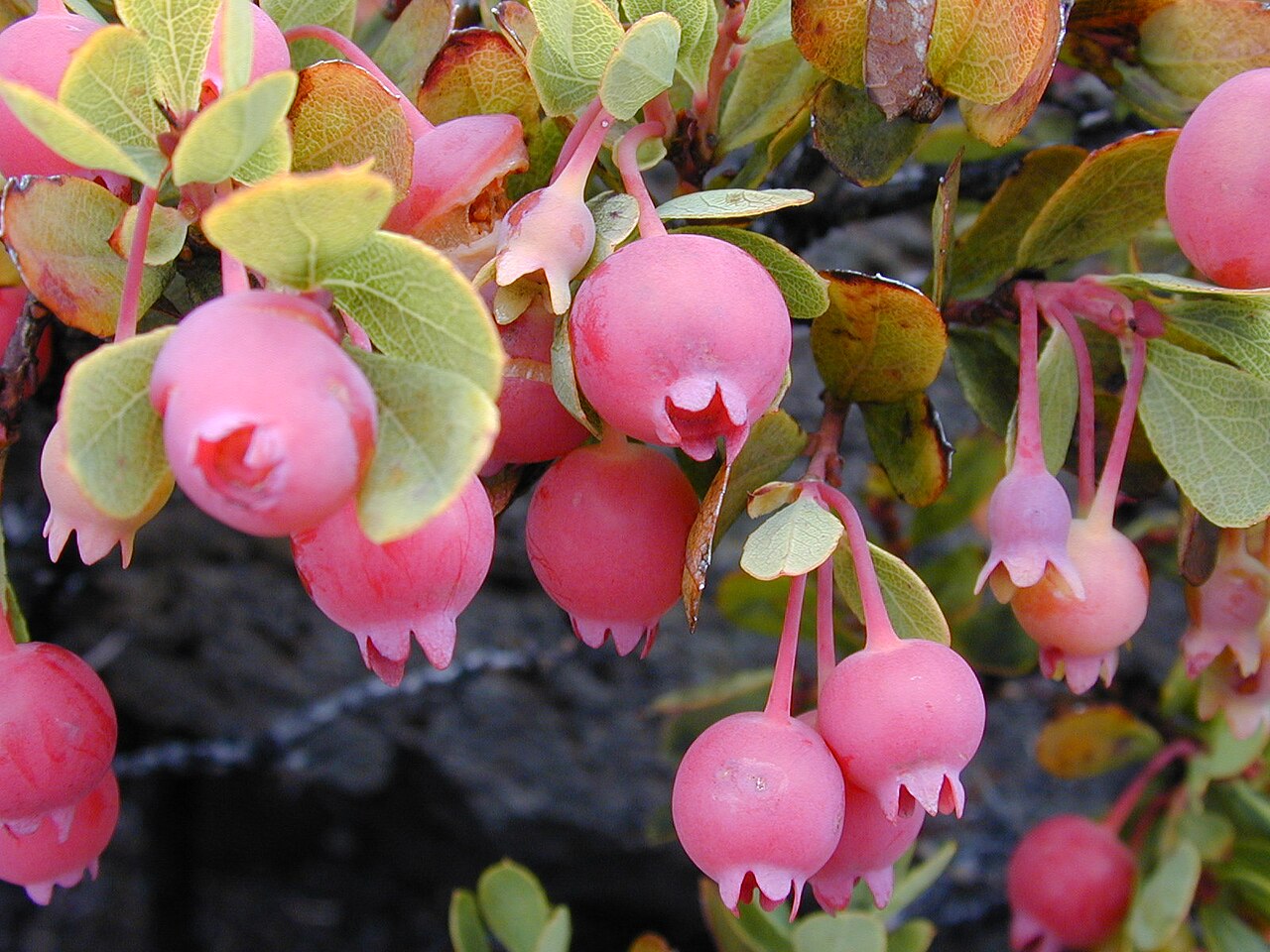
Vaccinium reticulatum, known as ʻŌhelo ʻAi, ʻōhelo or Hawaiian cranberry, is a small evergreen shrub found only in the Hawaiian Islands. It grows on lava flows, volcanic ash and open subalpine slopes, usually 1/2 to 4 1/2 feet tall, with thick, rounded leaves that emerge bright red, small bell-shaped flowers, and juicy berries in shades of red, orange, yellow, pink or blue-purple.
It belongs to the heath family (Ericaceae) and is a Hawaiian relative of blueberries, huckleberries and cranberries. USDA PLANTS lists it as native only to Hawaiʻi, and it is endemic there, meaning it grows naturally nowhere else in the world. Its berries are edible and have long been gathered, and the plant holds an important place in Hawaiian culture as a plant associated with Pele, the goddess of volcanoes.
ʻŌhelo ʻai is most common on Maui and Hawaiʻi Island, where it is one of the first woody plants to colonize new lava and ash. This guide covers how to identify it, where it grows, how it can be grown, and its importance to the endangered nēnē and Hawaiian culture.
Identification
ʻŌhelo ʻai is a familiar sight to visitors at Kīlauea and Haleakalā. Look for a low shrub with thick, rounded, often red-tinged leaves and bright, cranberry-like berries scattered among the foliage.
Growth Habit
It is a low to medium, much-branched evergreen shrub, usually 1/2 to 4 1/2 feet tall and rarely to about 6 1/2 feet. On exposed lava and windy summits it may grow as a compact, nearly prostrate mound, while in sheltered sites it becomes more upright.
Leaves
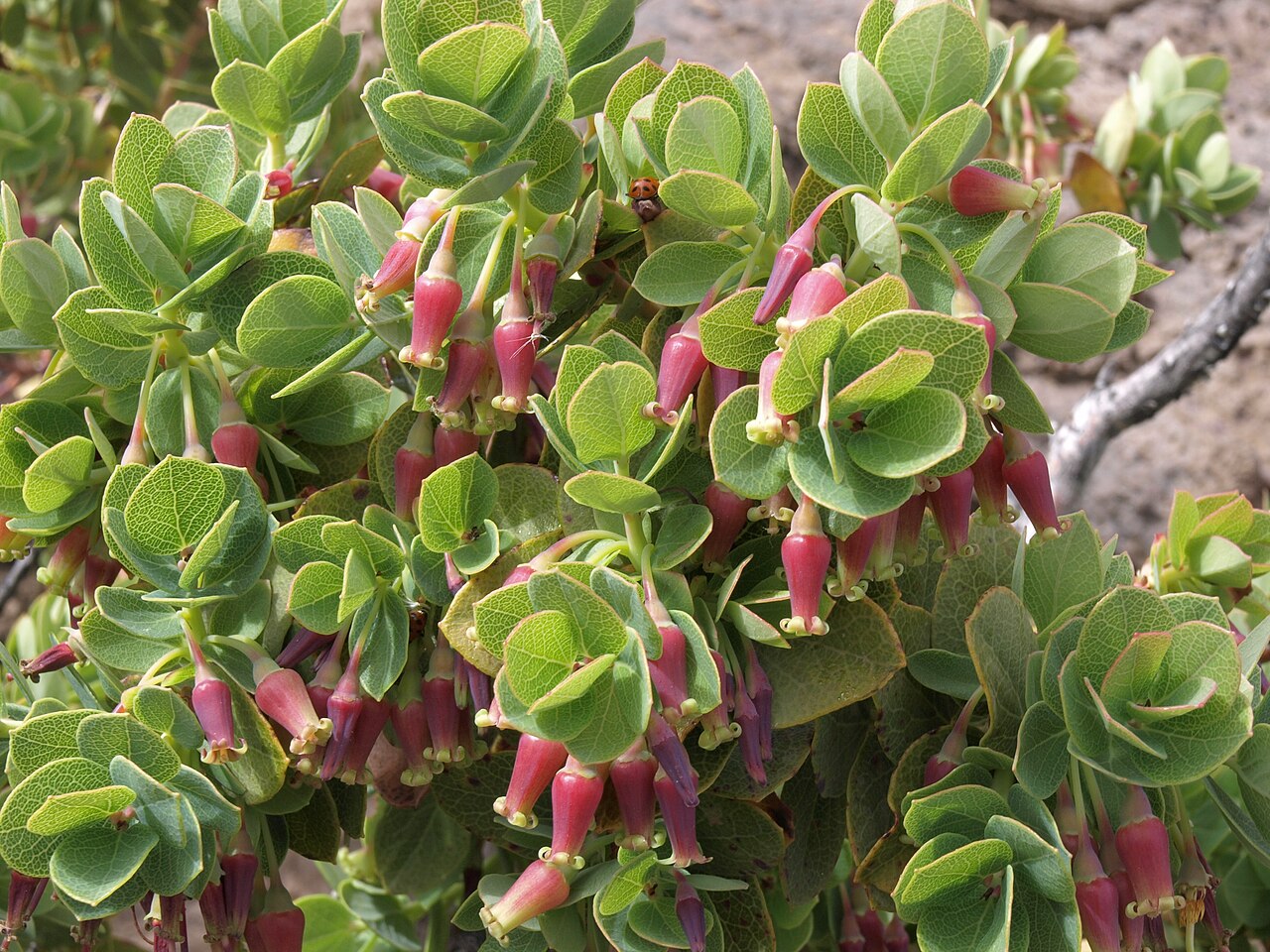
The leaves are alternate, thick and leathery, oval to nearly round, about 1/2 to 1 1/4 inches long, and often finely toothed along the edges. New leaves are bright red, maturing to green, blue-green or green with reddish patches. The network of veins on the leaf surface is the source of the species name reticulatum, meaning “net-veined”.
Flowers
The flowers are small, bell- or urn-shaped and nodding, about 3/8 to 1/2 inch long, and range from red to pink, greenish or yellowish. They hang singly from the leaf axils and can be found over much of the year.
Fruit & Seeds
The berries are round, about 3/8 to 1/2 inch across, and very variable in color, from red and orange to yellow, pink and blue-purple, often with a waxy bloom. Color does not reliably show ripeness. The flavor is similar to a cranberry, tart when unripe and sweet but mild when fully ripe. Each berry contains many tiny seeds.
Look-alikes
Vaccinium calycinum, ʻōhelo kau lāʻau, is a taller shrub or small tree of wet forests, with larger, thinner, pointed leaves. Another endemic, Vaccinium dentatum, grows in wet forests and bogs. Pūkiawe often grows with ʻōhelo ʻai but has tiny, needle-like leaves and small white, pink or red fruits.
Quick Facts
| Scientific Name | Vaccinium reticulatum Sm. |
| Family | Ericaceae (heath family) |
| Plant Type | Low evergreen shrub |
| Mature Height | 0.5–4.5 ft (rarely to 6.5 ft) |
| Mature Spread | 1–4 ft |
| Growth Rate | Slow |
| Sun Exposure | Full sun |
| Water Needs | Low to moderate; well-drained but not droughty |
| Soil Type | Cinder, lava, volcanic ash and gravelly, acidic soils with excellent drainage |
| Soil pH | About 4.5–6.0 (acidic) |
| Bloom Time | Much of the year |
| Flower Color | Red, pink, greenish or yellowish |
| Fall Color | Evergreen; new leaves bright red |
| Fruit | Edible berry, red, orange, yellow, pink or blue-purple |
| Deer Resistant | Browsed by feral goats, sheep and deer where present |
| USDA Hardiness Zones | Hawaiian uplands only (about 9–11; needs cool, high-elevation conditions) |
Native Range
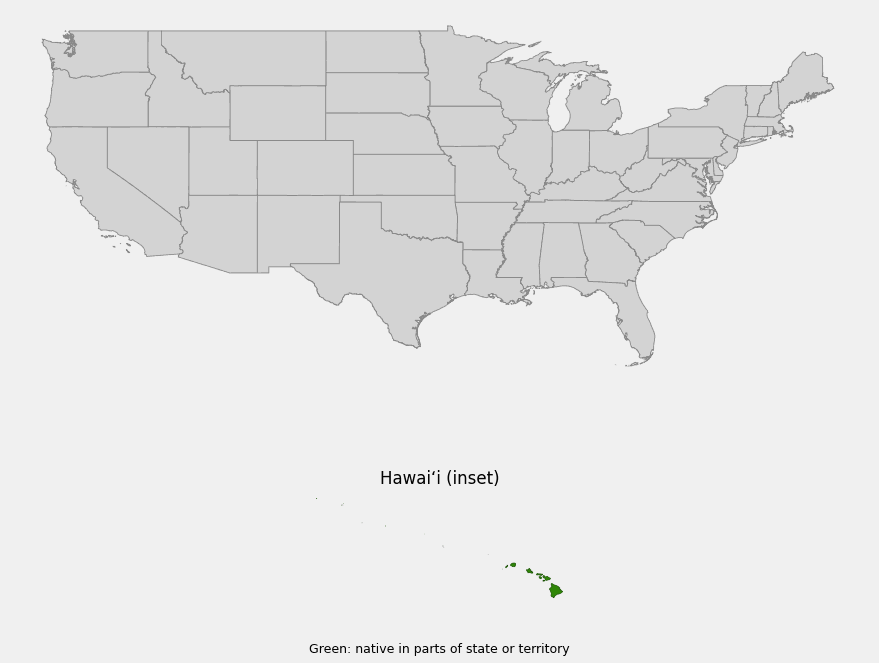
ʻŌhelo ʻai is endemic to the Hawaiian Islands. USDA PLANTS lists it only in Hawaiʻi. It is most common on the younger, volcanic islands of Maui and Hawaiʻi Island, especially on Haleakalā, Mauna Kea, Mauna Loa, Hualālai and Kīlauea, and is less common on Kauaʻi, Oʻahu and Molokaʻi.
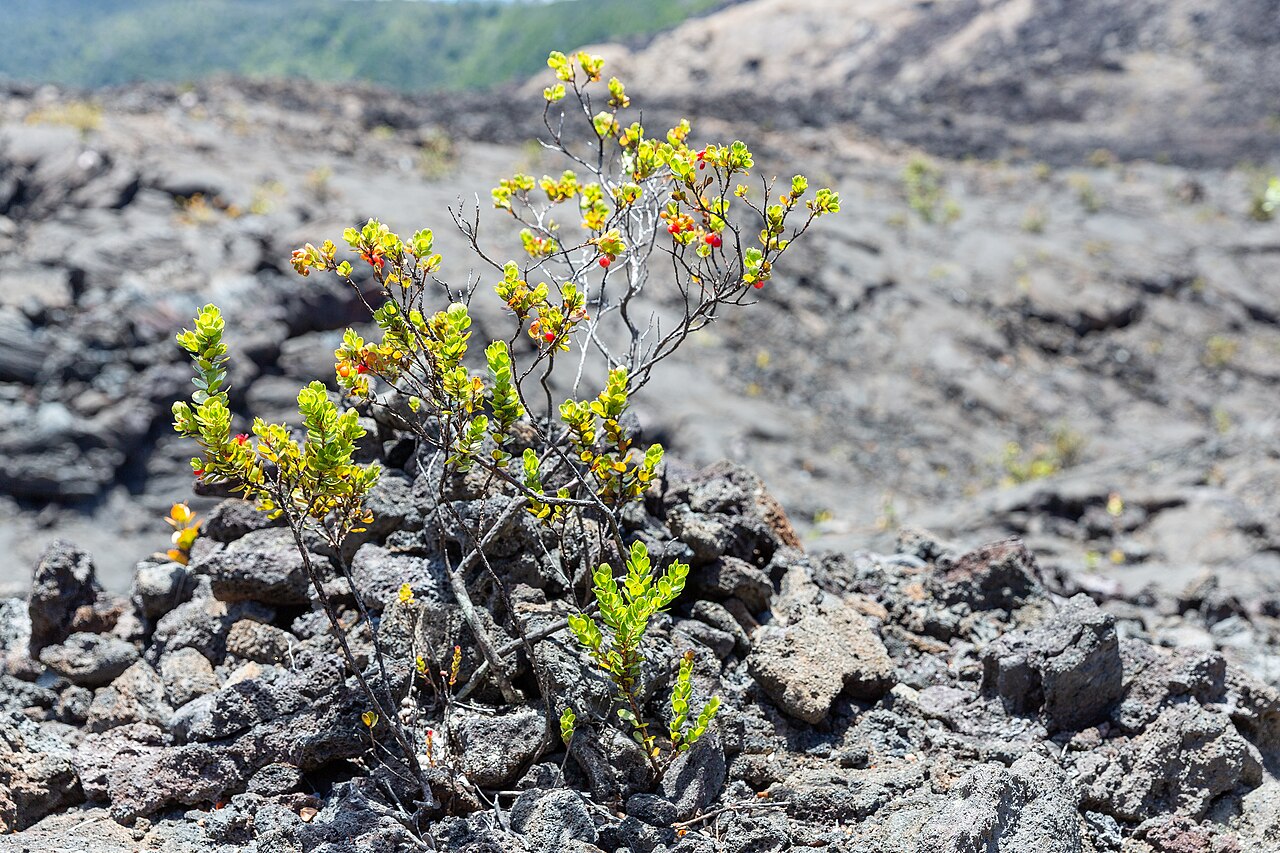
It grows at elevations from about 2,100 feet to about 12,000 feet, from open forests to the subalpine and alpine zones. It thrives on young lava flows, cinder and fresh volcanic ash, and it can survive being buried by ash falls of several inches, resprouting through the deposits. This makes it an important pioneer plant in volcanic landscapes.
Typical habitats include open ʻōhiʻa woodland on lava, subalpine shrubland and grassland, and barren cinder and lava fields. It is often seen around Kīlauea caldera in Hawaiʻi Volcanoes National Park and along the upper slopes of Haleakalā National Park.
📋 Regional plant lists featuring ʻŌhelo ʻAi: Hawaii
Growing & Care Guide
ʻŌhelo ʻai can be grown in Hawaiʻi, but it is not an easy garden plant. It does best in cool, upland gardens on cinder or other very well-drained, acidic soils, and it usually struggles in hot, humid lowland gardens. Plants are occasionally available from native plant nurseries in Hawaiʻi. Never dig plants from the wild, and follow park rules on berry picking.
Light
Give it full sun. In shade it becomes leggy and fruits poorly.
Soil & Water
Grow it in very well-drained, acidic media, such as cinder mixed with a little peat or organic matter, or volcanic soil in a raised bed. Water regularly while plants establish, then let the surface dry between waterings. It tolerates dry periods once established but not waterlogged soil.
Planting Tips
Plant it in upland gardens, ideally above about 2,000 feet, where nights are cool. In containers, use a cinder-based acidic mix. It combines well with other upland natives such as pūkiawe, ʻaʻaliʻi and young ʻōhiʻa.
Pruning & Maintenance
Little pruning is needed; trim lightly after fruiting to keep plants compact. Avoid high-nitrogen or alkaline fertilizers; use a light, acid-forming fertilizer sparingly if needed. Protect plants from feral animals and slugs.
Propagation
It is usually grown from seed. Mash ripe berries, rinse out the tiny seeds and sow them on the surface of a fine, moist, acidic mix; germination can take several weeks. Cuttings can also be rooted with patience. Seed collection on public lands requires permission.
Landscape Uses
- Upland native gardens: a colorful, berry-bearing shrub for cool, high-elevation gardens
- Edible landscaping: berries for jam and pie, harvested responsibly from cultivated plants
- Wildlife gardens: fruit for nēnē and native birds
- Lava and cinder plantings: a pioneer shrub suited to rocky volcanic sites
- Cultural gardens: a plant closely tied to Pele and Hawaiian traditions
Wildlife & Ecological Value
ʻŌhelo ʻai is a key food plant in Hawaiian upland ecosystems and one of the first shrubs to bring life back to new lava.
For Pollinators
The nodding, bell-shaped flowers are visited by native insects, including native yellow-faced bees (Hylaeus), as well as introduced honey bees.
For Birds
The berries are an important food for the nēnē, or Hawaiian goose, the endangered state bird of Hawaiʻi. Nēnē disperse the seeds in their droppings, helping ʻōhelo spread across lava fields. Other birds, including native honeycreepers and introduced species, also eat the fruit.
For Mammals
Hawaiʻi has only one native land mammal, the Hawaiian hoary bat, which does not use the plant for food. Feral goats, sheep, pigs and deer browse ʻōhelo, and controlling these animals has helped it recover in protected areas.
Ecosystem Role
As a pioneer on young lava and ash, ʻōhelo ʻai helps start soil development and provides shelter for other seedlings. Its ability to resprout after being buried by volcanic ash allows it to persist through eruptions, and its berries link it closely to the nēnē and other native wildlife.
Cultural & Historical Uses
In Hawaiian tradition, ʻōhelo is sacred to Pele, the goddess of volcanoes. A well-known custom at Kīlauea is to offer some of the first berries to Pele, often by tossing them toward Halemaʻumaʻu crater, before eating any. The plant also appears in Hawaiian stories and chants associated with Pele and her sister Hiʻiaka.
The berries have long been eaten fresh and are popular for jams, jellies and pies. Visitors to national parks should check current park rules before picking any berries, take only small amounts, and leave plenty for the nēnē and other wildlife.
The species was described by the English botanist James Edward Smith in the early nineteenth century from specimens collected in Hawaiʻi. Its Hawaiian name, ʻōhelo ʻai, includes the word ʻai, meaning food or edible, distinguishing it from other ʻōhelo species.
Frequently Asked Questions
Are ʻōhelo ʻai berries edible?
Yes. They are edible and taste somewhat like cranberries, tart when unripe and sweet but mild when fully ripe. Pick only where allowed and leave plenty for wildlife.
Where does ʻōhelo ʻai grow?
It is endemic to Hawaiʻi, mainly on Maui and Hawaiʻi Island, on lava flows, cinder and ash fields and open upland slopes from about 2,100 to 12,000 feet.
Why is ʻōhelo associated with Pele?
In Hawaiian tradition, ʻōhelo is sacred to Pele, the goddess of volcanoes, and it is customary to offer some berries to her before eating them, especially at Kīlauea.
Can I grow ʻōhelo ʻai?
Yes, in cool, upland gardens in Hawaiʻi with full sun and very well-drained, acidic, cinder-based soil. It usually does poorly in hot lowland gardens.
Why is ʻōhelo important to the nēnē?
Its berries are an important food for the endangered nēnē, which also spreads the seeds across lava fields in its droppings.

Looking for a nursery that carries ʻŌhelo ʻAi?
Browse our native plant nursery directory: Hawaii

