ʻŌlapa (Cheirodendron trigynum)
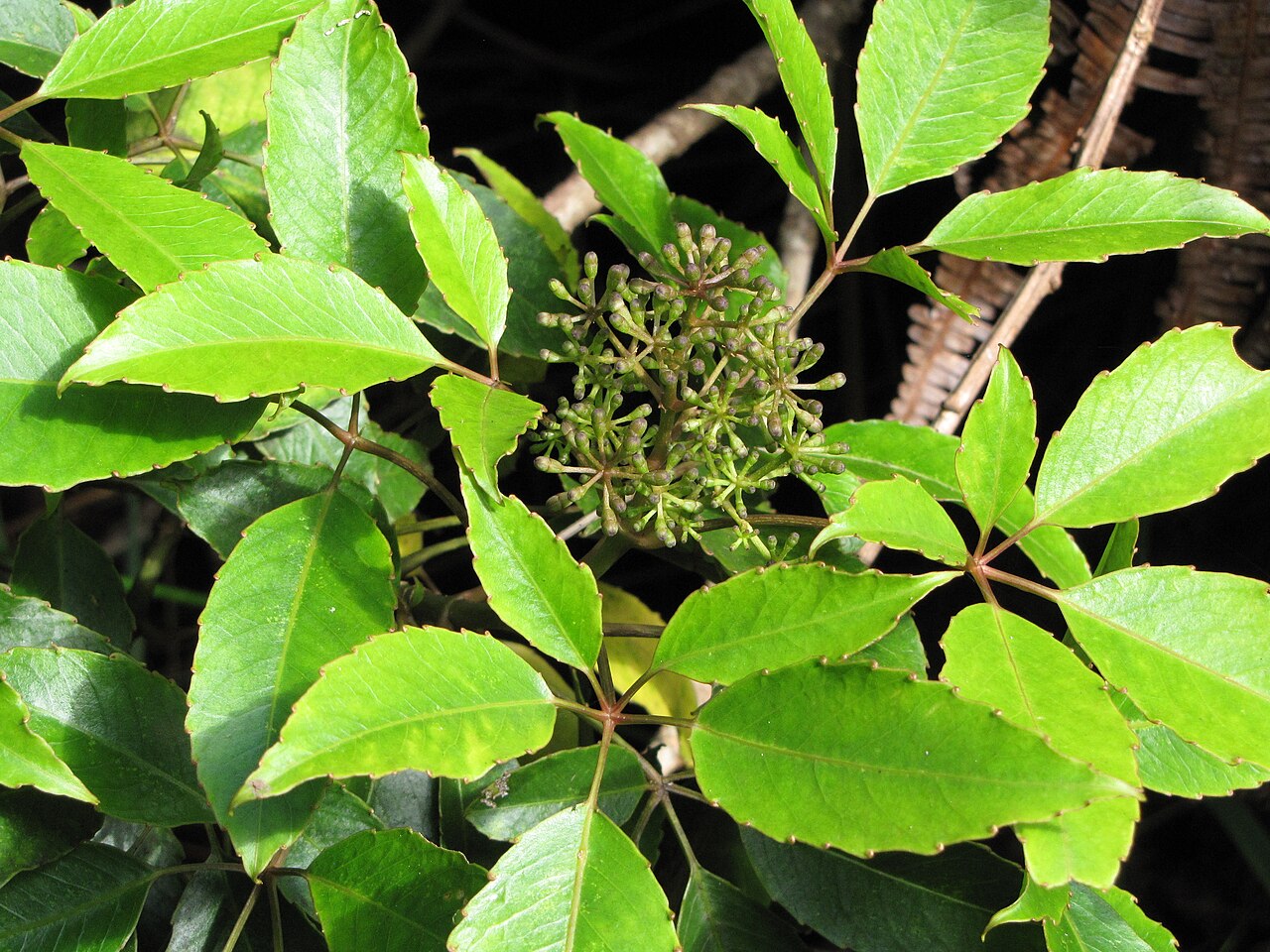
ʻŌlapa (Cheirodendron trigynum) brings movement to a Hawaiian forest garden. Its divided leaves turn and tremble on their stalks, catching light even when the air seems nearly still. That lively foliage, rather than a spectacular flower display, is the tree’s principal ornamental quality. Small flowers and dark fruits add ecological interest, while an open crown makes the tree a graceful companion to other native upland plants.
This is an endemic Hawaiian tree, not an introduced tropical shade tree. It belongs to the ginseng family, Araliaceae, and varies considerably across its island range. The familiar name ʻōlapa is also associated with Hawaiian dancers; the tree’s moving leaves provide a memorable connection between landscape observation and language. Its beauty is most convincing where the setting suits it: a cooler, sheltered, moist site with room for a real tree.
For a homeowner, the first decision is therefore location rather than pruning style. A hot, exposed coastal courtyard is a very different environment from the mesic and wet upland forests where ʻōlapa occurs. A tree placed in suitable conditions can become a distinctive long-term feature. One placed where constant intervention is needed to offset heat and drying wind may never develop the character that made it attractive in the first place.
Quick Facts
| Scientific Name | Cheirodendron trigynum |
| Family | Araliaceae |
| Plant Type | Evergreen native tree or variable shrub/tree |
| Mature Height | 20–50 ft |
| Mature Spread | Variable; allow space for an open tree crown |
| Growth Rate | Slow |
| Sun Exposure | Partial sun to shade |
| Water Needs | Average to moist; maintain drainage |
| Soil Type | Well-drained soil matched to native habitat and nursery provenance |
| Soil pH | Assess local soil and nursery performance before amending |
| Bloom Time | Variable with source and conditions; observe local seasonality |
| Flower Color | Small greenish flowers |
| Fall Color | Evergreen; seasonal new growth may contrast with older foliage |
| Fruit | Small dark fruits in branched clusters |
| Deer Resistant | Not a browse-proof planting; protect young trees where needed |
| USDA Hardiness Zones | Use Hawaiian island, elevation, and exposure guidance for site selection |
Recognizing ʻŌlapa
Hand-like leaves and an airy silhouette
The leaflets spread from a shared point, giving the foliage a hand-like outline reflected in the botanical genus name. Many leaves have three to five leaflets, but variation is part of this species, not necessarily a sign of poor growth. Individual leaflets can turn independently enough to produce a shifting pattern of light and shade. Seen against still, heavier foliage, an ʻōlapa crown has a particularly animated texture.
Look at an entire branch rather than identifying the tree from a single detached leaflet. Leaf arrangement, the way the leaflets meet their stalk, flowering or fruiting structures, and the tree’s provenance all matter. Several Hawaiian plants have similar common names or belong to related groups. A nursery label with the complete scientific name is much more useful than an assurance that the plant is simply “a native ʻōlapa.”
Small flowers and dark fruit
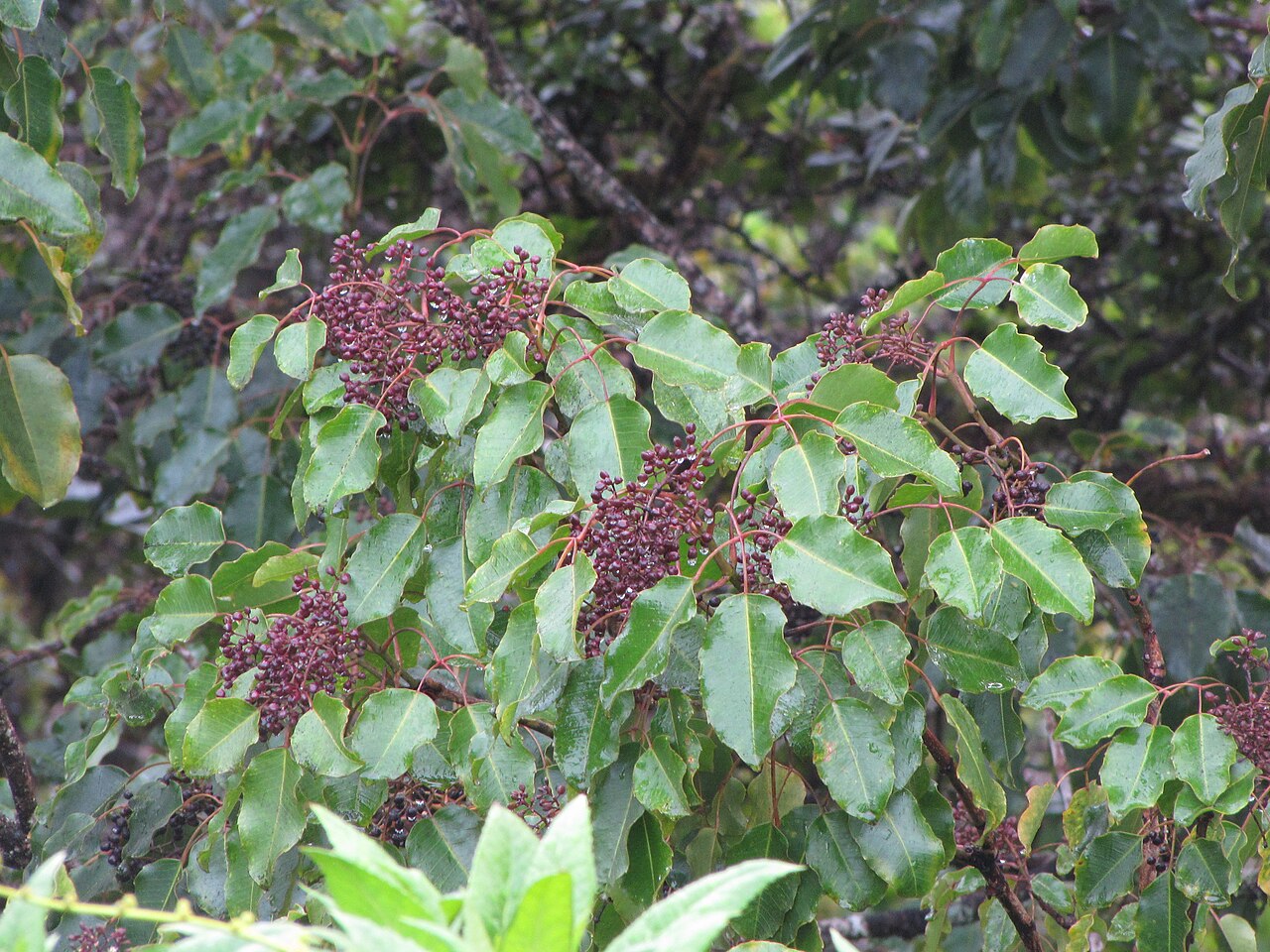
The flowers are modest greenish structures rather than large showy blossoms. They are followed by small dark fruits in branching groups. These features reward close observation but do not turn the tree into a season-long floral display. Allowing a tree to mature without repeated tip shearing preserves the branches on which its reproductive structures develop.
Fruit is an important part of the tree’s forest role. The University of Hawaiʻi account records use by ʻōmaʻo and historical use by birds including ʻōʻō and ʻōʻū. Those historical relationships should not be confused with a promise that a garden will attract every bird named in older literature. Present-day visitors depend on the island, elevation, surviving bird populations, and the surrounding habitat.
Native Range and Habitat
ʻŌlapa is native only to Hawaiʻi. The University of Hawaiʻi profile lists the main islands and distinguishes subspecies with different distributions. Its account places subspecies helleri on Kauaʻi, while subspecies trigynum occurs on the other main islands except Kahoʻolawe and Kauaʻi. Such distinctions are important when choosing material for restoration or trying to interpret an old specimen record.
The species occurs in mesic to wet forest. Reported elevations extend from around 1,000 feet to more than 7,100 feet, with a narrower published range for the Kauaʻi subspecies. These are descriptions of documented habitat, not a guarantee that every tree will thrive at every elevation between those limits. Rainfall, cloud exposure, slope, soil aeration, and island provenance can be as important as elevation alone.
Native Range
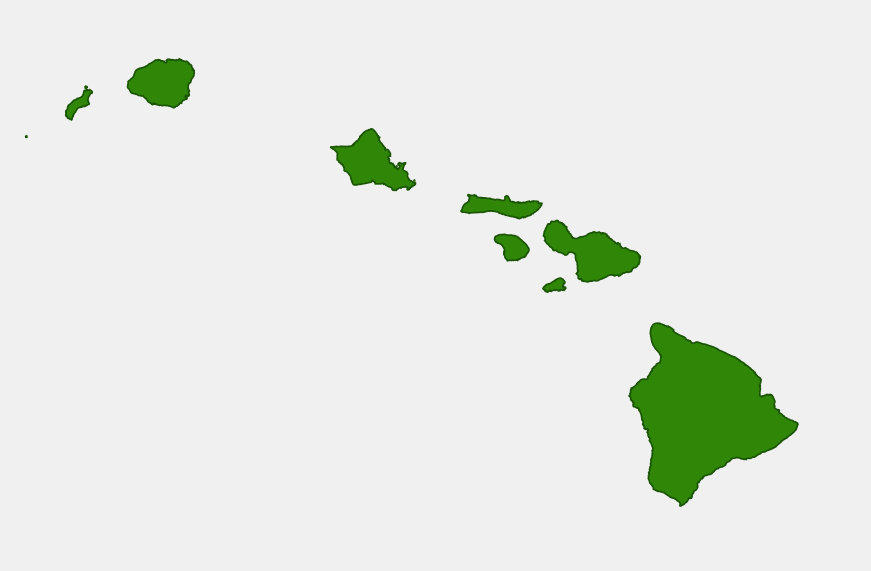
| U.S. States | Hawaii |
| Hawaiian Islands | Main Hawaiian Islands; island and subspecies records require local interpretation |
| Mexico / Canadian Provinces | Not included in the verified native range used here |
| Ecoregion | Hawaiian tropical forest and woodland |
| Elevation Range | Broadly about 1,000–7,100 ft; varies among island populations |
| Habitat | Mesic to wet forest, especially cooler upland sites |
| Common Associates | Site-appropriate native forest canopy and understory |
USDA PLANTS profile (CHTR2). Species identity verified; this link is not a guarantee of county-level distribution data.
The map above shows Hawaiʻi as the U.S. native-range state. It does not resolve subspecies or establish that an individual planting site lies within a documented population. For conservation work, use island-specific botanical records and locally appropriate nursery material. For a home landscape, treat the forest habitat as practical evidence that cool air, shelter, and reliable moisture deserve priority.
Choosing a Garden Position
Start with light and temperature
Partial sun to shade is the useful starting point in the University of Hawaiʻi growing guidance. In a garden, that may mean filtered light beneath a higher canopy or a position protected from the hottest afternoon exposure. Shade does not mean a cramped, airless corner beneath an impermeable roof of branches. The tree still needs enough light and crown space to establish its own structure.
ʻŌlapa prefers cooler, higher growing conditions and is slow growing. This combination makes patience and site selection more valuable than heavy feeding. Do not buy a small tree expecting it to screen a difficult boundary immediately. If an urgent screen is needed, solve that requirement separately so the ʻōlapa can grow at its natural pace without being crowded by temporary shrubs that later become permanent competitors.
Give the roots moisture and air
Moist soil and good drainage are compatible requirements. The root zone should retain enough water to avoid repeated drying, while excess water must be able to move away. A low spot where runoff collects for long periods is not equivalent to a moist forest slope. Check the actual planting location after rain rather than judging drainage from the appearance of dry soil at the surface.
In compacted or disturbed ground, evaluate the surrounding soil as well as the planting hole. A carefully amended pocket inside dense soil can still leave roots trapped in unfavorable conditions. Broad preparation and a suitable site are more useful than creating a small, rich basin that behaves differently from the soil the tree will eventually need to occupy.
Planting Without Burying the Trunk
The University of Hawaiʻi specifically warns against planting ʻōlapa too deeply. Covering the lower trunk can kill the tree. Before digging, identify the original soil level and the transition between stem and roots. Set the plant so that this transition is not buried by backfill, mulch, or later additions of soil. A tree that settles after planting may need attention before the problem becomes hidden by groundcovers.
Handle the root ball gently and keep it from drying during planting. Water the nursery plant beforehand if necessary, prepare the destination, and avoid leaving exposed roots in sun or wind while other work is completed. After backfilling, water slowly enough to settle soil around the root ball without washing soil over the stem base. The aim is contact between roots and surrounding soil, not a deeply buried trunk.
Mulch can help conserve moisture and moderate surface temperature, but leave a clear space immediately around the trunk. Check that mulch has not migrated against the bark after rain or maintenance. The finished surface should make the planting depth easy to see. This simple habit also makes it easier to notice ants, damaged bark, or irrigation water that is repeatedly striking the same part of the stem.
Watering and Establishment
A new tree has a limited root system even if the surrounding garden is damp. Check moisture within the nursery root ball and in adjacent soil; they may dry at different rates. Irrigate according to those observations and the weather rather than relying on an unchanging calendar. A cloudy upland week and a warm, windy interval can create very different demands at the same address.
Gradually encourage roots into the surrounding soil by wetting a useful area rather than a tiny spot at the trunk. At the same time, avoid keeping the planting hole continuously saturated. Wilting alone does not distinguish drought from damaged or oxygen-starved roots. When a tree declines, inspect soil moisture and planting depth before simply increasing watering frequency.
Keep vigorous weeds away from the young tree. The species profile notes their competition for moisture, an especially important issue for a slow-growing plant. Remove competition carefully so that maintenance does not damage shallow roots or the stem. A visible, modestly mulched root-zone area is often easier to manage than a dense ring of plants placed immediately around a newly installed tree.
Pruning, Pests, and Long-Term Care
Prune for sound structure and clearance, not to turn ʻōlapa into a formal hedge. Remove damaged branches thoughtfully and make only the cuts needed for the tree’s role. Repeated shearing sacrifices the loose foliage pattern and can prevent the development of flowers and fruit. If the mature crown will conflict with a roof or access route, change the planting position while the tree is small rather than relying on permanent hard pruning.
Ants at the base of the tree are mentioned in the University of Hawaiʻi account. Their presence warrants inspection, but a treatment decision should follow identification of the actual problem. Examine the bark and foliage, check for associated sap-feeding insects, and assess whether soil or mulch is piled against the trunk. Correcting a site or irrigation issue may be more important than applying a product without a diagnosis.
Slow growth is not by itself evidence of nutrient deficiency. Compare the tree’s leaf condition, seasonal growth, and site with its normal habits. Use soil assessment and local advice before major amendments. A healthy tree with modest annual extension can still be establishing successfully, whereas forcing lush growth does not correct unsuitable heat, chronic saturation, or a deeply buried stem.
Wildlife and Cultural Connections
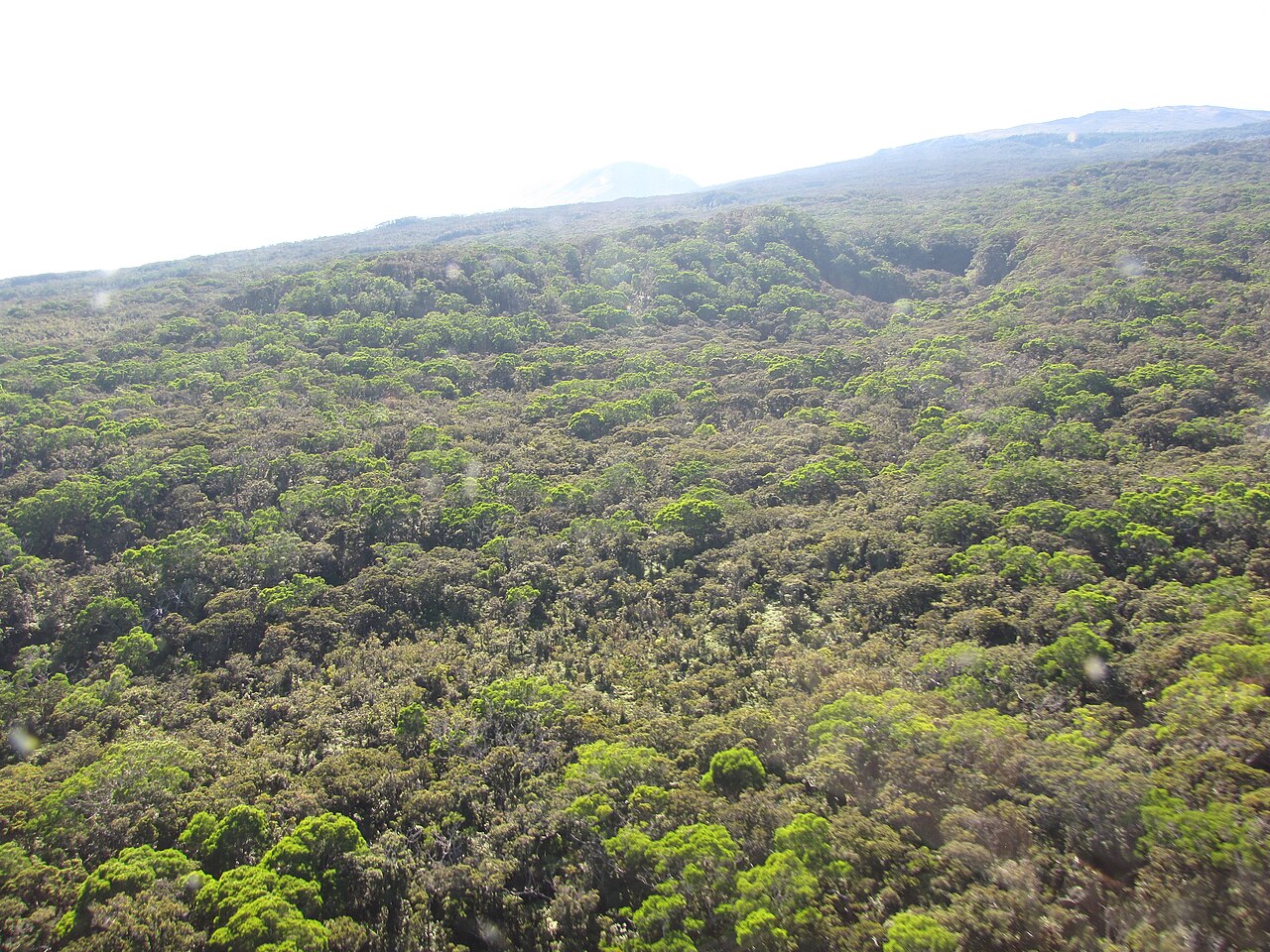
In native forest, ʻōlapa contributes fruit, foliage, and structure to a much larger living community. In a garden, its value grows when it is part of a compatible planting rather than an isolated specimen surrounded by conditions hostile to native understory plants. Choose companions suited to the same moisture and light, and allow enough spacing that they do not compete heavily during establishment.
Hawaiian uses recorded in the University of Hawaiʻi profile include dyes made from several parts of the plant, fragrant material used with kapa, and leaves used in lei. The name’s association with dancers is another reminder that the plant is not merely an ornamental commodity. These records provide cultural context; learning a practice properly requires the guidance and knowledge appropriate to that tradition.
Historical medicinal accounts should likewise be understood as ethnobotanical information, not a home-treatment recommendation. A planting guide cannot establish safe preparation, dosage, or suitability for an individual. The strongest everyday reason to grow ʻōlapa is the living tree itself: its moving foliage, its place in Hawaiian forest, and the opportunity to observe it over many years.
Questions Before Buying
Is it appropriate for a hot coastal garden? Its preference for cooler, higher, moist conditions makes that a poor default assumption. Ask a knowledgeable local nursery about performance at comparable sites before committing a prominent planting space.
Will it grow quickly into a screen? No quick-screen promise is justified. The published horticultural guidance describes slow growth. Give it time and avoid competing plants that will overtake it before it establishes.
Which island source should I choose? For restoration, local provenance and subspecies identity matter. For ornamental use, documented source information still helps explain likely performance and prevents accidental mixing of names or forms.
What is the most preventable planting mistake? Burying the lower trunk. Keep the original root-to-stem transition visible, allow for settling, and do not hide it beneath mulch.
A Tree to Observe Closely
ʻŌlapa works best where its movement can be appreciated without forcing it into an unsuitable shape or climate. A sheltered upland garden, a forest-edge planting, or a thoughtfully managed native collection can provide that setting. Match the site first, protect the root zone, and let the canopy develop slowly. The result is a tree whose character comes from the same foliage and forest relationships that distinguish it in the wild.
Sources & Further Reading
- University of Hawaiʻi, Native Plants Hawaiʻi species profile
- USDA Forest Service: species identification and ecology
Botanical range, identification, and cultural information are based on these sources. Garden-management advice should be adapted to local soil, exposure, and nursery provenance.
Find Native Plants Near You
Look for correctly identified, nursery-propagated plants with documented Hawaiian provenance. Visit our Hawaii native plant nursery directory and ask about stock suited to your island, elevation, and rainfall. Compare other trees in our Hawaii native plant list.