
Twoflower Violet (Viola biflora)
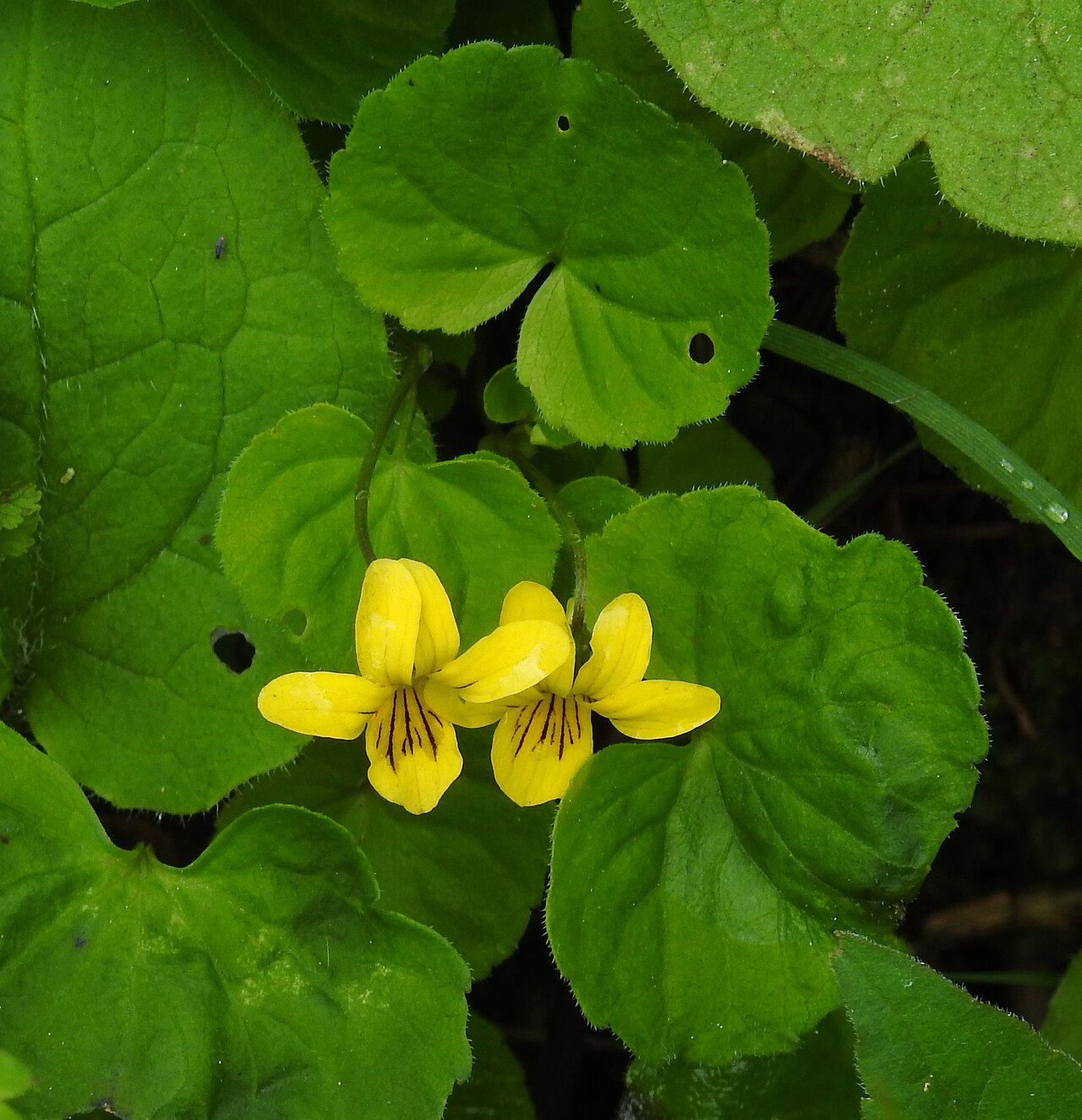
Viola biflora, the Twoflower Violet (USDA: arctic yellow violet; also alpine yellow violet), is a small, bright yellow violet of cool, moist mountain and northern habitats. It is one of the most widespread violets in the world, found across the mountains of Europe and Asia and in western North America. In the United States it is native to Alaska and, very locally, to the high mountains of Colorado.
The name biflora means “two-flowered,” because each stem often bears a pair of flowers. The flowers are only about ½ inch across, clear yellow with dark brown to purple lines, held just above soft, kidney-shaped, scalloped leaves. In Alaska it grows in shady, moist spots in subalpine meadows, willow thickets and along streams. In Colorado it is a rare plant, known from only a few scattered sites, and it is considered vulnerable there.
This guide covers how to identify twoflower violet, where it grows in North America, how it can be grown in a cool, shady rock garden or woodland garden, and its value to pollinators and wildlife. In Colorado especially, never dig or collect wild plants; grow it only from nursery-propagated plants or seed.
Identification
Twoflower violet is a low, tufted perennial with soft, kidney-shaped leaves and small yellow flowers, usually one or two per stem. It often grows in loose patches in moist shade.
Leaves
The leaves are kidney-shaped to heart-shaped, ¾ to 1½ inches wide, broader than long, with a scalloped (crenate) edge, a soft texture and a few scattered hairs or none. They grow on long stalks from the base and on the flowering stems. The plant spreads slowly from a short, branching rhizome.
Flowers
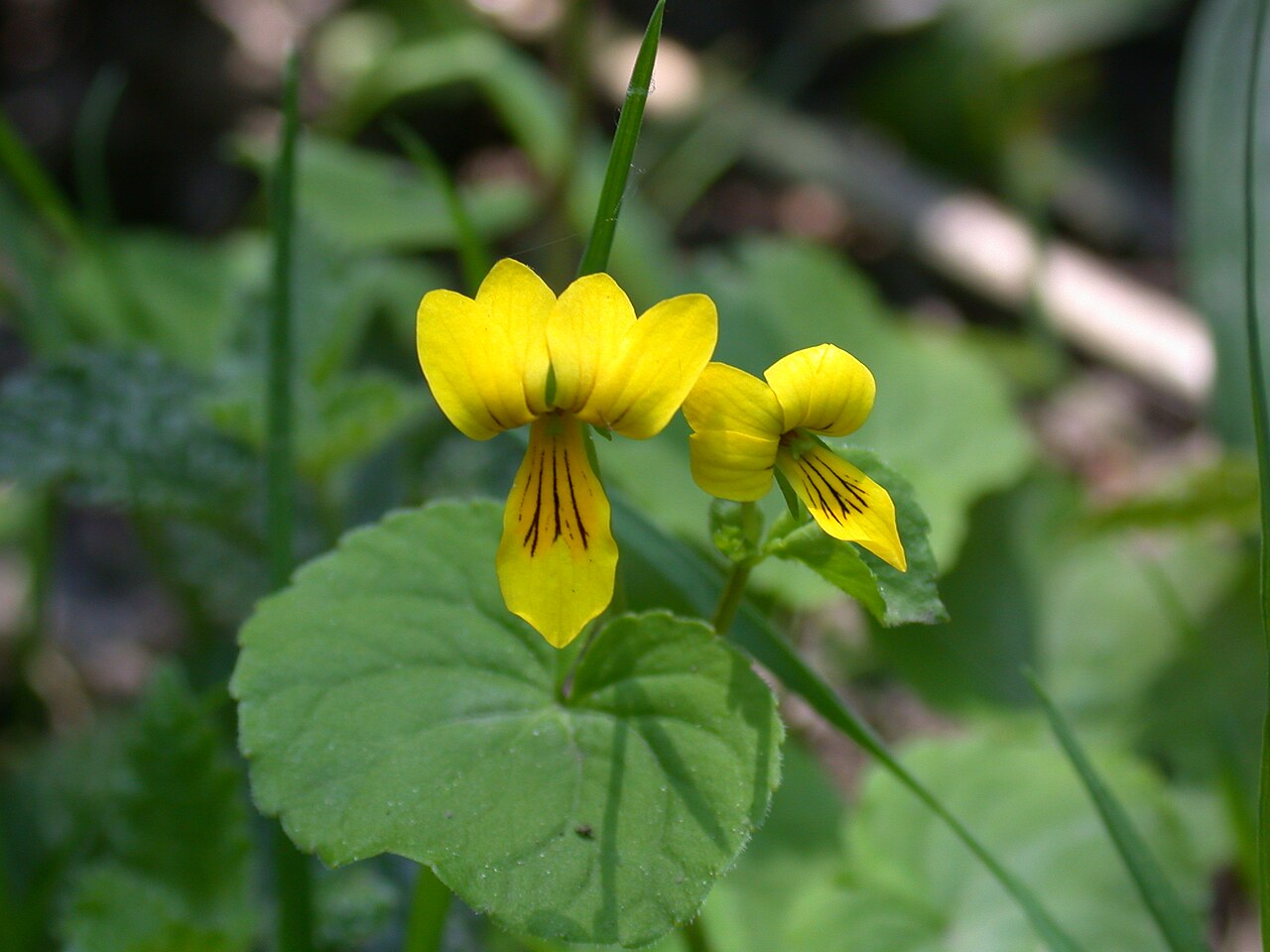
The flowers are about ½ inch across, with five clear yellow petals. The lower petal and side petals have fine dark brown to purple nectar lines, and the lower petal has a short spur at the back. The two upper petals usually point upward, giving the flower a narrow, upright look. In Alaska and Colorado it blooms from June to early August, soon after snowmelt.
Stems & Fruit
The upright, weak stems are 2 to 6 inches tall and carry two or three leaves and one or two flowers. The fruit is a small, three-parted capsule that splits open and flings out seeds, which ants also carry off.
Look-alikes
Stream Violet (V. glabella) is a larger yellow violet of moist forests in Alaska and the Pacific Northwest, with heart-shaped, pointed leaves and taller leafy stems. Downy Yellow Violet and Round-leaved Yellow Violet are eastern species that do not grow in its range. Twoflower violet’s combination of small yellow flowers and broad, kidney-shaped leaves is distinctive.
Quick Facts
| Scientific Name | Viola biflora L. |
| Family | Violaceae (violet family) |
| Plant Type | Herbaceous perennial wildflower |
| Mature Height | 2–6 in |
| Mature Spread | 4–10 in, slowly spreading |
| Growth Rate | Slow to moderate |
| Sun Exposure | Part shade to full shade |
| Water Needs | Consistently moist |
| Soil Type | Humus-rich, moist, well-drained loam or rocky soil |
| Soil pH | About 5.5–7.5 |
| Bloom Time | June–August (spring to early summer in gardens) |
| Flower Color | Yellow with dark brown to purple lines |
| Fall Color | Dies back to the ground in fall |
| Fruit | Small three-parted capsule |
| Deer Resistant | Moderate |
| USDA Hardiness Zones | 2–7 |
Native Range
Twoflower violet has a huge range across the Northern Hemisphere: the mountains of Europe, Scandinavia, Siberia, the Himalaya, China, Japan and Korea, and western North America. USDA PLANTS lists it as native in Alaska and Colorado, and in British Columbia and the Yukon. In Alaska it is widespread from the Interior and Alaska Range to southcentral and southeastern Alaska.
In Colorado it is a rare disjunct, far south of the rest of its North American range. It is known from only a few sites in the Front Range and nearby mountains, where it grows in cool, shady, moist places such as under rock overhangs, in mossy crevices and along small streams. It is considered vulnerable in Colorado, British Columbia and the Yukon. A related subspecies, Viola biflora subsp. carlottae, is endemic to Haida Gwaii in British Columbia.
Throughout its range it favors moist, shady, cool sites from the subalpine to the alpine zone: stream banks, seepy slopes, willow and alder thickets, snowbed margins, tall-herb meadows and shaded rock ledges. It often grows where snow lies late and the soil stays moist all summer.
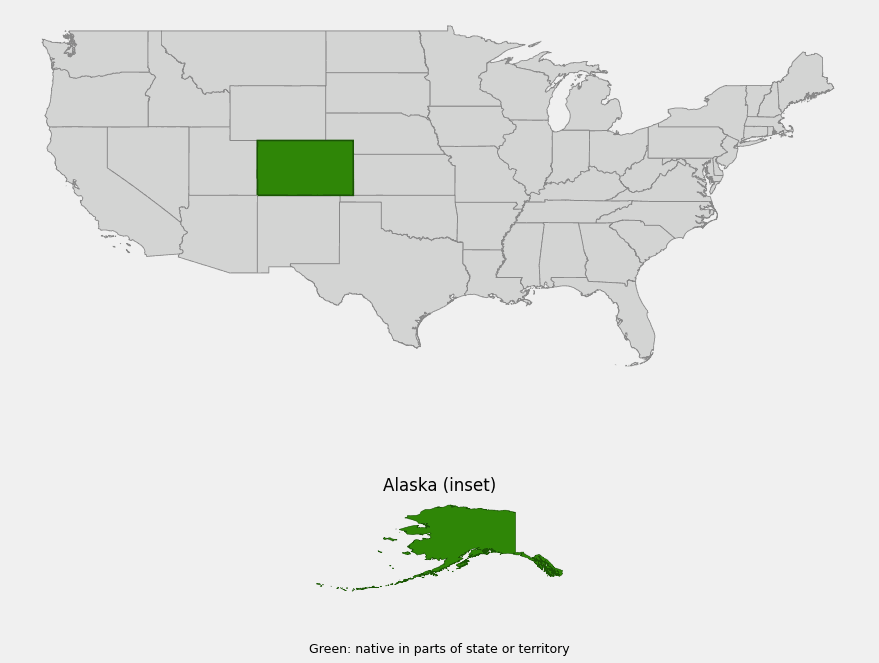
📋 Regional plant lists featuring Twoflower Violet: Alaska
Growing & Care Guide
Twoflower violet is grown by alpine and rock garden enthusiasts and is sometimes available from specialist nurseries. It is easy in cool, moist climates but struggles in hot, humid summers. Buy only nursery-propagated plants or seed, and never dig plants from the wild, especially in Colorado, where it is rare.
Light
Part shade to full shade. In cool northern gardens it tolerates morning sun, but in warmer areas give it bright shade, such as the north side of a rock or wall.
Soil & Water
Grow it in moist, humus-rich, well-drained soil that never dries out. A mix of loam, leaf mold and grit works well. Water during dry spells; it wilts quickly in drought and dislikes warm, soggy soil.
Planting Tips
Plant in spring in a cool, sheltered spot, such as a shady rock garden, a north-facing slope, the edge of a woodland path or beside a small stream or pond. Space plants 6 to 8 inches apart.
Pruning & Maintenance
Little care is needed. Remove dead leaves in spring, keep slugs in check and top-dress with leaf mold. It will self-seed lightly in good conditions.
Propagation
Sow fresh seed in fall and leave the pots outdoors for winter cold, which improves germination. Established clumps can be divided carefully in early spring or after flowering.
Landscape Uses
- Shade rock gardens: a tiny yellow violet for cool, moist crevices
- Woodland and streamside gardens: spring color in moist shade
- Alpine troughs: in a shaded trough in cool climates
- Native gardens in Alaska: a native groundcover for shady, moist beds
Wildlife & Ecological Value
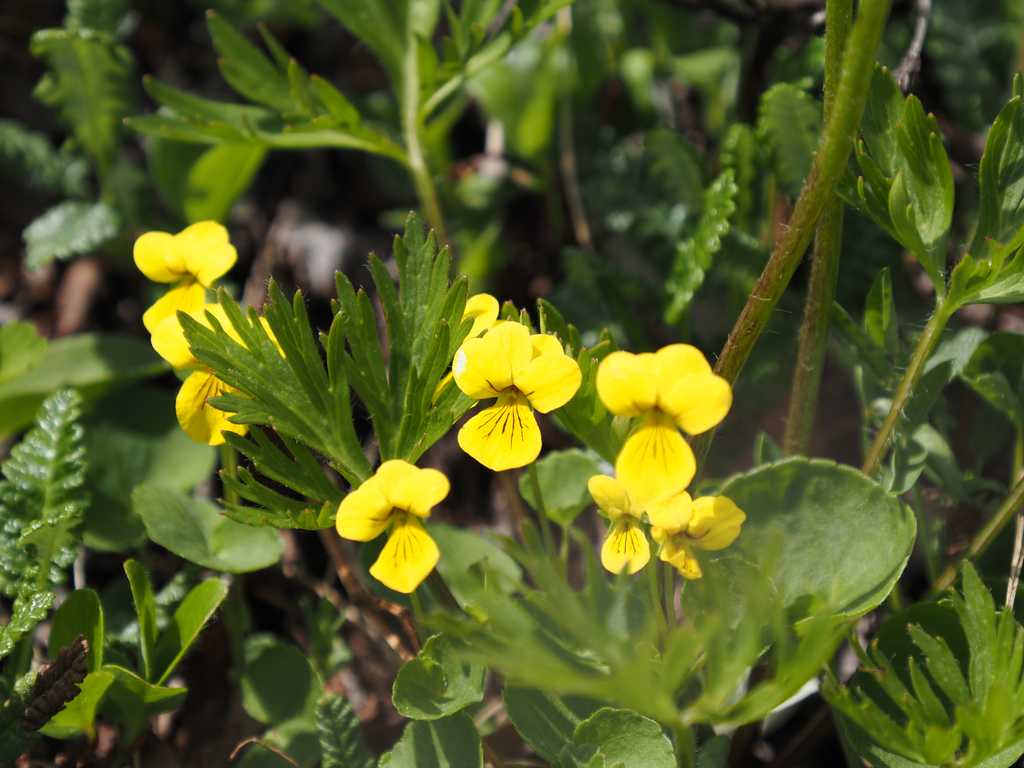
Twoflower violet is a small but useful plant in cold, moist mountain habitats, where it flowers early in the short growing season.
For Pollinators
Small bees, hover flies and other flies visit the flowers, guided by the dark nectar lines into the short spur. Like many violets, it can also self-pollinate. Violets are host plants for fritillary butterflies, and in the Arctic and mountains several fritillary species feed on Viola as caterpillars.
For Birds
Ground-feeding birds such as sparrows and juncos pick up small seeds of mountain wildflowers, and the leafy patches give cover to insects that birds feed to their young.
For Mammals
Small mammals such as voles and pikas may eat the leaves. The plant is too small to be important browse for larger animals.
Ecosystem Role
Its seeds have a small oily appendage (elaiosome) that attracts ants, which carry the seeds away and help spread the plant. It is part of the diverse tall-herb and streamside plant communities of subalpine and arctic zones.
Cultural & Historical Uses
Carl Linnaeus named Viola biflora in 1753 in his Species Plantarum. The name refers to the pair of flowers often carried on each stem. In Scandinavia it is called “fjellfiol” or “fjällviol,” the mountain violet, and it is a familiar flower of Nordic and Alpine mountain trails.
Twoflower violet has been studied by botanists as an example of a widespread arctic-alpine plant whose populations were separated by the ice ages. The Colorado populations are considered relics: plants that persisted on cool, moist, shaded sites as the climate warmed and the main range retreated north.
Violets have a long history of use as food and medicine in Europe and Asia, and in parts of the Himalaya and China twoflower violet has been used in traditional medicine. In North America it is valued mainly as a delicate wildflower of mountain hikes.
Frequently Asked Questions
Why is it called twoflower violet?
The scientific name biflora means “two-flowered.” Each stem often bears a pair of small yellow flowers, though many stems have only one.
Where does twoflower violet grow in the United States?
It is widespread in Alaska, in moist, shady subalpine and mountain habitats, and very rare in Colorado, where it is known from only a few scattered sites in the mountains.
Is twoflower violet rare?
It is common across much of Eurasia and Alaska, but it is considered vulnerable in Colorado, British Columbia and the Yukon. Never collect it from the wild.
How do I tell it from stream violet?
Twoflower violet is smaller, with broad, kidney-shaped, scalloped leaves and flowers about ½ inch across. Stream violet is taller, with heart-shaped, pointed leaves and slightly larger yellow flowers.
Can I grow twoflower violet in my garden?
Yes, in cool climates with moist, humus-rich soil and shade, from nursery-propagated plants or seed. It suits shady rock gardens and streamside beds but struggles in hot, humid summers.


