
Fragrant Pitcher Sage (Lepechinia fragrans)
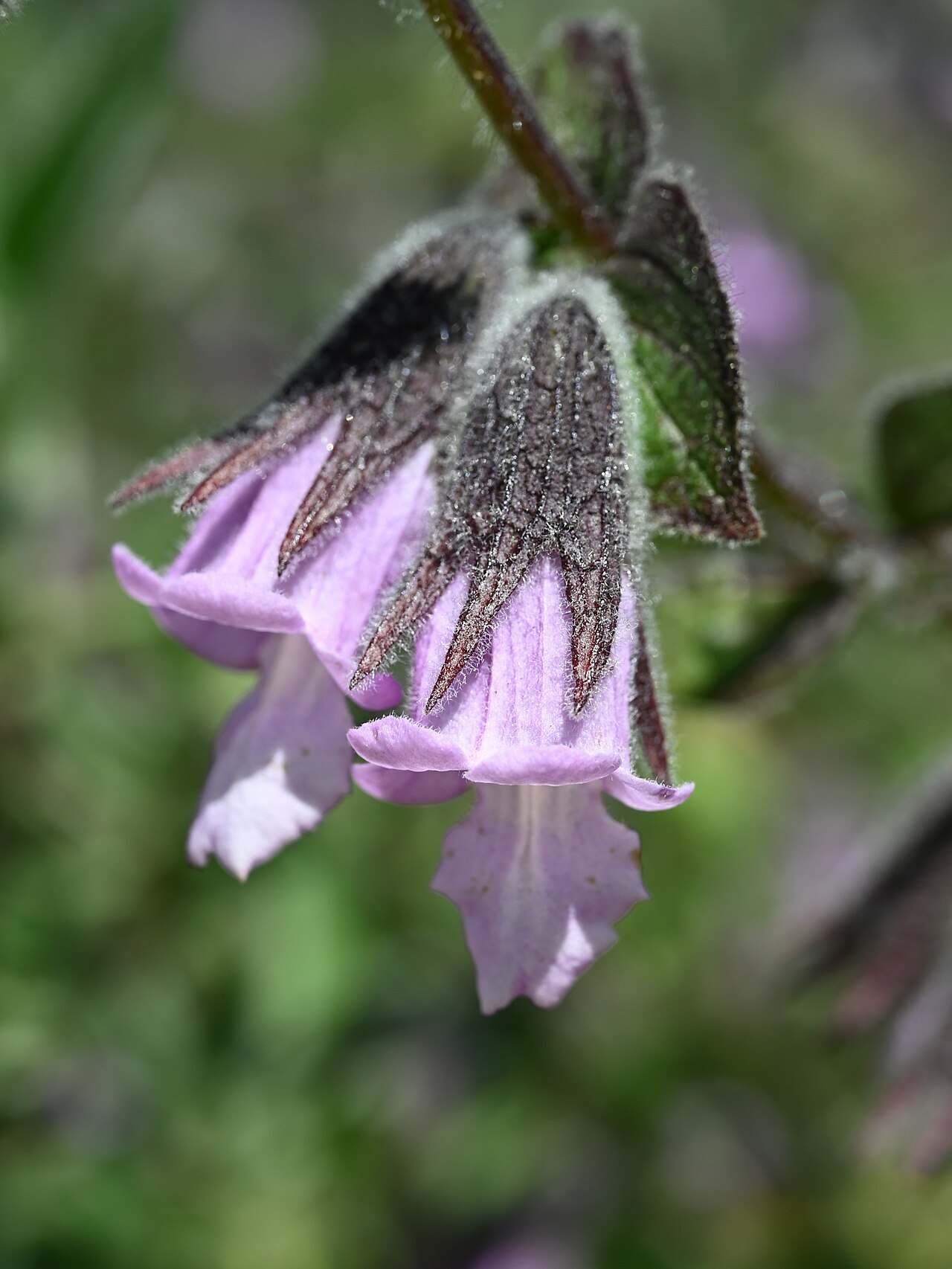
Lepechinia fragrans, known as Fragrant Pitcher Sage or island pitcher sage, is an aromatic native shrub of the mint family (Lamiaceae) found only in Southern California. It grows in chaparral on the northern Channel Islands and in a few mountain ranges near Los Angeles, forming an open, gray-green shrub 2 to 6 feet tall with soft, hairy leaves and drooping lavender to pale pink, bell-shaped flowers in spring and early summer.
The whole plant is covered in hairs and tiny glands, and its leaves release a sweet, sage-like fragrance when brushed, which gives the species its name. The “pitcher” refers to the calyx, the cup around each flower, which enlarges and becomes inflated and purple-tinged after flowering, holding the developing seeds like a small pitcher.
Fragrant pitcher sage has a limited natural range and is included on the California Native Plant Society’s watch list of plants of limited distribution. It is also a fine garden plant for dry shade in California, with a long bloom season that attracts hummingbirds and bees. This guide covers how to identify it, where it grows, and how to grow it.
Identification
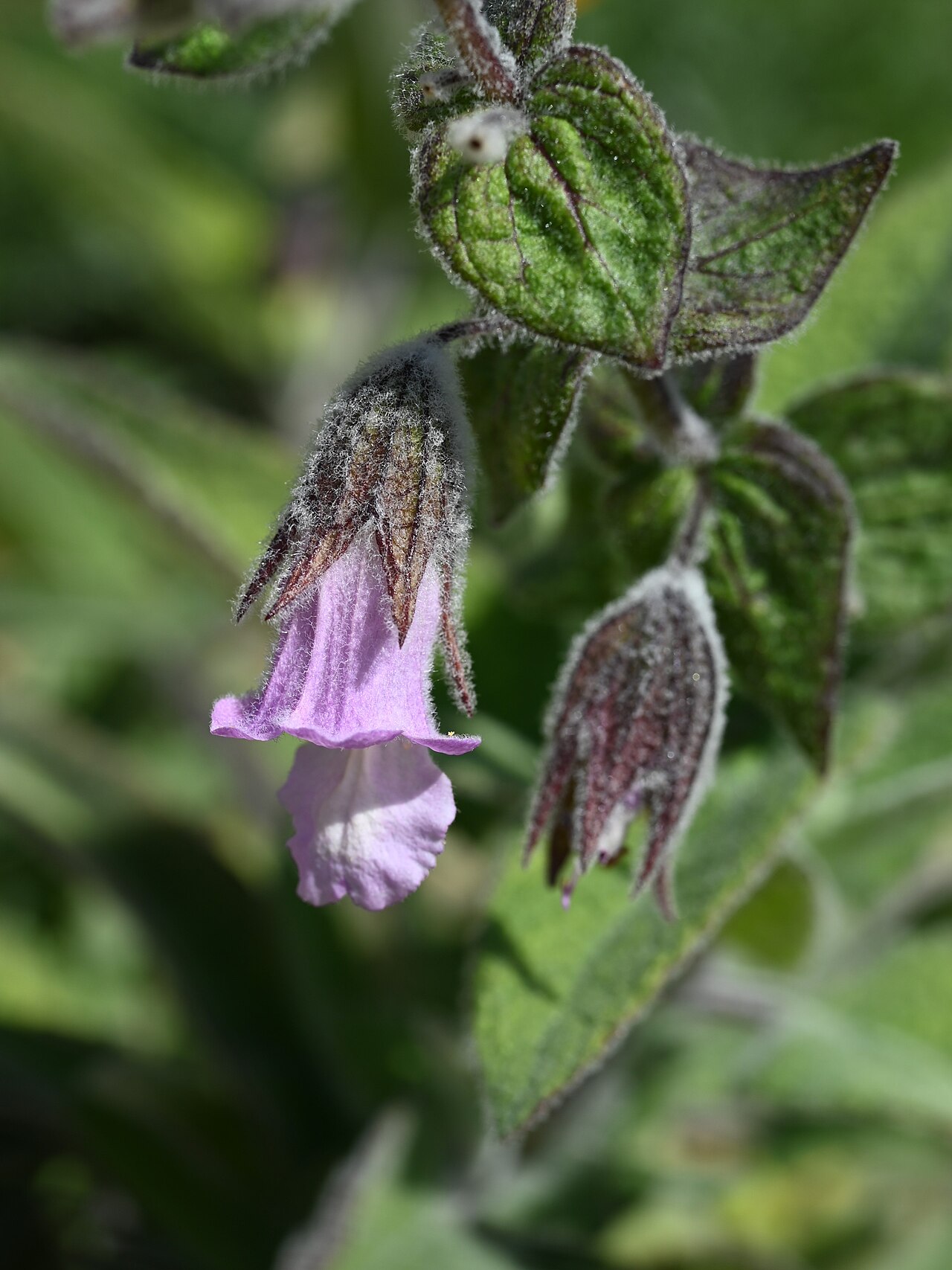
Fragrant pitcher sage is easy to recognize when in bloom by its hanging, bell-shaped flowers and its sticky, fragrant, gray-green foliage.
Growth Habit
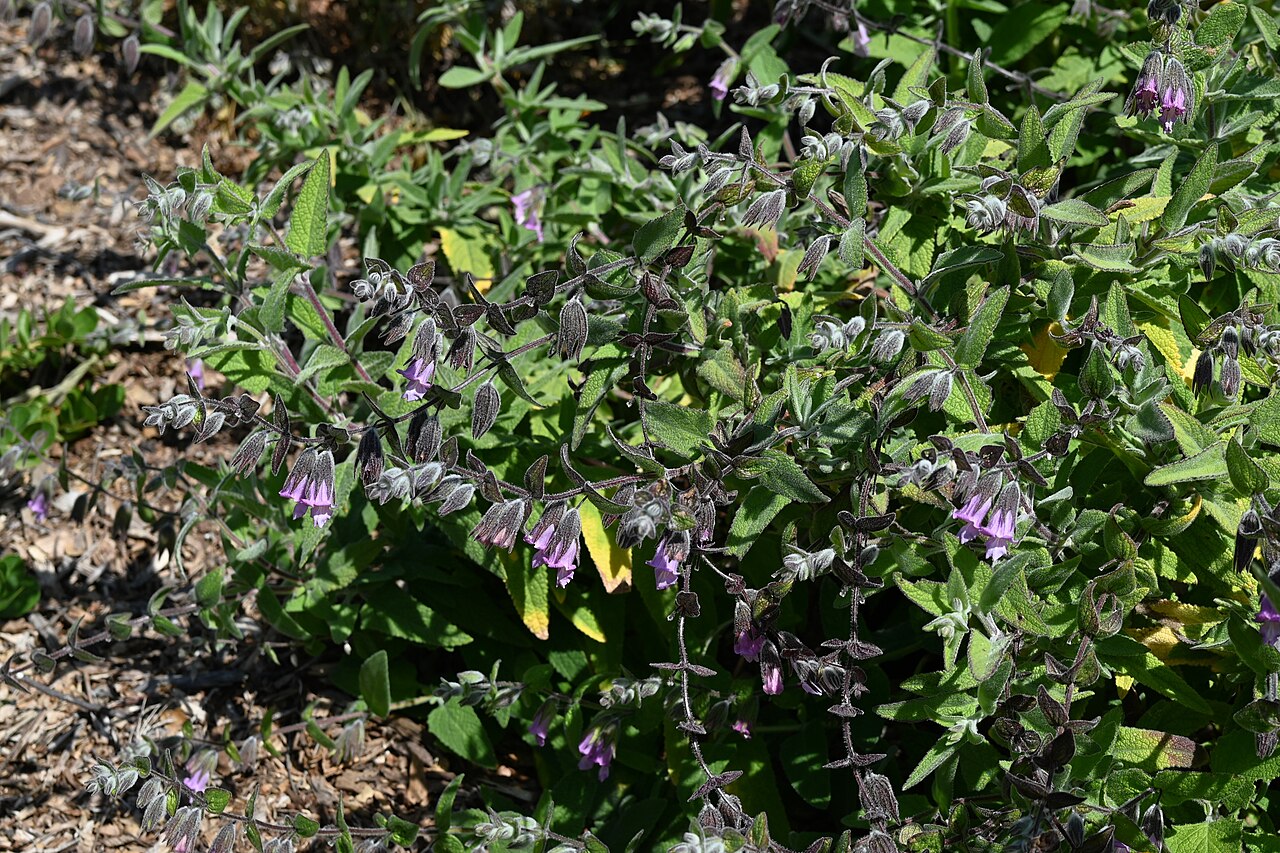
A vase-shaped to mounding shrub from 2 to about 6 feet tall and as wide, with arching branches that become woody near the base. It tends to grow taller and lankier in shade and more compact in sun. The stems are distinctly square, as in other members of the mint family.
Leaves
The leaves are opposite, triangular-lance-shaped to oval, 1½ to nearly 5 inches long, with smooth or slightly toothed edges. They are light green but appear grayish because of the dense hairs and small glands. Like many California shrubs, it produces larger leaves in the wet winter season and smaller, grayer leaves in the dry summer, shedding some of the larger ones.
Flowers & Fruit
The flowers hang in loose clusters along the branch tips. Each is a bell-shaped, two-lipped corolla about 1 inch long, white to pale pink or lavender, set in a hairy, five-lobed calyx. After flowering the calyx enlarges, becomes slightly inflated and turns purplish, enclosing four small nutlets. Bloom is mainly from March to June, sometimes later.
Look-alikes
California Pitcher Sage (Lepechinia calycina) is the most widespread pitcher sage in California; it has white to pale pink flowers, and its range is mostly to the north, in the Coast Ranges and Sierra Nevada foothills. Fragrant pitcher sage often has more lavender flowers and grows in Southern California and the Channel Islands. True sages (Salvia) have flowers in whorled clusters with only two stamens.
Quick Facts
| Scientific Name | Lepechinia fragrans (syn. Sphacele fragrans) |
| Family | Lamiaceae (mint family) |
| Plant Type | Aromatic evergreen to semi-deciduous shrub |
| Mature Height | 2–6 ft |
| Mature Spread | 2–6 ft |
| Growth Rate | Moderate to fast |
| Sun Exposure | Part shade to full sun (best with afternoon shade inland) |
| Water Needs | Low; summer-dry once established |
| Soil Type | Well-drained rocky or sandy loam; tolerates clay on slopes |
| Soil pH | Slightly acidic to neutral |
| Bloom Time | March–June (occasionally later) |
| Flower Color | White, pale pink to lavender |
| Fall Color | Summer leaves are smaller and grayer; not showy |
| Fruit | Four nutlets in an enlarged, purple-tinged calyx |
| Deer Resistant | Generally resistant (aromatic foliage) |
| USDA Hardiness Zones | About 8–10 |
Native Range
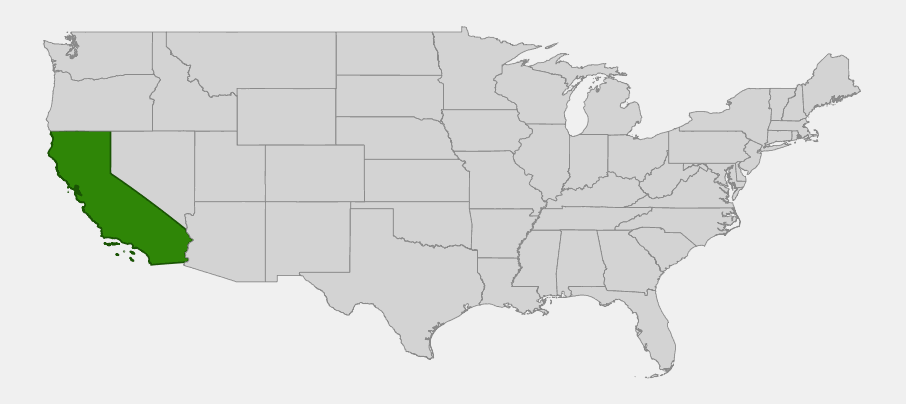
Fragrant pitcher sage is endemic to Southern California. It is found on the northern Channel Islands, in the Santa Monica Mountains, including the area around Triunfo Pass, and in the San Gabriel Mountains, with additional reports from Ventura County. It does not occur outside the state.
It grows at elevations from about 200 to 3,600 feet, on rocky slopes and ridgetops, in dry ravines, and in openings within chaparral. Because so much of its range lies near the Los Angeles metropolitan area, it is threatened by development and by changes in the natural fire regime.
The California Native Plant Society lists it in Rare Plant Rank 4.2, its watch list for plants of limited distribution that are fairly threatened in California. It is not listed as threatened or endangered by the state or federal government.
📋 Regional plant lists featuring Fragrant Pitcher Sage: California & Nevada
Growing & Care Guide
Fragrant pitcher sage is offered by California native plant nurseries and botanic gardens and is one of the easiest pitcher sages to grow in Southern California gardens. It is valued for its scent, long bloom season and tolerance of dry shade.
Light
Part shade to full sun. Near the coast it takes full sun; inland, give it afternoon shade or the dappled shade of oaks or larger shrubs. In deep shade it grows lanky and flowers less.
Soil & Water
It needs well-drained soil and does well on rocky or sandy slopes. Water regularly during its first summer, then water deeply about once a month or less in summer, or not at all near the coast. Too much summer water in heavy soil can lead to root rot.
Planting Tips
Plant in fall or winter so that winter rains help it establish. Space plants 3 to 4 feet apart. It works well in dry-shade gardens under oaks, on slopes, and in mixed chaparral plantings with sages, buckwheats and manzanitas.
Pruning & Maintenance
Cut it back by about a third after flowering, or in late fall, to keep it compact and encourage new growth. Older, leggy plants respond well to harder pruning in winter.
Propagation
Grow it from fresh seed sown in fall or from softwood or semi-hardwood cuttings taken in spring and summer. Use seed or cuttings from garden plants, not from wild populations.
Landscape Uses
- Dry-shade gardens: under oaks and on north-facing slopes
- Fragrance gardens: along paths where the leaves can be brushed
- Hummingbird and bee gardens: long spring bloom season
- Chaparral and habitat gardens: with sages, buckwheats, toyon and ceanothus
Wildlife & Ecological Value
Fragrant pitcher sage is part of the diverse shrub community of Southern California chaparral and supports many pollinators.
For Pollinators
Its bell-shaped flowers are visited by bumblebees, carpenter bees and other native bees, and by hummingbirds, which take nectar from the hanging flowers.
For Birds
Hummingbirds feed at the flowers, and the shrub provides cover for small chaparral birds such as wrentits, towhees and sparrows.
For Mammals
Its aromatic foliage is generally avoided by deer. Small mammals use the shrub for cover.
Ecosystem Role
Like many chaparral shrubs, it is adapted to a landscape shaped by periodic fire, and pitcher sages often become conspicuous in the open conditions after a burn. Too-frequent fires, however, can eliminate it and other native shrubs and allow invasive grasses to take over.
Cultural & Historical Uses
The genus Lepechinia honors Ivan Lepechin, an 18th-century Russian naturalist and explorer. Fragrant pitcher sage was first described as Sphacele fragrans by Edward Lee Greene in the late 1800s and later moved to Lepechinia.
Pitcher sages are found from the western United States through Mexico and Central America to the Andes and Hawaii. Several California species are grown in native gardens for their scent and flowers.
Fragrant pitcher sage is grown at Southern California botanic gardens, including the Santa Barbara Botanic Garden, where visitors can see it in bloom in spring. Its long cultivation in native plant nurseries means gardeners can enjoy it without disturbing wild populations.
Frequently Asked Questions
Why is it called pitcher sage?
After flowering, the cup-shaped calyx around each flower enlarges and becomes slightly inflated, holding the seeds like a small pitcher.
Is fragrant pitcher sage a true sage?
No. It belongs to the mint family like true sages (Salvia), but it is in a different genus, Lepechinia. Its flowers are larger and bell-shaped and hang in loose clusters.
Where does it grow naturally?
Only in Southern California, on the northern Channel Islands and in the Santa Monica and San Gabriel Mountains, in chaparral, rocky slopes and dry ravines.
Is it rare?
It has a limited range and is on the California Native Plant Society’s watch list (Rare Plant Rank 4.2), but it is not listed as threatened or endangered.
Does it need summer water?
Very little once established. Near the coast it can be grown without summer water; inland, a deep watering about once a month helps.

Looking for a nursery that carries Fragrant Pitcher Sage?
Browse our native plant nursery directory: California

