
Native Yellow Purslane (Portulaca lutea)
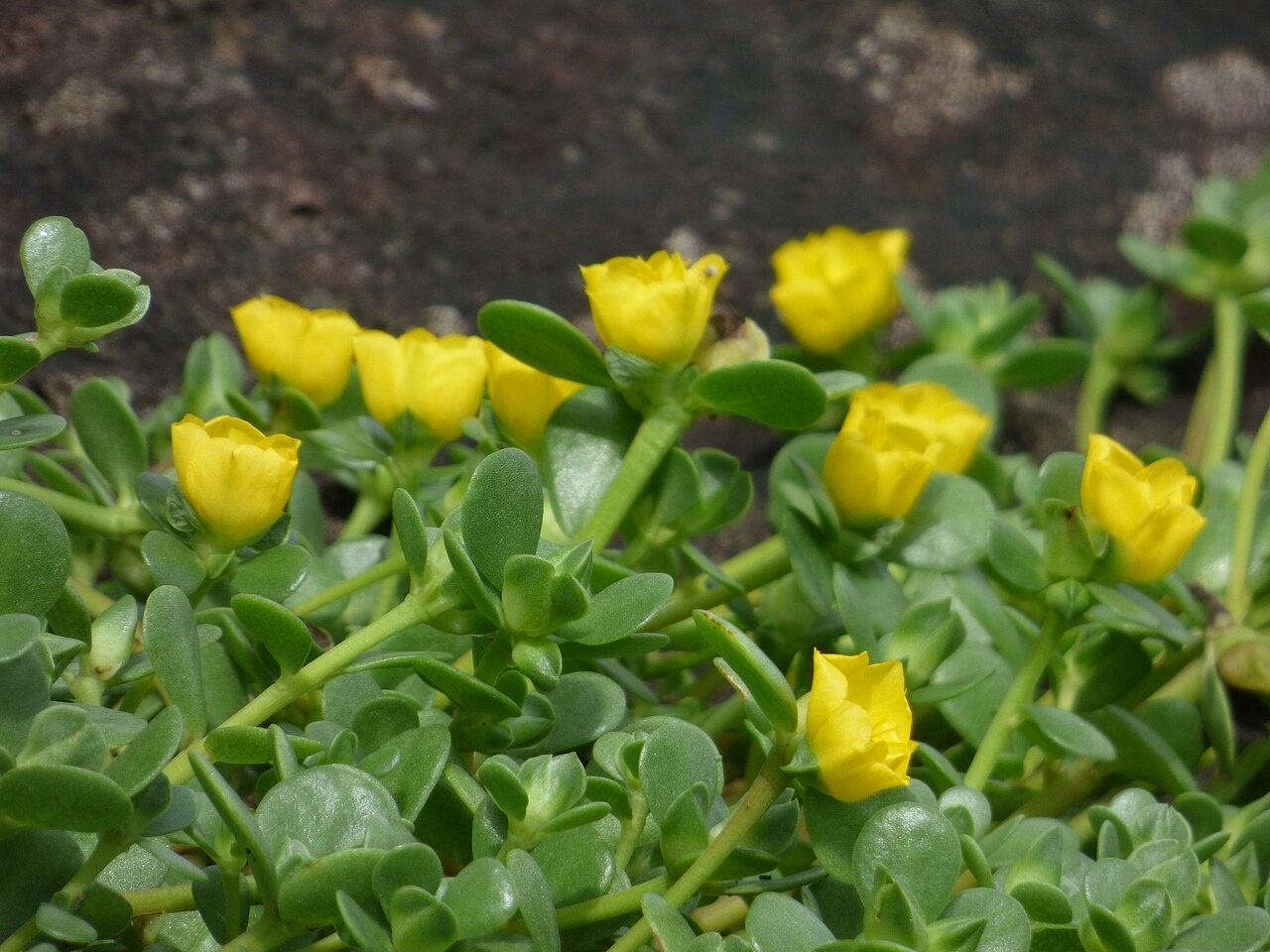
Portulaca lutea, the Native Yellow Purslane, known in Hawaiian as ʻihi, is a succulent coastal plant native to Hawaiʻi and widespread across the islands of the tropical Pacific. In Hawaiʻi it grows on rocky shores, lava, coral rubble and sand dunes, as well as on small offshore islets, from sea level to a few hundred feet in elevation.
It is a low, sprawling perennial with thick, fleshy, oval leaves, reddish young stems that become woody and gray with age, and showy, bright yellow flowers about an inch across. It is indigenous rather than endemic, meaning it is native to Hawaiʻi but also grows naturally elsewhere in the Pacific, carried between islands by ocean currents.
ʻIhi is an excellent, drought- and salt-tolerant groundcover for coastal native gardens in Hawaiʻi and containers in frost-free climates. This guide covers how to identify it, where it grows, how to grow it and its role in coastal ecosystems.
Identification
Native yellow purslane is a mat-forming succulent with thick, rounded leaves, stout stems that become gray and woody, and clusters of one to three bright yellow flowers at the stem tips.
Stems & Leaves
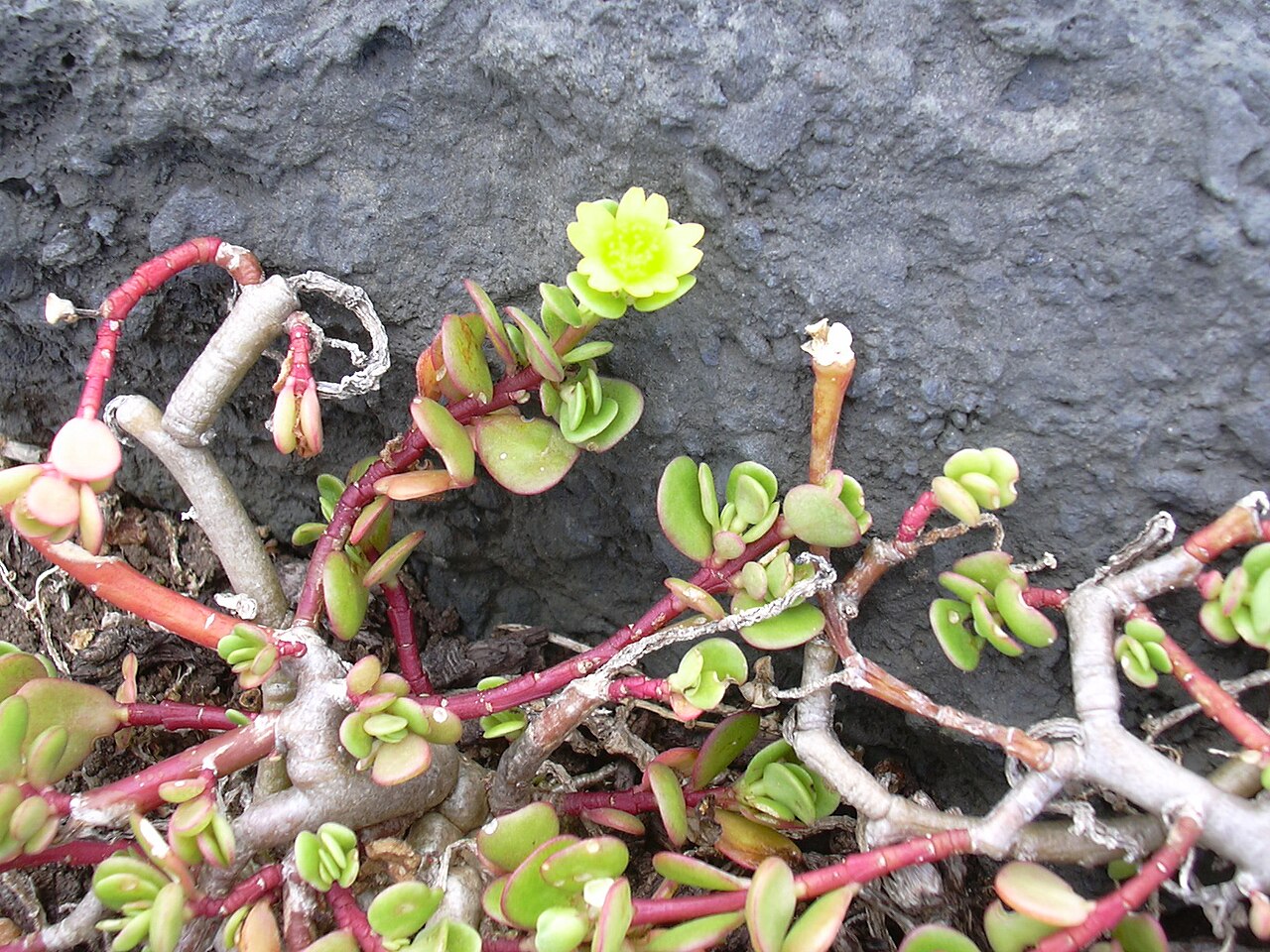
The stems are thick and fleshy, sprawling or rising to about 4 to 12 inches, and spread into mats a foot or more across. Young stems are green to reddish; older stems become woody with gray, papery bark. The leaves are opposite to nearly opposite, oval to rounded, fleshy and smooth, up to about 1 inch long, with small tufts of hairs at the leaf bases.
Flowers
One to three flowers sit at the tips of the stems, surrounded by leaves. Each is about ¾ to 1¼ inches across, with five bright yellow petals about ½ inch long and many yellow stamens. Flowers open in sunny mornings and close later in the day, and plants bloom through much of the year.
Fruit
The fruit is a small, egg-shaped capsule that opens by a lid (the top splits off like a cap) to release many tiny, black seeds.
Look-alikes
Common purslane (Portulaca oleracea), a widespread weed, has smaller flowers, thinner stems without gray bark and smaller, wedge-shaped leaves. The endemic ʻIhi (P. molokiniensis) of Molokini and nearby areas has stout, upright stems with tightly stacked, round leaves. Sea Purslane has pink flowers and narrower leaves.
Quick Facts
| Scientific Name | Portulaca lutea Sol. ex G. Forst. |
| Family | Portulacaceae (purslane family) |
| Plant Type | Succulent perennial groundcover |
| Mature Height | 4–12 in |
| Mature Spread | 1–3 ft |
| Growth Rate | Moderate |
| Sun Exposure | Full sun |
| Water Needs | Very low; drought and salt tolerant |
| Soil Type | Rocky, sandy, coral or lava; very well-drained |
| Soil pH | About 6.5–8.5 |
| Bloom Time | Much of the year |
| Flower Color | Bright yellow |
| Fall Color | None (evergreen) |
| Fruit | Small capsule opening by a lid; tiny black seeds |
| Deer Resistant | Moderate |
| USDA Hardiness Zones | 10–12 |
Native Range
Native yellow purslane is indigenous to the Hawaiian Islands and is also native across much of the tropical Pacific, including Polynesia and Micronesia. USDA PLANTS lists it as native to Hawaiʻi and to the U.S. Pacific islands, including Guam and the U.S. Minor Outlying Islands.
In Hawaiʻi it is found on all of the main islands except Kauaʻi, as well as on many offshore islets. It grows in coastal strand, on rocky points, sea cliffs, lava flows, coral rubble and dunes, mostly from sea level to about 1,300 feet.
Like many coastal plants, it was spread among Pacific islands by the sea: stem fragments tolerate salt water and root readily where they wash ashore. Coastal development and invasive plants have reduced it in many places, and it is often most abundant today on protected offshore islets.
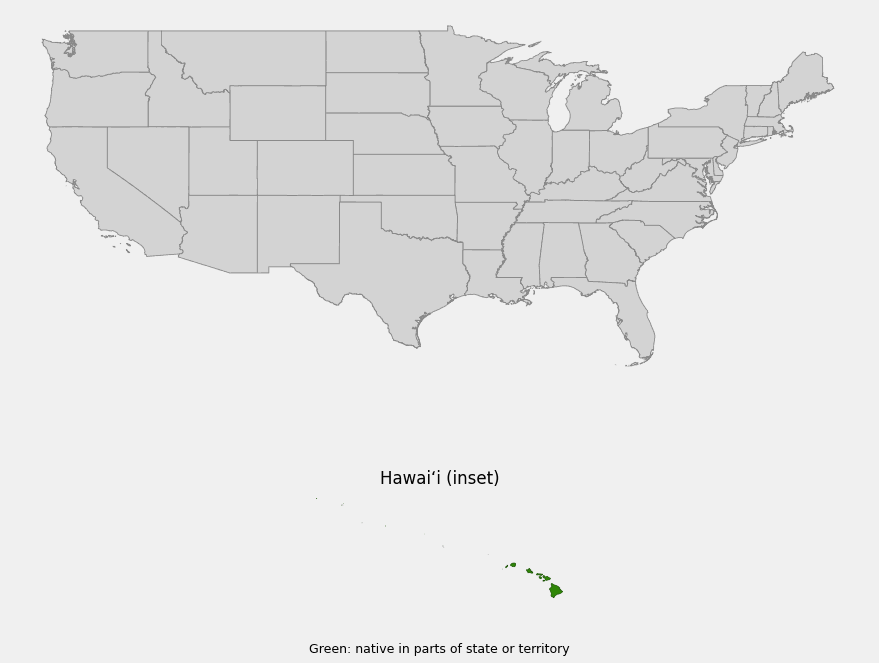
📋 Regional plant lists featuring Native Yellow Purslane: Hawaii
Growing & Care Guide
ʻIhi is grown by native plant nurseries in Hawaiʻi and is one of the easiest native groundcovers for hot, dry, salty coastal sites. It suits zones 10 to 12 and makes a good container plant elsewhere if brought indoors before frost.
Light
Full sun. In shade it becomes leggy and flowers poorly.
Soil & Water
Plant it in very well-drained sandy, rocky, cinder or coral soil. It is highly drought tolerant and salt tolerant; water only occasionally once established. Overwatering and poor drainage cause rot.
Planting Tips
Space plants 1 to 2 feet apart as a groundcover, or use them in rock gardens, between pavers, on walls and in containers. It combines well with ʻilima, naupaka and other coastal natives.
Pruning & Maintenance
Little care is needed. Trim leggy stems to keep it compact. Watch for mealybugs and scale, and avoid fertilizing heavily.
Propagation
Stem cuttings root very easily: let them dry for a day, then set them in a sandy mix. It also grows from seed sown on the surface of a well-drained mix.
Landscape Uses
- Coastal native gardens: salt- and drought-tolerant flowering groundcover
- Rock gardens and walls: fleshy mats with yellow flowers
- Containers: easy succulent for sunny patios
- Coastal restoration: native cover for strand and islet plantings
Wildlife & Ecological Value
ʻIhi is part of Hawaiʻi’s native coastal plant community, which supports native insects and seabirds.
For Pollinators
Its yellow flowers are visited by bees, flies and other insects. Native coastal plants like ʻihi help support Hawaiʻi’s native yellow-faced bees (Hylaeus), which depend on coastal vegetation.
For Birds
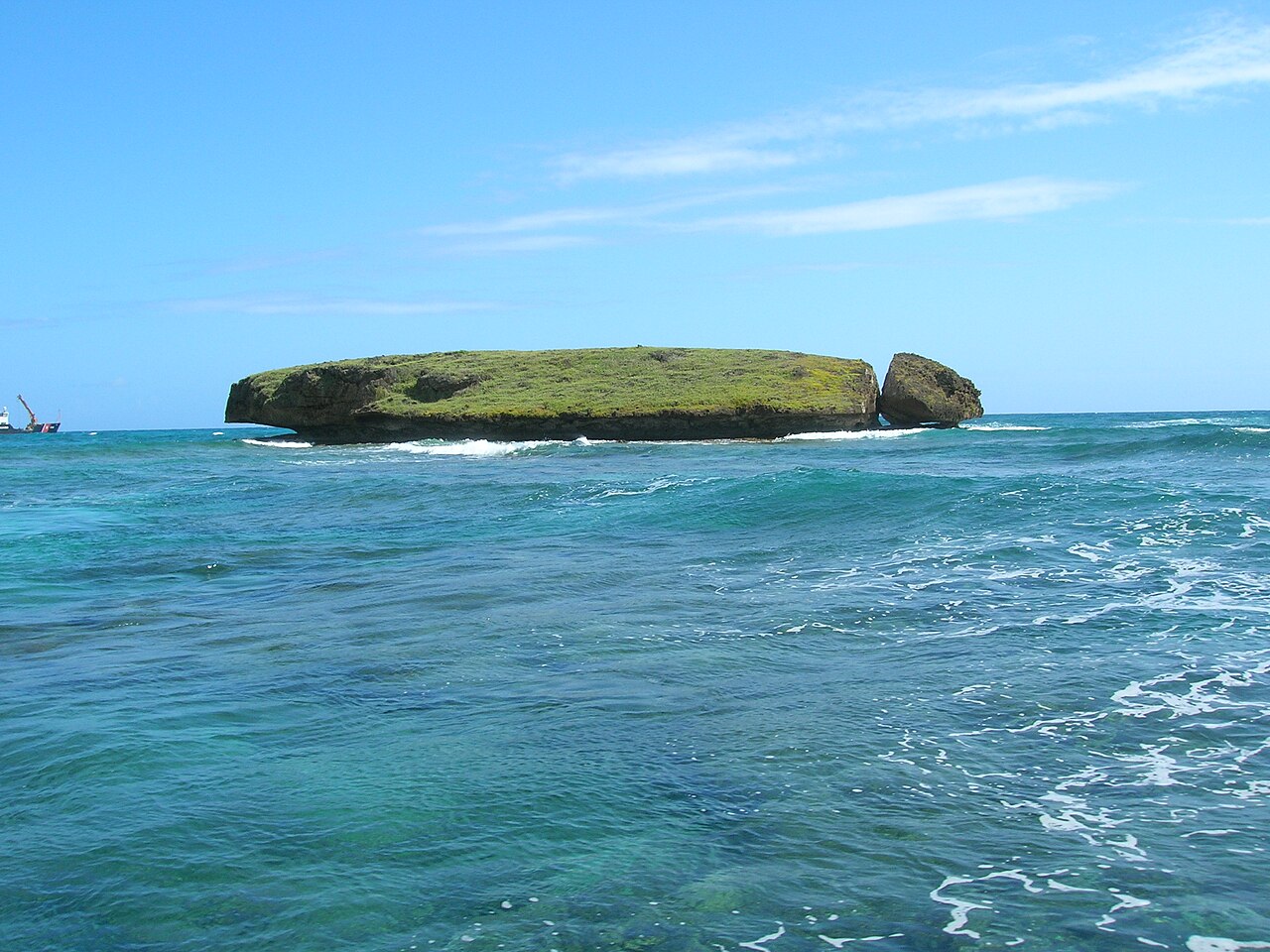
On offshore islets, native coastal plants like ʻihi help hold soil and provide cover around the nesting areas of seabirds such as shearwaters and noddies.
For Mammals
Hawaiʻi has very few native land mammals, and the plant is of little importance to them.
Ecosystem Role
As a low, spreading succulent, it helps stabilize sand, coral rubble and thin soils on exposed coasts, and it is one of the plants that colonizes new or disturbed coastal ground.
Cultural & Historical Uses
The species was described by Georg Forster, a naturalist on Captain James Cook’s second Pacific voyage, using a name coined by Daniel Solander. The name lutea means “yellow.”
The Hawaiian name ʻihi is shared by several native purslanes, including the endemic ʻihi of Molokini (P. molokiniensis) and other species found only in Hawaiʻi.
Purslanes have long been eaten in many cultures, but native coastal populations in Hawaiʻi are limited and should be left undisturbed; grow your own from nursery plants instead.
Frequently Asked Questions
Is native yellow purslane native to Hawaiʻi?
Yes. It is indigenous to Hawaiʻi and also native to many other Pacific islands, spread naturally by the ocean.
What is the Hawaiian name for native yellow purslane?
It is called ʻihi, a name shared with several other native Hawaiian purslanes.
How do I grow native yellow purslane?
Plant it in full sun in very well-drained sandy or rocky soil, water sparingly, and propagate easily from stem cuttings.
How is it different from common purslane?
Native yellow purslane has larger flowers, thicker leaves and stems that become woody with gray bark. Common purslane is a smaller, weedy plant.
Where can I see native yellow purslane in the wild?
On rocky coasts, lava shorelines and offshore islets on several of the main Hawaiian Islands.

Looking for a nursery that carries Native Yellow Purslane?
Browse our native plant nursery directory: Hawaii

