
Santa Cruz Striped Agave (Agave parviflora)
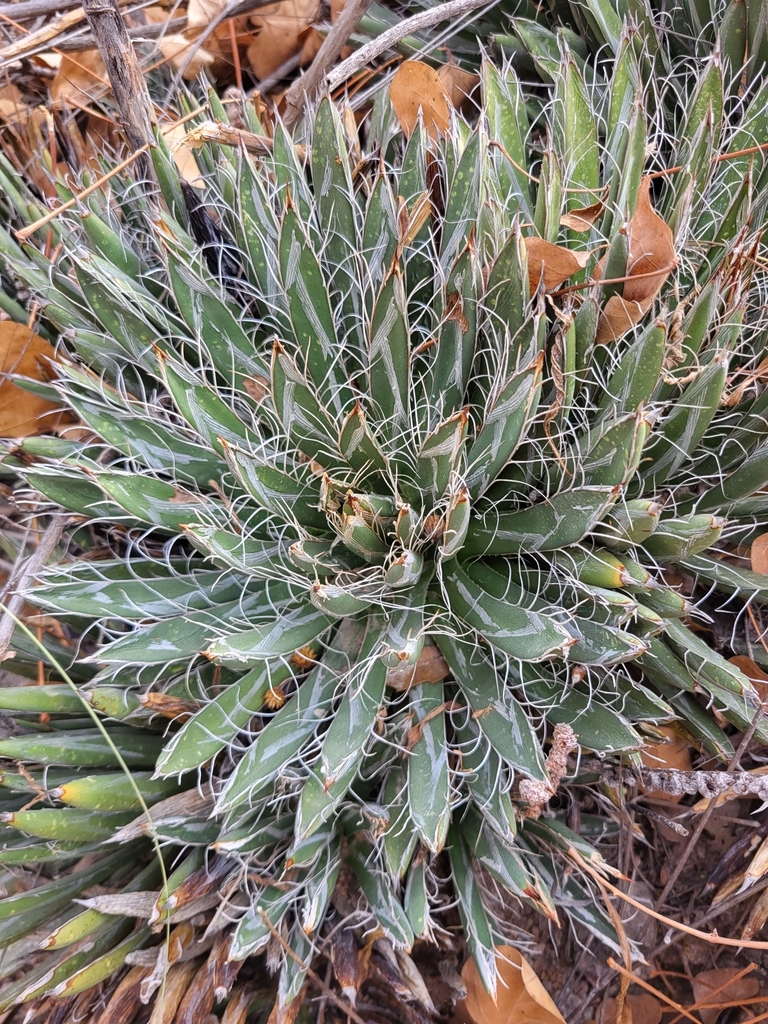
Agave parviflora, known as Santa Cruz Striped Agave, smallflower century plant or small-flower agave, is the smallest agave native to the United States. Its compact rosette is usually only 4 to 6 inches tall and 6 to 8 inches across, made of stiff, dark green leaves marked with crisp white lines and edged with curly white threads. When it finally blooms, after many years, it sends up a slender spike 3 to 7 feet tall lined with small pale yellow flowers.
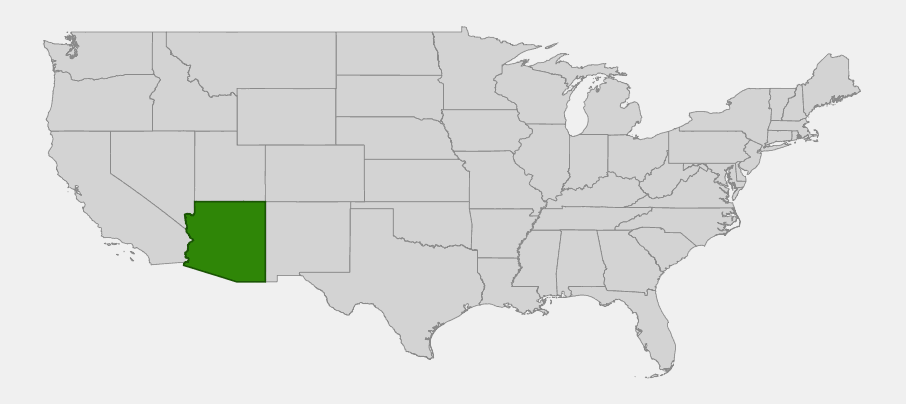
In the wild it is a rare plant of the borderlands. In the United States it grows only in southern Arizona, in Santa Cruz and Pima counties, and it continues south into Sonora and Chihuahua, Mexico. It is not federally listed, but the U.S. Fish and Wildlife Service has tracked the typical subspecies as a species of concern, it is protected as Highly Safeguarded under the Arizona Native Plant Law, and its wild populations have been reduced by collectors. Never dig or collect it from the wild.
In gardens, nursery-propagated plants are popular for containers, rock gardens and small desert landscapes. This guide covers identification, range, conservation status, and how to grow this small agave responsibly, including a safety note about its sap and spines.
Identification
Its tiny size and white-threaded, white-striped leaves set Santa Cruz striped agave apart from every other agave in Arizona.
Leaves & Rosette
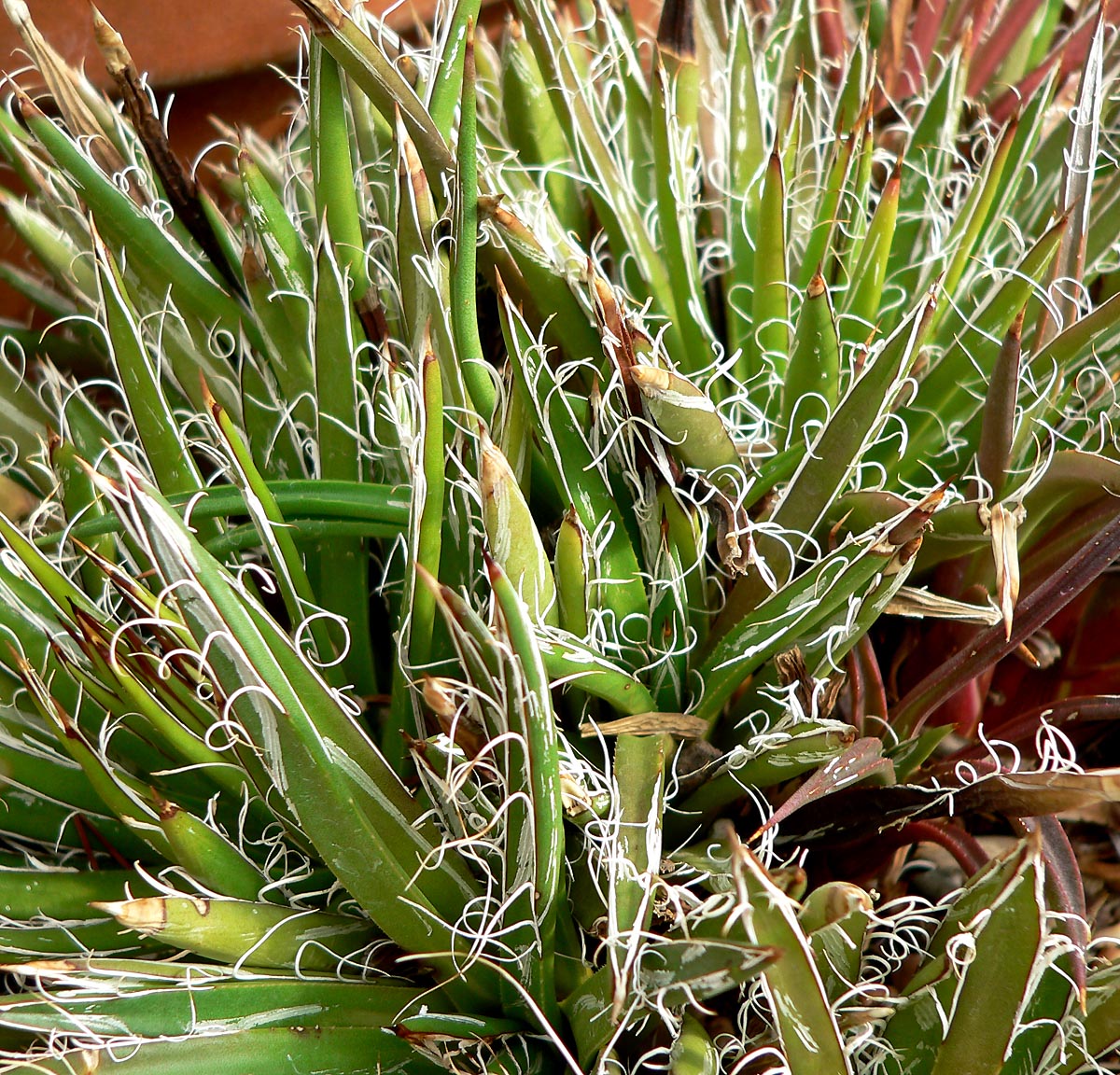
A small, dense rosette of 20 to 40 or more stiff leaves, typically 2½ to 4 inches long and about ⅜ inch wide. The leaves are dark green and narrowly lance-shaped, tapering to a short, sharp, dark terminal spine. The upper surface carries conspicuous white lines, called bud prints, left where developing leaves pressed against each other in the bud. The leaf edges have no teeth; instead, they shed fine white fibers that curl away from the margin.
Offsets
Plants often produce offsets (pups) around the base, forming small clusters over time. Each rosette flowers only once and then dies, but its pups carry on the clump.
Flowers
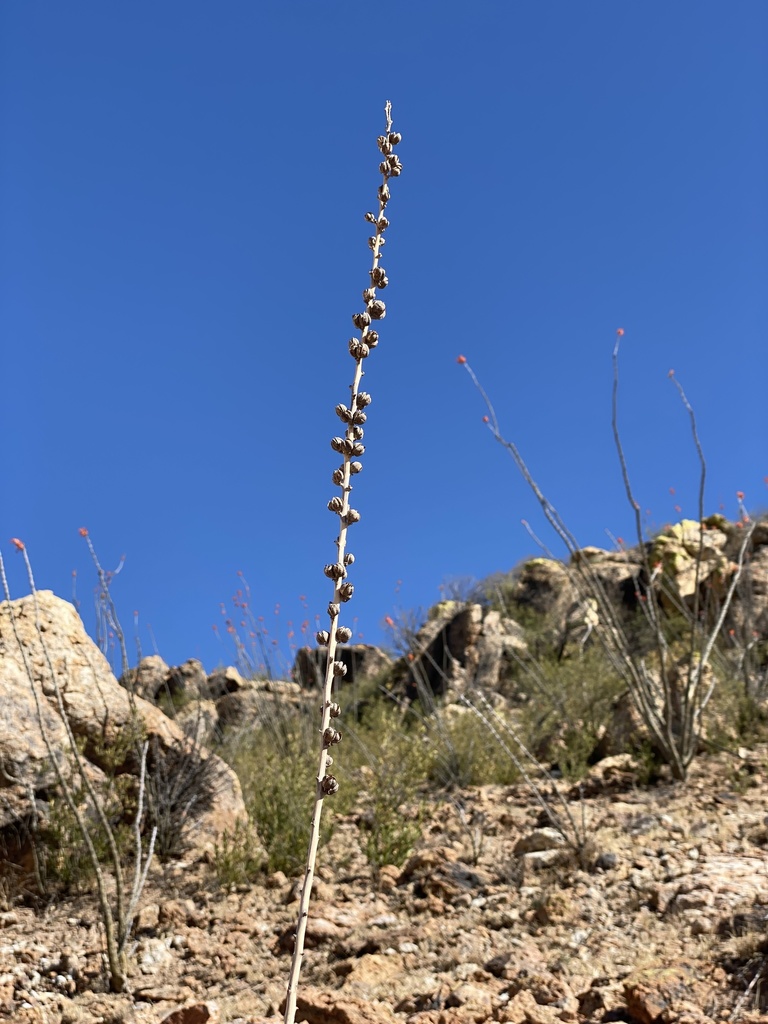
After roughly 10 to 15 years the rosette produces a narrow, unbranched flower spike, about 3 to 7 feet tall. Its upper part is lined with clusters of small, tubular, pale yellow flowers, sometimes tinged with red, about ½ to 1 inch long, which open from late spring into summer. The species name parviflora means “small-flowered.”
Fruit & Look-alikes
The fruit is a small, oval capsule about ¼ to ⅜ inch long, with flat black seeds. Its closest relatives in Mexico are other small, thread-leaved agaves such as Agave filifera and Agave schidigera, which are larger. In Arizona, Shin Dagger also has marginal threads, but its leaves are longer, narrower and yellow-green, and it forms large clumping colonies. Parry’s Agave and Palmer Agave are far larger, with toothed leaf edges.
Quick Facts
| Scientific Name | Agave parviflora Torr.; U.S. plants are ssp. parviflora |
| Family | Asparagaceae (formerly Agavaceae) |
| Plant Type | Small succulent perennial; each rosette flowers once (monocarpic) |
| Mature Height | 4–6 in rosette; flower stalk 3–7 ft |
| Mature Spread | 6–8 in per rosette; small clumps from offsets |
| Growth Rate | Slow |
| Sun Exposure | Full sun to light shade |
| Water Needs | Low; drought tolerant once established |
| Soil Type | Rocky, gravelly, fast-draining soils |
| Soil pH | Neutral to slightly alkaline |
| Bloom Time | May–August, after many years of growth |
| Flower Color | Pale yellow, sometimes tinged red |
| Fall Color | Evergreen |
| Fruit | Small oval capsule with flat black seeds |
| Deer Resistant | Yes; spiny and fibrous |
| USDA Hardiness Zones | About 8–11 (tolerates brief cold near 15°F if kept dry) |
Native Range
USDA PLANTS lists Santa Cruz striped agave as native only in Arizona. There it is confined to the far south of the state, in Santa Cruz and Pima counties near the Mexican border, where it grows in rolling semi-desert grasslands and oak woodlands of the Sky Islands region. It continues south into Sonora and Chihuahua, Mexico, where botanists recognize additional subspecies.
In Arizona it is found on open, rocky slopes and ridges, typically at about 3,000 to 5,000 feet in elevation, among bunchgrasses, small shrubs and scattered oaks. The plants are so small that they are easy to overlook among the grasses and rocks. NatureServe counts a few dozen occurrences across its whole range, some of them on protected land such as Buenos Aires National Wildlife Refuge.
Its main threats are collecting for the horticultural trade, which removed many plants from accessible sites, along with trampling and grazing by cattle, road building and mining. Because nursery-propagated plants are widely available, there is no reason to take plants from the wild.
📋 Regional plant lists featuring Santa Cruz Striped Agave: Arizona & New Mexico
Growing & Care Guide
Santa Cruz striped agave is easy to grow in a container or a well-drained rock garden, as long as it gets plenty of light and never sits in wet soil. Buy only nursery-propagated plants from a reputable grower. Wild plants are protected under Arizona law, and collecting them has already harmed native populations.
Safety note: like other agaves, its sap can irritate skin and eyes, and its leaves end in sharp spines. Wear gloves and eye protection when handling or dividing it, wash off any sap promptly, and keep children and pets from chewing the leaves.
Light
Full sun to light afternoon shade. In the low deserts of Arizona and California, a little afternoon shade prevents sunburn; in cooler climates, give it the sunniest spot available. Indoors, it needs a bright south- or west-facing window or grow lights.
Soil & Water
Use a gritty, fast-draining mix, such as cactus soil with extra pumice, perlite or decomposed granite. Water deeply but only when the soil has dried out, more often in the summer growing season and very little in winter. Soggy soil leads to root rot, which also attracts the agave snout weevil.
Planting Tips
Outdoors, it suits rock gardens, slopes, gravel beds and the edges of paths, where its small size can be appreciated, in about zones 8 to 11. In colder or wetter climates, grow it in a clay pot and bring it into a bright, frost-free place for winter. Plant the rosette at the same depth it was growing, with gravel around the crown.
Pruning & Maintenance
Very little care is needed. Remove dead lower leaves if desired. After a rosette blooms and dies, cut out the old rosette carefully and let the surrounding pups fill in. Watch for the agave snout weevil, whose larvae can rot the heart of the plant.
Propagation
The easiest method is to remove pups with some roots attached, let them dry for a few days, and pot them in dry, gritty soil. It can also be grown from fresh seed, which germinates readily in warm conditions. Use only cultivated plants or seed, never material from wild populations.
Landscape Uses
- Containers: a classic small agave for pots, dish gardens and sunny patios
- Rock and gravel gardens: pairs well with small cacti and native bunchgrasses in desert landscapes
- Pollinator gardens: its flower spikes attract bees and hummingbirds in summer
- Conservation plantings: nursery-grown plants reduce demand for wild-collected ones
Wildlife & Ecological Value
Although it is small, Santa Cruz striped agave produces a generous flower spike that feeds local pollinators for weeks.
For Pollinators
The small yellow flowers produce nectar and pollen for native bees, including bumblebees, and attract hummingbirds. Because each rosette blooms only once, a flowering plant is a notable event in its grassland habitat.
For Birds
Hummingbirds visit the flowers, and small birds may use the tall flower stalk as a perch or forage for insects on it. Seed-eating birds and rodents eat some of the seeds.
For Mammals
The spiny, fibrous leaves deter most browsers, though cattle trampling and grazing can damage plants. Rodents may gnaw flower stalks and young rosettes.
Ecosystem Role
It is part of the diverse succulent and grass community of the Sky Islands borderlands. The rosettes help hold thin, rocky soils, and the plant’s presence reflects healthy, lightly disturbed grassland and woodland slopes.
Cultural & Historical Uses
The American botanist John Torrey described Agave parviflora in 1859, in the botanical report of the U.S. and Mexican Boundary Survey, from plants collected in the borderlands of what is now southern Arizona and Sonora. The common name refers to Santa Cruz County, Arizona, where many U.S. populations grow, and to the white stripes on its leaves.
Like other agaves, it has been a source of food in its native region: the heart of the plant can be roasted, and NatureServe notes that it has been used for food and for mescal. Its tiny size made it far less important than larger agaves, however, which were the main food and fiber plants for many Indigenous peoples of the Southwest.
Its neat size and striking leaves made it a favorite of succulent collectors worldwide, and it has received the Royal Horticultural Society’s Award of Garden Merit. That popularity led to illegal collecting from wild Arizona populations, which is why buying nursery-propagated plants matters.
Frequently Asked Questions
Is Santa Cruz striped agave endangered?
It is not federally listed under the Endangered Species Act, but the U.S. Fish and Wildlife Service has tracked the Arizona subspecies as a species of concern. It is protected as Highly Safeguarded under the Arizona Native Plant Law, so it may not be collected from the wild without a permit.
How big does it get?
It is the smallest agave in the United States. The rosette is usually 4 to 6 inches tall and 6 to 8 inches wide, although the flower stalk can reach 3 to 7 feet.
Does it die after flowering?
Yes. Each rosette blooms once, usually after 10 to 15 years, and then dies. Most plants have produced pups by then, which continue to grow.
Is agave sap dangerous?
Agave sap can irritate the skin and eyes, and the leaf tips are sharp. Wear gloves and eye protection when handling it, wash off sap promptly, and keep pets and children from chewing on the leaves.
Can it be grown indoors?
Yes, in a very bright window or under grow lights, in a small clay pot with gritty, fast-draining soil. Water only when the soil is completely dry, and give it a cooler, drier rest in winter.

Looking for a nursery that carries Santa Cruz Striped Agave?
Browse our native plant nursery directory: Arizona

