
Kīlauea Hau Kuahiwi (Hibiscadelphus giffardianus)
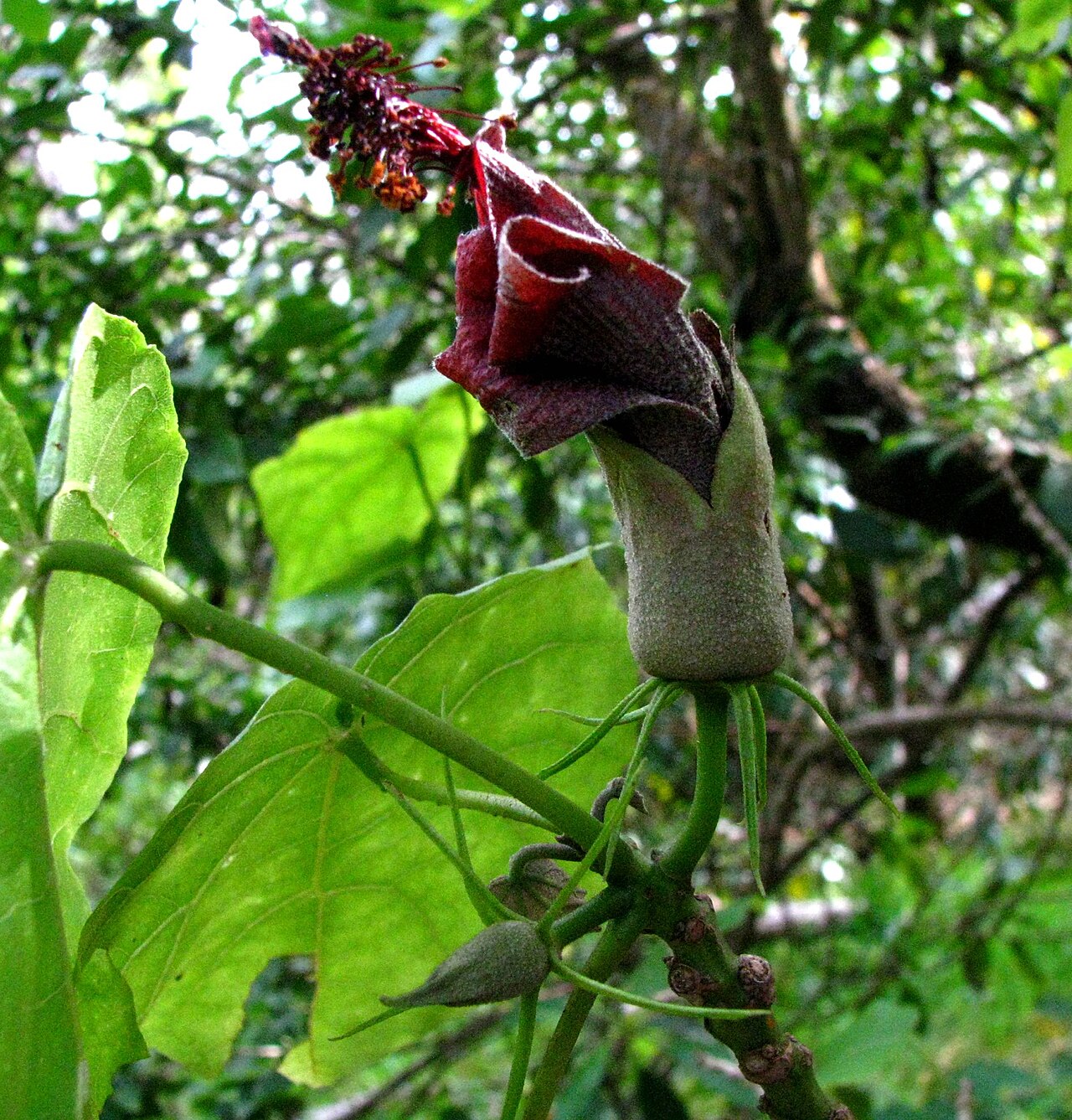
Kīlauea hau kuahiwi (Hibiscadelphus giffardianus) is a small tree in the mallow family with large, rounded leaves and strange, curved flowers that never open fully. It is endemic to Hawaiʻi Island and is one of the rarest trees in the world. Hau kuahiwi means “hau of the mountains,” after its resemblance to the lowland hau tree, and the generic name Hibiscadelphus means “brother of hibiscus.”
Only one wild tree of this species was ever found by botanists. Joseph Rock discovered it in 1911 in Kīpuka Puaulu, an island of old forest surrounded by younger lava flows on the slopes of Mauna Loa, now inside Hawaiʻi Volcanoes National Park. That tree died in 1930, but cuttings and grafts had been saved. Every Kīlauea hau kuahiwi alive today descends from that single tree, and the species is considered extinct in the wild as a naturally reproducing population, surviving through cultivation and replanting in the park.
It is listed as Endangered under the federal Endangered Species Act (listed in 1996). It is not a typical garden plant, but it can be grown in cool, moist upland conditions in Hawaiʻi, and botanical gardens and the National Park Service keep it alive. This guide covers how to recognize it, its remarkable history, and what it needs in cultivation.
Identification
Kīlauea hau kuahiwi is hard to confuse with other trees in its forest. Look for a slender small tree with very large, rounded, hibiscus-like leaves and, in season, curved tubular flowers hanging among the leaves.
Growth Habit & Bark
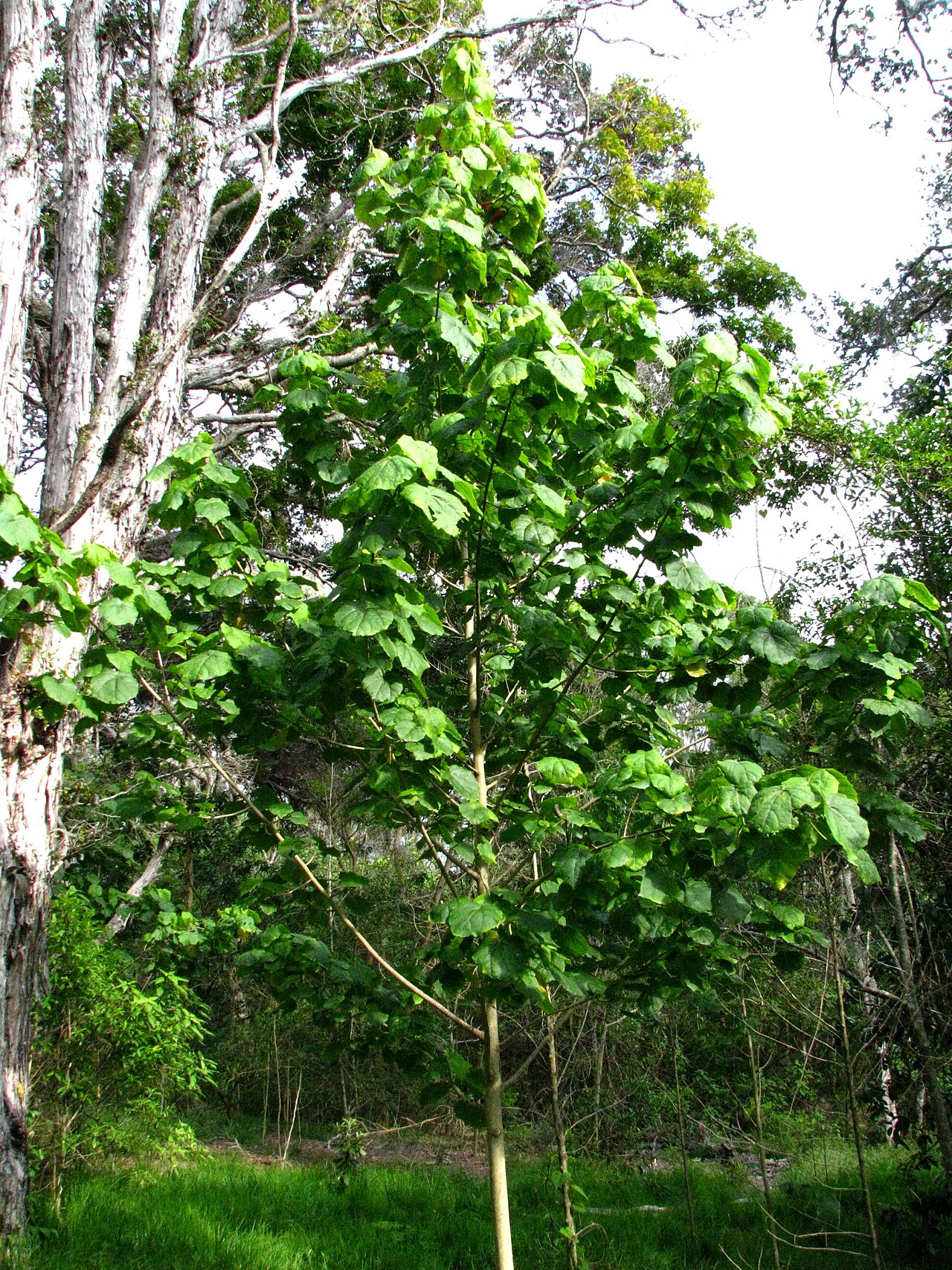
It is a small tree, usually 15 to 23 feet tall, with a single straight trunk up to about 1 foot in diameter, smooth pale bark and a fairly open crown. Young trees are slender and sparsely branched.
Leaves
The leaves are alternate, very large and nearly round, with a heart-shaped base and shallow lobes or angles, often as broad as a dinner plate. They are medium green and softly hairy, on long stalks, and give the tree a coarse, tropical look.
Flowers
The flowers are the genus’s most distinctive feature. Each is about 2 inches long, held below a ring of gray-green bracts, with petals that remain wrapped into a curved tube rather than opening flat. The petals are greenish outside and deep maroon to purplish inside, and the staminal column with its red-tipped stigmas protrudes from the tube. The curved shape matches the curved bills of the native honeycreepers that are thought to have pollinated it.
Fruit & Seeds
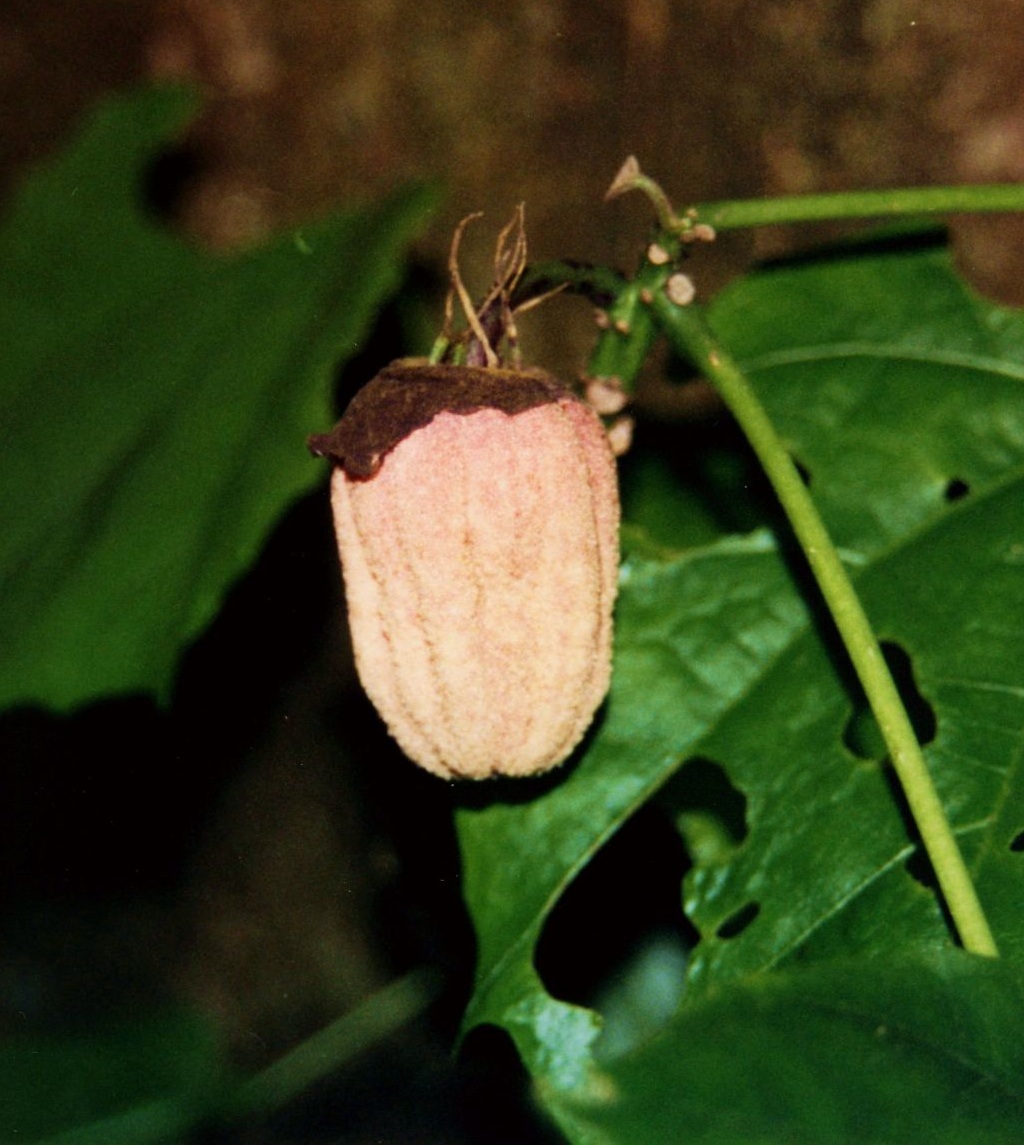
The fruit is a woody, ribbed capsule about 1 to 1.5 inches long that splits to release seeds covered in fine hairs. Few cultivated trees produce viable seed, and no natural regeneration has been observed.
Similar Species
Other Hibiscadelphus species, such as the Hualālai hau kuahiwi (H. hualalaiensis) of North Kona and H. distans of Kauaʻi, look similar but do not grow in the wild at Kīpuka Puaulu. A hybrid between Kīlauea and Hualālai hau kuahiwi, H. ×puakuahiwi, arose after the two were planted together in the park and was later removed to protect the purity of the Kīlauea species. Native hibiscus such as Kokiʻo Keʻokeʻo have flat, open flowers.
Quick Facts
| Scientific Name | Hibiscadelphus giffardianus Rock |
| Family | Malvaceae (mallow family) |
| Plant Type | Small tree; endemic to Hawaiʻi Island |
| Mature Height | 15–23 ft |
| Mature Spread | 8–15 ft |
| Growth Rate | Moderate |
| Sun Exposure | Full sun to part shade |
| Water Needs | Medium; regular moisture |
| Soil Type | Deep, well-drained volcanic soils with organic matter |
| Soil pH | About 5.5–6.5 |
| Bloom Time | Seasonal; timing varies from year to year |
| Flower Color | Greenish outside, maroon to purple inside |
| Fall Color | None; evergreen |
| Fruit | Woody ribbed capsule with hairy seeds |
| Deer Resistant | Unknown; seeds eaten by rats |
| USDA Hardiness Zones | 10–11 (cool upland conditions) |
Native Range
Kīlauea hau kuahiwi is endemic to Hawaiʻi Island, and USDA PLANTS records it only from Hawaiʻi. The single wild tree known to science grew in Kīpuka Puaulu, a kīpuka (an older patch of forest spared by surrounding lava flows) on the eastern slope of Mauna Loa near Kīlauea, at about 3,900 to 4,300 feet elevation.
The habitat is mixed mesic forest on deep, rich volcanic soil, with ʻŌhiʻa Lehua, Koa, mānele (soapberry), Olopua, Māmaki, Kōpiko, pilo, alani, ʻAʻaliʻi and Naio. Hundreds of trees grown from the original tree’s descendants have been planted in Kīpuka Puaulu and nearby Kīpuka Kī by the National Park Service.
The U.S. Fish and Wildlife Service listed Hibiscadelphus giffardianus as Endangered on October 10, 1996. Its decline is linked to the loss of native forest, cattle and pig damage, rats that eat the seeds, and the loss of its honeycreeper pollinators. Because every living plant traces back to one tree, genetic diversity is extremely low.
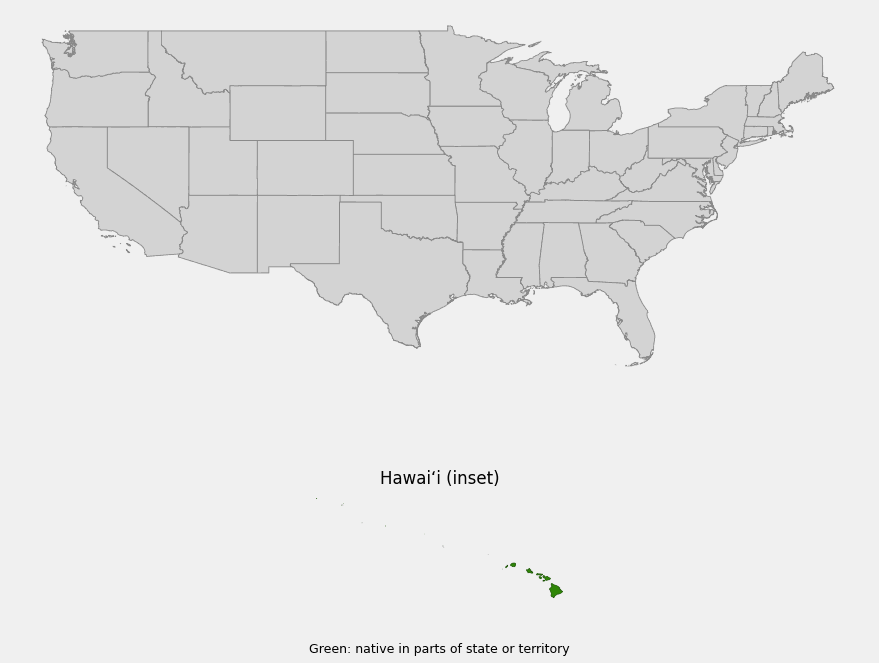
📋 Regional plant lists featuring Kīlauea Hau Kuahiwi: Hawaii
Growing & Care Guide
Kīlauea hau kuahiwi is grown mainly by the National Park Service, botanical gardens and conservation nurseries, and it is rarely offered for sale. If you find one, buy only nursery-propagated plants from a Hawaiʻi native plant nursery; never take cuttings or seed from park trees. Related hau kuahiwi do poorly in hot lowland gardens, and this species is best suited to cool, moist upland sites in Hawaiʻi, roughly 1,000 to 4,000 feet. Hawaiʻi restricts bringing plants in from other states.
Light
Grow it in full sun to part shade. In its forest home it grows in the understory and openings of a fairly open mesic forest, so morning sun with some afternoon shade suits it well in warmer gardens.
Soil & Water
Plant in deep, well-drained soil rich in organic matter. Water regularly so the soil stays evenly moist, and do not let young trees dry out. Mulch helps keep roots cool. Avoid waterlogged sites.
Planting Tips
Plant where the large leaves are sheltered from strong wind, and give the tree room to reach 15 to 20 feet. Protect young plants from slugs, and in rural areas from pigs and cattle. A balanced slow-release fertilizer every few months helps young trees establish.
Pruning & Maintenance
Little pruning is needed beyond removing dead or damaged branches. Watch for black twig borers, which kill twigs and branches: cut out affected twigs below the damage, bag them and put them in the trash. Whiteflies, aphids, spider mites and Chinese rose beetles also attack hau kuahiwi leaves; wash off light infestations and treat heavy ones.
Propagation
Most plants have been propagated by cuttings and grafting, since few trees set viable seed. Seed that is produced can be sown fresh after removing the hairs. Propagation of this endangered species is done by licensed conservation nurseries.
Landscape Uses
- Conservation gardens: an iconic endangered tree for botanical and conservation collections
- Upland native gardens: a bold-leaved small tree for cool, moist gardens
- Forest restoration: replanted in mesic forest kīpuka in Hawaiʻi Volcanoes National Park
- Education: a living example of island evolution and extinction risk
- Specimen tree: a conversation piece with unusual flowers
Wildlife & Ecological Value
Kīlauea hau kuahiwi is a living symbol of how fragile Hawaiian ecosystems are, and of how close a species can come to disappearing.
For Pollinators
The curved, nectar-rich flowers are thought to have evolved for pollination by native Hawaiian honeycreepers with curved bills, and nectar-feeding birds still visit the flowers. Many of those native birds are now rare or gone from the area.
For Birds
Nectar-feeding birds, both native honeycreepers and introduced species such as the Japanese white-eye, may visit the flowers where trees grow in the park.
For Mammals
Hawaiʻi’s only native land mammal, the Hawaiian hoary bat, forages over the kīpuka forests. Introduced rats eat the seeds, and cattle and pigs once damaged the forest where the tree grew.
Ecosystem Role
As a small tree of the mesic forest, it adds to the layered structure of the kīpuka forest. Its survival depends on people: no seedlings have been found growing on their own, so its future rests on continued planting and protection.
Cultural & Historical Uses
Botanist Joseph Rock named the species in 1911 for Walter M. Giffard, a Hawaiʻi entomologist and naturalist. Rock described the genus Hibiscadelphus from this tree, so the species is also the type of its genus.
Of the handful of Hibiscadelphus species described, several are extinct, and four were only ever known from a single wild tree. The Kīlauea hau kuahiwi survived because the last tree was propagated before it died in 1930, a rare case of a species being kept alive from a single individual.
The Hawaiian name hau kuahiwi, “hau of the mountains,” compares the plant to the hau tree (Talipariti tiliaceum, formerly Hibiscus tiliaceus) of the lowlands, whose bark was a valued source of cordage. Visitors to Hawaiʻi Volcanoes National Park can see replanted trees along the Kīpuka Puaulu loop trail.
Frequently Asked Questions
Is Kīlauea hau kuahiwi extinct in the wild?
Effectively, yes. Only one wild tree was ever known, and it died in 1930. All living trees descend from cuttings and grafts of that tree and have been replanted in Hawaiʻi Volcanoes National Park, but they have not been seen reproducing on their own.
Is it federally protected?
Yes. It has been listed as Endangered by the U.S. Fish and Wildlife Service since October 10, 1996.
Where can I see it?
Replanted trees grow in Kīpuka Puaulu and Kīpuka Kī in Hawaiʻi Volcanoes National Park on Hawaiʻi Island, and a few botanical gardens grow it.
Can I grow it at home?
Only in suitable conditions and only from nursery-propagated stock, which is rarely available. It needs a cool, moist, frost-free upland climate like that of Hawaiʻi’s mesic forests, and it tends to struggle in hot lowland gardens.
Why don’t the flowers open?
The petals of all Hibiscadelphus species stay wrapped in a curved tube. This shape is thought to fit the curved bills of the native honeycreepers that pollinated them.

Looking for a nursery that carries Kīlauea Hau Kuahiwi?
Browse our native plant nursery directory: Hawaii

