
Pāwale (Rumex skottsbergii)
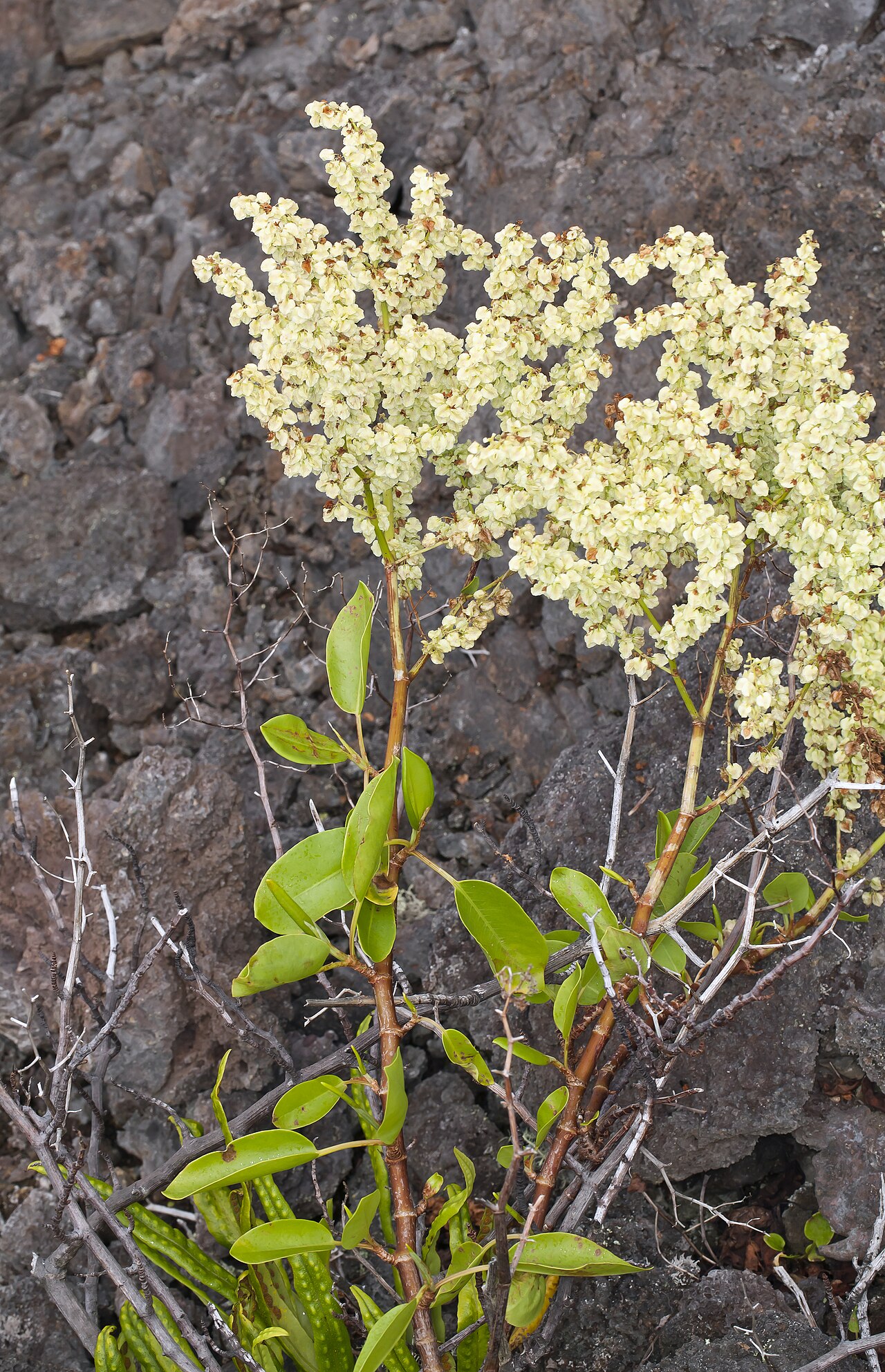
Rumex skottsbergii, known in Hawaiian as pāwale and in English as lava dock, is a native dock found only on Hawaiʻi Island. It is one of the first plants to colonize young lava and cinder around Kīlauea volcano, where its upright, slightly woody stems, bright green leaves and plumes of papery fruits stand out against black rock.
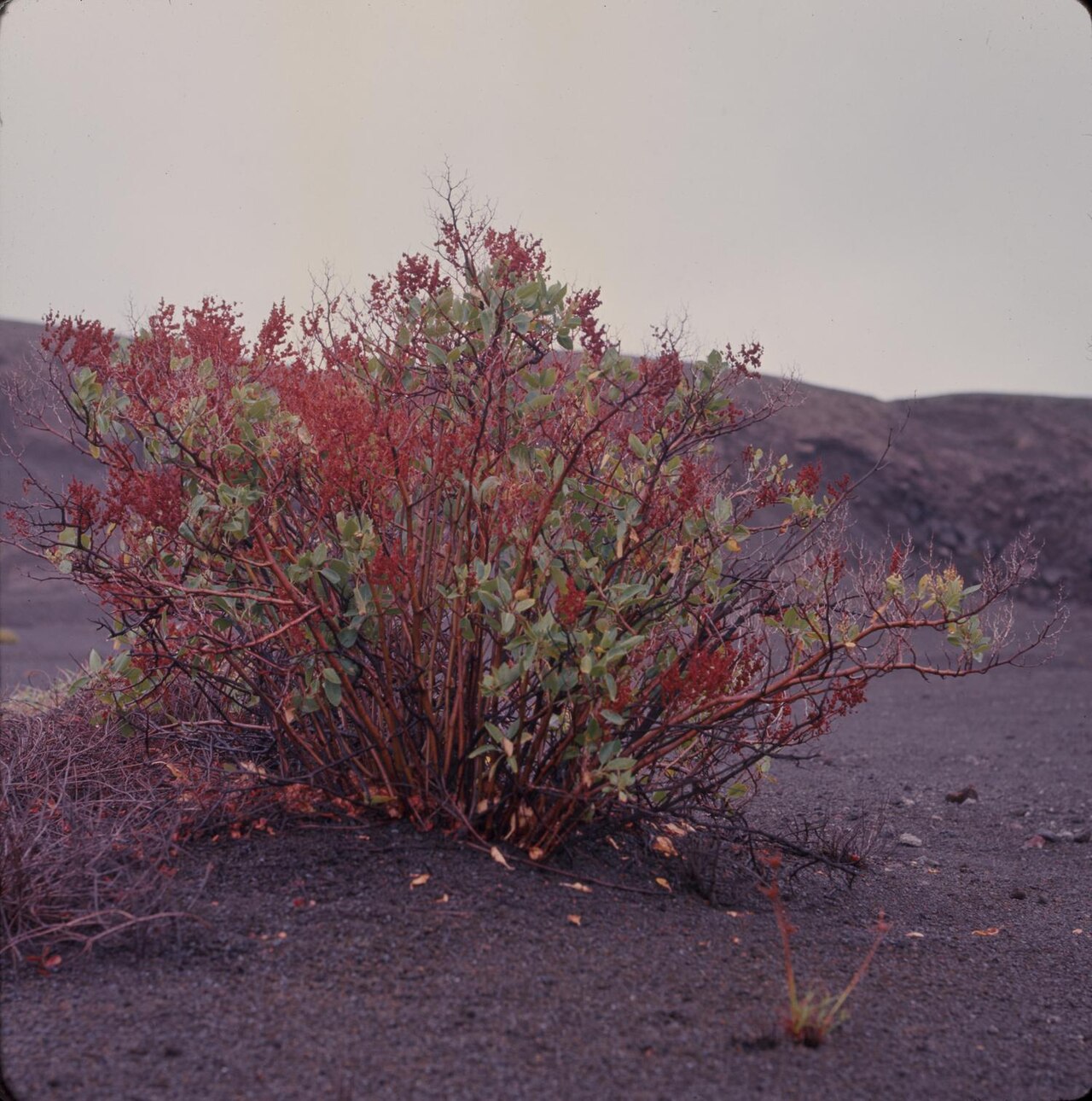
Most people know docks as weeds, but Hawaiʻi has its own native Rumex species that evolved on the islands. Pāwale is a tough, sun-loving subshrub of open lava fields, growing in cracks and cinder where little else can take hold. Its fruits are wrapped in heart-shaped, papery wings that turn from green to rusty red, giving whole lava flows a reddish cast when the plants are in fruit.
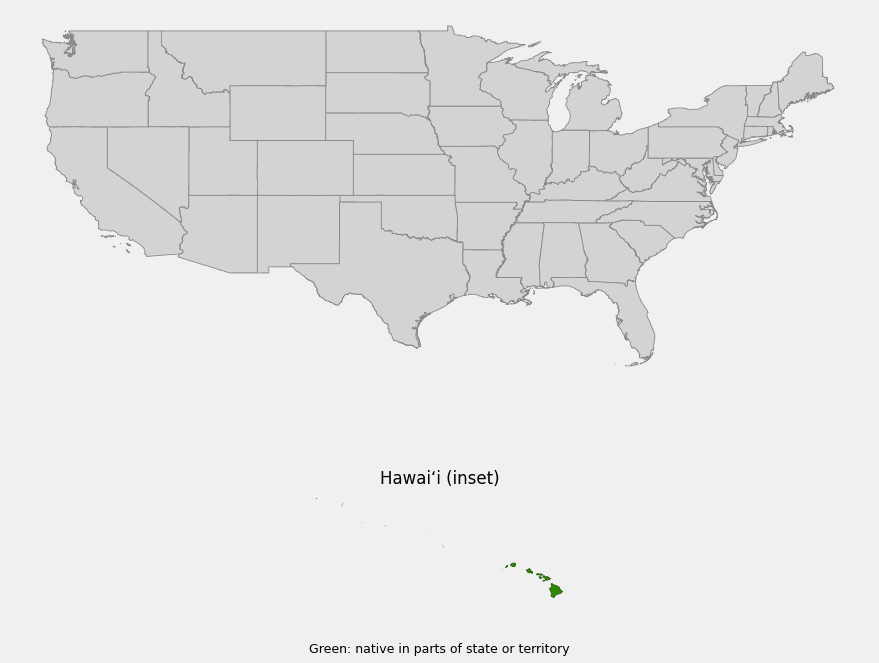
Pāwale is endemic to Hawaiʻi Island and is not federally listed. It is easy to see in Hawaiʻi Volcanoes National Park, and it is a good, drought-tolerant plant for dry, rocky native gardens on the island. This guide covers how to recognize it, where it grows, how to grow it, and its traditional uses.
Identification
Pāwale is the only dock likely to be seen growing on bare lava and cinder around Kīlauea. Introduced weedy docks in Hawaiʻi grow in pastures, roadsides and wet ground, not on young lava.
Growth Habit
Pāwale is an erect, branching perennial that becomes woody at the base, typically about 2 to 3 feet (0.7 to 1 m) tall. The stiff, upright stems are smooth (hairless) and often turn reddish with age. Plants usually grow singly from a crack in the lava or a pocket of cinder, forming a loose, bushy clump.
Leaves
The leaves are fairly small for a dock: narrowly oval to lance-shaped, smooth, bright green and somewhat fleshy, with smooth edges. They are crowded toward the lower part of the stems and become smaller up the flowering branches. Older leaves may turn yellow or red before they fall.
Flowers
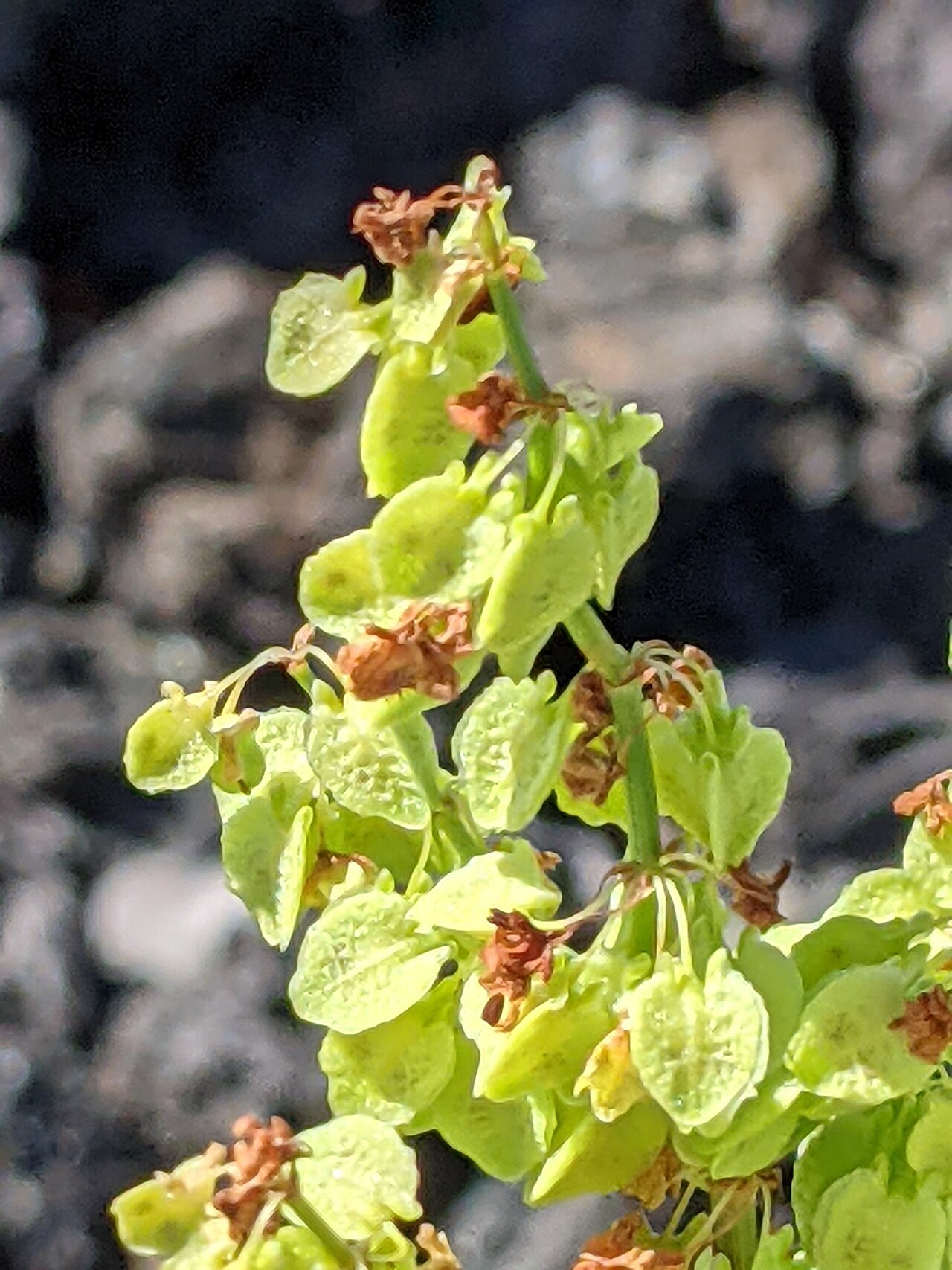
The tiny flowers are greenish-yellow to creamy and are packed into compact, narrow, branched clusters at the ends of the stems. Plants bear separate male and female flowers. In full bloom a plant looks like it is topped with fluffy cream or yellowish plumes.
Fruit
Each small, three-angled seed (achene) is enclosed by three enlarged inner tepals that form papery, heart-shaped wings. The wings are pale green when fresh and age to pink, red and rusty brown. The winged fruits are light and are carried by the wind across the lava.
Similar Species
Rumex giganteus, a larger, sprawling to climbing native dock of wet and mesic forests on several islands, also bears the name pāwale, but it grows in forest rather than on open lava and has looser, broader flower clusters. Weedy introduced docks such as curly dock (R. crispus) grow in disturbed, wetter ground.
Quick Facts
| Scientific Name | Rumex skottsbergii O. Deg. & I. Deg. |
| Family | Polygonaceae (buckwheat family) |
| Plant Type | Erect perennial subshrub, woody at the base; endemic to Hawaiʻi Island |
| Mature Height | 2–3 ft (0.7–1 m) |
| Mature Spread | 1–3 ft |
| Growth Rate | Moderate |
| Sun Exposure | Full sun |
| Water Needs | Low; drought-tolerant once established |
| Soil Type | Lava rock, cinder or very well-drained gravelly soil |
| Soil pH | About 5.5–7.0 |
| Bloom Time | Variable; can flower through much of the year |
| Flower Color | Greenish-yellow to cream |
| Fall Color | Stems and fruits turn red with age |
| Fruit | Papery, heart-shaped winged fruits, green aging to red-brown |
| Deer Resistant | Not applicable; seedlings are browsed by goats where present |
| USDA Hardiness Zones | 10–12 |
Native Range
Pāwale is endemic to Hawaiʻi Island. USDA PLANTS lists it only from Hawaiʻi, and it is known mainly from the open lava fields and cinder deserts on the slopes of Kīlauea, including Kīlauea Iki crater, the Kaʻū Desert and nearby flows within Hawaiʻi Volcanoes National Park, at roughly 1,500 to 4,300 feet (460 to 1,300 m).
Its habitat is young, open lava (both rough ʻaʻā and smooth pāhoehoe) and cinder and ash fields with little soil and sparse vegetation. It is a pioneer plant, colonizing cracks and cinder pockets on recent flows alongside ʻŌhiʻa Lehua, native ferns and lichens. Rainfall in these areas ranges from fairly dry in the Kaʻū Desert to moderately wet toward the summit forests, but the porous rock drains almost instantly.
Pāwale is not federally listed and is common within its small range. Because it depends on open, recently disturbed volcanic ground, its local populations come and go as new eruptions bury old flows and as older flows grow into forest. Invasive grasses such as fountain grass and broomsedge, which spread into lava fields and carry fire, are a threat to this open habitat.
📋 Regional plant lists featuring Pāwale: Hawaii
Growing & Care Guide
Pāwale is one of the easier native plants to grow in a dry, rocky garden on Hawaiʻi Island, as long as it gets full sun and sharp drainage. It suits lava-rock gardens, cinder beds and xeriscapes where most plants would struggle. Buy nursery-propagated plants from a Hawaiʻi native plant nursery, and do not collect plants or seed in Hawaiʻi Volcanoes National Park, where collecting is prohibited. Because it grows wild only on Hawaiʻi Island, plant it there rather than on other islands, and note that Hawaiʻi restricts bringing plants in from other states.
Light
Full sun. Pāwale grows on open lava with no shade at all, and in shade it becomes leggy and weak and flowers poorly.
Soil & Water
Plant in lava rock, cinder or a very gravelly, fast-draining mix. Rich, heavy or constantly moist soil leads to rot. Water regularly for the first couple of months while roots establish, then only during long dry spells. Established plants are drought-tolerant and do best when allowed to dry between waterings.
Planting Tips
Tuck plants into planting pockets in lava rock or into a cinder bed, as they grow in the wild. Space them 2 to 3 feet apart. Pāwale pairs well with other lava-field natives such as ʻōhiʻa, ʻaʻaliʻi and pūkiawe. In containers, use a coarse cinder mix and a pot that drains freely.
Pruning & Maintenance
Little care is needed. Cut back old, spent flowering stems to keep plants tidy and encourage fresh growth, and remove invasive grasses that crowd in around them. Plants may be short-lived in gardens, so let a few fruits ripen and self-sow or save seed to replace older plants.
Propagation
Grow pāwale from seed. Rub the papery wings off ripe, dry fruits and sow the seeds on the surface of a well-drained cinder or gravel mix, covering lightly. Keep the mix lightly moist in bright light; fresh seed usually germinates within a few weeks. Transplant seedlings to their final spot while young, because established plants have deep roots.
Landscape Uses
- Lava-rock and cinder gardens: a pioneer native for bare volcanic rock
- Xeriscapes: drought-tolerant once established
- Restoration of lava fields: colonizes open volcanic ground on Hawaiʻi Island
- Ethnobotanical gardens: a traditional Hawaiian medicinal plant
- Seasonal color: winged fruits turn red and rust-brown
Wildlife & Ecological Value
On the young lava of Kīlauea, pāwale is one of the plants that starts the slow process of turning bare rock into living habitat.
For Pollinators
The flowers are small and mostly wind-pollinated, like those of other docks, but they produce pollen that small native insects may visit.
For Birds
The seeds may be eaten by seed-eating birds, and the plants give small amounts of cover in open lava fields where shelter is scarce. Nēnē, the Hawaiian goose, forage in the same lava and shrubland habitats around Kīlauea.
For Mammals
Hawaiʻi has only one native land mammal, the Hawaiian hoary bat, which forages for insects over open country and forest edges. Introduced goats can browse pāwale where they are not controlled.
Ecosystem Role
As a pioneer plant on fresh volcanic rock, pāwale traps windblown ash and organic matter in cracks and adds leaf litter, helping to build the first thin soils. Its roots break up loose cinder, and its plants provide shade and shelter for native insects and spiders that colonize new lava flows.
Cultural & Historical Uses
The species was named for the Swedish botanist Carl Skottsberg, who studied Pacific island plants, and was described by Otto and Isa Degener, who spent decades documenting the flora of Hawaiʻi. The Hawaiian name pāwale is shared with the forest-dwelling native dock Rumex giganteus.
In traditional Hawaiian medicine, pāwale was used to treat pāʻaoʻao, a childhood illness that caused physical weakness, and as a remedy for constipation. Such uses were part of the specialized knowledge of trained practitioners (kahuna lāʻau lapaʻau) and should not be tried at home.
Today pāwale is a familiar plant to visitors at Kīlauea Iki and along Crater Rim Drive and Chain of Craters Road in Hawaiʻi Volcanoes National Park, where it is one of the most visible plants on recent lava. It illustrates how Hawaiian plants evolved to colonize the islands’ ever-changing volcanic landscape.
Frequently Asked Questions
What is the Hawaiian name for Rumex skottsbergii?
It is called pāwale in Hawaiian. In English it is called lava dock, because it grows on lava and cinder around Kīlauea on Hawaiʻi Island.
Is pāwale native to Hawaiʻi?
Yes. Pāwale is endemic to Hawaiʻi Island, which means it grows wild nowhere else in the world. It is not federally listed.
Is pāwale edible or toxic?
Like other docks, pāwale contains oxalic acid and oxalates, which can be harmful if eaten in large amounts and can irritate the mouth and stomach. It was used medicinally by trained Hawaiian practitioners, not as food. Keep pets and livestock from grazing it heavily.
How do I grow pāwale?
Plant it in full sun in lava rock, cinder or very gravelly soil, water until established, then let it dry between waterings. It grows easily from fresh seed. Buy nursery-propagated plants and never collect in national parks.
Where can I see pāwale in the wild?
It is common on recent lava and cinder in Hawaiʻi Volcanoes National Park, including Kīlauea Iki crater and the Kaʻū Desert. Stay on trails and do not pick plants or fruits in the park.

Looking for a nursery that carries Pāwale?
Browse our native plant nursery directory: Hawaii

