
Palaʻā (Odontosoria chinensis)
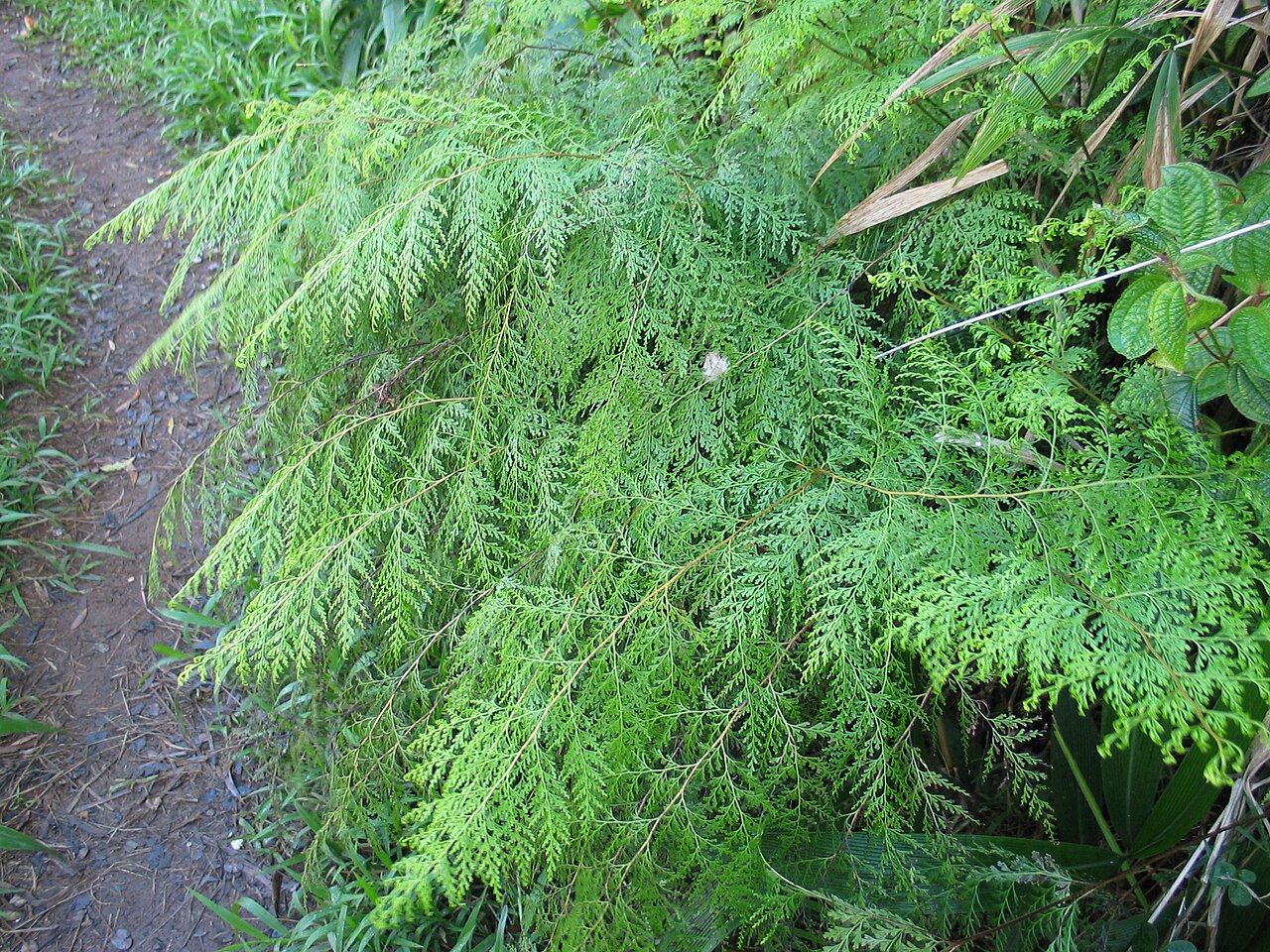
Odontosoria chinensis (long known as Sphenomeris chinensis), called Palaʻā in Hawaiian and lace fern or Chinese creeping fern in English, is a medium-sized, clump-forming fern with finely divided, lacy, bright green fronds on shiny, reddish-brown stalks. It is one of the best-loved native ferns in Hawaiʻi, used for generations in lei and as a source of a reddish-brown dye. Other Hawaiian names include palae and palapalaʻā.
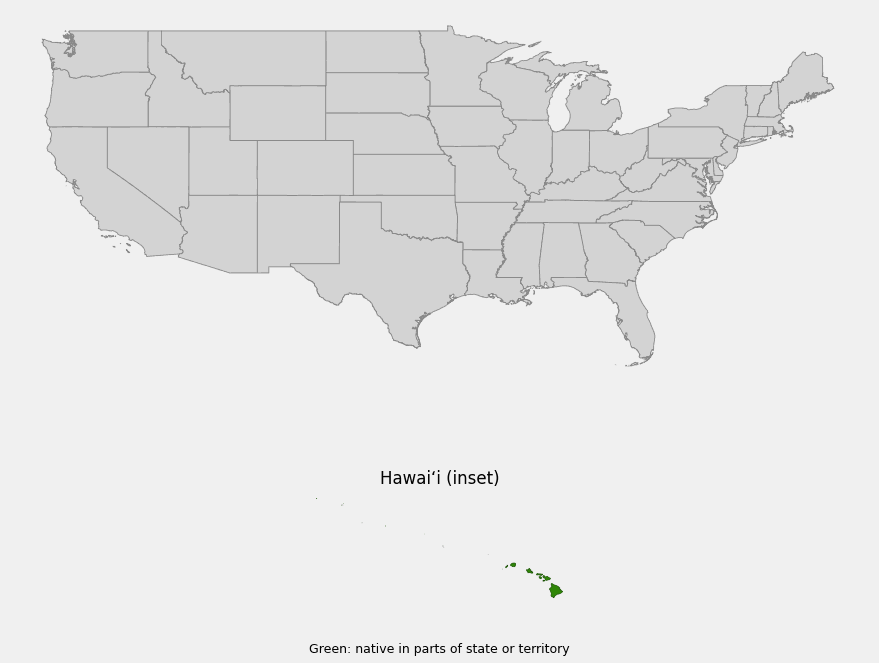
Palaʻā is indigenous to Hawaiʻi: it is also native across tropical and subtropical Asia and the Pacific, from India and China to Polynesia. In Hawaiʻi it grows on all the main islands, from near sea level to at least 4,000 feet, most often in forest openings, on road cuts, trail banks and landslides, and in other open, moist places. It is not federally listed and is common in suitable habitat.
Because it colonizes bare, disturbed ground, palaʻā is also a valuable plant for erosion control and native landscaping in Hawaiʻi. This guide covers how to identify it, where it grows, how to grow it from divisions, and its place in Hawaiian culture.
Identification
Palaʻā is easy to recognize once you know its finely cut, almost parsley-like fronds and shiny, reddish to orange-brown stalks.
Growth Habit
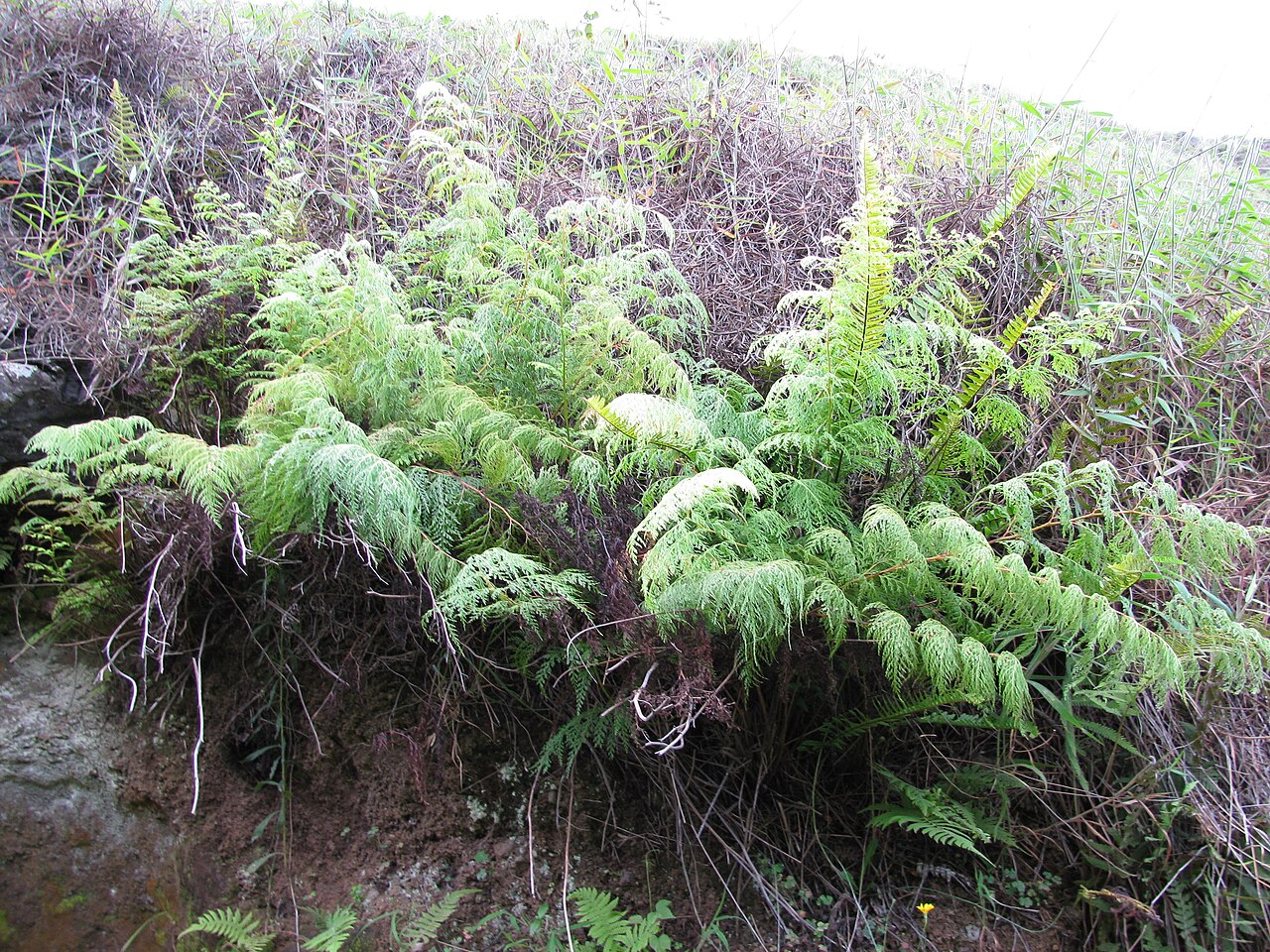
A clump-forming fern with a short, creeping rhizome covered in narrow, dark scales. Fronds are usually 1 to 3 feet long and arch outward to form dense clumps; in rich, moist sites they can reach about 4 or 5 feet. Clumps spread slowly into colonies on banks and slopes.
Fronds
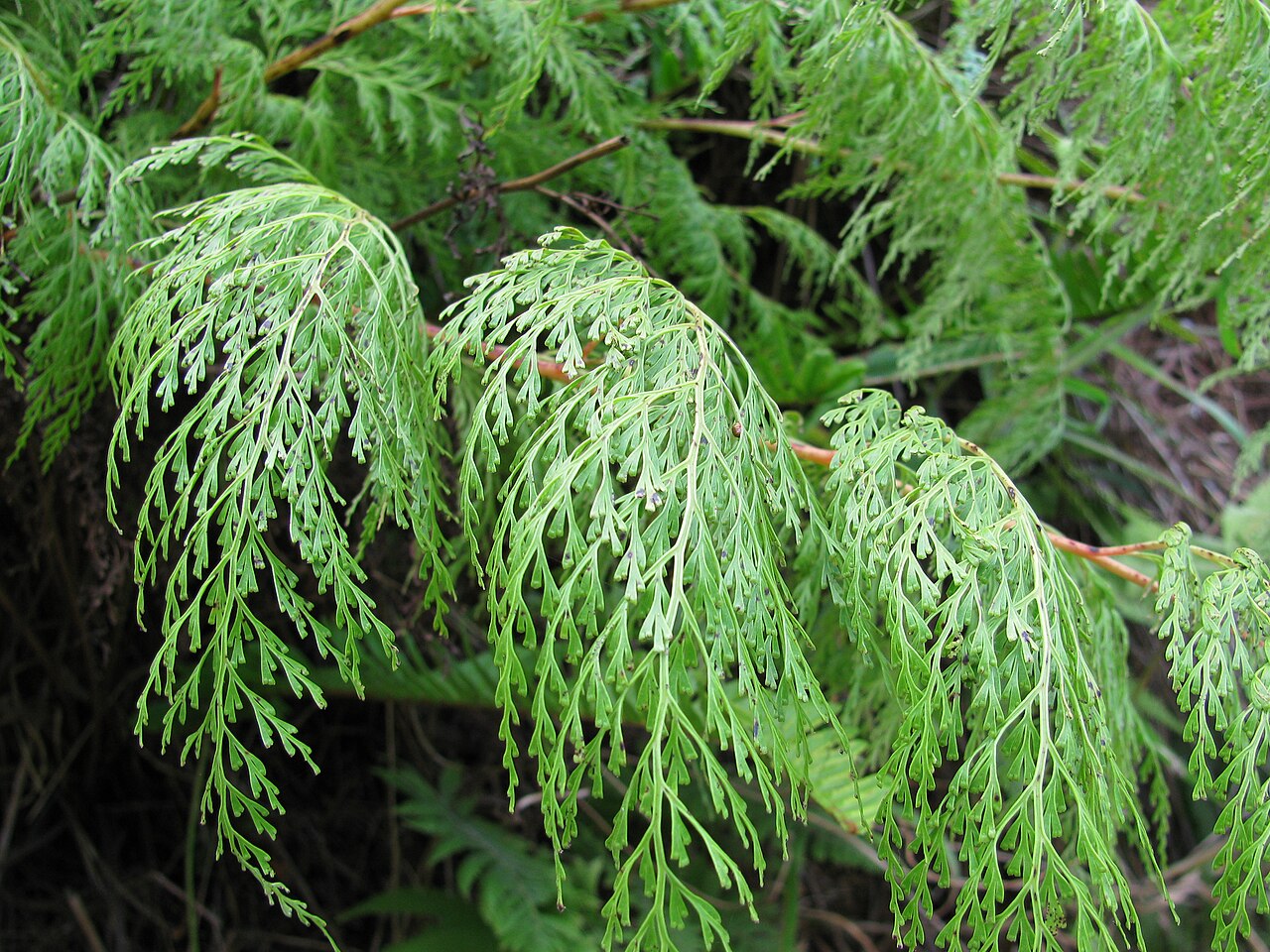
The blades are triangular to lance-shaped and three or four times divided into many small, narrow, wedge-shaped segments, giving a lacy, feathery texture. They are glossy, hairless and light to bright green, and the stalks and midribs are shiny, burnt orange to reddish-brown. Old fronds turn reddish-brown as they die.
Spores
Like all ferns, palaʻā has no flowers or seeds. Its spores are produced in small sori at the tips of the smallest segments, each protected by a little cup-shaped flap (indusium) that opens toward the segment edge.
Look-alikes
Palapalai (Microlepia strigosa), the native fern famous for hula, has softer, hairy, darker green fronds with broader segments. Some introduced garden ferns, such as rabbit’s-foot ferns (Davallia), also have finely cut fronds, but they creep by thick, furry rhizomes. Check for palaʻā’s clumping habit, glossy, hairless, wedge-shaped segments and reddish stalks.
Quick Facts
| Scientific Name | Odontosoria chinensis (L.) J. Sm.; synonym Sphenomeris chinensis (L.) Maxon |
| Family | Lindsaeaceae (lace fern family) |
| Plant Type | Evergreen, clump-forming fern; indigenous to Hawaiʻi |
| Mature Height | 1–3 ft (fronds to about 5 ft) |
| Mature Spread | 2–4 ft clumps |
| Growth Rate | Moderate |
| Sun Exposure | Full sun to partial shade |
| Water Needs | Moderate to high; moist, well-drained soil |
| Soil Type | Well-drained volcanic, clay-loam or organic soils; banks and slopes |
| Soil pH | Acidic, about 5.0–6.5 |
| Bloom Time | None (fern); spores produced through the year |
| Flower Color | None |
| Fall Color | None; old fronds turn reddish-brown |
| Fruit | None; spores in sori at segment tips |
| Deer Resistant | Moderate |
| USDA Hardiness Zones | 10–12 |
Native Range
Palaʻā is indigenous to all the main Hawaiian Islands. It grows from near sea level to at least 4,000 feet, mostly in mesic and wet areas: forest openings and edges, trail and road banks, landslide scars, eroded ridges and the open fern-and-shrub cover that follows disturbance. It often grows with the native Uluhe fern and young ʻōhiʻa on open, rainy slopes.
Outside Hawaiʻi, it is widespread in tropical and subtropical Asia and the Pacific, including India, Sri Lanka, China, Japan, Southeast Asia, Madagascar, and many Polynesian and Micronesian islands. Its tiny, wind-blown spores explain how a fern reached Hawaiʻi so readily across the open ocean.
Because it thrives on newly exposed soil, palaʻā is one of the native plants that helps heal landslides, road cuts and other wounds in the Hawaiian landscape. It holds its own against many weeds on open banks, though dense invasive grasses and shrubs can shade it out.
📋 Regional plant lists featuring Palaʻā: Hawaii
Growing & Care Guide
Palaʻā is a rewarding fern for Hawaiian gardens and is sold by native plant nurseries, though it is less common in the trade than palapalai. It is not rare, but gather lei material and divisions only with permission and never strip wild banks. Hawaiʻi restricts bringing plants and soil in from other states, so buy island-grown plants. Outside Hawaiʻi, it can be grown in frost-free, humid climates or in a bright, humid greenhouse.
Light
Unusually for a fern, palaʻā tolerates full sun as long as its roots stay moist; it also does well in partial shade. Plants in sun are more compact and often more reddish; plants in shade are greener and taller.
Soil & Water
Moist but well-drained soil, ideally acidic and rich in organic matter. It does very well on slopes and banks where water drains away. Water regularly during dry spells; it is best suited to windward and upland gardens with regular rain, and it struggles in hot, dry leeward lowlands without irrigation.
Planting Tips
Plant divisions on a bank, slope or stone wall, in a woodland or fern garden, or in large containers. Space clumps 2 to 3 feet apart for erosion control. Mulch to keep the soil cool and moist. It is suited to zones 10 to 12 and grows best in Hawaiʻi from the lowlands to middle elevations.
Pruning & Maintenance
Remove old brown fronds to keep clumps tidy, or leave some as mulch. Feed lightly with a balanced, slow-release fertilizer. Keep aggressive weeds and grasses from overtopping the clumps.
Propagation
Most easily grown from divisions or rhizome cuttings. Divide clumps into pieces at least 4 to 6 inches across, each with three or four mature fronds and some new growth. Growing palaʻā from spores is possible but has proved difficult and slow.
Landscape Uses
- Erosion control: a native fern for banks, slopes and road cuts
- Fern and woodland gardens: fine, lacy texture and reddish stalks
- Lei: fronds are braided into lei and used in haku lei
- Restoration plantings: an early colonizer of open, disturbed ground in wet and mesic areas
Wildlife & Ecological Value
Palaʻā plays a quiet but important part in the recovery of disturbed Hawaiian landscapes.
For Pollinators
As a fern it has no flowers and does not feed pollinators, but its dense clumps shelter native insects, spiders and snails.
For Birds
Native forest birds forage for insects among ferns and shrubs, and the clumps give ground cover on open banks.
For Mammals
Hawaiʻi’s only native land mammal is the Hawaiian hoary bat, which hunts insects along forest edges. Feral pigs dig up and damage native ferns.
Ecosystem Role
Palaʻā is a pioneer on landslides, road cuts and eroded ground, where its roots and rhizomes hold soil and create conditions for shrubs and trees to return.
Cultural & Historical Uses
Palaʻā is a classic Hawaiian lei fern. The fronds are braided by themselves into lei using the hili (braiding) method, and combined with flowers and other greenery in wili (wound) and haku lei. Hawaiians also made a reddish-brown dye from the old fronds, and the plant was used in traditional medicine, including for women’s health.
The name palaʻā is related to the Hawaiian words for ferns, such as palai. In English the plant is called lace fern for its finely cut fronds.
Carl Linnaeus first described the species in 1753, from Chinese material, as Trichomanes chinense. It has since been placed in Davallia, Stenoloma and Sphenomeris, and current fern classifications treat it as Odontosoria chinensis, the name iNaturalist and USDA PLANTS use today.
Frequently Asked Questions
Is palaʻā native to Hawaiʻi?
Yes. It is indigenous, meaning it is native to Hawaiʻi and also to tropical Asia and the Pacific. It grows on all the main islands from near sea level to at least 4,000 feet.
What is palaʻā used for?
It is a traditional Hawaiian lei fern, braided on its own or combined with flowers. Hawaiians also made a reddish-brown dye from old fronds and used it medicinally.
Can palaʻā grow in full sun?
Yes, as long as the soil stays moist. It often grows on sunny road banks and landslides. In dry, hot sites it needs regular watering or some shade.
How do I propagate palaʻā?
Divide established clumps into pieces at least 4 to 6 inches across with several mature fronds. Spores are slow and difficult.
What is the difference between palaʻā and palapalai?
Palaʻā has glossy, hairless, very finely divided fronds with narrow, wedge-shaped segments and reddish stalks. Palapalai has softer, hairy, darker green fronds and is the fern most associated with hula.

Looking for a nursery that carries Palaʻā?
Browse our native plant nursery directory: Hawaii

