
Nanea (Vigna marina)
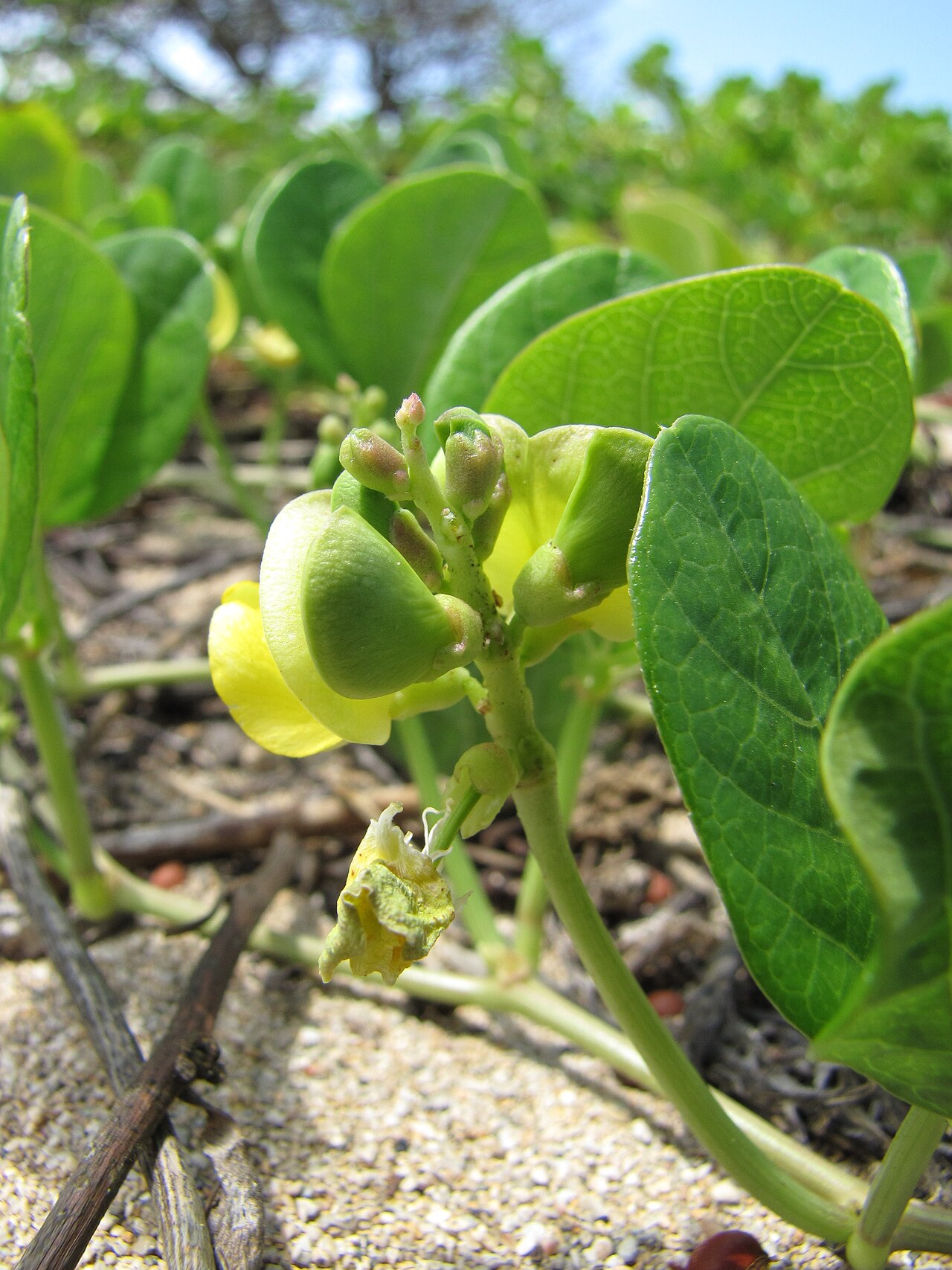
Vigna marina, known in Hawaiian as Nanea or mohihihi and in English as beach pea or notched cowpea, is a fast-growing, creeping coastal vine of the pea family (Fabaceae). It forms bright green mats of smooth, rounded, three-part leaves dotted with clusters of cheerful yellow pea flowers, and it is a familiar plant of Hawaiian beaches, dunes and coastal flats.
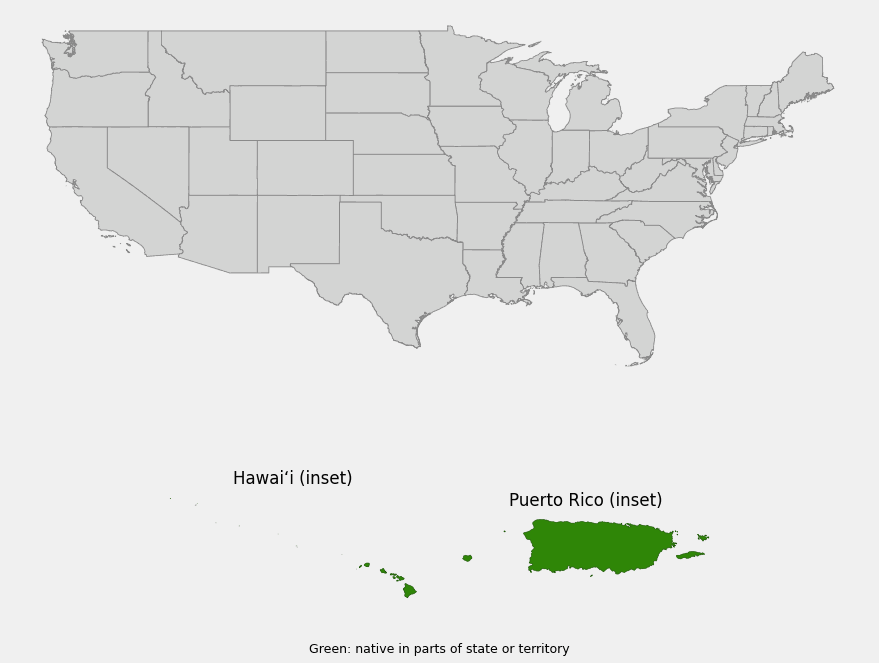
Nanea is indigenous to Hawaiʻi: its salt-tolerant seeds float, and it has spread naturally along tropical coastlines around the world. In the United States, USDA PLANTS lists it as native in Hawaiʻi and Puerto Rico. It is one of three Vigna species native to Hawaiʻi, and the only common one; the others are the rare endemic Vigna o-wahuensis and a species not seen since the 1800s. Nanea is not federally listed.
As a nitrogen-fixing legume that thrives in sand, wind and salt spray, nanea is one of the best native groundcovers for coastal gardens and dune restoration in Hawaiʻi and Puerto Rico. This guide covers how to identify it, where it grows, how to grow it and its traditional uses.
Identification
Nanea is easy to spot on the beach: a low, sprawling pea vine with smooth, bright green, three-part leaves and yellow pea flowers on long stalks.
Stems & Growth Habit
A perennial, prostrate to slightly twining vine with stems up to about 10 feet long, often with purplish stripes. Stems root at the nodes and can form dense mats several feet across, or scramble over low shrubs and rocks.
Leaves
Leaves are alternate and trifoliate, on stalks about 1 to 2 inches long. The three leaflets are smooth, slightly fleshy, broadly oval to nearly round, about 1½ to 4 inches long, with blunt or slightly notched tips (hence “notched cowpea”). Small, triangular stipules sit at the base of each leaf stalk.
Flowers
Bright yellow, pea-shaped flowers about ⅝ to ¾ inch long are clustered at the tips of upright stalks up to about 4 inches long. Flowers appear year-round, but most heavily in fall and early winter. They are unscented and are visited by bees.
Fruit & Look-alikes
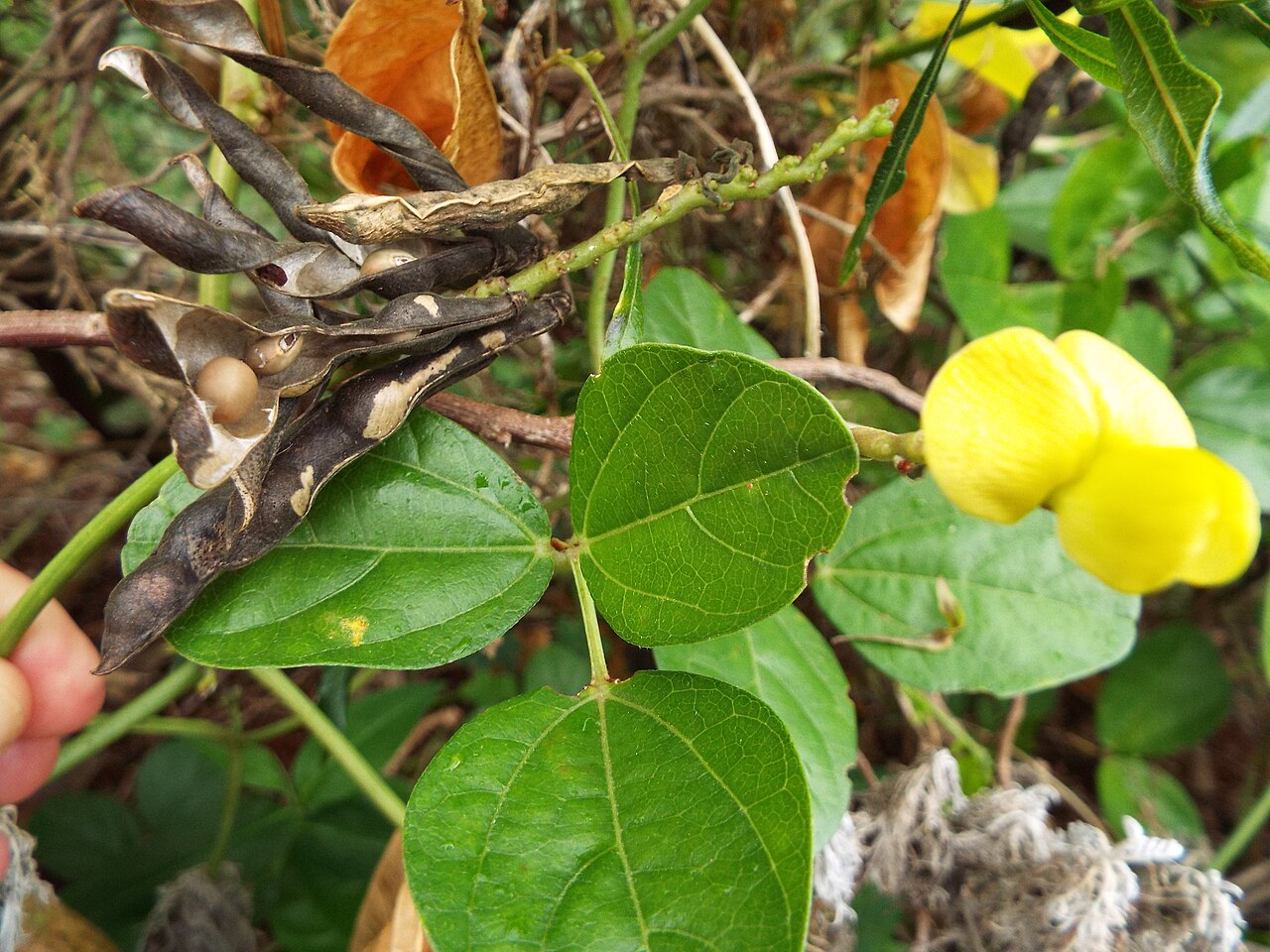
The pods are narrow and cylindrical, up to about 3 inches long, green at first and ripening dark brown to black. They split and twist to release four to nine small, rounded, grayish-brown seeds. Baybean (Canavalia rosea, called mauna loa or puakauhi in Hawaiʻi) also grows on beaches, but it has pink to purple flowers, larger, thicker leaves and much bigger pods.
Quick Facts
| Scientific Name | Vigna marina (Burm.) Merr. |
| Family | Fabaceae (pea or legume family) |
| Plant Type | Perennial creeping or trailing vine; indigenous to Hawaiʻi |
| Mature Height | 6 in–1 ft (groundcover) |
| Mature Spread | 6–10 ft |
| Growth Rate | Fast |
| Sun Exposure | Full sun |
| Water Needs | Low to moderate; drought and salt tolerant |
| Soil Type | Sand, coral rubble or well-drained loam |
| Soil pH | Neutral to alkaline |
| Bloom Time | Year-round, mostly fall and early winter |
| Flower Color | Bright yellow |
| Fall Color | None; evergreen |
| Fruit | Narrow pod ripening dark brown to black |
| Deer Resistant | No; legume foliage is browsed by deer and goats |
| USDA Hardiness Zones | 10–13 |
Native Range
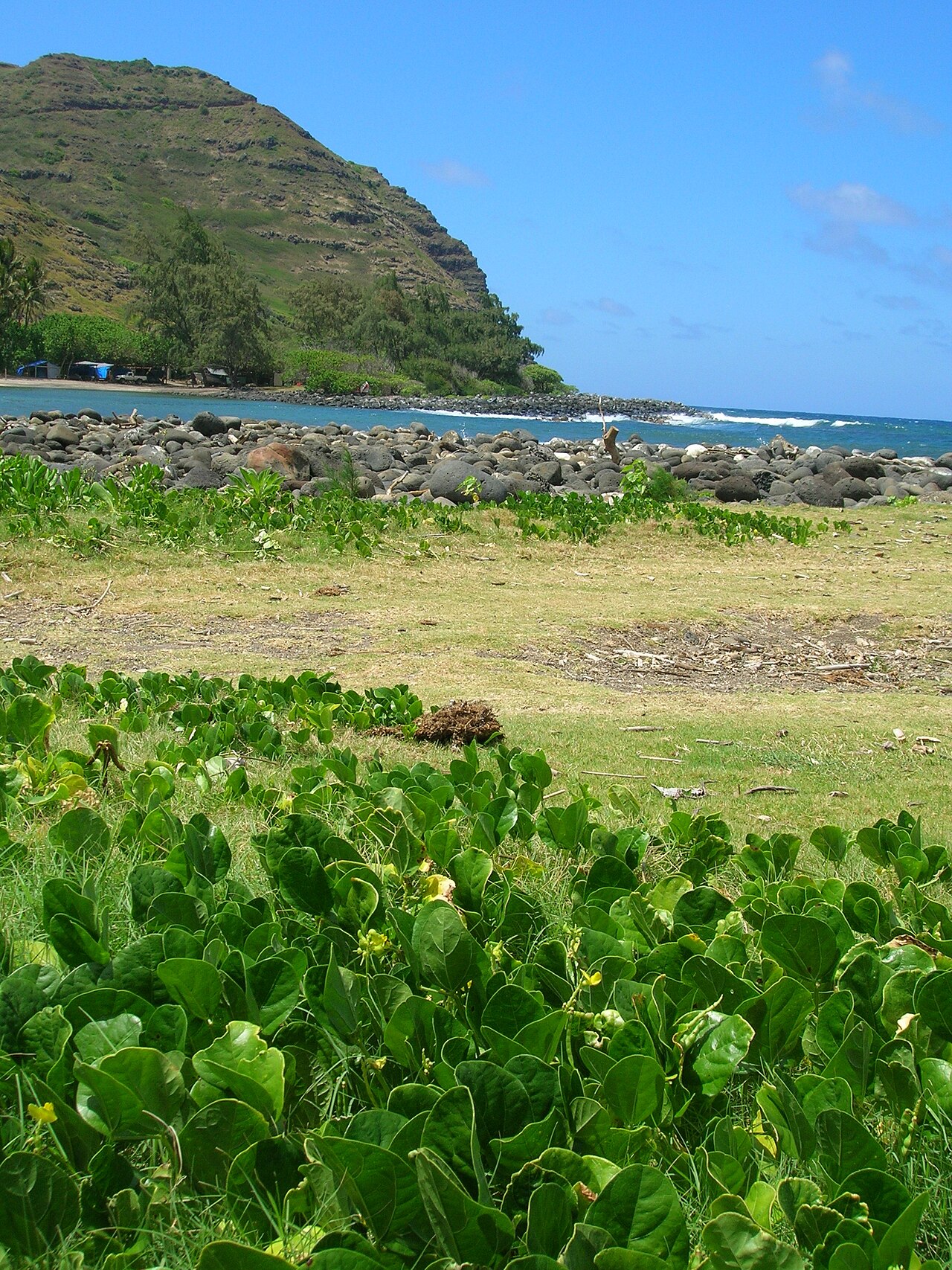
In Hawaiʻi, nanea is indigenous and grows along the coasts of the main islands. It is a plant of the coastal strand: it grows at the vegetation line on sandy beaches, on foredunes and beach ridges, on coastal flats and coral rubble, and occasionally on sea cliffs and dry, shrubby slopes up to about 400 feet above the sea.
In Puerto Rico and the rest of the Caribbean, it grows in the same kinds of places, on sandy beaches and the edges of coastal thickets. Worldwide, its floating, salt-tolerant seeds have carried it to tropical shores around the Pacific and Indian Oceans and the Atlantic, from Polynesia and Australia to Southeast Asia, India, Africa, Madagascar, Brazil and the Caribbean.
Coastal development, off-road vehicles, trampling and invasive plants have reduced native beach vegetation in Hawaiʻi, but nanea remains fairly common and is widely used in dune and shoreline restoration.
📋 Regional plant lists featuring Nanea: Hawaii · Puerto Rico
Growing & Care Guide
Nanea is easy to grow and is sold by native plant nurseries in Hawaiʻi. Buy nursery-grown plants or collect a few seeds only with permission, and never dig plants from dunes, where they hold the sand. Hawaiʻi restricts bringing plants and soil in from other states, so use island-grown stock; in Puerto Rico, look for local native plant growers.
Light
Full sun. In shade it grows thin, flowers poorly and is easily overrun by weeds.
Soil & Water
Sand, coral rubble or any fast-draining soil. It tolerates salt spray, wind and drought. Water regularly while plants establish, then only in long dry spells. It does not need fertilizer, because it fixes its own nitrogen.
Planting Tips
Use it as a fast groundcover for coastal gardens, sunny slopes, dunes and parking-lot edges, or let it trail over walls. Space plants about 3 to 4 feet apart; they knit together within a season. Outdoors it is suited to frost-free coastal areas in zones 10 to 13.
Pruning & Maintenance
Trim the runners where they spread beyond their space, and cut back old, woody mats to renew them. Watch for aphids, caterpillars and leaf-feeding beetles. In small gardens it can climb into neighboring shrubs, so guide or trim its stems.
Propagation
Grows easily from seed. Lightly nick or sand the hard seed coat, or soak the seeds in warm water overnight, before sowing. Stem cuttings with a node or two also root readily. It forms root nodules without special inoculation.
Landscape Uses
- Coastal groundcover: a fast, salt-tolerant native mat for sandy and rocky sites
- Dune and shoreline restoration: holds sand and adds nitrogen to poor soils
- Slopes and banks: quick erosion control in sunny places
- Pollinator gardens: yellow flowers almost all year
Wildlife & Ecological Value
On Hawaiian and Caribbean beaches, nanea is one of the plants that builds and holds the strand vegetation behind the sand.
For Pollinators
Its yellow pea flowers are visited by bees and other insects. Like many legumes, its flowers and young pods also feed the caterpillars of small blue butterflies, such as the introduced pea blue.
For Birds
Seabirds such as wedge-tailed shearwaters (ʻuaʻu kani) nest in burrows in coastal vegetation, and low native groundcovers like nanea help hold the sand around their nesting areas.
For Mammals
Hawaiʻi’s only native land mammal is the Hawaiian hoary bat, which hunts insects along coasts. Goats and deer graze legumes such as nanea.
Ecosystem Role
As a nitrogen-fixing legume, nanea enriches the poor, sandy soils of the coast for other plants, and its creeping stems help prevent erosion of beaches and dunes.
Cultural & Historical Uses
Early Hawaiians used nanea as medicine. To treat boils, running sores and ulcers (hēhē), they pounded the leaves, stalks and stems and applied the softened material directly to the wound. Do not use it medicinally without guidance from a knowledgeable practitioner. Nanea is related to mung beans, azuki beans and cowpeas, but it is not a recognized food plant, so don’t eat the seeds or pods.
The genus Vigna honors Domenico Vigna, a 17th-century Italian botanist at the University of Pisa. The name marina, from the Latin for “of the sea,” refers to its seaside home.
Its English names, beach pea and notched cowpea, refer to its habitat and to the slight notch at the tip of many leaflets. Because it is easy to grow and quick to cover bare sand, nanea has become a staple of community dune-restoration projects and native coastal landscapes in Hawaiʻi.
Frequently Asked Questions
Is nanea native to Hawaiʻi?
Yes. It is indigenous, meaning it arrived naturally, almost certainly as floating seeds, and is also native to tropical coasts elsewhere. In the U.S., it is native in Hawaiʻi and Puerto Rico.
Is nanea a good groundcover?
Yes. It is one of the best native groundcovers for sunny coastal gardens: it spreads fast, tolerates salt, wind and drought, and fixes its own nitrogen.
Can you eat beach pea?
It is a relative of edible beans, but it is not a recognized food plant. Don’t eat the seeds or pods.
How do I grow nanea from seed?
Nick or soak the hard seeds before sowing them in sandy, well-drained soil in full sun. Seedlings grow quickly and often flower within a few months.
What is the difference between nanea and beach morning glory?
Both are creeping beach vines. Nanea is a pea with yellow flowers and three-part leaves; pōhuehue (beach morning glory) has pink to purple funnel-shaped flowers and two-lobed, goat-foot-shaped leaves.

Looking for a nursery that carries Nanea?
Browse our native plant nursery directory: Hawaii

