
Best Fertilizers for Native Plants: Boosting Growth and Health
We independently select all products and services. If you click through links we provide, Plant Native may earn a commission with no extra cost to you.
Last updated: November 8, 2026

Native plants are an essential part of our ecosystem, providing food and shelter for wildlife and contributing to a healthy environment. However, they can be challenging to grow, especially if you’re not using the right fertilizers. That’s why we’ve spent hours researching and testing to identify the best fertilizers for native plants.
When it comes to fertilizers for native plants, there are several things to consider. First, it’s essential to choose a fertilizer that is specifically formulated for native plants. These fertilizers contain the right balance of nutrients to promote healthy growth without harming the environment. Second, you need to consider the type of native plant you’re growing. Some plants require more nitrogen, while others need more phosphorus or potassium. Finally, you should look for a fertilizer that is slow-release, so it provides nutrients over an extended period.
After extensive research and testing, we’ve identified the best fertilizers for native plants. We’ve considered the specific needs of different types of native plants and evaluated the effectiveness of each fertilizer. We’ve also looked at factors like price, ease of use, and environmental impact to ensure that our recommendations are the best possible options for your garden.
In the next section, we’ll take a closer look at the critical factors you should consider when choosing a fertilizer for your native plants. By understanding these factors, you’ll be able to make an informed decision and choose the best fertilizer for your garden.
Best Fertilizers for Native Plants
We understand the importance of maintaining a healthy garden, and we know that using the right fertilizer is key to achieving this goal. When it comes to native plants, it’s essential to choose a fertilizer that is specifically formulated to meet their unique needs. In this article, we’ve compiled a list of the best fertilizers for native plants that will help you keep your garden looking lush and vibrant. Whether you’re a seasoned gardener or just starting out, we’re confident that you’ll find the perfect fertilizer for your needs on our list.
Our top pick

- The 3-1-2 liquid formula promotes healthy growth and is absorbed more readily than granules or pellets.
- Easy dosing: 1 teaspoon for every 2 cups of water during your normal watering routine.
- Supplies nitrogen, phosphorus and other nutrients to boost root and bloom growth, with one bottle lasting up to a year.
Cons
- Some plants may require a UV or LED bulb if kept indoors, while some may only require high levels of sunlight from a window.
- All plants require varied amounts of light and moisture, so be sure to research your specific indoor plant when using any fertilizer.
- If using a sprayer, do not spray directly onto leaves for best results.
Bottom line: The Aquatic Arts Indoor Plant Food is listed for a long range of houseplants, including pothos, snake plant, hoya, peace lily, anthurium, orchids, ferns and palms. Mix 1 teaspoon into 2 cups of water and pour it into the pot or a spray bottle aimed at the soil. Overall, if you’re looking for an easy-to-use, all-purpose liquid fertilizer for your indoor plants, it is a strong pick.
Best runner-up

- Jobe’s Biozome advantage improves long-term soil quality and increases root mass
- Contains a proprietary microorganism that aggressively breaks down material for faster results
- OMRI listed for organic gardening by USDA
Cons
- Pungent smell
- Attracts bugs and insects
- May not be suitable for indoor use due to the smell
Bottom line: Jobe’s Organics Granular Fertilizer is easy to measure and apply every 2-3 weeks during the growing season, and the 16 lb bag goes a long way. It contains Jobe’s Biozome, a blend of beneficial microorganisms that helps improve soil conditions and resist disease, insects and drought. Expect an organic smell when applying it. Overall, it is an effective, organic fertilizer for the garden.
Best budget option

- The organic and natural ingredients deliver the Miracle-Gro results you expect.
- The shaker bottle makes feeding in-ground and container plants easy.
- You’ll start to see results in as little as 7 days.
Cons
- The 1 lb bottle may not be enough for large gardens.
- Needs reapplying every 4-6 weeks.
- Granules should be watered in after application.
Bottom line: Miracle-Gro Performance Organics granules are an easy, low-cost way to feed vegetable and herb beds and containers: shake them around the plants, water in, and reapply every 4-6 weeks. If you want quick results and like the idea of organic and natural ingredients, it is a good-value pick.
Best premium choice
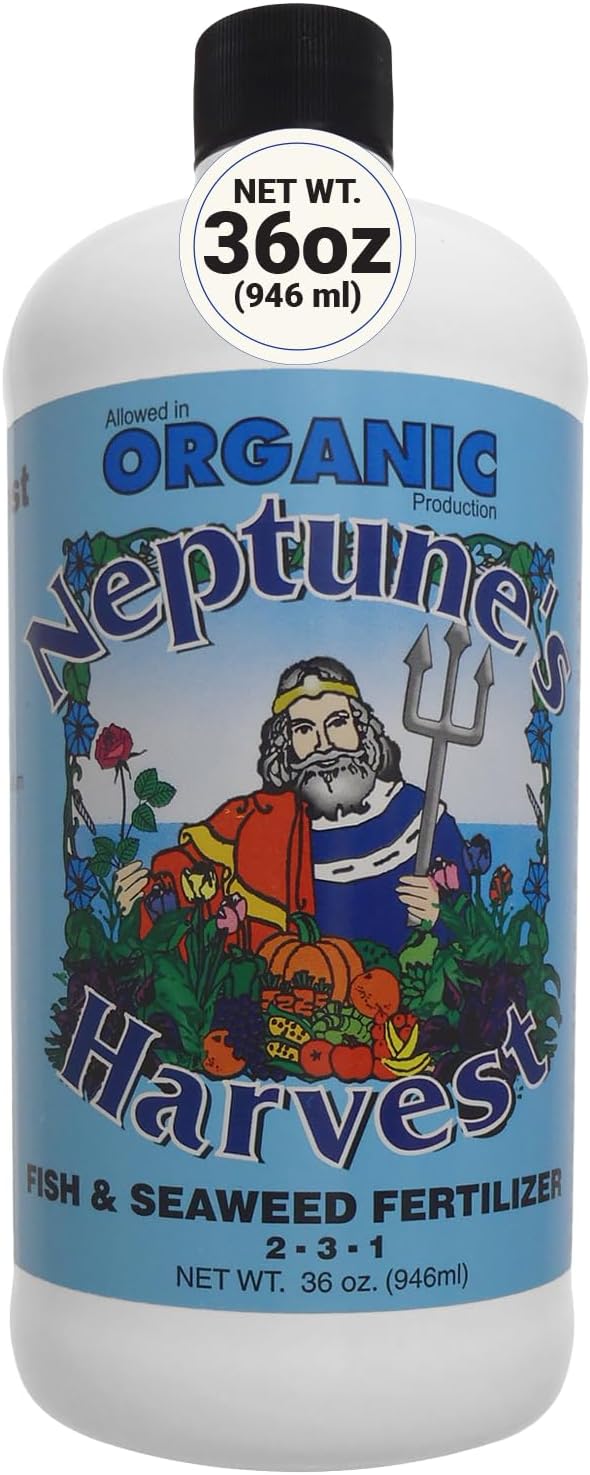
- Organic 2-3-1 blend of fish and seaweed feeds plants and also builds soil organic matter and beneficial microbes.
- Use as a soil drench or foliar feed; works for transplants and established plants.
- Concentrated: about 1 oz per gallon of water.
Cons
- Has a noticeable fish odor when applied.
- Liquid feeding needs repeating more often than slow-release granules.
- The 36 oz bottle is used up quickly over a large area.
Bottom line: Neptune’s Harvest Fish & Seaweed is a gentle, organic liquid feed that suits native plantings well: its low 2-3-1 analysis won’t push soft growth, and the fish and seaweed help improve soil structure over time. Apply it as a soil drench or foliar spray during the growing season. Overall, if you’re looking for a nutrient-rich and eco-friendly fertilizer for your native plants, it is a solid choice.
Also great
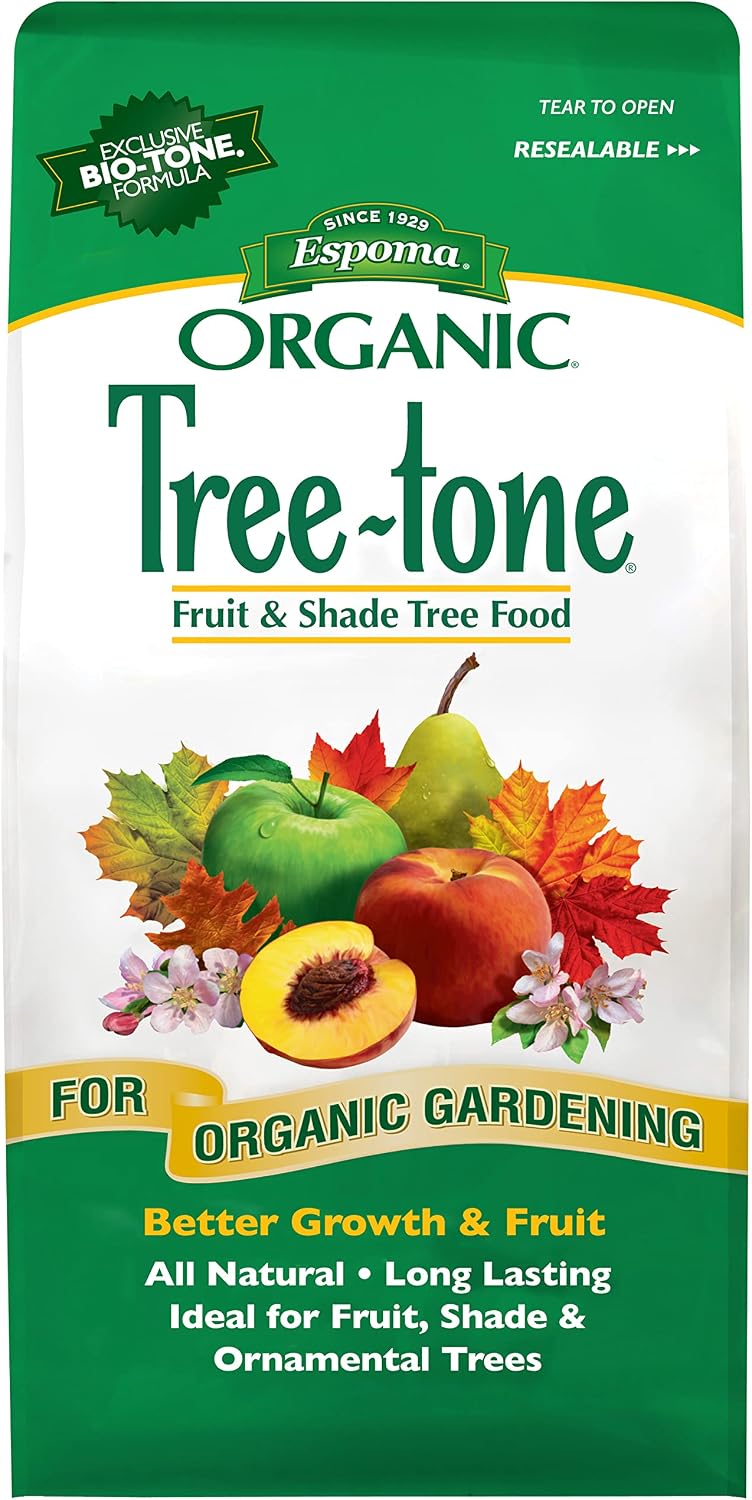
- Organic 6-3-2 formula with no sludges or fillers, approved for organic gardening.
- Ready to use with no mixing; apply around the drip line in spring and fall.
- Made in the USA by Espoma, a natural organics company since 1929.
Cons
- The 4 lb bag covers only a few mature trees.
- Granules must be worked into the soil or watered in.
- Formulated for trees, so it may not be the best choice for other types of plants.
Bottom line: Espoma Tree-tone is a simple, slow-feeding organic option for trees and shrubs: scatter it around the drip line in spring and fall and water it in. Its natural ingredients and Bio-tone microbes feed the soil as well as the plant, making it a good fit for native trees in the landscape.
Also great

- The organic composition of this fertilizer ensures that your trees grow as naturally indoors as they would in their native outdoors.
- This specialized formula promises to boost fruit production, intensify color, and ensure robust health for your trees.
- The fertilizer aids in strengthening the trees’ resistance against potential indoor stressors, ensuring they flourish year-round.
Cons
- The product might be too potent for some citrus varieties, so it’s important to pay attention to the specific needs of each tree to avoid over-fertilization.
- The 8 oz bottle might be too small for those who have multiple indoor citrus trees.
- The concentrate requires dilution with water before application, which might be time-consuming for some users.
Bottom line: Gardenera’s 3-1-2 Liquid Fertilizer Concentrate is a citrus-tailored, organic formula for lemons, oranges, calamondins, kumquats and other indoor citrus. Mix 1 teaspoon with 1 gallon of water and feed every other watering. If you’re looking for a fertilizer made specifically for indoor citrus trees, it is an excellent choice.
Also great
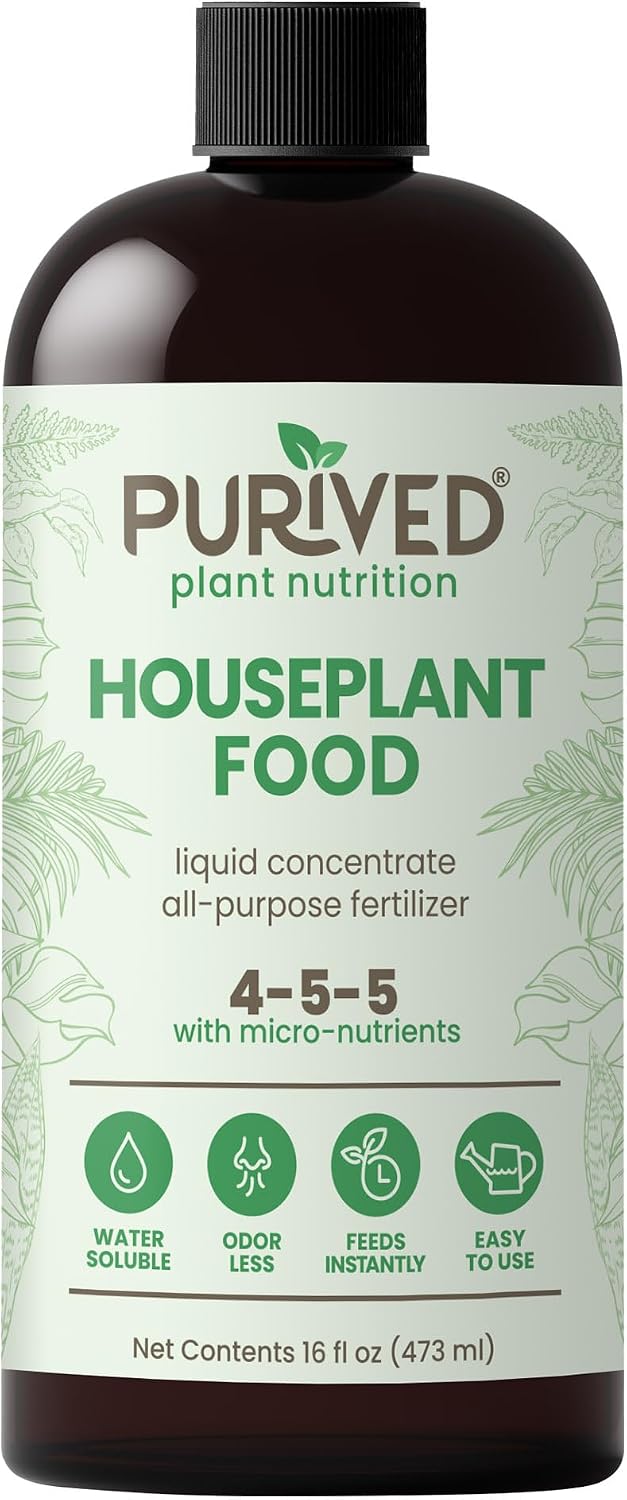
- Best value, one 16 oz bottle makes 50 gallons of nutrient-rich, odorless fertilizer that feeds instantly
- Easy to use & feeds instantly. Just mix a cap full of Purived Plant Food to 1 gallon of water & feed
- Works as a soil drench, foliar feed, or in full and semi hydroponics
Cons
- Can burn some succulents, so test prior to using
- Some plants may not respond well to the formula
- May have to use more than recommended for certain plants
Bottom line: The best part about Purived is that it is super-concentrated: one 16 oz bottle makes 50 gallons of liquid houseplant fertilizer, and it has a 2-year shelf life. Add 1 cap full to 1 gallon of water and feed. Overall, it is an easy-to-use, all-purpose liquid plant food for keeping indoor and outdoor potted plants healthy.
Also great
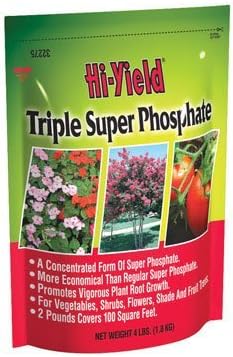
- High-analysis 0-45-0 phosphorus promotes root development and bigger blooms
- More concentrated, and so more economical, than regular super phosphate
- Dry granules are easy to measure and work into the soil
Cons
- Supplies only phosphorus, so it is not a complete fertilizer
- Many native plants need little added phosphorus; test your soil first
- Overapplication can contribute to phosphorus runoff
Bottom line: Hi-Yield Triple Super Phosphate is a targeted tool rather than an everyday feed: use it when a soil test shows low phosphorus, or at planting time for bulbs, flowering shrubs and fruit trees. Work it into the root zone and water well. Just be sure it suits your specific plants and soil.
Buying Guide
When selecting a fertilizer for your native plants, there are a few key features to consider to ensure you are getting the best product for your needs. Here are some important factors to keep in mind:
Nutrient Content
The first thing you’ll want to look at is the nutrient content of the fertilizer. Native plants typically require lower levels of nitrogen than other types of plants, so it’s important to choose a fertilizer with a balanced N-P-K ratio, such as 3-1-2 or 4-1-2. This will ensure that your plants are getting the nutrients they need without being overwhelmed with excess nitrogen.
Organic vs. Synthetic
Another important factor to consider is whether to choose an organic or synthetic fertilizer. Organic fertilizers are made from natural materials and release nutrients slowly over time, while synthetic fertilizers are made from chemicals and release nutrients quickly. Both types have their advantages and disadvantages, so it’s important to choose the one that best fits your needs.
Slow-Release vs. Quick-Release
You’ll also want to consider whether to choose a slow-release or quick-release fertilizer. Slow-release fertilizers release nutrients slowly over time, while quick-release fertilizers release nutrients quickly. Slow-release fertilizers are generally more expensive, but they provide more consistent nutrient delivery and can be more environmentally friendly.
Other Considerations
Finally, you may want to consider other factors such as the pH level of the fertilizer, the presence of micronutrients, and the cost of the product. Keep in mind that the most expensive fertilizer isn’t always the best, and that different plants may have different nutrient requirements.
By considering these factors, you can choose the best fertilizer for your native plants and help them thrive in their natural environment.
We independently select all products and services. If you click through links we provide, Plant Native may earn a commission with no extra cost to you. As an Amazon Associate I earn from qualifying purchases.
What about watering? I always seem to overdo it or not do enough.
Good question! Spacing depends on the variety but a general rule is to give them room to breathe. Check the tag or seed packet for specifics. -Plant Native Team