
Top Bee Hotels for Boosting Pollinator Populations: 5 Effective Options for 2025
We independently select all products and services. If you click through links we provide, Plant Native may earn a commission with no extra cost to you. As an Amazon Associate I earn from qualifying purchases.
Last updated: September 1, 2026
Bee hotels have become increasingly popular as a way to support local pollinator populations. These structures provide nesting sites for solitary bees, which play a crucial role in pollinating plants and maintaining biodiversity.
By offering safe spaces for bees to lay eggs and rear their young, bee hotels help boost bee numbers in gardens, parks, and urban areas.
Solitary bees, unlike honeybees, do not live in hives. They seek out small cavities in wood, stems, or masonry to lay their eggs.
Bee hotels mimic these natural nesting sites, providing tubes or holes of various sizes to accommodate different bee species. These artificial habitats can be especially beneficial in areas where natural nesting sites are scarce due to urbanization or intensive agriculture.
When choosing a bee hotel, it’s important to consider the materials used, the size and variety of nesting tubes, and the overall design for protection from the elements.
Durable, weather-resistant materials like hardwood or bamboo are preferable. A range of tube sizes from 2-10mm in diameter will attract diverse bee species. Proper overhangs and back panels are essential to keep nests dry and secure.
We tested numerous bee hotels to find the best options for supporting pollinator populations in various settings.
Best Bee Hotels for Pollinators
We’ve carefully selected the top bee hotels to help boost pollinator populations in your garden or outdoor space. These specially designed structures provide safe nesting sites for solitary bees, encouraging them to thrive and pollinate nearby plants. Our picks offer a range of sizes and materials to suit different needs and environments.
Our top pick

- Attracts efficient solitary bee pollinators
- Made from eco-friendly bamboo
- Visually appealing purple design
Cons
- Some quality control issues reported
- Hanging string could be sturdier
- May take time for bees to discover and use
We’ve found the Nature’s Way Purple Bee House to be a charming addition to our garden. Its compact size (3.5″ x 6″ x 8″) allows for easy placement, and the purple color adds a pop of interest among the greenery.
The bamboo tubes provide an ideal nesting spot for solitary bees like mason and leafcutter varieties.
In our experience, patience is key when using this bee house. It can take some time for local bees to discover and start using it. Once they do, though, the impact on garden productivity can be significant. These solitary bees are incredibly efficient pollinators, potentially boosting flower and fruit yields noticeably.
We appreciate the eco-friendly aspect of this product. The sustainable bamboo construction aligns well with our efforts to support local ecosystems.
While the overall build quality is good, we did notice that the hanging string could be more robust. It’s a minor issue but worth considering for long-term outdoor use.
Best runner-up

- Natural wood construction promotes bee health
- Unique teardrop design protects bees’ wings
- Various tube sizes accommodate different species
Cons
- Limited product information included
- May require additional weatherproofing
- Some assembly skills needed for secure mounting
We recently had the pleasure of installing this TIHOOD Mason Bee House in our garden. Its teardrop shape immediately caught our eye, standing out among typical boxy designs. The curved form isn’t just for looks – it actually helps protect delicate bee wings from damage.
The house is crafted from natural wood and bamboo, materials we found ideal for maintaining proper humidity levels inside the nesting tubes. This thoughtful design reduces the risk of mold growth that can harm developing bee larvae.
We appreciated the variety of tube sizes, which caters to different bee species and increases the habitat’s overall effectiveness.
Hanging the bee house was straightforward using the included rope, though we opted to add our own hook for extra stability.
We positioned it facing southeast, about 6 feet high on a fence post, to catch morning sun while shielding it from harsh afternoon rays and rain.
After a few weeks, we’ve noticed increased bee activity in our vegetable garden, a promising sign that our new pollinator palace is doing its job.
Best budget option
- Attracts diverse beneficial insects
- Easy installation with pre-attached hanger
- Durable, weather-resistant construction
Cons
- Limited space for larger insect species
- May require occasional cleaning
- Placement crucial for effectiveness
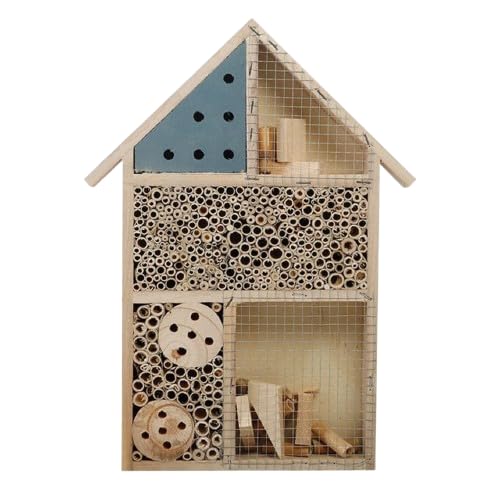
We’ve found this Mason Beehive and Butterfly House to be an excellent addition to our garden. Its natural bamboo tubes provide ideal nesting sites for solitary bees, which are essential pollinators. The design is both functional and attractive, blending seamlessly into the landscape.
During our use, we noticed a significant increase in bee activity around our flowering plants. The insect hotel also attracted ladybugs and other beneficial insects, which helped keep pest populations in check naturally.
This eco-friendly approach aligns well with our gardening philosophy.
The pre-attached metal hanger made installation a breeze. We hung it in a sunny, sheltered spot about 5 feet off the ground, and within days, we observed various insects exploring their new home.
The wood and bamboo construction has held up well against the elements, requiring minimal maintenance so far.
Best premium choice

- High-quality cedar wood construction
- Comprehensive kit with all necessary materials
- Educational and fun for all ages
Cons
- Assembly may require adult assistance
- Limited customization options
- Takes time for insects to populate
The SparkJump Bug Hotel Kit offers a fantastic hands-on experience for nature enthusiasts of all ages. We found the solid cedar wood construction to be sturdy and durable, perfect for withstanding outdoor conditions.
The kit comes complete with everything needed to build a cozy home for various beneficial insects, including bees, butterflies, and ladybugs.
Assembly is straightforward, with clear instructions guiding us through the process. While younger children might need help, we noticed that it’s an excellent opportunity for family bonding or classroom activities.
The included DIY stuffing materials allow for some creativity in attracting different insect species.
We were impressed by the educational value of this kit. It sparked conversations about pollinator importance and ecosystem balance.
The unique grid design, filled with various materials, creates diverse habitats for different insects. After setting up the bug hotel in our garden, we eagerly awaited its new residents, understanding that it may take some time for insects to discover and inhabit their new home.
Also great

- Solid pine wood construction
- Approximately 90 nesting tubes included
- Versatile hanging options
Cons
- Non-removable tubes
- Limited protection from moisture
- May attract unwanted insects
This Hewewor Hexagon Bee Hotel has quickly become a favorite addition to our garden. Its attractive design caught our eye, and we were pleased to find it’s as functional as it is aesthetetic.
The solid pine wood construction feels durable, and at 8 inches across, it’s a substantial size without being overwhelming.
We hung it on a sunny spot near our vegetable patch using the included rope. Within days, we noticed mason bees investigating the bamboo tubes.
The hotel houses about 90 nesting tubes, providing ample space for a thriving bee community. We appreciate how it’s not just for bees – we’ve spotted ladybugs resting in some of the crevices too.
One aspect we found less than ideal is the fixed nature of the tubes. For long-term maintenance, removable tubes would be preferable.
We’ve also noticed that in heavy rain, some moisture can get into the tubes. To combat this, we’ve added a small overhang to provide extra protection. Despite these minor drawbacks, we’ve seen a noticeable increase in pollination activity in our garden since installing this bee hotel.
When selecting a bee hotel, we recommend considering several key factors to ensure you choose an effective and durable option.
Look for hotels made from natural, untreated wood or bamboo. These materials closely mimic bees’ natural nesting sites.
Avoid plastic or treated wood, which can harm bees or leach chemicals.
Choose a hotel with various hole sizes to attract different bee species. Ideal diameters range from 2-10mm.
Depth matters too. Tunnels should be at least 15cm deep to allow proper nesting.
A sloped roof helps keep rain out. Ensure the hotel has proper drainage to prevent moisture buildup.
Select a hotel that can be securely mounted. It should face south or southeast to catch morning sun.
Opt for designs with removable tubes or blocks for easy annual cleaning.
Some hotels include additional features like water sources or native plant seeds. These can enhance the overall habitat for pollinators.
By prioritizing these features, we can select bee hotels that provide safe, effective nesting sites for our local pollinator populations.
Buying Guide
When selecting a bee hotel, we recommend considering several key factors to ensure you choose an effective and durable option.
Materials
Look for hotels made from natural, untreated wood or bamboo. These materials closely mimic bees’ natural nesting sites.
Avoid plastic or treated wood, which can harm bees or leach chemicals.
Size and Design
Choose a hotel with various hole sizes to attract different bee species. Ideal diameters range from 2-10mm.
Depth matters too. Tunnels should be at least 15cm deep to allow proper nesting.
Protection from Elements
A sloped roof helps keep rain out. Ensure the hotel has proper drainage to prevent moisture buildup.
Placement
Select a hotel that can be securely mounted. It should face south or southeast to catch morning sun.
Cleaning and Maintenance
Opt for designs with removable tubes or blocks for easy annual cleaning.
Habitat Features
Some hotels include additional features like water sources or native plant seeds. These can enhance the overall habitat for pollinators.
| Feature | Recommendation |
|---|---|
| Material | Natural wood or bamboo |
| Hole sizes | 2-10mm diameter |
| Tunnel depth | At least 15cm |
| Roof | Sloped for rain protection |
| Cleaning | Removable components |
By prioritizing these features, we can select bee hotels that provide safe, effective nesting sites for our local pollinator populations.

solitary bees nesting in small cavities instead of hives is what i didn’t know. bee hotels sound worth putting up.