
Best Garden Riddles for Sifting Soil: A Fun and Effective Solution
We independently select all products and services. If you click through links we provide, Plant Native may earn a commission with no extra cost to you.
Last updated: November 13, 2026

Sifting soil is an essential task for any gardener. It’s a process that involves removing stones, debris, and other unwanted materials from the soil to create a fine, uniform texture. This is where garden riddles come in. A garden riddle is a tool that helps sift soil by separating the large particles from the small ones. It’s a must-have tool for any serious gardener.
When choosing a garden riddle, there are a few things to consider. The first is the size of the mesh. The mesh size determines the size of the particles that will be sifted out. If you’re working with fine soil, you’ll want a riddle with a small mesh size. If you’re working with heavier soil, a larger mesh size will work better.
The second thing to consider is the material of the riddle. Garden riddles can be made from a variety of materials, including plastic, metal, and wood. Metal riddles are the most durable but can be heavy, while plastic riddles are lightweight but may not last as long. Wood riddles are a good middle ground, but they may not be as durable as metal.
We spent hours researching and testing various garden riddles to identify the best ones for sifting soil. In this article, we’ll share our top picks for the best garden riddles for sifting soil. Whether you’re a seasoned gardener or just starting, we’ve got you covered.
Best Garden Riddles for Sifting Soil
We know that finding the right garden riddle for sifting soil can be a daunting task, especially with so many options available on the market. That’s why we’ve done the research and testing for you to compile a list of the best garden riddles for sifting soil. Whether you’re a seasoned gardener or just starting out, these riddles will help you achieve the perfect soil texture for your plants. So, without further ado, here are our top picks for the best garden riddles for sifting soil.
Our top pick
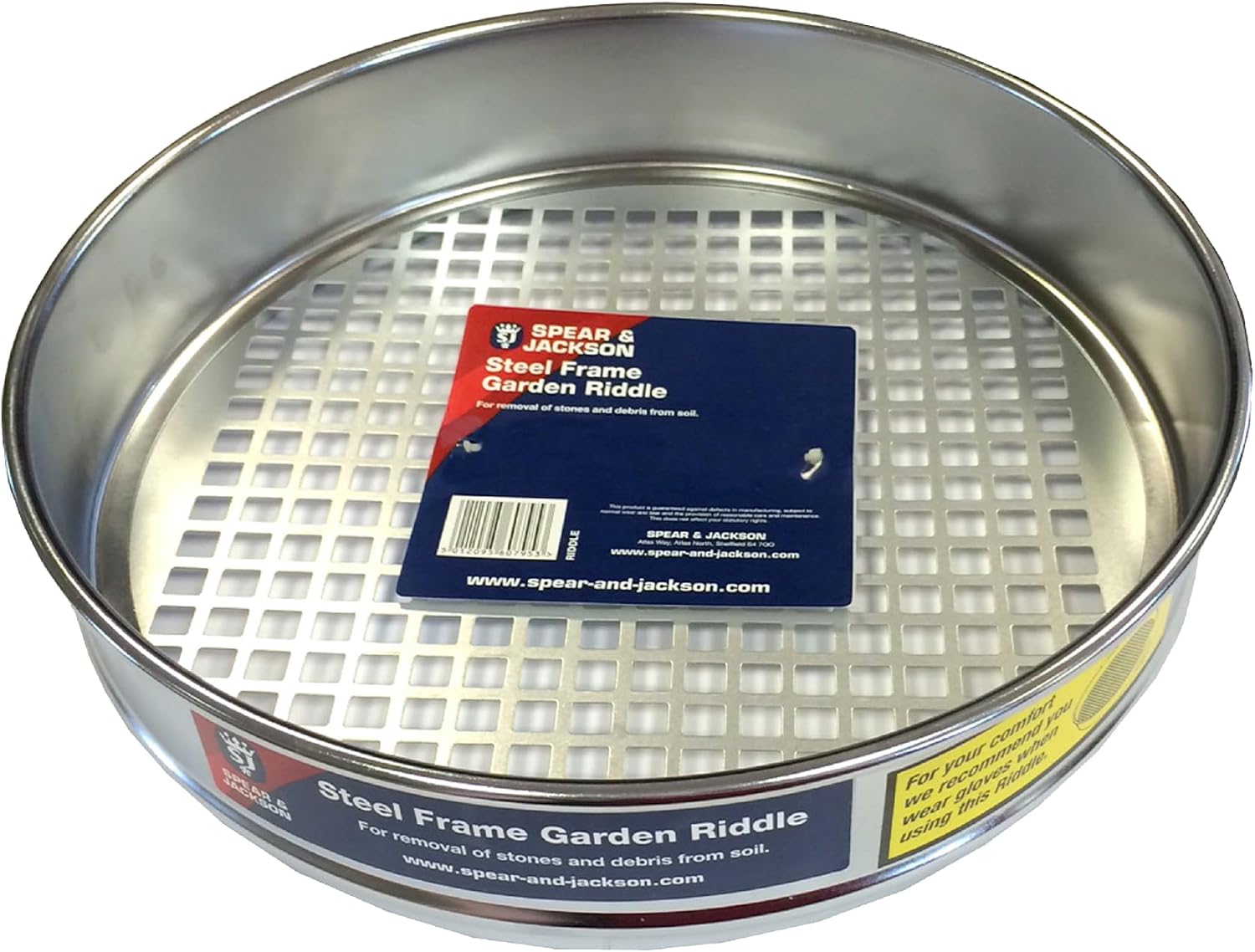
- 13-inch diameter frame holds a good batch of soil per shake.
- Chrome-plated steel construction is built to last.
- 10 mm square holes separate stones and clods from usable soil quickly.
Cons
- Only one hole size, so it cannot produce very fine potting mix.
- No handles; you hold it by the rim.
A simple, sturdy traditional garden riddle from an established tool brand, with thousands of high ratings on Amazon. A dependable first choice for clearing stones out of beds and borders.
Best stone option
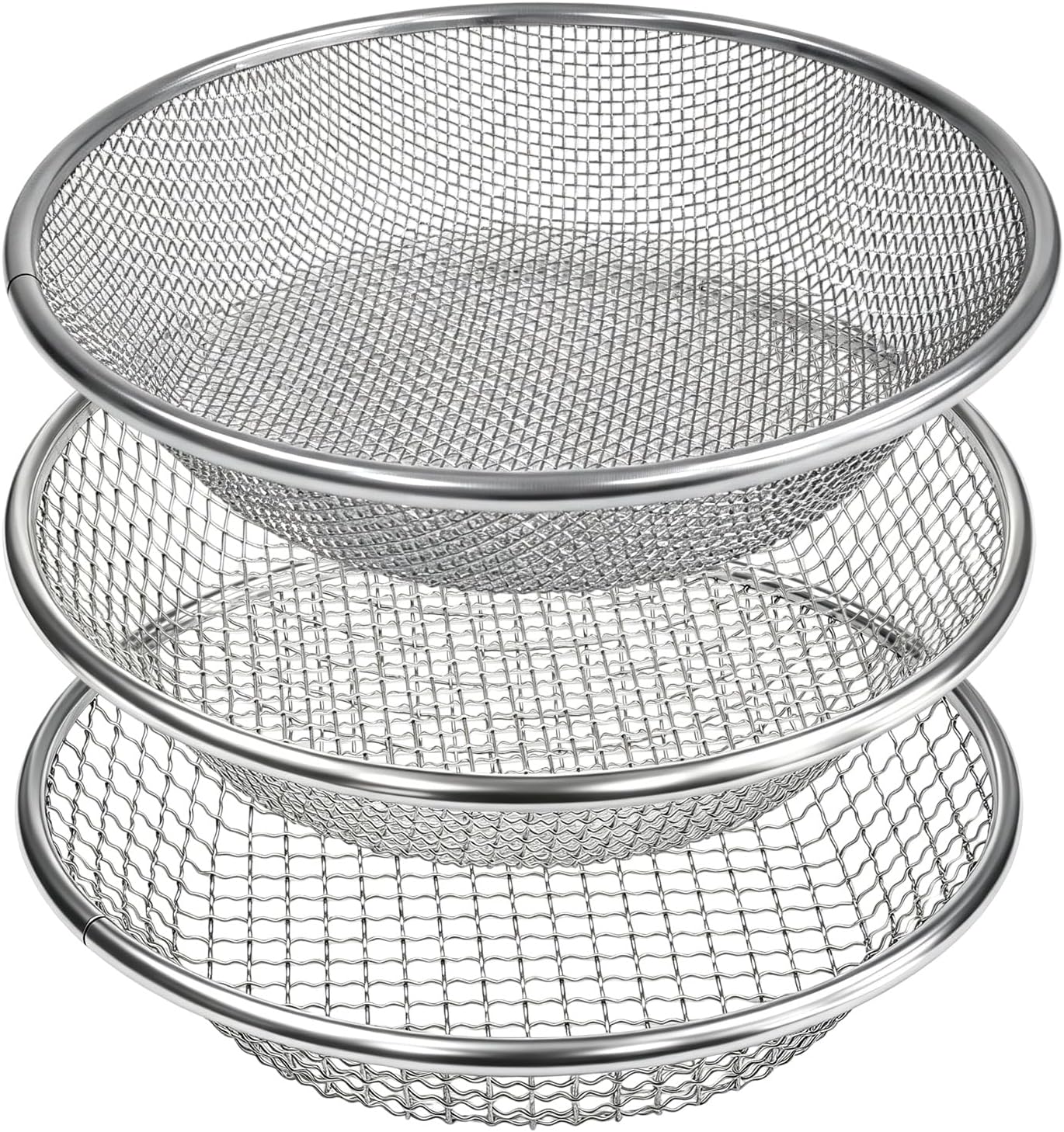
- Three sifters in three mesh sizes, from fine potting soil to coarse compost.
- 11.8-inch diameter sits securely on a 5-gallon bucket so soil drops straight in.
- Galvanized steel frame with rolled, burr-free edges.
Cons
- No handles on the frames.
- Galvanized steel rather than stainless.
- Three separate sifters take more storage space than one frame with swappable screens.
A well-rated, budget-friendly way to screen rocks and roots from soil and compost, with a mesh size for most garden jobs.
Best stainless steel option
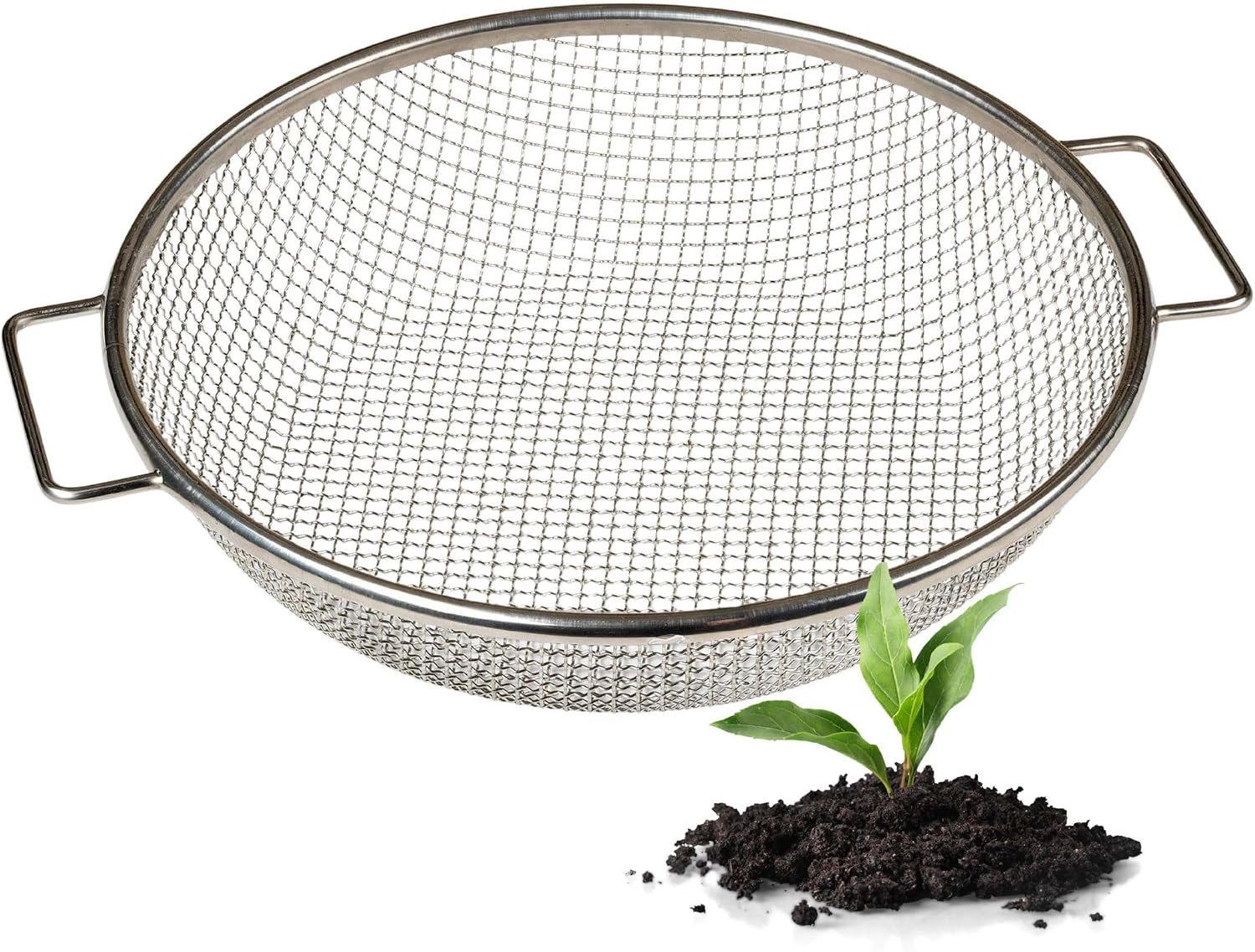
- Rust-resistant stainless steel instead of galvanized wire.
- Built-in side handles give good control while shaking.
- Rigid one-piece frame fits a 5-gallon bucket.
Cons
- Single 1/4-inch mesh only; no interchangeable screens.
- Bucket-sized, so large jobs take many loads.
A rugged stainless steel sifter with handles and very high Amazon ratings, a good choice if you want one screen that will not rust.
Best metal option
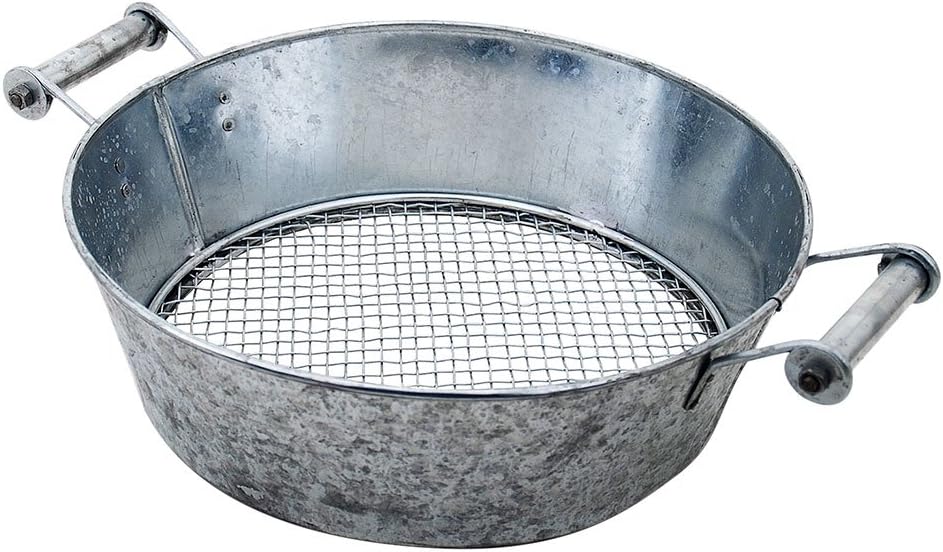
- Galvanized steel frame and mesh for durability.
- Comfortable handles for sifting and for hanging it up.
- Large 15.75 x 19-inch oval screen handles bigger batches.
Cons
- Only one mesh size (3/8 inch).
- Higher price than basic bucket sifters.
A long-standing, well-reviewed metal compost and soil sifter from a known garden brand, good for turning finished compost into fine material for beds.
Best mesh option
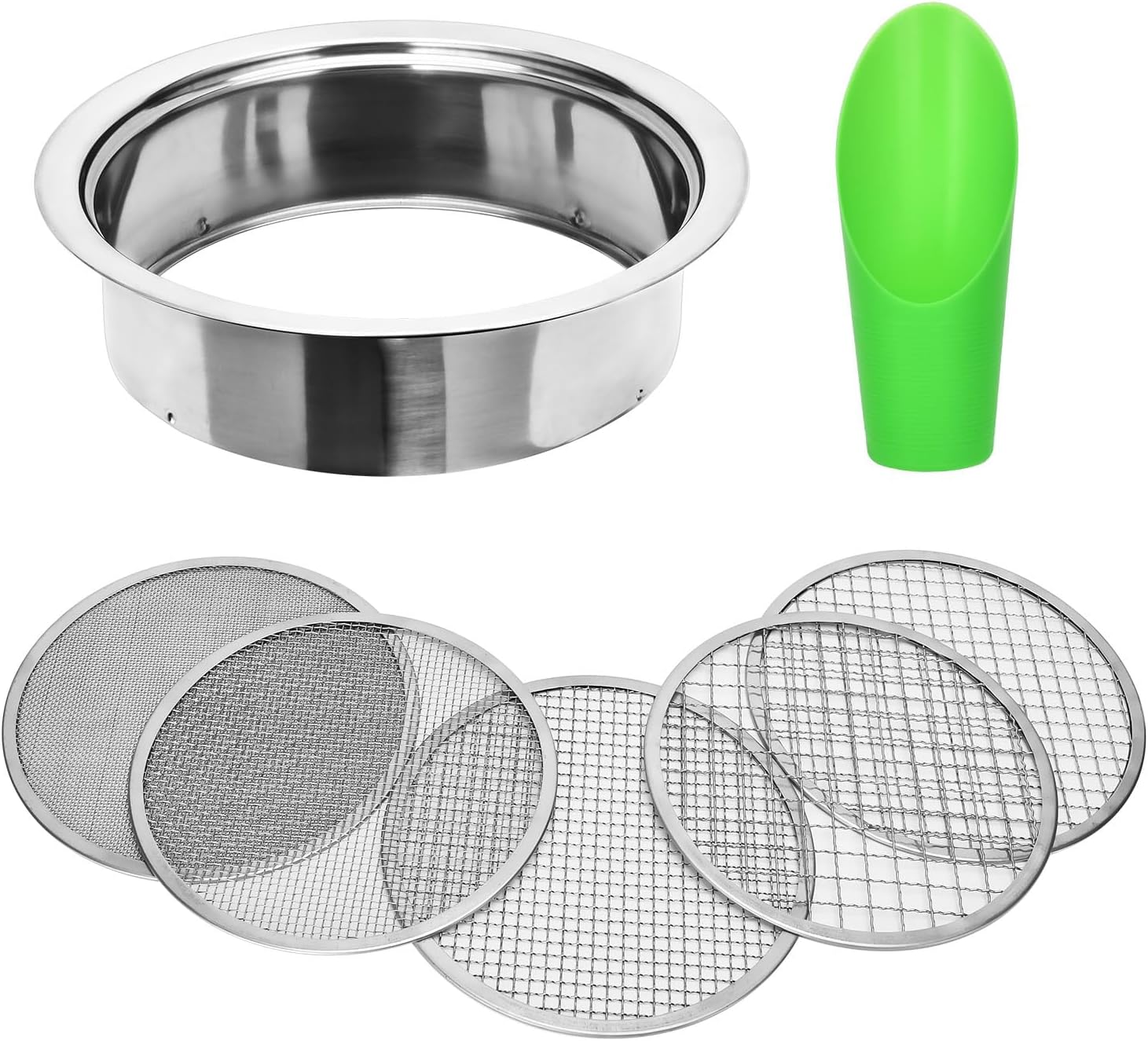
- Five interchangeable screens, including a fine 1 mm mesh.
- 304 stainless steel frame and screens resist corrosion and are easy to clean.
- Four internal bumps in the frame keep each screen seated; screens can be combined.
Cons
- Changing screens takes a moment between jobs.
- Fewer Amazon ratings than the bigger brands in this list.
The widest range of mesh sizes in this list, a strong choice for potting mixes, bonsai soil and seed starting.
Best for small spaces

- Two frames with interchangeable meshes in three sizes.
- Very light and compact for indoor potting work.
Cons
- Very small, so it is not practical for garden beds or compost.
- Plastic construction is less durable than metal riddles.
- Few Amazon ratings so far, with a low average.
A tiny, inexpensive plastic sieve set for potting benches and windowsill growing. For sifting garden soil or compost, choose one of the metal riddles above.
Best lightweight option

- The frame and mesh screens are made of durable metal and stainless steel, ensuring excellent strength and long-lasting use.
- The bottom sieve is both robust and lightweight, making it easy to handle and use.
- The riddle comes with four interchangeable screens that cover all of your bases with multiple meshes designed so that various soil types easily fall through the sieves.
Cons
- The screens sit loosely in the frame and can fall out if it is turned upside down.
- The finest screen is 3 mm, so there is no very fine mesh for seed-starting mix.
- Screen edges can be sharp, so wear gloves.
Overall, the Practicool Garden Potting Mix Sieve suits anyone looking for a high-quality and durable garden riddle for sifting soil. It’s perfect for breaking up the clumps of dirt and sifting out all the stones, weeds, twigs, and other debris. Plus, it comes with four interchangeable screens that cover all of your bases, making it easy to sift any type of soil. It hits the mark where it counts most.
Best for gardens
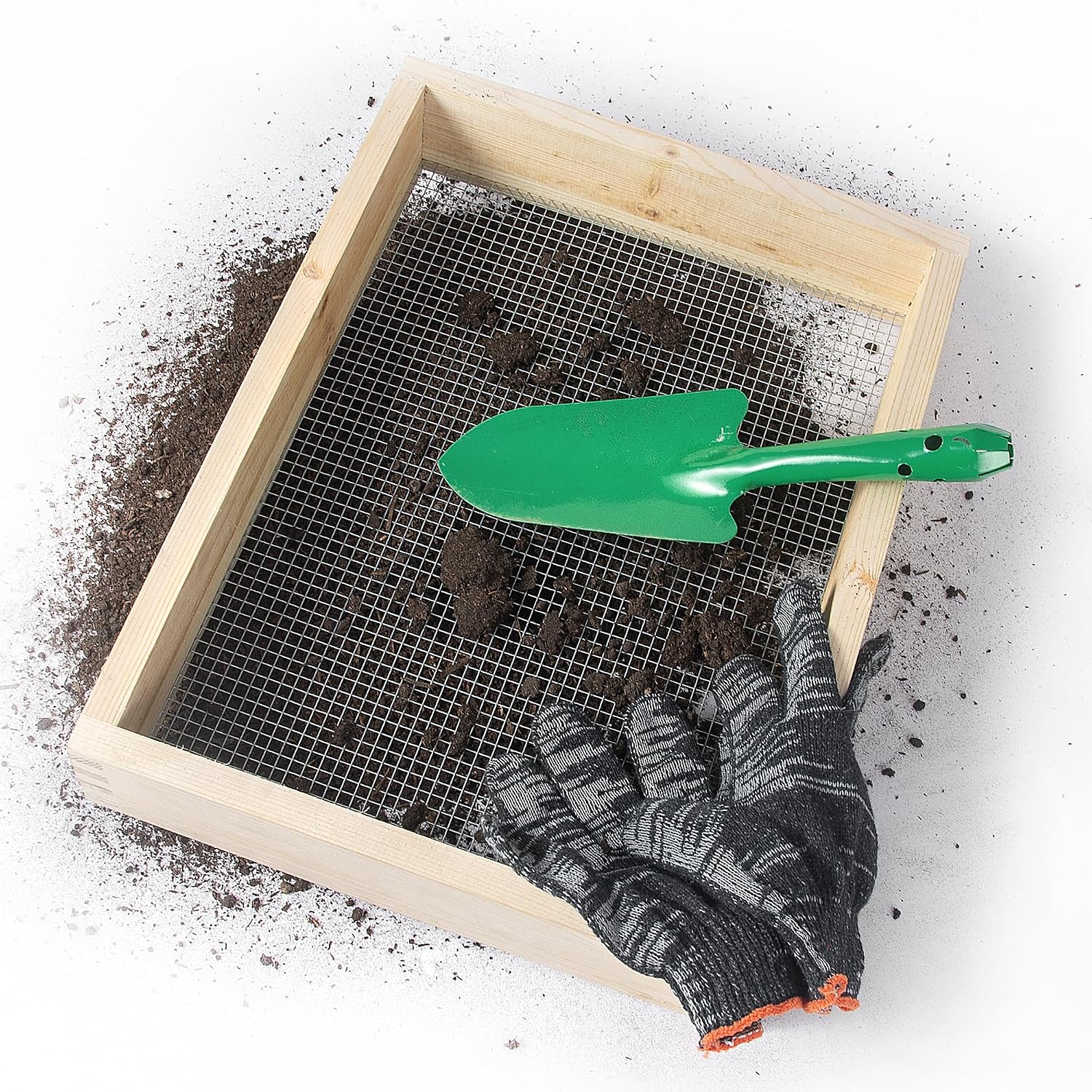
- Large 15.74 x 11.81-inch screen handles bigger batches of soil or compost.
- Includes gloves and a hand trowel, so you can start straight away.
- Solid wood frame with mortise and tenon joints.
Cons
- Wood frame should be kept away from standing water.
- One mesh size (0.24 inch).
A roomy, traditional wood-frame sifter for screening soil and compost before planting flowers or vegetables.
Buying Guide
When it comes to choosing the best garden riddles for sifting soil, there are a few important features to consider. Here are some factors to keep in mind:
Material
The material of the riddle is an important consideration. Look for a durable and sturdy material that won’t bend or break easily. Stainless steel is a popular choice as it is rust-resistant and long-lasting.
Mesh Size
The mesh size of the riddle determines the size of the soil particles that will pass through. Choose a mesh size that is appropriate for the type of soil you are working with. A finer mesh is suitable for sifting through fine soil particles, while a coarser mesh is better for larger particles.
Size and Shape
Consider the size and shape of the riddle. A larger riddle will allow you to sift more soil at once, but may be more difficult to handle. A smaller riddle may be easier to use but will require more time to sift through larger quantities of soil.
Handle
Look for a riddle with a comfortable and sturdy handle. A comfortable grip will make it easier to use for extended periods of time.
We hope this guide has helped you choose the best garden riddle for your needs. Remember to consider the material, mesh size, size and shape, and handle when making your selection.
Frequently Asked Questions
How can we effectively sift soil in our garden?
Sifting soil is an essential process that helps to remove any unwanted debris, rocks, or clumps from the soil. To effectively sift soil in your garden, you can use a garden sieve or a rotary soil sieve. Simply pour the soil into the sieve and shake it gently until the fine soil falls through the mesh. Repeat the process until you have sifted all the soil.
What are the advantages of using a rotary soil sieve over a traditional garden sieve?
A rotary soil sieve is a more efficient and faster way to sift soil compared to a traditional garden sieve. It can sift a larger quantity of soil at once and requires less effort. Additionally, a rotary soil sieve can produce finer soil, which is ideal for planting seeds.
Where can we find a high-quality large garden sieve for our landscaping needs?
You can find a high-quality large garden sieve at your local garden center or hardware store. You can also search for one online, where you can find a wide range of options to choose from.
Can you explain the distinction between a garden riddle and a sieve in horticultural use?
In horticultural use, a garden riddle and a sieve are essentially the same thing. Both are used for sifting soil and removing debris. However, a garden riddle typically has a larger mesh size and is used for removing larger debris such as stones and twigs, whereas a sieve has a finer mesh size and is used for sifting finer soil.
What should we look for when choosing a compost sifter for our home garden?
When choosing a compost sifter, look for one with a sturdy frame and a mesh screen that can withstand the weight of the compost. The mesh size should be fine enough to sift out any large chunks of debris, but not so fine that it clogs easily. Additionally, look for a compost sifter that is easy to clean and store.
How does a garden sieve improve soil quality for planting?
A garden sieve improves soil quality for planting by removing any debris or clumps from the soil, which can hinder plant growth. By sifting the soil, you create a finer and more uniform texture, which allows for better water retention and nutrient absorption. This can result in healthier and more productive plants.
We independently select all products and services. If you click through links we provide, Plant Native may earn a commission with no extra cost to you. As an Amazon Associate I earn from qualifying purchases.


I’ve seen conflicting advice on this topic. This seems reasonable though.
Appreciate the honest feedback, Nathan. Gardening is definitely more nuanced than any single article can cover. Local conditions play a huge role. -Plant Native Team