
Butterfly Japanese Maple (Acer palmatum ‘Butterfly’)
Last updated: November 3, 2026
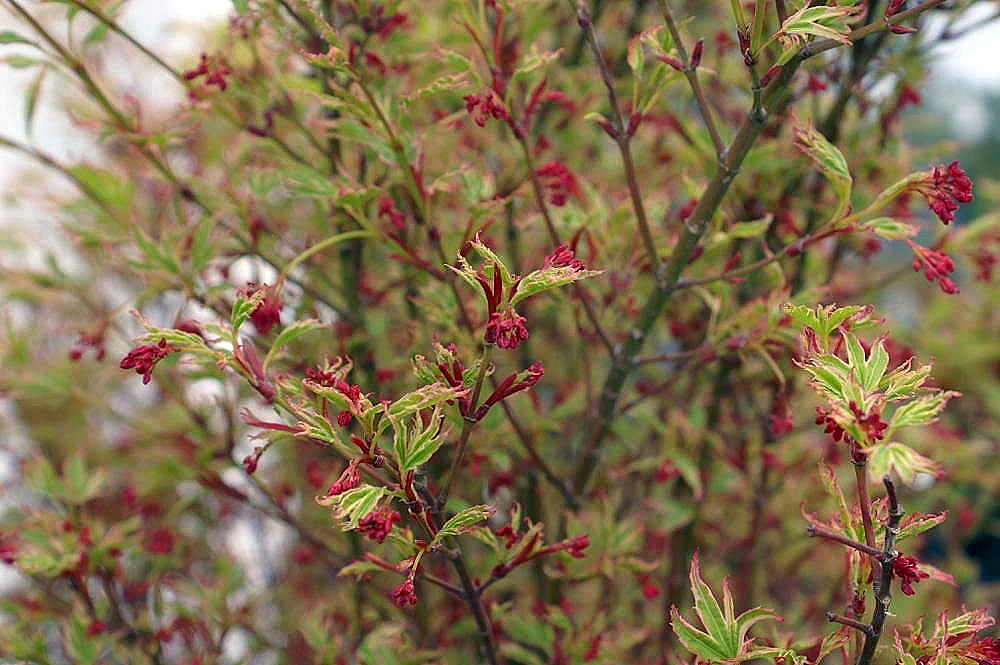
Acer palmatum ‘Butterfly’ is a small, upright, variegated Japanese maple cultivar grown for its delicate gray-green leaves edged in white to cream, which can take on a pink blush as they emerge in spring. The fine variegation and narrow, airy habit give the shrub a light, fluttering appearance that inspired its name.
Gardeners choose ‘Butterfly’ when they want variegated foliage interest in a compact, upright form that fits small gardens, narrow side yards, and large containers. Because variegated Japanese maples are generally slower and less vigorous than solid-green cultivars, ‘Butterfly’ stays modest in size for many years, making it useful where space is limited.
Japanese maple (Acer palmatum) is not native to North America; it is native to Japan, Korea and eastern China. It is not on federal noxious weed lists, but seedlings of the species can occasionally escape cultivation in parts of the eastern United States, especially the Mid-Atlantic. Variegated cultivars such as ‘Butterfly’ are generally slow-growing and set less seed than vigorous green-leafed selections, but gardeners near natural areas should still remove any volunteer seedlings, which will not come true from seed and often revert to plain green.
Identification
Bark & Stems
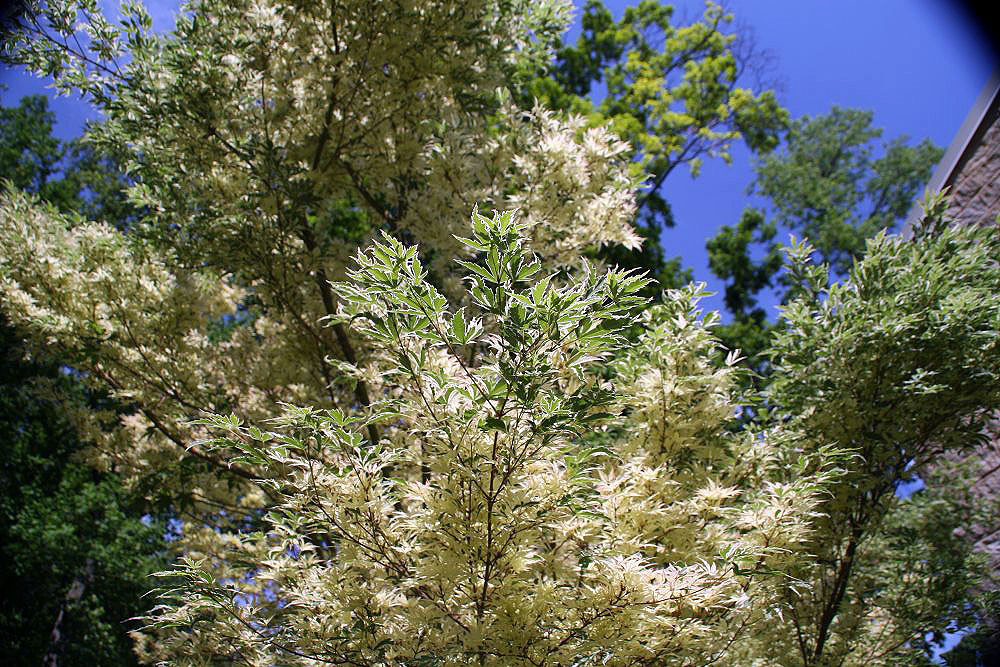
Stems are slender, upright, and gray-brown, forming a narrow, multi-stemmed shrub rather than a single-trunked tree. The habit is distinctly vertical compared with the rounded form of many Japanese maple cultivars.
Leaves
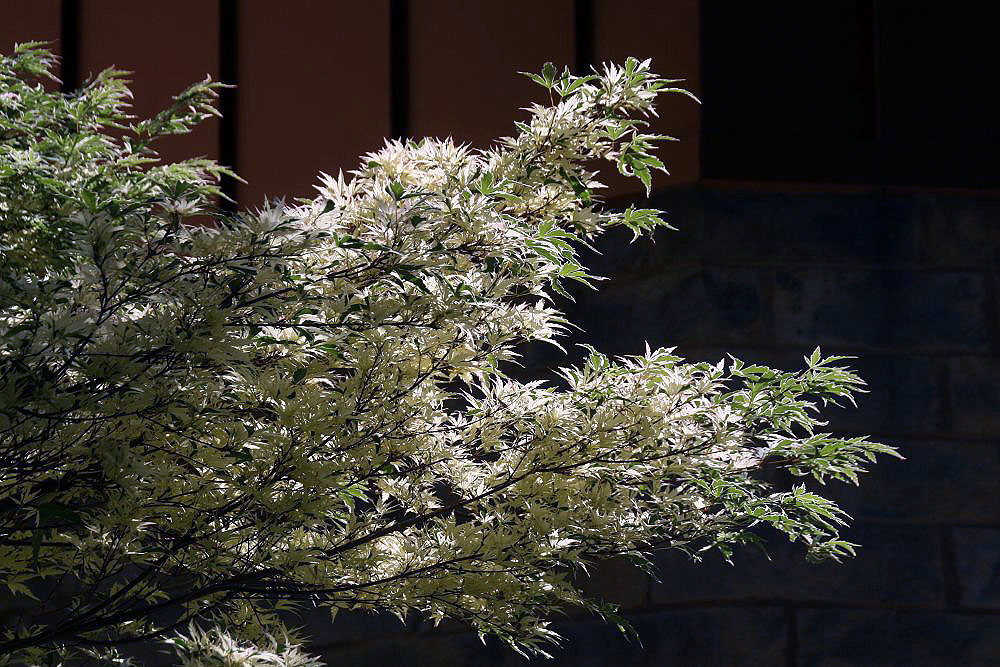
Leaves are small, deeply divided into five to seven narrow lobes, gray-green at the center with irregular white to cream margins; new growth often shows a pink tinge. Occasional branches may revert to solid green and should be pruned out, since reverted growth is more vigorous and will eventually overtake the variegated portions.
Flowers
Small reddish-purple flowers appear in spring, inconspicuous among the unfolding variegated leaves.
Fruit & Seeds
Paired winged samaras form through summer; they are minor features and not a significant ornamental draw on this cultivar.
Quick Facts
| Scientific Name | Acer palmatum ‘Butterfly’ |
| Cultivar | Butterfly |
| Family | Sapindaceae (Maple) |
| Plant Type | Deciduous upright variegated shrub |
| Native to North America | No — introduced from Japan, Korea and eastern China |
| Mature Height | 8–10 ft |
| Mature Spread | 4–6 ft |
| Growth Rate | Slow |
| Sun Exposure | Part shade (protect variegated leaves from hot afternoon sun) |
| Water Needs | Moderate; consistent moisture, well-drained soil |
| Soil Type | Rich, well-drained loam |
| Soil pH | Slightly acidic (5.5–6.5) preferred |
| Bloom Time | Spring (inconspicuous) |
| Leaf / Fall Color | Gray-green with white/cream margins, pink-tinged new growth; pink-purple fall tones |
| Fruit | Small winged samaras, minor ornamental value |
| Deer Resistant | Moderately |
| USDA Hardiness Zones | 5–8 |
| Invasive Status | Not federally listed; slow-growing variegated form sets limited seed |
Origin & Where It Grows
The species Acer palmatum is native to Japan, Korea and eastern China. ‘Butterfly’ is a variegated sport selected within Japanese horticultural tradition, part of a long history of Japanese nurserymen selecting and preserving unusual leaf-color mutations found on Japanese maple trees.
In the United States, ‘Butterfly’ grows best in USDA zones 5 through 8, and performs particularly well in the Pacific Northwest and mid-Atlantic, where moderate summer heat and humidity are less likely to scorch its delicate variegated leaves than in the Deep South or Southwest.
Growing & Care Guide
Light
‘Butterfly’ needs some shade protection, especially from hot afternoon sun, which can scorch the thin, white-margined leaf tissue. Morning sun with afternoon shade, or dappled light all day, gives the best results in most climates.
Soil & Water
Plant in rich, well-drained soil and keep moisture consistent; variegated leaves are more prone to scorch under drought stress than solid-green cultivars. Mulch to conserve moisture and moderate soil temperature.
Planting Tips
Site ‘Butterfly’ out of strong wind, which can tatter and brown the delicate leaf margins, and away from reflected heat off pavement or walls.
Pruning & Maintenance
Inspect regularly for reverted, solid-green shoots, which grow faster than variegated growth and will eventually dominate the plant if not removed; prune these out at their point of origin as soon as they appear. Otherwise, minimal pruning is needed beyond removing dead or crossing twigs in winter.
Propagation
‘Butterfly’ must be propagated by grafting or cuttings from variegated wood to preserve the variegation; seed-grown plants will not reliably show the white-margined leaf pattern and often revert to green.
Landscape Uses
- Narrow side yards and tight planting beds, thanks to its upright habit
- Container specimen for patios and entries
- Light-colored accent against dark evergreen backdrops
- Mixed borders where variegated foliage adds contrast without overwhelming neighboring plants
Wildlife & Ecological Value
Japanese maple, including variegated cultivars like ‘Butterfly’, offers limited ecological value in North America: its flowers attract few specialist pollinators, and its foliage supports far fewer native insect and caterpillar species than native maples, since it did not evolve alongside North American wildlife. Variegated leaves, which contain less chlorophyll, are generally even less attractive to foliage-feeding insects than solid-green cultivars. Any wildlife use is incidental, such as occasional perching or cover within the dense twiggy growth.
Native Alternatives
If you want a similar look with a plant native to North America, consider these:
- Vine maple (Acer circinatum) — a native Pacific Northwest understory tree with palmate leaves and good fall color, often used the way Japanese maple is used in gardens.
- Red maple (Acer rubrum) — a widespread native shade tree with brilliant red fall color and much greater wildlife and pollinator value than Japanese maple.
- Rocky Mountain maple (Acer glabrum) — a small native maple with lobed leaves and attractive form for western gardens.
- Fringetree (Chionanthus virginicus) — a small native flowering tree that offers a different but comparably ornamental accent, with fragrant spring flowers and strong wildlife value.
History & Uses
Variegated Japanese maple cultivars like ‘Butterfly’ arose from the long Japanese nursery tradition of spotting and propagating naturally occurring color mutations (‘sports’) on Japanese maple trees, then stabilizing them through grafting. This practice produced many of the variegated, dissected and otherwise unusual Japanese maple forms now grown worldwide.
‘Butterfly’ became popular in Western gardens as demand grew for smaller, more texturally varied Japanese maples suited to contemporary smaller gardens, where its narrow form and light-colored foliage provide contrast without requiring the space of larger cultivars.
Frequently Asked Questions
Is Butterfly Japanese maple native to North America?
No. Japanese maple (Acer palmatum) is native to Japan, Korea and eastern China. ‘Butterfly’ is an introduced, slow-growing variegated cultivar that sets limited seed; it is not considered a significant escape risk, but any seedlings should still be removed near natural areas, and note that seedlings will not have the variegated foliage of the parent.
Why does my Butterfly Japanese maple have plain green branches?
This is leaf reversion, common in variegated cultivars: a branch mutates back to produce solid-green, more vigorous growth. Prune reverted branches out at their base as soon as you notice them, or they will eventually outcompete the variegated portions of the plant.
How much sun can Butterfly Japanese maple tolerate?
It prefers some shade, particularly in the afternoon in hot climates, since its thin, white-margined leaves are more prone to sun scorch than solid-green cultivars. Morning sun with afternoon shade is generally ideal.
How big does Butterfly Japanese maple get?
It stays compact, typically 8 to 10 feet tall and only 4 to 6 feet wide, with a distinctly narrow, upright habit well suited to small spaces.
Can Butterfly Japanese maple be grown in a container?
Yes, its slow growth rate and narrow form make it a good container specimen, as long as it has well-drained soil, consistent water, and some protection from harsh afternoon sun.

