
Katsura Japanese Maple (Acer palmatum ‘Katsura’)
Last updated: November 3, 2026
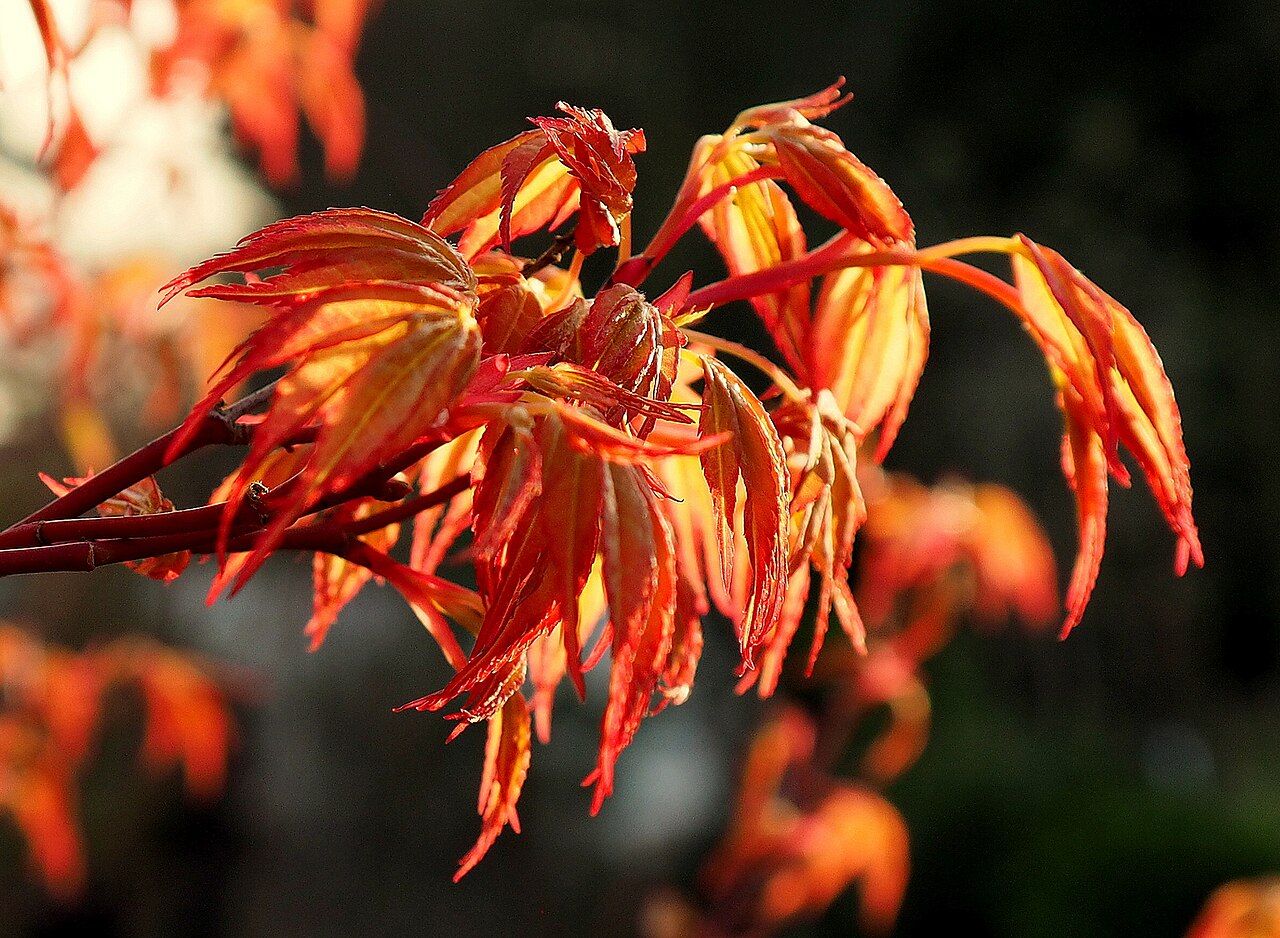
Acer palmatum ‘Katsura’ is a small, upright Japanese maple cultivar prized for its striking spring foliage, which emerges in vivid shades of orange, apricot and gold before settling into soft light green for summer. The cultivar takes its name from the Katsura Imperial Villa in Kyoto, one of Japan’s most celebrated traditional gardens, reflecting the refined, seasonal character gardeners associate with the cultivar.
Gardeners grow ‘Katsura’ for its compact size and multi-season interest: unlike cultivars chosen for a single big fall display, ‘Katsura’ offers a colorful spring emergence, pleasant summer green, and a return to gold and orange tones in fall. Its small stature makes it one of the more practical Japanese maple cultivars for small gardens, foundation plantings, and containers.
Japanese maple (Acer palmatum) is not native to North America; it is native to Japan, Korea and eastern China. It is not on federal noxious weed lists, but in parts of the eastern United States, particularly the Mid-Atlantic, seedlings can occasionally escape into forest edges. ‘Katsura’ is a relatively dwarf, twiggy cultivar that tends to set less seed than larger, more vigorous Japanese maple selections, but gardeners near natural areas should still watch for and remove any volunteer seedlings.
Identification
Bark & Stems
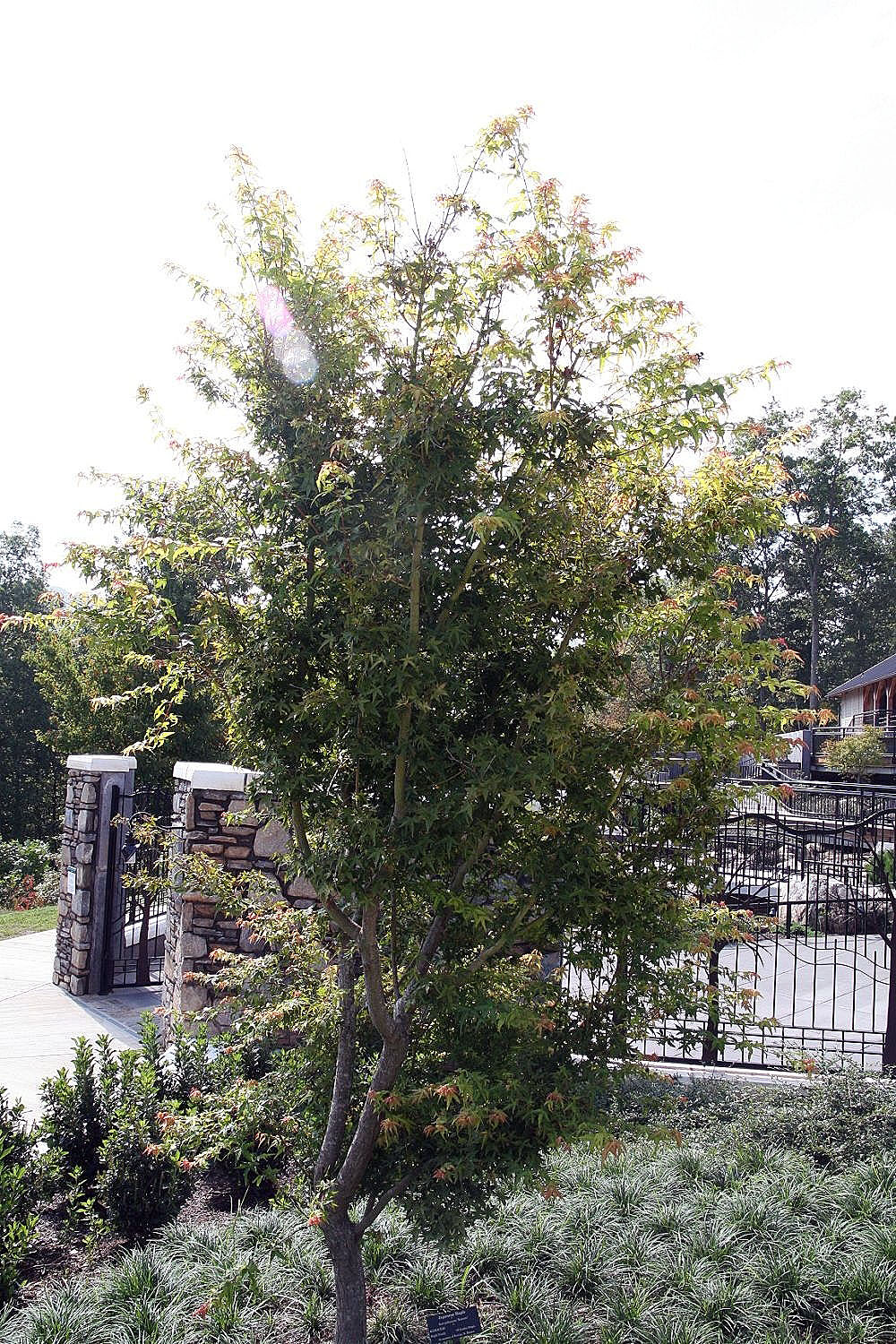
Young twigs are slender and greenish to reddish-brown, maturing to a smooth gray-brown bark. The overall habit is upright and rounded, more compact and twiggy than larger Japanese maple cultivars.
Leaves
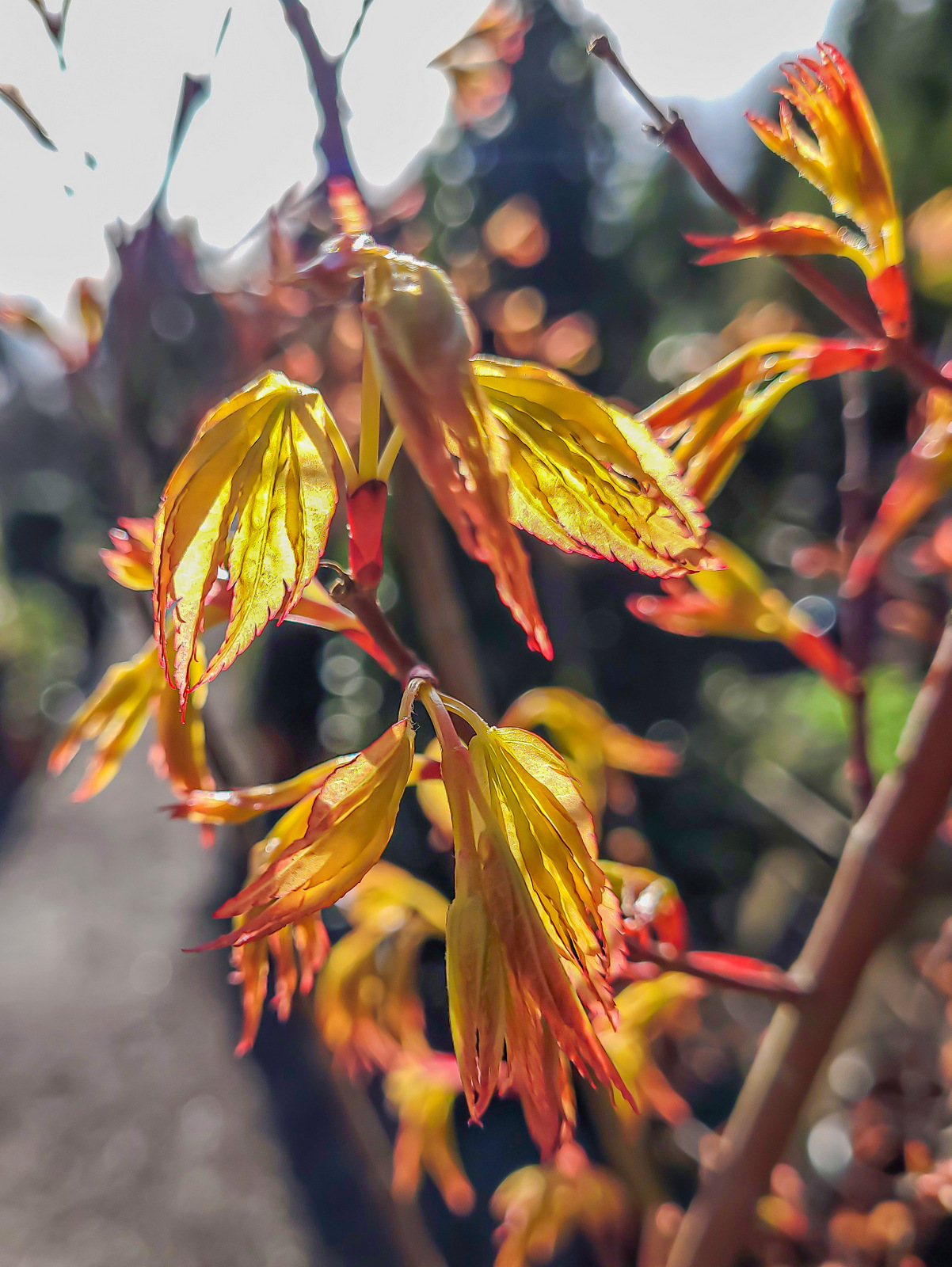
Leaves are small, usually 1.5 to 2.5 inches across, with five to seven narrow, finely toothed lobes. New spring growth is a striking blend of orange, apricot and yellow, sometimes with red leaf edges, maturing to a soft light green through summer and shifting to gold and orange again in fall.
Flowers
Small reddish-purple flowers appear in spring as the leaves emerge, in short drooping clusters; they are not a significant ornamental feature compared with the foliage color.
Fruit & Seeds
Paired winged samaras develop through summer and mature by fall; they are small and not especially ornamental, though they add light texture to the canopy.
Quick Facts
| Scientific Name | Acer palmatum ‘Katsura’ |
| Cultivar | Katsura |
| Family | Sapindaceae (Maple) |
| Plant Type | Deciduous upright shrub/small tree |
| Native to North America | No — introduced from Japan, Korea and eastern China |
| Mature Height | 8–12 ft |
| Mature Spread | 6–8 ft |
| Growth Rate | Slow to moderate |
| Sun Exposure | Part shade best (protects spring color); tolerates more sun in cooler climates |
| Water Needs | Moderate; consistent moisture, well-drained soil |
| Soil Type | Rich, well-drained loam |
| Soil pH | Slightly acidic (5.5–6.5) preferred |
| Bloom Time | Spring (inconspicuous) |
| Leaf / Fall Color | Orange-gold-apricot in spring; light green in summer; gold-orange in fall |
| Fruit | Small winged samaras, minor ornamental value |
| Deer Resistant | Moderately |
| USDA Hardiness Zones | 5–8 |
| Invasive Status | Not federally listed; lower seed set than large vigorous cultivars, but seedlings can still escape locally |
Origin & Where It Grows
The species Acer palmatum is native to the forests and mountain slopes of Japan, Korea and eastern China. ‘Katsura’ is a Japanese-origin cultivar named for the Katsura Imperial Villa, a renowned 17th-century garden in Kyoto famous for its refined, seasonally changing plantings, which reflects the cultivar’s reputation for layered seasonal color.
In U.S. gardens, ‘Katsura’ is best suited to USDA zones 5 through 8, and performs particularly well in the Pacific Northwest, the mid-Atlantic and parts of the upper South and Midwest, where it can be sited with some protection from the hottest afternoon sun so its spring color does not scorch.
Growing & Care Guide
Light
‘Katsura’ shows its best spring color with some protection from intense midday and afternoon sun, which can scorch the delicate new orange-gold leaves. Morning sun with afternoon shade works well in zones 7 and 8; in cooler zones it can take more direct sun.
Soil & Water
Plant in rich, well-drained soil and water consistently, especially during the first two growing seasons. Like most Japanese maples, it dislikes both waterlogged soil and prolonged drought.
Planting Tips
Because of its compact size, ‘Katsura’ works well near patios, entries, and other spots where its spring and fall color will be seen up close. Shelter it from strong, drying winds that can damage the thin spring foliage.
Pruning & Maintenance
Minimal pruning is needed; remove dead or crossing twigs in winter dormancy to maintain an open, airy structure. Avoid shearing, which spoils the natural layered form.
Propagation
‘Katsura’ is propagated by grafting or cuttings to preserve its distinctive spring leaf color; seedlings grown from its samaras will not reliably reproduce the parent’s coloring.
Landscape Uses
- Small-space specimen for patios, entries, and foundation plantings
- Container growing, where its compact size suits large pots
- Companion to spring bulbs, which bloom alongside ‘Katsura’s colorful new growth
- Understory accent beneath larger shade trees
Wildlife & Ecological Value
As an introduced species, Japanese maple provides limited ecological value in North America compared with native trees. Its flowers draw few specialist pollinators, and its foliage hosts far fewer native caterpillar and insect species than native maples, since most North American Lepidoptera have not co-evolved with it. Some small birds may glean insects from the dense twiggy growth, and the canopy offers modest cover, but it should not be relied on as a wildlife planting.
Native Alternatives
If you want a similar look with a plant native to North America, consider these:
- Vine maple (Acer circinatum) — a native Pacific Northwest understory tree with palmate leaves and good fall color, often used the way Japanese maple is used in gardens.
- Red maple (Acer rubrum) — a widespread native shade tree with brilliant red fall color and much greater wildlife and pollinator value than Japanese maple.
- Rocky Mountain maple (Acer glabrum) — a small native maple with lobed leaves and attractive form for western gardens.
- Fringetree (Chionanthus virginicus) — a small native flowering tree that offers a different but comparably ornamental accent, with fragrant spring flowers and strong wildlife value.
History & Uses
‘Katsura’ is part of a long Japanese tradition of selecting Japanese maple cultivars for subtle, refined seasonal qualities rather than single dramatic traits, a tradition closely tied to Japanese garden design. Its name references one of Japan’s most admired historic gardens, underscoring the cultivar’s association with careful, seasonally aware planting design.
In Western horticulture, ‘Katsura’ became popular as Japanese maple cultivars diversified beyond the classic purple-leafed and dissected forms, offering gardeners a smaller, more manageable tree with multi-season color rather than relying on fall display alone.
Frequently Asked Questions
Is Katsura Japanese maple native to North America?
No. Japanese maple (Acer palmatum) is native to Japan, Korea and eastern China. ‘Katsura’ is an introduced ornamental cultivar; while it sets relatively little seed compared with larger, more vigorous cultivars, gardeners near natural woodlands should still watch for and remove any seedlings.
Why does Katsura’s foliage change color so much through the season?
‘Katsura’ is specifically valued for its shifting foliage: orange-gold in spring, light green in summer, and gold-orange again in fall, giving it more seasons of interest than cultivars chosen only for fall color.
How big does Katsura Japanese maple get?
It stays relatively small, typically 8 to 12 feet tall and 6 to 8 feet wide at maturity, making it a good fit for small gardens and containers.
Does Katsura need shade?
It benefits from some afternoon shade in hot climates to protect its delicate spring leaf color from scorching, though it tolerates more sun in cooler regions.
Can Katsura Japanese maple be grown in a pot?
Yes. Its compact, slow-to-moderate growth rate makes it well suited to large containers, provided it has well-drained soil and consistent watering.

