
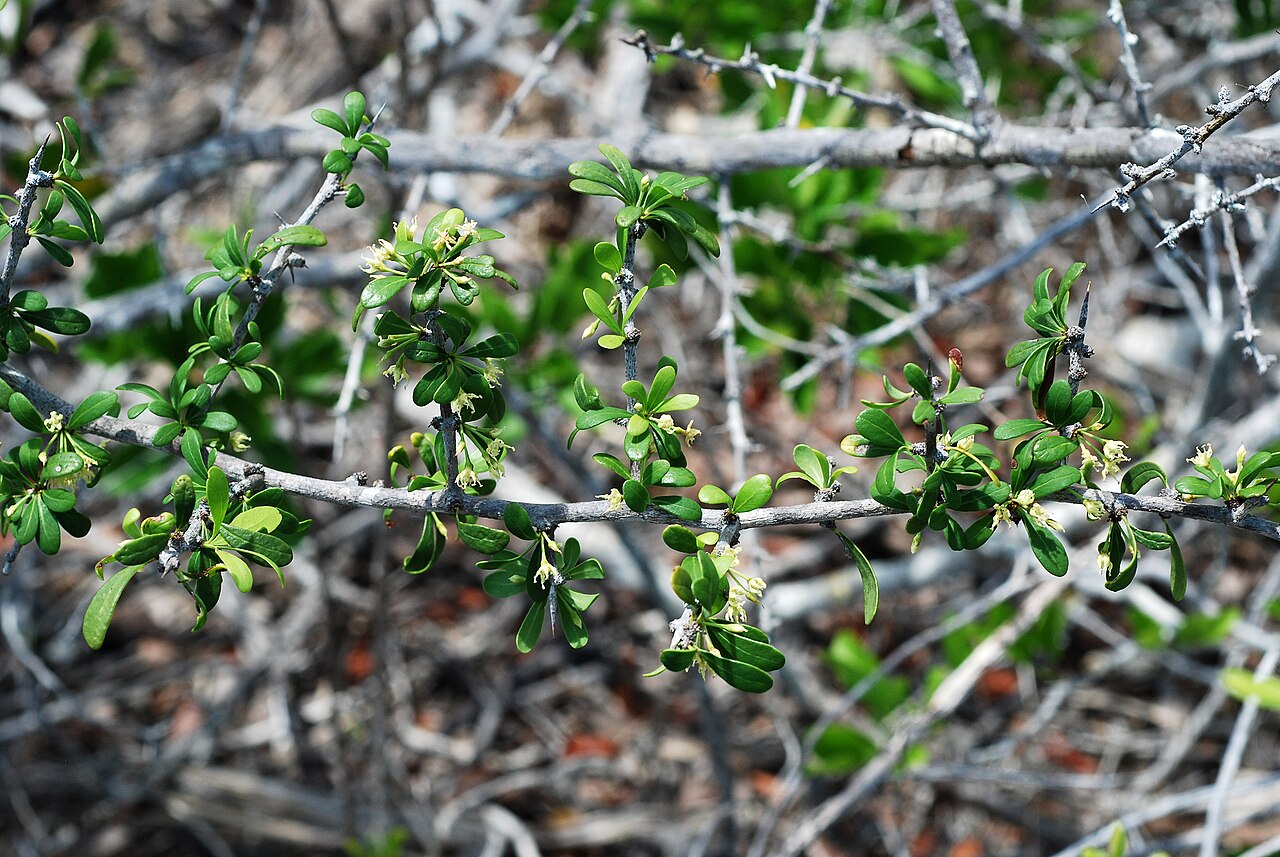
Saffron Plum’s dense, zig-zag thorny branching with small clustered leaves. Photo: Wikimedia Commons (CC BY-SA 4.0) Sideroxylon celastrinum (long known as Bumelia celastrina), commonly called
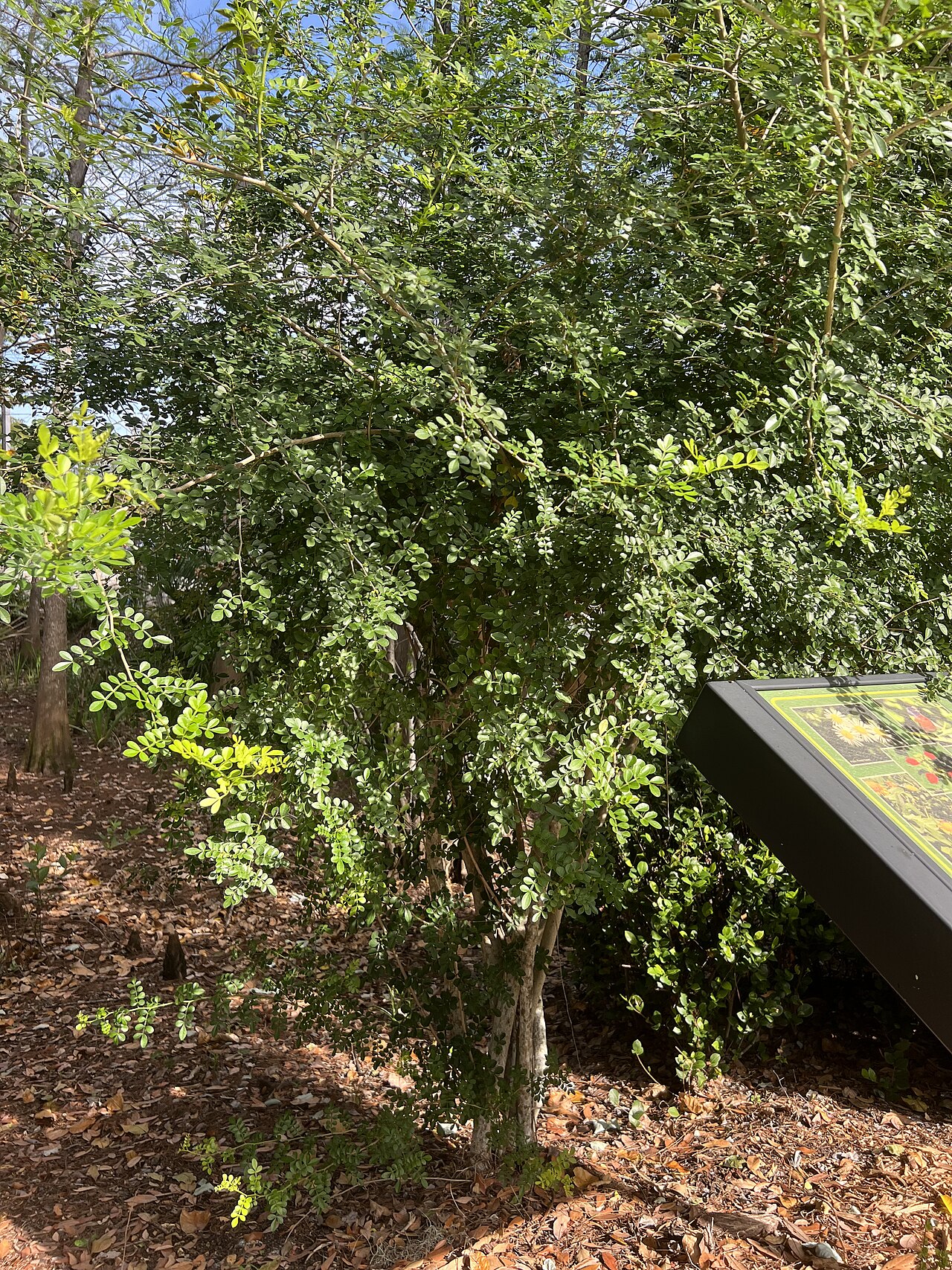
Lime Pricklyash growing as a dense, arching shrub. Photo: Katherine Wagner-Reiss, Wikimedia Commons (CC BY-SA 4.0) Zanthoxylum fagara, commonly called Lime Pricklyash or Wild Lime
Leucaena pulverulenta, commonly called Great Leadtree, Mexican Leadtree, or tepeguaje, is the largest and fastest-growing native legume tree of the Rio Grande Valley. Where many
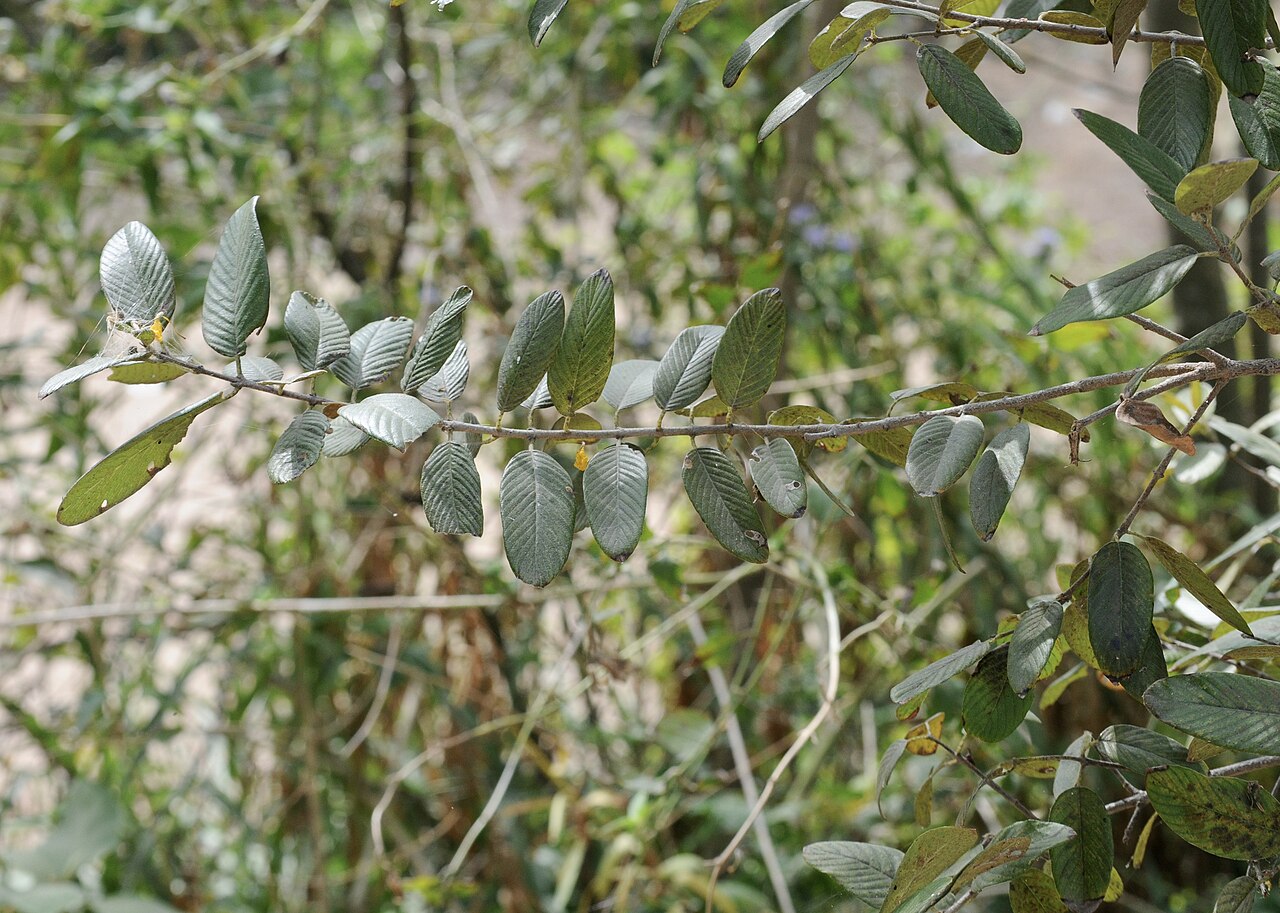
Coyotillo’s opposite leaves with closely spaced parallel veins, photographed at Edinburg Scenic Wetlands, Hidalgo County, Texas. Photo: sonnia hill, Wikimedia Commons (CC BY 2.0) Karwinskia
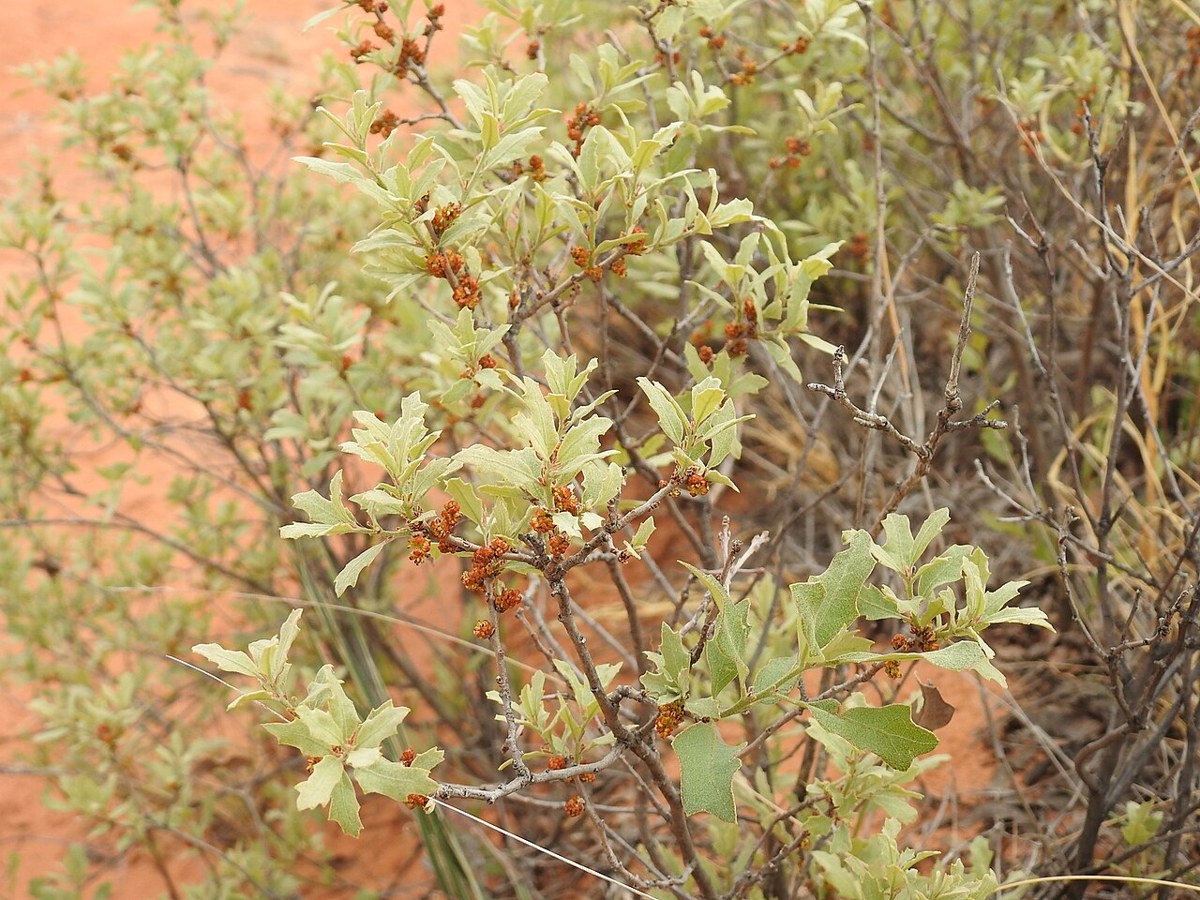
Flowering Shin Oak, Eddy County, New Mexico, showing its typical low, thicket-forming habit. Photo: bobnieman / Wikimedia Commons (CC BY 4.0) Quercus havardii, known as
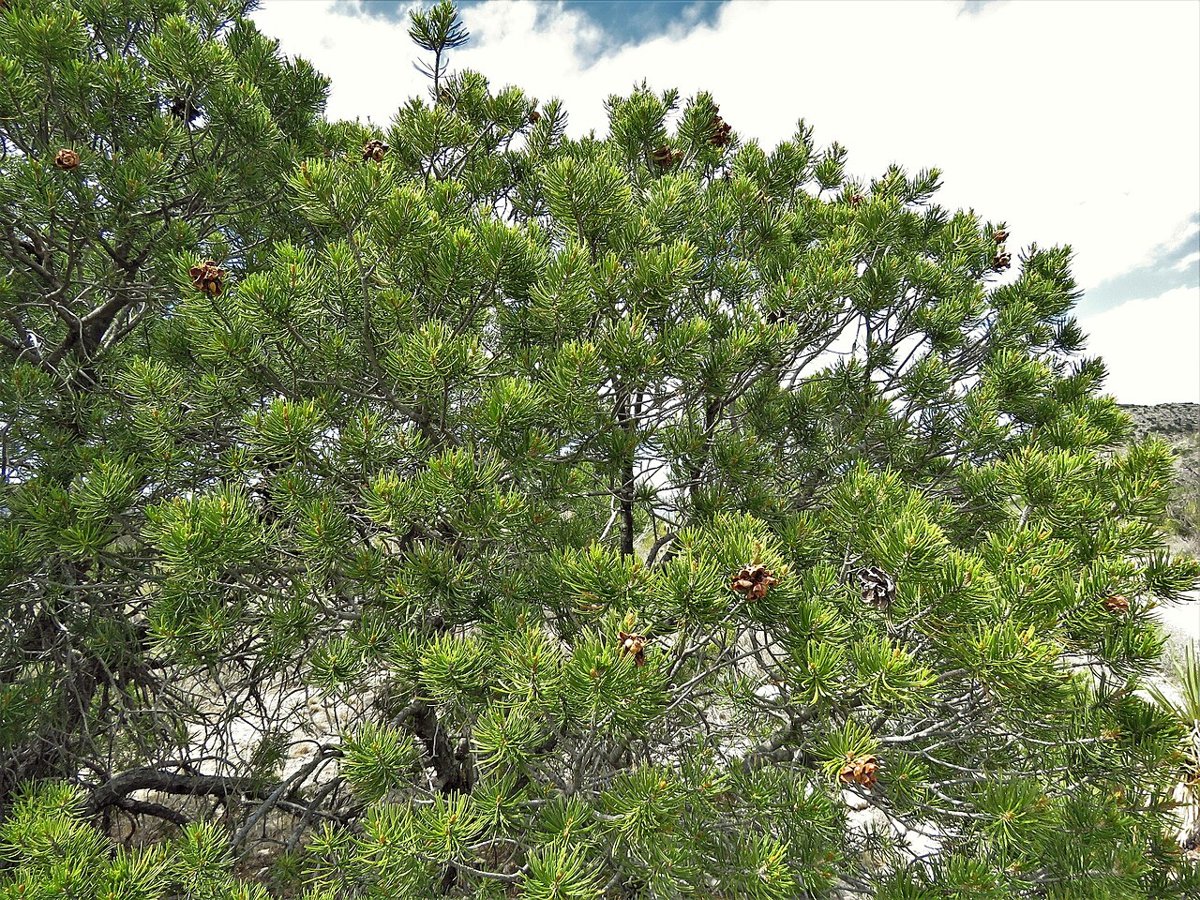
A Papershell Pinyon at Elephant Mountain Wildlife Management Area, Brewster County, Texas. Photo: Wikimedia Commons (CC BY 4.0) Pinus remota, the Papershell Pinyon, is a
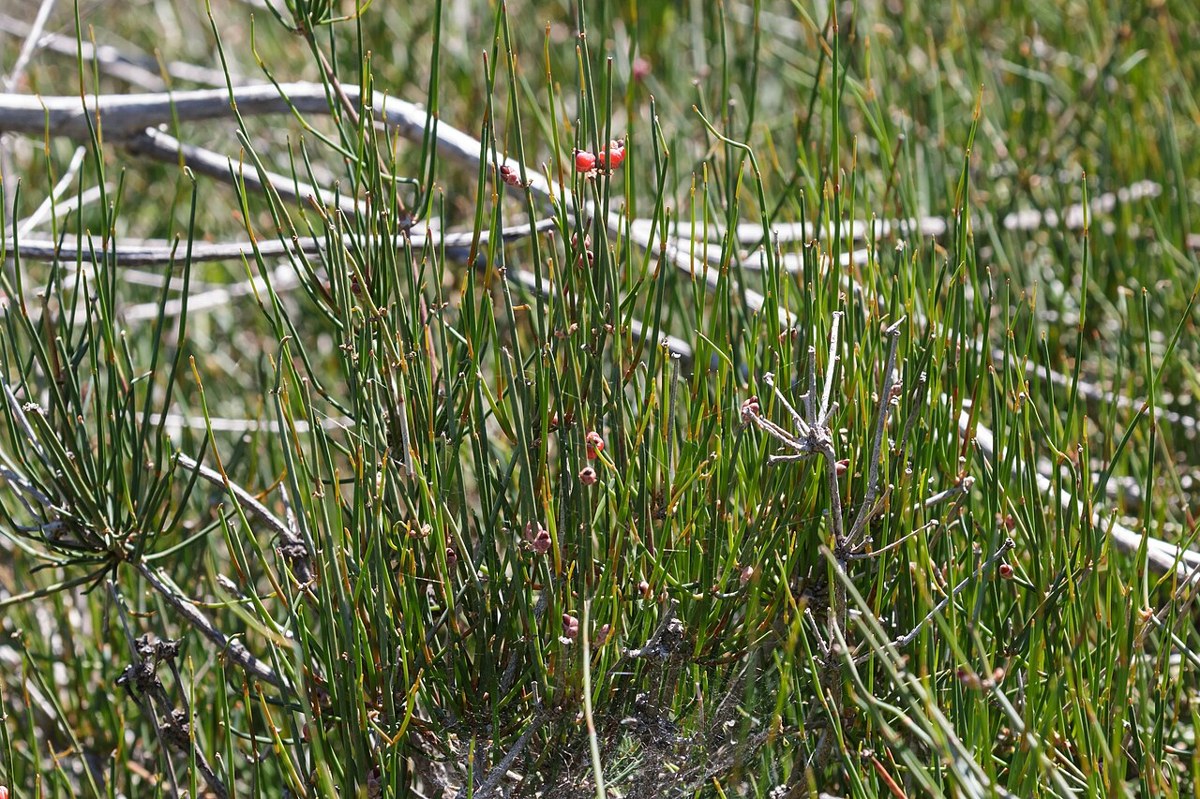
Mormon Tea’s leafless, jointed green stems with ripening red fruit. Photo: Meghan Cassidy / Wikimedia Commons (CC BY-SA 4.0) Ephedra antisyphilitica, commonly called Mormon Tea,
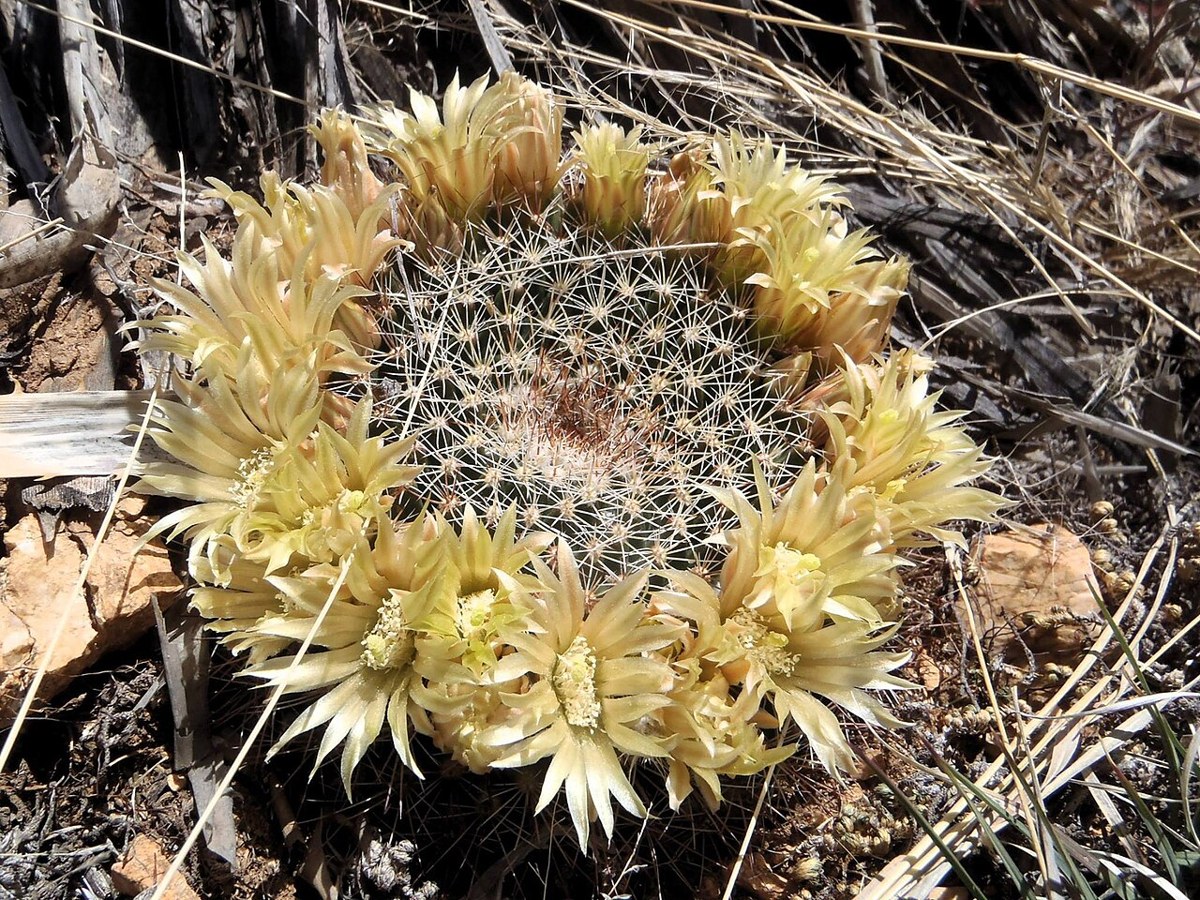
Little Nipple Cactus in bloom, Saguaro National Park, Arizona. Photo: DataEcologist / Wikimedia Commons (CC BY-SA 4.0) Mammillaria heyderi, the Little Nipple Cactus, is a
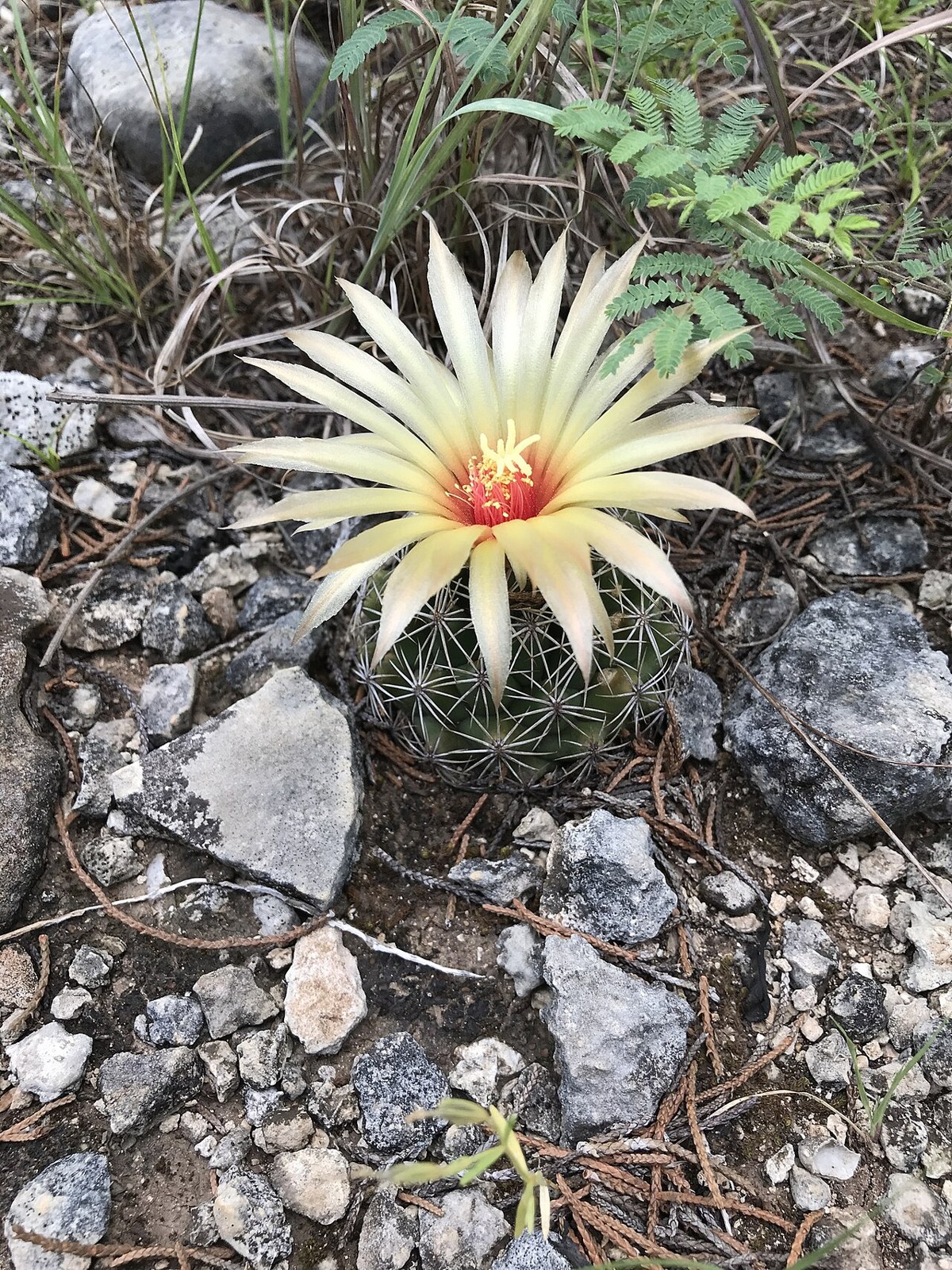
Cob Cactus in bloom on a limestone flat, Fort Hood, Bell County, Texas. Photo: lanechaffin / iNaturalist via Wikimedia Commons (CC0) Coryphantha sulcata, known as
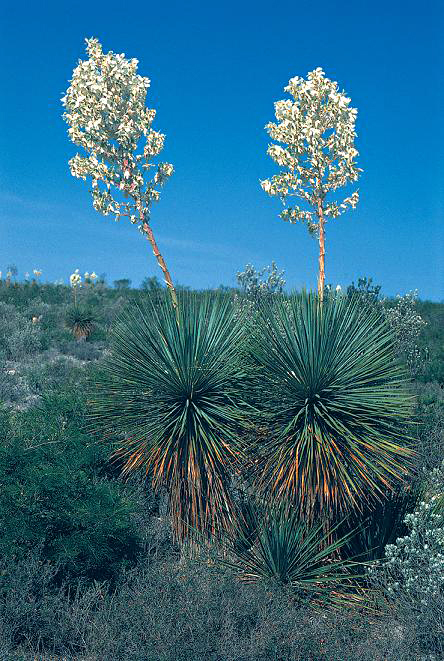
A pair of flowering Thompson’s yucca in Trans-Pecos Texas habitat, their white blooms held well above the blue-green rosettes. Photo: Wikimedia Commons (Public domain /
View More