
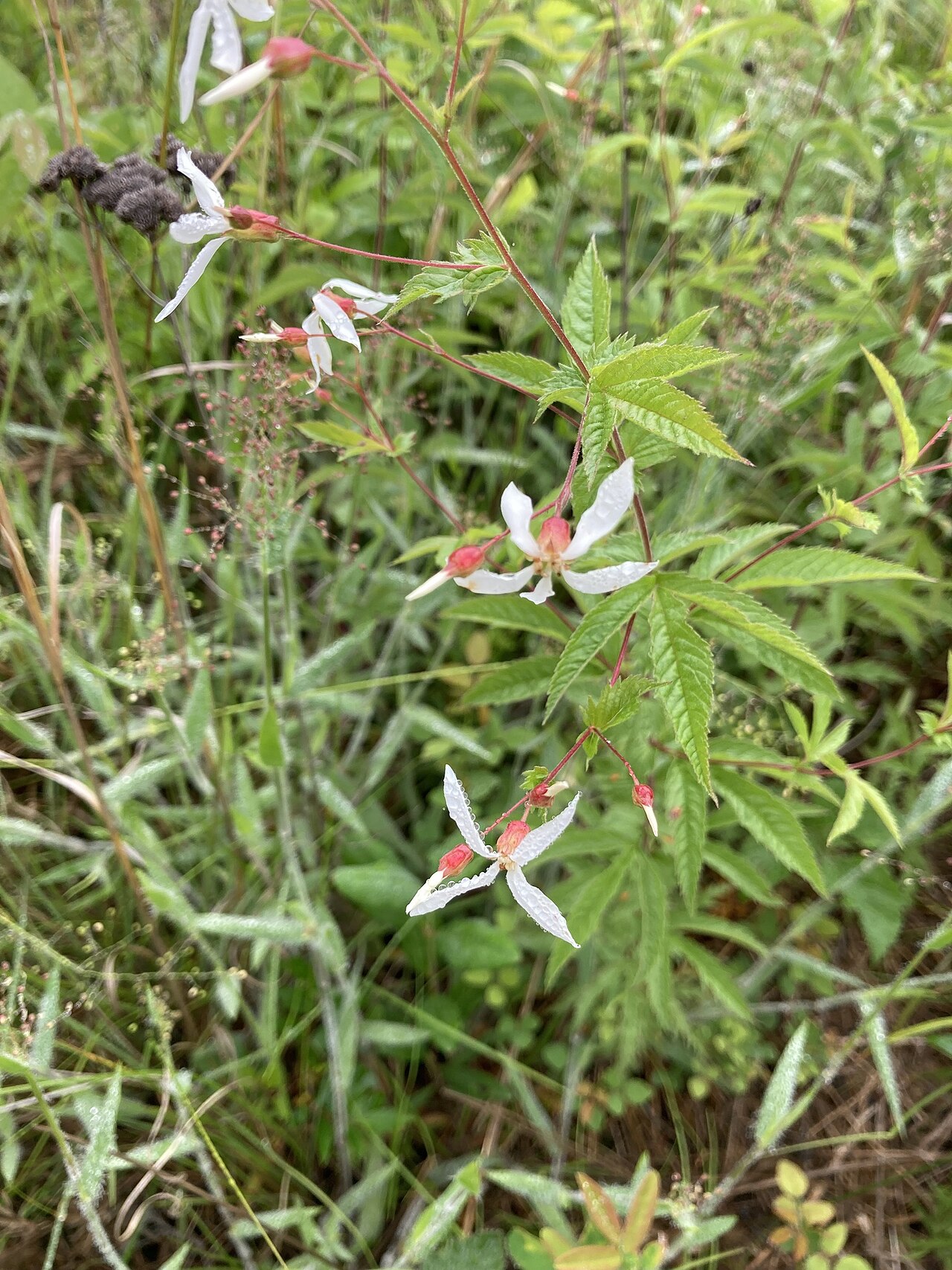
A flowering stem showing the narrow, widely spaced white petals and deeply toothed trifoliate leaves. Photo: Teresa A Mewborn, Wikimedia Commons (CC0) Gillenia stipulata (long
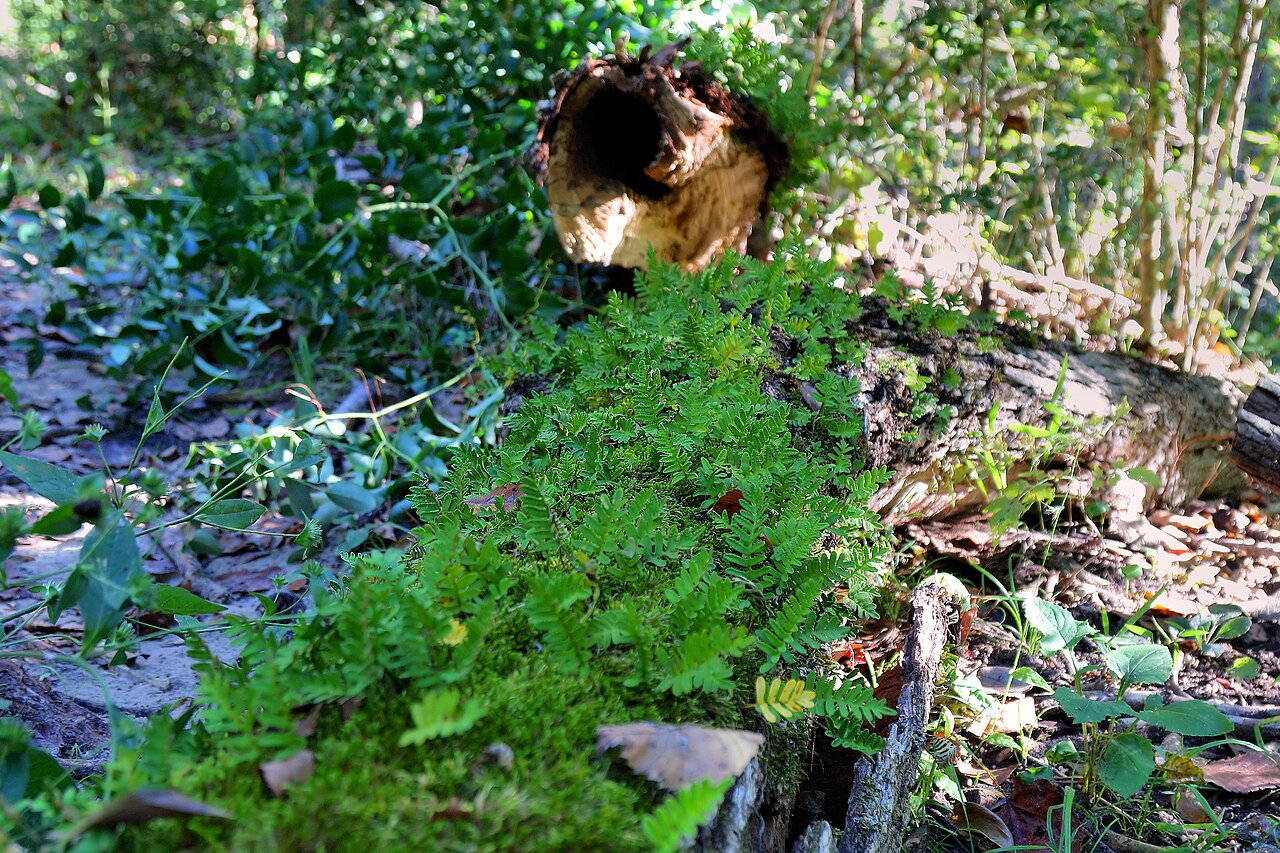
A healthy, hydrated colony of resurrection fern carpeting a fallen log after rain. Photo: Larry D. Moore, Wikimedia Commons (CC BY 4.0) Pleopeltis michauxiana, commonly
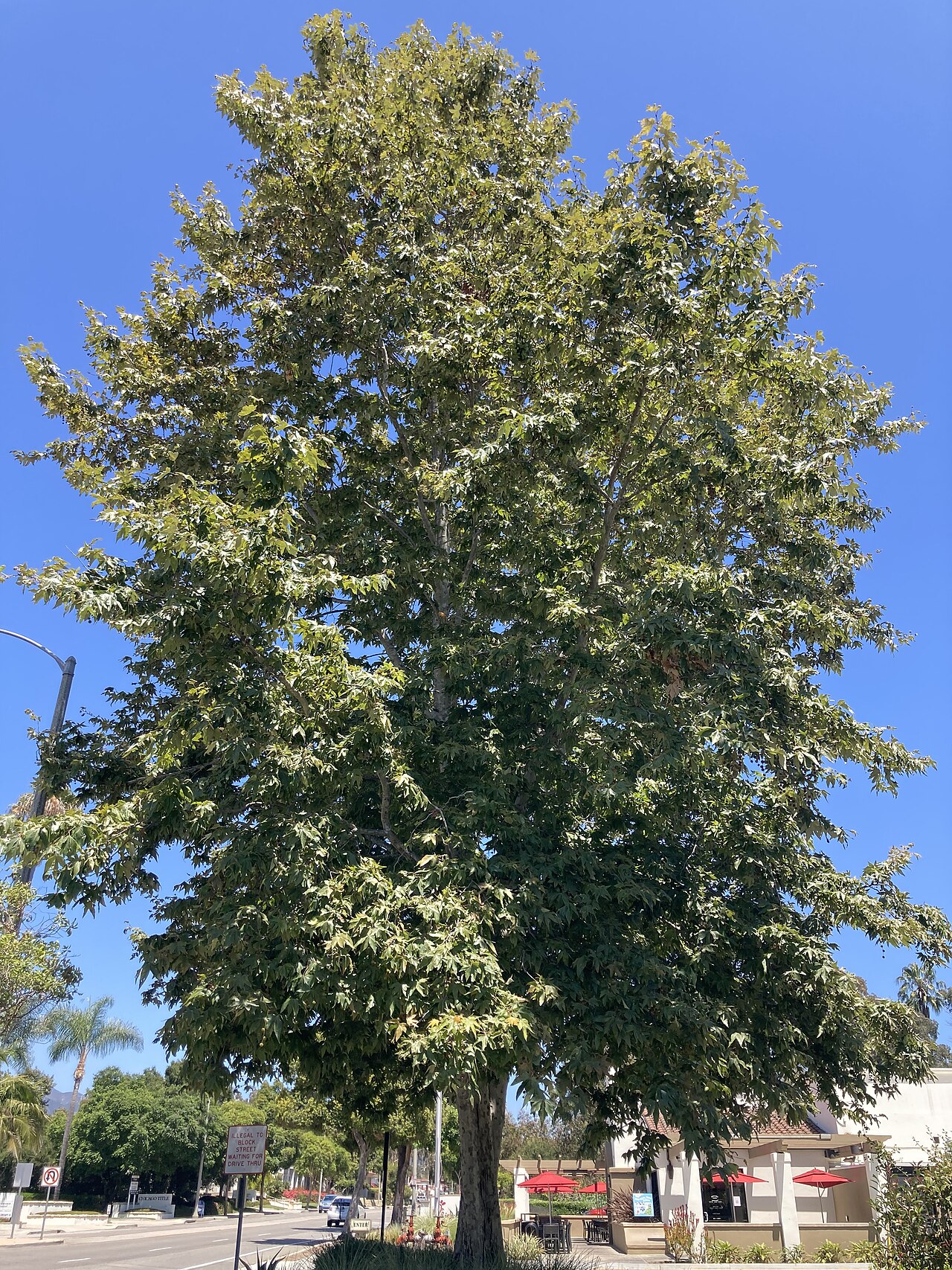
A mature California sycamore shows the broad, irregular crown typical of open-grown trees. Photo: Awinch1001, Wikimedia Commons (CC0) Platanus racemosa, the California Sycamore (also called
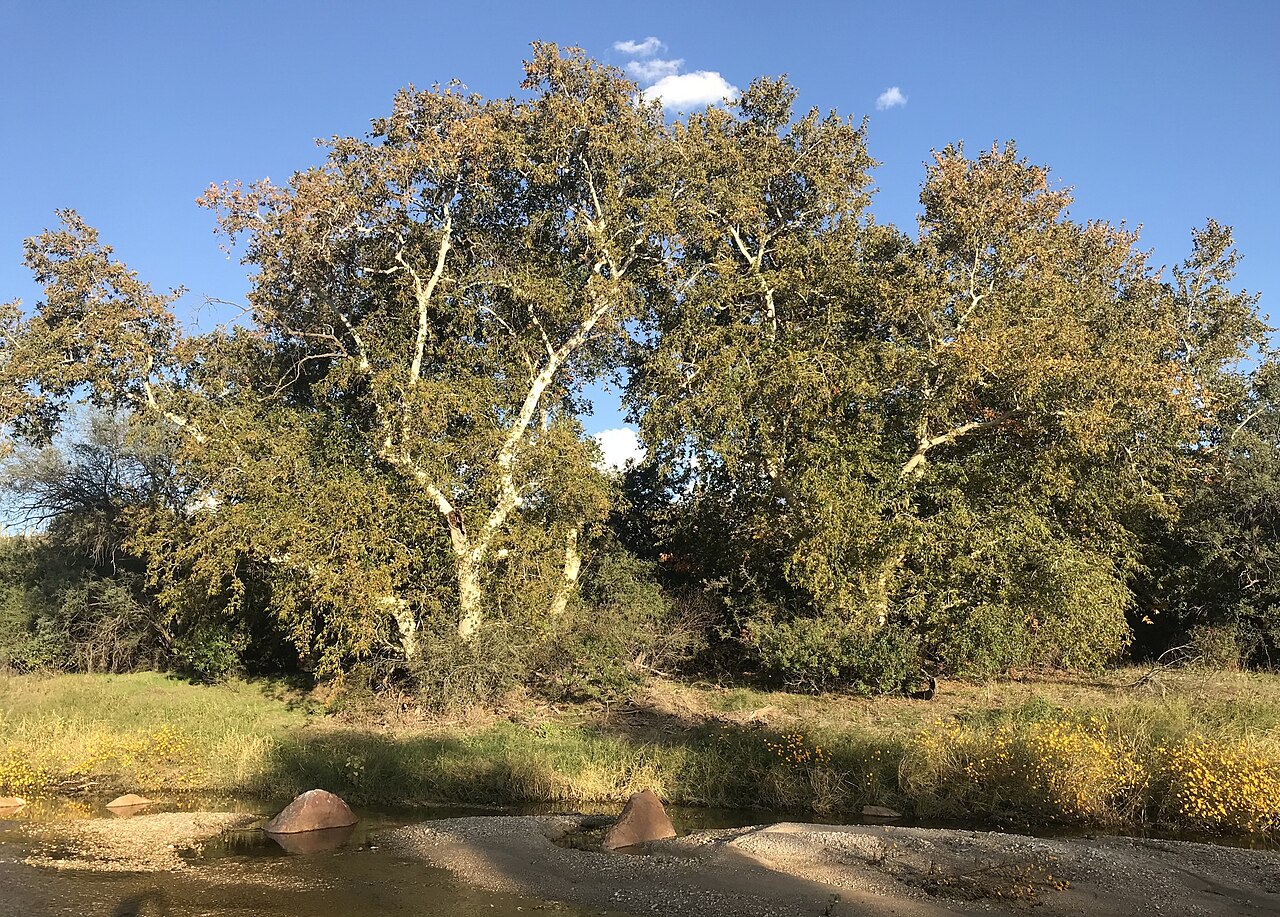
Arizona sycamore following a desert watercourse, its pale, multi-trunked form visible even from a distance. Photo: Raquel Baranow, Wikimedia Commons (CC BY-SA 4.0) Platanus wrightii,
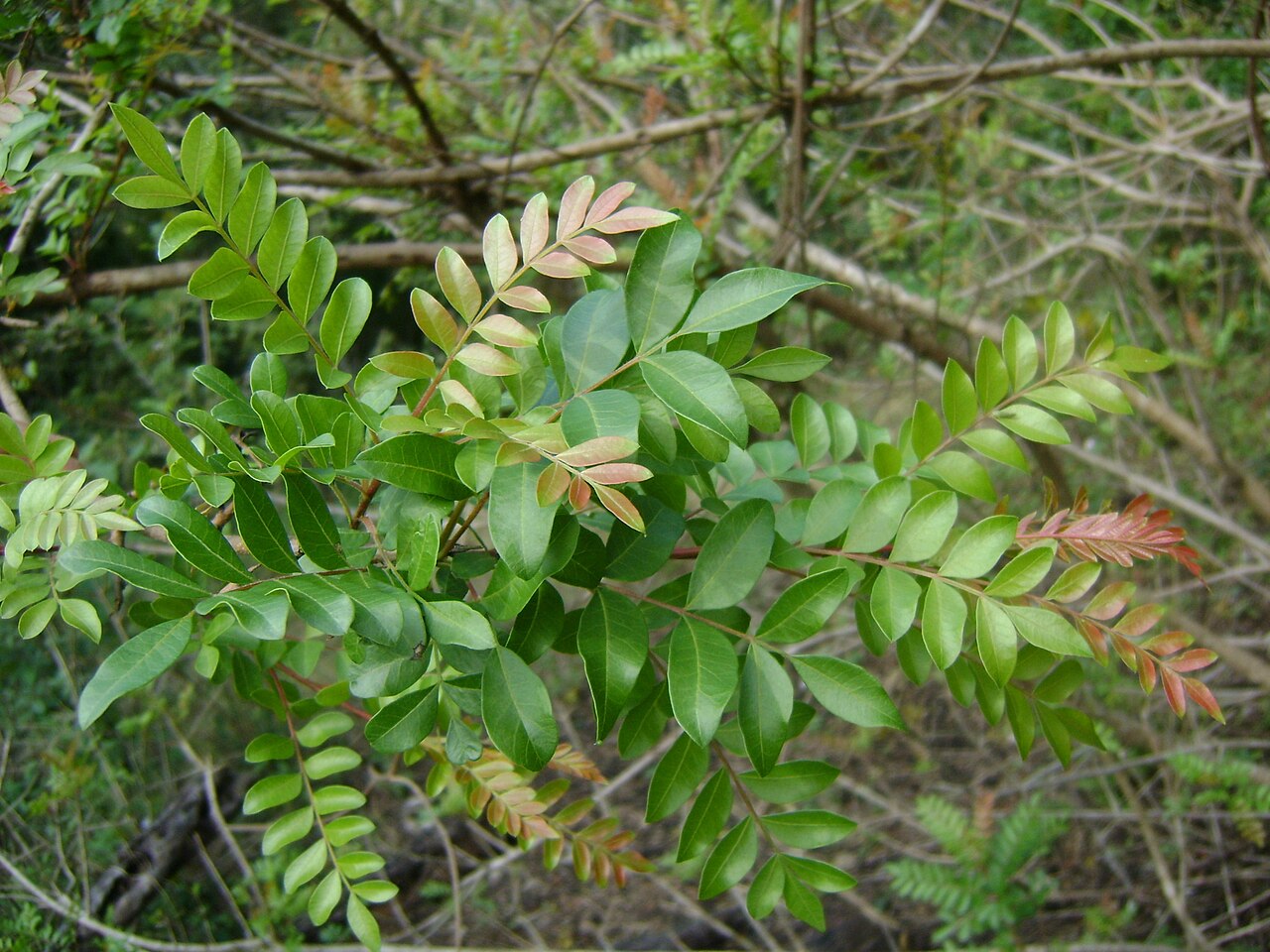
Texas Pistache foliage, showing the glossy, pinnately compound leaves with bronzy-red new growth typical of the species. Photo: iNaturalist user tereso30, via Wikimedia Commons (CC
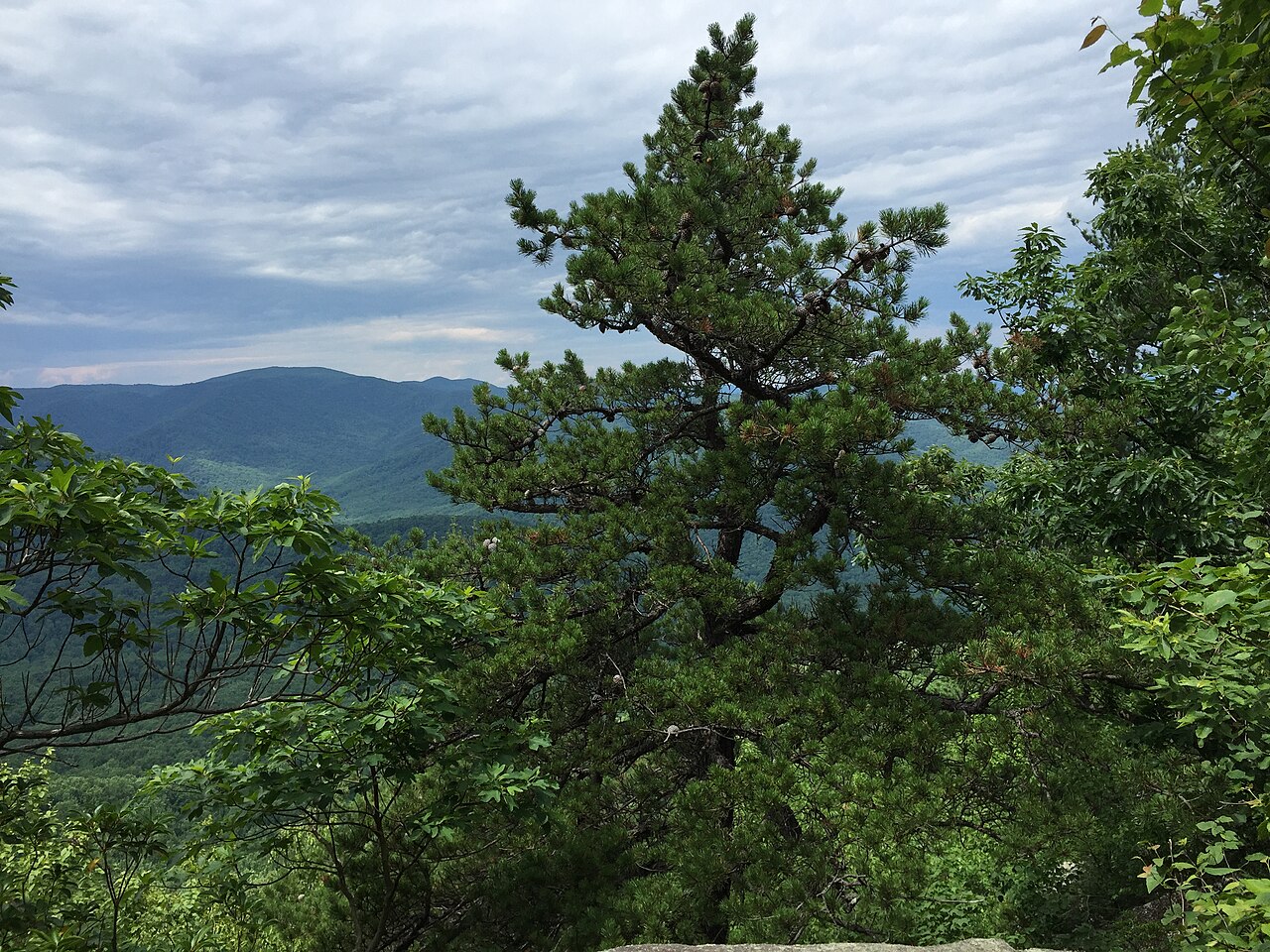
A wind-shaped Table Mountain Pine clinging to a rock outcrop above the Shenandoah Valley, Virginia. Photo: Famartin, Wikimedia Commons (CC BY-SA 4.0) Pinus pungens, commonly
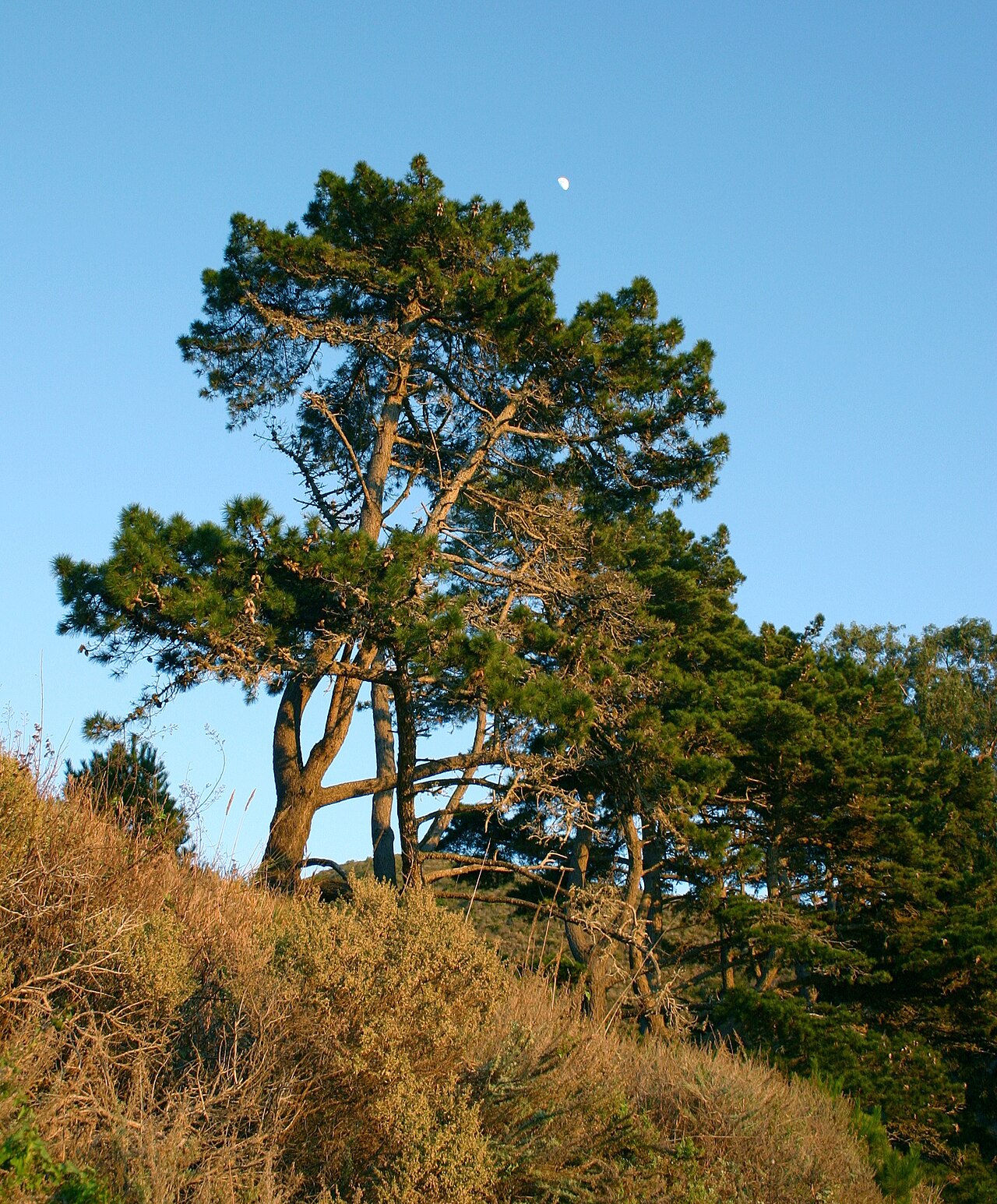
A native Monterey Pine on the Big Sur coast, Monterey County — within one of only three wild native stands on Earth. Photo: dalvenjah, Wikimedia
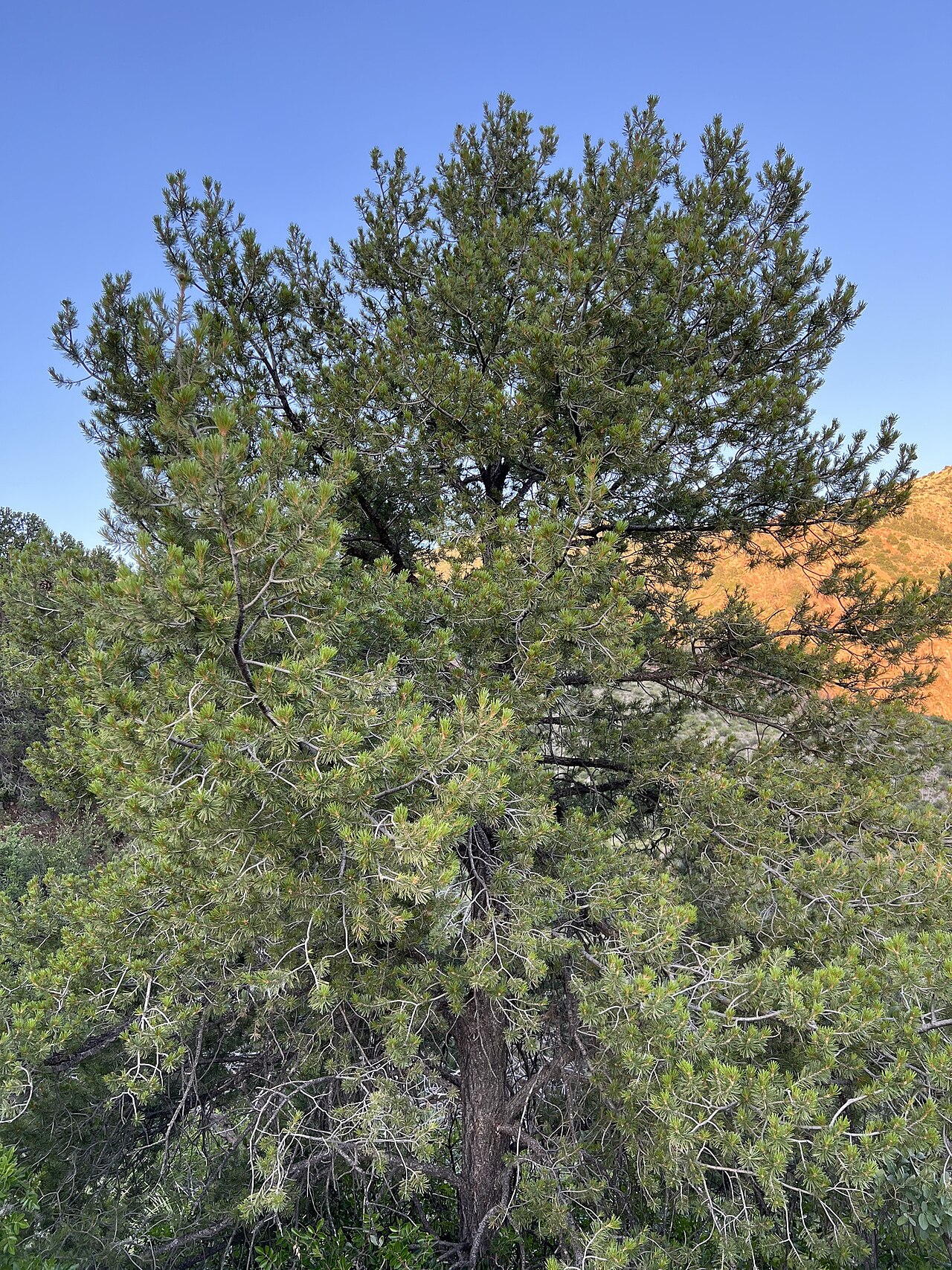
A mature Mexican Pinyon in the Chisos Mountains, Big Bend National Park, Texas. Photo: jhorthos / Wikimedia Commons (CC0) Pinus cembroides, commonly called Mexican Pinyon,
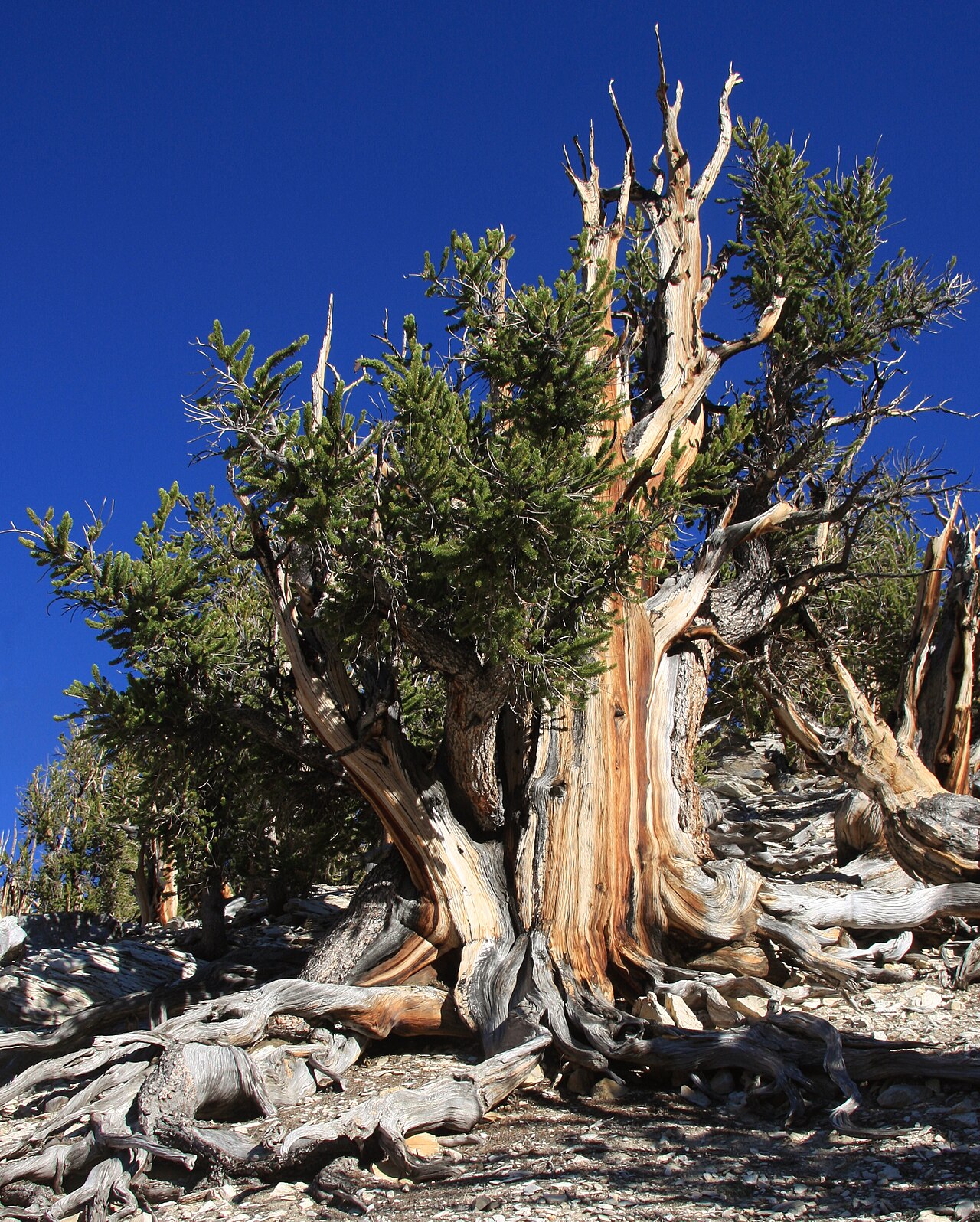
A mature Great Basin Bristlecone Pine in the White Mountains of California. Photo: Dcrjsr / Wikimedia Commons (CC BY-SA 3.0) Pinus longaeva, the Great Basin
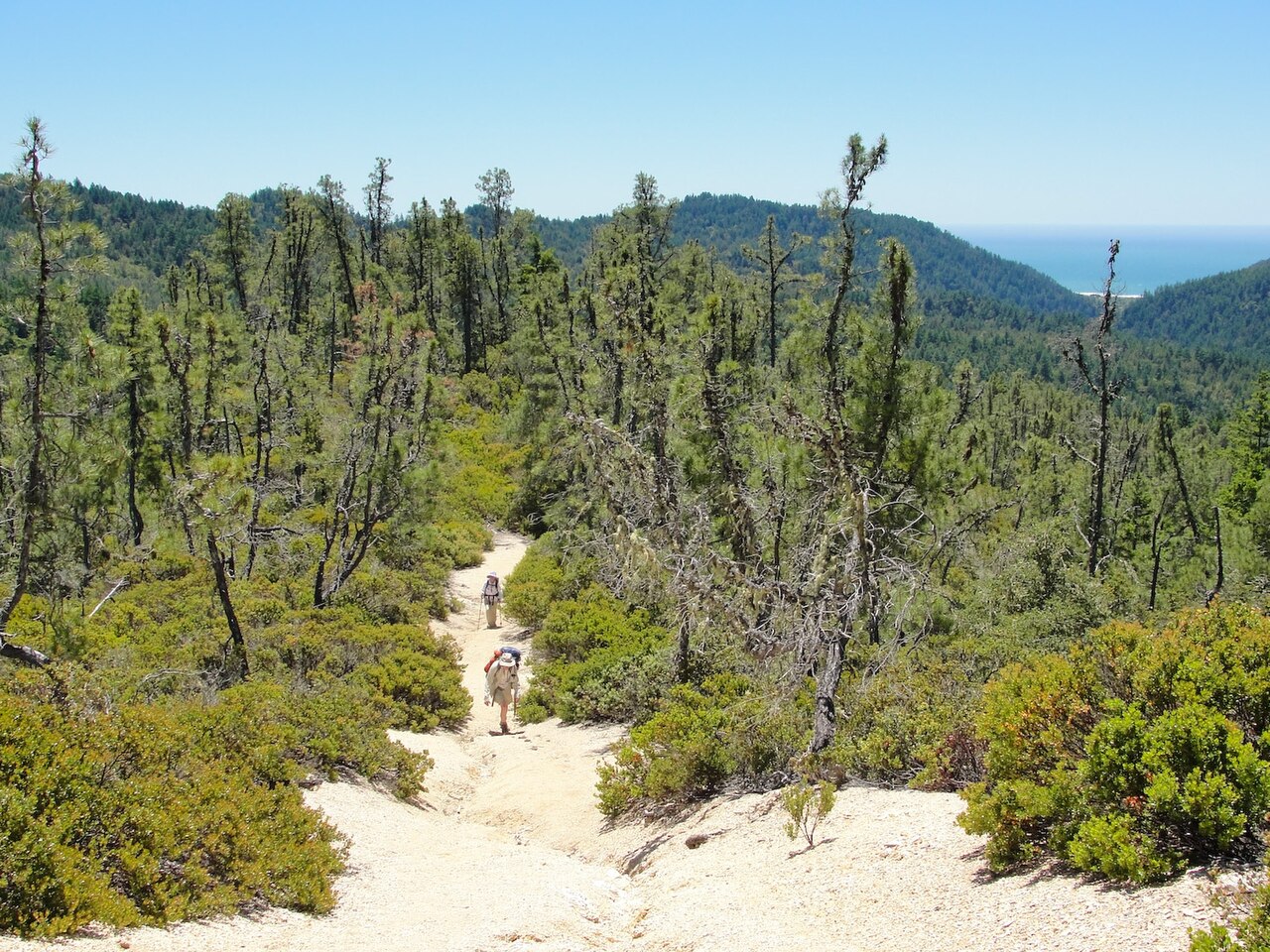
An open knobcone pine stand along a Santa Cruz Mountains ridge, with the Pacific visible beyond. Photo: 4johnny5 / Wikimedia Commons (CC BY 2.0) Pinus
View More