How to Prune Trillium for Healthy Growth and Blooming Success
Last updated: August 18, 2026
Pruning trillium isn’t complicated, but it can make a real difference for the plant’s health and vigor. The best thing you can do is wait until the foliage has fully yellowed and died back before you cut it.
That timing lets the plant store up energy for next year’s growth.
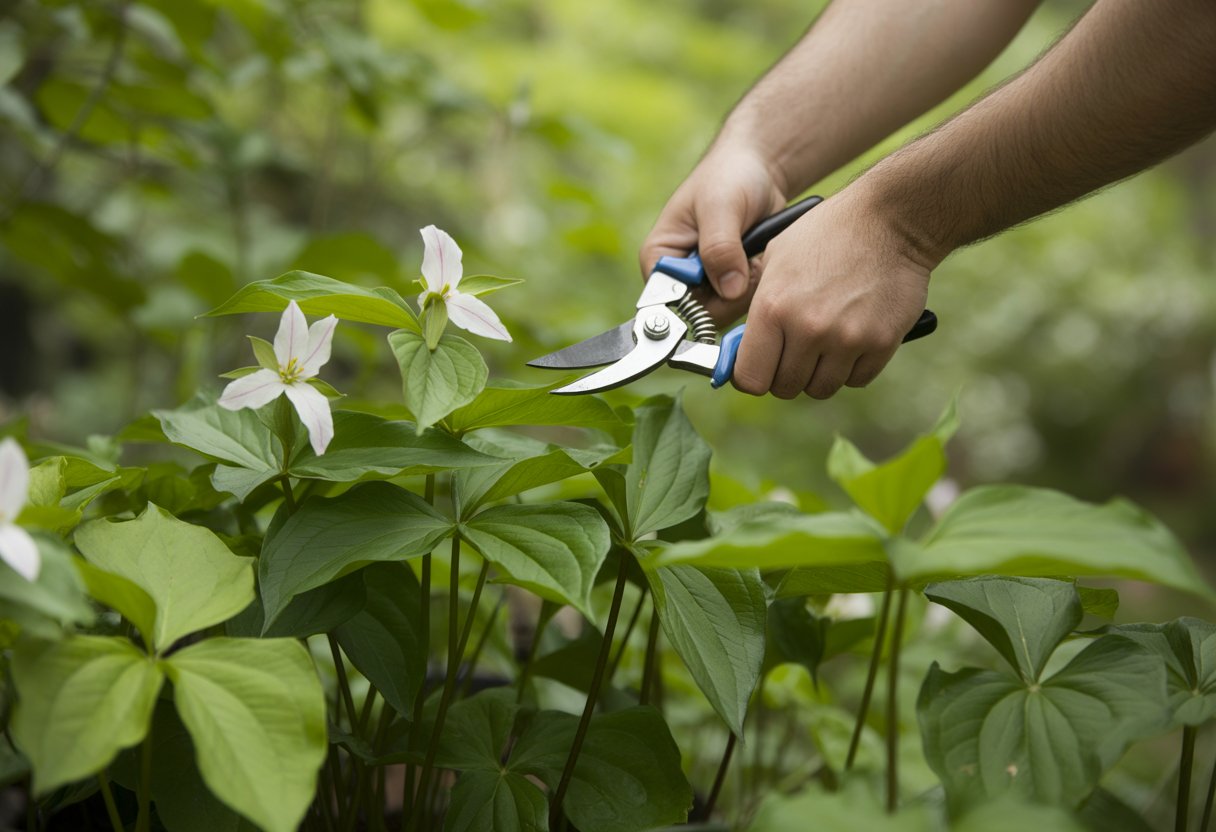
Trilliums grow slowly and don’t need much pruning at all. If you spot dead or damaged leaves, go ahead and remove them gently—this helps airflow and keeps disease at bay without stressing the plant.
Understanding Trillium Growth Habits
Trilliums are perennials that come up from underground rhizomes each year. They usually pop up in early spring and then go dormant by late summer.
Knowing how trilliums grow helps you avoid accidental damage when pruning. It’s easy to underestimate how delicate they can be.
Trillium Life Cycle
Trillium shoots push up in spring, using the energy stored in their rhizomes. Each plant usually produces a single flower with three leaves that soak up sunlight and recharge the rhizome.
After blooming, the leaves stick around for a few weeks, then start to yellow and die back. When that happens, the plant slips into dormancy until the next season.
Since trilliums spend so much of the year underground, it makes sense to keep pruning minimal and well-timed. Messing with them during active growth just isn’t worth the risk.
Identifying Rhizomes
Trilliums send up shoots from thick, horizontal rhizomes just under the soil. These fleshy, segmented roots hold the nutrients the plant needs for the next year.
Rhizomes spread slowly, so you’ll usually see small clumps instead of big colonies. They’re just a few inches below the surface.
If you’re pruning or dividing trilliums, it’s really important to spot these rhizomes. Cutting too close can set the plant back. Handle them gently—nobody wants to undo a year’s worth of growth.
Best Practices for Pruning Trillium
When you prune trillium, timing and clean tools matter more than anything else. Good habits here keep your plants healthy and their flowers coming back.
Optimal Timing for Pruning
Wait until after the trillium flowers, usually late spring into early summer, before you prune. Removing dead or fading leaves at that point helps the plant save energy for next year and encourages better blooms.
Don’t prune too early—those green leaves are still working hard for the roots. If you wait until after the leaves die back naturally in the fall, there’s really no benefit.
Stick to removing yellowing or dead leaves. If you cut healthy leaves too soon, you’ll weaken the plant and probably get fewer blooms next year.
Tools and Sanitization Methods
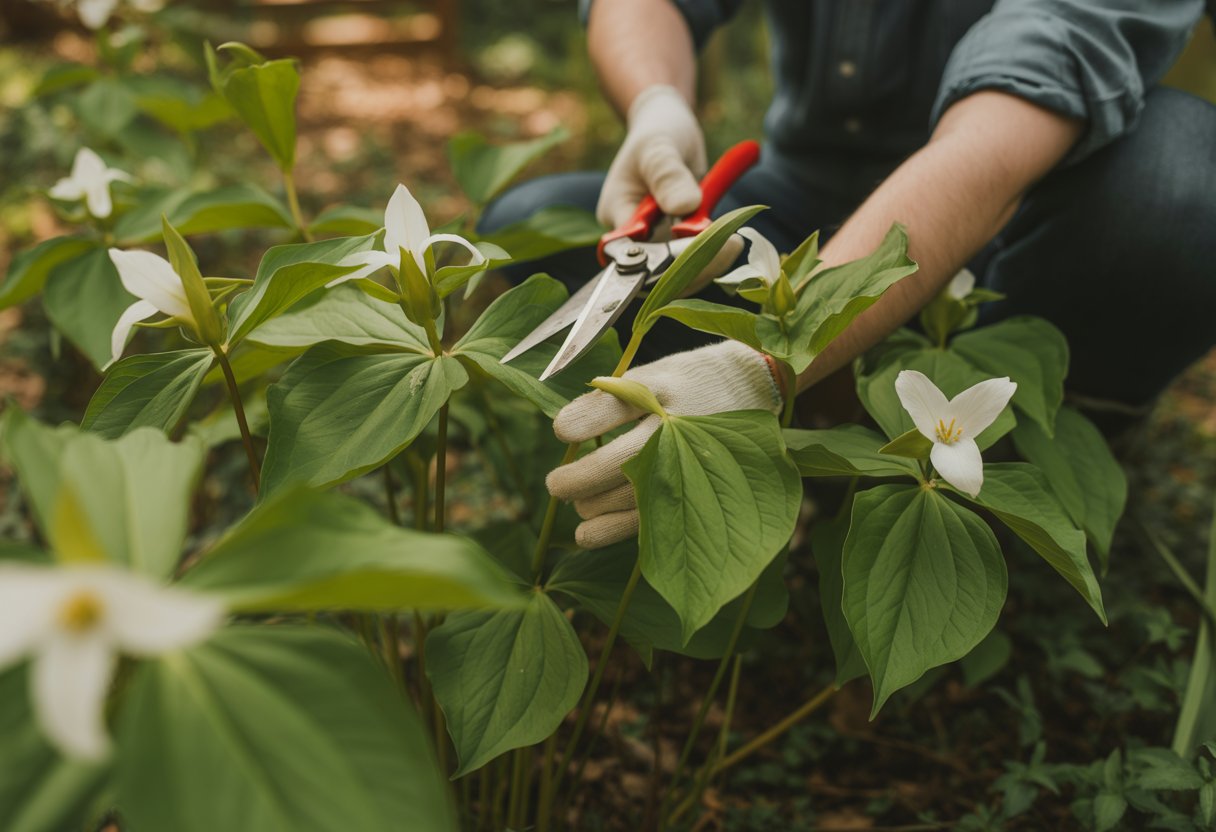
Grab some sharp, clean pruning shears or scissors for the job. Dull or dirty tools can crush stems and spread disease—nobody wants that.
Before you start, wipe down your tools with 70% isopropyl alcohol or a bleach solution (one part bleach, nine parts water). Clean the blades between plants to keep things safe.
Dry your tools before using them to avoid rust, and stash them somewhere clean and dry when you’re done. Good tools make a big difference.
Pruning Techniques and Aftercare
Trimming trillium takes a bit of patience and a gentle hand. Doing it right helps the plant recover and keeps those flowers coming.
Step-By-Step Pruning Process
Wait for the leaves to start yellowing in late summer or early fall. Grab your clean, sharp scissors or pruning shears and snip the leaves off at the base, right near the soil line.
Don’t cut green leaves—they’re still feeding the rhizome for next year. If you spot diseased or damaged leaves, remove them right away and toss the clippings far from your healthy plants to avoid fungus.
If your trillium has flowered, you can trim off spent flower stems once the petals drop. Leave the seed pods alone unless you want to collect seeds.
Encouraging Healthy Flower Production
After pruning, keep the soil just a bit moist—don’t let it get soggy. This helps the roots recover over the next few weeks.
Go for a balanced, slow-release fertilizer in early spring. It usually gives those blooms a real boost.
Mulch around the base with leaf mold or bark chips. That keeps the soil temperature steady and helps lock in moisture.
Try not to mess with the rhizome too much; trillium likes its roots left alone.
Keep an eye out for pests like slugs. They love to munch on young shoots.
Pull out any weeds that pop up, since they’ll steal nutrients from your plants.