
Love in a Mist Flowers: Characteristics and Growing Tips
Last updated: September 9, 2026
Love in a mist flowers, also known as Nigella, are an enchanting and delicate flower species. These flowers are native to Southern Europe, North Africa, and Southwest Asia. They are a popular choice for gardeners and florists due to their unique and intricate appearance.

Love in a mist flowers are characterized by their fine, fern-like foliage and delicate, star-shaped flowers. The flowers come in a range of colors, including blue, pink, white, and purple. The flowers are surrounded by a mist of thread-like bracts, which give the plant its distinctive appearance.
In addition to their beauty, love in a mist flowers have a rich cultural history. They have been used for medicinal purposes for centuries and were believed to have healing properties. They were also used in cooking, particularly in Middle Eastern cuisine, where the seeds were used as a spice. Overall, love in a mist flowers are a fascinating and beautiful addition to any garden or floral arrangement.
Botanical Overview
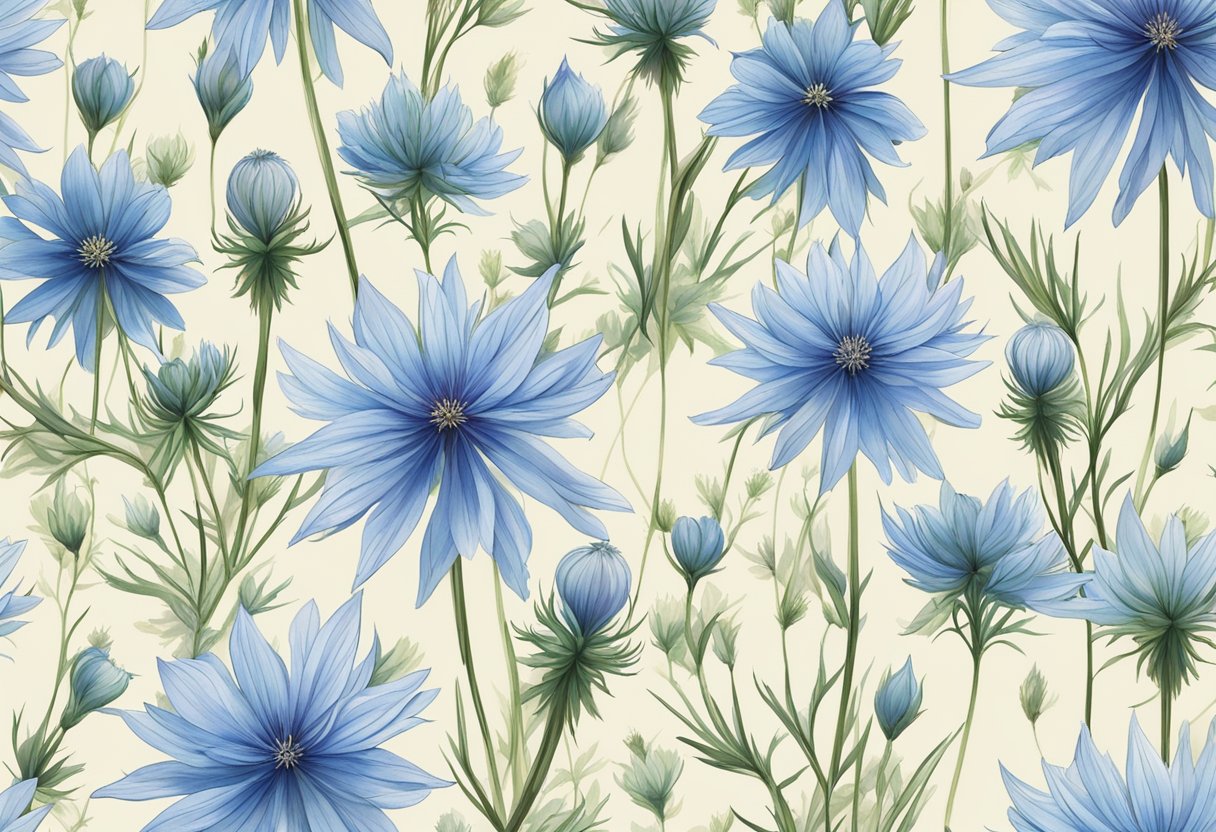
Nigella Damascena
Love in a mist, scientifically known as Nigella Damascena, is an annual flowering plant that belongs to the Ranunculaceae family. It is native to southern Europe, North Africa, and Southwest Asia, but is now widely cultivated around the world for its beautiful flowers and unique seed pods.
The plant grows up to 20-60 cm tall and has finely divided, feathery leaves that give it a delicate and lacy appearance. The flowers are usually blue, but can also be pink, white, or purple, and are surrounded by a ring of thread-like bracts that give them their distinctive “misty” appearance.
One of the most interesting features of love in a mist is its seed pods, which are large and balloon-shaped, with a spiky crown of bracts at the top. When the pods ripen, they split open to reveal clusters of small black seeds, which are often used in cooking and baking.
Ranunculaceae Family
Love in a mist belongs to the Ranunculaceae family, which includes more than 2,000 species of flowering plants. This family is known for its showy flowers and distinctive foliage, which often has a delicate and lacy appearance.
Other well-known members of the Ranunculaceae family include buttercups, columbines, and anemones. Many of these plants are popular in gardens and are valued for their ornamental qualities.
In conclusion, love in a mist is a beautiful and unique annual flowering plant that is widely cultivated for its distinctive flowers and seed pods. Its delicate foliage and misty appearance make it a popular choice for gardens and flower arrangements. As a member of the Ranunculaceae family, it shares many characteristics with other showy and ornamental plants.
Cultivation
Love in a mist flowers are easy to grow and require minimal care. In this section, we will discuss the planting guidelines, soil requirements, sunlight and watering needs, as well as fertilization and care.
Planting Guidelines
Love in a mist flowers can be planted in the early spring or fall. They prefer well-drained soil and can be planted directly into the ground or in containers. The seeds should be planted about 1/4 inch deep and spaced 6-8 inches apart.
Soil Requirements
Love in a mist flowers prefer fertile, well-drained soil. If the soil is too heavy, add some sand or perlite to improve drainage. If the soil is too light, add some compost or other organic matter to improve fertility.
Sunlight and Watering
Love in a mist flowers thrive in full sun to partial shade. They require regular watering, especially during hot, dry weather. However, be careful not to overwater, as this can lead to root rot.
Fertilization and Care
Love in a mist flowers do not require a lot of fertilizer. A general-purpose fertilizer can be applied once a month during the growing season. Deadheading spent blooms will encourage more flowers to bloom.
In summary, love in a mist flowers are easy to grow and require minimal care. They prefer well-drained soil, full sun to partial shade, regular watering, and occasional fertilization. By following these guidelines, you can enjoy beautiful blooms all season long.
Propagation
Love in a mist flowers are easy to propagate from seeds. In fact, they self-sow readily and can become invasive in some areas. Here are some tips for growing and propagating love in a mist flowers.
Growing from Seeds
To grow love in a mist flowers from seeds, start by collecting the seed pods in the fall. The pods will turn brown and dry, and you can hear the seeds rattling inside when they are ready. Once you have collected the pods, let them dry for a few days before opening them up to collect the seeds.
Sow the seeds in the spring, either directly in the garden or in pots. Plant the seeds about 1/4 inch deep and keep the soil moist until the seeds germinate, which usually takes about 7-14 days. Once the seedlings have emerged, thin them to about 6-8 inches apart to give them room to grow.
Self-Sowing Nature
Love in a mist flowers are known for their self-sowing nature. Once established, they will drop their own seeds and come back year after year. To encourage self-sowing, leave some of the seed pods on the plants at the end of the season. The seeds will drop to the ground and germinate the following spring.
If you want to control the spread of love in a mist flowers, deadhead the plants before the seed pods have a chance to mature. This will prevent the plants from self-sowing and spreading beyond their intended area.
Overall, love in a mist flowers are easy to propagate and care for, making them a great addition to any garden.
Garden Design

Landscape Uses
Love in a mist flowers are versatile and can be used in various garden designs. They are perfect for cottage gardens, where their delicate and intricate flowers add a touch of whimsy. They also work well as edging plants, creating a neat and tidy border for garden beds.
Containers are another great option for love in a mist flowers. Their compact size makes them ideal for small spaces, and they can be easily moved around to create different displays. In larger gardens, love in a mist flowers can be used to create a stunning floral display, adding pops of color throughout the landscape.
Companion Planting
Love in a mist flowers make great companion plants, and they can be used to enhance the beauty of other flowers. They look particularly stunning when planted alongside roses, adding a delicate touch to the garden.
They also work well when planted with other cottage garden favorites, such as delphiniums and hollyhocks. In floral arrangements, love in a mist flowers can be used to add texture and depth, creating a beautiful and unique bouquet.
Overall, love in a mist flowers are a great addition to any garden design. Their versatility and beauty make them a popular choice for gardeners looking to add a touch of whimsy to their landscape.
Varieties and Colors
Cultivar Selection
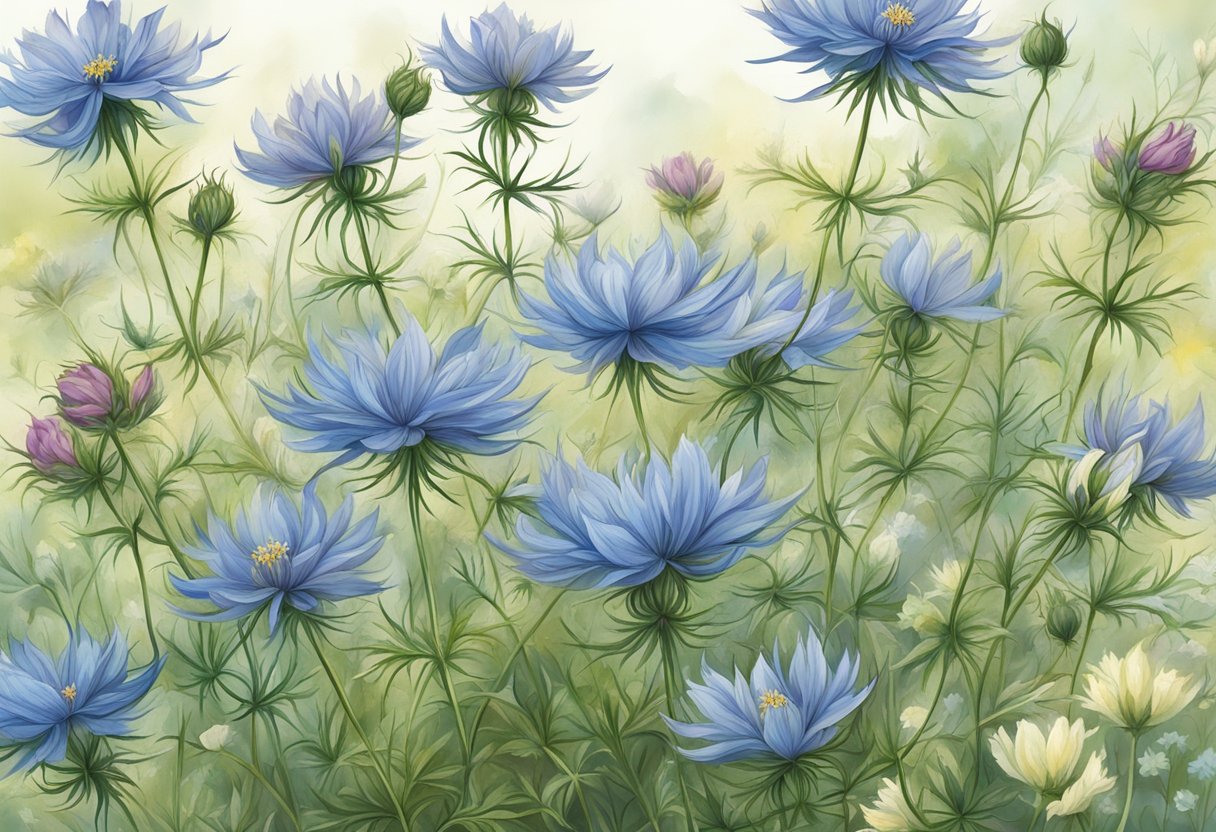
Love in a mist flowers, also known as Nigella, come in a variety of cultivars, each with its unique characteristics. Some popular cultivars include Persian Jewels, Miss Jekyll, Miss Jekyll Alba, Mulberry Rose, and Oxford Blue. Persian Jewels are known for their vibrant colors and large blooms, while Miss Jekyll Alba has pure white flowers that look stunning against its feathery foliage. Mulberry Rose, on the other hand, has deep pink flowers that are sure to add a pop of color to any garden.
Color Palette
Love in a mist flowers come in a range of colors, including blue, white, pink, purple, and lavender. The Oxford Blue cultivar, as the name suggests, has striking blue flowers that are sure to catch the eye. White love in a mist flowers, such as the Miss Jekyll Alba cultivar, are an excellent choice for a classic and elegant garden. Pink and purple love in a mist flowers, such as the Mulberry Rose and Persian Jewels cultivars, respectively, provide a beautiful contrast to green foliage and can add a touch of whimsy to any garden. Lavender love in a mist flowers, such as the Miss Jekyll cultivar, have a delicate and calming effect and are perfect for a tranquil garden.
Love in a mist flowers are a versatile and beautiful addition to any garden. With their wide range of cultivars and colors, there is sure to be a perfect choice for every gardener.
Flowering and Maintenance

Love in a mist flowers are easy to grow and maintain. This section will cover the blooming season, deadheading, and pruning of these delicate flowers.
Blooming Season
Love in a mist flowers typically bloom during the summer months, but they can also bloom in the spring and fall. These flowers produce beautiful blooms in shades of blue, pink, and white. The blooms are delicate and intricate, with a unique shape that resembles a delicate starburst.
Deadheading and Pruning
Deadheading is an important part of maintaining love in a mist flowers. Deadheading involves removing the spent blooms from the plant to encourage continuous bloom. This process also helps to prevent the plant from going to seed too quickly.
Pruning is another important aspect of maintaining love in a mist flowers. Pruning should be done in the late fall or early spring. This involves cutting back the plant to encourage new growth and to prevent the plant from becoming too leggy.
In conclusion, love in a mist flowers are a beautiful addition to any garden. With proper care and maintenance, these flowers will produce stunning blooms throughout the summer months. Deadheading and pruning are essential to maintaining the health and beauty of these delicate flowers.
Harvest and Post-Harvest

Collecting Seeds
Love in a mist flowers produce small, black seeds that are easy to collect. Once the flowers have bloomed and the petals have fallen off, the seedpod will start to turn brown. This is the time to harvest the seeds. Cut the seedpods from the plant and place them in a paper bag. Label the bag with the date and type of flower.
To extract the seeds, wait until the seedpods are completely dry. Then, gently crush the pods with your fingers and shake out the seeds. Store the seeds in a cool, dry place until you are ready to plant them.
Drying Flowers
If you want to use love in a mist flowers in cut flower arrangements, it’s important to harvest them at the right time. Cut the flowers when they are fully open but before they start to wilt. Cut the stems at an angle and place them in a vase of water.
To dry the flowers, hang them upside down in a warm, dry place for about two weeks. Once they are completely dry, you can use them in dried flower arrangements.
When storing dried love in a mist flowers, keep them in a cool, dry place away from direct sunlight. If you want to preserve the color, you can spray them with hairspray or a clear acrylic spray.
Pests and Problems
Common Challenges
Love in a Mist flowers are generally trouble-free plants. However, they can be affected by a few common challenges. One of the most common challenges is powdery mildew, which is a fungal disease that affects the leaves. It is caused by high humidity and poor air circulation. To prevent powdery mildew, it is important to water the plants at the base and not on the leaves. Additionally, providing good air circulation and avoiding overcrowding can help prevent the disease.
Another challenge that Love in a Mist flowers face is root rot. This is caused by overwatering and poor drainage. To prevent root rot, it is important to ensure that the soil is well-draining and not waterlogged. Additionally, it is best to water the plants only when the top inch of soil feels dry to the touch.
Troubleshooting
Love in a Mist flowers may also be affected by pests such as aphids, spider mites, and thrips. These pests can cause damage to the leaves and flowers, and may also spread diseases. To control these pests, it is important to keep the plants healthy and well-maintained. Additionally, using insecticidal soap or neem oil can help control the pests.
If the Love in a Mist flowers are not blooming, it may be due to a lack of sunlight. These plants require full sun to bloom properly, so it is important to ensure that they are planted in a location that receives at least six hours of direct sunlight per day. Additionally, fertilizing the plants with a balanced fertilizer can help promote blooming.
Overall, Love in a Mist flowers are relatively trouble-free plants, but with proper care and attention, any challenges can be easily overcome.
Historical and Cultural Significance
Love in a mist flowers, also known as Nigella damascena, have a rich history and cultural significance across different regions of the world. This section will explore the symbolism and usage in medicine of this beautiful flower.
Symbolism
In ancient times, love in a mist flowers were believed to have magical powers and were used in love potions and spells. The flower’s delicate petals and intricate design were also seen as a symbol of love and romance in many cultures.
In Africa, the flower was associated with good luck and was often used in traditional medicine to treat various ailments. In Europe, the flower was used as a decorative element in gardens and was believed to bring good fortune to the household.
Usage in Medicine
Love in a mist flowers have been used in traditional medicine for centuries. In North Africa, the seeds were used to treat digestive problems, while in Southern Europe, the flower was used to treat headaches and respiratory problems.
In Asia, the flower was used to treat skin conditions and was believed to have anti-inflammatory properties. Today, love in a mist flowers are still used in herbal medicine to treat a variety of ailments, including fever, coughs, and colds.
Overall, love in a mist flowers have a rich history and cultural significance across different regions of the world. Their delicate beauty and medicinal properties have made them a beloved flower for centuries.
Frequently Asked Questions
How do you grow Love-in-a-Mist from seeds?
Love-in-a-Mist, or Nigella Damascena, is an easy-to-grow annual flower that thrives in full sun and well-drained soil. To grow Love-in-a-Mist from seeds, simply scatter the seeds on the soil surface and lightly cover them with soil. Water the soil gently, and keep it moist until the seeds germinate, which usually takes about 7 to 14 days. Once the seedlings are established, thin them to about 6 inches apart.
Are Love-in-a-Mist flowers available for purchase online?
Yes, Love-in-a-Mist flowers are available for purchase online from various nurseries and seed companies. It is advisable to buy seeds or plants from a reputable supplier to ensure the quality and authenticity of the plant.
Can Love-in-a-Mist be grown in containers?
Yes, Love-in-a-Mist can be grown in containers, provided that the container is at least 6 inches deep and has drainage holes. Use a well-draining potting mix and water the plant regularly to keep the soil moist. Love-in-a-Mist can also be grown in hanging baskets or window boxes.
Are any parts of Love-in-a-Mist plants toxic?
Yes, all parts of Love-in-a-Mist plants are toxic if ingested. The seeds and seed pods contain a chemical called saponin, which can cause nausea, vomiting, and other gastrointestinal symptoms if consumed in large quantities. It is important to keep the plants away from children and pets.
What is the symbolism behind Love-in-a-Mist flowers?
Love-in-a-Mist flowers symbolize perplexity, fascination, and love. The intricate, lacy foliage surrounding the flower is said to represent the confusion and mystery of love, while the delicate blue or white flowers symbolize the purity and beauty of love.
Does Love-in-a-Mist exhibit invasive growth behavior?
No, Love-in-a-Mist does not exhibit invasive growth behavior. It is an annual plant that self-seeds, but it does not spread aggressively or become weedy. In fact, Love-in-a-Mist is often used in wildflower gardens and meadows to attract pollinators and add color and texture to the landscape.
 Looking for a nursery that carries native flowers?
Browse our native plant nursery directory
We just bought our first house and the previous owners didn’t do much with the landscaping. Starting from scratch.
Glad you found it useful, Ed! Best of luck this season. -Plant Native Team
Wish I’d found this before I made some mistakes last season. Live and learn I guess!
Thank you for reading, Brenda! Happy planting! -Plant Native Team
I work at a garden center and customers ask about this all the time. Good resource to share.
Glad you found it useful, Greg! Best of luck this season. -Plant Native Team
Helpful article, thanks!