American Hornbeam (Carpinus caroliniana)
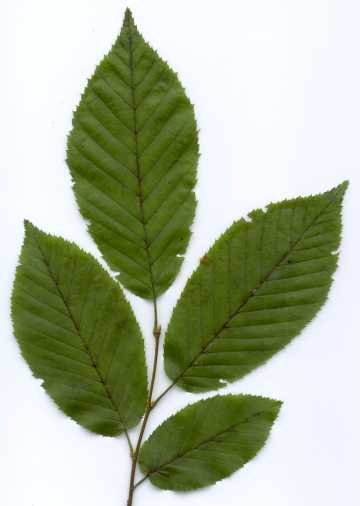
Carpinus caroliniana, commonly known as American Hornbeam, Blue Beech, Musclewood, or Ironwood, is a native small to medium understory tree renowned for its extraordinary trunk — smooth, gray, and distinctly sinewy in appearance, looking for all the world like a flexed human muscle or tendon. This characteristic gives rise to the “musclewood” nickname. A member of the Betulaceae (birch) family, it is one of eastern North America’s most distinctive and ecologically valuable woodland trees, thriving in the moist, shaded understory of stream valleys and floodplains from the Great Lakes to the Gulf Coast.
American Hornbeam earns its place in any woodland or riparian landscape through several exceptional traits. Its fall color — a blazing parade of yellow, orange, and scarlet — ranks among the finest of any native understory tree. Its hard, dense wood (second only to ironwood in hardness among eastern species) gives the tree its “ironwood” moniker and makes its forked branches and dangling seed clusters beloved by wildlife. As a street tree, it earns praise for its tolerance of urban conditions, tight spaces, and moist soils — an unusual combination that makes it genuinely valuable in modern landscape design beyond purely natural settings.
Unlike many native trees that struggle in shaded, wet, or compacted conditions, American Hornbeam embraces the difficult sites where others fail. It is pH-adaptable, moderately salt-tolerant, and thrives alongside streams and in the understory beneath larger canopy trees. Slow-growing but long-lived, it rewards patient gardeners with a refined, four-season beauty that few other small native trees can match.
Identification
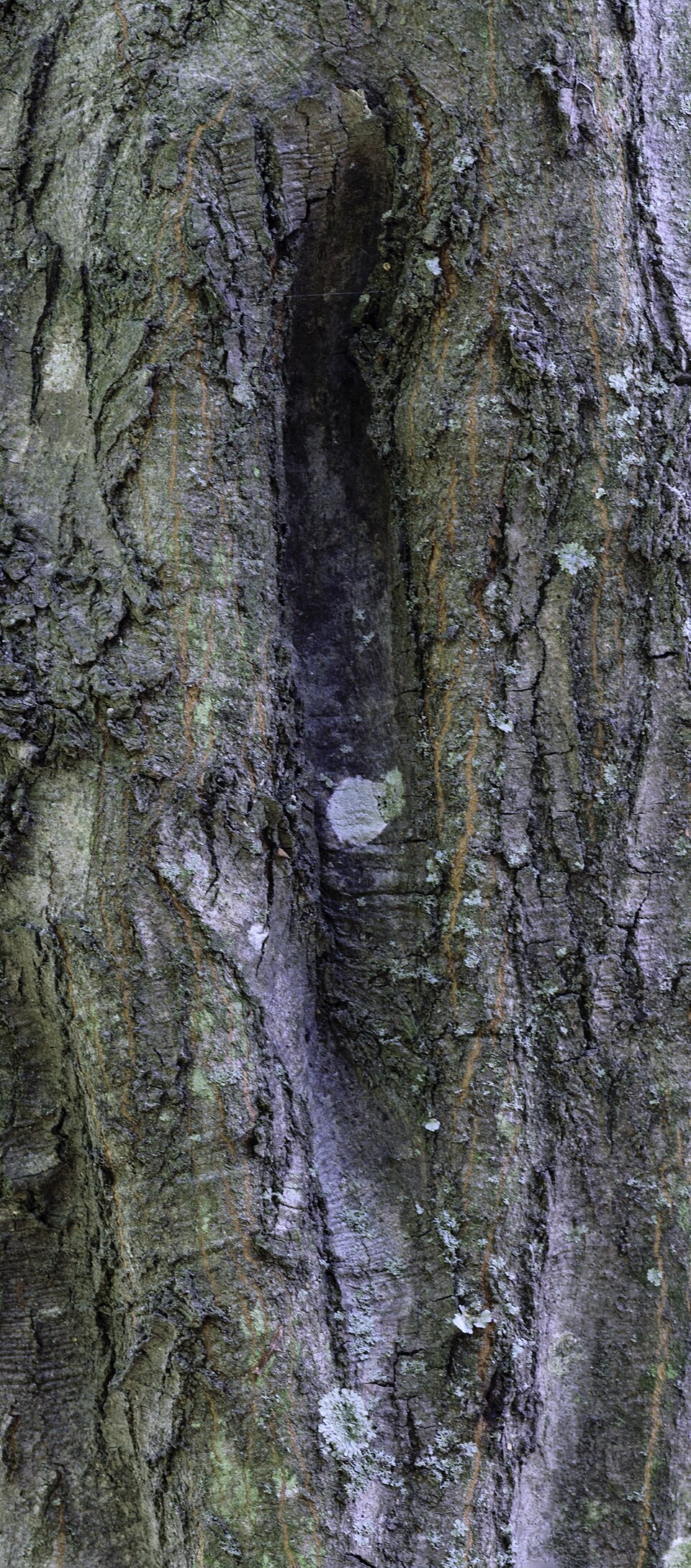
American Hornbeam is a small to medium deciduous tree, typically growing 20 to 30 feet tall with a similarly wide, irregular, spreading crown. The trunk is almost always gently twisted and fluted — appearing as though bundles of muscle or rope lie just beneath the smooth gray bark. This is immediately recognizable once you know what to look for, and is diagnostic even in winter when leaves are absent.
Bark
The bark is one of the most immediately distinctive features of this species. It is smooth, blue-gray, and conspicuously fluted — with longitudinal ridges and furrows that create a look uncannily similar to flexed muscle or sinew. There is no shaggy, furrowed, or plated bark texture; the smoothness persists even on old trunks. Up close, the bark surface has a subtle, lustrous sheen. The combination of smooth gray texture and muscular fluting makes American Hornbeam among the easiest native trees to identify by trunk alone.
Leaves
Leaves are simple, alternate, and ovate to oblong-ovate with doubly serrate margins — meaning each tooth itself has smaller teeth. They are 2 to 5 inches long with prominent parallel veins that give the upper surface a corrugated, textured appearance. In summer, foliage is a rich, deep green above and slightly paler beneath. The fall color display is outstanding: leaves transform through yellow, orange, and intense scarlet, often displaying multiple colors on a single branch. The leaf shape and doubly-toothed margin help distinguish it from similar species like hophornbeam (Ostrya virginiana).
Flowers & Fruit
Like all members of the birch family, American Hornbeam is monoecious — both male and female flowers are present on the same tree. Male catkins are elongate, yellowish-green, and drooping; they emerge in early spring before leaves. Female flowers are smaller clusters that develop into the characteristic fruits. The fruit cluster is a graceful, pendulous, hop-like structure: each seed (nutlet) is enclosed in a distinctive three-lobed leafy bract, and multiple bracts hang together in clusters resembling miniature hop cones. These fruit clusters ripen in late summer and persist into fall, providing wildlife food well into winter.
Quick Facts
| Scientific Name | Carpinus caroliniana |
| Family | Betulaceae (Birch) |
| Plant Type | Deciduous Understory Tree |
| Mature Height | 20–30 ft |
| Sun Exposure | Part Shade to Full Shade |
| Water Needs | Moderate to High |
| Bloom Time | March – April |
| Flower Color | Greenish-yellow (catkins) |
| Fall Color | Yellow, orange, scarlet |
| Fruit | Small nutlets in leafy bracts; hop-like clusters |
| Deer Resistant | Somewhat (deer browse occasionally) |
| USDA Hardiness Zones | 3–9 |
Native Range
American Hornbeam is broadly distributed across eastern North America, from southern Manitoba and Nova Scotia south through New England and the Mid-Atlantic states, continuing west through the Great Lakes region (including Indiana and Ohio) and south to Florida and Texas. It is one of the most widespread understory trees in the eastern deciduous forest biome, occurring in nearly every state east of the 100th meridian. In Indiana and Ohio, it is a common component of bottomland hardwood forests, moist ravines, and stream corridors.
Within its native range, American Hornbeam is strongly associated with moist, low-lying, and shaded habitats. It grows along streambanks and floodplains, in the shaded understory of mesic (moderately moist) forests, and along the edges of swamps and wet woodlands. In Indiana and Ohio, it often forms thickets in the rich bottomlands along rivers and creeks, growing alongside species like Spicebush (Lindera benzoin), Pawpaw (Asimina triloba), and Silver Maple (Acer saccharinum).
The species occurs at a wide range of elevations — from coastal lowlands to mountain hollows in the Appalachians up to roughly 3,000 feet. Throughout its range, it is considered a late-successional species, most abundant in mature, closed-canopy forests where its shade tolerance gives it a competitive advantage over sun-demanding species.
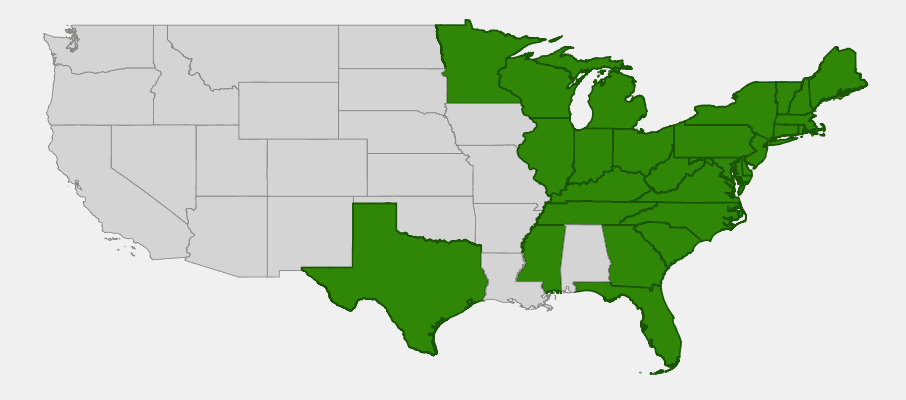
📋 Regional plant lists featuring American Hornbeam: Indiana & Ohio
Growing & Care Guide
American Hornbeam is a rewarding tree for gardeners willing to give it the moist, shaded conditions it prefers. Once established, it is remarkably low-maintenance — requiring minimal pruning, showing good pest and disease resistance, and delivering outstanding four-season interest in return for little ongoing care.
Light
This species thrives in part shade to full shade — conditions that would be limiting for most other trees. In nature it grows under the canopy of tall oaks, maples, and tulip poplars, and this is where it is most at home in the garden as well. It will tolerate part sun (morning sun with afternoon shade) but may show some leaf scorch on hot, dry sites in full sun. For urban street tree applications, a site with afternoon shade and consistent moisture is ideal.
Soil & Water
American Hornbeam prefers moist to wet, well-drained soils — the kind found in bottomlands, along streams, and in low-lying areas where water drains through but doesn’t stand for long periods. It adapts to a wide range of soil textures, from sandy loams to heavy clays, and tolerates a broad pH range from slightly acidic to slightly alkaline. Its moderate to high water needs make it ideal for rain gardens, bioswales, and areas that receive runoff. It does not thrive in dry, well-drained upland soils, particularly in the heat of Indiana and Ohio summers.
Planting Tips
Plant American Hornbeam in fall or early spring for best establishment. Choose a site near a downspout, low area, or stream corridor where moisture is consistently available. This tree transplants best from balled-and-burlapped or container stock. Avoid bare-root planting unless absolutely necessary. Mulch the root zone with 3–4 inches of wood chips or shredded leaf litter to maintain moisture and cool the root zone. Space trees at least 15 feet apart for a naturalistic planting or use a single specimen as a focal point in a shaded garden.
Pruning & Maintenance
American Hornbeam requires very little pruning. Its naturally graceful, spreading form develops without intervention. Remove dead or crossing branches in late winter while dormant. Never top this tree — the irregular, spreading crown is one of its most attractive features and topping would destroy its ornamental value. American Hornbeam is generally pest-free and disease-resistant, though it may occasionally show leafhopper damage or minor fungal leaf spots in wet seasons — neither of which is typically harmful.
Landscape Uses
American Hornbeam’s versatility makes it appropriate in many contexts:
- Understory tree beneath larger oaks, maples, or conifers
- Street tree in moist, partly shaded urban sites with adequate root zone
- Riparian buffer planting along streams and water features
- Rain garden anchoring — excellent in areas with seasonal wet-dry cycles
- Wildlife garden — seeds are consumed by many birds and small mammals
- Woodland edge and naturalized forest understory plantings
- Multi-season interest planting — bark in winter, catkins in spring, foliage in summer, color in fall
Wildlife & Ecological Value
American Hornbeam is a keystone component of the eastern deciduous forest understory, providing food and structure for a remarkable diversity of wildlife throughout the year.
For Birds
The small nutlets of American Hornbeam are eagerly eaten by numerous bird species, including Wild Turkey, Ruffed Grouse, Bobwhite, Wood Duck, and numerous songbirds such as Rose-breasted Grosbeak, Purple Finch, and American Goldfinch. The dense branching structure provides excellent nesting habitat, particularly for thrushes and vireos that prefer woodland understory sites. In winter, the persistent fruit clusters provide critical food for resident birds when other sources are depleted.
For Mammals
White-tailed deer browse the foliage and twigs, while beavers and rabbits use the bark and young branches for food and nesting material. Squirrels consume the nutlets, and the dense, interlocking branches of older specimens provide shelter for numerous small mammals. The tree’s streamside habitat makes it particularly valuable for semi-aquatic mammals like muskrat and mink.
For Pollinators
While hornbeam is wind-pollinated and does not provide nectar, its early spring catkins emerge when few other food sources are available for early-season bees. The leaf litter from mature specimens supports a diverse invertebrate community including beetles, moth and butterfly caterpillars, and ground-dwelling insects that in turn fuel the insectivorous birds and mammals of the woodland understory.
Ecosystem Role
As an understory species, American Hornbeam contributes to the structural complexity and biodiversity of eastern deciduous forests. Its leaf litter is rich in calcium and decomposes relatively quickly, enriching the soil and supporting the forest floor food web. Along streambanks, its dense root network stabilizes soils and reduces erosion. Its shade-tolerant nature and ability to persist beneath a closed canopy make it an important component of late-successional forest ecosystems that would otherwise lack a shrub/small tree layer.
Cultural & Historical Uses
American Hornbeam’s wood is among the hardest and toughest of any North American species — it is exceptionally dense, heavy, and resistant to splitting. Native American tribes, including the Chippewa, Potawatomi, and Iroquois, recognized these properties and used hornbeam wood for making tool handles, mallets, wedges, and other implements requiring strength and durability. The wood was also fashioned into ox yokes, levers, and other farm implements by early European settlers, who prized it for the same qualities — hence the name “ironwood” or “hardback.”
The name “musclewood” dates back to early European-American colonists who were struck by the tree’s uncanny resemblance to a human arm with tensed bicep muscles. This visual identity made it a memorable landmark tree in deep woodland, where few other trees have such a distinctive appearance. Early naturalists, including André Michaux during his botanical surveys of the Ohio and Indiana territories in the late 1700s, noted and documented the species as one of the most characteristic trees of the bottomland hardwood forests of the interior.
In modern horticulture, American Hornbeam has gained substantial attention as an ecological and urban planting. Its tolerance of shade, moist soils, and urban conditions has made it a recommended species for green infrastructure projects, stormwater bioswales, and naturalistic rain gardens. Its exceptional fall color, ornamental bark, and wildlife value have also secured it a place in residential and institutional landscapes where other understory natives might be overlooked. Increasingly, it is specified for urban street tree applications in contexts where moisture and shade are available — a niche where few other native trees can deliver its combination of beauty, toughness, and ecological benefit.
Frequently Asked Questions
Is American Hornbeam the same as Ironwood?
The name “ironwood” is shared by several hard-wooded trees, including American Hornbeam (Carpinus caroliniana) and Hophornbeam (Ostrya virginiana). Both are members of the birch family and have similarly hard wood, but they are distinct species. American Hornbeam has smooth, fluted, muscular gray bark; Hophornbeam has shaggy, somewhat scaly bark. The fruit clusters also differ — American Hornbeam produces hop-like clusters with leafy bracts, while Hophornbeam produces clusters resembling hop cones with papery enclosures.
Does American Hornbeam grow in full sun?
American Hornbeam is primarily a shade-tolerant understory species. It can survive in part sun but is not recommended for full-sun locations in the Midwest, where summer heat and periodic drought stress can cause leaf scorch. For best performance, provide afternoon shade and consistent soil moisture. In urban settings where street trees receive some shade from buildings, it can perform well.
How fast does American Hornbeam grow?
It is a slow to moderate grower, typically adding 6 to 12 inches of height per year. While this is slower than most landscape trees, it is long-lived (100+ years) and develops a graceful, character-filled form over time that fast-growing trees cannot match. Patience is rewarded.
Is American Hornbeam good for wet areas?
Yes, it is one of the best native trees for consistently moist or periodically wet soils. It thrives along streambanks, in rain gardens, and in low areas that receive runoff. It does not tolerate prolonged standing water but handles wet-dry cycles and poorly drained clay soils better than most landscape trees.
What is the difference between American Hornbeam and Musclewood?
They are the same species — Carpinus caroliniana. “Musclewood” and “Blue Beech” are regional common names for the same tree, referring to its muscular, fluted bark and grayish-blue bark color respectively. “American Hornbeam” is the most widely used formal common name.