
Bahama Ladder Brake (Pteris bahamensis)
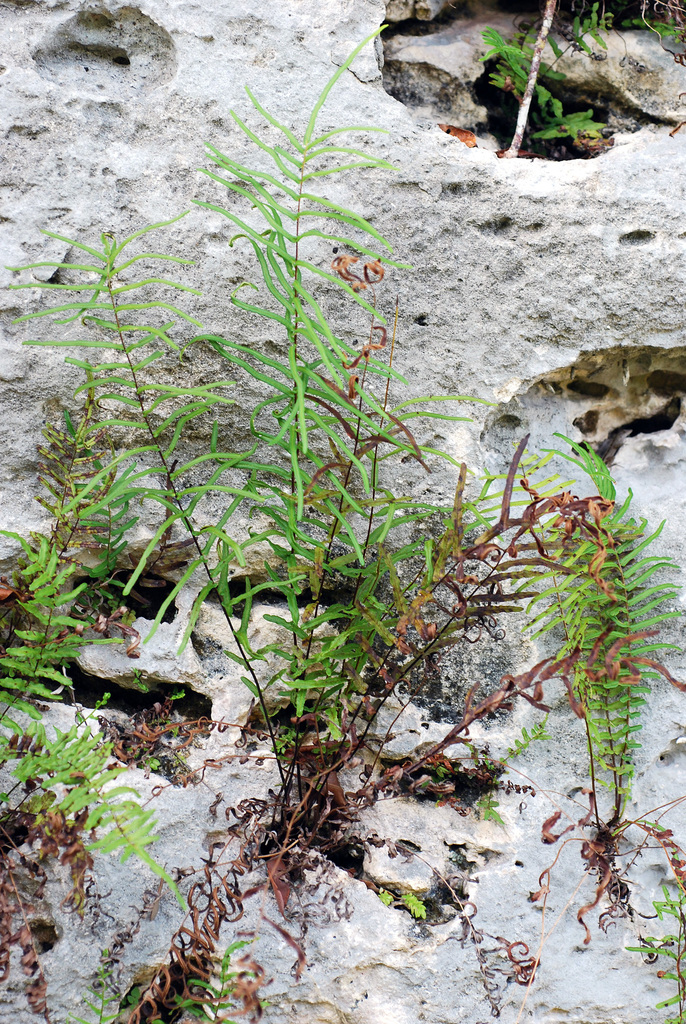
Bahama Ladder Brake (Pteris bahamensis), called Bahama brake by USDA PLANTS and sometimes plumy ladder brake, is a small evergreen fern of the pine rocklands of south Florida and the Bahamas. Its upright fronds have a central stalk lined with long, narrow, evenly spaced leaflets, like the rungs of a ladder, and it typically grows straight out of cracks and pockets in bare limestone. It belongs to the brake fern family (Pteridaceae).
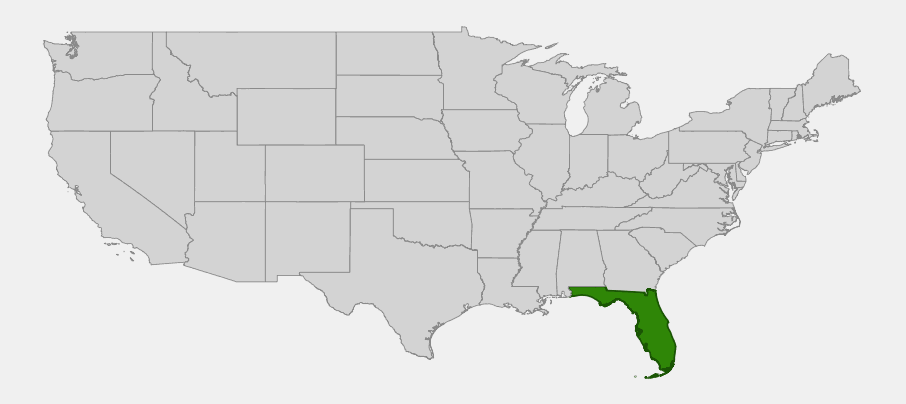
In the United States it is found only in southern Florida, and it is listed as Threatened by the State of Florida (FDACS Regulated Plant Index). Pine rockland, its only habitat in Florida, has been almost entirely cleared for development in Miami-Dade County, and the fern faces a second, quieter threat: it hybridizes with the invasive Asian China brake (Pteris vittata), and the Institute for Regional Conservation considers it threatened with extinction through hybridization.
Bahama ladder brake is a good fern for a sunny limestone rock garden or a pine rockland restoration in south Florida, and native plant enthusiasts grow it from spores. Buy only nursery-propagated plants and never dig or collect ferns or spores from the wild. This guide covers how to identify it, where it grows and how to grow it.
Identification
Bahama ladder brake is easy to recognize as a Pteris by its once-divided fronds with long, narrow leaflets and the continuous line of spores along their edges. The main challenge is telling it from the invasive China brake and from hybrids between the two.
Growth Form
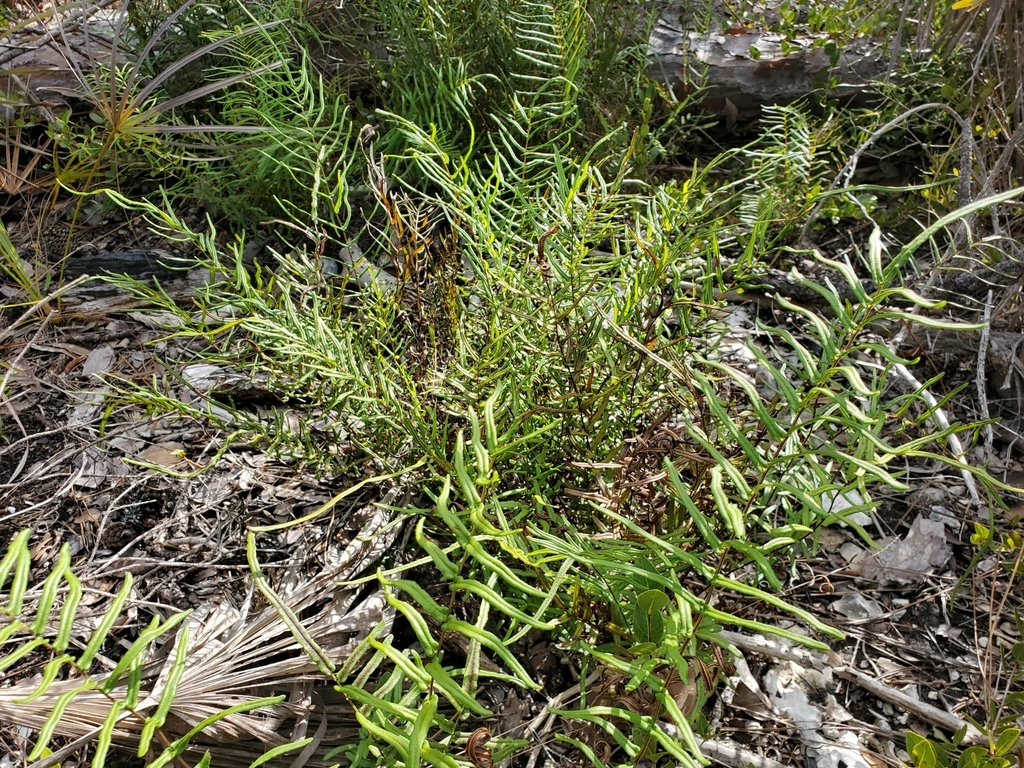
It forms small clumps from a short, creeping to upright rhizome covered in narrow brown scales. Fronds are erect to arching and usually 1 to 2 feet tall, occasionally up to about 3 feet. Old fronds persist and turn reddish brown, so a clump often has a skirt of dead fronds around its base.
Fronds
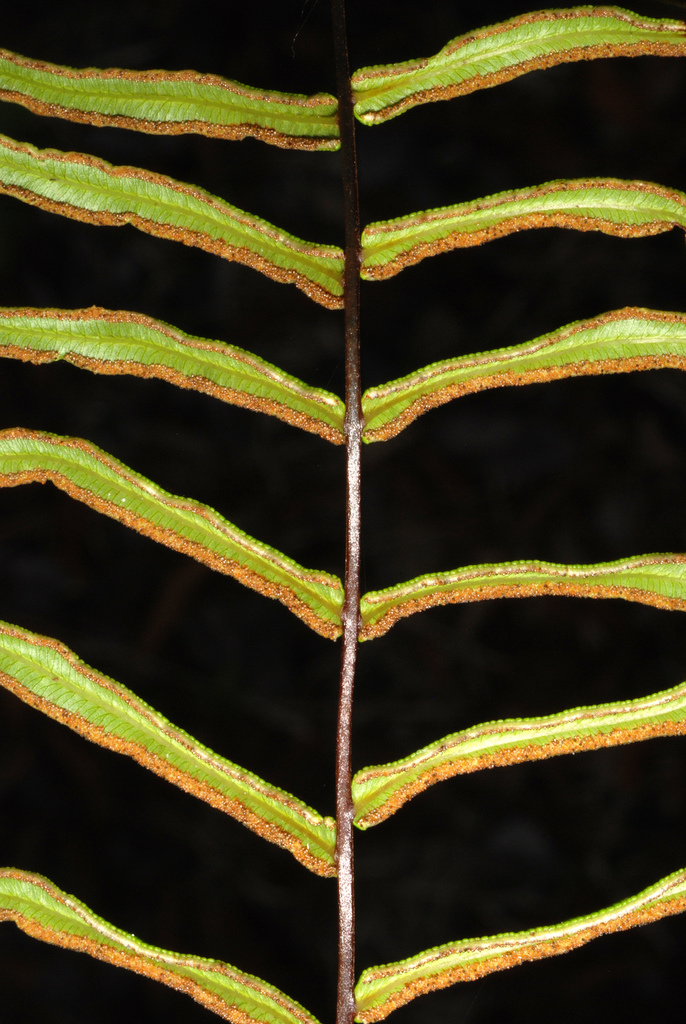
Each frond is once-pinnate: a slender, reddish-brown to straw-colored stalk and rachis carry pairs of long, narrow leaflets (pinnae) set at nearly right angles, which gives the fern its ladder-like look. The pinnae are linear, smooth-edged and up to several inches long. Sterile fronds tend to have slightly broader leaflets than fertile ones. A form with more finely divided, lobed or once-pinnate pinnae also occurs in the wild, which explains the occasional name “plumy” ladder brake.
Sori
Like all Pteris ferns, Bahama ladder brake produces its spores in a continuous band along the margins on the underside of each fertile pinna, covered by the rolled-under edge of the leaf (a false indusium). On mature fronds this shows as a neat orange-brown border along every leaflet.
Look-alikes
China brake (Pteris vittata), an invasive fern from Asia, is common on walls, sidewalks, canal banks and disturbed limestone throughout south Florida. It typically has more numerous, broader pinnae, with the lowest pinnae becoming gradually shorter toward the base of the frond. The two species cross to produce Delchamps’ ladder brake (Pteris × delchampsii), which is intermediate between them. Plants in yards or on disturbed ground are more likely to be China brake or hybrids than pure Bahama ladder brake.
Quick Facts
| Scientific Name | Pteris bahamensis (syn. Pteris longifolia var. bahamensis, Pycnodoria bahamensis) |
| Family | Pteridaceae (brake fern family) |
| Plant Type | Evergreen terrestrial fern |
| Mature Height | 1–2 ft (fronds occasionally to about 3 ft) |
| Mature Spread | 1–2 ft; clump-forming |
| Growth Rate | Moderate |
| Sun Exposure | Full sun to light shade |
| Water Needs | Low to moderate; drought tolerant once established |
| Soil Type | Thin, well-drained limestone (oolite) soil and rock crevices, without humus |
| Soil pH | Alkaline (above 7.2) |
| Bloom Time | None; produces spores year-round |
| Flower Color | None (fern) |
| Fall Color | None; evergreen |
| Fruit | None; spores in marginal bands under the leaflet edges |
| Deer Resistant | Yes; rarely browsed |
| USDA Hardiness Zones | 10–11 |
Native Range
Bahama ladder brake is native to southern Florida and the Bahamas, where its scientific name comes from. In Florida, the Institute for Regional Conservation records it from the Monroe County Keys north to St. Lucie and Collier counties, with its main populations in the pine rocklands of Miami-Dade County, including Everglades National Park’s Long Pine Key, and on Big Pine Key and nearby islands in the lower Keys, which are apparently separated from the mainland plants by a gap. It is very rare north of the Miami River and is perhaps extirpated in Broward and Palm Beach counties.
Its habitat is pine rockland, an open forest of south Florida slash pine over exposed oolitic limestone with a diverse understory of palms, shrubs and herbs. The fern grows in fissures, solution holes and shallow pockets of limestone with little or no organic soil, and occasionally at the edges of sinkholes. It tolerates both full sun and light shade.
Pine rockland is one of the most endangered habitats in the United States. Outside Everglades National Park, only a small percentage of the original Miami Rock Ridge pinelands remains, in scattered preserves that depend on prescribed fire. Bahama ladder brake is listed as Threatened by the State of Florida (FDACS Regulated Plant Index). Buy only nursery-propagated plants and never collect plants or spores from the wild.
📋 Regional plant lists featuring Bahama Ladder Brake: North & South Florida
Growing & Care Guide
Bahama ladder brake is one of the few native ferns suited to sunny, rocky, alkaline ground, so it fills a niche that most garden ferns cannot. It is grown mostly by native plant enthusiasts and occasionally offered by south Florida native nurseries. Because it is state-listed as Threatened, buy only nursery-propagated plants and never collect plants or spores from the wild.
Light
Give it full sun to light shade. It does well in the dappled light under open pines and tolerates more sun than most ferns, provided its roots are in rock or gritty soil.
Soil & Water
It needs very well-drained, alkaline, low-nutrient soil: limestone rock, crushed lime rock or a gritty, sandy mix with little organic matter. Rich, peaty potting soil and constantly wet conditions lead to rot. Water new plants regularly until established; after that, rainfall is usually enough, although plants look best with occasional water in a long dry spell. It does not tolerate salt spray or flooding with brackish water. Do not fertilize.
Planting Tips
Tuck plants into rock crevices, between limestone boulders in a rock garden, or into the understory of a pine rockland planting. Set the crown at the soil surface, not buried. Pair it with other pine rockland natives such as silver palm, coontie and locustberry. Keep it well away from China brake, which is common in south Florida yards and on walls; remove any China brake nearby to avoid hybrids. As a state-listed Threatened plant, it should only come from nursery-propagated stock, never from the wild.
Pruning & Maintenance
Cut old, brown fronds back at the base in winter or early spring to keep clumps tidy and let new fronds come through. In pine rockland restorations, periodic prescribed fire keeps the habitat open; the fern resprouts from its rhizome.
Propagation
It can be grown from spores sown on a sterile, moist, alkaline mix under cover, which is how enthusiasts and nurseries raise it. Large clumps can also be divided carefully. Use only spores and divisions from cultivated plants, and make sure the parent plant is true Bahama ladder brake and not a hybrid with China brake.
Landscape Uses
- Pine rockland restoration: one of many understory herbs used in pine rockland plantings in south Florida
- Limestone rock gardens: one of the few ferns that thrive in sunny rock crevices
- Native fern collections: a rare, state-listed species best conserved in cultivation from propagated stock
- Butterfly and wildlife gardens: fine-textured evergreen cover among flowering pine rockland shrubs
- Containers: in a gritty, alkaline mix for small spaces or for growers outside its native area
Wildlife & Ecological Value
As a fern, Bahama ladder brake has no flowers or fruit, but it is part of the rich understory that makes pine rockland one of the most biologically diverse habitats in Florida.
For Pollinators
Ferns reproduce by spores and do not need pollinators. Bahama ladder brake contributes to pollinator habitat indirectly, as part of the herb layer that surrounds the many flowering shrubs and wildflowers of pine rocklands.
For Birds
It offers little direct food for birds, but its clumps add low cover in the open rockland understory used by ground-foraging birds.
For Mammals
It is seldom eaten by mammals. In the lower Keys it grows in the habitat of the endangered Key deer, which browse many pine rockland plants but are not known to rely on this fern.
Ecosystem Role
It is adapted to the frequent, low-intensity fires that once swept pine rocklands every few years, resprouting from its rhizome after burns. Fire suppression, which lets hardwoods shade out the understory, and hybridization with China brake are the main threats to its remaining populations.
Cultural & Historical Uses
The species was first described by the Swedish botanist Jacob Georg Agardh in 1839 as a variety of Pteris diversifolia, based on plants from the Bahamas. It was later treated as a variety of the long-leaved brake, Pteris longifolia, a name still listed as a synonym by USDA PLANTS. John Kunkel Small, who explored the south Florida pinelands early in the twentieth century, placed it in his genus Pycnodoria and described a Florida plant as Pycnodoria pinetorum, the “pineland” fern.
The genus name Pteris comes from the Greek word for fern, itself derived from pteron, “wing” or “feather,” for the feathery fronds. “Brake” is an old English word for fern, also seen in bracken.
Today Bahama ladder brake is mostly known to botanists, fern enthusiasts and pine rockland restoration crews. Its story mirrors that of its habitat: once common on the Miami Rock Ridge, it now survives mainly in preserves and in the gardens of growers who propagate it from spores.
Frequently Asked Questions
Is Bahama ladder brake endangered?
It is listed as Threatened by the State of Florida (FDACS Regulated Plant Index). Its pine rockland habitat has been largely destroyed, and it also hybridizes with the invasive China brake. Buy only nursery-propagated plants and never collect plants or spores from the wild.
How can I tell it from China brake?
China brake (Pteris vittata) is a very common invasive fern on walls, sidewalks and disturbed ground in south Florida. It usually has more numerous, broader pinnae, with the lower pinnae gradually shortening toward the base of the frond. Bahama ladder brake grows mainly in natural pine rockland. Intermediate plants may be hybrids.
Can it grow in full sun?
Yes. It tolerates full sun to light shade, as long as it grows in well-drained limestone or gritty soil. It is one of the few ferns suited to sunny rock gardens in south Florida.
Will it grow in central or north Florida?
It is a tropical fern hardy only in roughly zones 10 and 11. Outside south Florida, grow it in a container and protect it from frost.
Does it need rich, moist soil like other ferns?
No. It prefers thin, alkaline, low-nutrient limestone soil and is drought tolerant once established. Rich, wet potting soil can rot the rhizome.

Looking for a nursery that carries Bahama Ladder Brake?
Browse our native plant nursery directory: Florida