
Elliott’s Aster (Symphyotrichum elliottii)
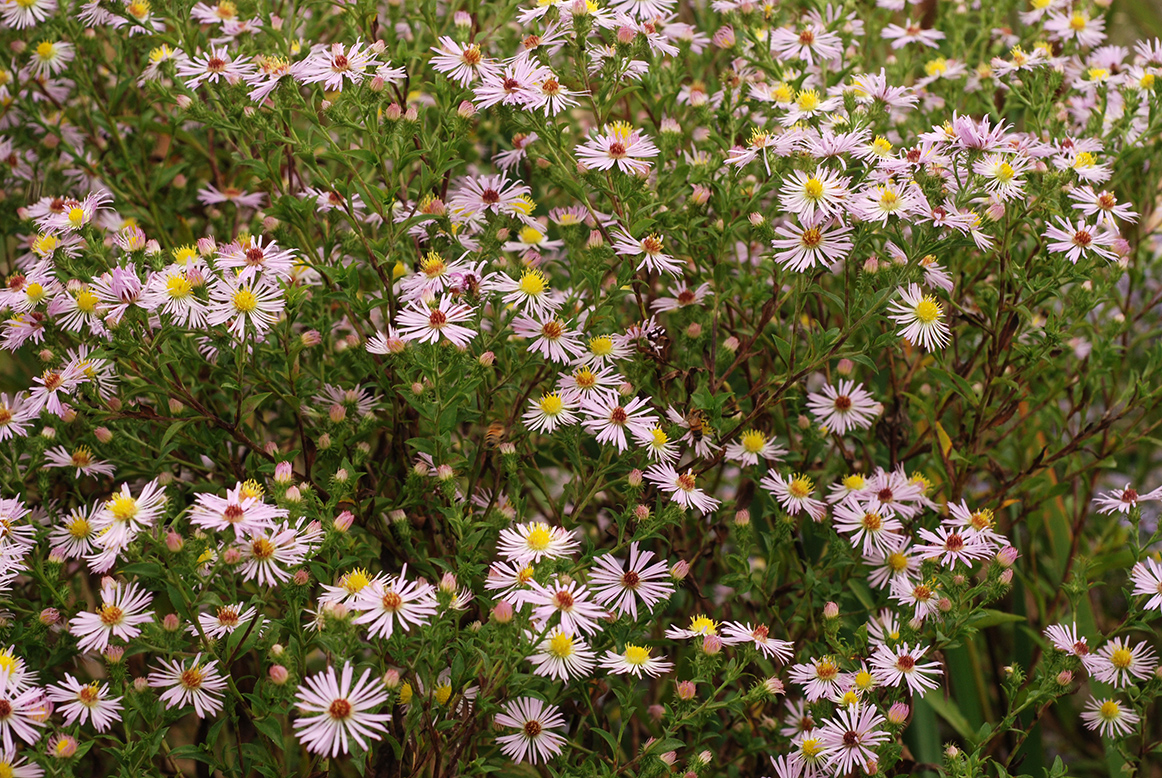
Symphyotrichum elliottii, Elliott’s Aster, is a tall, late-blooming wetland aster of the southeastern Coastal Plain. USDA PLANTS calls it marsh American-aster, and older books list it as Aster elliottii or as a variety of purple-stemmed aster (Aster puniceus var. elliottii). It is a perennial in the aster family (Asteraceae) that spreads by rhizomes into patches, and it grows in freshwater and brackish marshes, swamp edges, wet flatwoods, wet ditches and along the banks of rivers and canals.
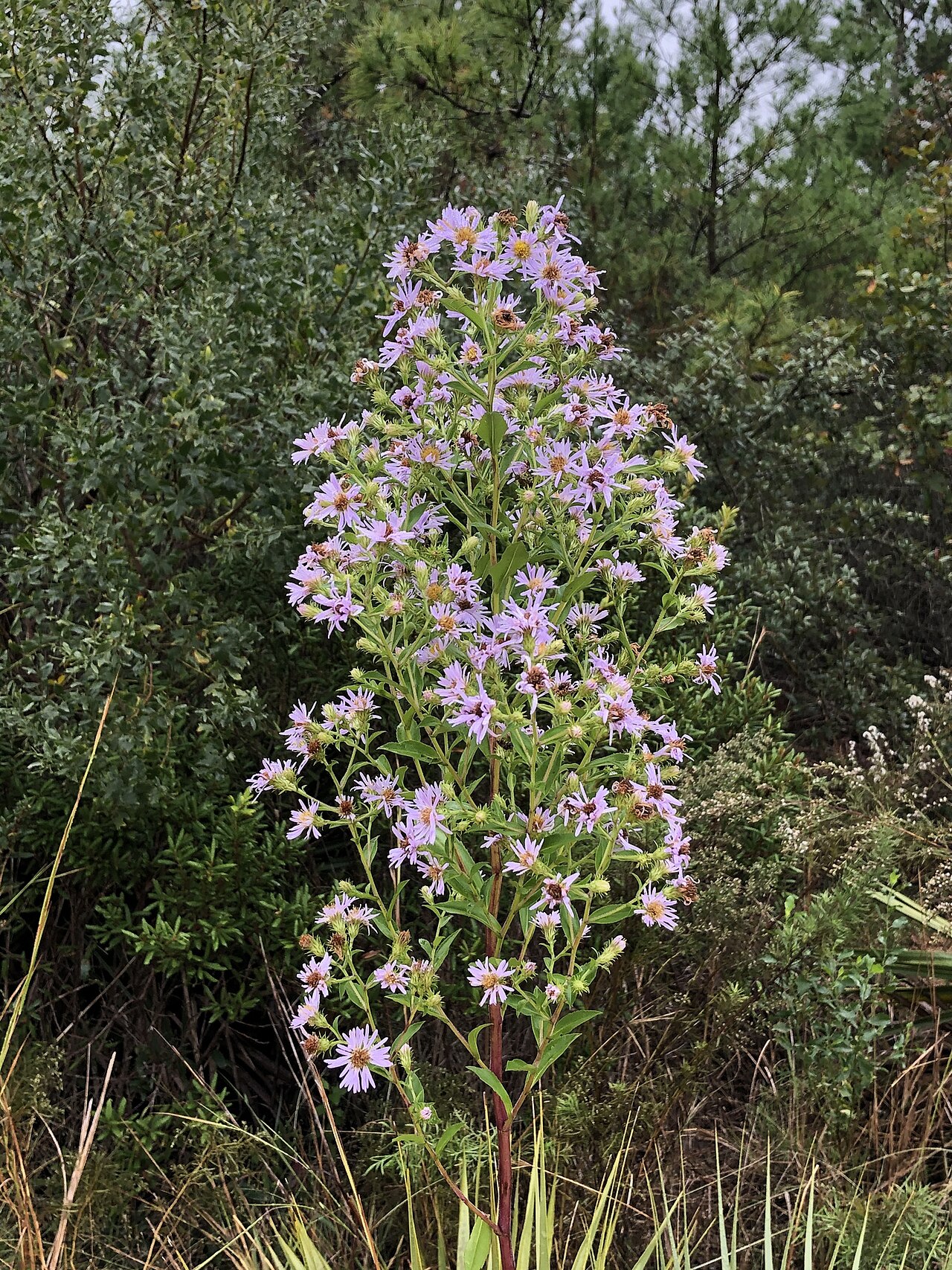
In fall, usually from September into November, the leafy stems rise 2 to 6 feet and end in large, branched sprays of flower heads, each about an inch to an inch and a half across. The many narrow rays are pale pink to lavender, and the disc florets start pale yellow and turn pink, then brown. With fresh and older heads open at once, a patch has a soft, two-toned look. It is one of the last big wildflower displays of the year in Florida wetlands, and it is especially valuable for bees and migrating butterflies.
Elliott’s aster is one of the easiest native asters to grow in wet, sunny parts of a southern garden, including rain gardens, pond edges and drainage swales. It is more tolerant of wet feet and heat than most asters, and it spreads politely in moist soil. This guide covers how to tell it apart from similar asters, where it grows, how to grow it and why it matters to wildlife.
Identification
Several tall asters bloom in southeastern wetlands in fall. Elliott’s aster is recognized by its stout, mostly smooth stems, thick toothed leaves that clasp the stem, its pink to lavender rays and its colonial habit in wet ground.
Stems & Roots
The plant spreads by long, creeping rhizomes, so it usually forms patches or loose colonies rather than single clumps. The stems are stout, upright and 2 to 6 feet tall (occasionally more), green to reddish, and smooth or only sparsely hairy in lines. That is one of the easiest ways to separate it from purple-stemmed aster (S. puniceus), whose stems are usually rough with stiff hairs.
Leaves
The leaves are thick and somewhat leathery, smooth, lance-shaped to oblong, up to about 6 inches long, with small, sharp teeth along the margins. Their bases are slightly widened and clasp the stem. Lower leaves are larger and may wither by flowering time. The upper leaves shrink gradually into the flowering branches.
Flowers
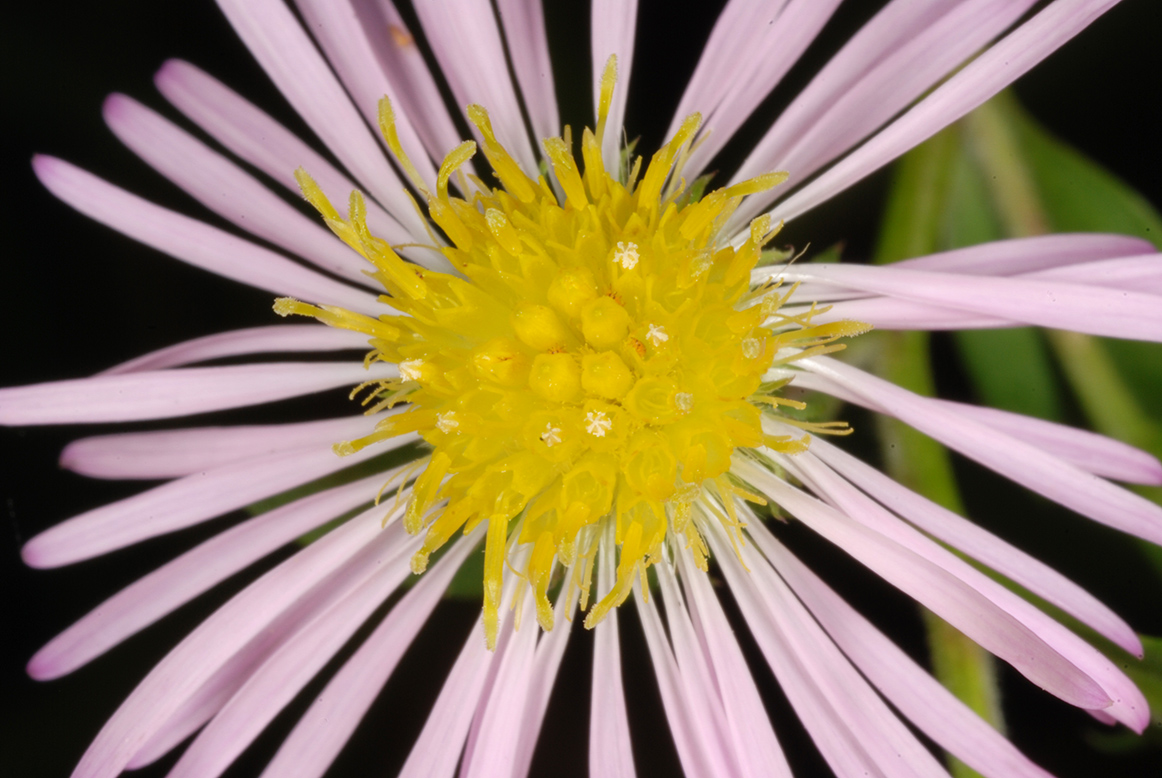
The flower heads are carried in large, leafy, branched arrays at the top of the stem. Each head is roughly 1 to 1½ inches across, with many (often 30 or more) narrow ray florets in pale pink, lavender or pinkish-purple, and a central disc of small tubular florets. The disc opens pale yellow, then turns pink to reddish brown as the florets age. The green, narrow phyllaries beneath the head overlap in several rows and have spreading tips. Bloom time is mainly September through November, and plants in south Florida can flower into early winter.
Fruit & Seeds
The seeds are small, ribbed cypselae topped by a tuft of soft, whitish bristles (the pappus), which carries them on the wind. Plants often hold seed heads into early winter, giving fluffy, buff-colored heads on dry stems.
Quick Facts
| Scientific Name | Symphyotrichum elliottii (Torr. & A. Gray) G.L. Nesom (syn. Aster elliottii, Aster puniceus var. elliottii) |
| Family | Asteraceae (aster family) |
| Plant Type | Herbaceous perennial wildflower; rhizomatous |
| Mature Height | 2–6 ft |
| Mature Spread | 2–3 ft; spreads into colonies |
| Growth Rate | Fast |
| Sun Exposure | Full sun to partial shade |
| Water Needs | High; moist to wet soil, tolerates shallow standing water |
| Soil Type | Wet sand, muck, peat or loam |
| Soil pH | About 5.0–7.5 |
| Bloom Time | September–November (into early winter in south Florida) |
| Flower Color | Pale pink to lavender rays; yellow disc aging pink to brown |
| Fall Color | None notable; foliage browns after frost |
| Fruit | Small cypselae with white, wind-carried bristles |
| Deer Resistant | Moderately; deer browse asters occasionally |
| USDA Hardiness Zones | 7–10 |
Native Range
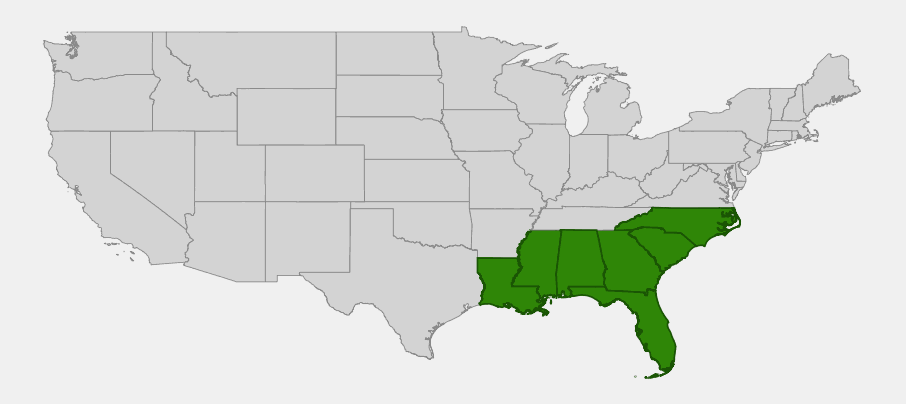
Elliott’s aster is a southeastern Coastal Plain species. USDA PLANTS records it as native in seven states: North Carolina, South Carolina, Georgia, Florida, Alabama, Mississippi and Louisiana. NatureServe also reports it from southeastern Virginia at the northern edge of its range, where it is rare. Within this range it stays mostly near the coast and in the lower Coastal Plain.
In Florida it grows through much of the state, from the Panhandle across north and central Florida to the southern peninsula. Its habitats are freshwater marshes, the edges of cypress domes and swamps, wet flatwoods, wet prairies, ditches, canal banks and the borders of lakes and rivers. It also tolerates the upper edges of brackish marshes. The U.S. Army Corps of Engineers wetland plant list rates it Obligate (OBL), meaning it almost always grows in wetlands.
NatureServe ranks Elliott’s aster as apparently secure globally, but it is considered of conservation concern at the northern edge of its range in North Carolina, South Carolina and Virginia. In Florida it is common enough to be grown and sold by native plant nurseries.
📋 Regional plant lists featuring Elliott’s Aster: North & South Florida · Alabama, Georgia & Mississippi · North & South Carolina · Arkansas, Louisiana, Eastern Oklahoma & Eastern Texas
Growing & Care Guide
Elliott’s aster is a reliable, vigorous perennial for wet, sunny sites in the Southeast. It is sold by many Florida native plant nurseries and is easy to establish from containers. The main things to plan for are moisture and space, since it spreads by rhizomes in good conditions.
Light
Full sun gives the strongest stems and heaviest bloom. It tolerates partial shade, especially in the afternoon, but in more shade the stems lean and flower less.
Soil & Water
Plant it in soil that stays moist to wet: rain gardens, pond and lake edges, swales, wet ditches and low spots. It tolerates shallow standing water for part of the year, as well as short dry spells once established. In ordinary garden beds it needs regular watering in dry weather, or it will wilt and lose its lower leaves. It does not need fertilizer, and rich soil can make stems floppy.
Planting Tips
Set plants 2 to 3 feet apart in spring or early summer. It mixes well with other wetland perennials such as swamp hibiscus, pickerelweed and blue flag iris. In small gardens, give it a defined space or plant it where its rhizomes are contained by a path or edging.
Pruning & Maintenance
To keep plants shorter and bushier, cut stems back by about a third to a half in late spring or early summer. This delays flowering slightly and reduces flopping. Leave the seed heads standing over winter for birds and cut the old stems to the ground in late winter. Divide crowded patches every few years, or simply pull out unwanted shoots in spring.
Propagation
Division is the easiest method: dig and separate rooted rhizome sections in late winter or early spring. Stem cuttings taken in late spring also root easily. Seeds germinate best when sown fresh in fall or after a few weeks of cold, moist treatment, and should be covered only very lightly, since the seeds are tiny.
Landscape Uses
- Rain gardens and bioswales: tolerates periodic flooding and dries out between rains
- Pond and lake shorelines: fills wet margins with late-season color
- Pollinator gardens: a key fall nectar source for bees and butterflies
- Wetland restoration: for marsh edges, wet prairies and stormwater areas on the Coastal Plain
- Naturalized meadows: spreads into informal drifts in moist, sunny ground
Wildlife & Ecological Value
Late-blooming asters are some of the most valuable wildlife plants in the Southeast, and Elliott’s aster is a strong example. It blooms when many other flowers are finished, provides seeds into winter and hosts caterpillars.
For Pollinators
The flowers attract a wide range of bees, including bumblebees, honeybees, leafcutter bees and many small native bees, as well as wasps, flies and butterflies. Its fall bloom overlaps with the southward migration of monarchs and other butterflies through Florida and the Gulf Coast, when nectar is in high demand. Asters in general are host plants for the caterpillars of the pearl crescent butterfly and of many moths.
For Birds
Seed-eating birds such as sparrows and goldfinches eat the seeds in late fall and winter. The dense stands also provide cover for wetland birds, and insects on the plants feed wrens, warblers and other insect-eating birds.
For Mammals
Deer, rabbits and marsh rabbits sometimes graze young shoots. Small mammals use the dense colonies for cover.
Ecosystem Role
Its spreading rhizomes help hold soil along ditches, canal banks and shorelines, and its colonies provide structure in marshes and wet prairies. Like many asters, it supports a large community of plant-feeding insects, which pass that energy on to birds, spiders and other predators.
Cultural & Historical Uses
The species honors Stephen Elliott (1771–1830), a South Carolina banker, legislator and botanist whose Sketch of the Botany of South-Carolina and Georgia was one of the most important early works on southern plants. John Torrey and Asa Gray named it Aster elliottii in their Flora of North America in the early 1840s.
For many years botanists debated whether it was a separate species or a coastal form of purple-stemmed aster, and some treatments listed it as Aster puniceus var. elliottii or subsp. elliottii. When North American asters were divided into several genera based on DNA and other evidence, Guy Nesom moved it to Symphyotrichum in 1995, and that name is now used by USDA PLANTS and the Atlas of Florida Plants.
The common names reflect this history. Gardeners and Florida nurseries usually call it Elliott’s aster, while USDA uses the descriptive name marsh American-aster. Whatever the name, it has become one of the most widely planted native asters in Florida rain gardens and stormwater plantings.
Frequently Asked Questions
Is Elliott’s aster the same as marsh American-aster?
Yes. Marsh American-aster is the common name used by USDA PLANTS for Symphyotrichum elliottii. It is also listed in older references as Aster elliottii.
Will Elliott’s aster grow in standing water?
It tolerates shallow, seasonal standing water and saturated soil, which is why it does well in rain gardens and on pond edges. It is not a true aquatic plant, though, and should not be permanently submerged.
Does it spread?
Yes. It spreads by rhizomes and forms colonies in moist soil. That is useful for stabilizing banks and filling large areas. In a small bed, divide it every few years or pull unwanted shoots in spring.
How do I keep it from flopping?
Give it full sun, avoid fertilizer and cut the stems back by about a third to a half in late spring or early summer. Neighboring plants can also help hold it upright.
When does it bloom?
Mostly from September to November. In south Florida it can continue blooming into December or later in mild years.

Looking for a nursery that carries Elliott’s Aster?
Browse our native plant nursery directory: Alabama · Florida & Georgia · Louisiana & Mississippi · North Carolina · South Carolina