
Yellow Waterlily (Nymphaea mexicana)
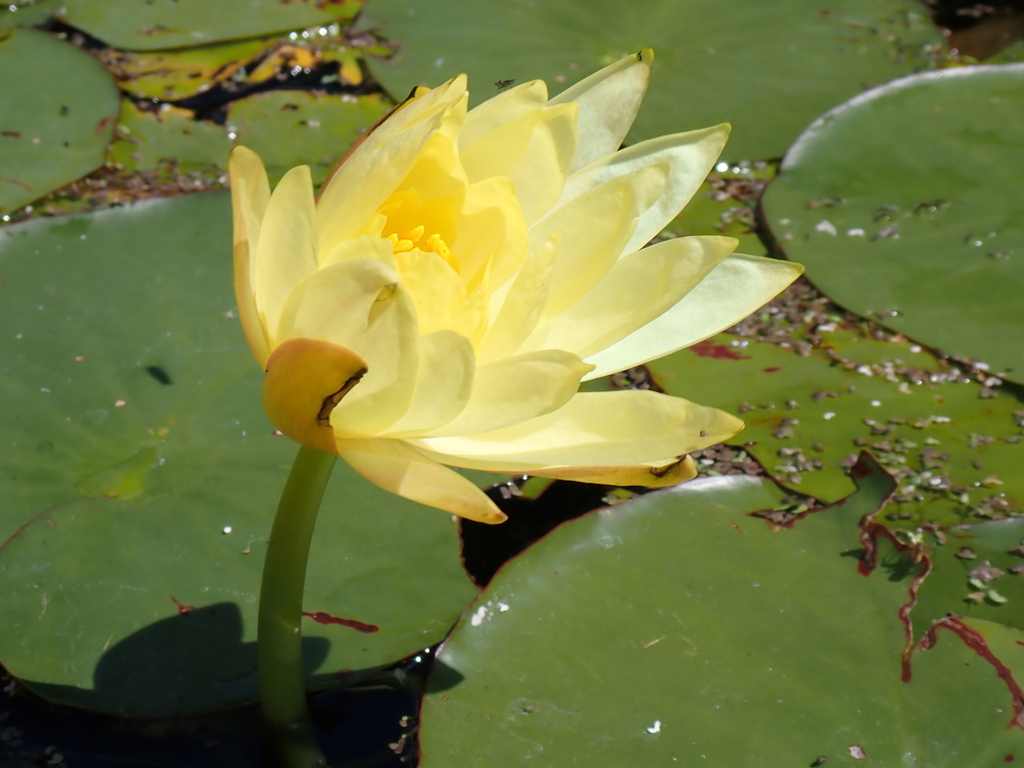
Nymphaea mexicana, known as Yellow Waterlily, Mexican waterlily or banana waterlily, is a floating-leaved aquatic perennial native to the southeastern United States, Texas and Mexico. From spring into fall it produces clear lemon-yellow flowers 3 to 5 inches across, held at or just above the water among round, notched leaves that are often mottled with reddish brown. It is the only yellow-flowered waterlily native to the United States. It belongs to the waterlily family (Nymphaeaceae).
In Florida it grows naturally in quiet pools of spring runs, spring-fed lakes and ponds and other still water, and FNPS notes that it is not a nuisance there. Outside its native range, however, it can be a serious weed. USDA PLANTS lists it as introduced in Canada, it is considered invasive where it has been planted in California, and it has become a nuisance in Australia and naturalized in South Africa. Because it spreads quickly by runners, it can also cover the surface of a small pond within its native range.
For gardeners inside its native range it is an attractive, wildlife-friendly choice for larger ponds, where its spread can be managed. Outside that range, plant native alternatives instead and never release it, or any water-garden plant, into natural waters. This guide covers how to recognize yellow waterlily, where it is native, and how to grow it responsibly.
Identification
Yellow waterlily is easy to recognize when flowering: no other native waterlily has yellow petals. Out of flower, look for floating, deeply notched leaves with brownish mottling on top and purplish undersides.
Growth Habit
It is a perennial aquatic plant that grows from an upright rhizome rooted in the mud. It spreads by long underwater runners (stolons) that root and form new plants, and it produces clusters of small, fleshy, banana-shaped storage roots, the source of the name banana waterlily. In crowded colonies the leaves may rise above the water, as noted by the Lady Bird Johnson Wildflower Center.
Leaves
The floating leaves are rounded to oval, roughly 3 to 8 inches across, with a deep notch where the leaf stalk attaches. The upper surface is green and often blotched with reddish-brown, and the underside is reddish purple with small dark spots. Young plants and plants in deep water may also have thin, submerged leaves.
Flowers
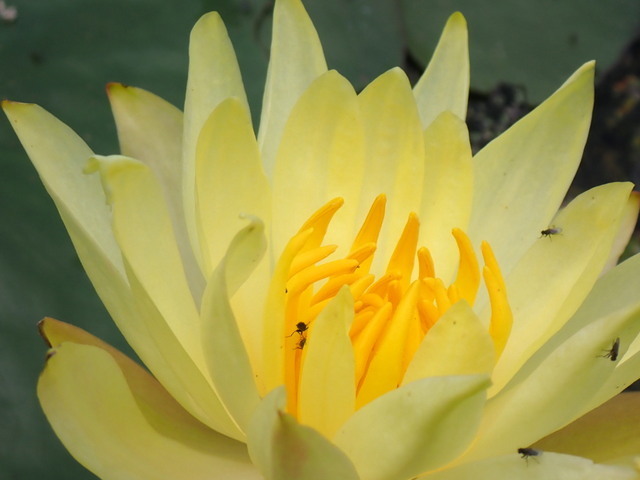
The flowers are pale to bright lemon-yellow, 3 to 5 inches across, with numerous petals and a central cluster of yellow stamens. They are held on stalks at or a few inches above the surface. Each flower opens for several days, typically from about midday to late afternoon. Blooming runs from spring through fall in Florida and Texas.
Fruit & Seeds
After flowering, the stalk bends and the fruit ripens under water. It is a fleshy, berry-like capsule that releases small seeds. In practice, most new plants arise from runners rather than seed.
Similar Species
American White Waterlily (N. odorata) has white, fragrant flowers that open in the morning. Spatterdock (Nuphar advena) has yellow flowers too, but they are small, ball-shaped and cup-like, with thick sepals instead of many open petals, and its leaves are usually held above the water. Hybrids between yellow and white waterlilies, with pale yellow to cream flowers, occur in some areas.
Quick Facts
| Scientific Name | Nymphaea mexicana (accepted by USDA PLANTS and the Atlas of Florida Plants) |
| Family | Nymphaeaceae (waterlily family) |
| Plant Type | Aquatic perennial with floating leaves |
| Mature Height | Flowers at or a few inches above the water |
| Mature Spread | Each plant 3–5 ft; colonies spread indefinitely by runners |
| Growth Rate | Fast |
| Sun Exposure | Full sun to part sun |
| Water Needs | Aquatic; still water about 1–3 ft deep |
| Soil Type | Mud, sand, clay or loam on the bottom of ponds and streams |
| Soil pH | Near neutral |
| Bloom Time | Spring through fall |
| Flower Color | Lemon-yellow |
| Fall Color | None; dies back to the rhizome in cold winters |
| Fruit | Fleshy capsule that ripens under water |
| Deer Resistant | Not applicable (aquatic) |
| USDA Hardiness Zones | 7–10 |
Native Range
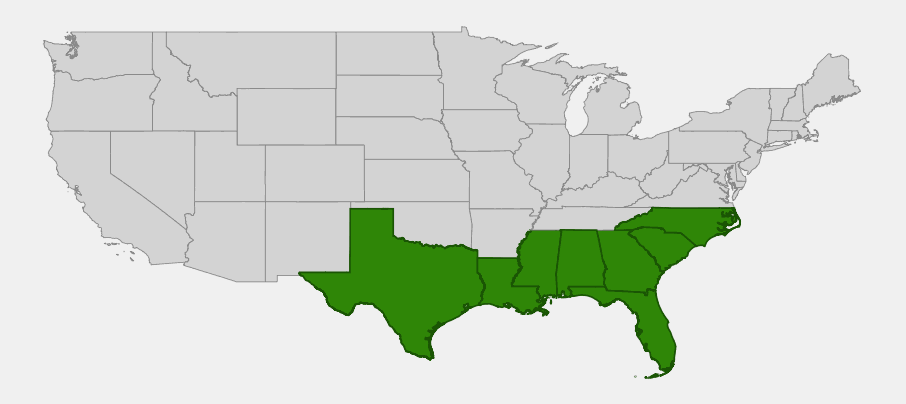
Yellow waterlily is native to the southern United States and Mexico. USDA PLANTS and the Lady Bird Johnson Wildflower Center record it from Alabama, Florida, Georgia, Louisiana, Mississippi, North Carolina, South Carolina and Texas, and also from Arizona, California and Oklahoma. USDA PLANTS also lists it in Arizona, California and Oklahoma; the map shows the southeastern and Texas range. It was first described from Mexico, which explains the species name.
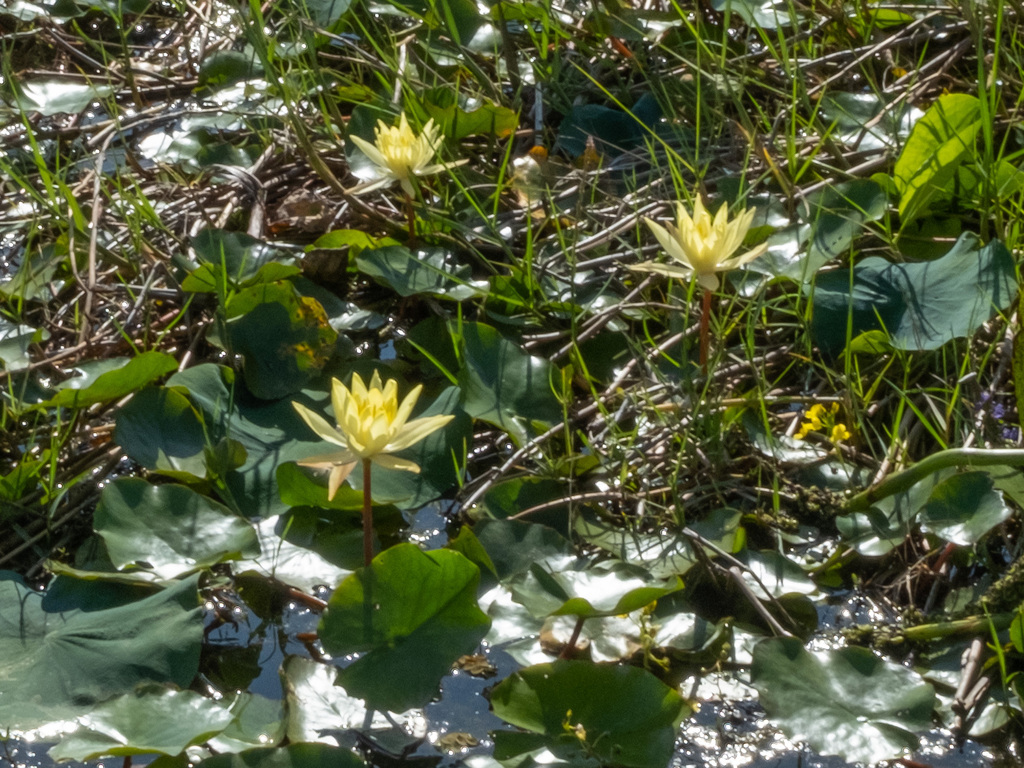
In Florida, FNPS describes its range as covering most of the state, with natural occurrences in streams that have suitable water chemistry: relatively neutral pH and high nutrients. Typical habitats are quiet pools in spring-run streams, spring-fed lakes and ponds, and other still water. FNPS also notes that it has been planted outside its natural range, including in old mine ponds and reclamation areas. In Texas it grows in ponds, resacas and ditches, especially in the southern part of the state.
Outside its native range it is a weed of concern. It is introduced in Canada according to USDA PLANTS, considered invasive in parts of California where it can choke ponds and slow streams, and listed by FNPS as a nuisance invasive in Australia. Gardeners should never move it into natural waters outside its home range.
📋 Regional plant lists featuring Yellow Waterlily: North & South Florida · Alabama, Georgia & Mississippi · North & South Carolina · Arkansas, Louisiana, Eastern Oklahoma & Eastern Texas · South & West Texas
Growing & Care Guide
Yellow waterlily is easy to grow in a sunny pond within its native range. FNPS lists it as available from native nurseries, FNPS plant sales and specialty providers. The main challenge is controlling its spread: in a small pond it can cover the whole surface in a season or two.
Light
Full sun gives the most flowers. It tolerates part sun, but flowering drops in shade.
Soil & Water
Grow it in still or slow-moving fresh water about 1 to 3 feet deep, rooted in mud, sand, clay or loam. FNPS notes that it does not tolerate salt or brackish water. In Florida it does best in water with a near-neutral pH and good nutrients, such as spring-fed ponds.
Planting Tips
In garden ponds, plant it in a wide, shallow container of heavy garden soil topped with gravel, and set the pot so that the crown is 12 to 18 inches below the surface. Containers help keep the runners from spreading across the pond bottom. Avoid planting it directly into the bottom of a small pond. Outside its native range, choose a native waterlily instead.
Pruning & Maintenance
Remove yellowing leaves and spent flowers during the growing season. Check containers each year and cut off runners and young plants that root outside the pot. If plants cover more than about half of the pond surface, thin them to keep open water for oxygen exchange and other wildlife. Compost removed plants; never dump them into natural waterways.
Propagation
FNPS lists propagation by pieces broken from the underground stems. Divide the rhizome or pot up the young plantlets formed on runners in spring. Plants can also be grown from seed, but division is much faster.
Landscape Uses
- Wildlife ponds: floating cover for fish, frogs and aquatic insects within its native range
- Large water gardens: the only native yellow-flowered waterlily, for sunny ponds where spread can be managed
- Spring and stream restoration: a natural component of spring-run and pond communities in Florida and Texas
- Container water gardens: a tub or pot keeps its runners confined
- Shade for open water: floating leaves help shade water and limit algae
Wildlife & Ecological Value
Like other waterlilies, yellow waterlily provides food and cover both above and below the water surface.
For Pollinators
FNPS notes that a wide range of insects, from flies and beetles to many kinds of bees, have been recorded on waterlilies, and that the yellow flowers likely attract mainly bees and flies.
For Birds
Wading birds hunt among the floating leaves, and ducks and other waterbirds eat the seeds and the plant parts. Purple gallinules and other marsh birds walk across the floating leaves to forage.
For Mammals
Muskrats, beavers and other aquatic mammals eat waterlily rhizomes and leaves where they occur.
Ecosystem Role
The floating leaves shade the water, providing cover for fish, tadpoles and invertebrates, and the plants add organic matter to pond and spring-run food webs. Where it is introduced, dense mats can block light, crowd out native plants and lower oxygen levels in the water.
Cultural & Historical Uses
The species was described in the 1830s by the German botanist Joseph Gerhard Zuccarini from plants collected in Mexico. The genus name Nymphaea comes from the Greek nymphs, the spirits of springs and streams.
Yellow waterlily played an important part in waterlily breeding. In the late nineteenth century the French nurseryman Joseph Bory Latour-Marliac used it as a parent in his crosses with hardy waterlilies, and it is regarded as the source of the yellow, peach and copper tones in many hardy garden waterlilies still grown today.
The name banana waterlily refers to the clusters of small, banana-shaped storage roots it forms. These help the plant survive drought and winter and allow it to regrow quickly, one reason it spreads so readily where it is introduced.
Frequently Asked Questions
Is yellow waterlily invasive?
Not within its native range in the southeastern United States, Texas and Mexico, where FNPS notes it is not a nuisance in Florida. Outside that range it can be invasive. It is introduced in Canada, considered invasive in parts of California, and a nuisance weed in Australia. Even in its native range it can cover a small pond.
How can I keep yellow waterlily from taking over my pond?
Grow it in a container, cut off runners that escape the pot, and thin the plants when they cover more than about half of the surface. Never dump extra plants into lakes, streams or ditches.
How is yellow waterlily different from spatterdock?
Yellow waterlily has open, star-like flowers with many thin petals and floating, mottled leaves. Spatterdock has small, round, cup-shaped yellow flowers with thick sepals, and its large leaves usually stand above the water.
When does yellow waterlily bloom?
From spring through fall in Florida and Texas. Each flower opens around midday and closes in late afternoon for several days.
Where is yellow waterlily native?
In Alabama, Florida, Georgia, Louisiana, Mississippi, North Carolina, South Carolina and Texas, and in Mexico. USDA PLANTS also has records from Arizona, California and Oklahoma, and lists it as introduced in Canada.

Looking for a nursery that carries Yellow Waterlily?
Browse our native plant nursery directory: Alabama · Florida & Georgia · Louisiana & Mississippi · North Carolina · South Carolina & Texas