
Curaçao Bush (Cordia globosa)
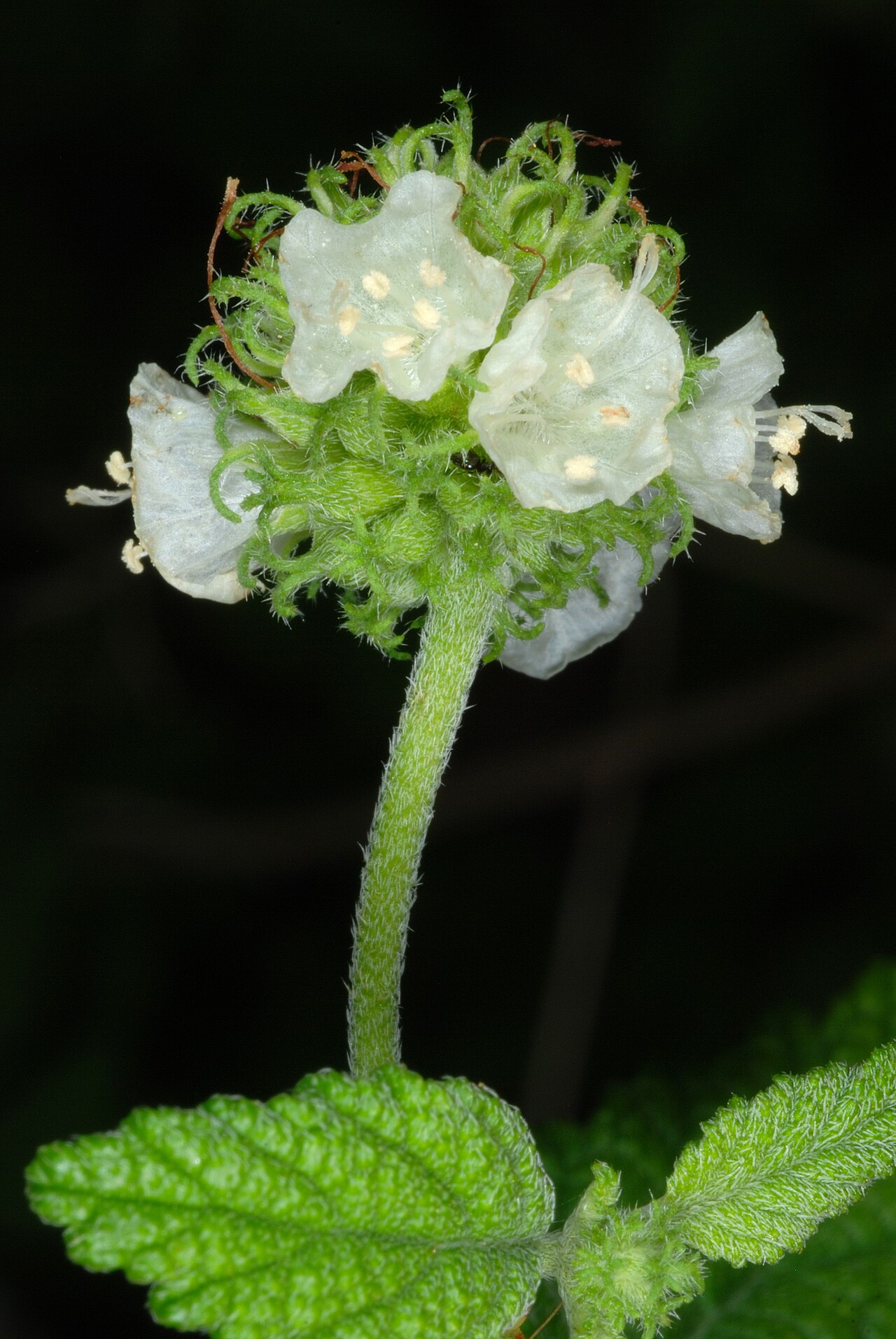
Cordia globosa, known as Curaçao Bush (also spelled Curacao bush) and sometimes sold as butterfly sage, is a small, sprawling shrub of coastal hammock edges and rocky thickets in South Florida and the Keys. Through much of the year it carries dense, round heads of small white flowers on long stalks, followed by bright red fruits that birds quickly eat. The rough, toothed leaves give it a sage-like look.
It belongs to the borage family (Boraginaceae). USDA PLANTS lists it as Cordia globosa, the name used here and by most nurseries. The Atlas of Florida Plants and the Florida Native Plant Society use Varronia globosa, following DNA studies that moved the shrubby, small-flowered species of Cordia into the genus Varronia. Both names refer to the same plant.
Curaçao bush is listed as Endangered by the State of Florida (FDACS Regulated Plant Index). Wild populations are small and threatened by coastal development, but the plant is easy to grow and is propagated by South Florida native nurseries. Buy nursery-propagated plants and never collect from the wild. This guide covers identification, range, care and its value for butterflies and birds.
Identification
Curaçao bush is a medium shrub with an open, loose, often sprawling habit. Its long-stalked, ball-shaped flower heads and rough leaves set it apart from most other South Florida shrubs.
Growth Habit
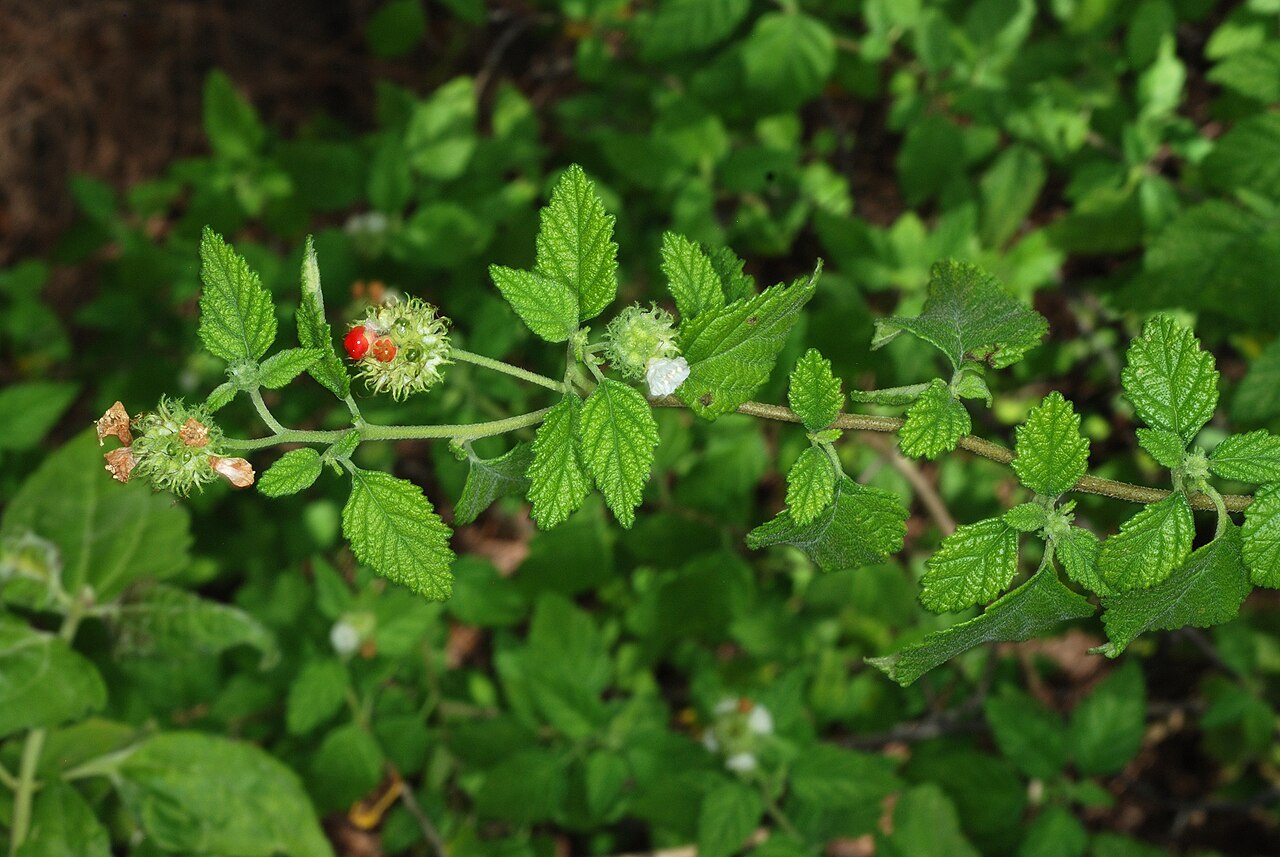
It usually grows 3 to 6 feet tall, occasionally to about 8 feet, and about as wide, with slender, arching or leaning branches. Young twigs are covered with rough hairs. In the wild it often forms loose thickets at the edges of hammocks, where it leans on other shrubs.
Leaves
The leaves are alternate, simple, about 1 to 3 inches long, ovate to lance-shaped, with coarsely toothed margins. The upper surface is rough like sandpaper, and the veins are deeply impressed, giving the leaf a wrinkled, sage-like texture. The foliage is evergreen in frost-free areas.
Flowers
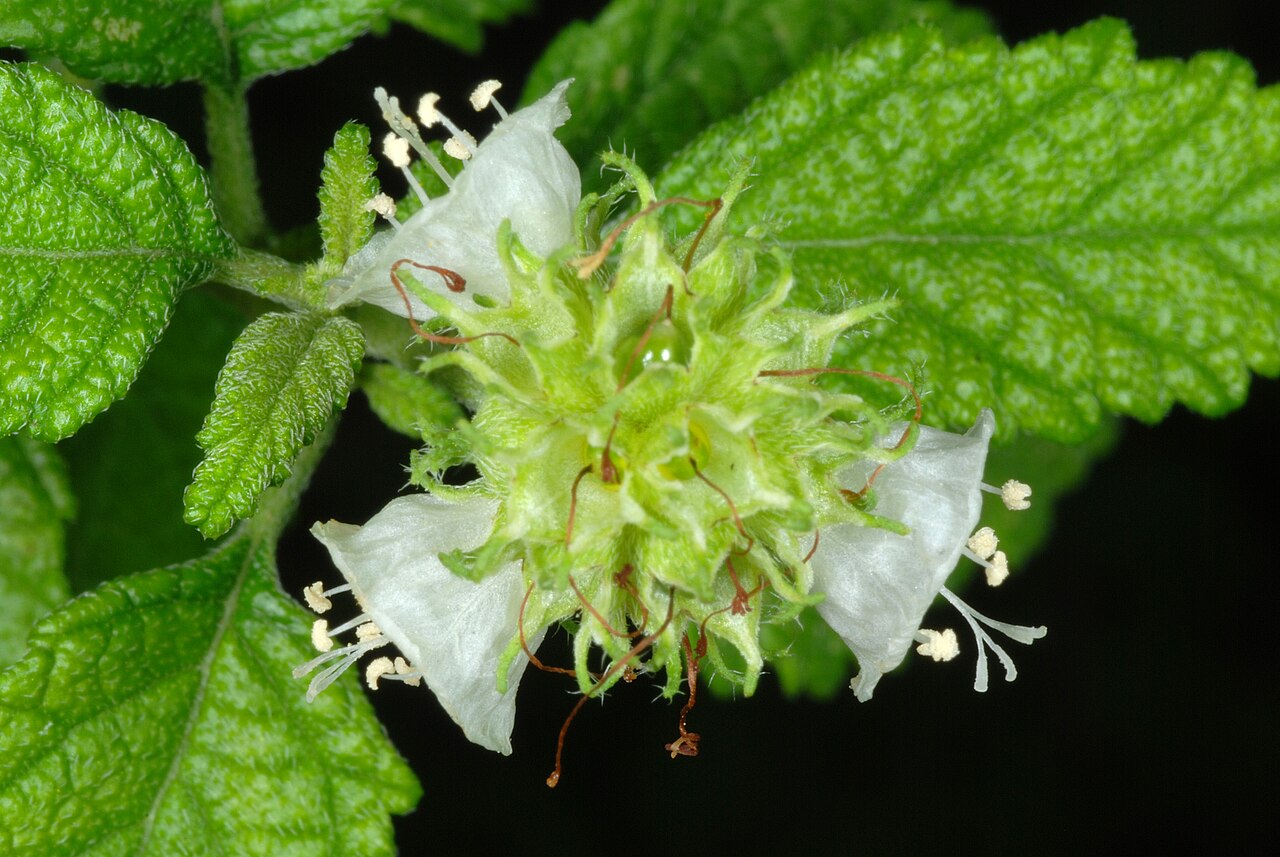
The flowers are packed into dense, round heads about ½ inch across, held on stalks 1 to 3 inches long opposite the leaves or at the branch tips. The head is a bristly ball of green calyces with long, threadlike tips. Only a few flowers open from each head at a time; each is white, funnel-shaped and about ¼ to ⅓ inch across, with five shallow lobes. Plants bloom on and off all year in South Florida, most heavily in the warm, wet months.
Fruit & Seeds
Each flower can produce a small, round, fleshy red drupe about ¼ inch across, partly enclosed in the persistent calyx. Ripe red fruits often appear on the same head as new flowers. Each fruit holds a single hard stone with one or a few seeds.
Quick Facts
| Scientific Name | Cordia globosa (Jacq.) Kunth (USDA); Varronia globosa Jacq. (Atlas of Florida Plants, FNPS) |
| Family | Boraginaceae (borage family) |
| Plant Type | Evergreen shrub |
| Mature Height | 3–8 ft |
| Mature Spread | 3–6 ft |
| Growth Rate | Moderate to fast |
| Sun Exposure | Full sun to part shade |
| Water Needs | Low; dry to moderately moist, well-drained soil |
| Soil Type | Sandy, rocky or limestone-based soil, including shell and coastal sand |
| Soil pH | Neutral to alkaline, about 6.5–8.5 |
| Bloom Time | Year-round in South Florida; heaviest in summer |
| Flower Color | White |
| Fall Color | None; evergreen |
| Fruit | Small red drupe, eaten by birds |
| Deer Resistant | Unknown; not usually browsed in gardens |
| USDA Hardiness Zones | 10–11 |
Native Range
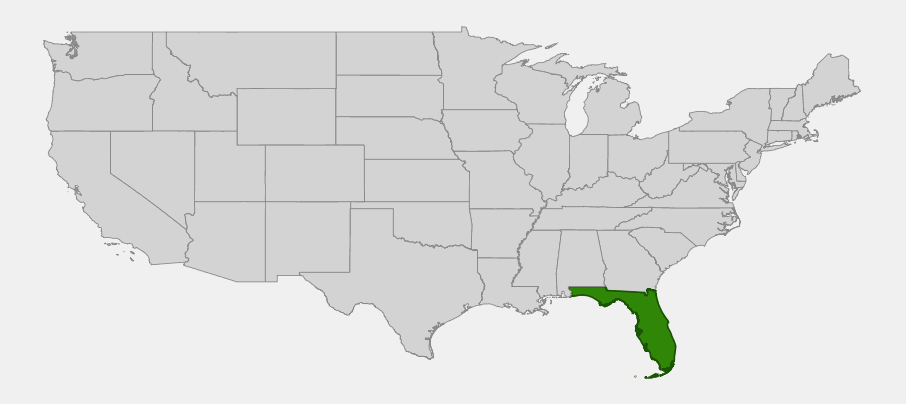
In the continental United States, Curaçao bush grows only in South Florida. USDA PLANTS records it as native in Florida, Puerto Rico and the U.S. Virgin Islands. Beyond the United States it is widespread in the American tropics, including the Bahamas, the Greater and Lesser Antilles, Mexico, Central America and northern South America.
The Atlas of Florida Plants maps it in the southern part of the peninsula and the Florida Keys, mostly in coastal counties. Naturalists find it in places such as North Key Largo and other Keys, Miami-Dade County, coastal Broward County and the Naples area. Many historical sites in the Miami area were lost to development. It is listed as Endangered by the State of Florida on the FDACS Regulated Plant Index, which restricts harvesting it from the wild.
Typical habitats are the sunny edges of rockland and coastal hammocks, coastal strand and scrub, shell mounds, and disturbed openings on limestone or sandy soil near the coast. It needs more light than the shady hammock interior and benefits from gaps created by storms.
📋 Regional plant lists featuring Curaçao Bush: North & South Florida
Growing & Care Guide
Curaçao bush is an easy, fast-growing shrub for South Florida butterfly and bird gardens. Despite its rarity in the wild, it is propagated and sold by many South Florida native plant nurseries. Because it is a state-listed Endangered plant, buy nursery-propagated plants and never dig or collect plants or seeds from wild populations.
Light
Plant it in full sun to part shade. It flowers and fruits most heavily in full sun, and becomes thin and leggy in heavy shade. Sunny hammock edges, the borders of a pine rockland garden or a mixed hedge are ideal.
Soil & Water
It thrives in the alkaline, rocky and sandy soils of South Florida and needs good drainage. Water regularly while it becomes established, then it is very drought tolerant and needs no supplemental irrigation in most years. It tolerates some salt spray and is suitable for coastal gardens behind the first dune line.
Planting Tips
Plant in spring or at the start of the rainy season and space plants 3 to 5 feet apart. Because of its loose, sprawling form, it looks best in an informal hedge or a mixed planting with other native shrubs such as buttonsage, blacktorch and firebush. It is cold sensitive: frost kills it back, so it is suited to roughly USDA zones 10 and 11.
Pruning & Maintenance
Prune lightly once or twice a year to keep the plant dense and to remove long, leaning stems. It responds well to pruning and can be kept at 3 to 4 feet. No fertilizer is needed in most soils. Expect volunteer seedlings near the plant, because birds and fallen fruit spread the seed; these can be potted up and shared.
Propagation
Curaçao bush is easy to grow from seed. Clean the pulp from ripe red fruits and sow the stones in a well-drained mix; germination usually takes a few weeks in warm weather. Semi-hardwood cuttings also root readily. Only use seed or cuttings from your own garden or nursery plants, not from wild populations.
Landscape Uses
- Butterfly gardens: a long-blooming nectar source in South Florida
- Bird gardens: red fruit eaten by mockingbirds, catbirds and other songbirds
- Informal hedges and borders: in mixed native shrub plantings
- Coastal gardens: tolerates alkaline soil, drought and some salt spray
- Conservation plantings: helps maintain a state-listed Endangered species in cultivation
Wildlife & Ecological Value
Curaçao bush is one of the best native shrubs for butterflies in South Florida, and its fruit adds to its wildlife value.
For Pollinators
The small white flowers are visited by many kinds of butterflies, including hairstreaks, skippers, sulphurs and Julias, as well as bees and wasps. Because it blooms nearly all year, it provides nectar when other shrubs are not in flower. The name butterfly sage reflects its popularity with butterflies.
For Birds
Northern mockingbirds, gray catbirds, cardinals and other birds eat the red fruits and spread the seeds. The dense, twiggy growth also provides cover for small birds.
For Mammals
Small mammals may eat fallen fruit. It is not an important food plant for larger mammals.
Ecosystem Role
Curaçao bush is part of the shrub layer at the sunny edges of South Florida hammocks and coastal scrub. It colonizes gaps opened by storms and helps knit these edges together. Its decline in the wild reflects the loss of coastal hammock and strand habitat to development.
Cultural & Historical Uses
The species was first described by the Austrian botanist Nikolaus Joseph von Jacquin as Varronia globosa from his travels in the Caribbean in the 18th century, and later moved to Cordia. The genus Cordia honors the 16th-century German botanist Valerius Cordus. DNA studies have since supported treating the shrubby, small-flowered species as Varronia again, which is why Florida sources now use that name.
The common name Curaçao bush refers to the island of Curaçao in the southern Caribbean, part of the plant’s wide tropical range. In Spanish-speaking areas it has local names such as saraguaso.
Several close relatives are used in traditional medicine in the Caribbean and Latin America. In Florida, its main value today is as a butterfly plant and as a rare native species that gardeners can help preserve.
Frequently Asked Questions
Is Curaçao bush the same as Varronia globosa?
Yes. Cordia globosa and Varronia globosa are two names for the same plant. USDA PLANTS uses Cordia; the Atlas of Florida Plants and FNPS use Varronia.
Is Curaçao bush endangered?
It is listed as Endangered by the State of Florida (FDACS Regulated Plant Index). It is not federally listed. Buy nursery-propagated plants and never collect from the wild.
Is it related to the geiger tree?
Yes. The Geiger Tree (Cordia sebestena) is a close relative in the same family. The geiger tree is a small tree with large orange flowers, while Curaçao bush is a shrub with small white flowers in round heads.
Can I grow Curaçao bush in central or north Florida?
It is cold sensitive and suited to roughly USDA zones 10 and 11. In colder areas it can be grown in a container and moved indoors or to shelter during freezes.
Does it attract butterflies?
Yes. Its nearly year-round white flowers are popular with many South Florida butterflies, which is why some nurseries sell it as butterfly sage.

Looking for a nursery that carries Curaçao Bush?
Browse our native plant nursery directory: Florida