
Slender Gayfeather (Liatris gracilis)
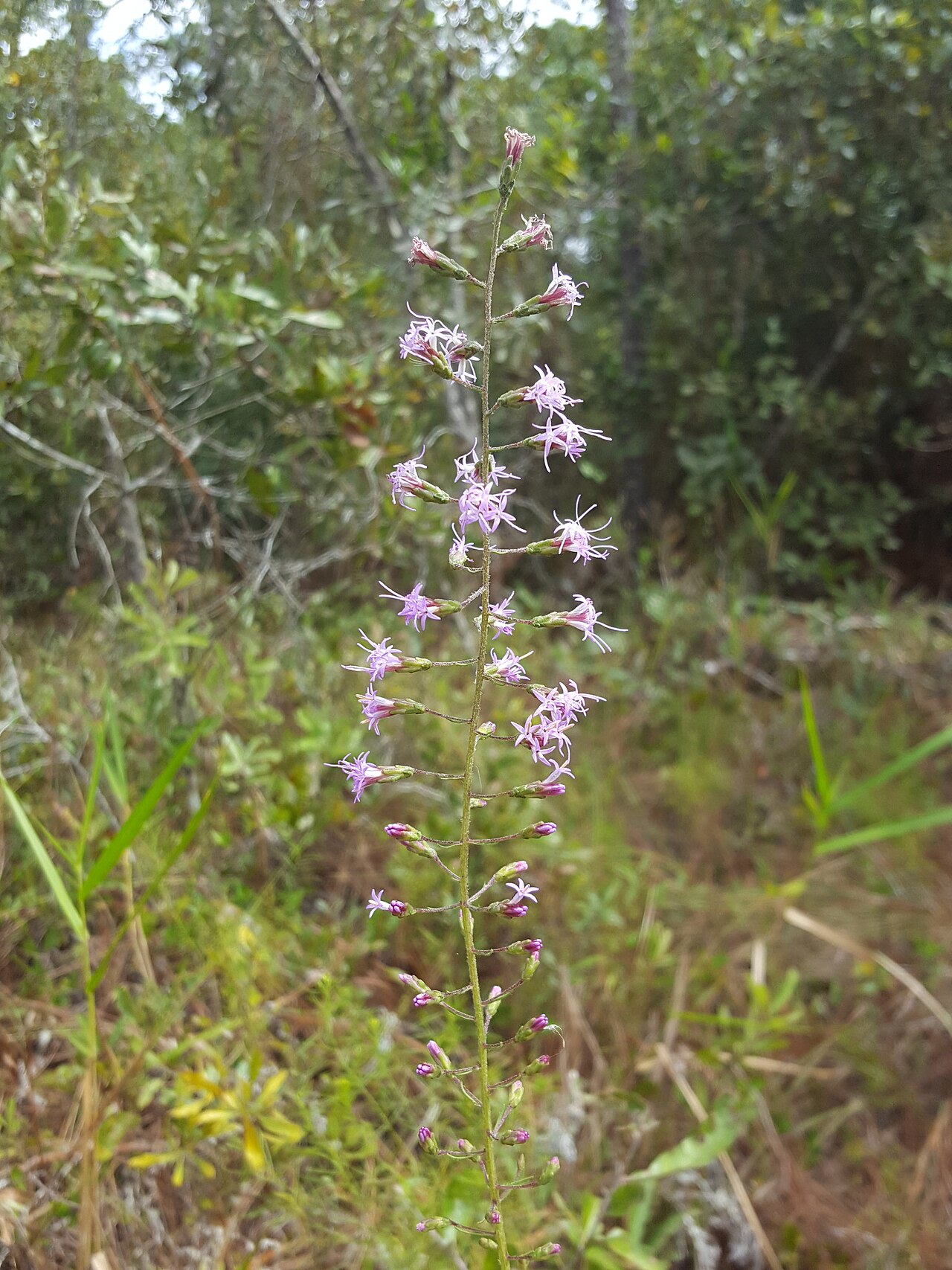
Liatris gracilis, called Slender Gayfeather or slender blazing star, is a fall-blooming wildflower of the sandy pinelands of the Southeastern Coastal Plain. It belongs to the aster family (Asteraceae) and grows from a rounded underground corm. From late summer into fall it sends up one or more thin, wand-like stems, usually 1 to 3 feet tall, lined with small lavender to rosy-purple flower heads. The name gracilis means “slender,” and that is the plant’s whole look: narrow leaves, a thin stem, and a loose, airy spike.
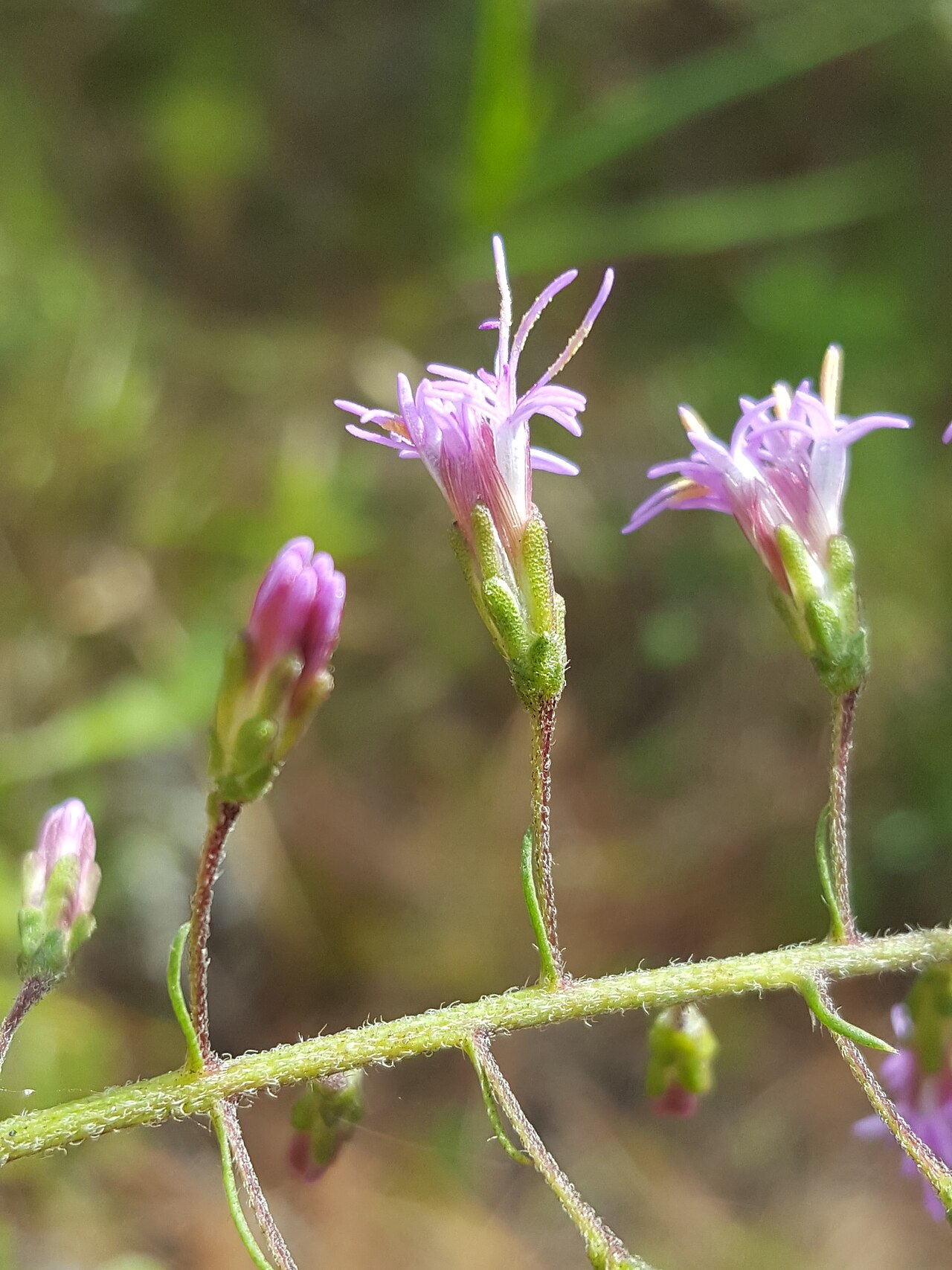
Most blazing stars carry their flower heads tight against the stem, forming a dense bottlebrush. Slender gayfeather is different. Its heads are small, hold only a few florets each, and sit on short stalks that stand out from the stem, so the spike looks open and lacy rather than solid. This makes it one of the easier Liatris species to recognize in the field.
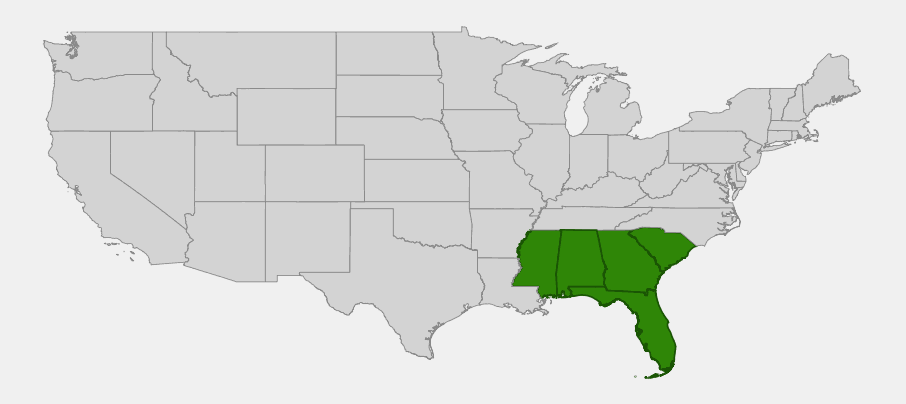
It is native to Florida, Georgia, South Carolina, Alabama and Mississippi, where it grows in longleaf pine and wiregrass sandhills, flatwoods, oak scrub and dry grassy openings. It is not a showy border plant on the scale of dense blazing star, but it is tough, drought tolerant and well suited to sandy, sunny native gardens in Florida, where it adds late-season color and nectar when many other flowers are finished.
Identification
Several blazing stars share the dry pinelands of the Southeast, and they can be hard to separate. Slender gayfeather’s combination of stalked flower heads, few florets per head, and hairy stems is the best guide.
Corm & Stems
Each plant grows from a rounded, woody corm a few inches below the soil surface. In spring it produces a tuft of grass-like basal leaves, and by late summer one or a few flowering stems rise from the corm. The stems are slender, upright, often slightly arching at the tip, and are usually finely hairy. They reach up to about 40 inches on vigorous plants but are often much shorter, especially in dry, recently burned sand.
Leaves
The basal and lower stem leaves are narrow, linear to oblanceolate, smooth-surfaced but often with a fringe of hairs near the base of the blade. They become gradually shorter and narrower up the stem, so the upper part of the flowering stem carries only small, scattered leaves. Like other blazing stars, the leaves are dotted with tiny resin glands visible under a hand lens.
Flowers
The flower heads are arranged along the upper half or more of the stem in a long, loose raceme. Each head sits on a short stalk (peduncle) and contains only a small number of tubular disk florets, with no ray flowers. The florets are lavender to dark magenta or pinkish purple, occasionally white, and each has a long, two-branched style that gives the head its feathery look. The bracts around the head are green, rounded and pressed close together, often with a purplish tinge. Flowering runs from late summer into fall, from about July to November across its range and mostly September and October in Florida.
Fruit & Seeds
After flowering, each floret produces a small, ribbed, dark achene (cypsela) topped with a ring of feathery bristles, the pappus. When ripe in late fall the heads open into small tufts and the seeds drift away on the wind. Dried stems with empty heads often stand into winter.
Quick Facts
| Scientific Name | Liatris gracilis Pursh (incl. var. gholsonii) |
| Family | Asteraceae (aster family) |
| Plant Type | Herbaceous perennial wildflower from a corm |
| Mature Height | 1–3 ft in flower (to about 40 in) |
| Mature Spread | 6–12 in |
| Growth Rate | Moderate |
| Sun Exposure | Full sun |
| Water Needs | Low; dry to moderately moist, well-drained sand |
| Soil Type | Deep sand, sandy loam; well drained and low in nutrients |
| Soil pH | About 4.5–6.5 (acidic) |
| Bloom Time | Late summer to fall (about July–November; mostly September–October in Florida) |
| Flower Color | Lavender to rosy purple; rarely white |
| Fall Color | Stems turn tan; seed heads become small fluffy tufts |
| Fruit | Small achene with a feathery pappus, wind-dispersed |
| Deer Resistant | No; deer and rabbits sometimes browse the stems |
| USDA Hardiness Zones | 8–10 |
Native Range
Slender gayfeather is a plant of the Southeastern Coastal Plain. USDA PLANTS and the Lady Bird Johnson Wildflower Center record it from five states: Florida, Georgia, South Carolina, Alabama and Mississippi. Plants of the World Online gives the same range. It is a common species within that range and is ranked globally secure (G5) by NatureServe.
In Florida it occurs widely in the Panhandle and the peninsula, in longleaf pine and wiregrass sandhills, dry and mesic flatwoods, oak scrub, sandy grasslands and the open edges of these communities. It is a characteristic fall wildflower of fire-maintained uplands, where it often grows with wiregrass, saw palmetto, turkey oak and other blazing stars.
Two varieties are recognized. The typical var. gracilis covers the whole range. Var. gholsonii, described from the Florida Panhandle as Liatris gholsonii, is restricted to Florida and is now usually treated as part of this species. Several older names, including Lacinaria laxa and Liatris pauciflosculosa, are synonyms and may appear in older floras.
📋 Regional plant lists featuring Slender Gayfeather: North & South Florida · Alabama, Georgia & Mississippi · North & South Carolina
Growing & Care Guide
Slender gayfeather is a good choice for a sunny, sandy Florida or Coastal Plain garden that gets little supplemental water. It is less commonly sold than dense blazing star, but native plant nurseries in Florida and neighboring states sometimes offer it, and it is straightforward to grow from seed. Buy nursery-grown plants or collect seed lightly and with permission; do not dig wild corms.
Light
Plant it in full sun. In shade the stems lean and flop, and flowering is sparse. In the wild it thrives in open, frequently burned pinelands with little canopy.
Soil & Water
Give it deep, well-drained, sandy soil that is low in nutrients. It handles drought very well once established, thanks to its storage corm, but corms can rot in heavy, wet or poorly drained soil. Water new plants for the first few weeks until they root in. After that, normal rainfall is enough. Do not fertilize, which only produces weak, floppy stems.
Planting Tips
Set container plants out in spring or early fall, with the top of the corm just below the soil surface. Space them about 12 inches apart and plant in groups of five or more. Single slender stems disappear visually, but a cluster creates an airy purple haze in fall. Combine it with low grasses such as wiregrass or lopsided indiangrass and with other fall bloomers like goldenrods, golden asters and pinkscale blazing star.
Pruning & Maintenance
Leave the stems standing after bloom until the seed has blown away, then cut them to the ground if you like. In meadow plantings, a burn or mow in late winter keeps the planting open, as fire does in the wild. Keep mulch thin or use none. Thick mulch holds moisture against the corm and smothers the seedlings that keep a planting going.
Propagation
Collect seed when the heads turn fluffy in late fall and sow it on the surface of a sandy mix in late fall or winter, kept outside. Seedlings take two to three years to reach flowering size. Large corms on mature plants occasionally form offsets that can be separated while dormant, but seed is the usual method.
Landscape Uses
- Pollinator and butterfly gardens: late-season nectar for butterflies, skippers, bees and bee flies
- Sandhill and flatwoods restoration: a characteristic fall wildflower of longleaf pine and wiregrass uplands
- Dry, low-water landscapes: thrives in deep sand with no irrigation once established
- Meadow plantings: adds vertical, airy purple spikes among native grasses
- Naturalized edges: along sunny paths, firebreaks and the margins of scrub
Wildlife & Ecological Value
Blazing stars are among the best fall nectar plants of the Southeastern pinelands, and slender gayfeather blooms when monarchs and other migrating butterflies are moving through.
For Pollinators
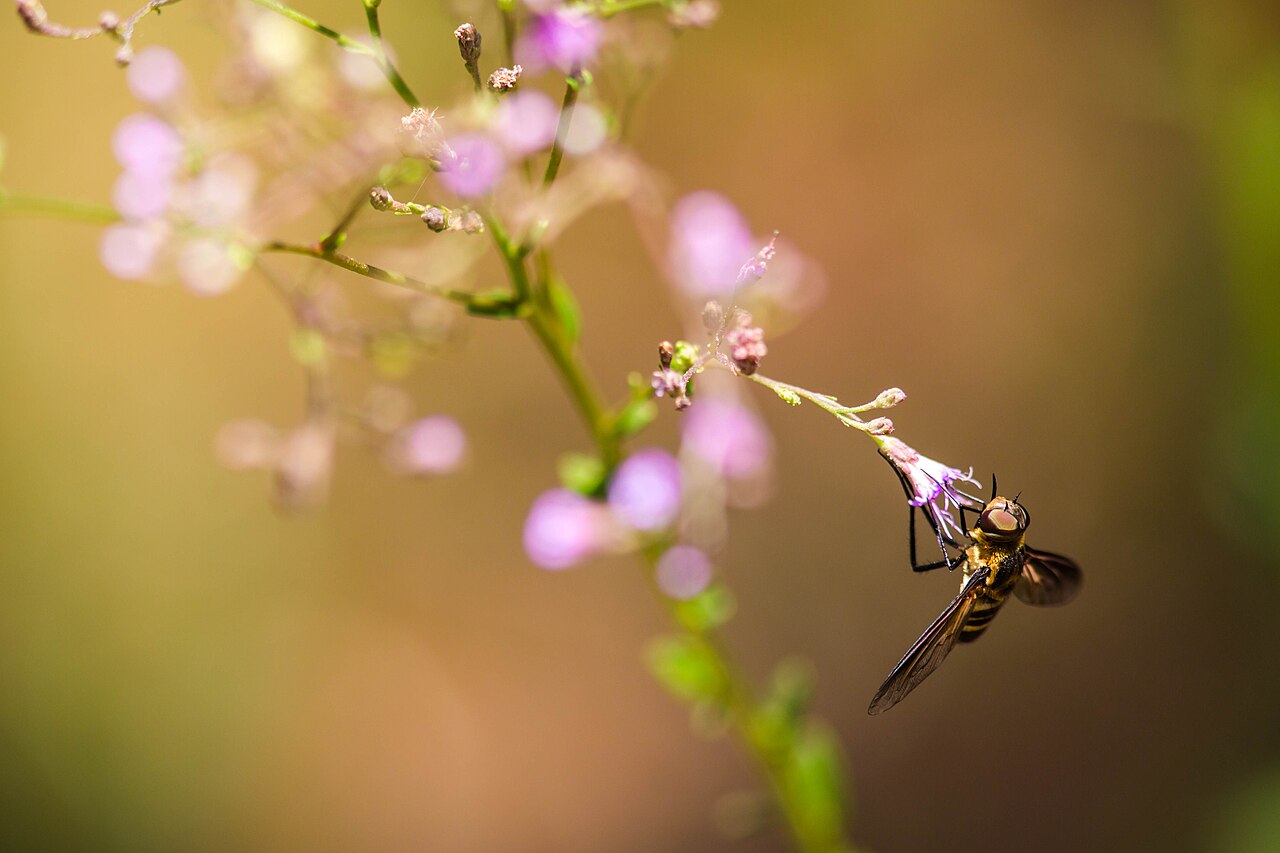
The flowers produce nectar at the bottom of narrow tubes, which suits long-tongued insects. Butterflies and skippers visit regularly, including migrating monarchs in fall, along with bumblebees (the common eastern bumblebee, Bombus impatiens, has been recorded on it in northern Florida), other native bees, and bee flies. Like other blazing stars, the plants are hosts for a few specialist caterpillars, such as flower moths in the genus Schinia, which feed on the developing seeds.
For Birds
Small seed-eating birds such as sparrows pick seeds from the heads in late fall and winter, and the insects that visit the flowers feed birds in turn. In longleaf pine habitat, a diverse herb layer that includes blazing stars supports the insect food of Bachman’s sparrows, northern bobwhite and other ground-foraging birds.
For Mammals
Deer and rabbits occasionally browse the stems and flower spikes, and small mammals such as voles are known to dig and eat Liatris corms.
Ecosystem Role
Slender gayfeather is part of the species-rich groundcover of fire-maintained longleaf pine ecosystems. Its corm survives fires underground, and the plants resprout quickly and flower well after burns. Where fire is excluded and shrubs or pines close in, it declines, so its presence is a good sign of a healthy, open upland.
Cultural & Historical Uses
Frederick Pursh named Liatris gracilis in 1813 in his Flora Americae Septentrionalis, one of the first floras of North America. The genus name Liatris is of uncertain origin. The common names “blazing star” and “gayfeather” both describe the feathery, bright flower spikes that light up meadows and pinelands in late summer.
Blazing star corms were used for food and medicine by several Native American peoples, and early settlers used some species in folk remedies. Those records refer mainly to the larger prairie species. There is little specific record for slender gayfeather, and this page does not recommend medicinal use.
Today slender gayfeather is valued mostly by native gardeners, restoration practitioners and naturalists. Its fall bloom, together with the flowers of goldenrods, asters and other blazing stars, gives the Southeastern sandhills one of their most colorful seasons.
Frequently Asked Questions
How is slender gayfeather different from other blazing stars?
Its small flower heads hold only a few florets and sit on short stalks, so the spike looks loose and airy instead of dense. Most other common blazing stars, like dense blazing star (Liatris spicata), have stalkless heads packed tightly along the stem.
Does slender gayfeather need watering?
Only while it is getting established. After that, its corm lets it ride out dry spells, and it does best in deep, well-drained sand without irrigation. Overwatering heavy soil is more likely to kill it than drought.
When does slender gayfeather bloom?
From late summer into fall. In Florida the main bloom is usually September and October, and some plants flower into November.
Will slender gayfeather spread in my garden?
Not aggressively. It forms single clumps from a corm and seeds itself gently in open, sandy soil. It will not crowd out neighbors.
Is it good for butterflies?
Yes. Its nectar attracts butterflies and skippers, including migrating monarchs in fall, plus bumblebees, other native bees and bee flies.

Looking for a nursery that carries Slender Gayfeather?
Browse our native plant nursery directory: Alabama · Florida & Georgia · Mississippi · South Carolina