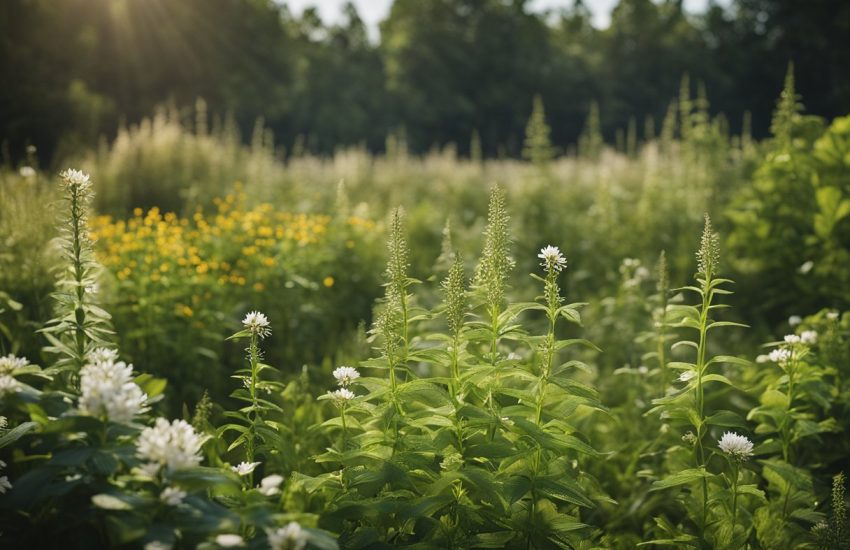
Bald-hip Rose (Rosa gymnocarpa)
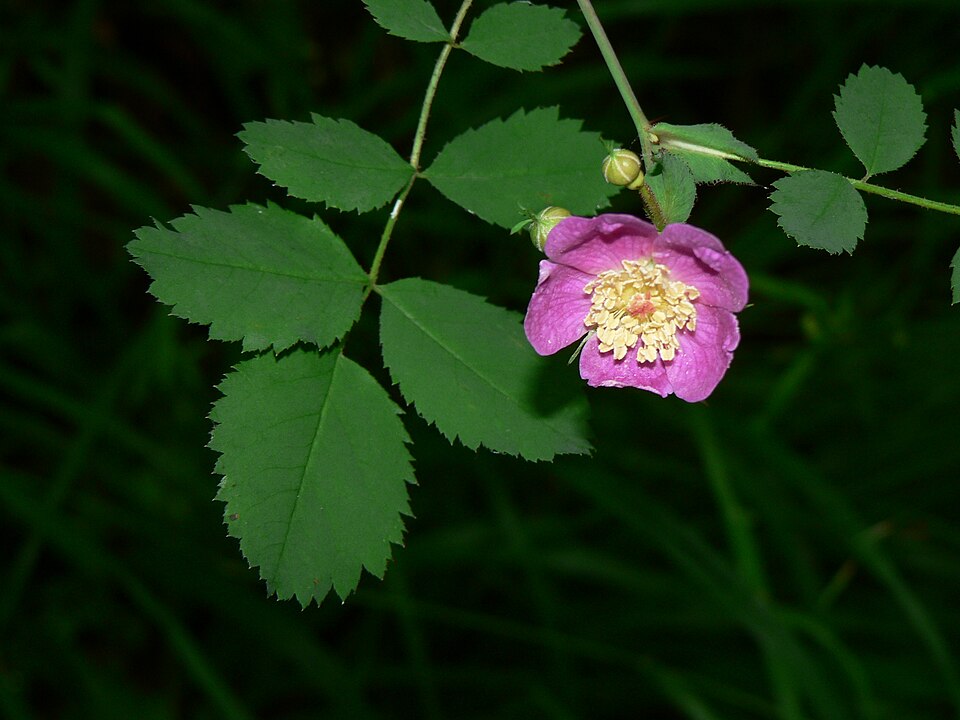
Rosa gymnocarpa, commonly known as Bald-hip Rose, is the Pacific Northwest’s most graceful native wild rose. This slender woodland shrub produces delicate pink flowers in early summer, followed by distinctive smooth red hips that give the plant its common name. Unlike other wild roses, the sepals fall away early from the developing fruit, leaving the hips “bald” or naked—a unique identifying characteristic that makes this species unmistakable among North American roses.
Quick Facts
| Scientific Name | Rosa gymnocarpa |
| Plant Type | Deciduous shrub |
| Mature Height | 5 ft |
| Height | 2-6 feet (0.6-1.8 m), usually under 3 feet |
| Sun Exposure | Full Sun |
| Water Needs | Low (Drought Tolerant) |
| Soil Type | Well-draining, sandy loams to cobbly loams |
| Soil pH | Slightly acidic to neutral (6.0-7.0) |
| Bloom Time | Late spring to early summer (May-July) |
| Flower Color | Pink to pale pink, occasionally white |
| USDA Hardiness Zones | 5-9 |
Identification
Bald-hip Rose is easily distinguished from other Pacific Northwest roses by its delicate stature, fine prickles, and most notably, its smooth rose hips that lack the persistent sepals found on other species. This understory shrub typically grows as a graceful, finely branched specimen that fits perfectly into the forest ecosystem’s layered structure.
Growth Habit and Stems
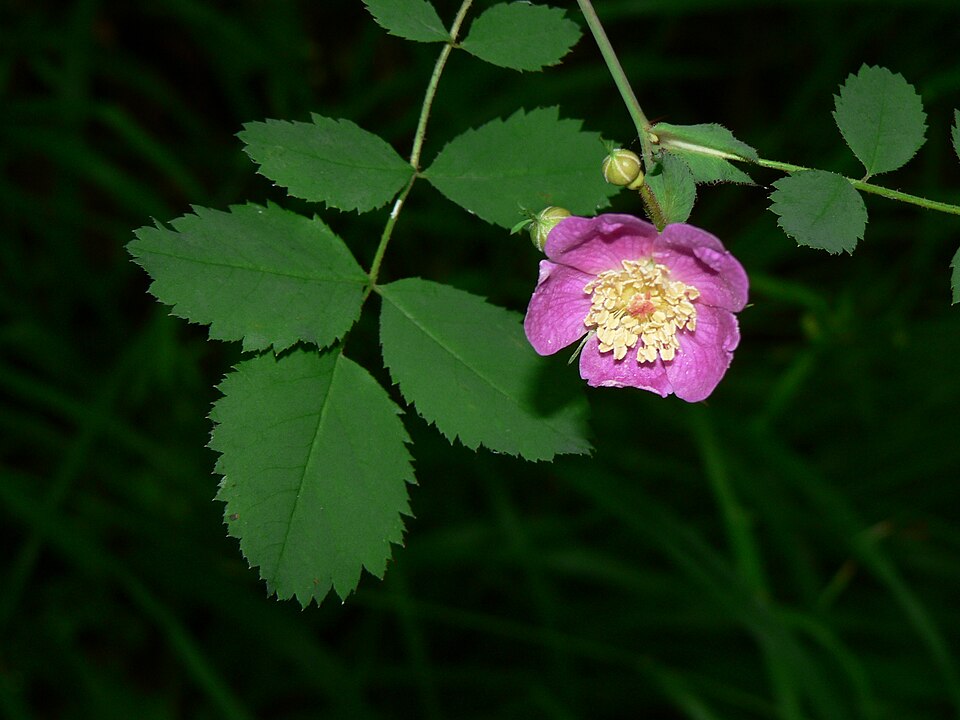
This deciduous shrub presents an elegant, upright but arching growth habit, rarely exceeding 6 feet in height and more commonly found in the 2-4 foot range. The slender stems are armed with straight, needle-like prickles that are noticeably finer than those found on most other wild roses. These prickles are often mixed with bristles, giving the stems a distinctly delicate appearance despite their defensive armament.
The plant spreads via rhizomes, forming small colonies over time, though it’s not as aggressive in this regard as some other native shrubs. The shallow root system and rhizomatous growth make it well-adapted to the organic-rich, well-draining soils of its forest habitat.
Leaves
The compound leaves are perhaps the most refined among native roses, consisting of 5-9 leaflets that are smaller and more delicate than those of most other rose species. Each leaflet is elliptic to ovate or round, measuring only ½ to 1½ inches (1-4 cm) long and ¼ to ½ inch (0.6-1.2 cm) wide. The leaflets often display a subtle brownish or purplish tinge and are covered with a dull waxy bloom, usually hairless on both surfaces.
The narrow stipules at the leaf bases are another identifying feature, and the overall impression of the foliage is one of delicate beauty rather than the coarse robustness of many other roses. In autumn, the leaves turn yellow to reddish-brown before dropping.
Flowers
The flowers of Bald-hip Rose are among the most charming of all native roses, combining delicacy with genuine beauty. Appearing from late spring through early summer, the blooms are typically pink, ranging from pale blush to deeper rose tones, though white forms occasionally occur. Each flower measures 1-1½ inches (2.5-4 cm) across when fully open, presenting five rounded petals that create a classic wild rose appearance.
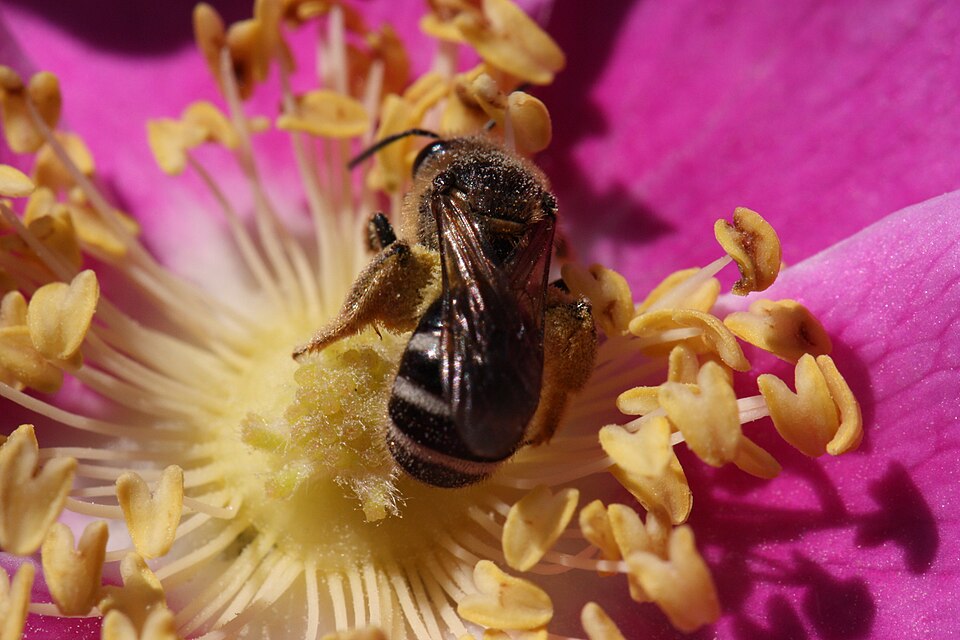
The flowers may appear singly or in small clusters of 2-4, usually positioned at the stem tips. They possess a light, sweet fragrance that attracts various pollinators. The open-faced flowers reveal prominent yellow stamens that provide a beautiful contrast to the pink petals.
Unlike many roses that bloom heavily for a short period, Bald-hip Rose often produces flowers intermittently throughout the summer, extending its season of interest.
Distinctive Rose Hips
The fruit that gives this rose its common name appears in late summer and provides the most reliable identification feature. The rose hips are small, typically ¼ to ⅜ inch (6-10 mm) in diameter, and range from spherical to slightly pear-shaped. Most notably, they are completely smooth and “bald” because the sepals fall away early in fruit development, unlike other roses where sepals persist and create a crown-like appendage on the hip.
The hips ripen to a bright red color and persist on the plant throughout winter, providing important wildlife food and adding visual interest to the dormant landscape. Inside each hip are several hard, tan-colored achenes (the true seeds) that contain the plant’s genetic material.
Native Range
Bald-hip Rose enjoys a substantial range throughout western North America, from the Pacific Coast inland to the Rocky Mountains. This distribution reflects its adaptability to various forest types and its important role in multiple ecosystem communities.
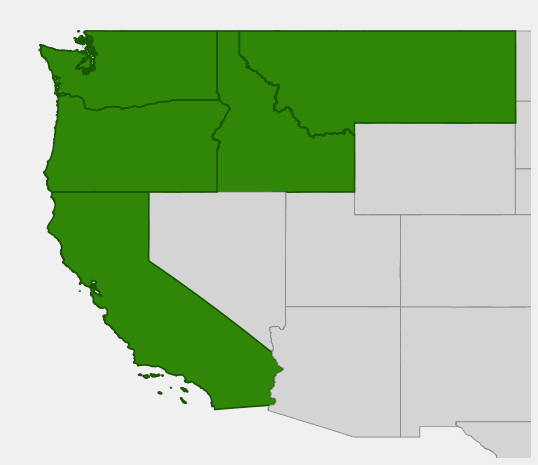
Within this range, Bald-hip Rose shows a strong preference for the understory of coniferous forests, particularly those dominated by Douglas-fir, Western Hemlock, and associated species. It extends from coastal forests inland through the Cascade Mountains and into the drier forests of the interior regions. The species is notably absent from the wettest coastal zones and the driest interior locations, preferring the middle ground of moderately moist forest conditions.
From British Columbia south to the Sierra Nevada in California, and from the Pacific Coast east to western Montana and Idaho, this rose has found its niche in the diverse forest ecosystems of the region. It’s particularly common in second-growth forests and areas with some canopy disturbance that allows increased light penetration.
📋 Regional plant lists featuring Bald-hip Rose: Western Oregon & Western Washington
Growing & Care Guide
Successfully growing Bald-hip Rose requires understanding its natural habitat preferences and replicating forest understory conditions. While not as demanding as some native plants, it does have specific requirements that must be met for optimal growth.
Light Requirements
Bald-hip Rose is fundamentally a woodland plant, adapted to the filtered light of the forest understory. It performs best in partial shade to full shade, tolerating more sun in cooler, moister climates. In its native habitat, it typically receives 20-50% of full sunlight, filtered through the forest canopy.
While it can tolerate full sun in ideal conditions, excessive sunlight often leads to stress, reduced flowering, and increased susceptibility to drought. Morning sun with afternoon shade is often the ideal compromise in garden settings. The plant’s higher survival rate in shade reflects its evolutionary adaptation to forest conditions.
Soil Preferences
The key to successful cultivation lies in providing well-drained soils that mimic forest floor conditions. Bald-hip Rose thrives in coarse-textured soils such as sandy loams, loamy sands, and cobbly loams. The soil should drain freely while retaining some moisture, avoiding both waterlogged conditions and extreme drought.
A slightly acidic to neutral pH (6.0-7.0) is preferred, though the plant shows good adaptability within this range. Incorporating organic matter such as compost or aged leaf mold improves soil structure and helps maintain appropriate moisture levels. The shallow root system benefits from a well-developed organic layer that protects roots and provides gradual nutrient release.
Water Needs
Once established, Bald-hip Rose demonstrates good drought tolerance, particularly when grown in appropriate partial shade. However, consistent moderate moisture produces the best growth and flowering. The plant is adapted to the Pacific Northwest’s wet winter/dry summer pattern and can handle seasonal drought once mature.
During establishment (first 1-2 years), regular watering during dry periods is important. Mature plants typically require supplemental irrigation only during extended dry spells, particularly in sunnier locations. Avoid overwatering, as this can lead to root problems and reduced vigor.
Planting Tips
Plant Bald-hip Rose in early spring or fall when temperatures are moderate and natural rainfall provides moisture. Choose a location that mimics its natural habitat—under or near trees, in woodland gardens, or in naturalized areas with some overhead canopy.
Dig a planting hole twice as wide as the root ball but no deeper. The plant should be set at the same level it was growing in the nursery container. Backfill with the existing soil amended with compost, and water thoroughly after planting.
Space plants 4-6 feet apart if planting multiple specimens, allowing room for the natural spreading habit via rhizomes. The plant will gradually form small colonies over time.
Maintenance and Pruning
Bald-hip Rose requires minimal maintenance once established. Annual pruning can be performed in late winter or early spring, focusing on removing dead, damaged, or crossing branches. Light pruning helps maintain shape and encourages new growth and flowering.
The plant benefits from a yearly application of organic mulch around the base, extending to the drip line. This suppresses weeds, conserves moisture, and gradually improves soil as the mulch decomposes. Avoid cultivating around the plant, as the shallow root system can be easily damaged.
Fertilization is rarely necessary if the soil contains adequate organic matter. If growth seems sluggish, a light application of balanced organic fertilizer in early spring can be beneficial.
Wildlife & Ecological Value
Bald-hip Rose plays significant ecological roles throughout its range, supporting diverse wildlife communities and contributing to forest ecosystem health.
Pollinators
The flowers attract numerous native pollinators, including various bee species, beneficial wasps, and hover flies. The open flower structure and accessible nectar make it particularly valuable for smaller native bees that might have difficulty accessing deeper, more complex flowers.
The extended blooming period, often continuing intermittently through summer, provides a reliable nectar source during periods when other woodland plants may not be flowering. This consistent availability makes it a valuable component of pollinator habitat in forest understory communities.
Birds
The persistent rose hips are perhaps the plant’s greatest wildlife value. The bright red fruits ripen in late summer and remain available throughout winter, providing crucial food for numerous bird species. Thrushes, finches, quail, and grouse all consume the hips, helping to disperse seeds throughout the forest.
Ruffed grouse in particular utilize the hips as an important winter food source. The small size and abundance of the fruits make them ideal for smaller songbirds, while the winter persistence provides food when other sources may be scarce.
The thorny structure of the shrub also provides protected nesting sites for small birds, offering both concealment and defense against predators.
Mammals
Both the foliage and hips provide food for various mammals. Deer and elk browse the young shoots and leaves, particularly in areas recovering from fire or other disturbances. The browsing tolerance of the plant makes it valuable in areas with high ungulate populations.
Small mammals including mice, voles, and squirrels harvest and cache the hips for winter consumption. Bears also consume the fruits when available, contributing to long-distance seed dispersal.
Ecosystem Functions
As an understory shrub, Bald-hip Rose helps create structural diversity in forest communities. Its rhizomatous growth pattern contributes to soil stability on slopes, while the deciduous foliage adds organic matter to forest soils each autumn.
The plant’s fire ecology is particularly important—it’s well adapted to low- to medium-intensity fires that historically maintained many forest types. The ability to resprout from root crowns and rhizomes allows it to quickly reestablish after disturbance, providing early successional habitat for wildlife.
Fire Ecology and Adaptation
Bald-hip Rose has evolved with fire as a natural disturbance factor and shows excellent adaptations to the fire regimes typical of Pacific Northwest forests.
Fire Adaptations
The plant’s underground rhizome system and root crown allow it to survive low- to moderate-intensity fires that kill the above-ground portions. This adaptation enables rapid recovery and often results in increased vigor and flowering in post-fire years.
The species is classified as both a “small shrub, adventitious-bud root crown” and “rhizomatous shrub, rhizome in soil” for fire recovery strategies. It can also serve as a secondary colonizer through off-site seed dispersal by birds and mammals.
Post-Fire Recovery
Following appropriate fire events, Bald-hip Rose typically responds with vigorous sprouting from surviving root systems. This rapid recovery makes it valuable for post-fire habitat restoration, quickly providing cover and food resources for returning wildlife.
The increased light availability in post-fire environments often results in enhanced flowering and fruit production compared to pre-fire conditions, benefiting both the plant’s reproduction and wildlife food availability.
Cultural and Traditional Uses
Indigenous peoples throughout the range of Bald-hip Rose developed various uses for this valuable plant, primarily focusing on the vitamin-rich rose hips and medicinal properties of different plant parts.
Food Uses
The rose hips are rich in vitamin C, containing higher concentrations than most citrus fruits. Traditional preparation typically involved harvesting the hips in late summer through autumn, when they had reached full ripeness and developed maximum sugar content.
The Nuxalk people of British Columbia continue to harvest wild rose hips annually from August to October, maintaining traditional knowledge of timing and preparation methods. The fruits can be eaten fresh, though they’re often somewhat dry and seedy, or processed into jellies, teas, and dried preparations for winter use.
The hips are also excellent sources of calcium, phosphorus, and iron, making them valuable nutritional supplements in traditional diets, particularly during winter months when other fresh foods were scarce.
Medicinal Applications
Various Native American groups utilized different parts of the plant for medicinal purposes. Leaves were commonly chewed and applied topically to reduce pain and swelling, particularly for wounds or sore muscles. The astringent properties of rose leaves made them useful for treating minor cuts and abrasions.
Rose hip tea was prepared for its nutritional value and to treat various ailments related to vitamin deficiency. The high vitamin C content made it particularly valuable for preventing or treating scurvy and supporting overall health during winter months.
Modern Gardening Applications
In contemporary landscape design, Bald-hip Rose offers unique advantages for gardeners seeking to create authentic Pacific Northwest plant communities or provide native wildlife habitat.
Landscape Uses
The plant’s graceful form and seasonal interest make it excellent for:
- Woodland gardens: Perfect for understory plantings beneath native conifers
- Wildlife gardens: Provides four-season value with flowers, hips, and nesting sites
- Natural borders: Creates informal property boundaries with native character
- Erosion control: Rhizomatous growth helps stabilize slopes in shaded areas
- Restoration projects: Excellent for rehabilitating disturbed forest understory areas
Companion Planting
Bald-hip Rose combines beautifully with other native understory plants, creating authentic plant communities that support diverse wildlife. Consider pairing with:
- Shrubs: Oregon Grape, Salal, Oceanspray, Red Elderberry
- Perennials: Wild Ginger, Trillium, Vanilla Leaf, Inside-out Flower
- Groundcovers: Kinnikinnick, Wintergreen, Twin-flower
- Ferns: Sword Fern, Deer Fern, Lady Fern
Frequently Asked Questions
How can I tell Bald-hip Rose apart from other wild roses?
The most reliable identifying feature is the smooth rose hips that lack persistent sepals—they’re truly “bald.” Additionally, the delicate stature, fine prickles, small leaflets, and preference for shaded woodland conditions distinguish it from more robust rose species like Nootka Rose or Woods’ Rose.
Will Bald-hip Rose spread aggressively in my garden?
While the plant does spread via rhizomes, it’s not considered aggressive in most garden settings. The spread is typically slow and confined to a relatively small area. The plant forms colonies gradually over many years rather than spreading rapidly like some other rhizomatous shrubs.
Can I grow Bald-hip Rose from seed?
Yes, though seed propagation requires patience and proper treatment. Rose hips should be collected when fully ripe, and seeds require cold stratification over winter. Germination can be sporadic and slow. Most gardeners find it easier to obtain nursery plants or propagate through division of established colonies.
How do I know if my site is suitable for Bald-hip Rose?
Look for areas that receive filtered light or partial shade, have well-draining but moisture-retentive soil, and are protected from harsh afternoon sun and strong winds. If other woodland plants like Oregon Grape or Salal thrive in your area, conditions are likely suitable for Bald-hip Rose as well.
Why aren’t my plants flowering well?
Poor flowering often results from too much shade (less than 20% sunlight), competition from aggressive weeds or other plants, or plants that are too young (flowering begins at 3-5 years). Ensure adequate light penetration and remove competing vegetation around the plant base.

Looking for a nursery that carries Bald-hip Rose?
Browse our native plant nursery directory: Oregon · Washington