
Blackfruit Dogwood (Cornus sessilis)
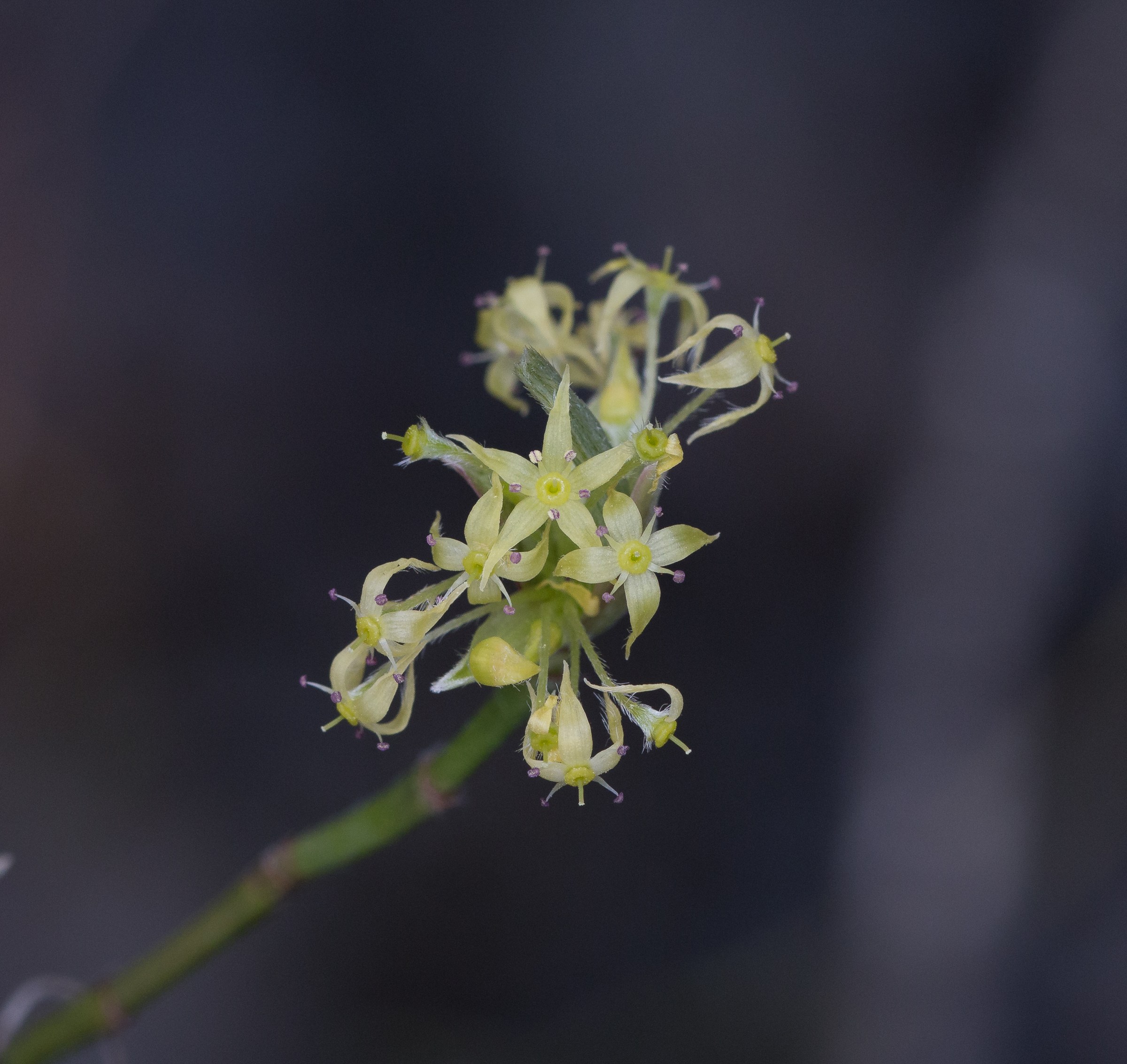
Cornus sessilis, commonly known as Blackfruit Dogwood or Miner’s Dogwood, is a deciduous shrub or small tree found only along streambanks in the mountains of northern California. Like its better-known cousin Pacific Dogwood, it belongs to the Cornaceae (dogwood family), though unlike that species it lacks showy white bracts — its flowers are small and greenish-yellow, clustered tightly and tucked among pointed bracts rather than displayed on broad petal-like bracts.
The plant’s two common names both describe it well. “Blackfruit dogwood” refers to its round drupes, which open white and ripen to a glossy black that stands out against the foliage. “Miner’s dogwood” recalls its presence in the gold country of the Sierra Nevada foothills, where streamside thickets of this dogwood would have been a familiar sight to 19th-century prospectors working the Mother Lode.
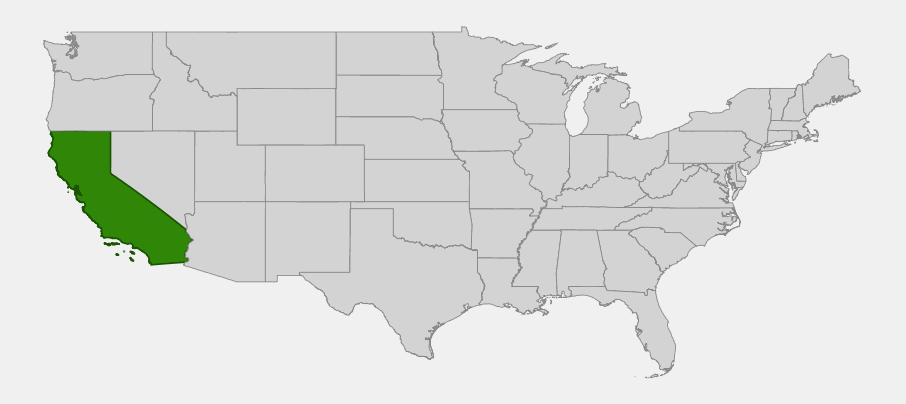
Blackfruit Dogwood is endemic to northern California, growing as an understory shrub along streambanks in the Cascades, Sierra Nevada, and the coastal mountain ranges, often beneath the canopy of coast redwoods. For gardeners in its native range who want an authentic streamside or woodland-edge native with handsome foliage, fall color, and genuine wildlife value, it is a worthwhile, if somewhat under-planted, choice.
Identification
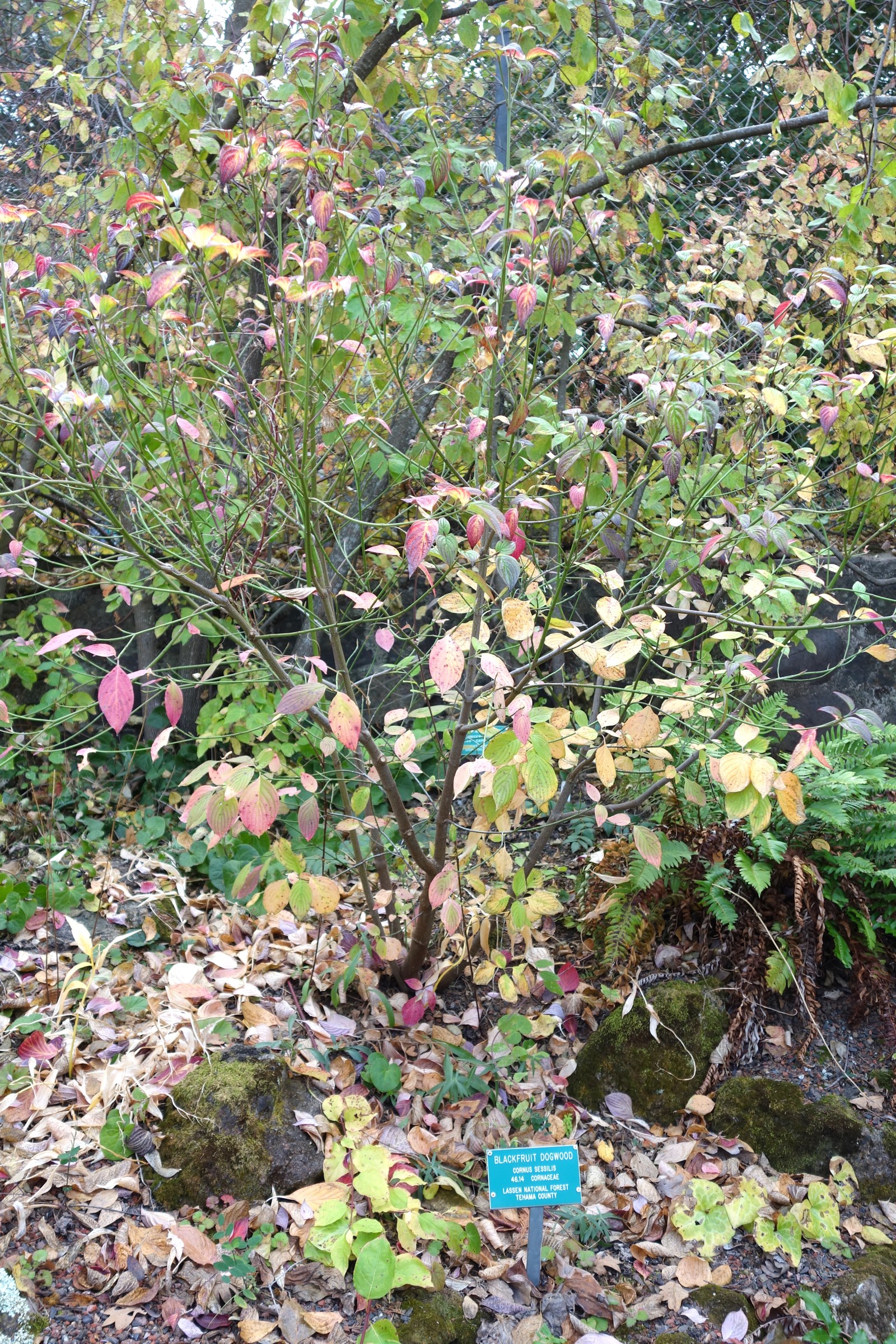
Blackfruit Dogwood grows as a multi-stemmed deciduous shrub or small tree, typically reaching 5 to 10 feet tall and wide, occasionally approaching 16 feet at maximum size in favorable streamside conditions.
Leaves
The leaves are opposite, oval, and shiny jade green, with the deeply impressed, prominently parallel lateral veining characteristic of the dogwood genus. In autumn they turn attractive shades of red, pink, and bronze before falling, often holding several colors on the same branch at once.
Flowers
Unlike the big, showy white bracts of Pacific Dogwood or Flowering Dogwood, Blackfruit Dogwood’s inflorescence is a small, tight cluster of tiny, star-shaped, greenish-yellow flowers surrounded by thick, pointed bracts rather than large petal-like ones. The blooms appear in April and, while not especially showy from a distance, reward a close look with their delicate form. They are pollinated by insects.
Fruit
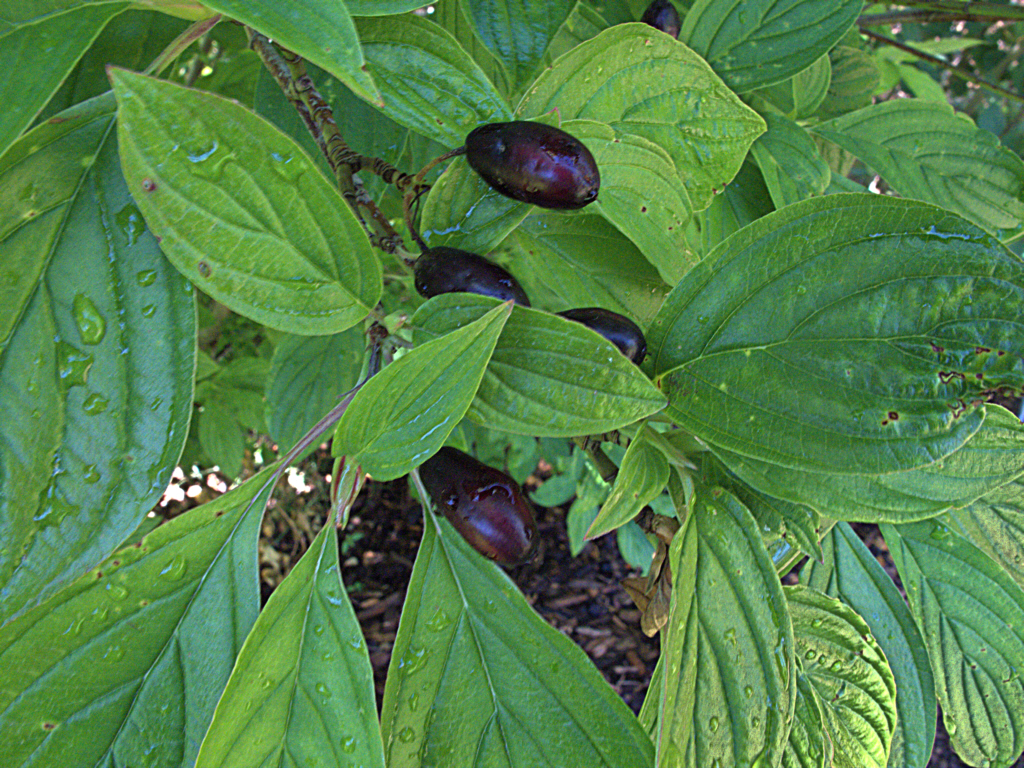
The fruit is a round drupe about a centimeter wide that starts out white and gradually ripens to a glossy, deep black by late summer or fall — the feature that gives the species its common name. The fruit attracts a wide variety of birds, which disperse the seed along the streamside corridors where the plant grows.
Quick Facts
| Scientific Name | Cornus sessilis |
| Family | Cornaceae (Dogwood) |
| Plant Type | Deciduous shrub or small tree |
| Mature Height | 5–10 ft (occasionally to 16 ft) |
| Growth Rate | Moderate |
| Sun Exposure | Part Shade (light woodland or dappled shade) |
| Water Needs | Moderate to high; prefers consistently moist soil |
| Soil Type | Light, medium, or heavy soils; tolerates clay |
| Soil pH | Mildly acid to alkaline |
| Bloom Time | April |
| Flower Color | Greenish-yellow |
| Fall Color | Red, pink, and bronze |
| Fruit | Round drupe, white ripening to glossy black |
| USDA Hardiness Zones | 7–9 |
Native Range
Blackfruit Dogwood is endemic to northern California — it occurs nowhere else in the world. Within the state it is found along streambanks in the Cascade Range, the Sierra Nevada, and California’s northern coastal mountain ranges, where it often grows as an understory shrub beneath coast redwoods.
In the wild, the species sticks closely to riparian corridors: moist ravines, stream banks, and seasonally wet drainages in forested mountain country, generally in part shade beneath a taller tree canopy. It is adaptable to a range of soil textures, from light sandy soils to heavy clay, and to soil chemistry from mildly acid through alkaline.
📋 Regional plant lists featuring Blackfruit Dogwood: California & Nevada
Growing & Care Guide
Blackfruit Dogwood is an easily grown shrub for gardeners within its northern California range who can offer it the cool, moist, part-shaded conditions it enjoys along wild streambanks.
Light
Give Blackfruit Dogwood dappled or part shade, as in a light woodland or along a shady edge. It can tolerate more open sites if soil moisture is reliable, but performs best mimicking its native streamside-under-canopy setting rather than in full, exposed sun.
Soil & Water
This species is adaptable to light, medium, or heavy soils, including clay, and to a wide pH range from mildly acid to alkaline. The one consistent requirement is moisture: it prefers consistently moist soil and is best suited to streamside plantings, rain gardens, or irrigated woodland beds rather than dry sites.
Planting Tips
Site Blackfruit Dogwood beneath larger trees or along a stream or seasonal drainage where its roots can access steady moisture. Space plants to allow for a mature spread similar to their height, and mulch to help retain soil moisture between waterings in drier years.
Pruning & Maintenance
Little pruning is needed beyond removing dead or damaged wood. The genus is notably resistant to honey fungus, and Blackfruit Dogwood is not known to have significant pest or disease problems when grown in conditions similar to its native habitat.
Landscape Uses
Blackfruit Dogwood fits naturally into several native garden styles:
- Streamside and riparian plantings along creeks or seasonal drainages
- Woodland understory beneath redwoods, firs, or other tall native trees
- Shade gardens that want multi-season interest from flowers, fruit, and fall color
- Wildlife gardens, where the fruit draws birds through late summer and fall
Wildlife & Ecological Value
As a fruiting shrub of mountain streamside corridors, Blackfruit Dogwood plays a genuine supporting role for wildlife in the forests where it grows.
For Birds
The glossy black drupes attract a wide variety of birds, which feed on the ripe fruit in late summer and fall and help disperse the seed along stream corridors. Dense streamside thickets of this dogwood also provide cover for songbirds moving through riparian habitat.
For Pollinators
The small spring flowers are insect-pollinated, offering an early nectar source in shaded forest settings where flowering plants can be scarce.
Ecosystem Role
Growing along streambanks, Blackfruit Dogwood helps stabilize soil and moderate erosion on the moist slopes and drainages it favors, while its presence in the redwood and mixed-conifer understory adds structural diversity to otherwise shaded forest floors.
Cultural & Historical Uses
The common name “miner’s dogwood” reflects the plant’s presence in the gold-mining districts of the Sierra Nevada foothills and northern California, where streamside thickets of this dogwood would have grown alongside the waterways worked by 19th-century prospectors, though no specific historical use by miners is documented. The ripe black fruit of the closely related species in this group — Cornelian cherry (Cornus mas) and Asiatic dogwood (Cornus officinalis) — has long been eaten raw or cooked, and Blackfruit Dogwood’s fruit is generally considered similarly palatable, if slightly astringent, when fully ripe; as with any wild fruit, positive identification is essential before sampling, and the bulk of the crop is best left for the many birds that rely on it.
Frequently Asked Questions
How is Blackfruit Dogwood different from Pacific Dogwood?
Pacific Dogwood (Cornus nuttallii) produces large, showy white bracts around its flower clusters, while Blackfruit Dogwood’s flowers are small and greenish-yellow with only small, pointed bracts — much less conspicuous. Pacific Dogwood also ranges more widely across the Pacific coast, while Blackfruit Dogwood is restricted to northern California streambanks.
Can Blackfruit Dogwood tolerate drought?
Not well. It is adapted to consistently moist streamside soils and performs best with reliable moisture; it is not a good choice for dry, unirrigated sites.
Does Blackfruit Dogwood need full sun to flower?
No. It flowers and fruits well in the dappled or part shade typical of its native streambank and forest-understory habitat, and generally does not need full sun.
Where can I see Blackfruit Dogwood in the wild?
It grows along streambanks in the Cascade Range, Sierra Nevada, and coastal mountains of northern California, often in the understory of coast redwood or mixed-conifer forests — look for it along shaded creek corridors in these regions.
For companion plants that share Blackfruit Dogwood’s streamside and woodland-understory habitat, see our profiles of Coast Redwood, Big Leaf Maple, and Pacific Dogwood. For more on putting its wildlife value to work in the landscape, see our guides to native hedgerows for birds, encouraging beneficial insects, and designing a native shade garden.

Looking for a nursery that carries Blackfruit Dogwood?
Browse our native plant nursery directory: California

