Encouraging Beneficial Insects for Effective Natural Pest Control
Last updated: September 19, 2026
Encouraging beneficial insects can really boost garden health and cut down on chemical pesticides. These insects work as natural pest controllers and pollinators, supporting plant growth and crop yields.
Creating habitats that attract and sustain these insects is essential for a balanced and thriving ecosystem.
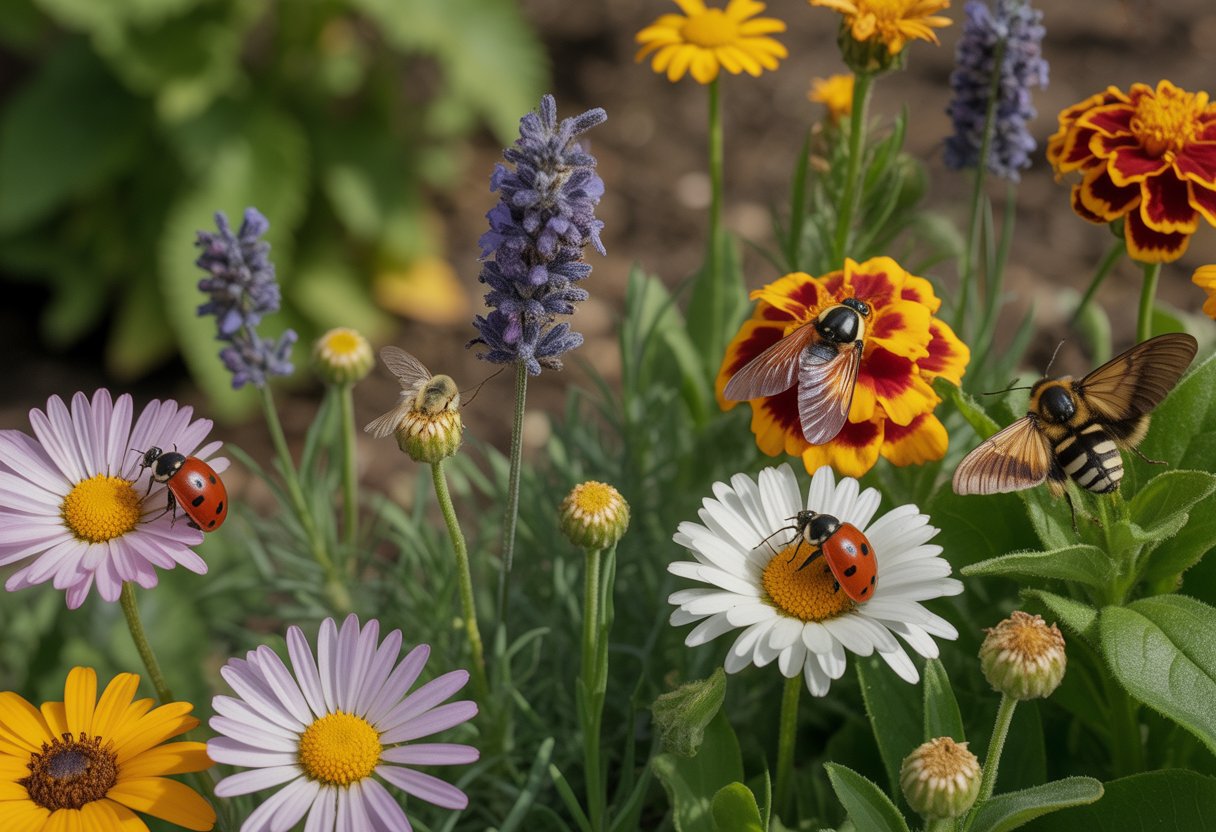
Just planting a mix of flowers, offering water, and skipping harsh chemicals can make a real difference. Beneficial insects like ladybugs, bees, and lacewings help control pests by eating the bad guys.
Learning how to keep these insects around lets gardeners and farmers keep plants healthy naturally.
Understanding Beneficial Insects
Beneficial insects fill specific roles that support healthy gardens and crops. Their categories and functions differ, but together they help cut down on chemical controls and keep a natural balance.
Types of Beneficial Insects
You’ll find predatory insects, parasitoid insects, and other garden helpers like predatory mites and beneficial nematodes. Predatory insects—think lady beetles and lacewings—go after pest insects directly.
Parasitoid insects, such as certain wasps, lay their eggs inside or on pests, which eventually kills the host. Predatory mites hunt down tiny arthropods that hurt plants, while beneficial nematodes attack soil pests.
Garden spiders, though technically arachnids, pull their weight by trapping flying insects in webs. Each type targets certain pests, so they help manage populations pretty efficiently.
Roles of Predatory and Parasitoid Insects
Predatory insects hunt and eat pest insects, which quickly reduces pest numbers. For instance, ground beetles go after caterpillars, and hoverflies love to snack on aphids.
Parasitoid insects use pests as hosts for their larvae, which develop inside and eventually kill the pest. This process takes longer but keeps pest numbers down over time.
Both groups matter. Predators act fast, while parasitoids offer long-term help. Together, they’re key players in integrated pest management.
Beneficial Insects vs. Insect Pests
People often mix up beneficial insects and pests, but the difference is big. Beneficial insects control or eat harmful pests, improving plant health.
Pests, on the other hand, damage plants by feeding, multiplying fast, or spreading disease. Some insects can be both, depending on their life stage or situation—certain beetles come to mind.
It helps to watch what an insect does and how it affects plants. If it’s reducing pests, it’s probably a friend. If it’s chewing up leaves, well, not so much.
How to Attract Beneficial Insects
Attracting beneficial insects takes a bit of thought—choose the right plants, offer good habitat, and keep food sources coming. Mixing flowering plants, shelter, and varied nutrition can really support pollinators and predators.
Selecting Plants That Attract Beneficial Insects
Picking the right plants is key. Wildflowers like aster, cosmos, and alyssum provide nectar and pollen for bees and ladybugs. Even garden herbs like dill (anethum graveolens) attract predatory insects.
You’ll want blooms of different shapes and times, so there’s always something for insects to eat. Plants with small, open flowers are especially good because they’re easy to access. Adding native plants and wildflowers does the most for local wildlife.
Creating a Supportive Habitat
A suitable habitat keeps beneficial insects around all year. Leave some bare soil for ground-nesting bees.
Mix up plant heights and types to create microclimates and hiding spots. Skip too much mulch or frequent tilling—those disrupt nests.
Leaving dead wood or plant stems gives shelter, and a shallow dish with stones lets insects drink safely.
Providing Food and Shelter
Keep food coming by planting nectar and pollen-rich flowers that bloom at different times. Alyssum and aster are great for early and late blooms.
Shrubs, grasses, and leaf litter provide shelter from weather and predators. Avoid pesticides that harm good insects.
Check in on your garden regularly to keep the balance and make sure beneficial insects are doing well.
Key Beneficial Insects and Their Garden Benefits
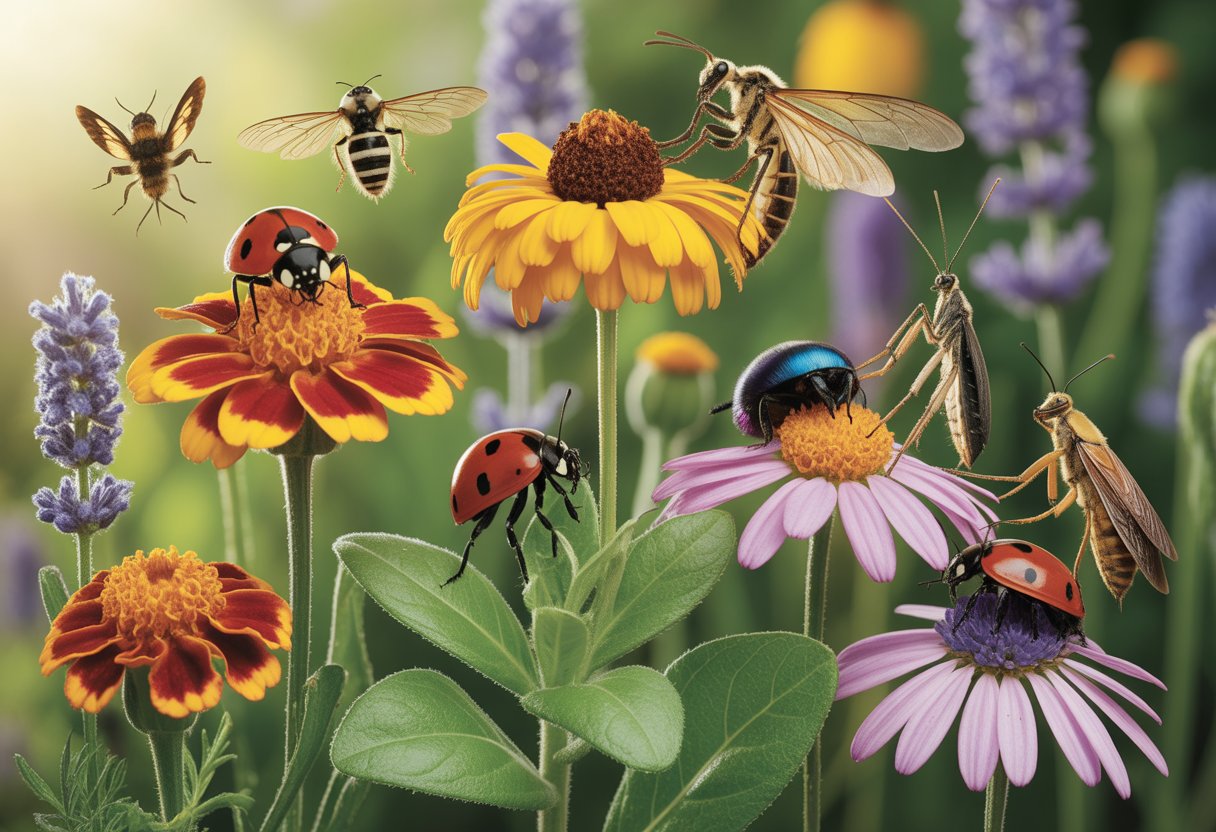
A bunch of insects help gardens by managing pests and supporting plant reproduction. They all work in different ways, but together make for healthier ecosystems.
Ladybugs and Aphid Control
Ladybugs, especially the seven-spotted kind, are famous for eating aphids. One ladybug can eat dozens of aphids every day, so they’re pretty valuable.
Ladybug larvae are even hungrier, gobbling up aphids and other soft-bodied pests. Both adults and larvae feed on aphids, scale insects, and mites.
If you want balanced pest control, encourage ladybugs in your veggie and flower beds.
Lacewings and Their Larvae
Green lacewings and their larvae are top-notch predators of aphids, thrips, whiteflies, and caterpillars. Their larvae, sometimes called “aphid lions,” eat a ton of pests.
Adults usually go for nectar and pollen, adding a little pollination on the side. Lacewings adapt well to different gardens, and releasing larvae can quickly cut down soft-bodied pests.
Hoverflies, Bees, and Pollinators
Hoverflies might look like tiny bees or wasps, but they’re harmless. Their larvae eat aphids and other pests, while the adults serve as pollinators.
Bees—including honey bees, bumblebees, and sweat bees—are crucial for pollinating many crops and flowers. Their work leads directly to fruit and seed production.
If you keep flowers blooming through the season, you’ll see more pollinators and better yields.
Other Essential Predators and Parasitoids
Other helpful insects include assassin bugs, minute pirate bugs, and damsel bugs—they prey on a range of soft-bodied and armored pests.
Praying mantises and soldier beetles eat all sorts of harmful insects. Dragonflies mostly go after flying pests like mosquitoes.
Parasitic wasps, such as tachinid flies and tiny mini-wasps, lay eggs inside pests like caterpillars, killing them from the inside. Ground beetles do a great job hunting soil pests.
Benefits of Encouraging Beneficial Insects for Pest Management
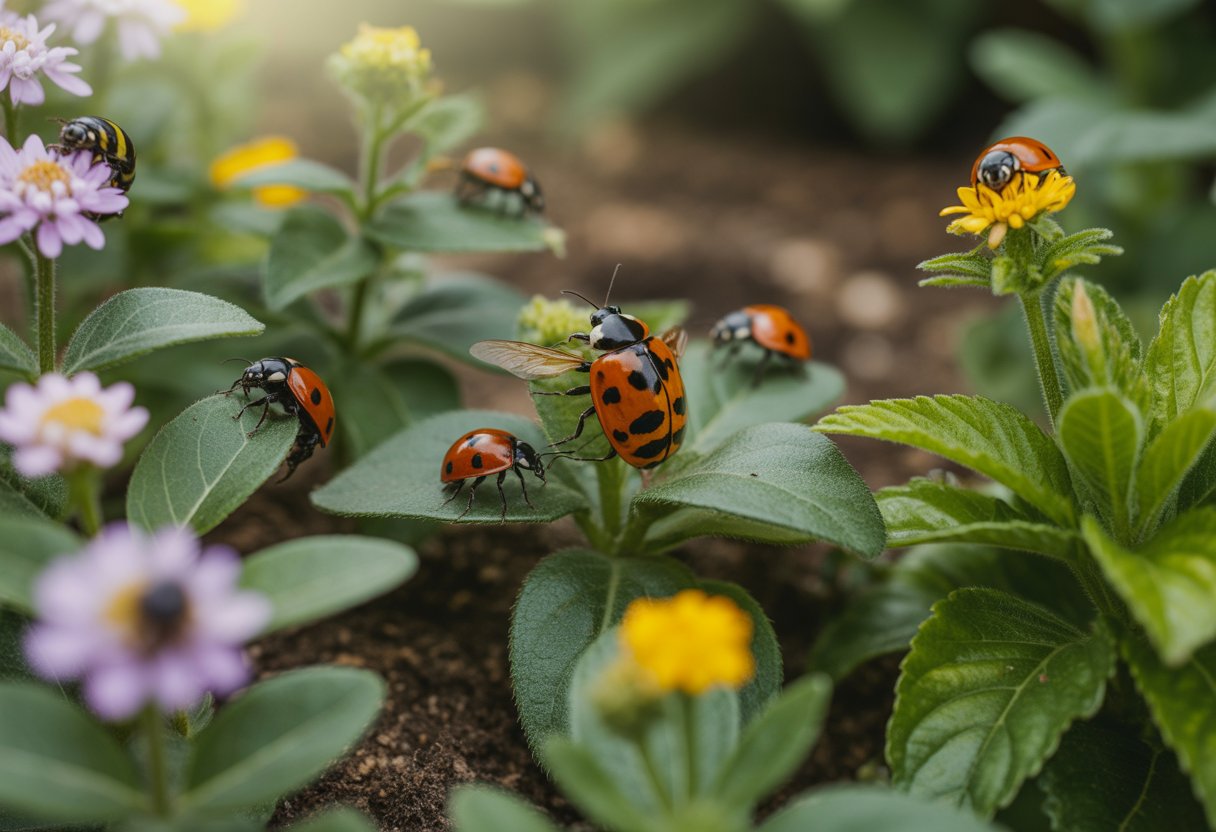
Encouraging beneficial insects supports sustainable pest management by reducing harmful pest populations and boosting garden health. These insects help control common pests like cucumber beetles and squash bugs, and they improve pollination—a must for many crops.
Biological and Natural Pest Control Strategies
Beneficial insects act as natural predators or parasites of garden pests. Ladybugs, for instance, eat loads of aphids and other soft-bodied pests.
Parasitic wasps lay eggs inside insect pests, which helps reduce populations of things like cucumber beetles. This kind of biological control lowers pest numbers without hurting the environment.
When you support diverse insect populations, you get a more reliable approach to managing garden pests—no need for synthetic chemicals.
Reducing Reliance on Insecticides
Bringing in beneficial insects means you can skip many insecticides that harm helpful bugs and lead to resistant pests. Less spraying helps keep the ecosystem balanced and stops beneficial insects from disappearing.
For tough pests like squash bugs, which often need heavy-duty chemicals, natural predators can knock them down early. That means fewer sprays, lower costs, and less pollution. Isn’t that what we’re all after?
Enhancing Pollination and Garden Health
Many beneficial insects, like native bees and hoverflies, play a huge role in pollination.
When pollination thrives, you usually get better fruit set and bigger harvests in both gardens and farms.
A strong pollinator population helps veggies and flowers grow well. Healthy plants tend to shrug off pests and stress a bit more easily.