Blue Porterweed (Stachytarpheta jamaicensis)
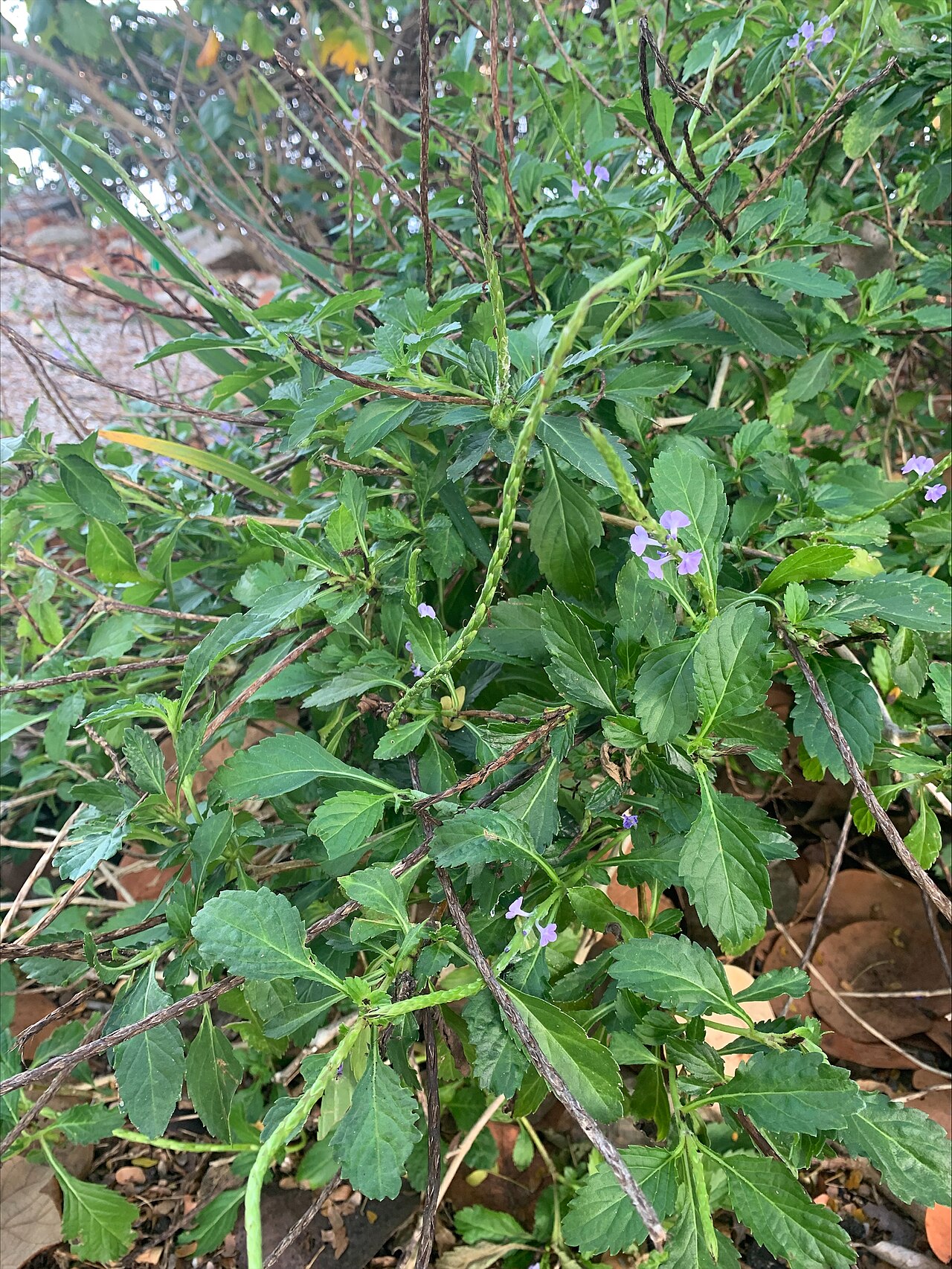
Stachytarpheta jamaicensis, known as Blue Porterweed or Jamaica porterweed, is a low, sprawling subshrub in the Verbena family (Verbenaceae) found in coastal and disturbed habitats of South and Central Florida. It is a favorite of butterfly gardeners for its long, slim flower spikes that open a few small, light-blue flowers at a time, nearly year-round in frost-free sites.
Blue porterweed’s status in Florida is genuinely a little unsettled: it is generally treated as native by the USDA PLANTS database and the Atlas of Florida Plants, and botanist Roger Hammer, writing for the Florida Native Plant Society, described it as “generally considered to be a Florida native,” while also noting that some botanists suspect it arrived with early Bahamian or Caribbean settlers who carried seeds of medicinal plants to Florida. In practice, it behaves like an uncommon native of disturbed coastal and roadside ground rather than an aggressive escape, and the state’s conservation agencies list it as native rather than introduced.
What makes identification important in Florida is not telling blue porterweed apart from something harmless, but telling it apart from its close relatives — several other Stachytarpheta species, all clearly non-native, that are commonly sold at nurseries and have escaped into the same disturbed, sunny habitats. Mixing them up in a restoration planting works against, rather than for, Florida’s native flora.
Identification
The single most useful habit to learn is this: Florida’s only native porterweed, blue porterweed, is a low, sprawling, decumbent plant, usually under 2 feet tall, while the most common escaped look-alike, Stachytarpheta urticifolia (nettleleaf porterweed, also treated by some botanists as a form of S. cayennensis), is an upright, woody shrub 4 to 6 feet tall with a distinct trunk. If the plant you are looking at stands up like a shrub, it is very likely not the Florida native.
Stems
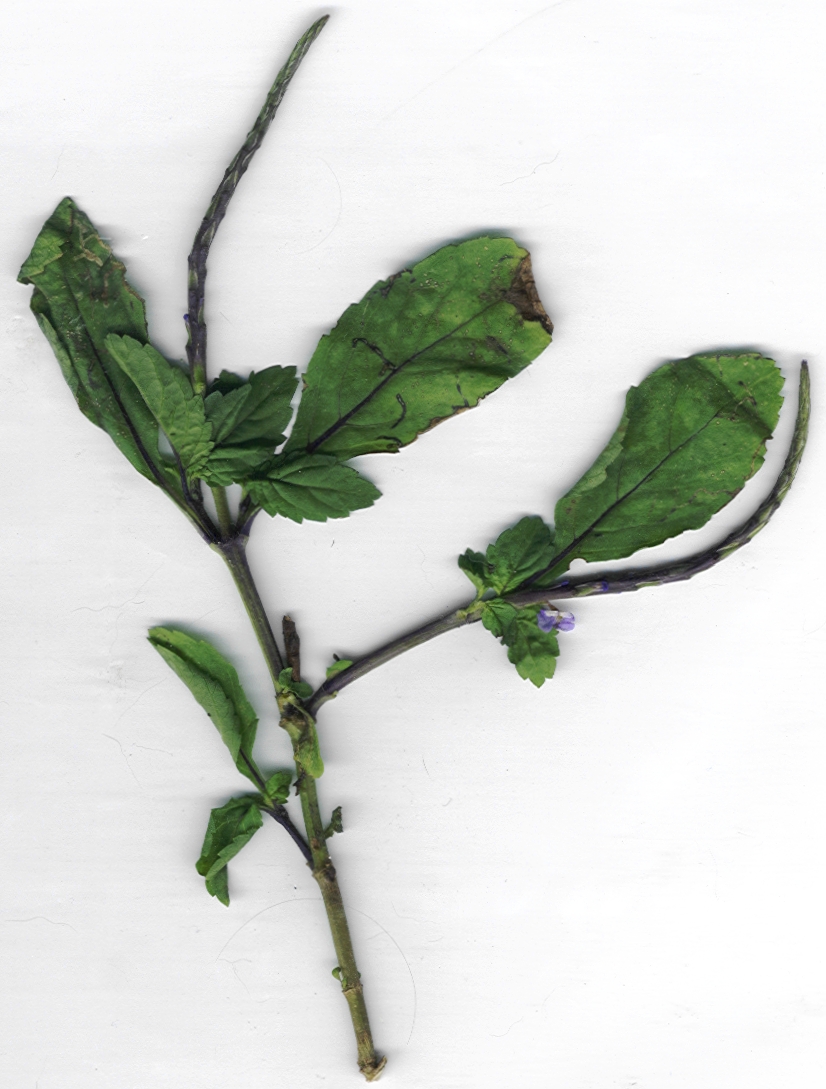
Blue porterweed has slender, green to purplish, sprawling or decumbent (lying along the ground before turning upward) stems that often root where they touch soil, forming loose mounds or mats rather than an erect shrub. Mature plants reach roughly 1 to 2 feet tall and wider than tall.
Leaves
Leaves are opposite, oval, 1 to 3 inches long, dull light green to gray-green (occasionally blushed with purple), with coarsely toothed margins where the teeth generally point forward, toward the leaf tip. The leaf surface is smooth to the touch above and may be faintly hairy beneath, and — importantly for identification — it lacks the quilted, raised venation (bullate texture) seen on the leaves of the non-native nettleleaf porterweed, which instead has glossy, dark green, distinctly puckered leaves.
Flowers
Flowers are small, tubular, and light blue to pale violet, borne a few at a time along a slender, green, quill-like flowering spike that elongates as the season progresses. Each individual flower lasts only a single day, but the spikes keep producing new flowers for weeks, giving the plant a long, if sparse, bloom display. Flowering occurs nearly year-round in South Florida where frost does not intervene.
Fruit & Seeds
Like other members of the vervain family, the fruit is a small, dry structure (a schizocarp) that splits into two single-seeded nutlets, embedded in cavities along the flowering spike after the petals drop. Seed production is modest compared to the more aggressively spreading non-native species.
Quick Facts
| Scientific Name | Stachytarpheta jamaicensis |
| Family | Verbenaceae (Vervain/Verbena) |
| Plant Type | Perennial Subshrub |
| Mature Height | 1–2 ft (30–60 cm) |
| Mature Spread | 2–3 ft (60–90 cm), sprawling |
| Growth Rate | Moderate to fast |
| Sun Exposure | Full Sun to Light Shade |
| Water Needs | Low to moderate |
| Soil Type | Sandy, well-drained; tolerates disturbed and roadside soils |
| Soil pH | Neutral to slightly alkaline |
| Bloom Time | Nearly year-round in South Florida |
| Flower Color | Light blue to pale violet |
| Fall Color | Not significant |
| Fruit | Small two-seeded nutlets along the flower spike |
| Deer Resistant | Not notably resistant |
| USDA Hardiness Zones | 9b–11 |
Native Range
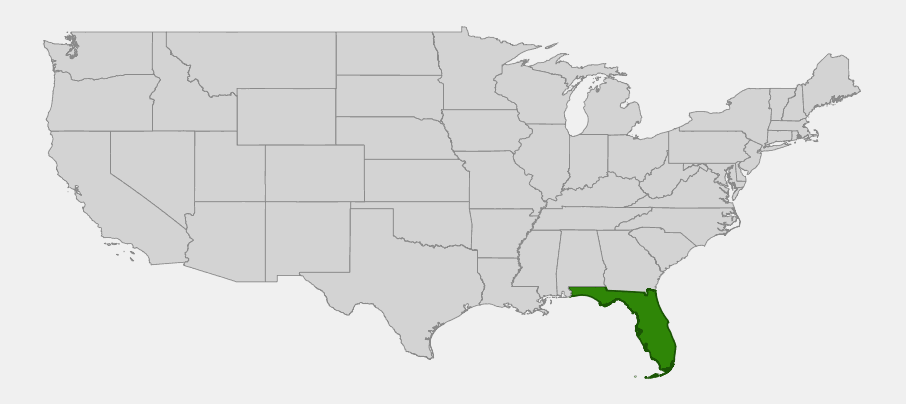
In the continental United States, blue porterweed’s native range is limited to Florida, where it occurs in central and southern counties, generally in frost-free or near-frost-free areas near the coast. It is also native in Puerto Rico and the U.S. Virgin Islands, and occurs more widely through the West Indies, Mexico, and Central America, where it is considered part of the species’ broader native distribution. The USDA PLANTS database lists it as introduced in Hawaii, where it occurs as a naturalized, non-native plant rather than part of its original range.
Within Florida, blue porterweed grows in open, sunny, often disturbed sites — roadsides, coastal scrub edges, pinelands, and sandy waste ground — rather than deep in undisturbed native plant communities. This preference for disturbed ground is one reason some botanists have questioned how long the species has actually been present in Florida versus arriving with early human settlement, though it is currently treated as native by USDA PLANTS and the Atlas of Florida Plants.
Blue porterweed is sensitive to frost and dies back or is killed outright by hard freezes, which limits its reliable range to the central and southern peninsula; gardeners in North Florida should expect it to behave as a root-hardy perennial at best, or an annual in colder winters.
📋 Regional plant lists featuring Blue Porterweed: No Florida regional plant list currently covers this species; browse all Native Plant Profiles.
Growing & Care Guide
Blue porterweed is an easy, fast-growing butterfly plant for warm Florida gardens, forming a loose, low mound that fills space quickly without becoming a woody, hard-to-manage shrub.
Light
Grow in full sun for the densest form and best flowering; it also tolerates light, filtered shade, though bloom will be sparser and the plant looser.
Soil & Water
Blue porterweed is adaptable to sandy, well-drained Florida soils and does not require rich garden beds. It has moderate drought tolerance once established but flowers best with occasional deep watering during dry spells; avoid soggy, poorly drained sites, which can encourage root rot.
Planting Tips
Set out container plants in spring or early summer so they can establish well before any winter cold. Because the stems root where they touch soil, blue porterweed spreads readily by layering — space plants 2 to 3 feet apart to allow for this low, spreading habit, and expect it to knit together into a groundcover-like mat over a season or two.
Pruning & Maintenance
Pinch or trim stems periodically to keep the plant compact and encourage branching and more flower spikes; left untrimmed, it becomes loose and leggy. In the event of a hard freeze, cut damaged stems back to live wood in spring — the plant often resprouts from the base or roots if the freeze was not severe. Always confirm you are buying and planting Stachytarpheta jamaicensis specifically, since nurseries in Florida not infrequently mislabel the taller, non-native porterweed species, which should not be planted in native gardens.
Landscape Uses
Blue porterweed’s scale and bloom make it useful for several garden roles:
- Butterfly gardens as a reliable, long-blooming nectar source
- Low border or groundcover in sunny, sandy beds
- Coastal and xeriscape plantings tolerant of sandy, salt-influenced soils
- Native plant restoration on disturbed coastal or roadside sites within its Florida range
Wildlife & Ecological Value
Blue porterweed is best known in Florida gardens as a butterfly magnet, and that reputation is well earned among the state’s native nectar plants.
For Pollinators
The flowers are highly attractive to a wide range of butterflies, including swallowtails, skippers, and sulphurs, as well as to native bees. Its long bloom season means it provides a dependable nectar source across most of the year in frost-free parts of Florida, a valuable trait in a state where many native nectar plants bloom in shorter, more seasonal windows.
For Birds
Hummingbirds, where present, will visit the tubular flowers for nectar, and the low, dense growth offers some ground-level cover for small birds foraging among garden plantings.
For Mammals
Blue porterweed is not a significant food source for mammals in Florida and is not notably browsed by deer, which makes it a reasonably reliable low planting in areas with browsing pressure.
Ecosystem Role
As a low, spreading plant of open, disturbed, and coastal-adjacent ground, blue porterweed helps hold sandy soils and provides nectar continuity in habitats that are otherwise frequently cleared or disturbed. Its ecological role is modest compared to larger native shrubs and trees, but it fills a niche as one of the few reliably blooming native nectar plants in sunny, sandy, disturbed sites.
Cultural & Historical Uses
Throughout the Caribbean, porterweeds — including blue porterweed — are traditionally called by that name because a foaming, beer-like brew was historically made from the plant in parts of the Bahamas, used in folk tradition as a drink for fever, “cooling the blood,” skin washes, and other complaints. This is a historical account of folk practice, not a medicinal recommendation, and the safety and effectiveness of such preparations have not been established by modern research.
Some botanists, including Roger Hammer writing for the Florida Native Plant Society, have suggested that blue porterweed may have first reached Florida with early Bahamian settlers who carried seeds of useful plants with them — a reminder that even “native” status can be a matter of ongoing scientific debate for species with long histories of human association, rather than a simple yes-or-no label.
In the 20th and 21st centuries, blue porterweed’s main cultural role in Florida has shifted toward horticulture, where it is deliberately planted for its butterfly-attracting flowers, alongside continued confusion in the nursery trade between this native species and its larger, non-native relatives.
Frequently Asked Questions
How can I tell blue porterweed from the invasive porterweed sold at nurseries?
Growth habit is the fastest check: blue porterweed (Stachytarpheta jamaicensis) is low and sprawling, under about 2 feet tall, while the non-native nettleleaf porterweed (Stachytarpheta urticifolia, sometimes labeled S. cayennensis) is an upright woody shrub 4 to 6 feet tall with a distinct trunk. The native species also has duller, flatter leaves without the glossy, deeply quilted (bullate) texture seen on the non-native species, and its flowers are light blue rather than deep violet-purple.
Is blue porterweed actually native to Florida?
It is treated as native by the USDA PLANTS database and the Atlas of Florida Plants, though some botanists have noted the possibility that it was introduced with early human settlement in the Caribbean and Florida. The scientific consensus currently leans toward native status, and it behaves ecologically like a native plant of disturbed coastal ground rather than an aggressive non-native spreader.
Will blue porterweed survive a Florida winter?
In Central and South Florida, yes, in most years. It is frost-sensitive, however, and a hard freeze can kill the top growth or the entire plant in North Florida or during unusually cold winters further south; it is best suited to USDA zones 9b through 11.
Do I need to deadhead blue porterweed?
Not strictly, but periodic pinching and light trimming keeps the plant compact and encourages more flowering spikes, since individual flowers last only a day and the plant blooms best when it is actively producing new growth.
Is blue porterweed invasive?
No — the plant itself is not considered invasive in Florida. The identification confusion in this genus runs the other way: the truly invasive species are the non-native porterweeds, which are sometimes mistakenly sold or planted in place of the native blue porterweed.

Looking for a nursery that carries Blue Porterweed?
Browse our native plant nursery directory: Florida