Small-leaf Globemallow (Sphaeralcea parvifolia)
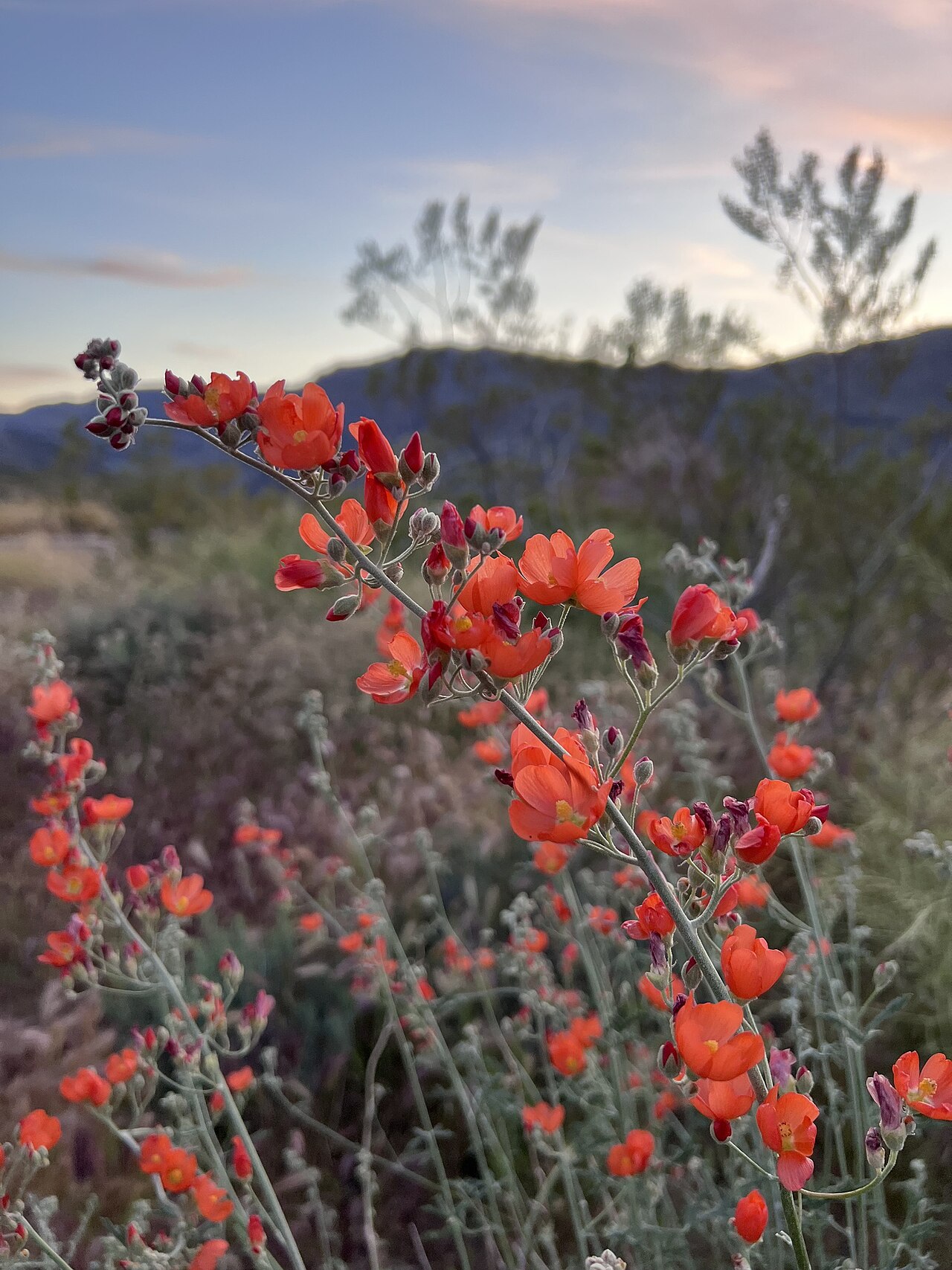
Sphaeralcea parvifolia, known as Small-leaf Globemallow (also spelled small-leaved globemallow), is a short-lived perennial forb of the Mallow family (Malvaceae) found across the dry basins and foothills of the Four Corners region. Along with its close relatives, it is one of the most familiar wildflowers of the high desert — a tough, drought-adapted plant that lights up roadsides, washes, and disturbed ground with clusters of brick-orange, cup-shaped flowers from spring through early fall.
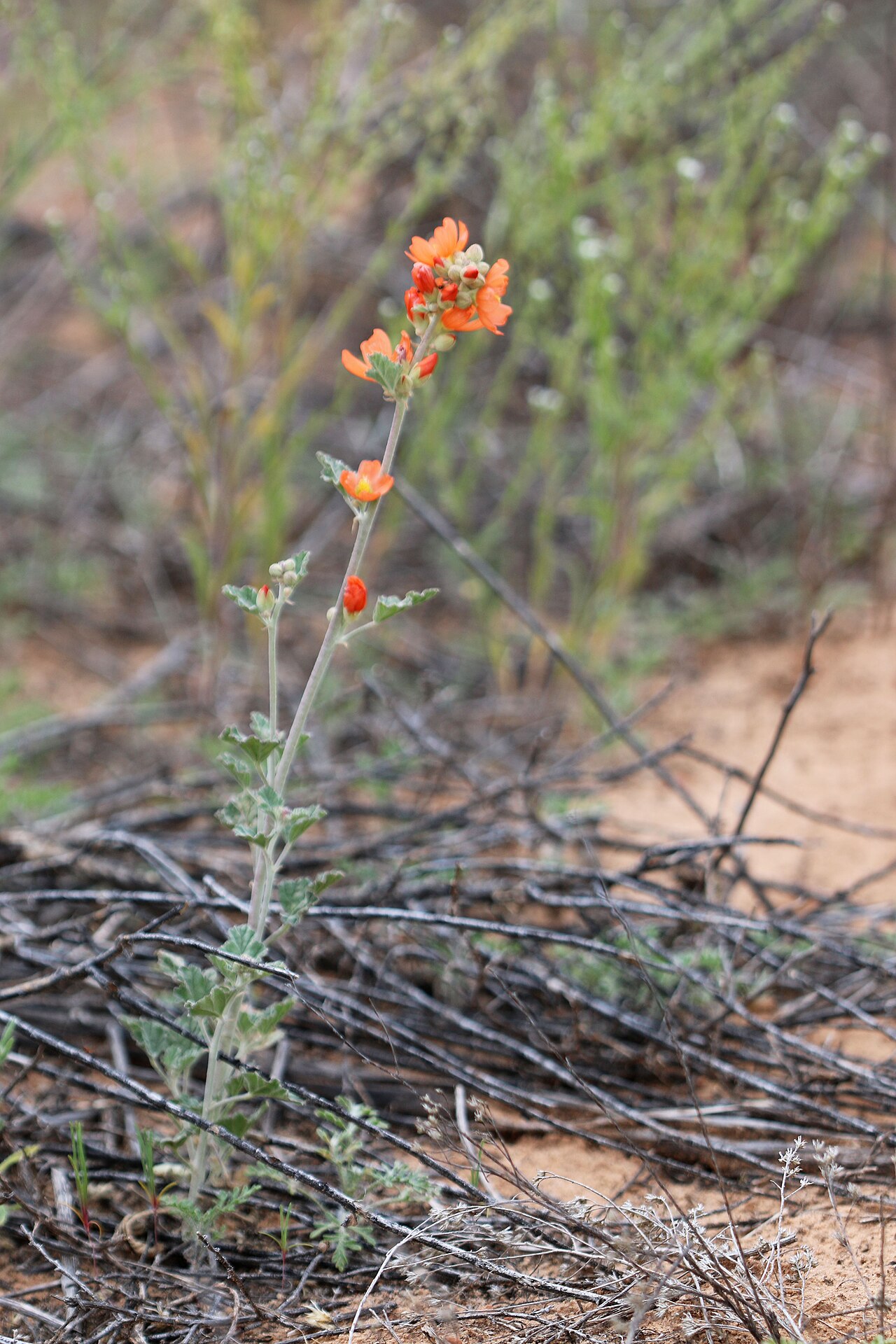
The plant forms an open, somewhat woody-based clump of slender, gray-green stems, 1 to 3 feet tall, covered in a fine coat of star-shaped (stellate) hairs that give the whole plant a soft, dusty look. Small-leaf globemallow is short-lived as individuals — often just a few years — but it reseeds readily and persists as a population wherever bare, well-drained soil is available, including recently disturbed sites, floodplains, and roadcuts.
Gardeners in the Intermountain West value small-leaf globemallow for its long bloom season, minimal water needs once established, and its popularity with native bees and other pollinators. It is an excellent choice for a xeriscape bed, a disturbed-soil restoration planting, or a gravel garden, but it is not for everyone: the fine hairs that cover the stems and leaves can irritate skin, eyes, and airways if the plant is handled roughly or mowed, so site it away from paths and play areas and avoid rubbing your face after working around it.
Identification
Small-leaf globemallow can be difficult to separate from several other Sphaeralcea species that share its range, including desert globemallow (Sphaeralcea ambigua) and gooseberryleaf globemallow (Sphaeralcea grossulariifolia). Flower color, leaf shape, and elevation all help, but a hand lens on the stellate hairs is often needed for a confident identification.
Stems
Stems are erect to ascending, 1 to 3 feet (30–90 cm) tall, branching from a woody base. Young growth is covered in dense, gray, star-shaped hairs that wear thinner with age, giving older stems a slightly greener cast. The base can persist for a few growing seasons, but individual plants are generally short-lived.
Leaves
Leaves are alternate, triangular-ovate to nearly round, 1 to 2 inches long, with a wavy, shallowly lobed or scalloped margin — smaller and less deeply cut than the leaves of desert globemallow. Both surfaces are gray-green and felted with stellate hairs, which is the source of the genus’s common “mallow” texture and also the reason the foliage is more often brushed than touched directly.
Flowers
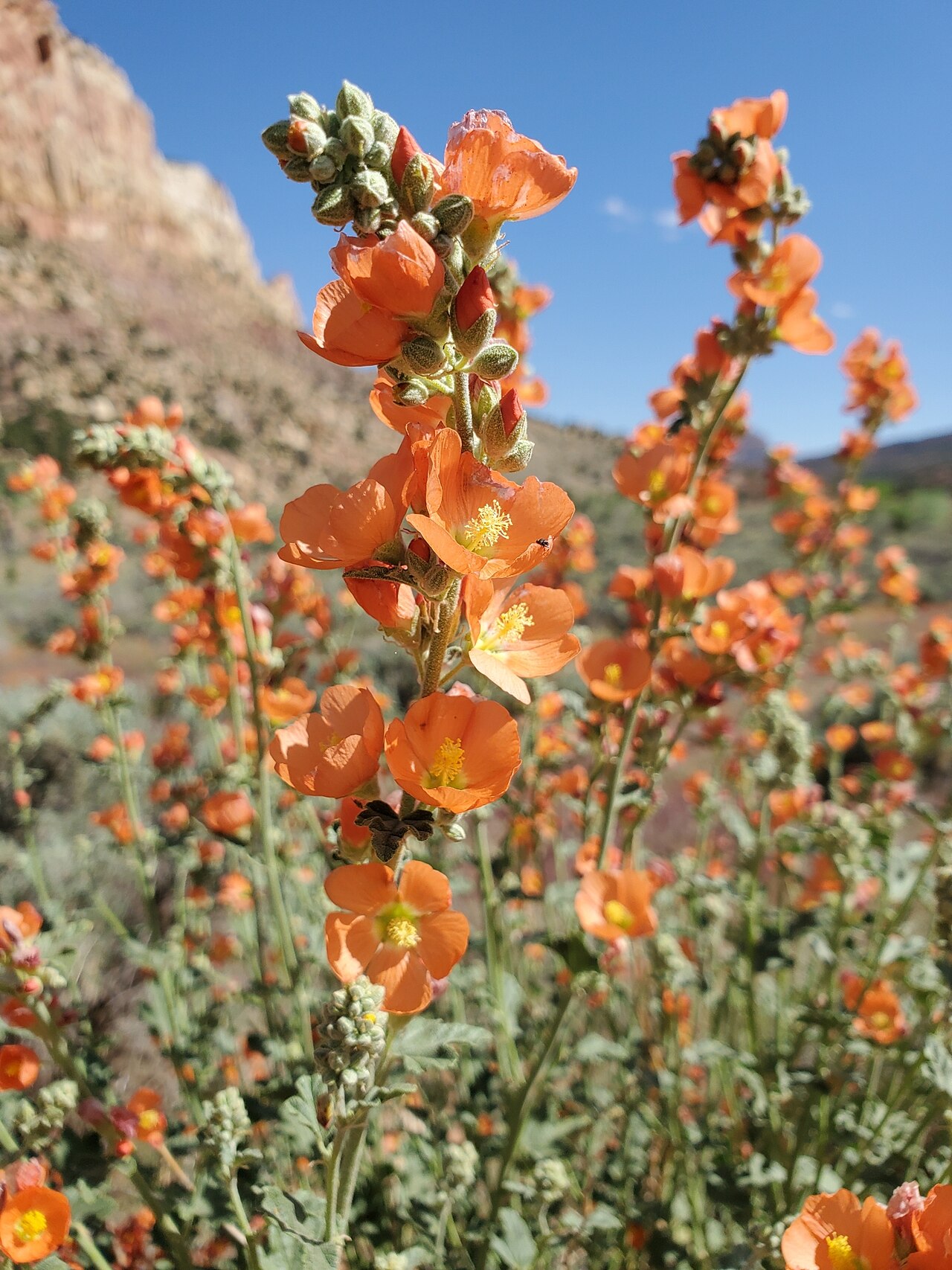
Flowers are five-petaled, cup- to saucer-shaped, about ¾ to 1¼ inches across, in a color usually described as grenadine, brick-orange, or salmon-red (rarely pale pink). They are borne in loose, elongated clusters (racemes) along the upper stems, opening a few at a time over a long season, typically April through September, with flushes after summer rain.
Fruit & Seeds
Like other mallows, small-leaf globemallow produces a disc-shaped fruit (a schizocarp) that splits into 8 to 10 small, kidney-shaped segments (carpels), each holding one or two seeds. The dry fruiting heads remain on the stem after the petals drop and are a useful identification feature late in the season.
Quick Facts
| Scientific Name | Sphaeralcea parvifolia |
| Family | Malvaceae (Mallow) |
| Plant Type | Perennial Forb / Subshrub |
| Mature Height | 1–3 ft (30–90 cm) |
| Mature Spread | 1–2 ft (30–60 cm) |
| Growth Rate | Fast, but short-lived |
| Sun Exposure | Full Sun |
| Water Needs | Low once established |
| Soil Type | Dry, well-drained; sandy, rocky or clay-loam |
| Soil pH | Neutral to alkaline |
| Bloom Time | April – September |
| Flower Color | Orange-red (grenadine), rarely pink |
| Fall Color | Not significant |
| Fruit | Small disc-shaped dry capsules (schizocarps) |
| Deer Resistant | Yes, generally avoided by deer and rabbits |
| USDA Hardiness Zones | 5–9 |
Native Range
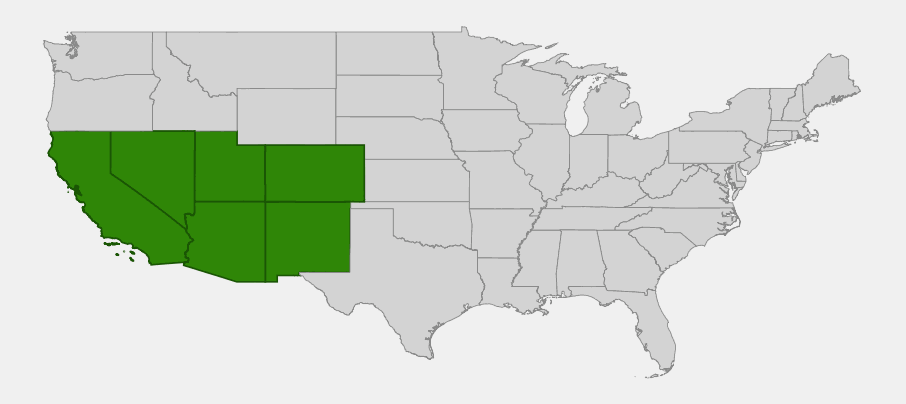
Small-leaf globemallow is native to the Four Corners region of the American Southwest, occurring throughout most of Nevada and Utah, western Colorado, northwestern New Mexico, and northern to central Arizona, with a smaller presence in the desert mountains of adjacent California. It is a signature wildflower of the Colorado Plateau and Great Basin, often the most abundant orange-flowered mallow along highways and trailheads in these areas.
The species grows at elevations of roughly 2,500 to 7,000 feet, favoring open, well-drained sites in pinyon-juniper woodland, sagebrush steppe, blackbrush scrub, and desert grassland. It is quick to colonize disturbed ground — road cuts, old burns, abandoned fields — which is part of why it is so visible from a car window in late spring.
Although it is sometimes offered for cultivation outside this range, small-leaf globemallow is considered only planted, not naturally occurring, in Idaho; some nursery and restoration sources list Idaho populations, but they trace to seeded or planted stock rather than wild establishment, so gardens east or north of the native range should treat it as an introduced ornamental rather than a native planting.
📋 Regional plant lists featuring Small-leaf Globemallow: Utah & Western Colorado · Arizona & New Mexico
Growing & Care Guide
Small-leaf globemallow is about as low-maintenance as a flowering perennial gets, provided it has the dry, sunny, well-drained conditions it evolved with. It is a good “first native” for gardeners moving away from thirsty ornamentals, and a reliable filler for restoration seed mixes on disturbed desert soils.
Light
Give it full sun. The plant becomes leggy, sparse-flowering, and more prone to rot in shade, and it rarely performs well under irrigation designed for shade-loving plants.
Soil & Water
Plant in fast-draining soil — sandy, rocky, or clay-loam are all fine as long as water does not pool. Established plants need little to no supplemental water in most of their range and can rot in heavy, wet, or frequently irrigated soil. A deep, infrequent soak during the first summer helps seedlings establish a deep taproot; after that, rainfall alone is usually sufficient outside of extended drought.
Planting Tips
Set out container plants in fall or early spring so roots can establish before summer heat. Because individual plants are short-lived, many growers treat small-leaf globemallow as a reseeding perennial: let a few seed heads mature and fall each year to keep a patch going, rather than expecting any one plant to persist for decades. Space plants 18 to 24 inches apart to allow for their open, arching form.
Pruning & Maintenance
Cut plants back by half after the first flush of bloom to encourage a tidier form and a second round of flowers later in the season. Older, woody-based plants that have become sparse can be cut hard in late winter; if they do not resprout vigorously, replace them with new seedlings, which are usually already coming up nearby. Wear gloves and avoid working with the plant on windy days, since broken stems release the irritating stellate hairs into the air.
Landscape Uses
Small-leaf globemallow fits a wide range of dry-garden settings:
- Xeriscape and gravel gardens where long bloom and low water use matter most
- Disturbed-soil restoration on road cuts, fill slopes, and old building pads
- Pollinator plantings paired with other desert wildflowers
- Roadside and median plantings in low-water municipal landscapes
- Mixed native borders with sagebrush, rabbitbrush, and bunchgrasses
Wildlife & Ecological Value
Small-leaf globemallow is a quietly important food source in the desert ecosystems where it grows, flowering through much of the hottest, driest part of the year when few other plants are in bloom.
For Pollinators
The flowers are visited by a wide range of native bees, including specialist mallow bees (Diadasia species) that collect pollen almost exclusively from globemallows and their relatives. Honeybees, other solitary bees, and various flies and beetles also use the flowers for nectar and pollen through the long bloom season.
For Birds
Seed-eating birds, including sparrows and towhees, take seeds from the dry fruiting heads in late summer and fall. The open, branching form also offers modest perching and foraging structure in otherwise sparse desert shrubland.
For Mammals
Mule deer and cottontail rabbits generally avoid the foliage because of its dense stellate hairs and somewhat bitter taste, which is part of why the plant is considered reliably deer resistant. Small mammals and insects use the base of mature clumps for cover.
Ecosystem Role
As an early colonizer of bare or disturbed desert soil, small-leaf globemallow helps stabilize ground after fire, grading, or erosion, and its presence often signals the start of a more diverse plant community reclaiming a disturbed site. Its long, sporadic bloom period — especially the flushes that follow summer monsoon rain — provide a dependable nectar source when many other desert wildflowers have already finished for the year.
Cultural & Historical Uses
Globemallows, including small-leaf globemallow, were used historically by Indigenous peoples of the Southwest, including Navajo and Puebloan communities, as a source of fiber from the stems and as a minor component of traditional medicine, such as poultices for skin complaints. Because several Sphaeralcea species grow together and were not always distinguished by early botanists or ethnographers, it is difficult to say with precision which specific traditional uses applied to this species versus its close relatives.
Ranchers and range scientists have long noted the irritating effect of globemallow hairs on livestock during haying and on people handling hay contaminated with the plant, sometimes called “globe mallow itch.” This is a historical and practical observation about handling dried plant material, not a medicinal use, and the plant is not used as human food.
Today, small-leaf globemallow is valued mainly in restoration and low-water landscaping rather than for any traditional use, prized for its ability to quickly cover disturbed desert ground with color and support pollinators with very little water input.
Frequently Asked Questions
Is small-leaf globemallow the same as desert globemallow?
No. Desert globemallow (Sphaeralcea ambigua) is a separate, more shrubby species found at lower, hotter elevations, with somewhat larger, more deeply lobed leaves. The two can grow near each other in parts of Arizona and are sometimes confused, but they are distinct species.
Why does small-leaf globemallow irritate my skin and eyes?
The stems and leaves are covered in microscopic, star-shaped (stellate) hairs that can break off and become airborne when the plant is disturbed, brushed, or mowed. These hairs can irritate skin, eyes, and airways, a well-known issue for people working around globemallows and livestock exposed to hay containing them. Wearing gloves and avoiding vigorous handling on windy days reduces the irritation.
How long does small-leaf globemallow live?
Individual plants are typically short-lived, often just a few years, though they reseed readily where soil is open and well-drained. Treat it as a reliably self-sowing perennial rather than a long-lived specimen plant.
Will small-leaf globemallow survive in a regular garden bed with lawn irrigation?
Not well. It is adapted to infrequent, deep moisture and dry soil between waterings. Regular lawn-style irrigation tends to cause root rot and shortens the plant’s already brief lifespan; it performs best in a dedicated dry bed separate from thirstier plantings.
Is small-leaf globemallow deer resistant?
Yes, it is generally left alone by deer and rabbits, likely because of its hairy, somewhat bitter foliage, which makes it a useful choice in areas with heavy browsing pressure.

Looking for a nursery that carries Small-leaf Globemallow?
Browse our native plant nursery directory: Arizona · California · Colorado · Nevada & New Mexico · Utah