Bristlecone Fir (Abies bracteata)
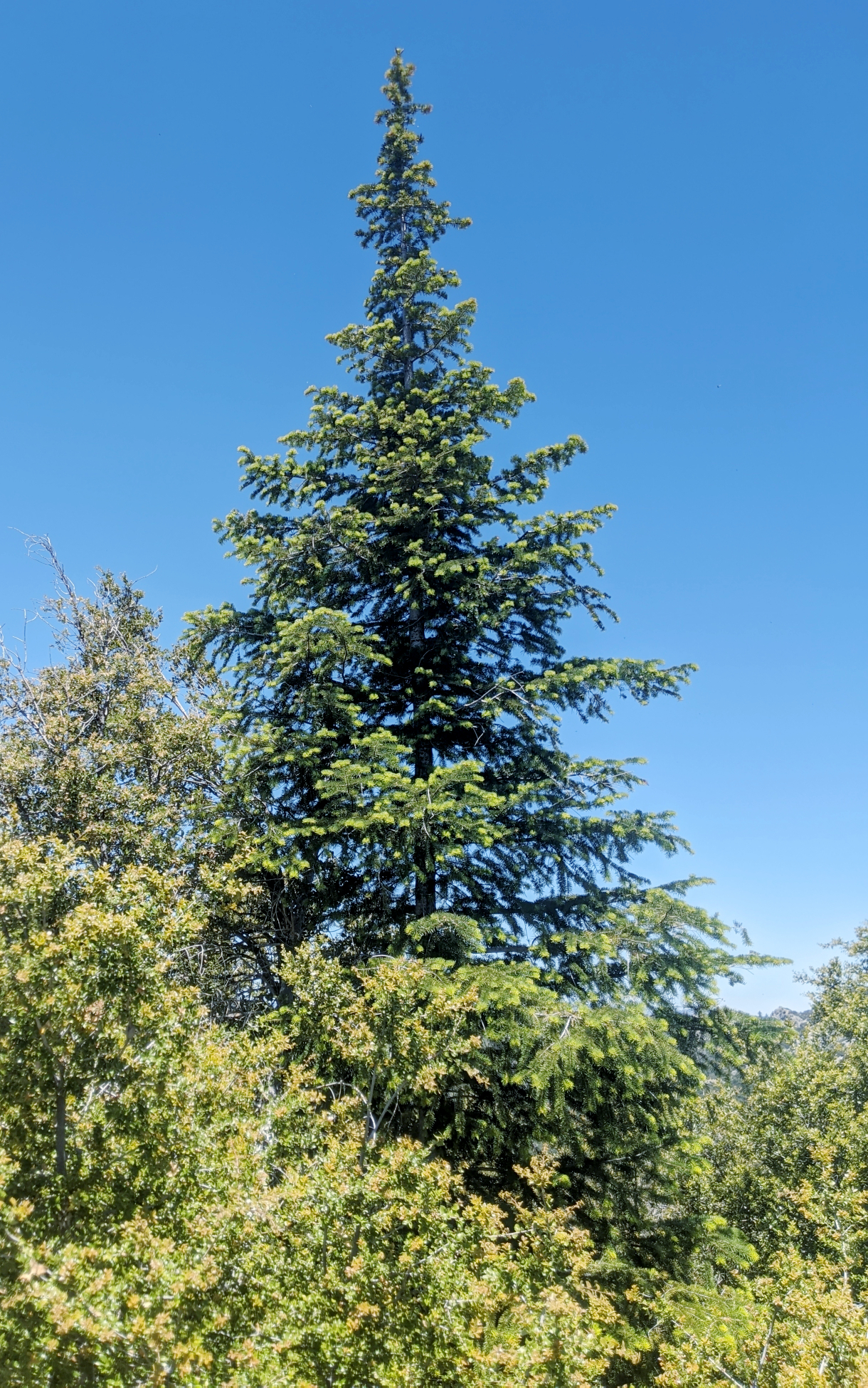
Abies bracteata, the Bristlecone Fir (also called Santa Lucia fir), is the rarest fir in North America and one of the most narrowly distributed conifers anywhere on the continent. It grows wild only in the Santa Lucia Mountains of Monterey County, California, with a handful of occurrences reaching just across the county line into extreme northwestern San Luis Obispo County — an area famous as the dramatic, fog-shrouded backbone of the Big Sur coast.
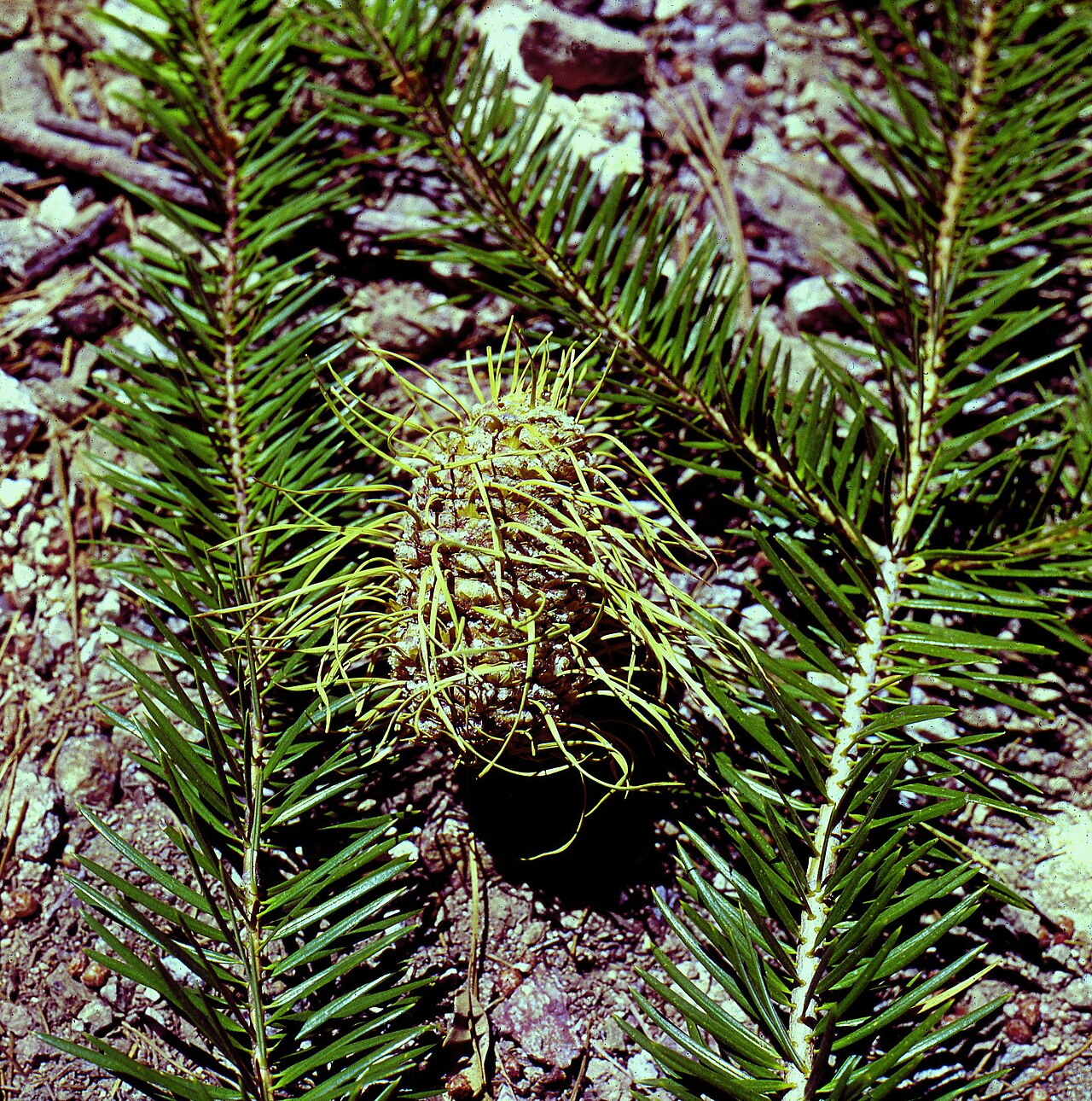
The species gets both of its common names from its extraordinary cones: each cone scale ends in a long, slender, needle-like bristle up to 2 inches long, giving mature cones a shaggy, almost sea-urchin-like appearance found in no other true fir. This feature is so distinctive that bracteata (“bearing bracts”) has been used as the species name since its original description, and the cones are often the quickest way to confirm an identification in the field, where they are available — mature cones disintegrate on the tree each fall and are rarely found whole on the ground.
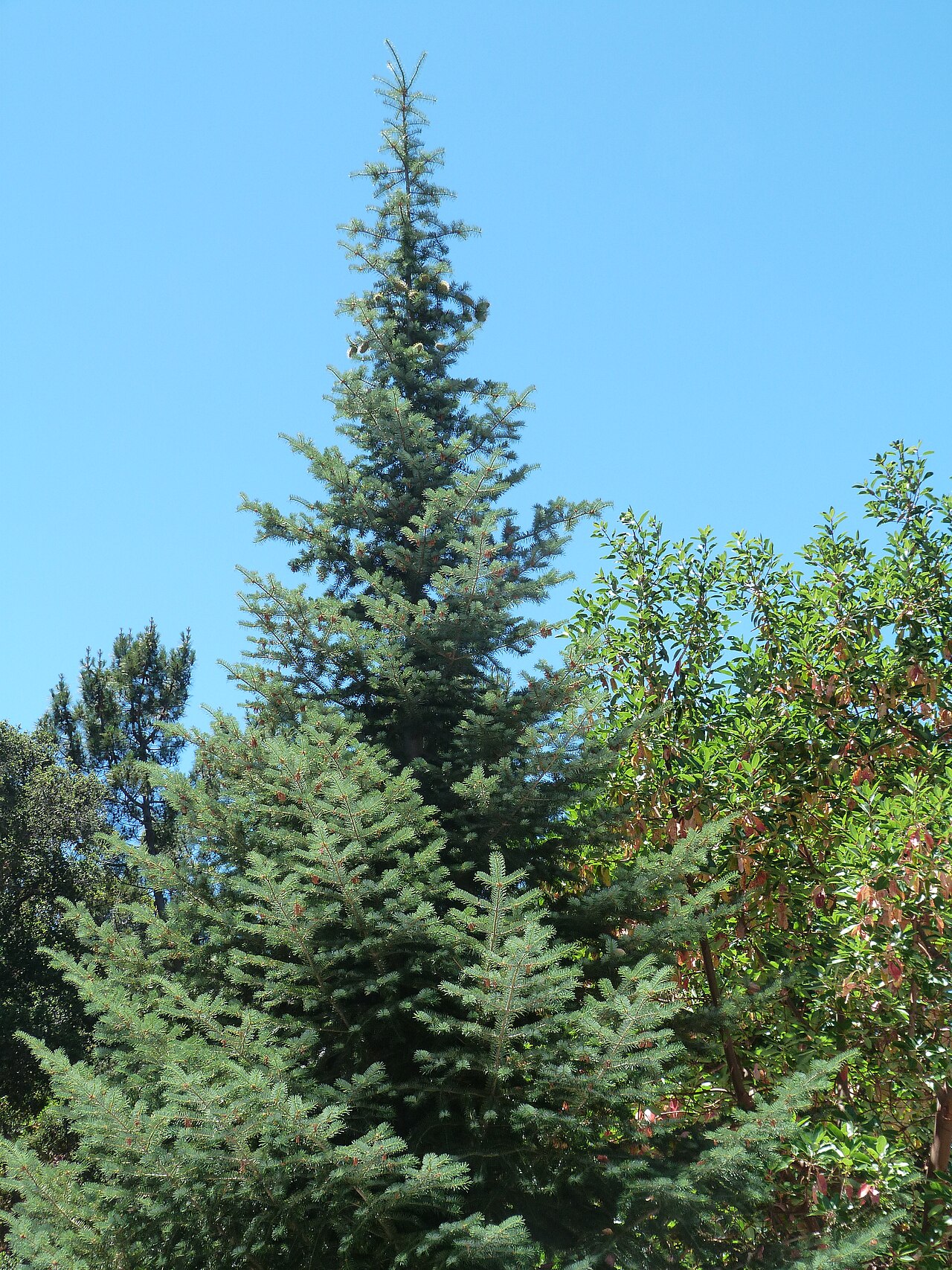
Bristlecone fir is a tall, strikingly narrow, spire-topped tree that stands out sharply against the rounded canopies of the oaks and chaparral shrubs that typically surround it in its steep canyon habitat. Though it is not a tree most gardeners outside its native range will ever plant, it is an important conservation and horticultural curiosity for conifer collectors and a true California original for anyone gardening within its narrow climate zone, and one of the relatively few California conifers that stays evergreen and holds its needles through winters mild enough not to require the cold-hardiness adaptations covered in our guide to trees that keep their leaves year-round. For how it fits among California’s other native firs, see our pages on California red fir and white fir.
Identification
Bristlecone fir is a medium to large evergreen conifer, typically 65 to 100 feet tall in favorable canyon sites, though trees in harsher, more exposed terrain stay smaller. Its silhouette is one of the most distinctive of any California conifer: a very narrow, spire-like, almost columnar crown with a sharply pointed top, quite different from the broader pyramidal form typical of most firs.
Bark & Stems
Bark on young trees is smooth and gray with resin blisters typical of true firs; with age it becomes somewhat scaly and fissured, though it stays comparatively thin and smooth-textured compared with many other conifers. Branches are relatively short and held tightly to the narrow crown, especially on the upper trunk.
Foliage
Needles are flat, stiff, and sharply pointed — unusually sharp for a true fir, almost spruce-like to the touch — 1 to 2 inches long, dark glossy green above with two whitish stomatal bands beneath, and spirally arranged but twisted at the base to appear two-ranked along the twig.
Cones & Seeds
The defining feature: egg-shaped cones 2.5 to 4 inches long, purplish-brown, borne upright near the top of the tree as in all true firs, with each bract-tipped scale extending into a conspicuous straight or slightly curved bristle up to 2 inches long. No other North American fir has anything resembling this cone architecture. Like other firs, the cones disintegrate on the branch at maturity to release their seeds, so intact fallen cones are almost never found — only scattered scales and the persistent central cone axis remain on the tree afterward.
Quick Facts
| Scientific Name | Abies bracteata |
| Family | Pinaceae (Pine) |
| Plant Type | Evergreen coniferous tree |
| Mature Height | 65–100 ft (occasionally more in sheltered canyons) |
| Mature Spread | 12–20 ft; notably narrow, spire-like crown |
| Growth Rate | Slow |
| Sun Exposure | Part Shade (shaded canyon slopes in nature) |
| Water Needs | Average; prefers cool, moist canyon microclimates |
| Soil Type | Rocky, well-drained canyon and slope soils |
| Soil pH | Slightly acidic to neutral |
| Bloom Time | Pollen cones in spring |
| Flower Color | Not applicable (conifer) |
| Fall Color | None (evergreen) |
| Fruit | Upright cones, 2.5–4 in, with long bristle-tipped scales; disintegrate at maturity |
| Deer Resistant | Yes |
| USDA Hardiness Zones | 7–9 |
Native Range
Bristlecone fir is a true California endemic, found nowhere else in the world except the Santa Lucia Mountains of Monterey County, with scattered occurrences crossing just into the extreme northwestern corner of San Luis Obispo County. Its total range covers roughly 710 square kilometers of rugged coastal mountain terrain along the Big Sur coast, making it one of the most geographically restricted conifers in North America.
Within this narrow range, the species favors steep, rocky canyon slopes and the bottoms of narrow ravines, often on north-facing exposures where fog drip and canyon shade provide the cool, moist microclimate the tree depends on even through California’s dry summers. It typically grows scattered among mixed evergreen forest and chaparral rather than forming pure stands, often alongside Coulter pine, canyon live oak, and tanoak, reaching from about 700 to 5,000 feet in elevation.
Because fire plays a complex role in its canyon habitat and the species does not resprout after being top-killed, bristlecone fir populations are considered vulnerable to changes in fire frequency and severity across the Santa Lucia Range, even though the overall species is not currently federally listed.
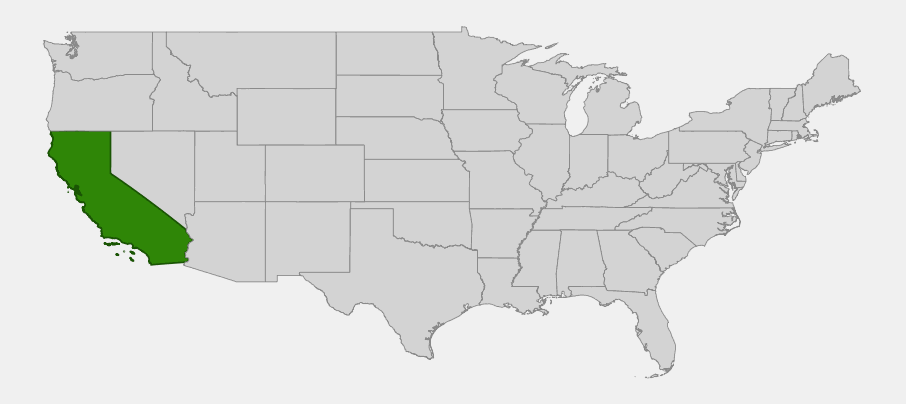
📋 Regional plant lists featuring Bristlecone Fir: California & Nevada
Growing & Care Guide
Bristlecone fir is grown mainly by conifer specialists and botanic gardens, but it is cultivated successfully in parts of coastal California and similar cool-summer climates, and occasionally farther afield by dedicated collectors who can replicate its canyon-shade preferences.
Light
In the wild it grows in the part shade of steep, fog-shaded canyons, and cultivated trees generally do best with similar protection — morning sun with afternoon shade, or the dappled light beneath a taller canopy — rather than full, hot, exposed sun.
Soil & Water
Plant in well-drained, rocky to loamy soil. Unlike many drought-adapted California natives, bristlecone fir prefers consistent moisture and a cool root zone reflecting its canyon origins, so mulch generously and avoid letting the soil dry out completely during summer, especially while the tree is establishing.
Planting Tips
Choose a site with a cool, coastal-influenced or otherwise mild summer climate (roughly USDA zones 7–9), ideally with some afternoon shade or a north-facing slope that mimics its native canyon habitat. Source only nursery-propagated stock, since the species’ extremely limited range makes conservation of wild seed sources a priority. Because it keeps a very narrow form, it fits better than most large conifers into gardens with limited horizontal space.
Pruning & Maintenance
Little pruning is needed beyond removing dead branches; the tree’s narrow, upright habit requires minimal shaping. Bristlecone fir does not resprout from the trunk or roots if top-killed by fire or severe damage, so protect young trees from mechanical injury and, where relevant, defensible-space fire management.
Landscape Uses
- Specimen conifer for a cool, shaded corner of a California native garden
- Conifer collections and botanic garden conservation plantings
- Narrow accent tree where a wide-crowned conifer would not fit
- Canyon and north-slope restoration plantings within its native range
Wildlife & Ecological Value
As a rare, localized conifer, bristlecone fir’s wildlife value is tied closely to its role within the Santa Lucia canyon ecosystem rather than to abundant food production.
For Pollinators
Like all true firs, it is wind-pollinated and offers no significant nectar or pollen resource to insect pollinators.
For Birds
The dense, narrow crown provides nesting and roosting cover for forest birds, and seed-eating birds and small mammals take advantage of the cone crop during the brief period each year when seeds are available before the cones disintegrate.
For Mammals
Squirrels and other small mammals forage on cone material while it is intact on the tree, and the tree’s shaded canyon habitat supports a range of wildlife that depends on the cooler, moister microclimates bristlecone fir favors.
Ecosystem Role
Bristlecone fir is a California endemic with no close living relatives among the other true firs, making every grove ecologically and evolutionarily significant. Its presence in the mixed evergreen canyon forests of the Santa Lucia Range helps define a cooler, moister habitat type distinct from the surrounding, more fire-prone chaparral, supporting species that depend on that shaded canyon microclimate.
Cultural & Historical Uses
Bristlecone fir has little documented history of use by Indigenous peoples or settlers, a reflection of its remote, rugged canyon habitat along what is now the Big Sur coast — terrain that remained sparsely traveled well into the 20th century. The landmark Cone Peak in the Santa Lucia Mountains, one of the steepest rises from sea level to mountain summit in the contiguous United States, takes its name directly from this tree’s distinctive cones.
In modern times, the species’ primary significance has been scientific and horticultural: it is one of the most studied California endemic conifers precisely because of its extreme rarity, its unusual bristled cones, and its isolated evolutionary position within the genus Abies. It is grown in botanic gardens and conifer collections worldwide as a conservation specimen and a horticultural curiosity, valued by collectors for a form and cone structure found in no other fir on Earth. For general background on growing conifers in a home landscape, see our broader guide to conifer trees, and for how it fits among the region’s other needle-leaved natives, our roundup of Southern California pine trees covers several of its chaparral and mountain neighbors.
Frequently Asked Questions
Why is it called bristlecone fir?
Each scale of the cone ends in a long, slender bristle up to 2 inches long, giving mature cones a shaggy, bristled appearance unlike any other true fir. The alternative name, Santa Lucia fir, refers to the Santa Lucia Mountains where the species is endemic.
Is bristlecone fir the same as bristlecone pine?
No, despite the similar name. Bristlecone fir (Abies bracteata) is a California coastal endemic named for its bristled cone scales, while bristlecone pine (Pinus longaeva and relatives) is a very different, long-lived high-desert mountain tree found in places like the White Mountains. The two are not closely related and do not share habitat.
How rare is bristlecone fir?
It is the rarest fir native to North America, restricted entirely to the Santa Lucia Mountains of Monterey County and a small corner of San Luis Obispo County, California — nowhere else in the world.
Can bristlecone fir be grown outside California?
It can succeed in similar cool-summer, mild-winter climates with some care, and is grown by conifer collectors and botanic gardens outside its native range, but it is not a mainstream landscape tree and does best replicating the cool, shaded canyon conditions of its native habitat.
Does bristlecone fir resprout after fire?
No. Like most true firs, it does not resprout from the trunk or roots if top-killed, which is part of why changes in fire frequency and severity in its narrow range are a conservation concern.

Looking for a nursery that carries Bristlecone Fir?
Browse our native plant nursery directory: California