Catalina Currant (Ribes viburnifolium)
Ribes viburnifolium, the Catalina currant (also called Catalina perfume, evergreen currant or island gooseberry), is an uncommon, low, spreading evergreen shrub with one of the most restricted native ranges of any plant on this site. In the wild it grows only on Santa Catalina Island and a handful of other Southern California Bight islands, plus a narrow strip of mainland coastal scrub that barely crosses into extreme southwestern San Diego County before continuing south into Baja California, Mexico.
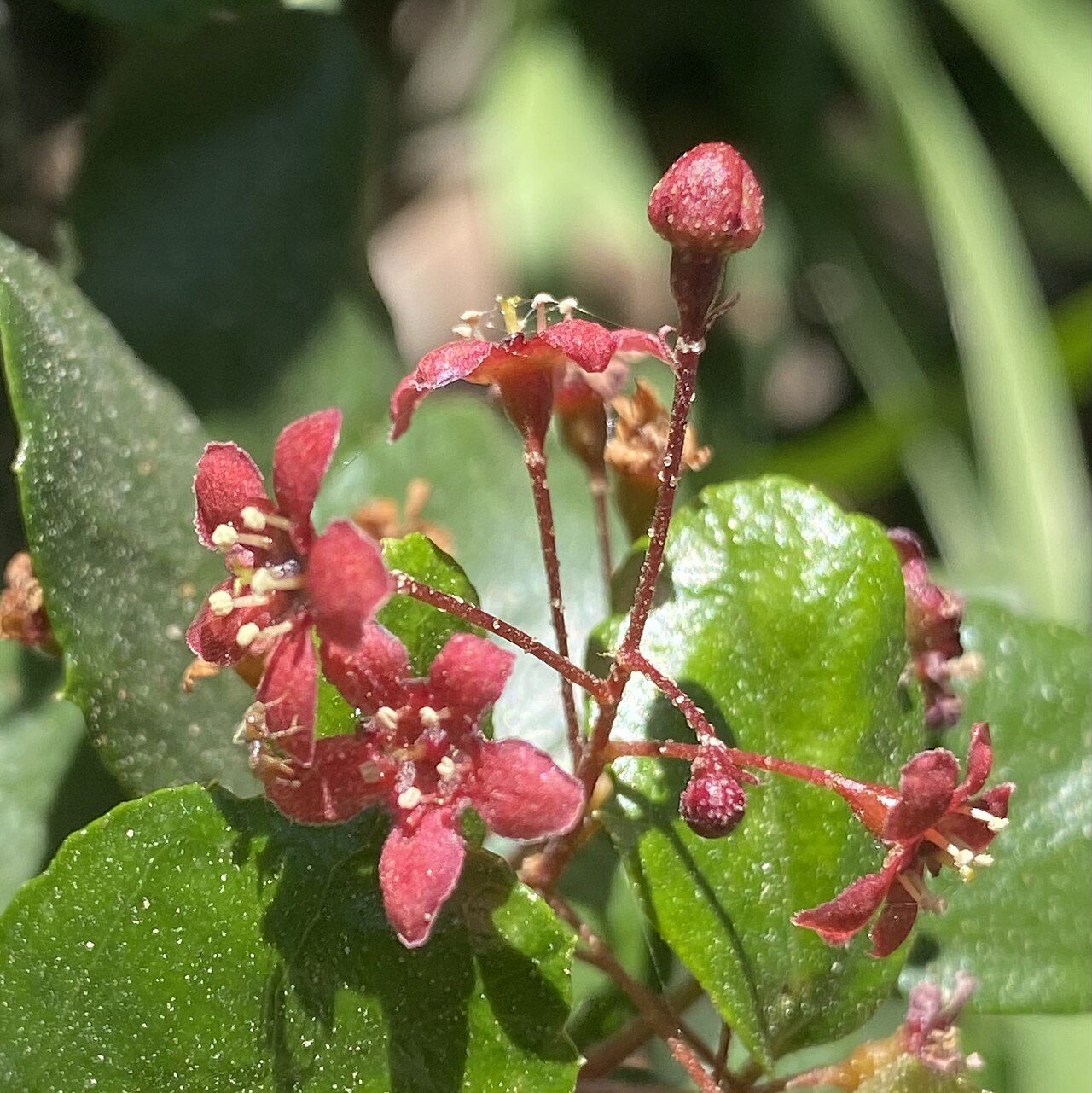
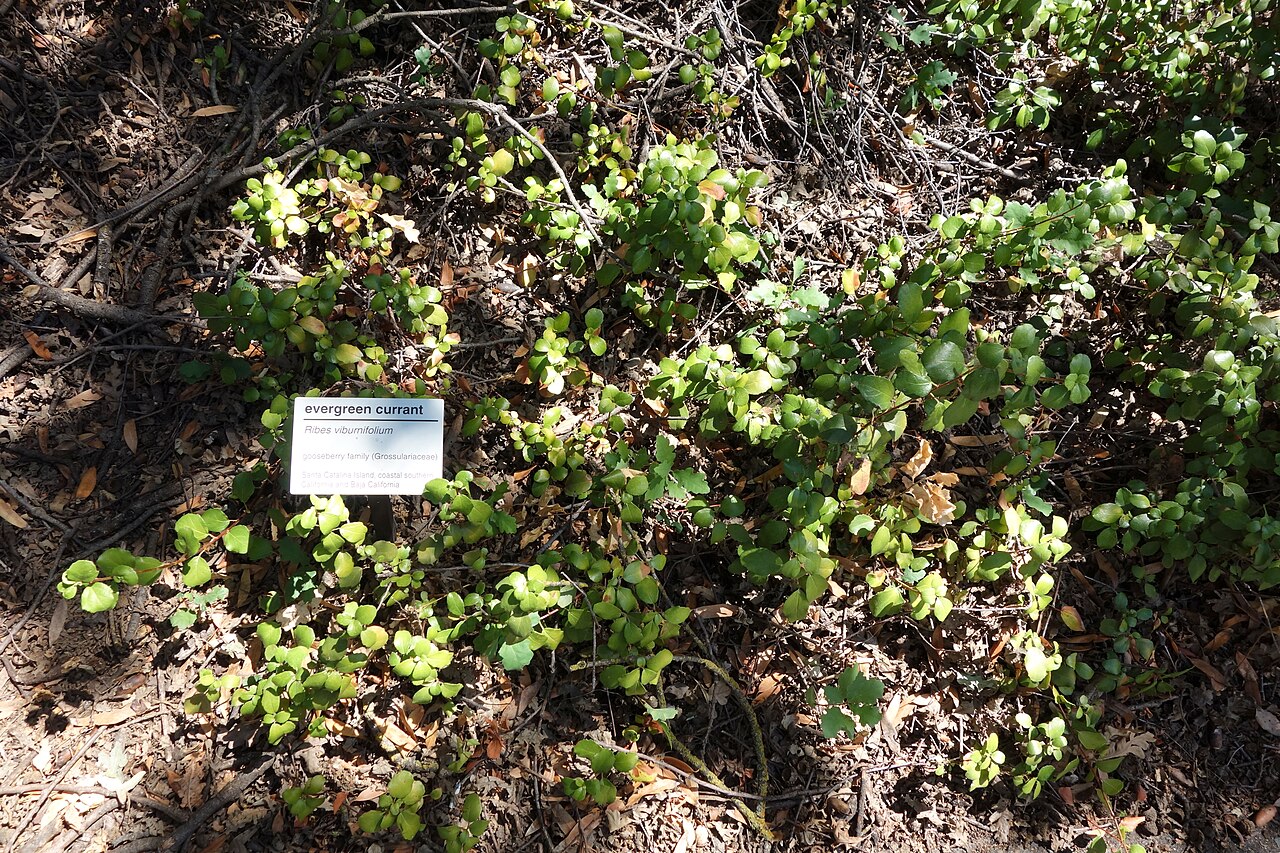
Unlike most of its currant and gooseberry relatives, which are deciduous and upright, Catalina currant is evergreen and trails along the ground on long, reddish stems, rooting as it spreads to form a dense, glossy groundcover. Its leathery leaves are coated in a sticky, aromatic resin with a distinct citrus-like scent — the source of the “perfume” in one of its common names — and in late winter and early spring it produces small clusters of deep maroon-red, star-shaped flowers that are a magnet for hummingbirds.
Because Catalina currant is rare and range-restricted in the wild, it should never be collected from natural populations; nursery-propagated plants are widely available and are the only responsible way to bring it into a garden. It has become a popular, low-maintenance groundcover for shaded, dry Southern California gardens precisely because its natural habitat — canyon understories near the coast — matches so many garden situations where little else native will thrive.
Identification
Catalina currant is a low, spreading shrub, typically growing only 1 to 3 feet tall but trailing outward 6 feet or more as its long stems extend across the ground and root where they touch soil. This growth habit, more groundcover than upright shrub, immediately sets it apart from its deciduous relatives.
Bark & Stems
Stems are without spines, slender and often reddish, trailing along the ground or draping over rocks and banks rather than growing upright. New growth is especially vivid in color before it hardens off.
Leaves
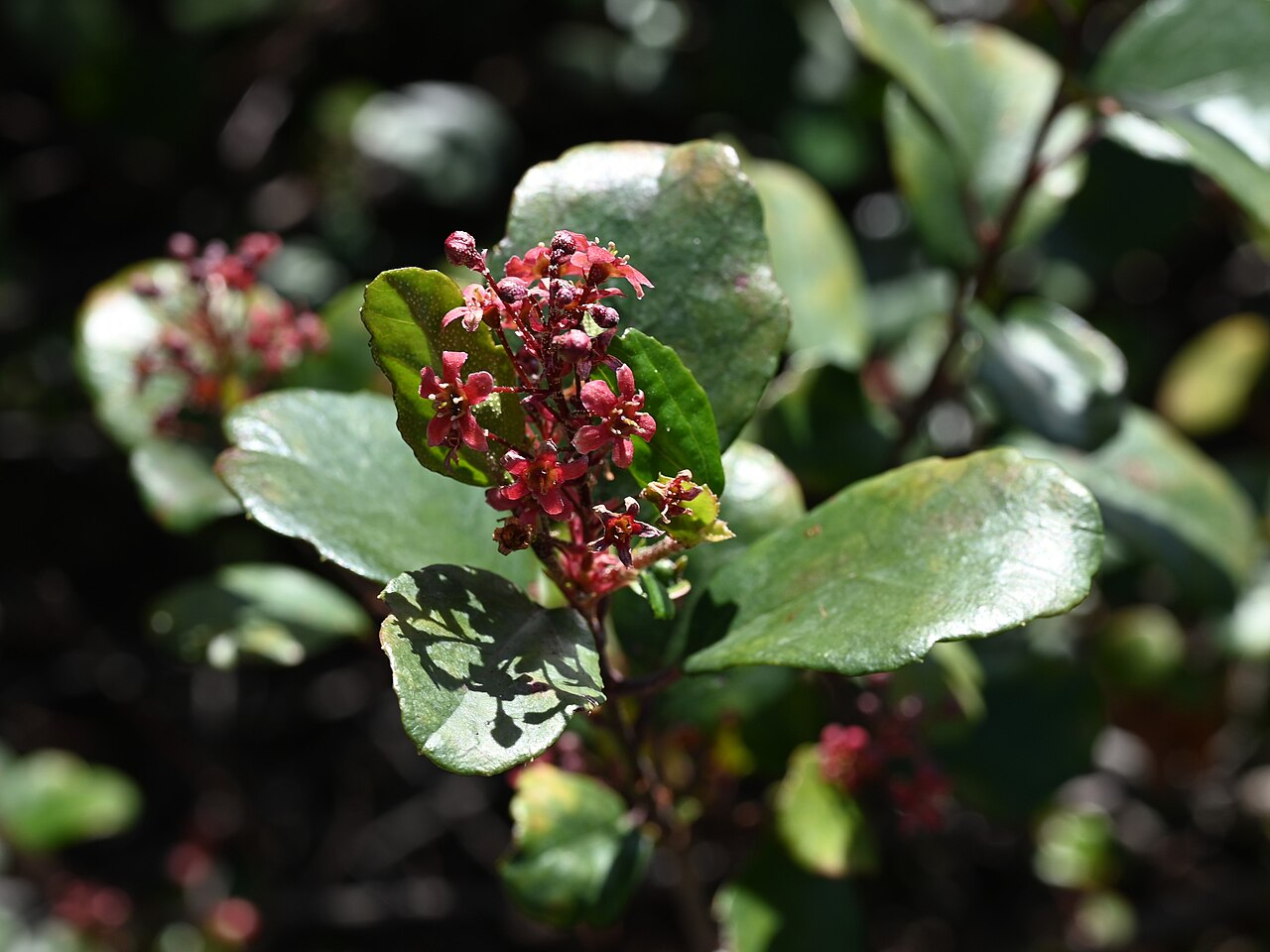
Leaves are evergreen, leathery and glossy dark green above with a paler, often yellowish-green underside. They are coated with sticky, resinous glands that release a strong, pleasant citrus-like fragrance when brushed or crushed — a distinctive feature that makes this plant easy to identify by scent alone.
Flowers & Fruit
Flowers appear in small clusters from late winter into early spring, each bloom a deep maroon-red, star-shaped flower that stands out against the dark foliage. They are a favored nectar source for hummingbirds and are also visited by insects. The fruit is a small red berry that ripens in spring and is eaten by birds; it is not grown or marketed as a food plant, and standard native-plant references describe it in terms of its ornamental and wildlife value rather than any culinary use, so it should not be considered a garden fruit crop.
Quick Facts
| Scientific Name | Ribes viburnifolium |
| Family | Grossulariaceae (Currant/Gooseberry) |
| Plant Type | Evergreen trailing shrub / groundcover |
| Mature Height | 1–3 ft |
| Mature Spread | 6–10 ft (spreads by rooting stems) |
| Growth Rate | Moderate |
| Sun Exposure | Part Shade to Shade |
| Water Needs | Low once established |
| Soil Type | Well-drained; tolerates sandy and rocky coastal-scrub soils |
| Soil pH | Adaptable; neutral typical |
| Bloom Time | January – April |
| Flower Color | Deep maroon-red |
| Fall Color | None; evergreen year-round |
| Fruit | Small red berries; grown for wildlife value, not for eating |
| Deer Resistant | Good |
| USDA Hardiness Zones | 9–11 |
Native Range
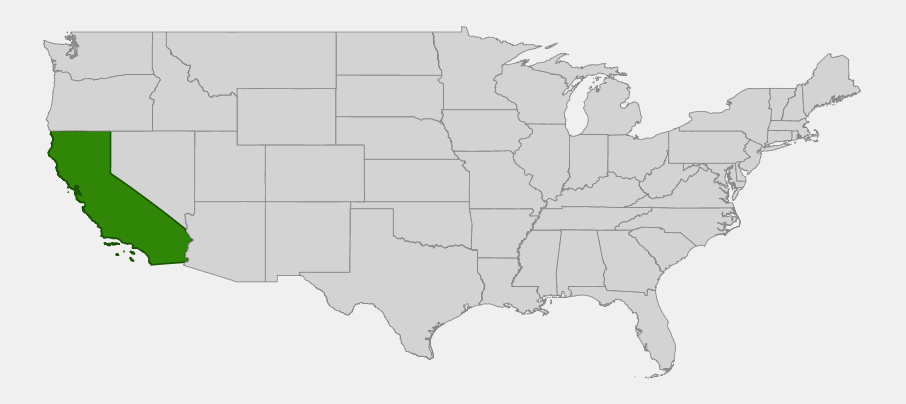
Catalina currant has an unusually restricted native range for a California plant. On the mainland, it occurs only in a narrow coastal strip of extreme southwestern San Diego County, in the Tijuana Hills near the Mexican border, continuing south along the coast of Baja California to around El Rosario. It is not native throughout California — references that show it occurring statewide are mapping the genus broadly or are simply in error; the confirmed wild range is this small mainland corner plus a handful of islands.
Those islands include Santa Catalina Island itself (source of the common name), nearby Todos Santos Islands, and Cedros Island farther south off Baja California’s Vizcaíno Peninsula, where it grows among pine groves rather than coastal scrub. A long-persisting population in San Clemente Canyon in San Diego County traces back to a historical planting rather than a naturally occurring wild stand, so it should not be read as evidence of a wider native range on the mainland.
Because of this narrow distribution, Catalina currant carries a California Rare Plant Rank of 1B.2 from the California Native Plant Society, indicating a plant rare and threatened in California and elsewhere. Gardeners should always buy nursery-propagated stock and never collect this species from the wild, whether on the mainland or the islands where it occurs.
📋 Catalina currant does not yet have a dedicated spot on one of our regional plant lists — browse our full native plant directory for more California natives.
Growing & Care Guide
Light
Catalina currant is at its best in part shade to full shade, reflecting its natural habitat in shaded coastal canyons. It can take more sun right along the immediate coast where summers stay cool and foggy, but inland gardens should give it shade, especially in the afternoon.
Soil & Water
Give it well-drained soil and expect to water regularly only through the first one to two years. Once established, it is quite drought tolerant and is a classic choice for the dry, shady spots — often under oaks or other trees — where few other evergreen groundcovers perform well without regular irrigation.
Planting Tips
Because only nursery-propagated plants should ever be used — never wild-collected material, given the species’ rarity — source plants from a reputable native plant nursery. Space plants generously, 4 to 6 feet apart, to allow for the spreading, rooting growth habit, and plant in fall to take advantage of winter rains during establishment.
Pruning & Maintenance
Little pruning is required. Occasional trimming can control spread where it threatens to climb over neighboring plants or hardscape, and old, woody growth can be thinned to encourage fresh color. It is otherwise a low-maintenance, “plant and leave alone” groundcover.
Propagation
Catalina currant roots readily from cuttings taken from semi-hardwood growth, and rooted layers can sometimes be found where trailing stems have already rooted into the soil. Always take cutting material from nursery stock or with explicit permission from a cultivated garden specimen, not from wild populations.
Landscape Uses
- Evergreen groundcover for dry shade under oaks and other trees
- Erosion control on shaded banks and slopes
- Hummingbird gardens, for its winter-into-spring nectar
- Fragrant foliage planting along paths where leaves will be brushed
Wildlife & Ecological Value
For Pollinators
The winter-into-spring flowers are visited by hummingbirds primarily, along with some insects, providing nectar at a time of year when few other plants in its range are blooming.
For Birds
Hummingbirds are drawn to the tubular-based, nectar-rich flowers, and other birds feed on the small red berries that follow in spring.
For Mammals
The dense, trailing growth habit provides ground-level cover for small animals in the canyon and scrub habitats where it naturally occurs, though it has not been documented as a major food source for mammals.
Ecosystem Role
As one of the few evergreen groundcovers native to shaded Southern California canyons, Catalina currant helps stabilize soil on slopes and canyon walls and adds structural and floral diversity to coastal sage scrub and island plant communities that are otherwise dominated by more drought-deciduous shrubs.
Cultural & Historical Uses
Unlike many California native plants, Catalina currant does not have well-documented historical uses by Indigenous peoples in the sources consulted for this page, and none are claimed here. Its main human story is a horticultural one rather than an ethnobotanical one.
The species’ discovery and naming trace to nineteenth-century botanical exploration of the Southern California islands and Baja California coast, with the type specimen linked to collections made near Ensenada in the 1880s. Its restricted range and attractive, fragrant, evergreen habit later made it appealing to native plant horticulturists working to find shade-tolerant groundcovers for California gardens — a role that uncultivated, open hillside natives rarely fill well.
Today, Catalina currant’s main significance is conservation-related: as a California Rare Plant Rank 1B.2 species with a naturally small range further limited by coastal development pressure near San Diego and on parts of the islands, every wild population matters, and gardeners are strongly encouraged to support it by planting only nursery-propagated stock rather than ever removing material from wild sites, whether on Santa Catalina Island, Cedros Island, or the mainland San Diego County population.
Frequently Asked Questions
Is Catalina currant endangered?
It carries a California Rare Plant Rank of 1B.2 (rare and threatened in California and elsewhere), reflecting its naturally small, fragmented native range. It is not federally listed as endangered, but its rarity means wild populations should never be disturbed or collected from.
Can you eat the berries?
This is not a plant grown or recommended for its fruit. Standard references describe its value in terms of wildlife and ornamental appeal, not edibility, so the berries should be left for the birds rather than treated as a garden food source.
Is Catalina currant only found on Catalina Island?
No, though the common name comes from the island. It also grows on a few other Southern California Bight islands, on Cedros Island off Baja California, and on a narrow strip of the adjacent mainland coast in extreme southwestern San Diego County and northern Baja California.
Does Catalina currant need shade?
It performs best in part to full shade, especially away from the cool, foggy immediate coastline. This shade tolerance is part of what makes it valuable — few evergreen California native groundcovers handle dry shade as well.
Is Catalina currant a blister rust risk?
All Ribes species are biologically capable of hosting white pine blister rust, but given this species’ very limited, warm coastal and island range far from the cold-climate white pine forests the disease threatens, it is not a species of practical concern for blister rust management, and current regulations focus on cultivated black currant rather than species like this one.

Looking for a nursery that carries Catalina Currant?
Browse our native plant nursery directory: California