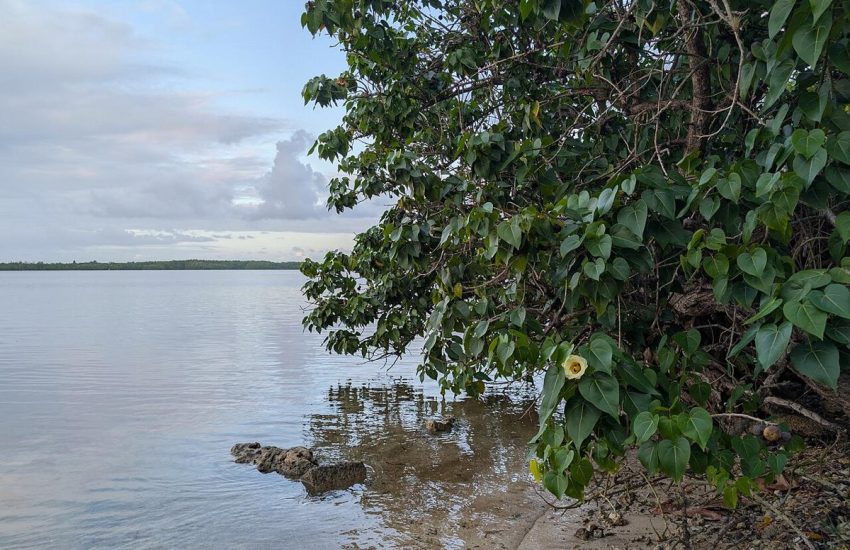
Coast Sandalwood (Santalum ellipticum)
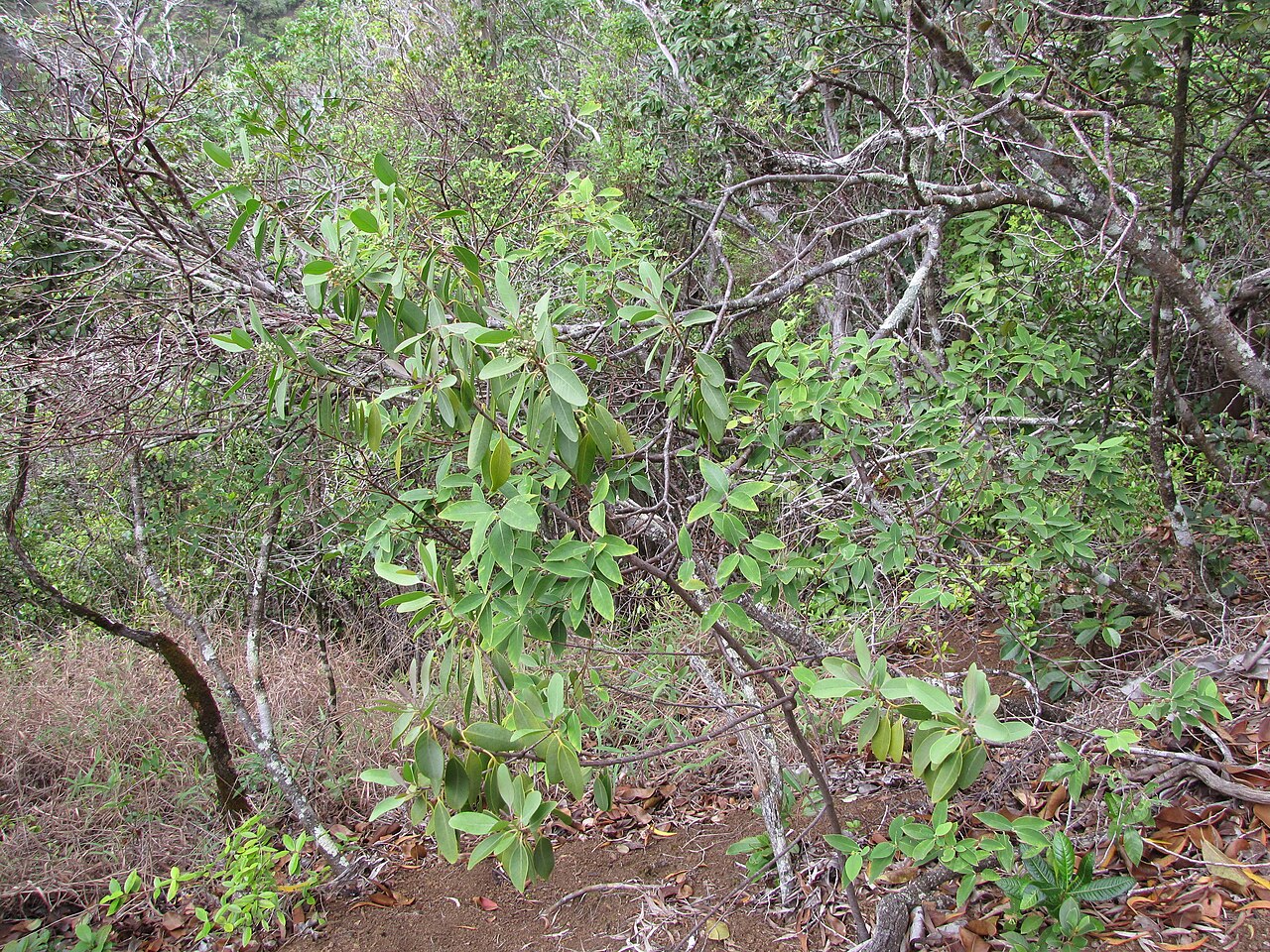
Santalum ellipticum, known in Hawaiian as ʻIliahialoʻe and in English as Coast Sandalwood, is one of several native Hawaiian sandalwoods and the species most associated with the islands’ dry, low-elevation coastal habitats. Like all sandalwoods, it is a root hemiparasite, meaning it photosynthesizes on its own but also taps into the roots of neighboring plants for water and minerals — a quiet partnership that shapes how this species must be planted and grown.
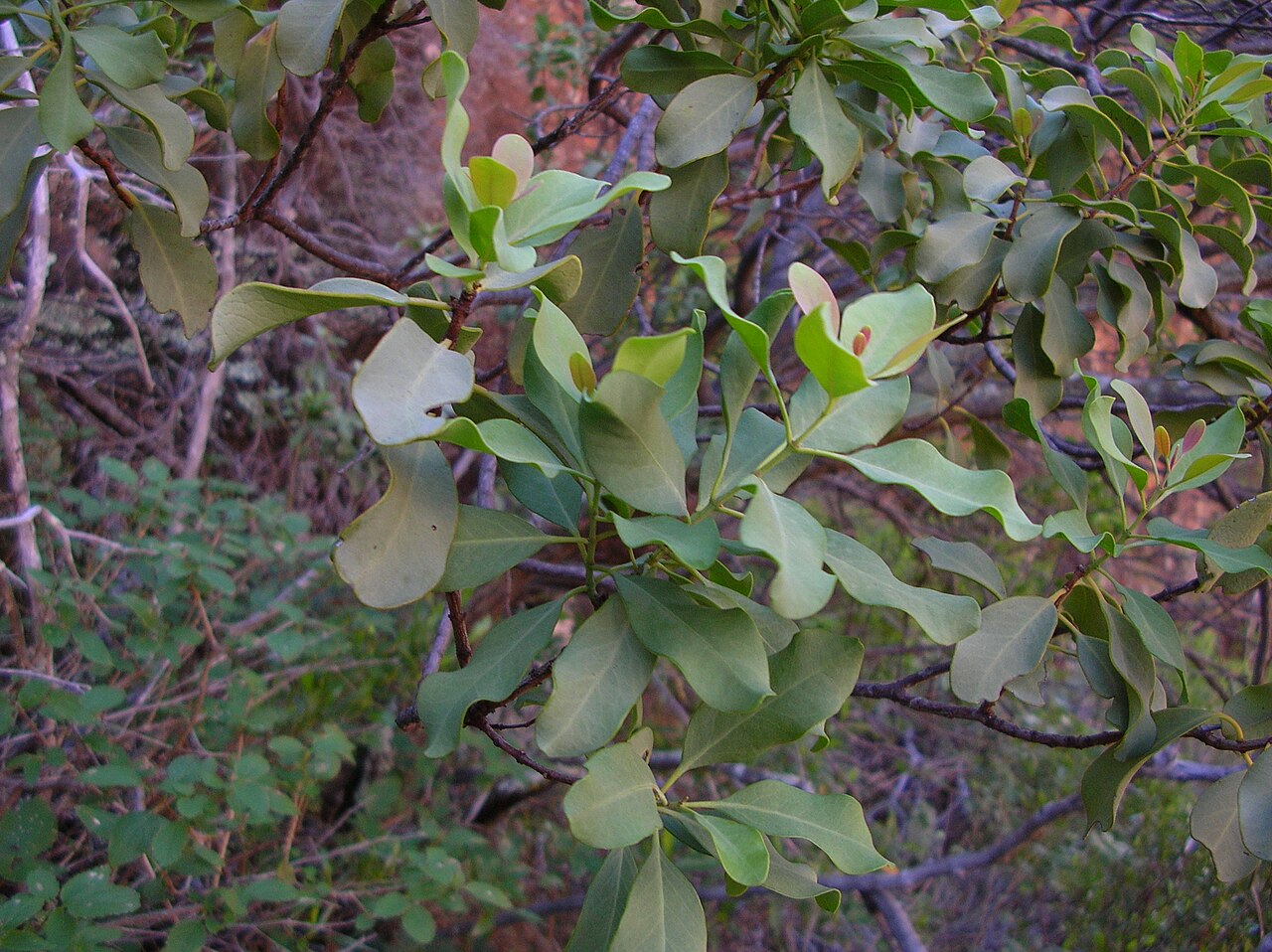
Coast sandalwood ranges from low, sprawling, almost prostrate shrubs near the shoreline to taller upright shrubs or small trees further inland, with pale blue-green, leathery leaves that stand out against the grayer and greener tones of its typical dryland companions. Its fragrant wood carries the same cultural weight as Hawaii’s other native sandalwoods, tied to a 19th-century trade that devastated wild sandalwood populations across the islands.
Today, coast sandalwood remains present on all the main Hawaiian Islands except Kahoʻolawe, where it was extirpated and is now the subject of active reintroduction efforts. It is an excellent choice for coastal and dryland native Hawaiian gardens, but like other sandalwoods it needs a compatible host plant nearby to thrive, which gardeners should plan for before planting.
Identification
Coast sandalwood’s form varies with its growing site. Near the immediate coastline it often grows as a low, spreading, sometimes nearly prostrate shrub only a few feet tall; moving inland and upslope, plants become taller, upright shrubs or small trees, occasionally reaching around 15 feet, though 4 to 8 feet is more typical.
Bark & Stems
Stems are slender and woody, branching frequently to produce a dense, rounded shrub form. Older stems develop grayish, somewhat rough bark, while young growth is smoother and often tinged with red or green.
Leaves
The leaves are elliptical (hence the species name ellipticum), leathery, and a distinctive pale blue-green to gray-green, hairless, and arranged oppositely along the stems. This pale coloring is one of the easiest field marks separating coast sandalwood from the greener-leaved sandalwood species found at higher elevations.
Flowers & Fruit
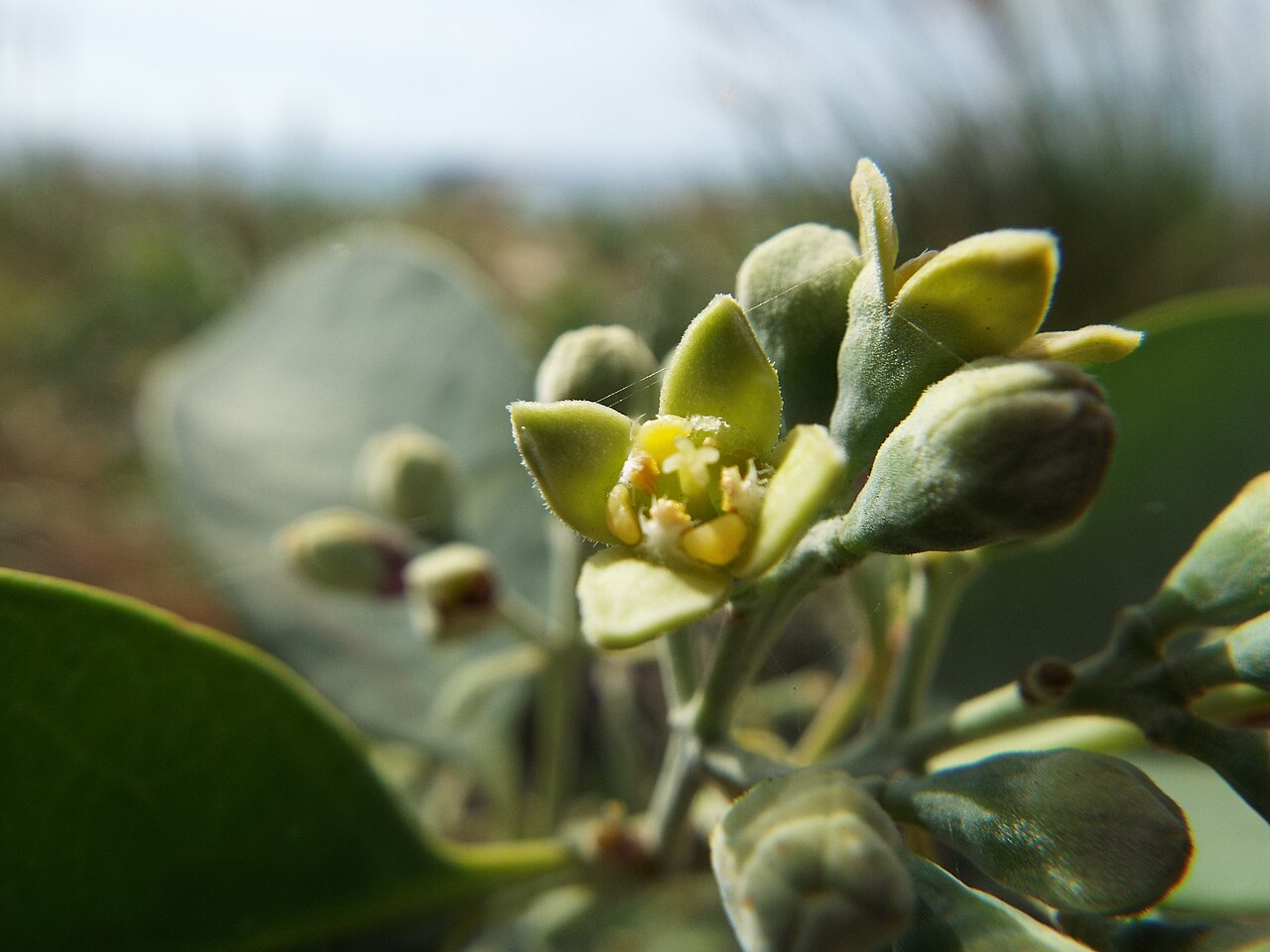
Small, four-petaled flowers open greenish-yellow, sometimes with hints of salmon or orange, and cluster at the branch tips, with a light fragrance. Flowering in wild populations tends to be sporadic through the year but becomes more continuous in cultivated plants. Pollinated flowers develop into round, fleshy fruits (drupes) that ripen from green to dark purple to nearly black, each containing a single hard seed.
Quick Facts
| Scientific Name | Santalum ellipticum |
| Family | Santalaceae (Sandalwood) |
| Plant Type | Evergreen shrub to small tree; root hemiparasite |
| Mature Height | 2–8 ft typical (prostrate near shore to ~15 ft inland) |
| Mature Spread | Often wider than tall; dense, rounded shrub |
| Growth Rate | Slow to moderate |
| Sun Exposure | Full Sun |
| Water Needs | Low; drought tolerant once established |
| Soil Type | Sandy, coralline, lava rock, or clay; well-drained |
| Soil pH | Tolerant of a range; neutral to alkaline coastal soils common |
| Bloom Time | Sporadic year-round in the wild; more continuous in cultivation |
| Flower Color | Greenish-yellow, sometimes salmon-tinged |
| Fall Color | None (evergreen) |
| Fruit | Round drupes ripening green to dark purple-black |
| Deer Resistant | Not applicable (no deer in native Hawaiian range) |
| USDA Hardiness Zones | 10–11 |
Native Range
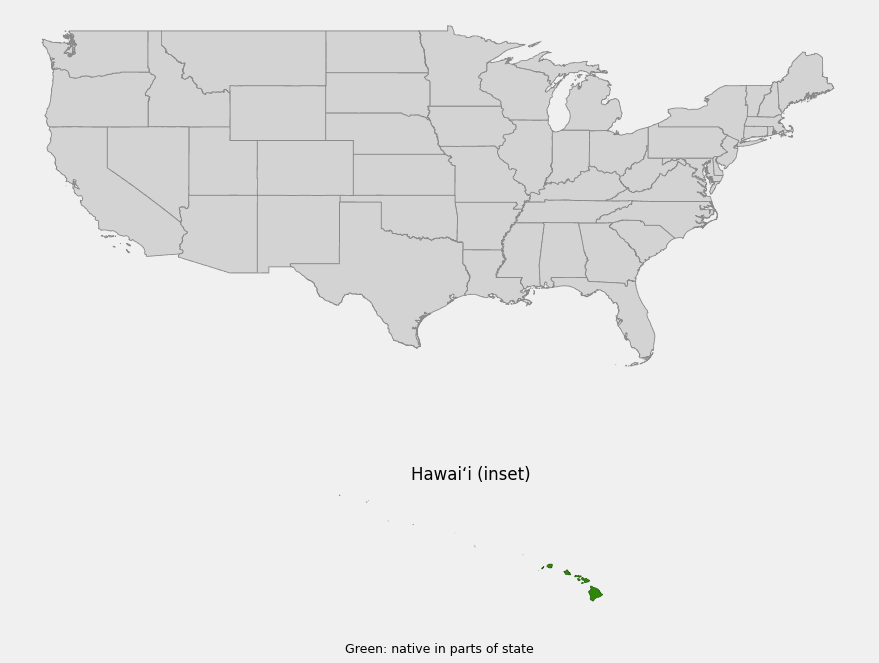
Coast sandalwood is endemic to the Hawaiian Islands, found historically on all the main islands. Today it persists on most of them, though it is now rare on Kauaʻi, and it was extirpated on Kahoʻolawe before reintroduction plantings began there as part of that island’s long-running ecological restoration. It also formerly occurred on Laysan in the Northwestern Hawaiian Islands, where recovery efforts are likewise underway.
As its common name suggests, it is primarily a lowland species, most common in dry coastal habitats — rocky shorelines, lava flats, and dry shrublands — from near sea level up to around 1,800 feet, occasionally higher. It grows on a wide range of substrates for a Hawaiian native, from loose coral sand to raw ʻaʻā lava to clay-based soils, tolerating the salt spray, wind, and drought typical of leeward coastal Hawaii.
Like Hawaii’s other native sandalwoods, coast sandalwood populations were sharply reduced by the sandalwood trade of the early 1800s, when traders harvested the fragrant heartwood for export to China, and further pressure has come from habitat conversion and competition from introduced plants. It remains uncommon in many areas where it once grew, making garden and restoration plantings genuinely valuable for the species’ future.
📋 Regional plant lists featuring Coast Sandalwood: Hawaii
Growing & Care Guide
Coast sandalwood is a rewarding dryland native for Hawaiian gardens, but its hemiparasitic nature means success depends on more than just sun, soil, and water — it needs a living host plant nearby to tap into.
Light
Give it full sun for all or most of the day. In the wild it grows in open, exposed coastal and dryland sites, and it performs best, and flowers most reliably, with strong direct light.
Soil & Water
Coast sandalwood tolerates a wide range of soils, from sandy and coralline to lava rock and clay, as long as drainage is reasonable. It is notably drought tolerant and heat tolerant once established; water roughly monthly during extended dry periods, but avoid routine heavy watering, which can stress or rot an established plant adapted to lean, dry conditions.
Planting Tips
Because coast sandalwood is a hemiparasite, plant it within about 3 feet of a compatible host — recommended hosts include ʻilima (Sida fallax), pōhinahina (Vitex rotundifolia), ʻākulikuli (Sesuvium portulacastrum), and various native legumes. The host does not need to be harmed by the relationship when properly established; sandalwoods draw water and minerals through root connections without typically killing a well-matched host. Plant both host and sandalwood together, or establish the host first, then add the sandalwood nearby once the host has rooted in.
Pruning & Maintenance
Minimal pruning is needed; shape lightly if a more compact form is desired, and remove dead wood as it appears. Established plants need little fertilizer and are generally low-maintenance once their host relationship is functioning well.
For a broader sense of how coast sandalwood fits among the islands’ native woody plants, see our guides to canopy trees in Hawaii and flowering trees of Hawaii, which cover many of the species that can serve as companions in a native Hawaiian planting.
Landscape Uses
- Coastal and dryland native gardens, paired with a suitable host shrub
- Xeriscaping in hot, dry, low-elevation Hawaiian landscapes
- Cultural and lei gardens, given its significance in Hawaiian tradition
- Restoration plantings on islands and sites where the species has declined, including ongoing reintroduction work on Kahoʻolawe
- Erosion control on dry, rocky coastal slopes once established
Wildlife & Ecological Value
Coast sandalwood is a component of Hawaii’s increasingly rare native lowland dry forest and shrubland, an ecosystem type that has lost much of its original extent to development and invasive species.
For Pollinators
The small, fragrant flowers attract native Hawaiian insects, including native bees, which visit for nectar and pollen, contributing to pollination in dryland plant communities where native pollinator resources can be limited.
For Birds
The ripe purple-black fruits are eaten by native and introduced birds, which help disperse the seeds to new sites, an important function in a landscape where many native dryland plants have become fragmented and isolated.
Ecosystem Role
As a root hemiparasite, coast sandalwood interacts directly with the root systems of neighboring native shrubs, forming below-ground connections that are part of its ecological niche in dry coastal communities. Its presence alongside hosts such as ʻilima and pōhinahina reflects a web of native plant relationships increasingly threatened by habitat loss, making every wild and cultivated stand ecologically significant.
Cultural & Historical Uses
ʻIliahialoʻe holds deep significance in Hawaiian culture. Its fragrant heartwood, like that of Hawaii’s other native sandalwoods, was used historically for carving, for lei-making, and was pounded into powder to scent kapa (bark cloth) during its manufacture, masking the odor of the beating and fermentation process. The wood was also used in constructing certain musical instruments, including the ʻūkēkē musical bow.
The early 1800s brought a devastating commercial sandalwood trade to Hawaii, as Hawaiian aliʻi exploited the islands’ sandalwood forests to trade with Chinese merchants eager for the fragrant wood, used there for incense, furniture, and medicine. This intensive harvesting, which did not distinguish carefully between Hawaii’s several native sandalwood species, severely depleted wild populations across the islands within a few decades, a history that still shapes conservation priorities for coast sandalwood and its relatives today.
In lāʻau lapaʻau, traditional Hawaiian medicine, ʻiliahialoʻe leaves were used historically in preparations such as a shampoo for the scalp. This page notes that use as a historical practice, not a current health recommendation.
Frequently Asked Questions
Does coast sandalwood need a host plant to survive?
Yes. As a root hemiparasite, it draws some water and minerals from the root systems of neighboring plants. Plant it within a few feet of a compatible host such as ʻilima, pōhinahina, or a native legume for best results; without one, it is likely to struggle.
Is coast sandalwood the same as the sandalwood used for incense and oil?
It is in the same genus, Santalum, as commercially important sandalwoods, and its wood is aromatic, but coast sandalwood itself is not the primary commercial source today. Harvesting wild coast sandalwood is discouraged given its reduced populations; commercial sandalwood oil mostly comes from cultivated Indian sandalwood (Santalum album) and Australian species.
How does coast sandalwood differ from Hawaii’s other native sandalwoods?
It is primarily a low-elevation, dry coastal species with distinctive pale blue-green leaves, while relatives such as ʻIliahi (Santalum freycinetianum) and Mountain Sandalwood (Santalum paniculatum) generally occupy higher, wetter forest habitats.
Is coast sandalwood endangered?
It is not federally listed, but it has been extirpated from Kahoʻolawe and Laysan, with reintroduction efforts underway on both islands, and it is considered rare on Kauaʻi. It also faces ongoing threats from genetic introgression where introduced Indian sandalwood grows nearby.
Can coast sandalwood grow outside Hawaii?
It is adapted to Hawaii’s frost-free, warm climate and is best suited to USDA zones 10 to 11. It is not a realistic choice for gardens with winter frost or freezing temperatures.

Looking for a nursery that carries Coast Sandalwood?
Browse our native plant nursery directory: Hawaii