Crucifixion Thorn (Canotia holacantha)
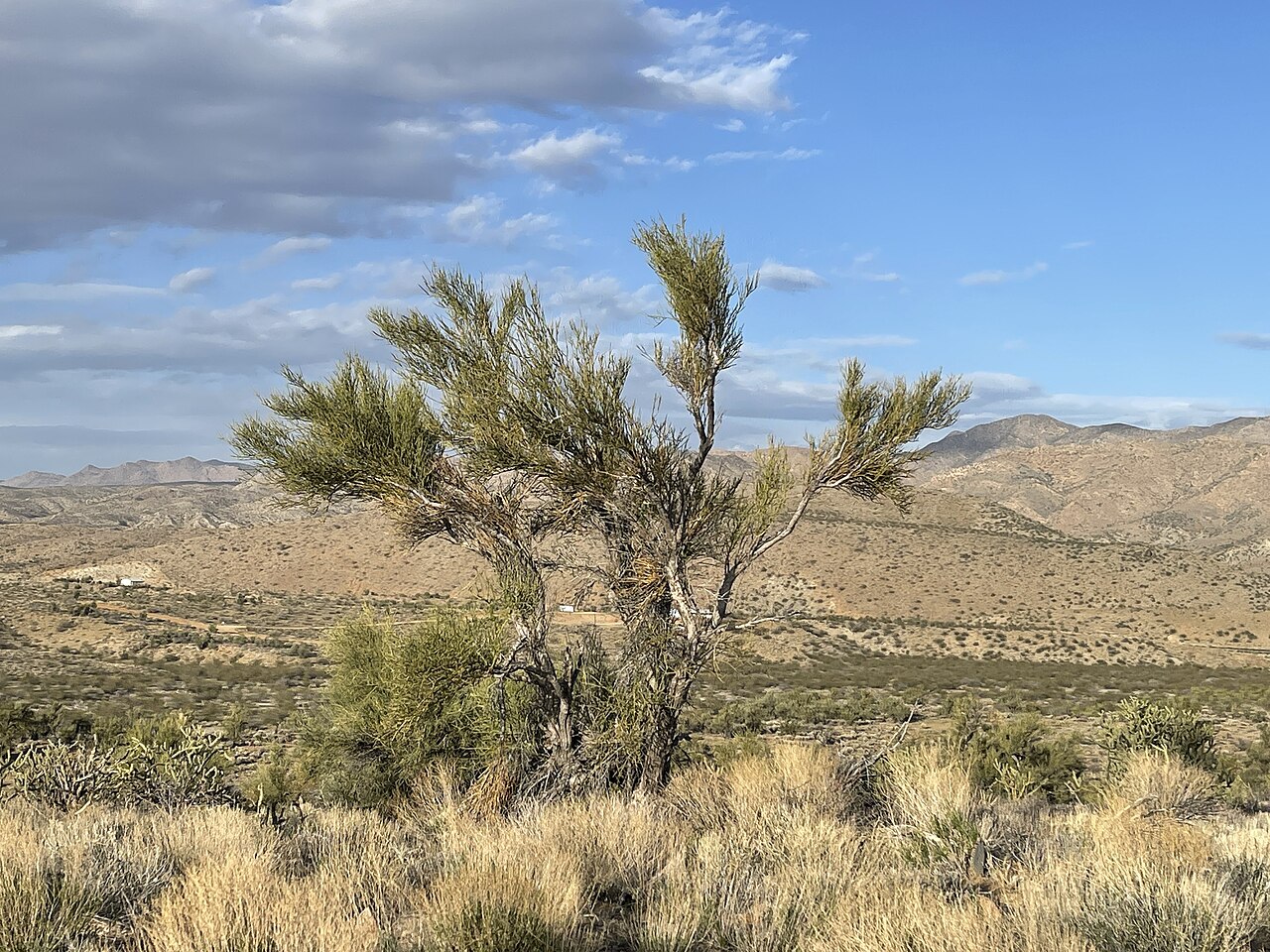
Canotia holacantha, commonly called Crucifixion Thorn, is one of the Southwest’s strangest and most distinctive native trees — a leafless, broom-like small tree made up almost entirely of rigid, upright, blue-green stems that end in sharp spine tips. It is the sole species in its genus, placed in the bittersweet family (Celastraceae), and it is immediately recognizable even from a distance by its stark, nearly photosynthetic-stem architecture, which lets it conserve water in the hot, rocky uplands it calls home. The common name refers to the crossed, thorn-tipped branchlets, which early settlers thought resembled the instrument of crucifixion.
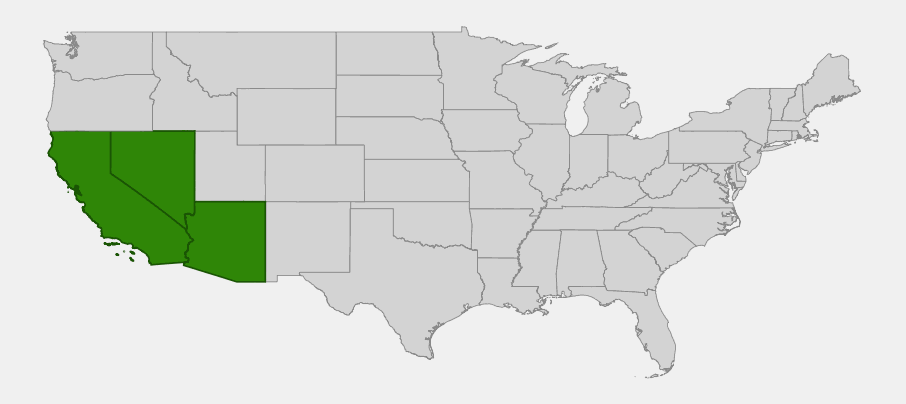
Crucifixion thorn occupies a narrow band of habitat across the transition zone between Arizona’s Sonoran desert lowlands and its higher forested mountains — the rocky mesas, bajadas, and canyon slopes of the upper desert and desert grassland belt. It is also found in a few scattered locations in southeastern California and southern Nevada, always on well-drained, often rocky or caliche-crusted soils. The species is rarely planted ornamentally, but where it grows wild it forms an unmistakable, almost sculptural presence in the landscape, especially striking against red rock country around Sedona or the open grasslands near Kingman.
For desert gardeners and native plant enthusiasts in its natural range, crucifixion thorn offers an extreme, architectural alternative to typical desert trees — one that needs essentially no irrigation once established and provides a dense, thorny thicket that is valuable for wildlife cover even though the plant itself produces little traditional “shade.”
Identification
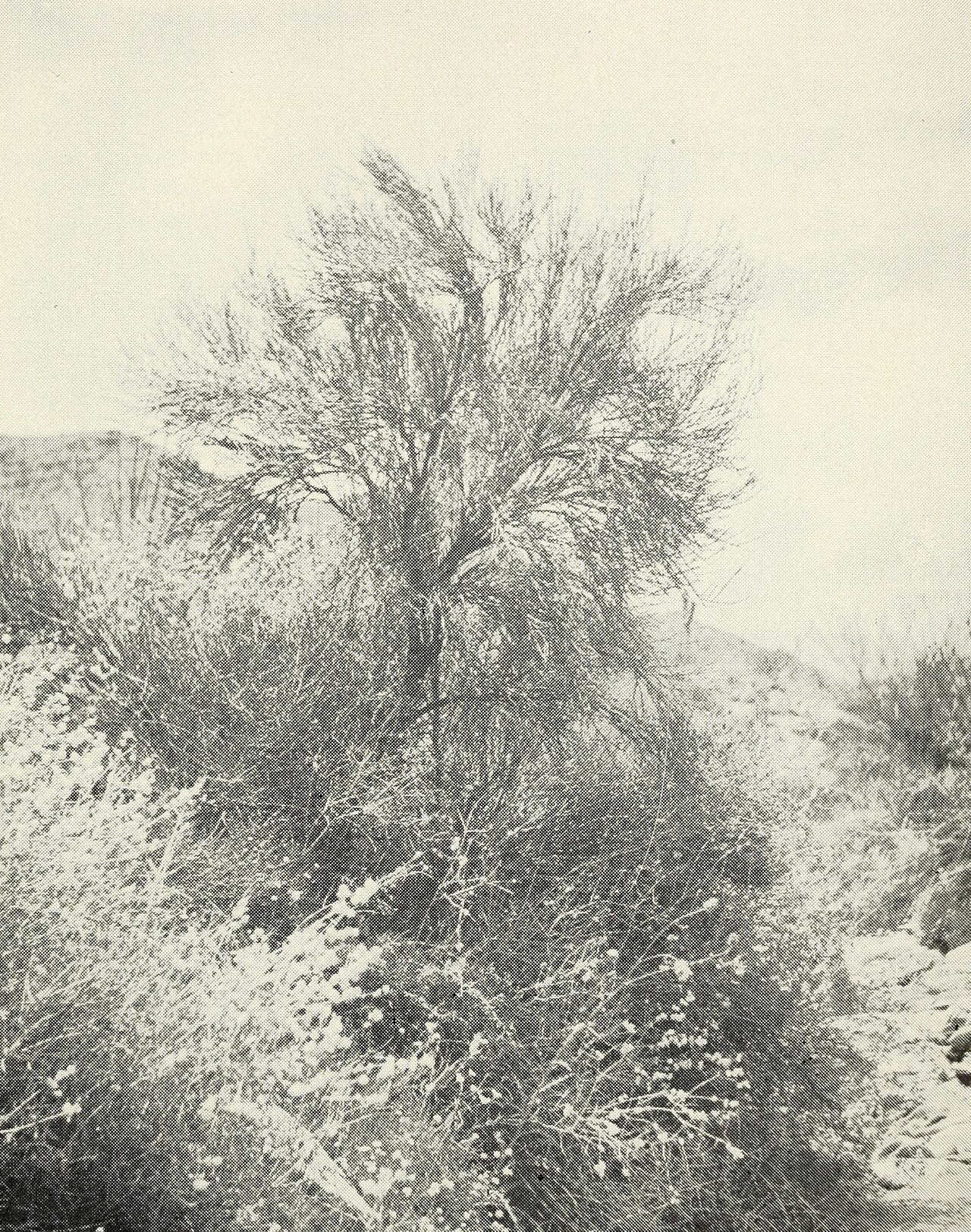
Crucifixion thorn grows as a many-branched shrub or small tree, typically 10 to 20 feet tall, with an upright, broom-like or vase-shaped silhouette. The plant is leafless for virtually all of the year — functional leaves are tiny, scale-like, and quickly shed — so the green, rigid stems themselves carry out photosynthesis, an adaptation shared with only a handful of other desert plants.
Stems
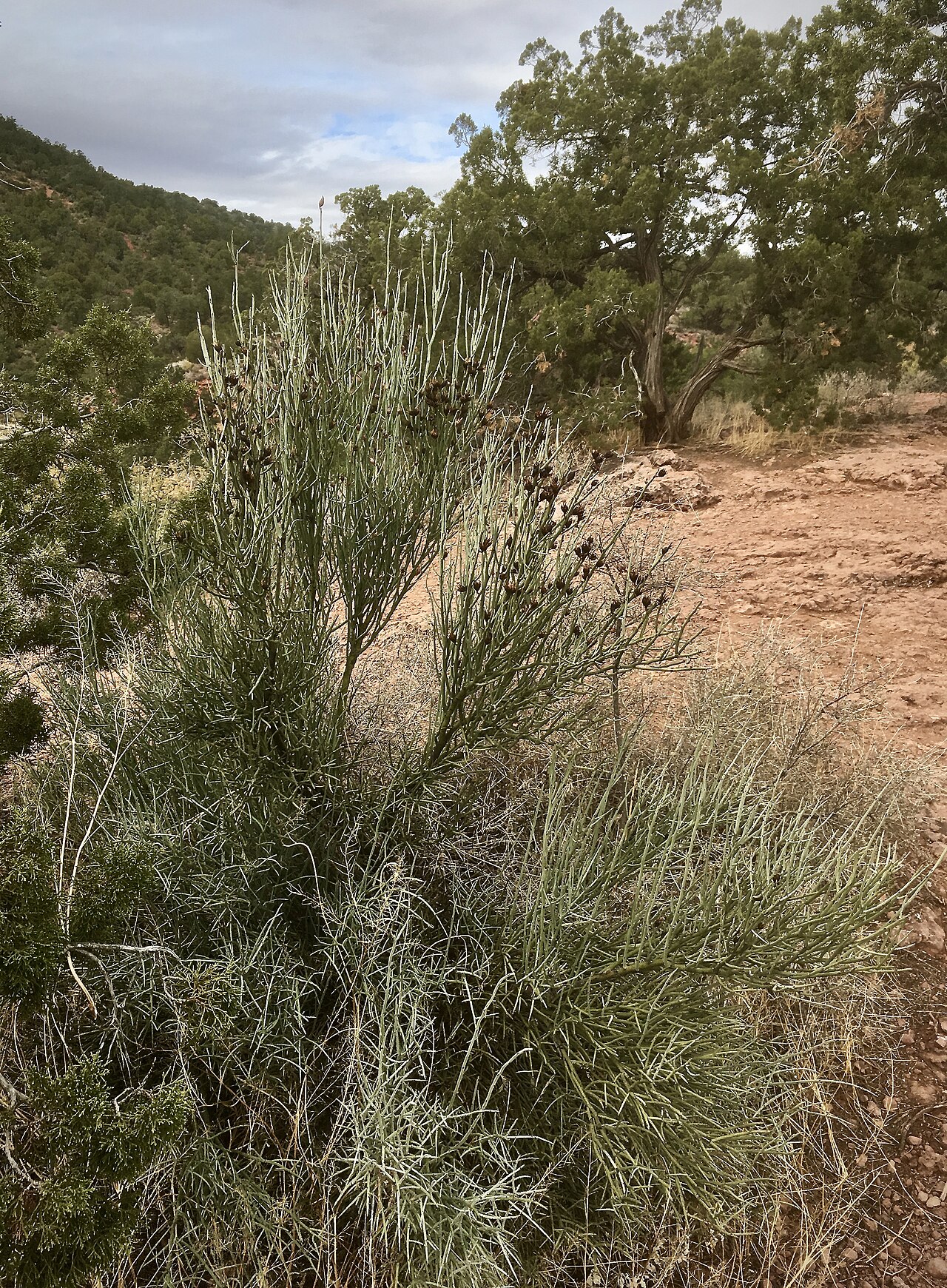
The stems are smooth, yellow-green to gray-green, stiffly upright, and divide repeatedly into narrower branchlets that terminate in sharp, rigid spine tips. Clusters of these crossing, spine-tipped twigs give the crown its characteristic tangled, impenetrable look, which is the source of both the common name and much of its value as protective wildlife cover.
Flowers & Fruit
Small, inconspicuous greenish-white to yellowish flowers appear in loose clusters near the branch tips in late spring to early summer. They are easy to overlook against the green stems and have a mild, not unpleasant scent that attracts bees and other insects. Flowers give way to small, woody, five-parted seed capsules that persist on the plant well after ripening, splitting open to release winged seeds that are carried short distances by wind.
Bark & Form
Older trunks and lower stems develop smooth, pale gray bark, in contrast to the younger green photosynthetic stems above. With age, plants can develop a short, stout trunk a few inches in diameter, though many wild individuals remain multi-stemmed from near ground level throughout their lives.
Quick Facts
| Scientific Name | Canotia holacantha |
| Family | Celastraceae (Bittersweet) |
| Plant Type | Leafless, spine-tipped desert shrub/small tree |
| Mature Height | 10–20 ft |
| Mature Spread | 8–15 ft |
| Growth Rate | Slow |
| Sun Exposure | Full Sun |
| Water Needs | Very low; highly drought tolerant once established |
| Soil Type | Rocky, well-drained; tolerates caliche and poor soils |
| Soil pH | Neutral to alkaline |
| Bloom Time | May – June |
| Flower Color | Greenish-white to pale yellow |
| Fall Color | None (leafless, green-stemmed year-round) |
| Fruit | Small woody five-parted capsule with winged seeds |
| Deer Resistant | Yes (rigid spine-tipped stems deter browsing) |
| USDA Hardiness Zones | 8–10 |
Native Range
Crucifixion thorn is native primarily to Arizona, where it occurs widely across the central and northwestern parts of the state in the transition zone between the Sonoran Desert and the higher Mogollon Rim country, including areas around Kingman, the Harcuvar and Harquahala Mountains, and the Sedona-Verde Valley region. Its range extends west into a scattering of locations in southeastern California’s desert mountains and south into southern Nevada, with populations continuing into adjacent northwestern Mexico.
Typical habitat is dry, rocky slopes, mesas, and bajadas in desert grassland and desert scrub communities, generally between about 2,000 and 5,000 feet elevation — higher and often cooler than the true low desert, but drier and more exposed than the pinyon-juniper woodland above it. The species tolerates poor, caliche-crusted, or shallow rocky soils that few other woody plants can use, which helps explain its patchy, locally common but regionally scattered distribution.
Crucifixion thorn is uncommon enough across much of its range that botanists and desert naturalists consider a sighting notable, though it can be locally abundant where conditions suit it, forming small stands or scattered individuals among palo verde, juniper, and other high-desert shrubs. It is not listed as rare or protected, but its narrow habitat preferences make wild stands worth leaving undisturbed.
📋 Regional plant lists featuring Crucifixion Thorn: Arizona & New Mexico
Growing & Care Guide
Crucifixion thorn is rarely offered in the nursery trade, but where it can be found it makes an unusual, extremely low-maintenance specimen for xeriscape and native plant gardens within its climate range. It is not a plant for small, heavily trafficked yards given its stiff spine-tipped stems, but it rewards patience with a striking, sculptural form.
Light
Full sun is essential. This species evolved in some of the most exposed, intensely lit upland desert sites in the Southwest, and it will not thrive in shade or even significant part-shade conditions.
Soil & Water
Rocky, well-drained soil is a must; the species is naturally adapted to poor, caliche-crusted, or shallow soils and will struggle or rot in heavy, poorly drained clay. Once established, it needs essentially no supplemental irrigation in its native range, surviving on natural rainfall alone. Young plants benefit from occasional deep watering during their first one to two summers to encourage deep root development, tapering off sharply afterward.
Planting Tips
Plant from containers in fall or early spring to allow roots to establish before summer heat. Because the stems are rigid and sharply spine-tipped, site this species well away from walkways, patios, and areas where people or pets pass closely. Allow plenty of room for its eventual spread, since it resents crowding and transplanting once established.
Pruning & Maintenance
Little pruning is needed or even advisable; the plant’s natural upright, broom-like form is its main ornamental appeal. Remove only dead or damaged stems, and use heavy gloves given the sharp spine tips throughout the canopy. The species is naturally pest- and disease-resistant and essentially maintenance-free once established.
Landscape Uses
Crucifixion thorn suits a narrow but distinctive range of desert landscape roles:
- Xeriscape focal point for its unusual, sculptural leafless form
- Wildlife barrier or security planting, thanks to its dense, spine-tipped stems
- High desert native plant collections and botanical demonstration gardens
- Erosion control on rocky slopes within its native elevation range
- Wildlife cover plantings away from high-traffic areas
Wildlife & Ecological Value
Despite its sparse, leafless appearance, crucifixion thorn provides real ecological value in the open, often shrub-poor habitats where it grows.
For Pollinators
The small greenish-white flowers, though easy to overlook, attract native bees and other insects during the late spring bloom period, offering a nectar source in habitat that can be relatively sparse in flowering plants at that time of year.
For Birds
The dense, thorny tangle of stems provides secure nesting and roosting cover for small desert birds, protecting them from predators that cannot easily penetrate the spine-tipped branches — a role similar to that played by other thorny desert shrubs like catclaw acacia.
For Mammals
Small mammals and other wildlife use the protected interior of mature plants as shelter from both weather and predators. The plant’s inaccessibility to browsing animals, thanks to its rigid spines, also makes it one of the few woody plants in its habitat that reliably escapes heavy grazing pressure.
Ecosystem Role
As a long-lived, slow-growing woody plant in open desert grassland and scrub, crucifixion thorn adds structural diversity to otherwise low, often grazed landscapes, and its presence can indicate relatively undisturbed rocky upland habitat.
Cultural & Historical Uses
Crucifixion thorn has a limited but interesting place in the history of Southwestern botany and ethnobotany. The genus Canotia was first described in the 1870s during the Wheeler Survey expeditions that mapped much of the Southwestern United States, and the species has since remained botanically notable as the sole member of its genus, with no close relatives anywhere else.
Historical accounts note that the small, sweetish berries or capsule contents were occasionally eaten by desert travelers and Indigenous peoples when encountered, though the plant was never an important food source compared to more productive desert species like mesquite or saguaro. Its primary traditional significance was likely practical: a glance at a stand of crucifixion thorn was, and remains, a quick way to recognize certain kinds of rocky, high-desert terrain.
The common name itself reflects a long tradition among English-speaking settlers of applying “crucifixion thorn” to several unrelated, fiercely spiny desert plants across the Southwest — including species in entirely different families such as Castela emoryi — a naming pattern that can cause confusion and is worth keeping in mind when researching the plant further.
Frequently Asked Questions
Is crucifixion thorn the same plant as other “crucifixion thorn” species?
No. Several unrelated, spiny Southwestern desert plants share the common name “crucifixion thorn,” including Castela emoryi in a completely different plant family. Canotia holacantha is the only species in its own genus and is best identified by its smooth green, rush-like, photosynthetic stems rather than true leaves.
Does crucifixion thorn ever have leaves?
Only briefly and inconspicuously. It produces tiny, scale-like leaves that are quickly shed, so for nearly all of the year the green stems themselves handle photosynthesis — an adaptation that helps the plant conserve water in its hot, dry habitat.
Are the spines dangerous?
The rigid, sharp stem tips can cause painful scratches and punctures, so the plant should be sited away from paths and play areas, and handled with heavy gloves during any maintenance. The spines are not known to be toxic, but any puncture wound should be cleaned properly.
Can crucifixion thorn be grown outside Arizona, California, and Nevada?
It can potentially be grown in other low-desert climates with similarly mild winters, intense sun, and excellent drainage, but it is rarely available commercially and performs best within or close to its native elevation and climate range.
How fast does crucifixion thorn grow?
Very slowly. In its harsh native habitat, plants may take many years to reach their mature 10 to 20 foot height, and even with occasional supplemental water in cultivation, growth remains gradual compared to most garden trees.

Looking for a nursery that carries Crucifixion Thorn?
Browse our native plant nursery directory: Arizona · California · Nevada