Stebbins’ Morning-glory (Calystegia stebbinsii)
Calystegia stebbinsii, known as Stebbins’ Morning-glory or Stebbins’ false bindweed, is one of the rarest plants in California — a low, trailing perennial vine found nowhere on Earth except a handful of sites in the Sierra Nevada foothills of El Dorado and Nevada counties. It is federally listed as Endangered under the U.S. Endangered Species Act and listed as Endangered by the State of California, and it appears on the California Native Plant Society’s Inventory of Rare and Endangered Plants at the highest rarity rank, List 1B.1. This page exists to help identify the species and explain its conservation needs — it is not available in the nursery trade, and it should never be collected, transplanted, or propagated from wild populations.
The species was discovered on and named for the distinctive reddish-brown gabbro-derived soils of the Pine Hill area near Shingle Springs and El Dorado Hills, and for a second, disjunct set of occurrences near Grass Valley in Nevada County. It honors G. Ledyard Stebbins, the UC Davis evolutionary biologist and a founding member of the California Native Plant Society. Like several other rare plants restricted to this unusual soil type, Stebbins’ morning-glory is a gabbro soil endemic, meaning it survives only on a geologically unusual, mineral-rich, poorly developed soil that most other plants cannot tolerate — and that happens to sit squarely in the path of Sacramento-area suburban growth.
For gardeners and land managers in the Sierra foothills, the value of this page is awareness, not acquisition: knowing how to recognize Stebbins’ morning-glory helps protect remaining populations from accidental disturbance, supports habitat conservation efforts at places like the Bureau of Land Management’s Pine Hill Preserve, and underscores why protecting intact gabbro soil chaparral matters for this and the several other rare plants that share its narrow range.
Identification
Stebbins’ morning-glory is a low, spreading to weakly climbing herbaceous perennial that dies back to a deep, woody rootstock each year. Unlike the more vigorous, climbing morning glories common elsewhere in California, this species typically stays close to the ground, with stems trailing along bare, rocky soil rather than twining high through shrubs.
Stems & Leaves
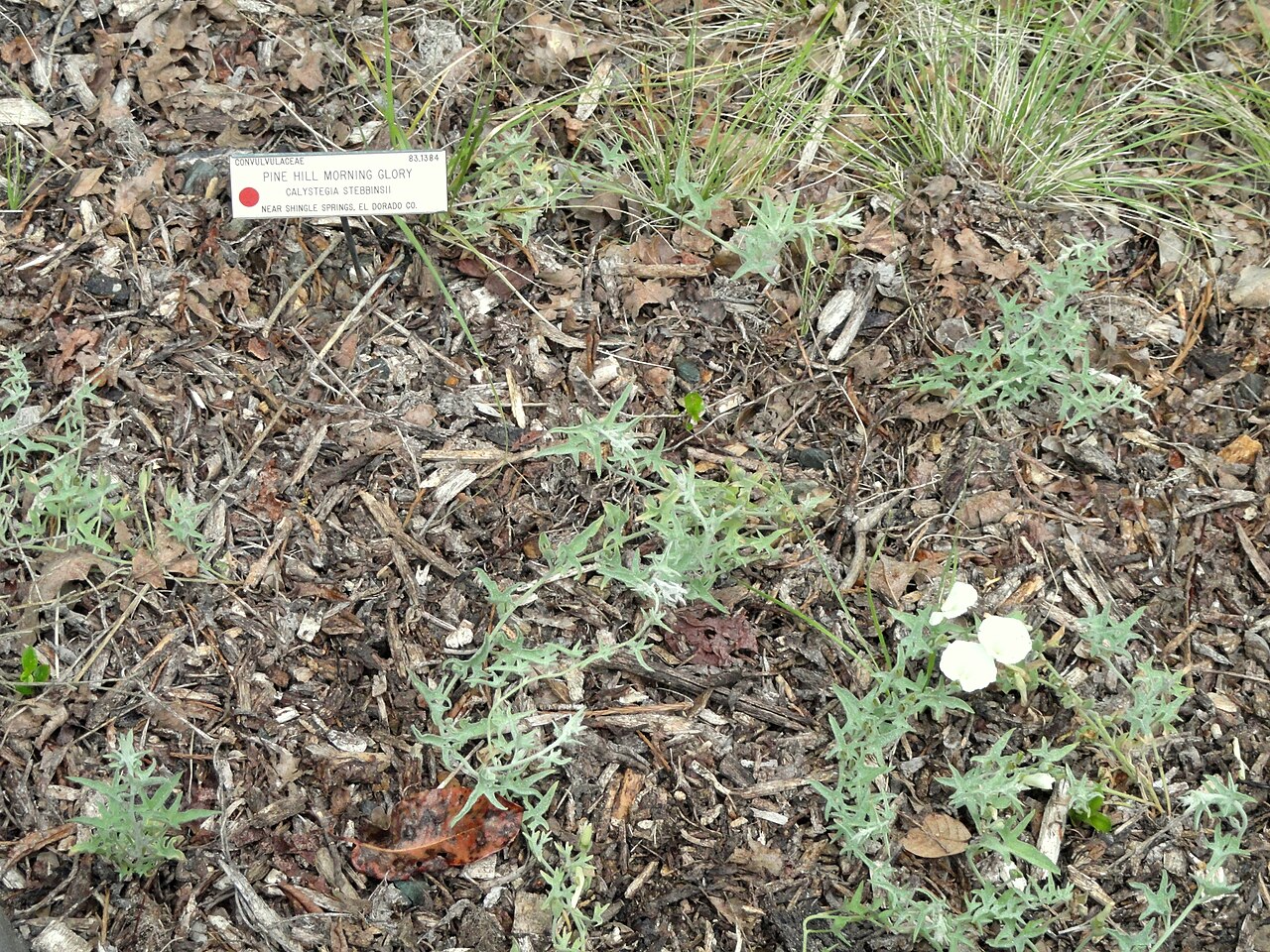
Stems are slender, trailing, and often densely covered in fine grayish hairs, giving the whole plant a soft, silvery-green appearance that helps it stand out against the reddish gabbro soil. The leaves are small, narrow, and deeply lobed to almost pinnately divided — a notably different, more dissected leaf shape than the simple arrowhead leaves of most other California Calystegia species, and a useful identification clue in the field.
Flowers
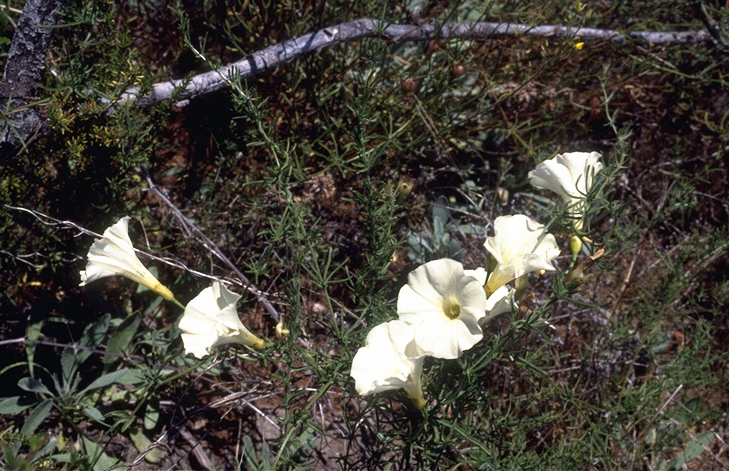
The flowers are classic funnel-shaped morning glory blooms, about 1 to 1½ inches across, white to very pale pink with faint pink veining, and borne singly on short stalks from the leaf axils. They open in the cooler hours of spring mornings and are smaller and more delicate-looking than those of the more widespread chaparral false bindweed found elsewhere in the state.
Fruit & Seeds
Fruit is a small, rounded capsule typical of the genus, containing a few dark seeds. Seed production in wild populations is limited by the small number of surviving plants and by competition from non-native annual grasses, which is one reason recovery has been slow despite decades of federal protection.
Quick Facts
| Scientific Name | Calystegia stebbinsii |
| Family | Convolvulaceae (Morning Glory) |
| Plant Type | Perennial trailing vine (gabbro soil endemic) |
| Mature Height | Low, trailing stems under 1 ft tall |
| Mature Spread | 1–3 ft of trailing stems |
| Growth Rate | Slow |
| Sun Exposure | Full Sun |
| Water Needs | Very low; adapted to dry, mineral-poor soil |
| Soil Type | Gabbro-derived clay/rocky soil (reddish, nutrient-poor) |
| Soil pH | Neutral to slightly alkaline |
| Bloom Time | April – June |
| Flower Color | White to very pale pink |
| Fall Color | None (foliage dies back in summer) |
| Fruit | Small capsule with a few dark seeds |
| Deer Resistant | Not documented; populations too rare for study |
| Legal Status | Federally Endangered; California Endangered; CNPS Rank 1B.1 |
Native Range
Stebbins’ morning-glory is a true California endemic known from only two small areas: the Pine Hill vicinity near Shingle Springs and El Dorado Hills in El Dorado County, and a disjunct set of occurrences near Grass Valley in Nevada County. It is not known to occur anywhere else in the world, and its entire global range covers only a few square miles of specialized habitat.
The species is restricted almost entirely to soils derived from gabbro, an unusual dark, iron- and magnesium-rich intrusive rock that weathers into reddish, nutrient-poor, often rocky clay. This soil type supports a distinctive chaparral community that includes several other rare, gabbro-restricted plants found nowhere else, which is why the Pine Hill area has been the focus of a long-running multi-species conservation effort involving the U.S. Fish and Wildlife Service, the Bureau of Land Management, and El Dorado County.
Because its entire range sits at the edge of the rapidly growing Sacramento metropolitan area, habitat loss to residential and commercial development has been the primary threat to Stebbins’ morning-glory since it was first listed in 1996. The BLM’s Pine Hill Preserve, along with several smaller protected parcels, now conserves the largest remaining populations, but the species remains vulnerable to any further loss or degradation of its narrow gabbro-soil habitat, including invasion by non-native annual grasses that outcompete it for space, light, and moisture.
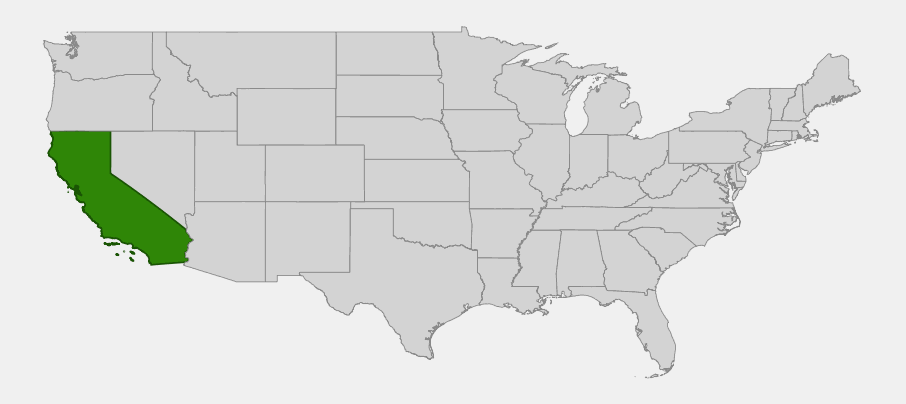
📋 Regional plant lists: Stebbins’ morning-glory is not included on any Plant Native regional list — its range is too narrow and its status too protected for general garden use. See the native plant profile directory for other Sierra foothill natives suited to home gardens.
Growing & Care Guide
Stebbins’ morning-glory is not a garden plant. It is a federally and state endangered species restricted to a handful of protected sites, it is not propagated or sold by the native plant nursery trade, and it is illegal under the California Endangered Species Act to collect, remove, or possess wild plants without specific authorization. The sections below describe its ecological requirements for conservation and educational purposes, not as planting guidance.
Habitat Requirements
In the wild, the species depends entirely on open, undisturbed gabbro-soil chaparral with full sun and minimal competition from other vegetation, particularly invasive annual grasses that have overtaken much of its historical habitat. Management at protected sites such as the Pine Hill Preserve focuses on removing non-native grasses and shrub encroachment, controlling off-road vehicle use, and preventing further habitat fragmentation.
Conservation Status
Stebbins’ morning-glory was listed as federally Endangered in 1996 alongside several other Pine Hill gabbro-soil endemics, under a joint multi-species recovery plan. The California Department of Fish and Wildlife separately lists it as a state Endangered species. Recovery efforts are coordinated through the Pine Hill Preserve, a mosaic of BLM, county, and other protected parcels managed specifically to conserve this suite of rare plants.
How Gardeners Can Help
Rather than attempting to grow this species, Sierra foothill gardeners can support its survival by choosing other California natives for their own landscapes, supporting local land trusts and BLM programs that manage the Pine Hill Preserve, reporting any suspected wild sightings to the California Department of Fish and Wildlife or the California Native Plant Society, and staying on designated trails when visiting protected gabbro-soil habitat.
Wildlife & Ecological Value
As a narrow endemic, Stebbins’ morning-glory contributes to a uniquely specialized chaparral community found only on Pine Hill-area gabbro soils, one that supports several other plants and associated insects found nowhere else.
For Pollinators
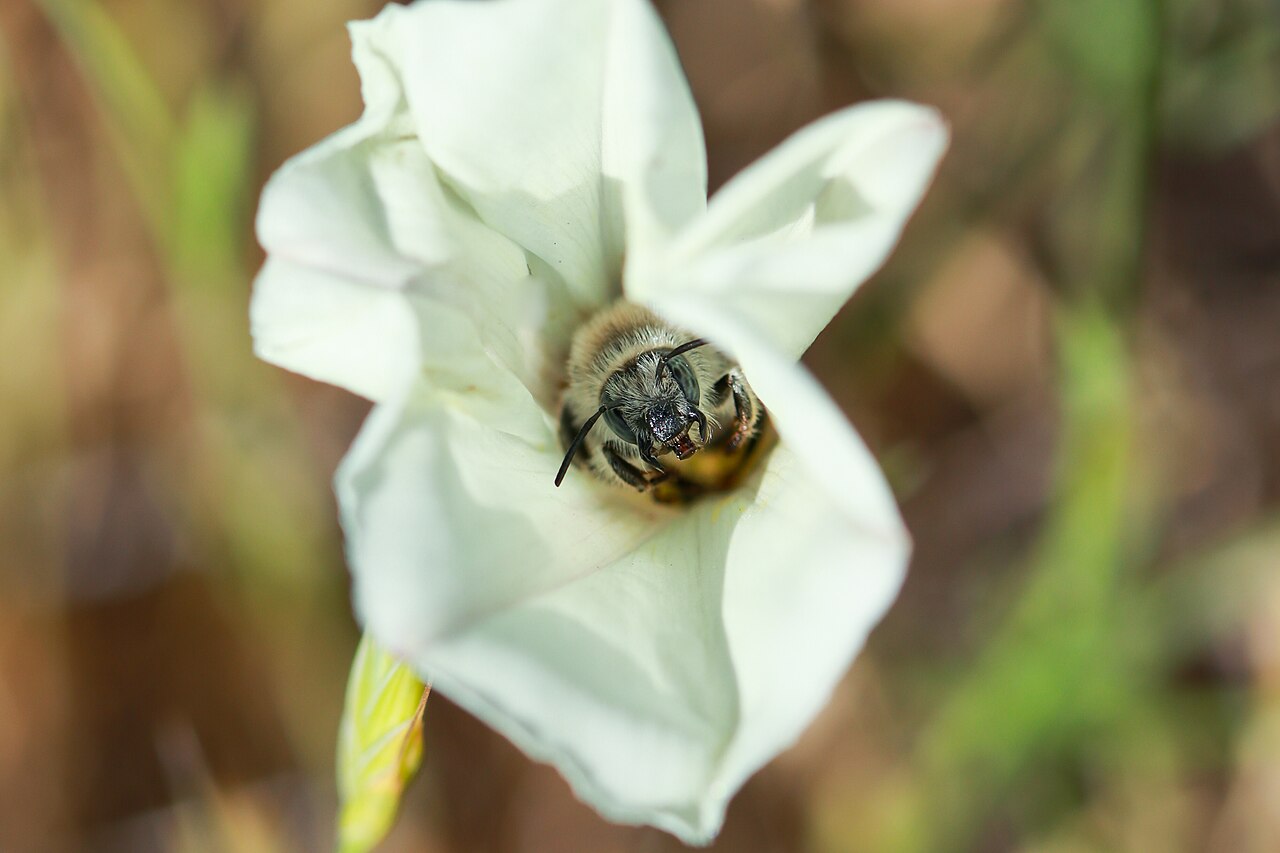
The flowers are visited by native bees, including specialist digger bees of the genus Diadasia, which have been documented foraging directly on this species at the Pine Hill Preserve. The Bureau of Land Management has specifically funded pollinator habitat work at Pine Hill in recent years, recognizing the close relationship between the preserve’s rare plants and the native bee fauna that depends on them.
For Birds & Mammals
Because populations are so small and scattered, the species’ contribution to the broader food web is limited, though its low, spreading foliage adds structural diversity to the open gabbro chaparral used by ground-foraging birds and small mammals typical of this habitat.
Ecosystem Role
Stebbins’ morning-glory is one of several co-occurring gabbro-soil endemics that make the Pine Hill area a conservation priority; protecting its habitat indirectly protects an entire suite of rare plants and the insects, including specialist pollinators, that depend on this unusual soil-driven plant community.
Cultural & Historical Uses
Stebbins’ morning-glory has no recorded history of use by Indigenous peoples or in any other cultural tradition. It was not formally distinguished from other California Calystegia species until relatively recently in botanical history, and its extreme rarity and tiny range mean it was likely never abundant enough, even historically, to serve as a resource for food, fiber, or medicine.
Its significance today is almost entirely scientific and conservation-related. The species is named for G. Ledyard Stebbins (1906–2000), a towering figure in twentieth-century evolutionary biology and plant genetics who taught at UC Davis for decades and was a founding member of the California Native Plant Society. Naming the plant after him reflects both his direct contributions to understanding California’s flora and the broader conservation ethic the Native Plant Society championed.
The ongoing recovery effort at Pine Hill has become something of a case study in multi-species habitat conservation at the edge of a rapidly suburbanizing region, illustrating both the challenges and the possibilities of protecting narrowly endemic plants within an expanding metropolitan footprint.
Frequently Asked Questions
Can I buy Stebbins’ morning-glory for my garden?
No. It is not propagated or sold commercially, and collecting or possessing wild plants is prohibited under state and federal endangered species law. If you garden in the Sierra foothills and want a similar native vine, look for the much more widespread chaparral false bindweed (Calystegia occidentalis) instead, which grows throughout much of California.
Where can I see Stebbins’ morning-glory in the wild?
The Bureau of Land Management’s Pine Hill Preserve near Shingle Springs, El Dorado County, protects the largest known populations and has interpretive trails; check current BLM guidance before visiting, and always stay on designated paths to avoid disturbing sensitive habitat.
Why is this species so rare?
It is restricted entirely to gabbro-derived soil, an unusual and geographically limited substrate, and much of its historical habitat near Sacramento has been lost to urban and suburban development. Competition from invasive annual grasses has further reduced suitable habitat within its remaining range.
Is Stebbins’ morning-glory related to the weedy bindweed in my yard?
It is in the same family and genus group as common morning glories, but it is not closely related in any practical sense to the invasive, non-native field bindweed (Convolvulus arvensis) that is a common garden weed; the two are entirely different species with very different conservation status.
What is being done to help this species recover?
Recovery work includes habitat protection and restoration at the Pine Hill Preserve and nearby parcels, control of invasive grasses, pollinator habitat projects, and ongoing population monitoring coordinated by the U.S. Fish and Wildlife Service, BLM, and California state agencies under the federal recovery plan for Pine Hill gabbro-soil plants.

Looking for a nursery that carries Sierra foothill natives instead?
Browse our native plant nursery directory: California