Desert Peach (Prunus andersonii)
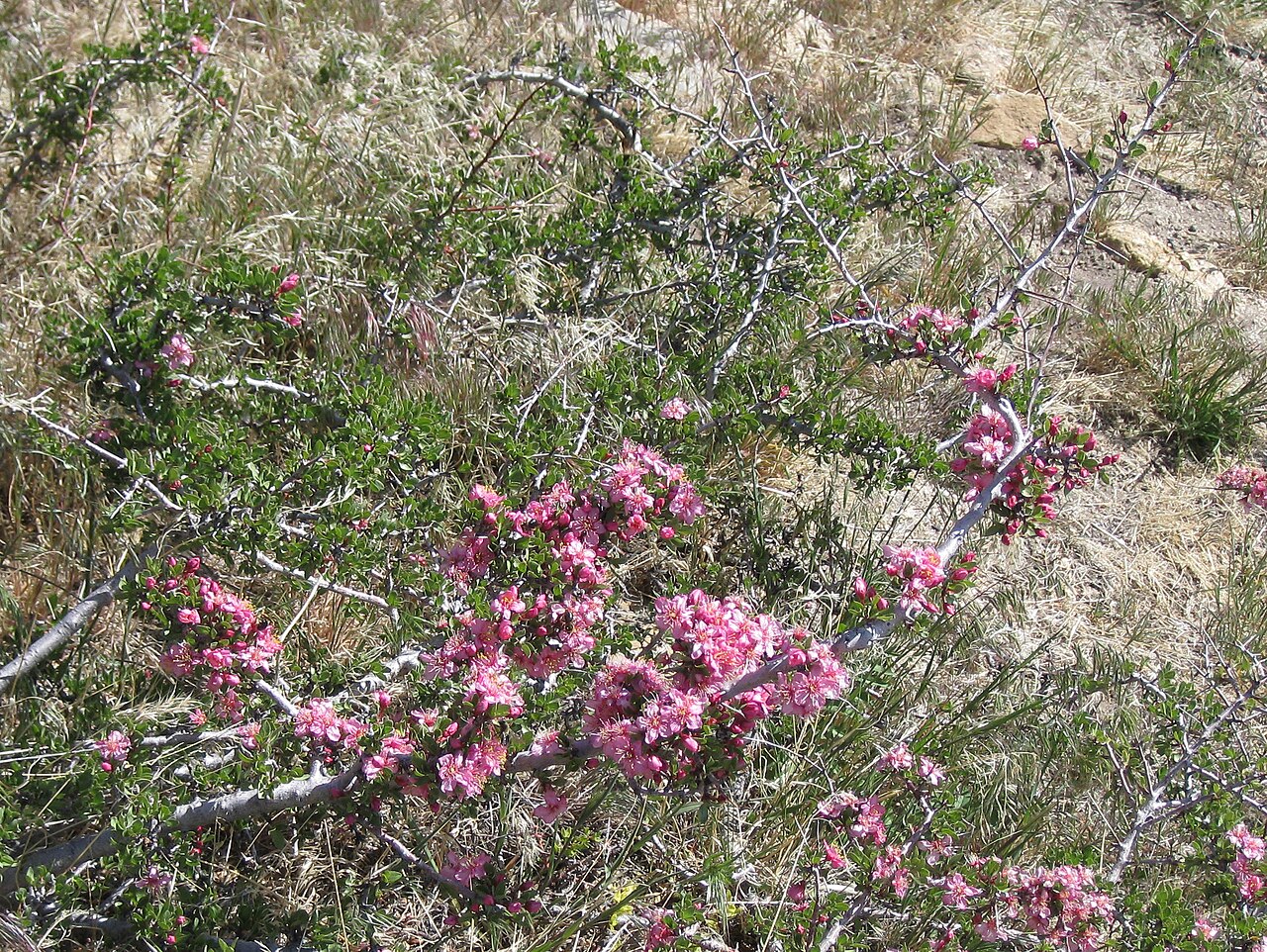
Prunus andersonii, commonly called Desert Peach or Anderson’s Peachbrush, is a tough, thorny, early-blooming shrub of the Great Basin and the dry eastern slopes of the Sierra Nevada. It belongs to the rose family (Rosaceae) and is a true wild relative of the cultivated peach and almond, but instead of orchard conditions it has adapted to some of the harshest, driest ground in California and Nevada. In a landscape that still looks winter-brown in March, a blooming desert peach stands out as a haze of bright pink against gray sagebrush and bare rock.
Desert peach is a dense, intricately branched shrub, usually 3 to 6 feet tall, with stiff gray twigs that end in sharp spines. Small, finely toothed gray-green leaves cluster along short spur shoots, and in early spring — often before or just as the leaves emerge — the whole shrub lights up with abundant pink, five-petaled flowers that look exactly like miniature peach or almond blossoms. By midsummer those flowers have become small, dry, fuzzy “peaches” about the size of a large olive, each holding a single hard pit.
Though rarely sold at mainstream nurseries, desert peach is an excellent choice for a dry, rocky, low-water garden within its native range — valuable for erosion control on slopes, as early-season browse and cover for wildlife, and as one of the first shrubs to flower each year in high-desert plantings.
Identification
Desert peach grows as a dense, rounded, many-branched shrub, typically 3 to 6 feet tall and often as wide, though it can reach 8 feet in favorable sites. Its growth habit is intricate and twiggy, with numerous rigid branches that terminate in sharp, woody spines — a defense against the deer and other browsers that readily eat its foliage.
Bark & Stems
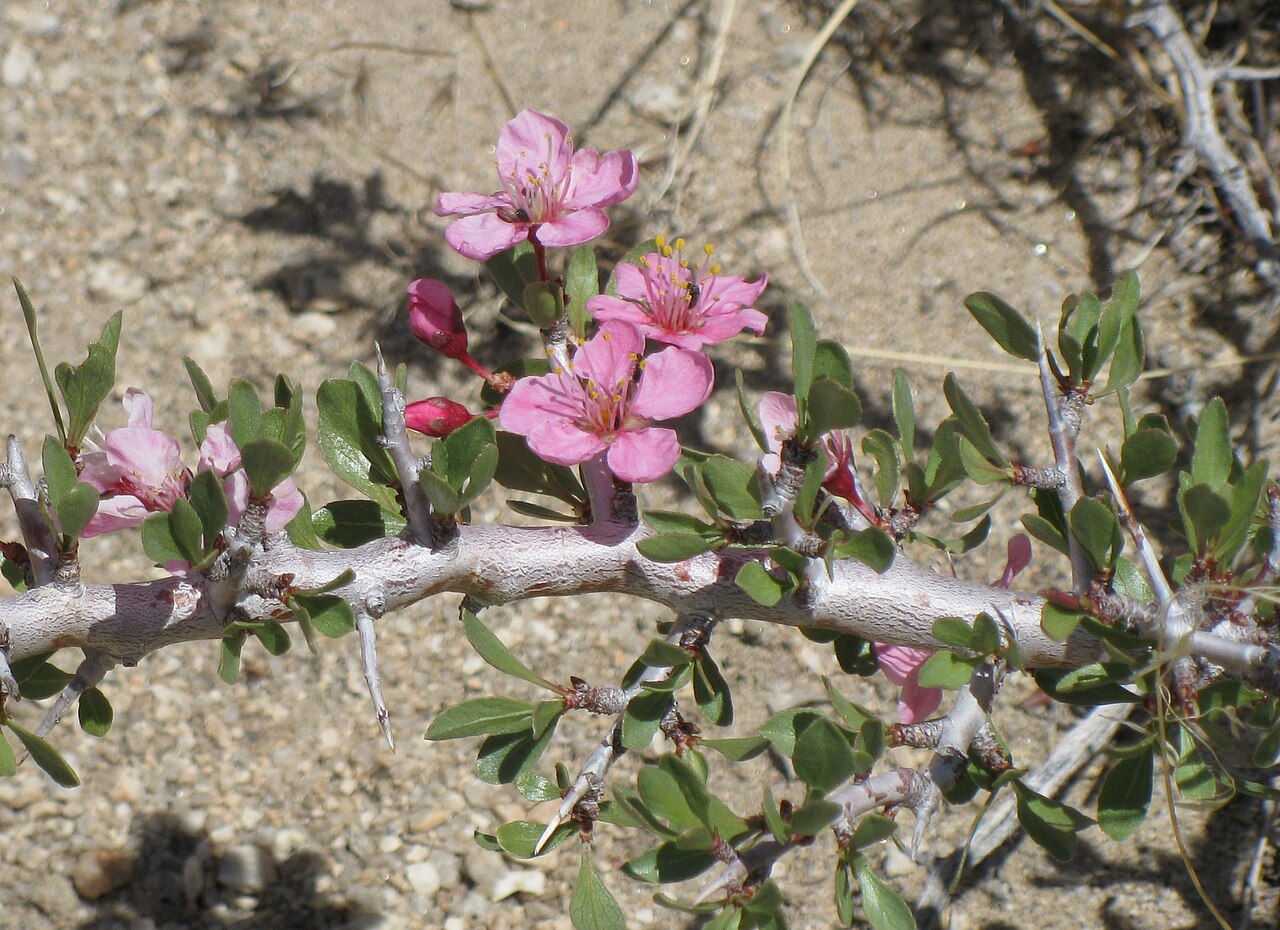
Young twigs are smooth and gray to reddish-gray, becoming grayer and more rigid with age. The branching pattern is dense and interlaced, and the spine-tipped twig ends are stiff enough to catch clothing — a useful identification clue when the shrub is out of flower.
Leaves
Leaves are small, 0.5 to 1.5 inches long, oblanceolate to narrowly elliptic, with finely toothed margins. They are gray-green and somewhat leathery, clustered in tight bundles on short spur shoots along the branches. Leaves emerge around or just after flowering and drop in fall, leaving the spiny branch structure bare through winter.
Flowers
Flowers appear very early in spring, from March into May depending on elevation, often opening before the leaves are fully out. Each flower has five rounded pink petals (occasionally paler, almost white) surrounding a cluster of yellow-tipped stamens, closely resembling a small peach or almond blossom. Flowers are borne singly or in small clusters directly along the previous year’s twigs, and a well-flowered shrub can be almost entirely pink for a few weeks.
Fruit & Seeds
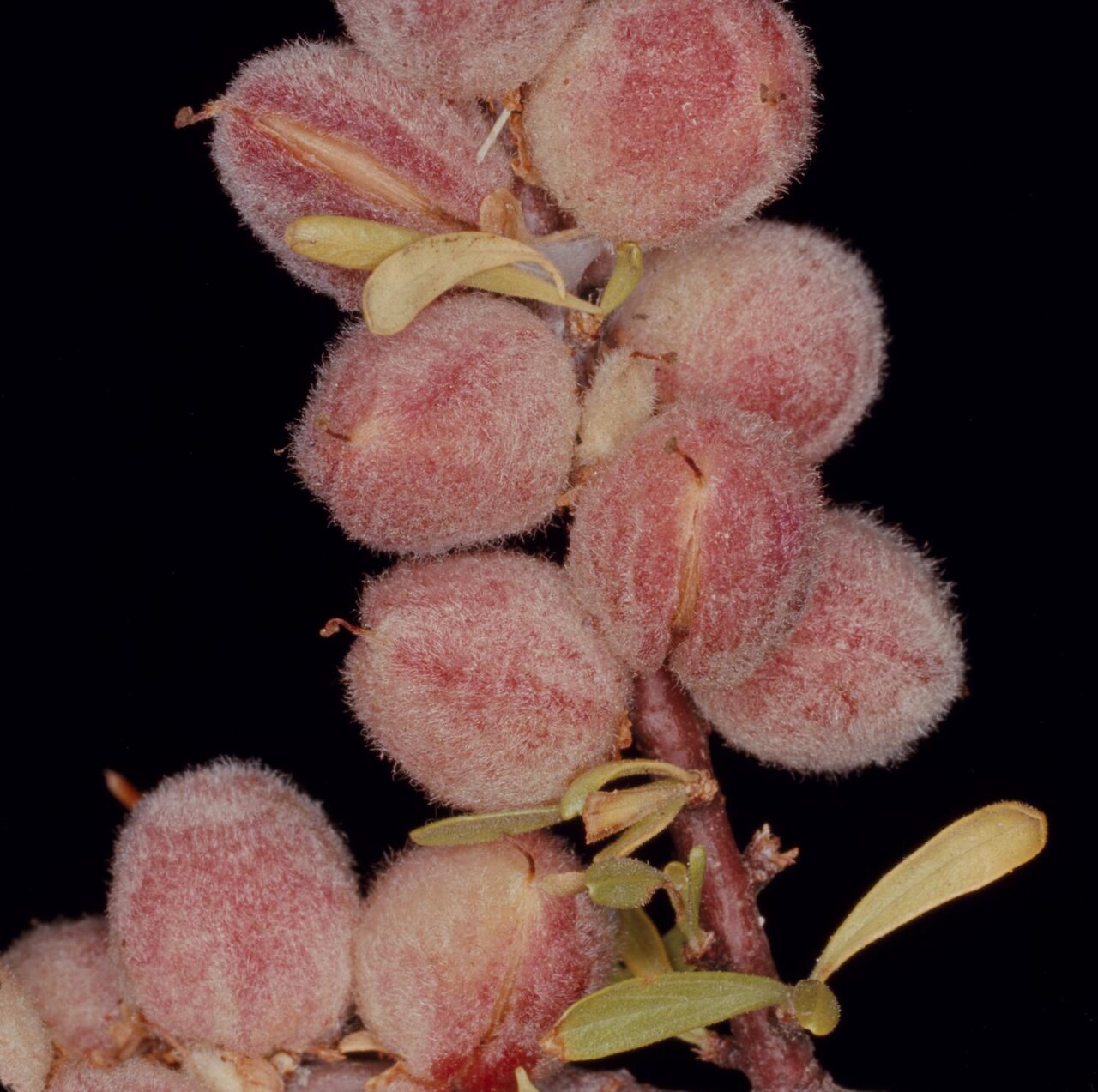
The fruit is a small, dry, fuzzy drupe about ½ to ¾ inch long, pale green ripening to pinkish or dull red, covered in fine velvety hairs. Unlike a cultivated peach, the flesh is thin, dry and not palatable, surrounding a single hard, pitted stone. The pits, leaves, and bark of desert peach — like those of other wild Prunus species — contain cyanogenic compounds that can release toxic cyanide when damaged or chewed, and the fruit should never be eaten or used in any recipe. Leave the fruit for wildlife rather than attempting to harvest or process it.
Quick Facts
| Scientific Name | Prunus andersonii |
| Family | Rosaceae (Rose) |
| Plant Type | Deciduous shrub |
| Mature Height | 3–6 ft (occasionally to 8 ft) |
| Mature Spread | 3–6 ft, dense and rounded |
| Growth Rate | Slow to moderate |
| Sun Exposure | Full Sun |
| Water Needs | Low; excellent drought tolerance once established |
| Soil Type | Dry, rocky or sandy, well-drained; tolerates poor soils |
| Soil pH | Neutral to alkaline (6.5–8.0) |
| Bloom Time | March – May |
| Flower Color | Pink |
| Fall Color | Muted yellow-green, not showy |
| Fruit | Small dry, fuzzy drupe; not edible — contains cyanogenic compounds |
| Deer Resistant | No (readily browsed by mule deer, especially in early spring) |
| USDA Hardiness Zones | 5–8 |
Native Range
Desert peach is native to a fairly narrow band of the Great Basin and the eastern Sierra Nevada, found almost entirely within California and Nevada. In California it occurs mainly along the eastern slope of the Sierra Nevada and in the Mono Basin and adjacent desert ranges; in Nevada it extends through the western Great Basin ranges, including the Pine Nut and Virginia Mountains near Reno and other scattered ranges to the east.
Typical habitat is dry, rocky or gravelly slopes and benches in sagebrush scrub and pinyon-juniper woodland, generally between about 2,000 and 7,500 feet in elevation. It grows in open, sun-baked sites with minimal competition, often alongside big sagebrush, bitterbrush, rabbitbrush and scattered pinyon pine or juniper.
Desert peach is not listed as rare or threatened, but its range is naturally limited to this relatively small corner of the Great Basin and eastern Sierra, and it should not be planted as a garden shrub outside California and Nevada.
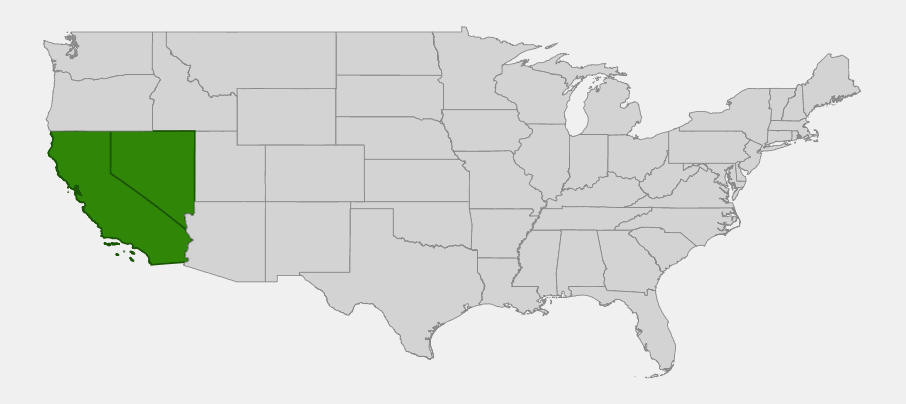
📋 Regional plant lists featuring Desert Peach: California and Nevada are not yet covered by one of our regional native plant lists — browse the full regional plant list directory for lists covering nearby areas.
Growing & Care Guide
Desert peach is built for tough conditions, and it rewards gardeners in its native high-desert range who resist the urge to baby it. Overwatering and rich soil do it no favors; it performs best when treated like the dryland native it is.
Light
Full sun is essential. Desert peach naturally grows in open, exposed sites and will become sparse and poor-flowering in shade.
Soil & Water
Plant it in dry, rocky, sandy or gravelly soil with excellent drainage — heavy, wet or rich garden soil encourages root problems. Once established, desert peach needs little to no supplemental water and is one of the more drought-tolerant native shrubs available for high-desert and eastern Sierra gardens. Occasional deep watering during the first year or two helps establish the root system, after which irrigation should be minimal.
Planting Tips
Plant in fall or early spring from container stock, in full sun on a slope or berm that sheds water rather than collecting it. Space plants 4 to 6 feet apart if planting in groups for a hedgerow or wildlife screen. Avoid soil amendments that increase fertility or moisture retention beyond what the surrounding native ground provides.
Pruning & Maintenance
Little pruning is needed. Remove dead wood as needed, and keep in mind the spines when working near the plant — gloves and long sleeves are a good idea. Because it is adapted to a short growing season and dry summers, desert peach generally needs no supplemental feeding.
Landscape Uses
- Erosion control on dry slopes and banks
- Wildlife hedgerow or screen in high-desert gardens
- Xeriscaping and low-water native plantings
- Early-spring color in a dryland native garden
- Deer-browse buffer plantings near more vulnerable garden plants
Wildlife & Ecological Value
Desert peach is a genuinely important shrub in its native plant communities, offering food and structure at a time of year when little else in the high desert is green or flowering.
For Pollinators
The abundant early-spring flowers provide an important nectar and pollen source for native bees at a time when few other desert plants are blooming, helping support solitary bee populations as they emerge for the season.
For Birds
The dense, spiny branching provides good nesting cover and protection from predators for small songbirds, and the shrub’s structure offers shelter in otherwise open sagebrush terrain.
For Mammals
Desert peach is an important browse plant for mule deer, particularly valuable because its leaves emerge and its branches green up early in spring, when other forage is still scarce. Small mammals use the dense thickets for cover from predators.
Ecosystem Role
As one of the earliest shrubs to flower in its range, desert peach helps anchor the spring pollinator calendar in sagebrush and pinyon-juniper communities, and its extensive root system helps stabilize the loose, rocky soils of the dry slopes it favors.
Cultural & Historical Uses
Desert peach’s showy spring bloom made it a recognizable seasonal marker for peoples traveling and gathering across the Great Basin, signaling the turn from winter to spring in the high desert. Because the fruit is dry, thin-fleshed and the pits and foliage carry cyanogenic compounds, it was not used as a reliable food source in the way true peaches or other fleshy fruits were, and no established historical practice treats the fruit as edible.
The hard wood and thorny branches have occasionally been noted in regional accounts as material for small tool handles or similar uses, though detailed documentation is limited. Today the plant’s main cultural role is as a conspicuous, well-loved signal of spring in the high desert and eastern Sierra foothills, rather than as a resource plant.
Frequently Asked Questions
Can you eat desert peach fruit?
No. Despite its common name and peach-like appearance, the fruit is dry and thin-fleshed, and the pit, leaves and bark contain cyanogenic compounds that can release toxic cyanide when damaged or chewed. The fruit should never be eaten or used in recipes; leave it for wildlife.
Is desert peach related to the peaches sold in stores?
Yes, loosely — both belong to the genus Prunus in the rose family, which also includes almonds, cherries and plums. But desert peach is a wild, thorny, drought-adapted shrub with small, dry, inedible fruit, not an ancestor of the cultivated orchard peach.
Why does desert peach have thorns?
The sharp, spine-tipped twigs likely help deter browsing animals, particularly mule deer, which otherwise readily eat the foliage. Even with this defense, desert peach remains an important browse plant in its native range.
Will desert peach grow outside California and Nevada?
It is only native to a limited part of the Great Basin and eastern Sierra Nevada in these two states, and it is best kept within that native range. It is adapted to very specific dry, rocky, high-desert conditions that are hard to replicate elsewhere.
Does desert peach need regular watering once established?
No. It is highly drought tolerant once established and generally needs no supplemental irrigation in its native range. Overwatering can actually harm the plant by encouraging root problems in soil that is wetter than what it is adapted to.

Looking for a nursery that carries Desert Peach?
Browse our native plant nursery directory: California · Nevada