
Dwarf-winged Sumac (Rhus copalina)
Rhus copalina (also spelled Rhus copallinum), commonly called Dwarf-winged Sumac, Winged Sumac, Flameleaf Sumac, or Shining Sumac, is one of eastern North America’s most spectacular native shrubs for fall color and wildlife value. The “winged” in its name refers to the distinctive winged petioles — the leaf stems have flattened green flanges running along their length, creating a wing-like appearance that distinguishes this species from all other sumacs at a glance.
In autumn, few native plants rival Dwarf-winged Sumac for pure visual drama. The compound leaves ignite in shades of crimson, scarlet, and deep burgundy — often the most intensely red foliage in the native woodland understory. The brilliant fall display is complemented by dark red clusters of berries that persist through winter, providing critical food for birds when other food sources are scarce. This combination of ornamental appeal and wildlife value makes Dwarf-winged Sumac one of the most recommended native shrubs for naturalistic plantings throughout the Northeast.
Unlike some sumacs that can become invasive in ideal conditions, Dwarf-winged Sumac is well-behaved in drier sites where it naturally occurs — on rocky slopes, dry ridges, open woods edges, and disturbed uplands from Maine to Texas. Its deep drought tolerance, excellent wildlife value, and spectacular seasonal display make it an ideal choice for difficult, dry sites in New York, Pennsylvania, and New Jersey where many other plants struggle.
Identification
Dwarf-winged Sumac grows as a large shrub or occasionally a small tree, typically 10–20 feet tall in good conditions, though the name “dwarf” reflects its tendency to remain compact — often 6–10 feet — on dry, rocky sites. It spreads by root sprouts to form dense, impenetrable colonies that provide excellent wildlife cover.
Bark & Stems
The bark of young stems is covered in fine, velvety hairs and is brownish to reddish in color. Older stems become smoother and grayish. The stems and branches exude a milky sap when broken — this sap can cause contact dermatitis in sensitive individuals (though Dwarf-winged Sumac is much less toxic than Poison Sumac, Toxicodendron vernix). The milky sap is the key visual distinction from Poison Sumac, which has watery clear sap and white fruits.
Leaves
The pinnately compound leaves are the defining feature of this species. Each leaf has 9–21 leaflets, and the rachis (central stem) bears distinctive flattened, wing-like flanges between each leaflet pair — the “wings” that give the plant its common name. Individual leaflets are 1.5–3 inches long, shiny dark green above, paler below, with wavy to entire margins. In fall, the leaves turn brilliant shades of scarlet, orange-red, and crimson, among the most spectacular fall color of any eastern native shrub. The shiny upper leaf surface gives the plant its alternative common name, Shining Sumac.
Flowers & Fruit
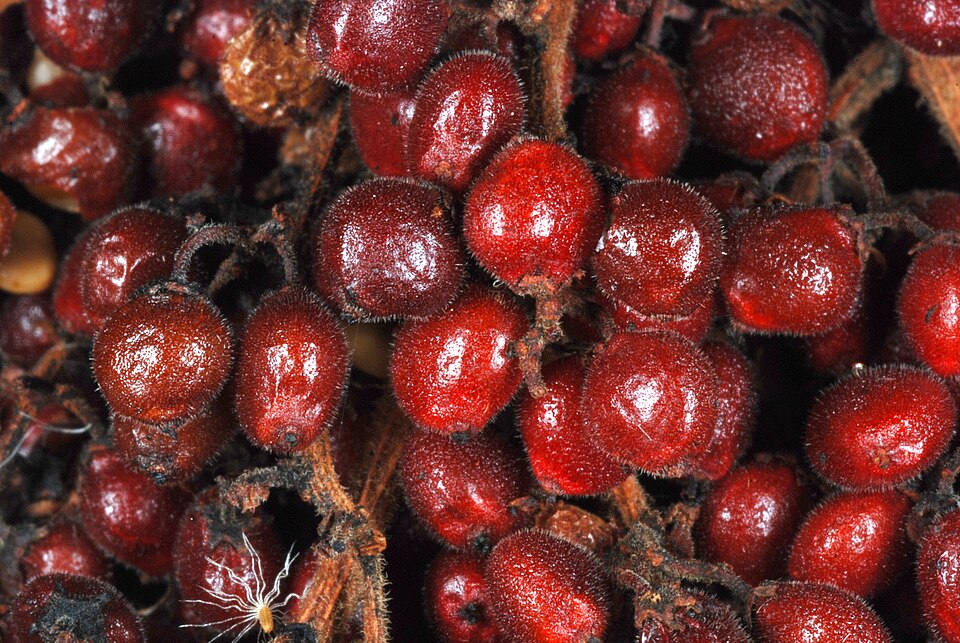
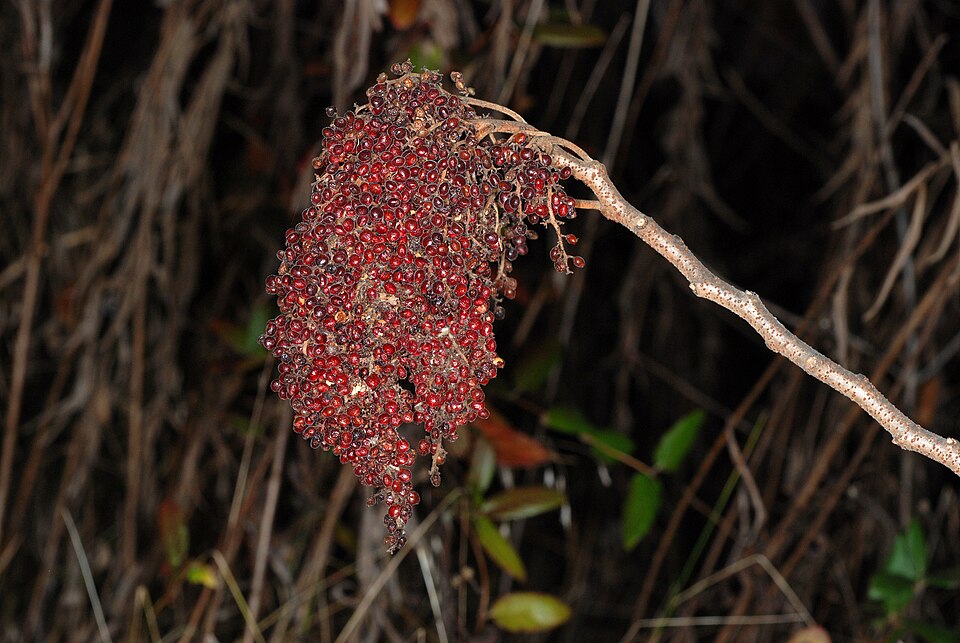
The flowers appear in summer (July–September) as dense, erect, cone-shaped clusters (panicles) of tiny yellow-green flowers at the tips of branches. The clusters are 4–8 inches long and quite showy despite the small individual flowers. Male and female flowers typically occur on separate plants (dioecious), though some plants bear both. The fruit that follows on female plants is a dense, upright cluster of small, round, dark red drupes covered in sticky red hairs. These fruit clusters, called “bobs,” persist through winter and are an important food source for dozens of bird species.
Quick Facts
| Scientific Name | Rhus copalina (syn. Rhus copallinum) |
| Family | Anacardiaceae (Cashew) |
| Plant Type | Deciduous Shrub / Small Tree |
| Mature Height | 20–30 ft (often 6–15 ft in drier sites) |
| Sun Exposure | Full Sun to Part Shade |
| Water Needs | Low (Drought Tolerant) |
| Bloom Time | July – September |
| Flower Color | Yellow-green |
| USDA Hardiness Zones | 4–9 |
Native Range
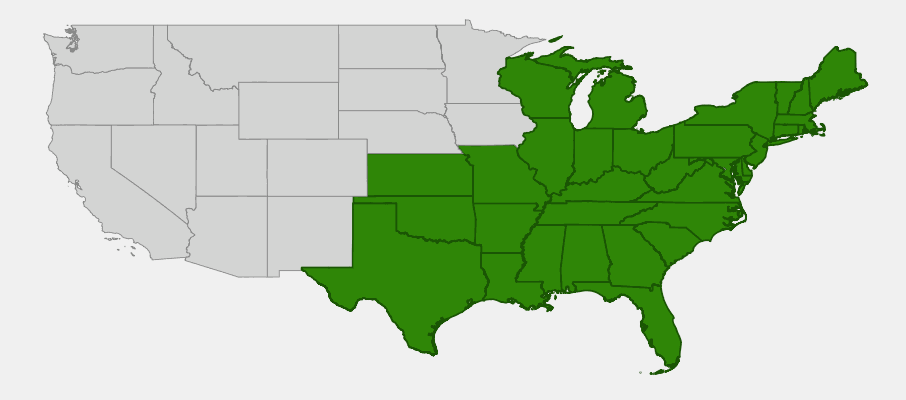
Dwarf-winged Sumac has one of the broadest ranges of any eastern North American sumac, occurring from Maine south to Florida and west through the Great Plains to Nebraska, Kansas, Oklahoma, and Texas. It is most common and most ecologically dominant in the Appalachian foothills, the Piedmont, and the Coastal Plain, where it thrives on dry, rocky, acidic soils that other shrubs cannot fully colonize.
In New York, Pennsylvania, and New Jersey, Dwarf-winged Sumac is found on dry ridges, rocky outcrops, open woodland edges, and disturbed uplands throughout the region. It is particularly common along highway rights-of-way, abandoned fields, and rocky hillsides in the Appalachian highlands and the Piedmont transition zone. The plant typically grows in well-drained to dry, often acidic soils derived from shale, sandstone, or granite.
The species occupies an important ecological role in dry woodland-edge communities. Its dense, suckering growth creates impenetrable thickets that provide essential cover for wildlife, and its persistent winter fruit sustains birds through the cold months when other food is scarce. In open, successional areas, Dwarf-winged Sumac is often a colonizer that prepares disturbed sites for later forest species.
📋 Regional plant lists featuring Dwarf-winged Sumac: New York, Pennsylvania & New Jersey
Growing & Care Guide
Dwarf-winged Sumac is one of the most carefree native shrubs you can plant — once established on a dry, sunny site, it requires virtually no maintenance. Its key to success is sharp drainage and adequate sun.
Light
Full sun produces the densest, most vigorous growth and the most brilliant fall color. Dwarf-winged Sumac also grows well in part shade, but may be more open in form and show less spectacular fall coloration. Avoid deep shade, which will result in weak, spindly growth and minimal fruiting. A hot, south-facing slope in full sun is this plant’s ideal home.
Soil & Water
This is a true drought-tolerant native, thriving in well-drained to dry soils including rocky, shallow, and infertile soils where most other ornamental shrubs struggle or fail. It grows naturally on shale barrens, dry sandstone ridges, and gravelly slopes. Excellent drainage is essential — poorly drained or clay-heavy soils will cause root rot. Once established (typically after the second season), Dwarf-winged Sumac needs no supplemental watering except in extreme droughts. Avoid fertilizing, which promotes excessive vegetative growth at the expense of fall color and fruit production.
Planting Tips
Plant in spring or fall in a well-drained location with good sun exposure. Space plants 6–10 feet apart to allow for natural spread. Be aware that the plant spreads by root suckers and will form a colony over time — this is desirable in naturalistic plantings and for wildlife gardens, but may require mowing at the perimeter if you need to contain it near beds or lawns. Container-grown plants establish readily; bare-root stock is also available and very cost-effective for mass plantings.
Pruning & Maintenance
Dwarf-winged Sumac is self-maintaining on dry sites. If desired, remove dead stems or lightly prune for shape in late winter before growth begins. Heavy pruning stimulates vigorous suckering. The plant is naturally pest- and disease-resistant and rarely needs treatment for any ailment. The only maintenance typically needed is managing the spread of root suckers if the colony becomes too large for its space.
Landscape Uses
- Dry, rocky slopes where few other shrubs perform
- Naturalistic wildlife gardens providing food and cover for birds
- Fall color borders — among the most brilliant red foliage of any native shrub
- Erosion control on dry hillsides and disturbed slopes
- Highway and roadside plantings where drought tolerance is essential
- Mixed native shrub borders with Little Bluestem, Eastern Red Cedar, and Black Cherry
- Habitat restoration of dry woodland edges and open successional areas
Wildlife & Ecological Value
Dwarf-winged Sumac is a high-value wildlife plant across all seasons. Its berries, flowers, and dense cover support an impressive range of wildlife species.
For Birds
The persistent red fruit clusters (“bobs”) are consumed by over 95 species of birds — one of the highest bird-use values of any native shrub. Species that regularly feed on sumac berries include American Robin, Eastern Bluebird, Northern Flicker, Downy and Hairy Woodpeckers, Gray Catbird, Cedar Waxwing, Yellow-rumped Warbler, and many sparrow and thrush species. The berries are particularly critical in winter when they persist after other food sources are exhausted. The dense, suckering colonies provide excellent nesting habitat for thicket-nesting birds like Yellow-breasted Chat and Northern Cardinal.
For Mammals
White-tailed Deer browse the foliage heavily, and rabbits and squirrels consume the berries. The dense thicket growth provides excellent cover for rabbits, foxes, and small mammals. Wild Turkey and ruffed grouse consume the berries and insects found in sumac stands. Black bears occasionally consume the berries, particularly in fall when other fruits are scarce.
For Pollinators
The summer flowers, though individually tiny, are produced in enormous numbers and attract a diverse community of native bees, wasps, beetles, and flies. The flowers are a particularly important late-season nectar source, blooming in mid-to-late summer when many other plants have finished flowering. Native sweat bees (Halictus spp.), mining bees (Andrena spp.), and bumble bees (Bombus spp.) all visit the flowers regularly. Dwarf-winged Sumac also supports several specialist bee species.
Ecosystem Role
On dry, rocky sites where forest canopy cannot establish, Dwarf-winged Sumac colonies create a shrub layer that provides food and cover resources otherwise absent from the landscape. The dense leaf litter created by sumac colonies enriches poor soils over time, eventually facilitating the establishment of woodland species. Its role as a pioneer on disturbed uplands is critical for reestablishing ecological function on abandoned agricultural land, highway embankments, and other degraded sites.
Cultural & Historical Uses
Sumac species have been among the most widely used wild plants across indigenous cultures in North America. The tart berries of Dwarf-winged Sumac, like those of Staghorn Sumac (Rhus typhina), were used to make a lemonade-like beverage by steeping the berry clusters in cold water. This “sumac-ade” was a common refreshment among many Indigenous nations, including the Cherokee, Chippewa, and Iroquois. The berries are high in vitamin C and malic acid, giving the drink its characteristic sour flavor.
The bark and leaves of Rhus species are high in tannins and were widely used for tanning animal hides. This tanning use was documented among Indigenous peoples across the eastern woodland region and was later adopted by European settlers. The dried, powdered berries were used as a spice — similar to Middle Eastern sumac (Rhus coriaria), which remains in common culinary use today. Some Indigenous communities also used the bark and roots medicinally as astringents and for treating mouth sores, sore throats, and skin conditions.
In the 19th century, sumac bark and leaves were a commercial source of tannin used in the leather industry, and significant quantities were harvested from wild stands in the Appalachian highlands. Today, Dwarf-winged Sumac is primarily valued ecologically and ornamentally, with increasing recognition from restoration ecologists and native plant gardeners for its exceptional wildlife value and low-maintenance performance on difficult dry sites. The berries can still be used to make a pleasant sour tea, offering a direct link to centuries of indigenous culinary tradition.
Frequently Asked Questions
Is Dwarf-winged Sumac related to Poison Sumac?
They are in the same family (Anacardiaceae) but are not closely related and look very different. Poison Sumac (Toxicodendron vernix) grows only in wet swamps and has white or grayish berries and smooth leaflet margins. Dwarf-winged Sumac has red berries, the distinctive winged petiole, and grows on dry sites. If you see red berries and the winged leaf stem, it is safe to touch.
How do I prevent Dwarf-winged Sumac from spreading too much?
Mow or cut root suckers at the colony perimeter during the growing season. Installing a root barrier 12–18 inches deep can also contain spread in formal garden settings. For naturalistic wildlife gardens, the spreading habit is usually desirable.
Can I eat the berries?
Yes — the berries of Dwarf-winged Sumac are edible and were traditionally used to make a tart, lemonade-like beverage. Steep the red berry clusters in cold water for 20–30 minutes, strain through cheesecloth, sweeten if desired. Do not boil, as heat makes the beverage bitter.
Why is the fall color so brilliant?
Dwarf-winged Sumac produces exceptionally high concentrations of anthocyanins (red pigments) in autumn. This, combined with the large compound leaves that turn red simultaneously across the entire plant, creates the spectacular scarlet display. Dry sites with good sun produce the best fall color.
Will deer eat Dwarf-winged Sumac?
Yes, White-tailed Deer browse Dwarf-winged Sumac fairly heavily. However, the plant resprouts vigorously from the root system after browsing and typically recovers quickly. In very high deer pressure areas, young plants may need protection during the first 1–2 seasons until established.

Looking for a nursery that carries Dwarf-winged Sumac?
Browse our native plant nursery directory: New York · Pennsylvania