Fernleaf Phacelia (Phacelia bipinnatifida)
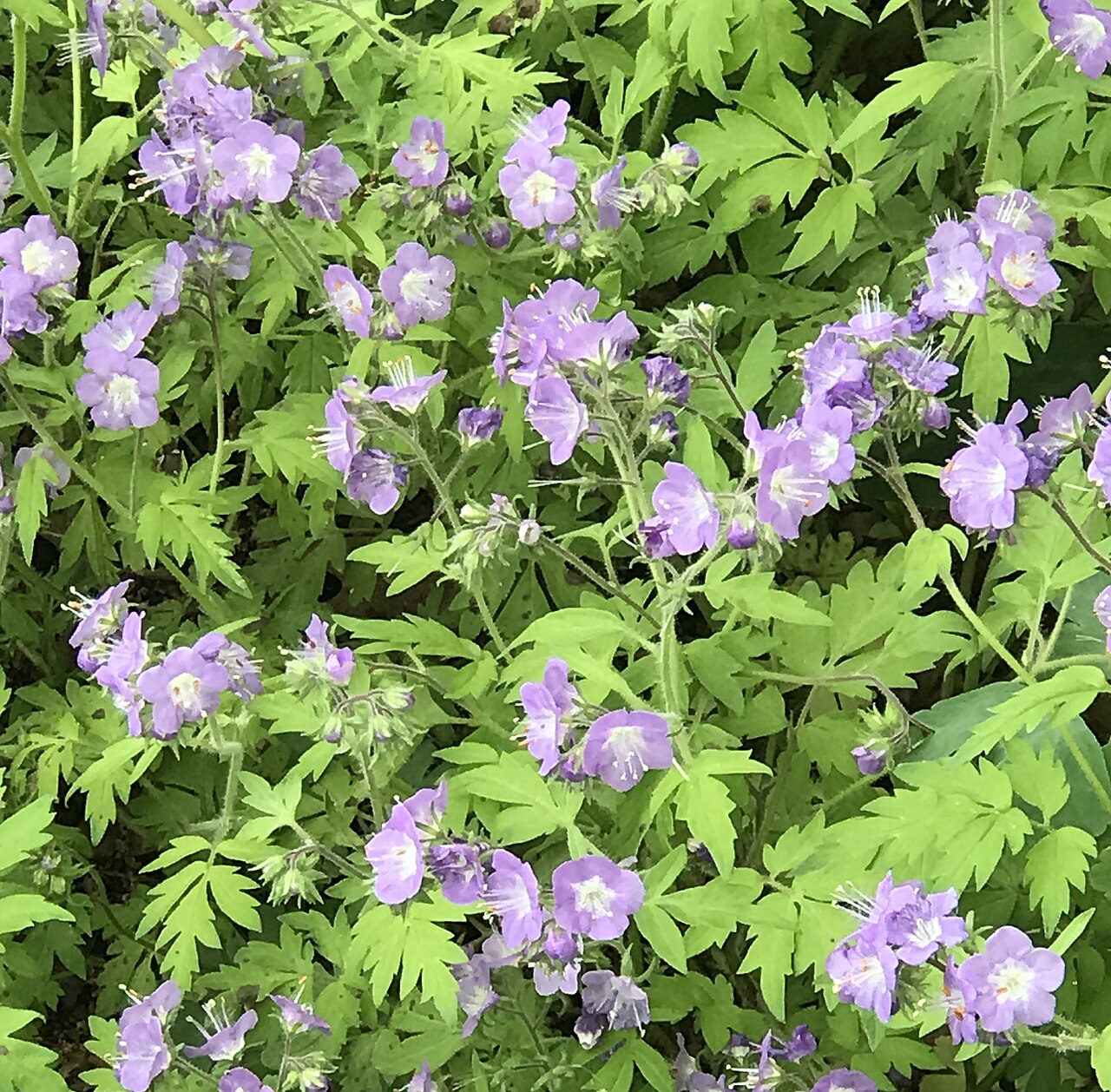
Fernleaf phacelia brings a loose cloud of purple flowers to the spring woodland garden. The divided foliage is attractive before the blooms appear, and a self-sown colony can thread between longer-lived shade plants. Its scientific name, Phacelia bipinnatifida, is important: it is not the same plant as the annual agricultural phacelia often sold in cover-crop packets.
This native wildflower usually behaves as a biennial. A young plant develops foliage, flowers in a later season, sets seed and then dies. A successful garden patch therefore depends on recruitment, not on keeping the same individual alive indefinitely. Gardeners who understand that cycle can enjoy the apparent continuity of a colony without mistaking normal post-flowering decline for an irrigation failure.
In the Carolinas, fernleaf phacelia is particularly associated with suitable mountain woodland habitats. It appreciates humus, moisture and shade with drainage, often in rocky or sloping settings. Give it a little room to move by seed, keep its seedlings recognizable, and avoid turning the whole planting into a permanently mulched surface where no new generation can establish.
Identification
Stems & Growth Habit
Flowering plants are herbaceous, upright and branched, commonly about 1–3 feet tall. Leaves and stems are hairy, with the flowering branches held above the lower foliage. The plant may occupy more lateral space than a neat nursery plug suggests. A first-year leafy plant looks different from an older flowering stem, so photograph and label both stages if you are learning its identity.
Leaves
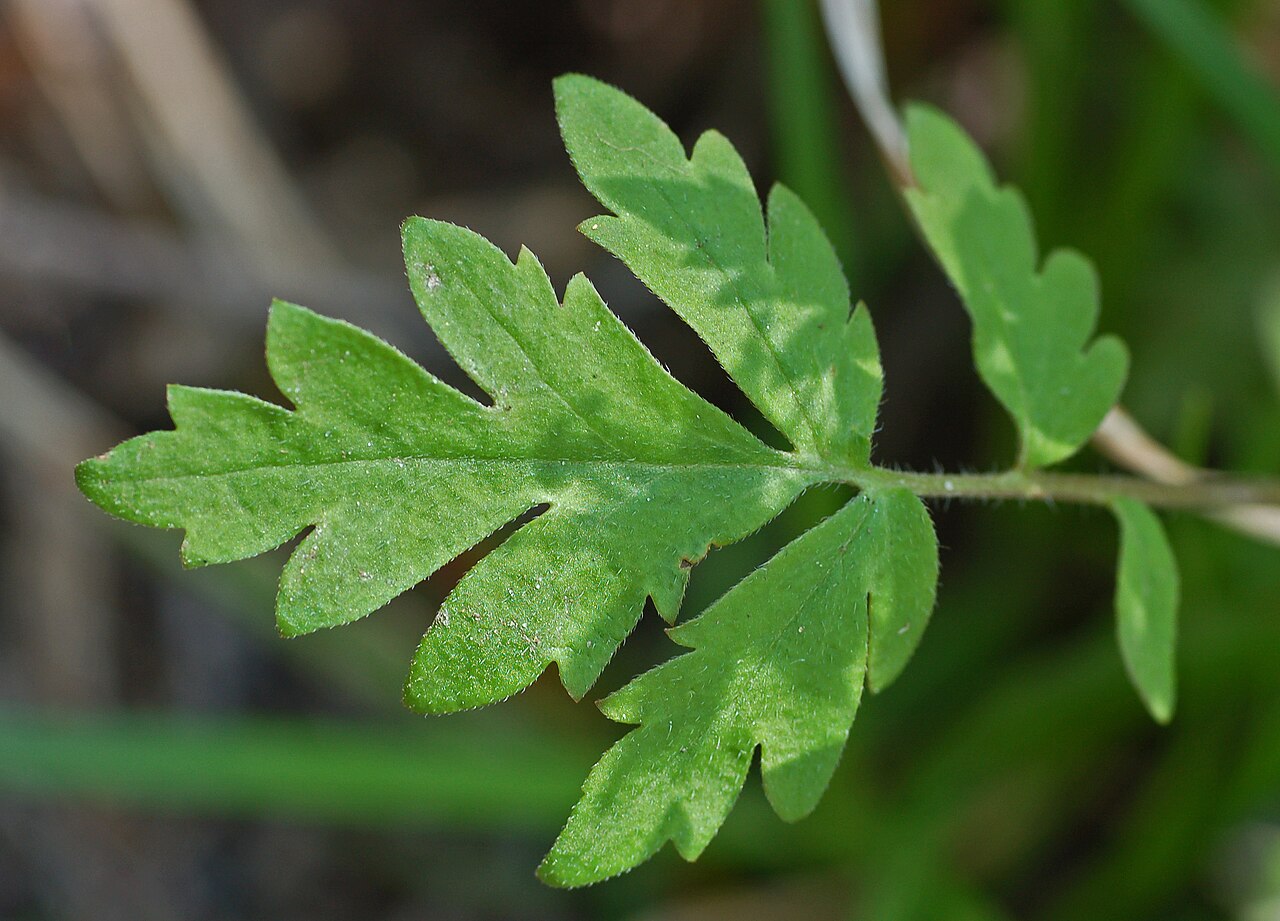
Leaves are divided into toothed or lobed portions, producing the fernlike texture reflected in the common name. They are not fern fronds: this is a flowering plant that reproduces with seeds. Individual leaves can vary in the depth of their divisions, and the lower foliage is especially useful for comparison with a botanical description. Handle unfamiliar hairy plants carefully if you have sensitive skin.
Flowers
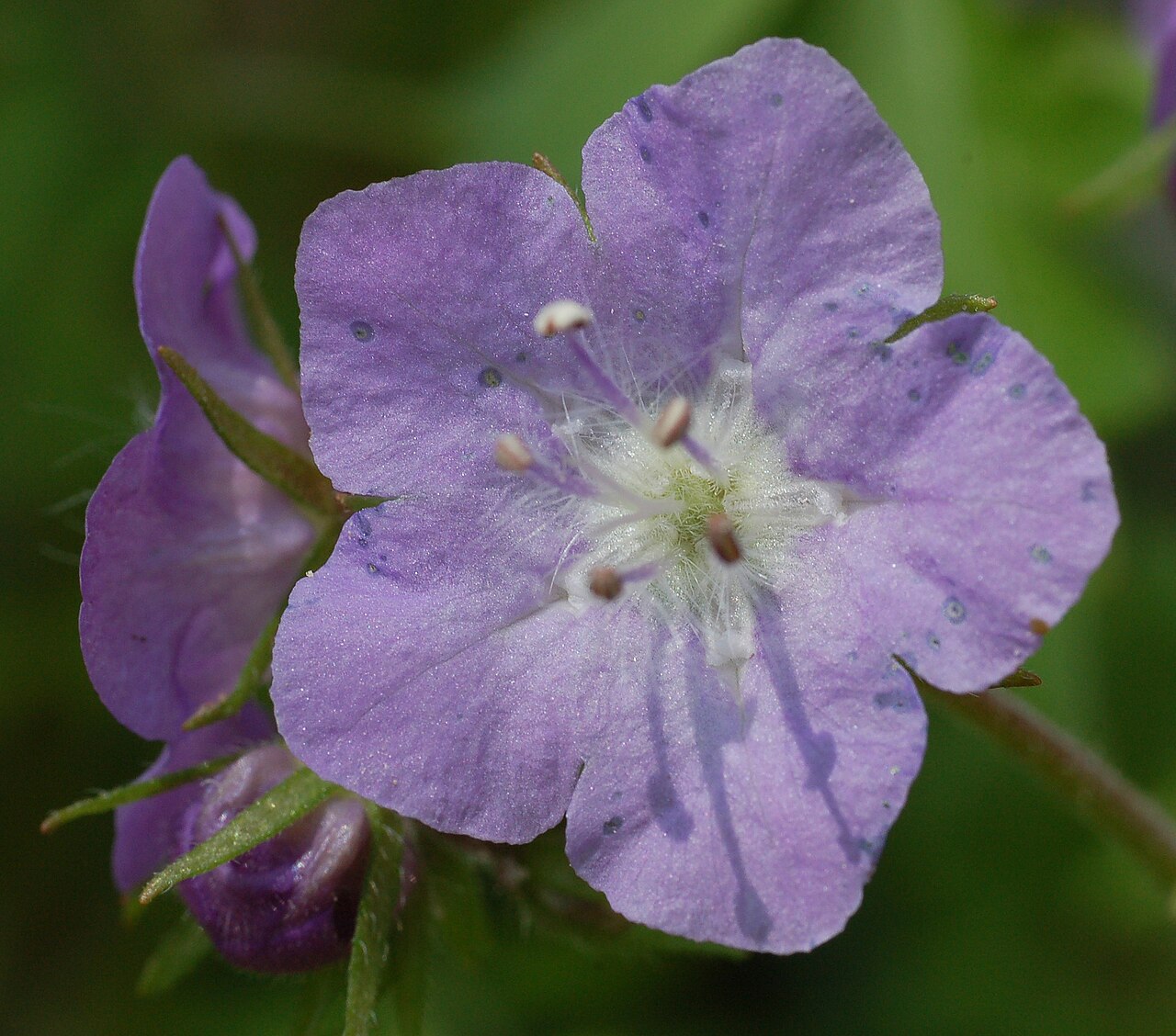
Small blue-purple to lavender flowers open in loose clusters, each with a five-lobed corolla and visible stamens. Flowering is mainly in spring, broadly April–May in many southeastern locations, with differences by elevation and year. The bloom is a seasonal event rather than an all-summer carpet. Photograph flowers and the divided leaves together to distinguish the species from other purple woodland wildflowers.
Fruit & Seeds
Small capsules follow the flowers and release seeds as the reproductive stems mature. Allow some of these to develop if a continuing colony is the goal. Newly shed seed and young seedlings are easy to remove unintentionally during a thorough garden cleanup. Mark the patch before the flowering stems disappear so that its next generation is not automatically treated as weeds.
Quick Facts
| Scientific Name | Phacelia bipinnatifida |
| Family | Boraginaceae in broad treatments; Hydrophyllaceae in some classifications |
| Plant Type | Herbaceous biennial wildflower |
| Mature Height | Usually 1–3 ft in flower |
| Mature Spread | About 1–3 ft for a branching flowering plant |
| Growth Rate | Seasonal; colony renews through seed |
| Sun Exposure | Part shade to shade; dappled woodland light |
| Water Needs | Moist, well-drained soil; avoid prolonged drying during growth |
| Soil Type | Organic woodland soil, including suitable rocky slopes |
| Soil pH | Acidic to near neutral; some alkalinity tolerated |
| Bloom Time | Spring; commonly April–May |
| Flower Color | Blue-purple to lavender |
| Fall Color | Not a primary display; generations may be in different stages |
| Fruit | Small dry capsules |
| Deer Resistant | Not guaranteed; protect where browsing is observed |
| USDA Hardiness Zones | Approximately 5–8 |
Native Range
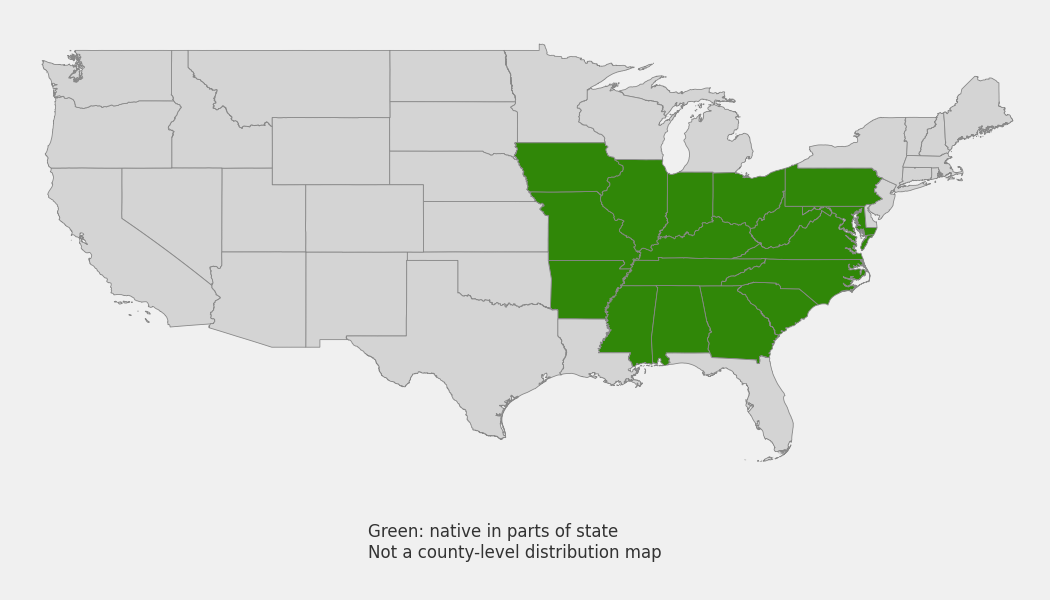
The species is native to eastern and central portions of the United States, especially the Southeast and adjoining woodland regions. The documented state distribution in the NC State account includes Alabama, Arkansas, Georgia, Iowa, Illinois, Indiana, Kentucky, Maryland, Missouri, Mississippi, North Carolina, Ohio, Pennsylvania, South Carolina, Tennessee, Virginia and West Virginia. This map summarizes that state-level range, not all places where gardeners can grow it.
In North Carolina the plant is much more associated with the mountains than the eastern lowlands. Moist rocky woods, slopes and stream-associated woodland settings provide a useful habitat model. A stream association does not make it an aquatic plant; roots still need an appropriate soil environment rather than standing water around the crown.
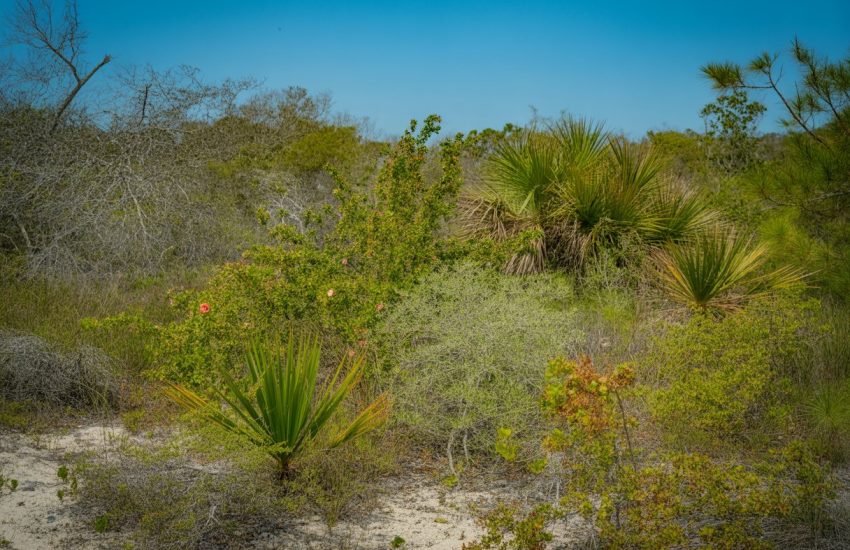
The photographs here include botanical garden plants outside or away from particular natural populations. They are used for identification, not as proof that the species is native at every photographic location. For a restoration planting, consult local floristic records and seek a regional seed source rather than using the map alone to choose material.
📋 Regional plant list: North Carolina & South Carolina native plant list
Growing & Care Guide
Light
Choose part shade, dappled light or a shaded woodland bed. Spring light under deciduous trees can support growth before the canopy fully closes. Avoid assuming that a cool shaded April position stays cool in July if nearby vegetation is later removed. A hot exposed border usually defeats the woodland character that makes this plant useful in the first place.
Soil & Water
Maintain moisture during active growth without keeping the soil stagnant. Leaf mold and an intact woodland soil surface are better models than a highly fertilized annual-flower bed. On a slope, water gently enough that seeds and small seedlings are not washed away. In a container, drainage holes do not compensate for allowing the root ball to dry out completely between waterings.
Planting Tips
Set nursery-grown plants at their established crown level and leave space for branching. Place them where seed can fall into small suitable openings near the parent. A mixed planting with longer-lived woodland perennials provides continuity after the biennial stems finish. Keep labels until the first generation of seedlings has been identified reliably, especially if several similar seedlings appear in spring.
Pruning & Maintenance
Do not cut every flowering stem as soon as petals fade if you want self-renewal. Let selected plants mature seed, then remove spent stems where they interfere with paths or small neighbors. Thin crowded seedlings rather than expecting every one to make a full-size plant. The older individual dying after seed production is usually a normal life-cycle event, not a reason to drench the patch.
Propagation
Seed is the appropriate starting point for a new colony. Use a reputable native-plant grower’s species-specific sowing instructions, as germination depends on seed history and seasonal conditions. Young self-sown plants can be moved carefully while small, with moisture during re-establishment. Avoid digging established wild plants; a biennial removed before setting seed represents both that plant and part of the next generation.
Landscape Uses
- A self-renewing spring layer in a moist woodland garden
- Purple flowers among compatible shade perennials
- An informal shaded slope with small seedling opportunities
- A teaching planting demonstrating the biennial life cycle
Wildlife & Ecological Value
For Pollinators
Flowers provide a spring resource for visiting bees. Botanical references associate the genus Phacelia with specialized bees, but a genus-level association should not be converted into a guarantee that every listed specialist will occur in a particular garden. Observe local visitors and keep the planting free of insecticide during flowering.
Birds
The patch contributes small-scale structure and insect activity to a broader woodland garden. Its ecological role should not be inflated into a major bird-food claim without species-specific evidence. Retaining some natural seed production and leaf litter supports the habitat context while also maintaining the plant’s own population.
Mammals
Young plants can be affected by browsing or trampling even when a species is described as easy to grow. Monitor a small trial planting before committing a large area. This guide does not identify fernleaf phacelia as an edible crop for people or animals, and its attractive flowers should not be used as evidence of food safety.
Ecosystem Role
A biennial occupies a different niche from a permanent woody plant or a long-lived clump-forming perennial. It takes advantage of small openings and renews itself through seed. Allowing that controlled movement in a garden creates a dynamic understory rather than a rigid arrangement in which every stem must remain in the same position year after year.
Cultural & Historical Uses
The epithet bipinnatifida points to the divided foliage, a useful botanical feature for anyone learning the plant. The common names fernleaf, purple and loose-flowered phacelia emphasize different visible traits. Keeping the scientific name alongside a garden label avoids confusion with other members of a large genus.
Family placement differs among botanical systems: some use a broad Boraginaceae while others recognize Hydrophyllaceae. That difference in classification does not mean the plant in the garden has changed identity. Record the species name first and note the family convention when comparing nursery lists, floras and database entries.
No unverified medicinal or ceremonial use is supplied here. For a garden or educational setting, the most useful story is its biennial rhythm and the way its foliage and flowers fit a woodland season. Nursery propagation and responsible seed sourcing allow that story to be shared without removing plants from natural habitats.
Frequently Asked Questions
Is fernleaf phacelia a perennial ground cover?
An individual generally behaves as a biennial, flowering and then dying after seed production. A colony can persist through seedlings, so the planting may appear permanent even though its members change.
Why did it die after flowering?
That can be the normal life cycle. Look for developing seed and a younger generation rather than assuming the older plant needs fertilizer or extra irrigation.
Can I sow agricultural phacelia seed instead?
Do not substitute on the basis of the genus name. Cover-crop packets commonly contain a different species. Order Phacelia bipinnatifida for the plant described here.
Will it grow in dense shade?
It tolerates shade, but a suitable moist woodland environment still matters. Begin with a small planting and observe growth and bloom rather than treating all shaded locations as equivalent.
How do I keep a colony without letting it overwhelm neighbors?
Allow selected stems to set seed, recognize the seedlings, and thin or move extras while small. Retain some seedling space but remove plants encroaching on delicate neighbors or paths.
Sources & Further Reading
Find Native Plants
Ask growers about nursery propagation and regional provenance. Browse our NC native plant nurseries, SC native plant nurseries directory for suppliers. Explore the native nursery finder.