Mouse-eared Coreopsis (Coreopsis auriculata)
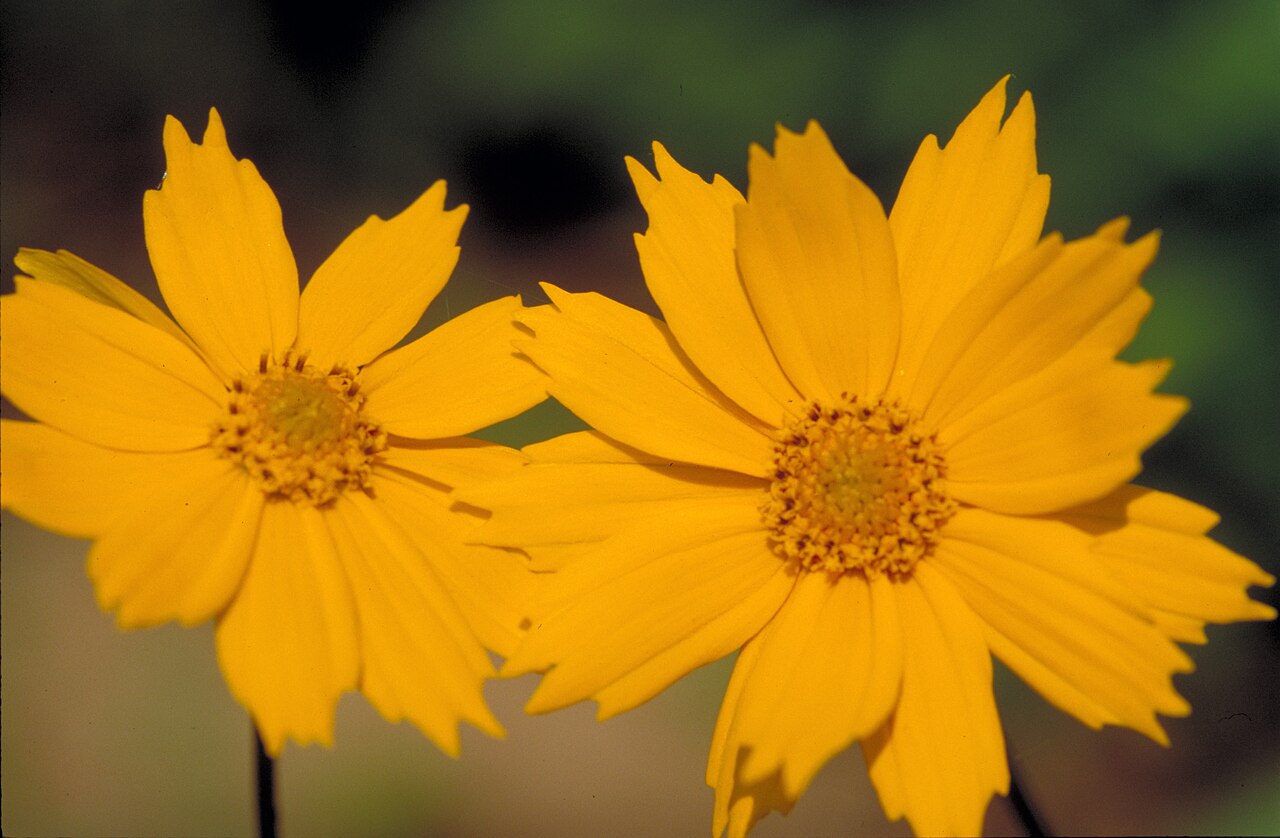
Mouse-eared coreopsis earns its place near the front of a native border. Yellow flower heads stand above a comparatively low patch of green leaves, bringing clear spring color without the towering stems associated with some other tickseeds. Its botanical name is Coreopsis auriculata. The small ear-like lobes near the base of many leaves explain both “auriculata” and the familiar common name.
This southeastern perennial spreads by short runners and can gradually make a colony. It is useful along an open path or in a sunny mixed planting where those small expansions are welcome. The species commonly reaches about 1–2 feet in flower. Compact nursery selections, especially Nana, can be shorter; the photographs of Nana on this page are labeled so that a dwarf selection is not mistaken for the full size range of wild plants.
Give mouse-eared coreopsis well-drained soil and sunlight, with some tolerance for part shade. It can manage occasional dry periods after establishment, but it is not a substitute for a true desert plant. Its main flowering season is spring into early summer. Removing spent flowers can encourage more bloom; it does not guarantee an uninterrupted spring-to-frost display in every climate or planting.
Identification
Stems & Growth Habit
Upright flowering stalks rise above a leafy base. A mature patch may contain several rooted shoots connected by runners. The overall form is lower and more compact than tall Coreopsis species used at the back of a meadow. Look for the leaves as well as the flower heads: yellow daisies alone are insufficient to distinguish the many native and cultivated members of this genus.
Leaves
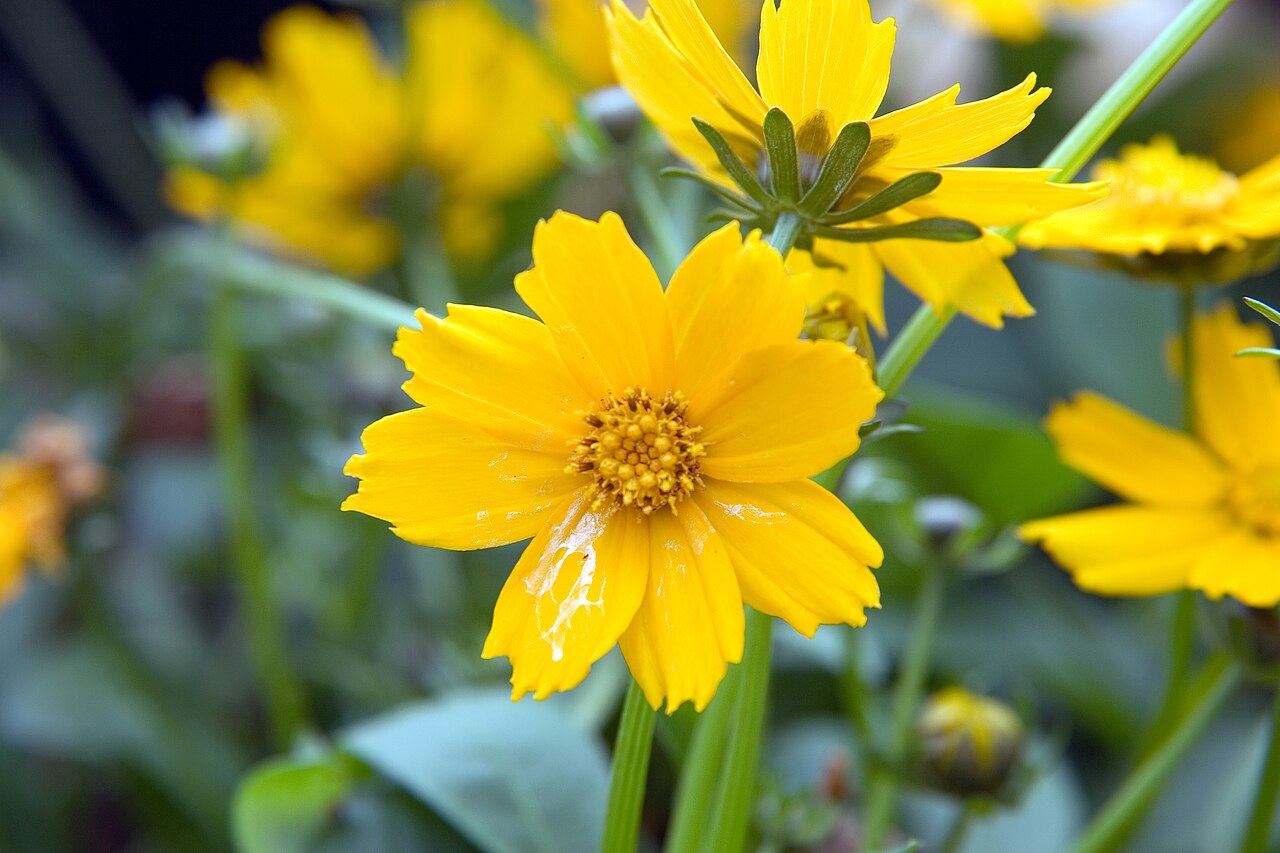
The leaves are generally oval to somewhat elongated and may have one or two small side lobes near their bases. Not every leaf displays equally obvious ears. Lower leaves and their stalks are especially useful to examine, while the foliage occupies much of the lower part of the flowering plant. Leaf surfaces may be softly hairy. A whole-plant photograph documents this character better than a close crop of one bloom.
Flowers
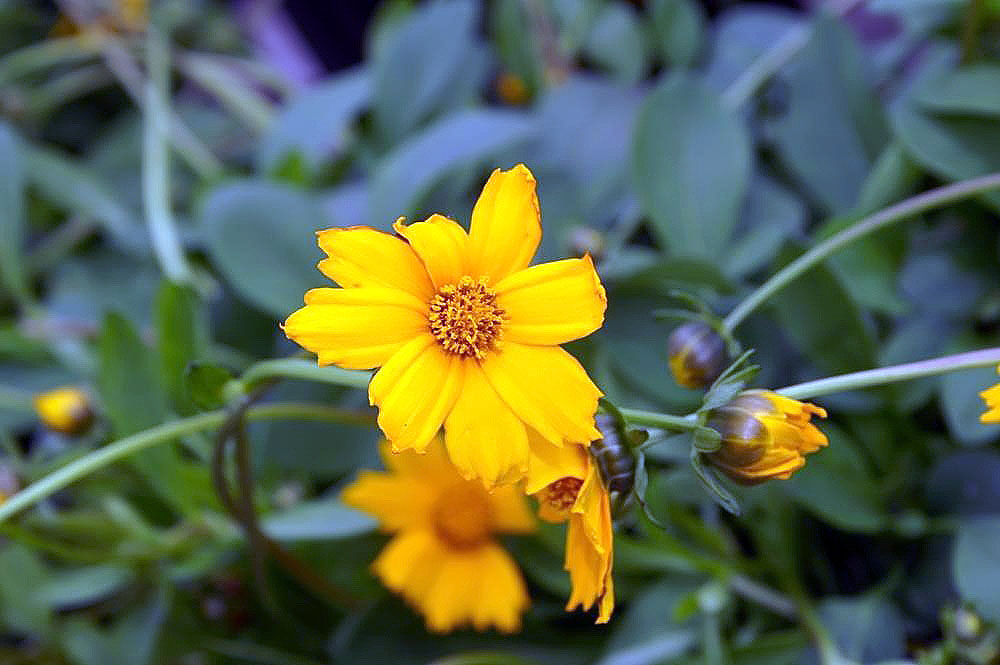
The flower head is a composite structure: conspicuous yellow rays surround smaller central disk flowers. Ray tips are notched or lobed, producing the familiar tickseed outline. Primary flowering is usually during April–June in the Southeast, with timing shifted by weather and location. Size and repeat bloom can vary among garden selections. The central disk is not a single flower and should not be confused with a seed capsule.
Fruit & Seeds
Following pollination, the head develops small dry one-seeded fruits. Leaving some mature heads allows seed production; removing all of them favors a tidier appearance and may support further flowering. The name tickseed refers to the fruits’ appearance, not to any special ability of the plant to attract ticks. For propagation, collect only from a documented garden source and keep the parent’s name attached to the seed.
Quick Facts
| Scientific Name | Coreopsis auriculata |
| Family | Asteraceae |
| Plant Type | Herbaceous perennial; spreading by runners |
| Mature Height | Usually 1–2 ft in flower; dwarf cultivars shorter |
| Mature Spread | Individual clumps about 6–9 in wide; colonies expand |
| Growth Rate | Moderate in suitable conditions |
| Sun Exposure | Full sun to part shade |
| Water Needs | Average moisture; occasional dry periods tolerated after establishment |
| Soil Type | Well-drained loam or sandy soil |
| Soil pH | Acidic to near neutral |
| Bloom Time | Mainly spring–early summer; later flowers possible |
| Flower Color | Yellow rays and disks |
| Fall Color | Not a principal ornamental feature |
| Fruit | Small dry one-seeded fruits in spent heads |
| Deer Resistant | Often relatively resistant; not browse-proof |
| USDA Hardiness Zones | Approximately 4–9; provenance and drainage matter |
Native Range
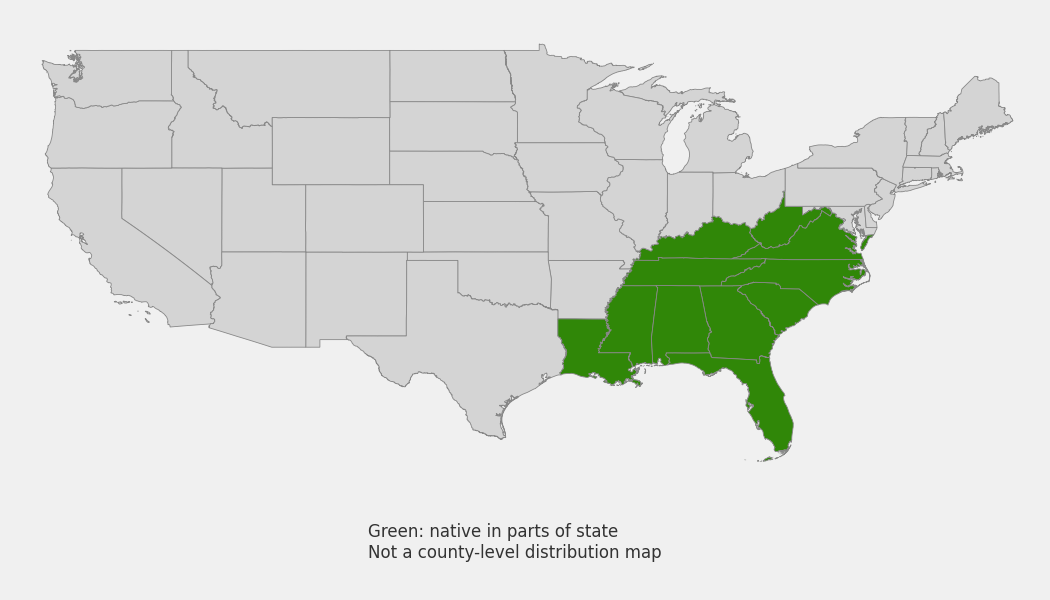
Coreopsis auriculata is native to the southeastern United States, with a documented range extending from Virginia and Kentucky south through the Carolinas and adjoining states to the Gulf region. The state list used here follows the botanical distribution recognized by Kew and the NC State plant account: Alabama, Florida, Georgia, Kentucky, Louisiana, Mississippi, North Carolina, South Carolina, Tennessee, Virginia and West Virginia.
Within this range, the plant occurs in suitable open or partly open habitats rather than uniformly across every county. Garden plants seen outside these states are not evidence of a broader native range. A commercially selected dwarf form may flourish far from the wild distribution, which is a horticultural fact rather than a change in botanical nativity.
The Carolinas regional table is therefore an appropriate place to feature this species, but gardeners should still consider their local site. A sunny, draining border is different from a saturated rain-garden basin or a deeply shaded woodland floor. Use the map as an orientation tool and county floras or local botanical guidance for restoration decisions.
📋 Regional plant list: North Carolina & South Carolina native plant list
Growing & Care Guide
Light
Use full sun for a compact, freely flowering patch, or light part shade where afternoons are especially hot. A position under a dense shrub canopy may keep leaves alive but give a disappointing floral display. Watch how neighboring plants expand through the season; a border that was sunny at planting can become shaded when taller perennials fill in.
Soil & Water
A soil that drains after rainfall is more important than high fertility. Heavy fertilization or an overly lush wet site can encourage sprawling growth. Water new plants until roots establish, then respond to actual soil moisture instead of running the same irrigation schedule all year. Brief dry spells are generally less concerning than a crown remaining saturated for long periods.
Planting Tips
Plant with the crown near the existing soil surface and water the root ball thoroughly. Space plants for the intended effect: a small cluster can join into a patch, whereas an isolated accent needs room to reveal its own outline. Keep mulch from covering the crown and avoid landscape fabric where runners are meant to root. Label compact selections so later division does not lose their identity.
Pruning & Maintenance
Remove spent stems if a neat border is the goal, and consider a light tidy-up after the main bloom. Some gardeners shear a large planting rather than deadheading every head, but do not remove all healthy basal foliage. Retain selected seed heads where wildlife and reseeding matter. Check the edge of a colony once or twice a season and move runners that extend into a path.
Propagation
Spring division is a practical way to extend an established patch while preserving a cultivar. Separate healthy rooted portions, replant promptly and support them with moisture while they settle. Seed creates genetic variation and may not reproduce a named selection. Nursery-propagated regional plants are preferable to digging wild clumps, even when a roadside patch appears abundant.
Landscape Uses
- Low yellow-flowered edging beside an open garden path
- Small drifts at the front of a pollinator border
- A spreading component in a mixed native cottage garden
- A sunny pocket where a compact perennial is preferable to tall tickseed
Wildlife & Ecological Value
For Pollinators
The composite heads offer many small flowers accessible to visiting insects. Bees and butterflies can use the display, especially during its main spring and early-summer season. Keep some other native species flowering later so the patch contributes to a sequence rather than an isolated burst of garden color. Avoid spraying open blooms.
Birds
Spent heads can provide seeds, and the planting participates in a larger insect-rich garden. Leaving a portion standing is an easy compromise between seed availability and deadheading. Do not describe it as a fruiting shrub: its dry seeds and low cover play a different role from berries and woody nesting structure.
Mammals
Mouse-eared coreopsis is often listed as relatively resistant to deer damage, but young shoots are not guaranteed protection. Observe local browsing before depending on it as the only unprotected plant in a high-pressure site. The common name mouse-ear describes leaf shape, not a claim about a special relationship with mice.
Ecosystem Role
A spreading perennial can help fill small gaps in a planted community and reduce exposed soil. It is not a reason to replace all other low plants with one continuous clone. Mix species with compatible size and moisture needs, preserve some structural variety, and use provenance appropriate to the goal of the planting.
Cultural & Historical Uses
The name Coreopsis is associated with the appearance of the dry fruits, while auriculata calls attention to the leaf lobes. That combination gives gardeners a useful two-part memory aid: inspect both the fruiting head and the foliage. Botanical names are particularly valuable in a genus represented by many yellow-flowered nursery plants.
The North Carolina Botanical Garden’s Wildflower of the Year program selected this species in 1991. Its continuing garden appeal rests on manageable stature, bright flowers and suitability for informal native borders. Cultivars broaden the range of garden sizes, but their names should be retained so photographs and mature dimensions are interpreted correctly.
No specific traditional medicinal use is asserted here. An attractive, well-documented garden role is sufficient reason to grow this plant. For educational plantings, record the cultivar or seed source, leave examples of the distinctive basal leaves visible, and show visitors how a composite flower head develops into a seed-bearing structure.
Frequently Asked Questions
Does mouse-eared coreopsis bloom until frost?
The main season is spring to early summer. Deadheading can produce additional flowers, but weather, moisture and selection affect repeat bloom. A guaranteed continuous display would overstate its performance.
Is Nana the same size as a wild plant?
No. Nana is selected for compact growth. The species can reach roughly 1–2 feet in flower, so do not use a dwarf cultivar photograph as the sole guide to mature height.
Will it spread aggressively?
It can form a colony by runners, but the expansion is usually manageable in a garden. Check edges and divide or move unwanted rooted pieces rather than assuming it will remain one small clump forever.
Can it grow in wet clay?
Persistent poor drainage is a poor choice. Improve the site across a useful area or choose a plant suited to wet soil; a small pocket of potting mix will not correct a waterlogged bed.
How do I recognize it among other tickseeds?
Check the low leafy base and the small lateral lobes near the base of many leaves, along with the flower head and botanical label. Yellow petals alone do not establish the species.
Sources & Further Reading
Find Native Plants
Ask growers about nursery propagation and regional provenance. Browse our NC native plant nurseries, SC native plant nurseries directory for suppliers. Explore the native nursery finder.