Mountain Rosebay (Rhododendron catawbiense)
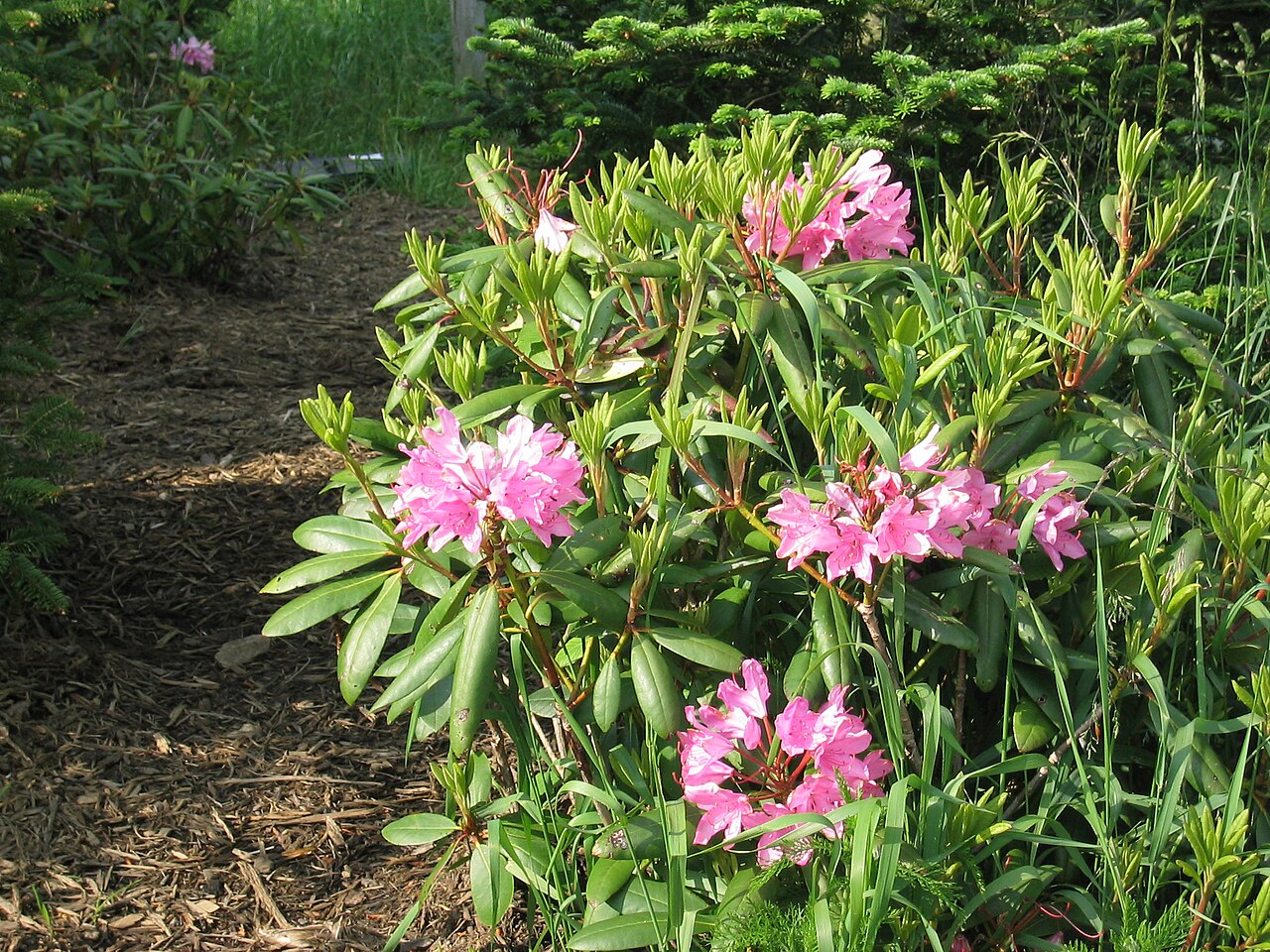
Mountain rosebay is one of the defining flowering shrubs of the southern Appalachians. Its rounded clusters of pinkish purple flowers appear above substantial evergreen leaves, turning a woodland edge into a spring spectacle. The species is Rhododendron catawbiense, also called Catawba rhododendron. It belongs in a garden for the same reasons it commands attention on a mountain trail: bold foliage, a substantial branching framework, and flowers that look particularly luminous against a green forest background.
This is a woody shrub, not a small bedding azalea. A typical mature garden plant reaches about 6–10 feet in height and may be equally wide or wider; old plants in favorable settings can become larger. Plan its position around that eventual size. Mountain rosebay is most convincing when its branches can develop naturally rather than being repeatedly cut back to fit beneath a low window or into a narrow strip beside a sidewalk.
The main practical requirement is the root environment. Cool, acidic, humus-rich soil that stays moist but drains freely matters more than a colorful fertilizer label. In the Carolinas, a wooded mountain or suitable Piedmont site is a better starting point than a hot, exposed coastal yard. The plant’s presence on a two-state regional list does not imply that every part of either state provides its native habitat or an easy garden setting.
Identification
Bark & Stems
Several woody stems usually rise from the base and branch into a rounded or spreading crown. Younger shoots are relatively smooth; older bark becomes gray-brown and finely textured. Large terminal flower buds can be distinguished from smaller vegetative buds before bloom. Do not judge a dormant shrub only by height: pruning and garden selection can change its outline without changing the species.
Leaves
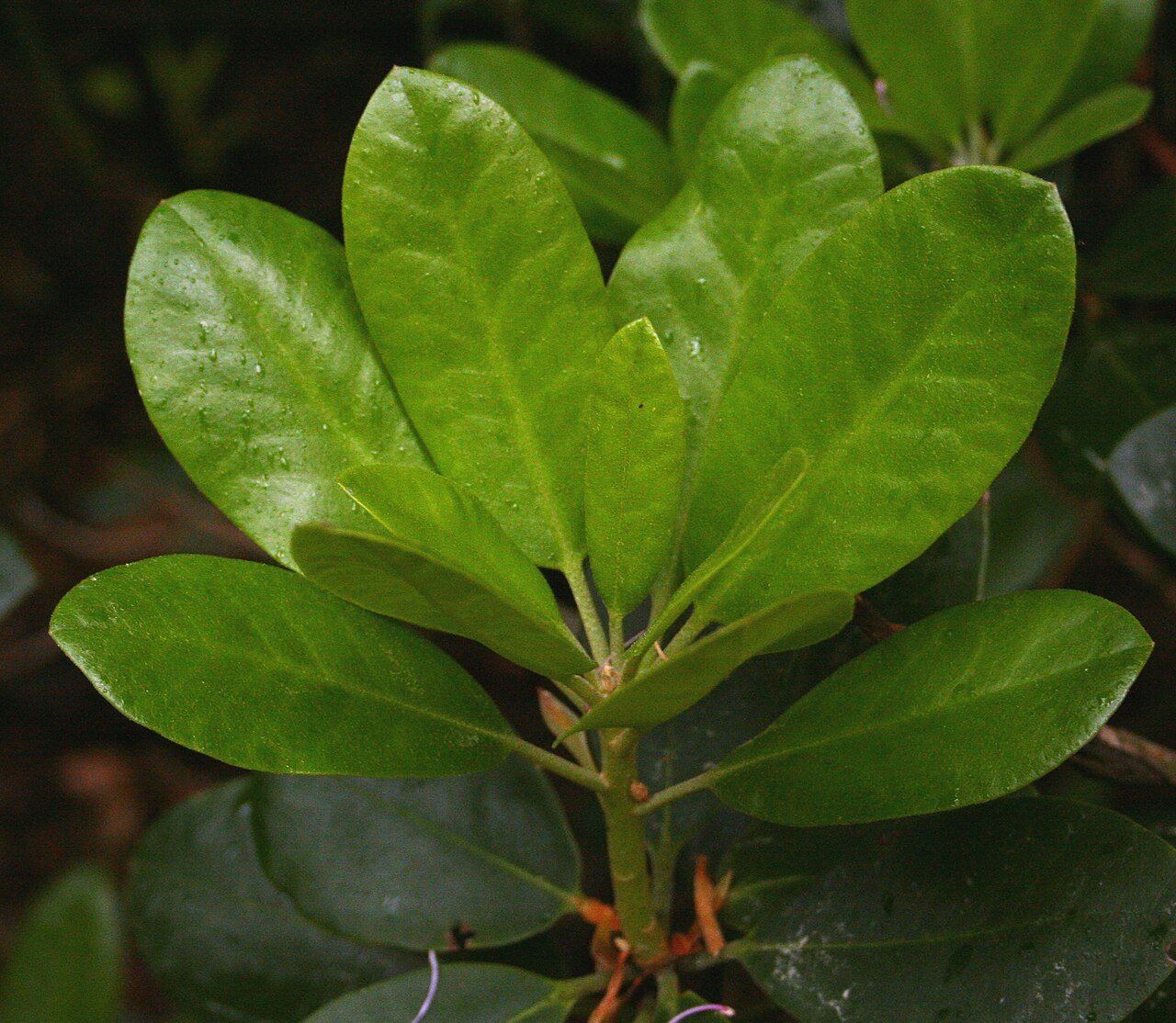
The evergreen leaves are simple, leathery and broadly elliptic to oblong, commonly several inches long. They are arranged along the shoot but appear concentrated near its end. Their smooth mature surfaces and broad outline give the plant a coarse texture. Check an entire shoot, including leaf undersides and the bud, rather than identifying a rhododendron solely from one detached leaf.
Flowers
The terminal flower clusters carry numerous open, funnel-to-bell-shaped blooms, normally lavender-pink to purple with contrasting markings in the throat. Bloom timing varies with elevation and season, broadly during spring into early summer. White or unusually intense garden flowers can belong to selections or hybrids. A trade name containing “Catawbiense” does not by itself prove that a garden shrub is the unhybridized native species.
Fruit & Seeds
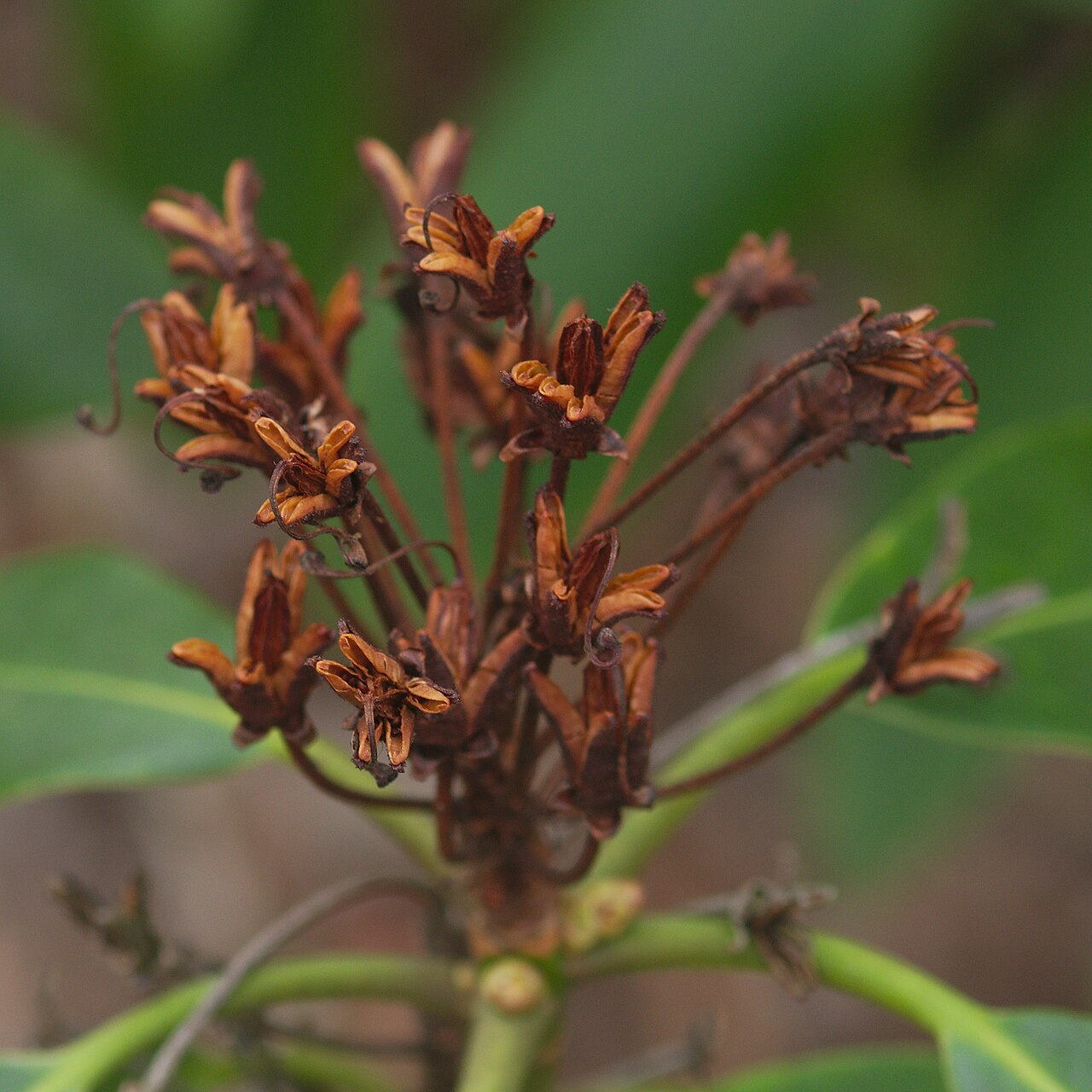
After flowering, fertilized blossoms develop dry capsules rather than fleshy berries. Old capsules and their supporting stalks may remain visible after seeds have dispersed. The photograph below documents that less showy part of the life cycle. Capsules help distinguish this shrub’s fruiting structure from berry-producing woodland plants, but flowers, leaves and provenance remain important for species identification.
Quick Facts
| Scientific Name | Rhododendron catawbiense |
| Family | Ericaceae |
| Plant Type | Broadleaf evergreen shrub |
| Mature Height | Usually 6–10 ft; old plants occasionally taller |
| Mature Spread | About 8–10 ft; allow room for age-related spread |
| Growth Rate | Slow to moderate; strongly site-dependent |
| Sun Exposure | Part shade; tolerates shade; cool moist sites can support more sun |
| Water Needs | Consistent moisture with free drainage; not a bog plant |
| Soil Type | Humus-rich, well-drained woodland soil |
| Soil pH | Acidic; avoid alkaline planting sites |
| Bloom Time | Spring to early summer; later at higher elevations |
| Flower Color | Lavender-pink to purple |
| Fall Color | Evergreen; older leaves shed naturally |
| Fruit | Dry seed capsules |
| Deer Resistant | No; browsing can be substantial |
| USDA Hardiness Zones | Approximately 4–8; summer heat and root conditions also matter |
Native Range
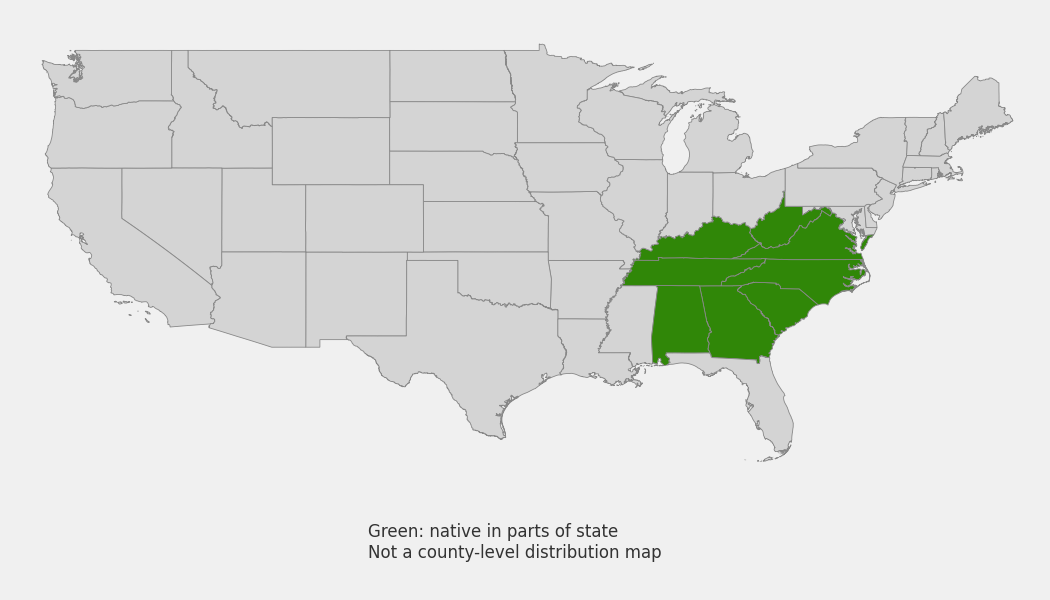
The native distribution is centered on the Appalachian region of the eastern United States. Botanical references document Alabama, Georgia, Kentucky, North Carolina, South Carolina, Tennessee, Virginia and West Virginia. Within that broad outline, populations occupy particular slopes, ridges and woodland environments. A green state on the map is not a claim that the shrub grows naturally throughout its lowlands, cities or coastal plain.
North Carolina is central to the species’ botanical and horticultural identity. South Carolina populations are associated with its suitable upland settings rather than a general statewide distribution. When buying plants for a restoration project, seek regional provenance and compare the planting site with local botanical records. A hardy garden selection shipped from elsewhere can survive without representing the local wild population.
This map excludes the plant’s many cultivated locations in Europe, Canada and other parts of the United States. It also does not map the parentage of commercial hybrids. For county-level decisions, consult the USDA link and a state flora; for garden success, inspect drainage, soil acidity and afternoon exposure at the actual planting position.
📋 Regional plant list: North Carolina & South Carolina native plant list
Growing & Care Guide
Light
Start with filtered woodland light or morning sun and afternoon protection. A shaded root zone reduces drying and heat stress. A dense canopy can reduce bloom, but opening a mature site abruptly may expose leaves and shallow roots to conditions they have not experienced. Evaluate summer afternoon light, not just the pleasant sun reaching the bed before deciduous trees leaf out.
Soil & Water
Test the soil before planting. Where the native soil is strongly alkaline or chronically waterlogged, another species may be the more durable choice. Incorporate site-appropriate organic material across the bed rather than making a tiny enriched pocket in impermeable clay. Water thoroughly after planting and then according to soil moisture. Damp soil and stagnant saturated soil are not interchangeable conditions.
Planting Tips
Choose a nursery-propagated shrub with a sound root system. Set the root crown at the correct grade rather than burying it beneath extra soil or mulch. Keep an organic mulch layer over the root area but clear of the stems. Allow its future width when spacing neighboring plants, and keep foot traffic away from the shallow roots. Spring or autumn planting often offers gentler establishment weather than midsummer.
Pruning & Maintenance
Remove damaged wood as needed, but schedule shaping soon after bloom if next year’s flowers matter. The shrub develops flower buds on existing growth; a late seasonal haircut can remove them. Avoid routine shearing into a tight geometric shell. If foliage wilts while soil is already wet, do not automatically add more water: examine drainage and root health. Protect young shrubs from deer where browsing pressure is high.
Propagation
Seed and vegetative propagation serve different purposes. Seed-grown plants retain variation and require patience; cuttings or layering preserve the characteristics of a selected parent. Use a species-specific propagation reference for timing and treatment rather than applying a general shrub recipe. For conservation planting, buy documented regional stock instead of collecting material from wild populations or assuming a named hybrid is equivalent.
Landscape Uses
- Evergreen structure along a roomy woodland edge
- A flowering specimen in an acidic, well-drained shade garden
- Small groups with space for broad mature crowns
- A naturalistic screen where browsing and root moisture can be managed
Wildlife & Ecological Value
For Pollinators
The flowers are visited by bees and other nectar-seeking animals, including butterflies and hummingbirds. A shrub in bloom contributes to a larger seasonal planting; it should not be the garden’s only floral resource. Combine it with plants flowering before and after its display, without crowding its root zone or replacing the woodland conditions on which it depends.
Birds
Dense evergreen branching provides useful cover. This is not a berry shrub, so do not promise a crop of fleshy bird fruit. Its value is structural and part of a diverse habitat planting, complemented by nearby native plants that provide seeds, fruit or insect prey at other times of year.
Mammals
Deer may browse mountain rosebay despite its leathery foliage and chemical defenses. “Native” does not mean deer-proof. Establish protective fencing before a young plant is repeatedly damaged, and allow enough space between mesh and foliage. The shrub is not recommended as a human or livestock food plant.
Ecosystem Role
In its native woodland setting, the shrub contributes evergreen cover and a persistent woody understory. Keeping soil and leaf litter intact around it benefits the whole planting. Garden cultivation can illustrate this forest relationship, but it does not replace protection of natural populations and their local habitat.
Cultural & Historical Uses
The scientific epithet records the Catawba association that also appears in the common name. Mountain rosebay has long attracted botanical and horticultural attention because its leaves and flower clusters are conspicuous even among the many rhododendrons. Its story is best told as that of an Appalachian species, not as a generic purple-flowered shrub.
Rhododendron catawbiense has contributed to garden breeding. That history explains why cultivar names and hybrid ancestry can complicate identification in nurseries. For a native-plant project, request the botanical name and provenance explicitly. A beautiful garden hybrid is not automatically appropriate for a planting intended to represent a local wild community.
No medicinal preparation is recommended here. Rhododendrons contain compounds that make casual ingestion inappropriate, and a common name such as rosebay should never be treated as an invitation to make tea. The useful garden lesson is observational: appreciate the flowers, document the seasons, and choose nursery propagation rather than taking shrubs from the wild.
Frequently Asked Questions
Is mountain rosebay the same as rosebay rhododendron?
Common names overlap. This page is specifically Rhododendron catawbiense. Rhododendron maximum is another native rhododendron with its own range, flowering pattern and characteristics; use the scientific name when ordering.
Can I grow it in full sun?
More sun is possible in cool settings with reliable moisture, but hot afternoon exposure is a poor default. In most garden situations, filtered light or morning sun with afternoon protection is easier to manage.
Why did my shrub lose next spring’s flowers after pruning?
Late pruning may remove already developing flower buds. If shaping is needed, work soon after flowering and avoid unnecessary heavy shearing.
Does a yellow leaf mean it needs fertilizer?
Not necessarily. Older leaves shed naturally, and poor drainage, unsuitable pH or damaged roots can affect foliage. Diagnose the site before adding nutrients or increasing irrigation.
Is the species suitable for every Carolina garden?
No. Regional nativity does not override drainage, acidity, heat exposure and provenance. A suitable upland woodland garden differs greatly from a hot coastal planting bed.
Sources & Further Reading
- NC State Extension Gardener Plant Toolbox
- World Flora Online: distribution and taxonomy
- The Morton Arboretum: Catawba rhododendron
- University of Illinois woody plants
Find Native Plants
Ask growers about nursery propagation and regional provenance. Browse our NC native plant nurseries, SC native plant nurseries directory for suppliers. Explore the native nursery finder.