
Florida Keys Thoroughwort (Koanophyllon villosum)
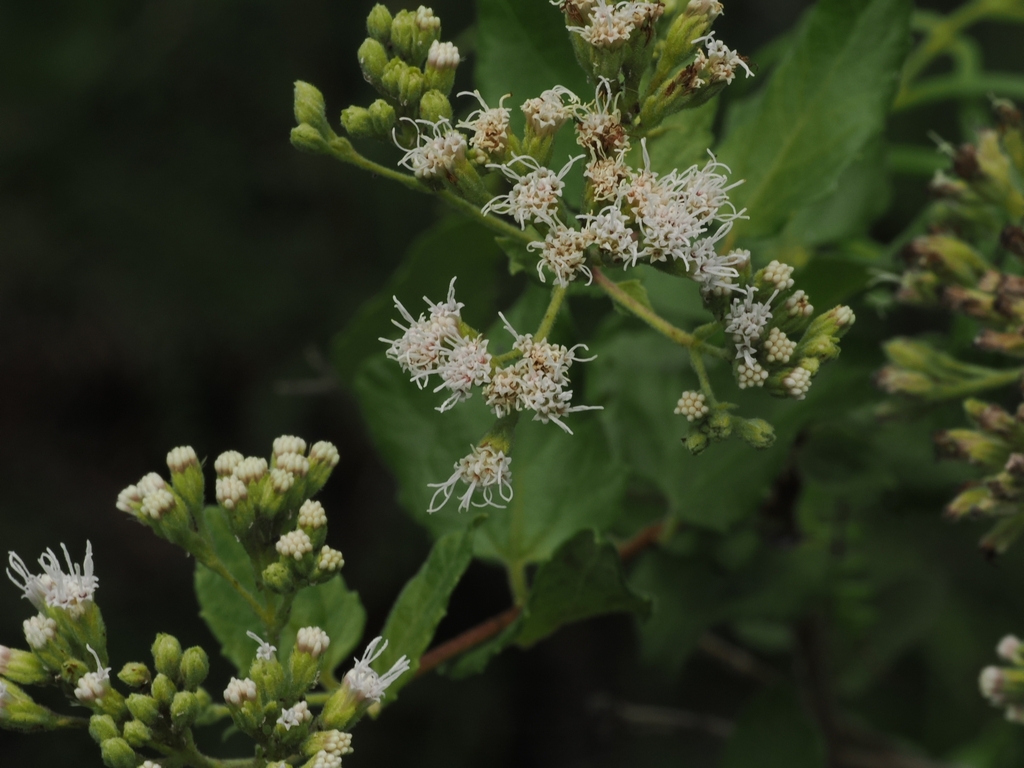
Koanophyllon villosum, known as Florida Keys Thoroughwort, Florida shrub thoroughwort or, in the Caribbean, abre camino, is a small, branching shrub of the aster family with soft, hairy leaves and clusters of small white flower heads. It is a Caribbean species that reaches the United States only in South Florida, where it grows in the endangered pine rocklands of Miami-Dade County. It was formerly called Eupatorium villosum, and older Florida books list it under that name.
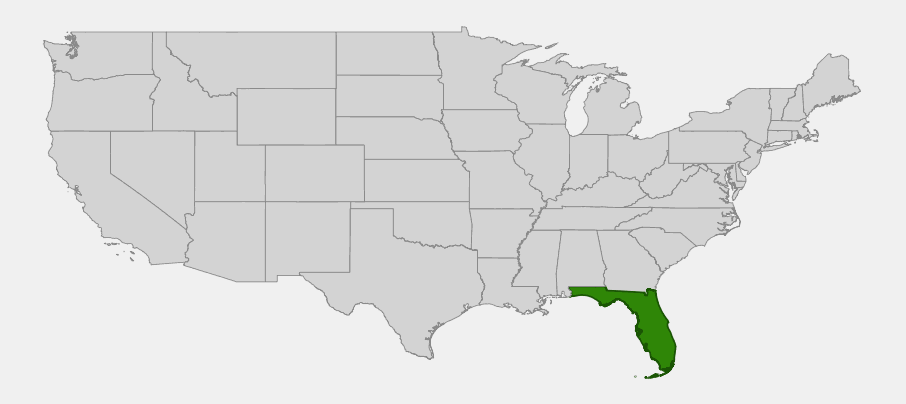
The Atlas of Florida Plants lists it as native and as a state-listed Endangered species under Florida’s Preservation of Native Flora of Florida Act, and the Atlas maps it only in Miami-Dade County. Its pine rockland habitat has been reduced to a small fraction of its original extent by development, and what remains depends on regular fire.
This page covers how to identify Florida Keys thoroughwort, its native range in Florida and the Caribbean, how it is grown in South Florida native gardens, its value to butterflies and other wildlife, and why it is protected. If you grow it, buy only nursery-propagated plants and never collect plants or seed from the wild.
Identification
Florida Keys thoroughwort looks like a woody, shrubby relative of the familiar bonesets and mistflowers. Look for a twiggy shrub with opposite, hairy leaves and small, white, rayless flower heads in clusters.
Size & Form
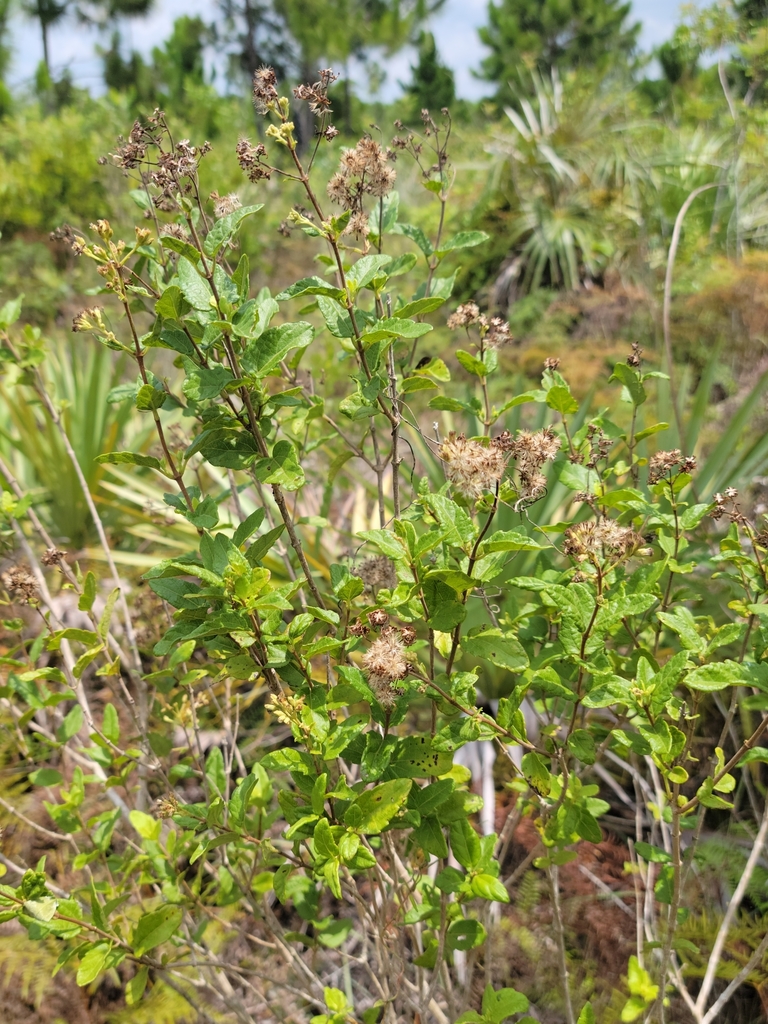
It is an upright to sprawling, much-branched shrub or subshrub usually 2 to 5 feet tall, occasionally to about 6 1/2 feet. The young stems are reddish-brown to green and covered with soft hairs; older stems become woody.
Leaves
The leaves are opposite, simple and oval to broadly lance-shaped, about 1 to 2 1/2 inches long, with smooth or slightly wavy edges and a blunt or pointed tip. They are softly hairy, especially beneath, which is the meaning of the species name villosum (“covered with long, soft hairs”).
Flowers
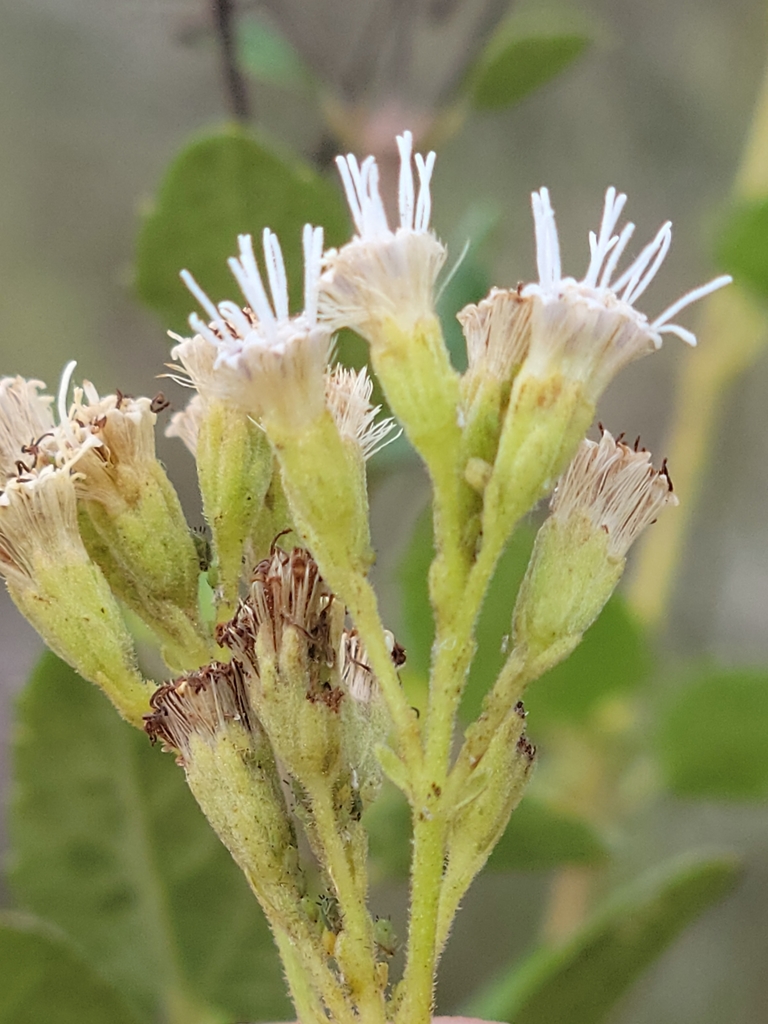
The flower heads are small, narrow and cylindrical, each with roughly 10 to 15 tubular disk flowers and no rays. The flowers are white, sometimes tinged pink, with long, protruding white styles that give the clusters a fuzzy look. Heads are grouped in rounded or flat-topped clusters at the branch tips. In Florida it blooms mainly from fall into spring, with scattered flowers at other times.
Fruit
The fruits are small, dark, ribbed achenes topped by a tuft of fine, whitish bristles (pappus) that carries them on the wind.
Similar Species
White Mistflower (Ageratina havanensis) is a related shrubby Texas native with white flowers, but it is not found wild in Florida. Florida’s herbaceous thoroughworts, such as Pink Thoroughwort, die back to the ground and are not woody. Jack-in-the-bush (Chromolaena odorata), another pine rockland shrub of the same tribe, has larger, lavender-blue to white heads and coarsely toothed, three-veined leaves.
Quick Facts
| Scientific Name | Koanophyllon villosum (Sw.) R.M. King & H. Rob. (syn. Eupatorium villosum Sw.) |
| Family | Asteraceae (aster family) |
| Plant Type | Evergreen shrub or subshrub |
| Mature Height | 2–5 ft (occasionally to 6.5 ft) |
| Mature Spread | 2–4 ft |
| Growth Rate | Moderate |
| Sun Exposure | Full sun to light shade |
| Water Needs | Low; drought tolerant once established |
| Soil Type | Thin, well-drained soil over limestone (oolite); sandy or rocky |
| Soil pH | About 7.0–8.5 (alkaline) |
| Bloom Time | Mainly fall to spring |
| Flower Color | White, sometimes tinged pink |
| Fall Color | None; evergreen |
| Fruit | Small achenes with a tuft of bristles |
| Deer Resistant | Unknown |
| USDA Hardiness Zones | 10b–11 |
Native Range
USDA PLANTS lists Florida Keys thoroughwort as native in Florida, its only U.S. state. The Atlas of Florida Plants maps it only in Miami-Dade County, where it grows in the pine rocklands of the Miami Rock Ridge, including Long Pine Key in Everglades National Park and pineland fragments in the Homestead and Florida City area. Despite the USDA common name, it is not documented in the Keys by the Atlas, and the name may reflect old records or the similar habitat of the islands.
Pine rocklands are open forests of South Florida slash pine over exposed limestone, with a rich understory of palms, shrubs and wildflowers, many of them tropical and found nowhere else in the United States. They depend on frequent fire to stay open; without it, they turn into hardwood hammock. More than 98 percent of the pine rockland outside Everglades National Park has been lost to development, which is a main reason this and many other pine rockland plants are state-listed.
Outside the United States it is native to the Caribbean, including the Bahamas, Cuba, Jamaica and Hispaniola, and to the Bay Islands of Honduras, where it grows in pinelands, coastal thickets and scrub.
📋 Regional plant lists featuring Florida Keys Thoroughwort: North & South Florida
Growing & Care Guide
Florida Keys thoroughwort is a state-listed Endangered plant, so it is only rarely offered for sale, mainly by South Florida native plant nurseries that grow it from legally obtained stock. Buy only nursery-propagated plants and never collect plants, cuttings or seed from the wild; under Florida law, endangered plants may not be removed from another person’s land or public land without permission and permits. It is best suited to native gardens and pine rockland restoration in Miami-Dade and nearby South Florida.
Light
Grow it in full sun or light, filtered shade, like the open canopy of a pine rockland. In deeper shade it becomes leggy and flowers poorly.
Soil & Water
It needs very well-drained soil and does well in the thin, alkaline, rocky or sandy soils of South Florida. It does not tolerate soggy ground. Water regularly until established; after that it is drought tolerant and seldom needs irrigation except in long dry spells.
Planting Tips
Plant it in a sunny, well-drained spot in a pine rockland-style garden with coontie, silver palm and native wildflowers. Space plants 2 to 3 feet apart. It is frost-tender and suited only to frost-free areas of South Florida (USDA zones 10b to 11).
Pruning & Maintenance
Lightly trim it after flowering to keep it bushy and remove dead wood. In nature, periodic fire burns pine rockland shrubs back and they resprout; in gardens, an occasional hard cutback in late spring can renew older plants. It has few pest problems.
Propagation
It can be propagated by softwood or semi-hardwood cuttings and from seed sown fresh on the surface of a well-drained mix. Use only plants you have legally obtained as the source.
Landscape Uses
- Pine rockland gardens: an authentic understory shrub for South Florida native landscapes
- Butterfly gardens: small white flowers attract butterflies, bees and other insects
- Conservation and restoration: planted in managed pine rockland restoration projects
- Dry, rocky sites: tolerates thin, alkaline soils over limestone
- Wildlife corridors: adds native cover in small pine rockland fragments and backyard habitats
Wildlife & Ecological Value
Like many members of the boneset tribe (Eupatorieae), Florida Keys thoroughwort is attractive to insects, especially butterflies.
For Pollinators
The small white flowers offer nectar to butterflies, small bees, wasps and flies. Plants of the boneset tribe are well known as butterfly nectar plants, and some, such as relatives in Chromolaena and Eupatorium, also attract male queen butterflies and certain moths that gather plant alkaloids used in courtship.
For Birds
Small birds such as warblers glean insects from the shrubs, and its twiggy growth provides cover in the open pinelands.
For Mammals
Small mammals and reptiles may shelter beneath it. Browsing by mammals has not been well documented.
Ecosystem Role
It is one of many tropical shrubs that make up the diverse understory of South Florida pine rocklands, a globally imperiled ecosystem. Its flowers add to the late-season nectar supply, and its persistence in the rocklands depends on regular prescribed fire.
Cultural & Historical Uses
The species was first described in 1788 by the Swedish botanist Olof Swartz as Eupatorium villosum, from plants collected in the West Indies. Botanists Robert M. King and Harold Robinson later transferred it to Koanophyllon, one of many new genera they created when they divided the huge, varied genus Eupatorium.
In the Caribbean the plant is known by names such as abre camino (“opens the way”). In Florida it is one of dozens of tropical pine rockland plants that botanists, land managers and native plant societies track and protect.
Safety note: there is little information on the toxicity of this species. Some relatives in the boneset tribe contain pyrrolizidine alkaloids that can harm the liver, so don’t eat or brew it, and keep it away from pets and livestock.
Frequently Asked Questions
Is Florida Keys thoroughwort endangered?
It is listed as Endangered by the State of Florida under the Preservation of Native Flora of Florida Act, according to the Atlas of Florida Plants. It is not federally listed. It survives in Florida only in the remaining pine rocklands of Miami-Dade County.
Is Florida Keys thoroughwort the same as Eupatorium villosum?
Yes. It was long known as Eupatorium villosum, and botanists later moved it to the genus Koanophyllon. It is also called Florida shrub thoroughwort.
Does Florida Keys thoroughwort grow in the Florida Keys?
Despite the USDA common name, the Atlas of Florida Plants maps it only in Miami-Dade County, in the pine rocklands of the mainland. Its wider range is in the Bahamas and the Greater Antilles.
Can I grow Florida Keys thoroughwort?
Yes, in frost-free South Florida, if you can find nursery-propagated plants. Give it full sun to light shade and very well-drained, alkaline soil. Never collect it from the wild.
Does Florida Keys thoroughwort attract butterflies?
Yes. Its small white flowers provide nectar for butterflies, bees and other insects, and it is a good addition to pine rockland butterfly gardens.

Looking for a nursery that carries Florida Keys Thoroughwort?
Browse our native plant nursery directory: Florida

