
Shyleaf (Aeschynomene americana)
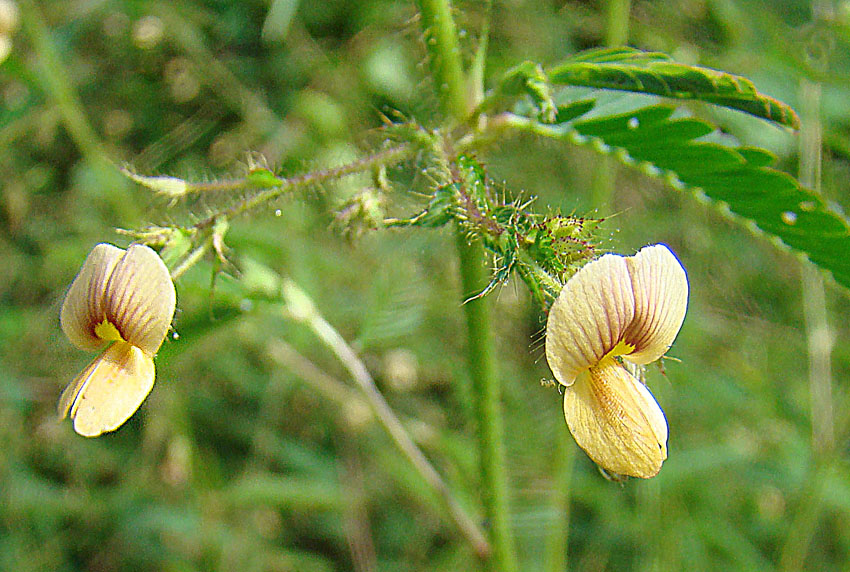
Aeschynomene americana, known as Shyleaf, American jointvetch or forage aeschynomene, is a bushy, fast-growing legume of wet, open ground in the American tropics and subtropics. Its feathery leaves fold up when touched, like those of the sensitive plant, and its small, pale yellow to peach flowers are followed by flat, jointed pods that break into sticky segments. The genus name comes from the Greek for “to be ashamed,” a reference to the bashful, folding leaves.
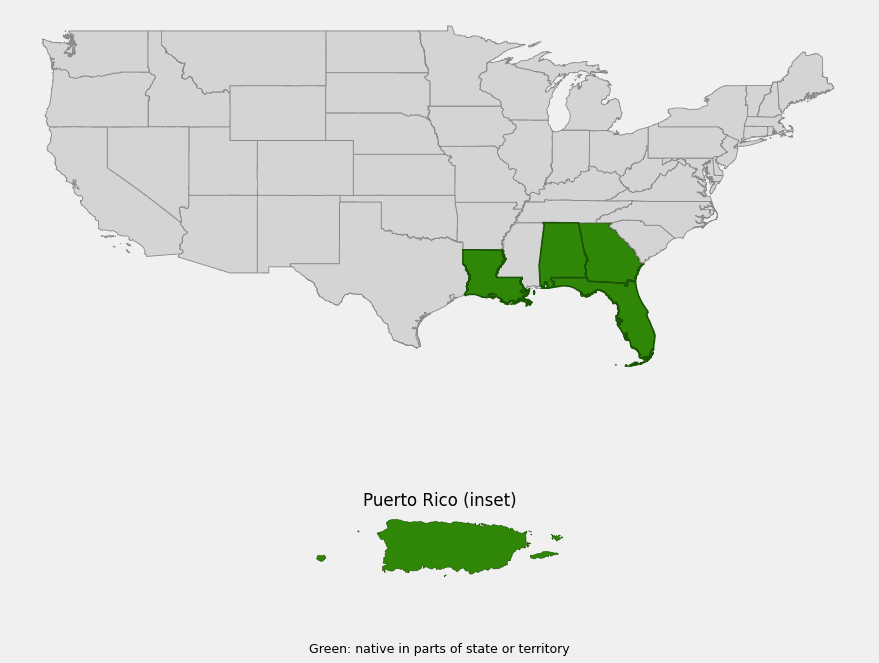
In the United States it is native to Florida, southern Georgia, Alabama and Louisiana along the Gulf Coastal Plain, and to Puerto Rico. Its range continues through the West Indies, Mexico, Central America and South America. It has been introduced across much of the Old World tropics, including Asia, Africa and Australia, as a forage and green manure plant.
Shyleaf is best known to farmers and hunters as “aeschynomene,” a high-protein forage for cattle and a favorite of white-tailed deer in food plots. This page covers how to identify it, where it grows wild, how to grow it, and its value to wildlife.
Identification
Shyleaf looks like a large, bristly sensitive plant. Look for its many-leafleted, folding leaves, sticky-bristly stems, small pea-like flowers and flat, jointed pods.
Size & Form
It is an annual or short-lived perennial, usually 2 to 6 feet tall, with a woody base in older plants. The stems are erect and branching and are covered with stiff, sometimes gland-tipped bristles that feel slightly sticky.
Leaves
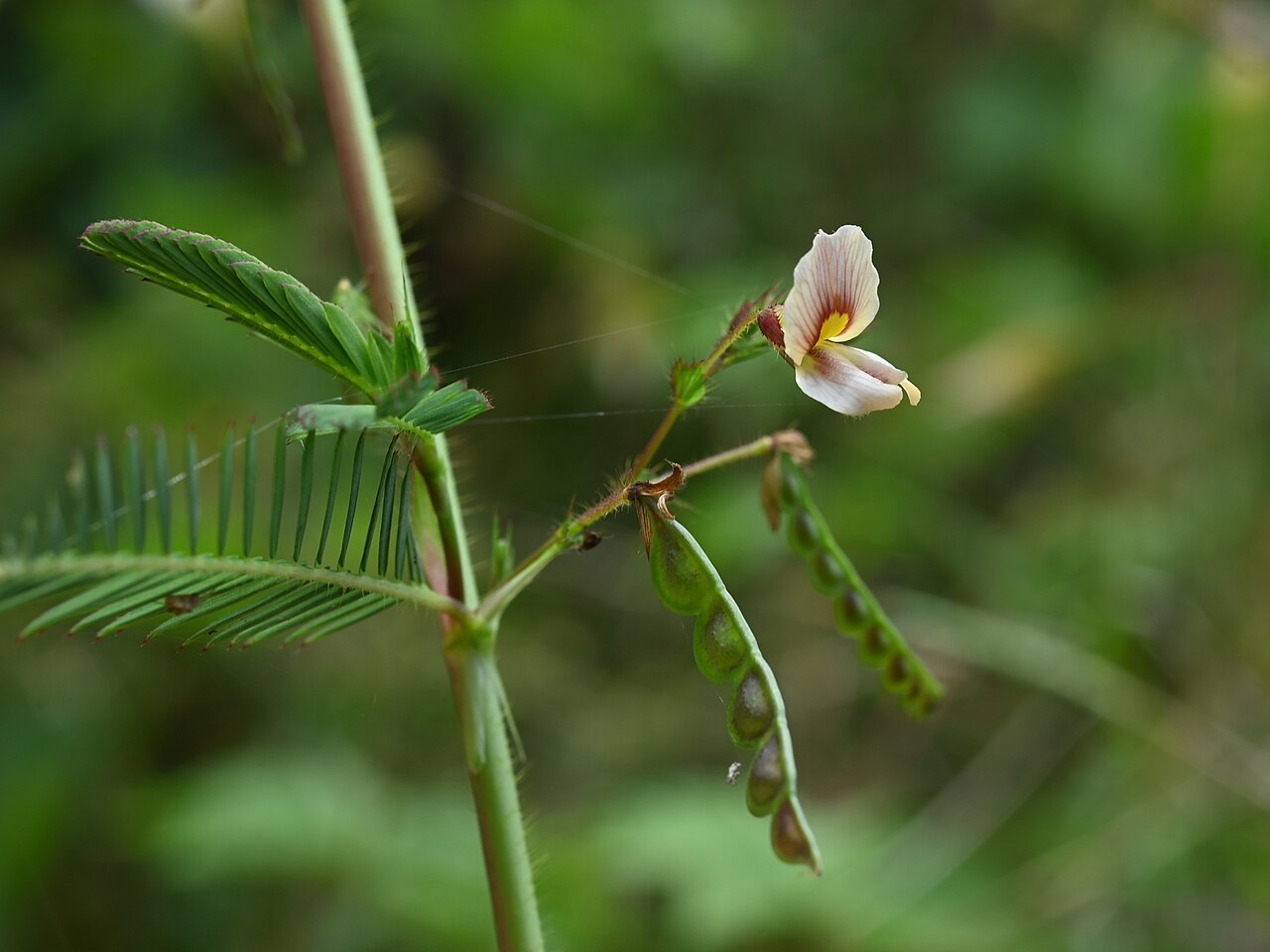
The leaves are pinnately compound, about 1 to 3 inches long, with 20 to 60 or more small, narrow, oblong leaflets. The leaflets fold together when touched and at night. At the base of each leaf are papery stipules that extend below the point of attachment.
Flowers
From late summer into fall (and much of the year in the tropics), small clusters of flowers appear in the leaf axils on bristly stalks. Each flower is about 1/4 to 3/8 inch long, pale yellow, cream, peach or pinkish-orange, with fine reddish veins on the large upper petal.
Pods
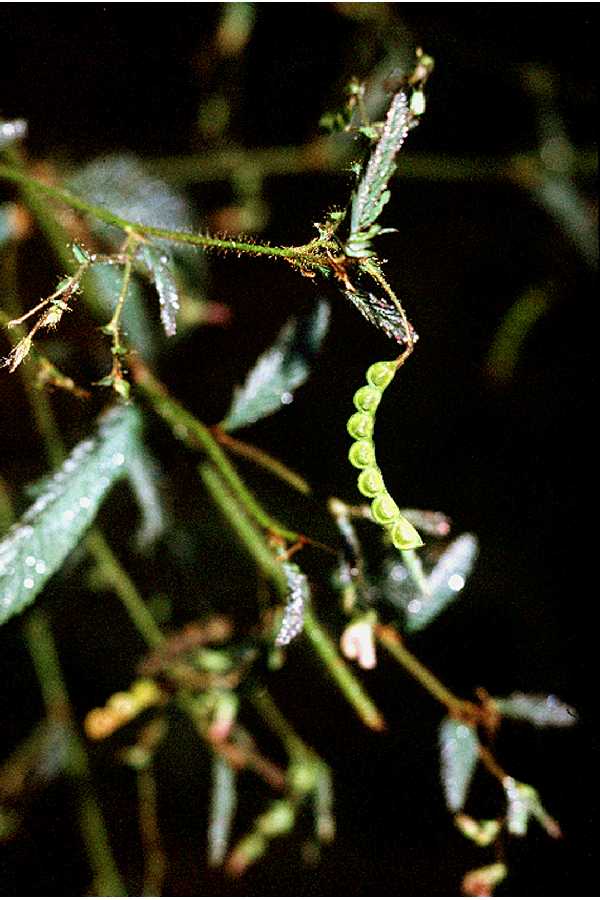
The fruit is a flat, slightly curved pod (loment) about 1 to 1 1/2 inches long, made of 4 to 9 nearly square, one-seeded segments. The segments are often bristly and break apart at the joints when ripe, sticking to fur and clothing.
Similar Species
Sensitive plant and native sensitive briars such as littleleaf sensitive briar also have folding leaves but have pink, ball-shaped flower heads and prickly stems. Sensitive partridge pea has folding leaves and bright yellow, five-petaled flowers. Other jointvetches, such as the Florida native Aeschynomene viscidula, are smaller, sprawling plants.
Quick Facts
| Scientific Name | Aeschynomene americana L. |
| Family | Fabaceae (pea or legume family) |
| Plant Type | Annual or short-lived perennial herb or subshrub |
| Mature Height | 2–6 ft |
| Mature Spread | 2–4 ft |
| Growth Rate | Fast |
| Sun Exposure | Full sun |
| Water Needs | Medium to high; moist to wet soil, tolerates brief flooding |
| Soil Type | Moist sandy, loamy or mucky soils; tolerates poor, acidic soil |
| Soil pH | About 5.0–7.0 |
| Bloom Time | Late summer–fall in the Southeast; much of the year in the tropics |
| Flower Color | Pale yellow, peach or pinkish-orange with red veins |
| Fall Color | None notable; annual plants die at frost |
| Fruit | Flat, jointed, bristly loment 1–1.5 in |
| Deer Resistant | No; heavily browsed by deer |
| USDA Hardiness Zones | 8–11 (grown as a summer annual farther north) |
Native Range
USDA PLANTS lists shyleaf as native in Alabama, Florida, Georgia and Louisiana, and in Puerto Rico. It is most common in Florida, where it grows throughout the peninsula and the Panhandle, and becomes scattered along the Gulf Coastal Plain of Georgia, Alabama and Louisiana. USDA also lists a record from Maryland, but the only known collection there came from ore piles at the Port of Baltimore in 1953, an accidental introduction, so Maryland is not treated as part of its native range here.
Beyond the United States it ranges through the West Indies, Mexico, Central America and tropical South America. It has been introduced widely in the tropics of Asia, Africa, Australia and the Pacific, including Guam, Palau and the U.S. Virgin Islands, where USDA treats it as introduced.
In the wild it grows in moist to wet, open places: wet pine flatwoods and savannas, marsh edges, pond margins, ditches, wet pastures and disturbed ground. It colonizes quickly after disturbance and often appears in roadside ditches and fields.
📋 Regional plant lists featuring Shyleaf: North & South Florida · Alabama, Georgia & Mississippi · Arkansas, Louisiana, Eastern Oklahoma & Eastern Texas · Puerto Rico
Growing & Care Guide
Shyleaf is easy to grow from seed and is sold by forage and wildlife seed suppliers, often simply as “aeschynomene” or as the cultivar ‘Glenn’. It is mainly used in pastures, deer food plots and wildlife plantings rather than ornamental beds.
Light
Plant it in full sun. It tolerates very light shade but becomes leggy and flowers poorly.
Soil & Water
It thrives in moist to wet, sandy or loamy soils, including poorly drained, acidic sites where many forage crops fail, and it tolerates short periods of flooding. It does not do well in very dry, deep sands without rain or irrigation.
Planting Tips
Sow seed in late spring to early summer once soils are warm, on a firm, well-prepared seedbed, and cover it lightly (about 1/4 inch). Hulled or scarified seed germinates faster. Inoculate the seed with the appropriate cowpea-type rhizobia if the site has not grown it before. It grows quickly in summer heat and rain.
Pruning & Maintenance
In pastures and food plots, it regrows after grazing or mowing if some leafy stems are left. It needs little or no nitrogen fertilizer because it fixes its own. Let some plants set seed if you want it to reseed the following year. In ornamental settings, its sticky pod segments can be a nuisance on clothing.
Propagation
Grow it from seed. In much of its U.S. range it behaves as a reseeding annual, returning each year from seed shed in the fall.
Landscape Uses
- Wildlife food plots: a top summer forage legume for white-tailed deer in the Southeast
- Pastures: high-protein summer forage for cattle on wet, sandy soils
- Green manure: adds nitrogen to soil when tilled in
- Wetland edges: a fast native cover for moist, open ground in its range
- Pollinator and butterfly gardens: nectar for small bees; foliage for legume-feeding caterpillars
Wildlife & Ecological Value
Shyleaf is a valuable wildlife plant across the Gulf Coast and Caribbean, feeding everything from small bees to deer and quail.
For Pollinators
Small bees visit the flowers for nectar and pollen. Like other jointvetches, it is a larval host plant for the barred yellow butterfly (Eurema daira), and its leaves are eaten by caterpillars of other sulphurs and skippers.
For Birds
Bobwhite quail, doves, wild turkeys and other seed-eating birds eat the seeds, and the dense stands give them cover.
For Mammals
White-tailed deer browse it heavily, which is why it is so widely planted in deer food plots. Cattle readily graze it and help spread its seeds on their coats and in manure.
Ecosystem Role
As a nitrogen-fixing legume, it enriches the soil of wet, sandy sites. It colonizes disturbed wet ground quickly and helps hold soil in ditches and along pond edges.
Cultural & Historical Uses
The genus name Aeschynomene comes from the Greek aischynomai, “to be ashamed,” which, like the English name shyleaf, refers to the way the leaves fold up when touched, as if bashful. In Latin America its names include pega pega and pega ropa, “sticks to clothes,” for its clinging pod segments.
Researchers in Florida developed shyleaf as a summer forage legume for cattle, and the cultivar ‘Glenn’ became popular for wet pastures. Today it is also one of the most widely planted summer crops in deer food plots across the Southeast.
Because it spreads readily by seed, it has become naturalized in many tropical countries outside the Americas. Within its native range, it is a useful native legume for wildlife and soil building.
Frequently Asked Questions
Is shyleaf (aeschynomene) native to Florida?
Yes. Shyleaf is native to Florida, where it is common, and to Georgia, Alabama and Louisiana along the Gulf Coast, and to Puerto Rico. It also grows wild through the American tropics.
Why is it called shyleaf?
Its small leaflets fold together when touched, as if shy, like those of the sensitive plant. The scientific name Aeschynomene also comes from a Greek word meaning “to be ashamed.”
Is aeschynomene good for deer food plots?
Yes. It is one of the most popular summer food plot legumes in the Southeast because deer browse it heavily and it is high in protein. It grows best on moist, sandy soils in full sun.
When should I plant aeschynomene?
Plant it in late spring to early summer when the soil is warm, on a firm seedbed, about 1/4 inch deep. Use inoculated seed if the site has not grown it before.
Is shyleaf invasive?
It is native in Florida and the Gulf Coast, where it is a natural part of wet, open habitats. It has become naturalized in many tropical countries outside the Americas where it was introduced as a forage plant.

Looking for a nursery that carries Shyleaf?
Browse our native plant nursery directory: Alabama · Florida & Georgia · Louisiana

