
Florida Willow (Salix floridana)
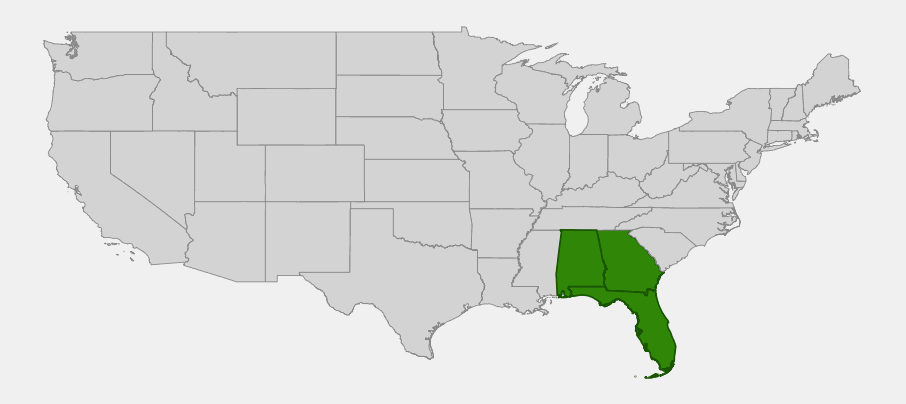
Salix floridana, the Florida Willow, is a rare native shrub or small tree found only in a small corner of the southeastern Coastal Plain. Unlike the familiar streamside willows found across much of North America, Florida Willow is a true regional specialist, restricted to spring-fed, sphagnum-mossy seepage habitats in north-central Florida, with a few outlying populations in southwestern Georgia and southern Alabama. With roughly three dozen known populations remaining, it is tracked as a species of conservation concern and considered globally vulnerable.
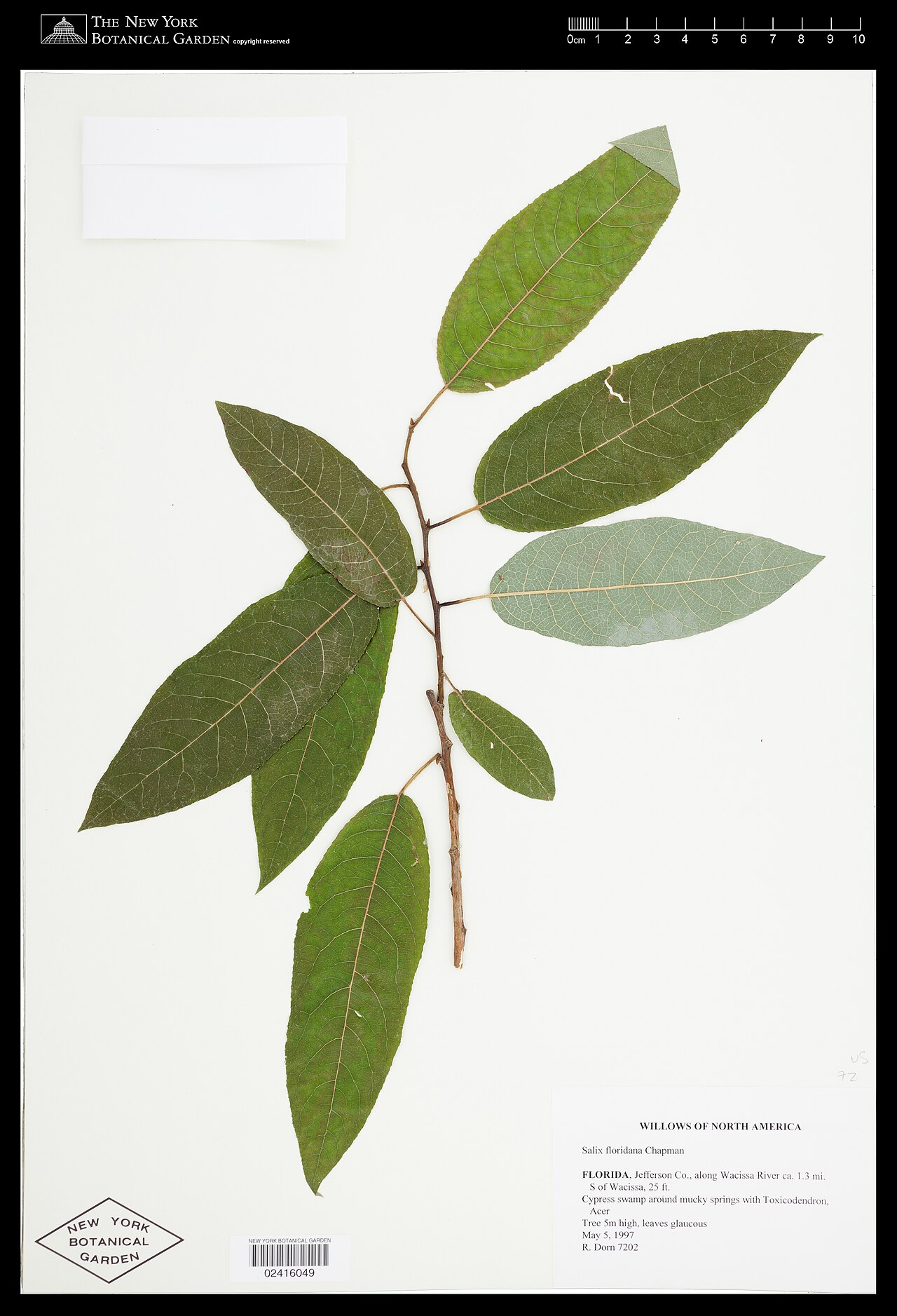
Because no live-plant photographs are currently available from Wikimedia Commons, this page illustrates the species with a pressed herbarium specimen from the New York Botanical Garden, collected along the Wacissa River in Jefferson County, Florida. The specimen clearly shows the glaucous (whitish, waxy) leaf undersides that help distinguish Florida Willow from other southeastern willows.
Florida Willow is not a plant for the average home garden — its habitat requirements are narrow and specific — but it is an important species for restoration projects, conservation plantings, and specialty native gardens built around spring-fed wetlands in its native range.
Identification
Florida Willow grows as a shrub or small tree, with herbarium records documenting specimens to about 16 feet (5 m) tall, though many wild plants are smaller, multi-stemmed shrubs. Like other willows, it has slender branches and alternate, simple leaves.
Leaves
The leaves are elliptic to oblong-lanceolate, with finely toothed margins, and are distinctly glaucous (pale, waxy-blue-green) on the underside — a key identification feature visible even on pressed specimens. The upper surface is a darker, duller green. This two-toned leaf, which flashes pale when the wind turns it, is one of the easiest ways to recognize the species in the field.
Flowers & Fruit
Like all willows, Florida Willow is dioecious, meaning individual plants bear either male or female flowers, never both. Flowers appear very early in the season, from mid-February into April, in the catkins typical of the genus, well before most other wetland shrubs break dormancy. Tiny, cottony-tufted seeds follow and are dispersed by wind and water, a willow trait that allows the species to colonize newly exposed wet ground near its seep habitats.
Bark & Form
Young stems are slender and flexible like other willows, with bark that is smooth and grayish-brown, roughening somewhat with age. Plants often grow in multi-stemmed clumps rather than as single-trunked trees, especially where repeated flooding or seepage disturbance favors resprouting over single-trunk growth.
Quick Facts
| Scientific Name | Salix floridana |
| Family | Salicaceae (Willow) |
| Plant Type | Deciduous shrub / small tree |
| Mature Height | 10–16 ft (3–5 m) |
| Growth Rate | Moderate |
| Sun Exposure | Part Shade (shade tolerant) |
| Water Needs | High; requires consistently wet, seepy soil |
| Soil Type | Saturated, often calcareous or sphagnum-mossy seep soils |
| Soil pH | Neutral to slightly alkaline in calcareous seeps |
| Bloom Time | Mid-February – early April |
| Flower Color | Greenish catkins |
| Fall Color | Yellow-green |
| Fruit | Tiny wind- and water-dispersed cottony seeds |
| Conservation Status | Globally vulnerable; species of conservation concern |
| USDA Hardiness Zones | 8b–9b |
Native Range
Florida Willow is native to a small area of the southeastern Coastal Plain: the central and northern Florida peninsula and panhandle, extending into southwestern Georgia and, per more recent records, south-central Alabama as far north as Butler County. Roughly 35 extant populations are known, concentrated in the Florida peninsula, with only a handful of outlying occurrences in Georgia and Alabama (see our guide to trees blooming in Georgia for other early-season bloomers in the same region).
This species is a habitat specialist of calcareous, spring-fed seepage areas: sphagnous (sphagnum moss) seeps, spring runs, and the margins of cypress swamps and marshy stream banks in shaded or partly shaded woodland settings. It tolerates and even favors shade, unlike many other willows that need full sun. Because its habitat depends on stable groundwater flow, Florida Willow is considered vulnerable to changes in hydrology — including wetland drainage for agriculture or pine plantation conversion — which has reduced and fragmented its populations over time.
Given its narrow habitat requirements, Florida Willow is not a species to introduce casually outside intact spring-seep wetlands within its native range. It is best suited to conservation and restoration plantings on sites with the right hydrology, rather than conventional home landscaping.
📋 Regional plant lists featuring Florida Willow: Georgia, Alabama & Mississippi
Growing & Care Guide
Florida Willow is a specialist plant, and successful cultivation depends almost entirely on matching its narrow natural habitat. It is not a general-purpose landscape shrub, but it can be a valuable addition to restoration and conservation plantings on appropriate wetland sites within its native range.
Light
Unusually for a willow, this species tolerates and often prefers partial shade, reflecting its habit of growing beneath a canopy along spring runs and seep margins. Full sun is tolerated where soil moisture remains constant, but deep shade from a closed canopy is also acceptable.
Soil & Water
Florida Willow needs consistently saturated or seasonally flooded soil — the kind of steady, spring-fed moisture found in sphagnum seeps and the margins of spring runs. It is not a drought-tolerant plant and is not appropriate for upland or seasonally dry sites. Where found growing naturally with calcareous (limestone-influenced) groundwater, it tends toward neutral to slightly alkaline soil conditions.
Planting Tips
Because viable habitat is limited and the species is a conservation concern, Florida Willow is best used in restoration projects on sites with confirmed, stable seepage hydrology rather than general garden plantings. Source nursery-propagated stock rather than wild-collected plants, and consult state natural heritage programs in Florida, Georgia or Alabama before planting in or near known wild populations.
Pruning & Maintenance
Minimal pruning is needed. Remove dead or damaged stems as needed; the multi-stemmed, clumping habit typical of this species benefits from occasional thinning of crowded shoots to maintain airflow in consistently wet, humid seep environments.
Landscape & Restoration Uses
- Wetland and seep restoration on sites with documented spring-fed or calcareous groundwater
- Conservation plantings coordinated with state natural heritage or native plant society programs
- Streambank stabilization in appropriate shaded, perennially moist settings
- Specialty native bog or seep gardens where hydrology can be carefully maintained
Wildlife & Ecological Value
As an early bloomer in shaded wetland habitats, Florida Willow plays a quiet but valuable ecological role in the specialized seep communities where it occurs.
For Pollinators
Flowering from mid-February into early April, well ahead of most other wetland plants, Florida Willow’s catkins provide an early pollen and nectar source for native bees and other insects emerging in late winter, when few other blooms are available.
For Birds & Wildlife
Like other willows, it likely supports a range of insects that in turn feed songbirds foraging in seep and swamp-margin habitats, and the shaded, multi-stemmed growth adds structural cover along the small streams and spring runs where it grows.
Ecosystem Role
Florida Willow is an indicator species for intact, spring-fed seepage wetlands — habitats that are themselves uncommon and sensitive to hydrological disturbance. Its presence signals stable groundwater flow, and conserving existing populations depends directly on protecting the seeps and spring runs that sustain them from drainage, groundwater withdrawal and conversion to agriculture or forestry.
Conservation Status
Florida Willow is considered globally vulnerable and a species of conservation concern. Only around three dozen populations are known, concentrated in the Florida peninsula with a few outlying sites in Georgia and south-central Alabama. The primary threat is loss and alteration of its specialized seepage wetland habitat through drainage, groundwater changes, and conversion of surrounding land to agriculture or pine plantations. Because of its rarity and narrow habitat needs, this species should never be collected from the wild; anyone interested in growing it for restoration purposes should work with nursery-propagated stock and coordinate with regional conservation programs.
Frequently Asked Questions
Is Florida Willow endangered?
It is not currently listed under the federal Endangered Species Act, but it is considered globally vulnerable by conservation assessments, with only about 35 known populations remaining, most in Florida with a few in Georgia and Alabama.
Can I grow Florida Willow in a regular garden?
Generally no. It requires consistently saturated, spring-fed or seepage soil conditions that are difficult to replicate outside a true wetland or seep setting. It is best suited to restoration projects on appropriate sites rather than typical home landscaping.
How can I tell Florida Willow from other southeastern willows?
The glaucous (pale, waxy-blue) underside of the leaves, combined with its habitat in shaded, spring-fed seeps rather than open stream banks, helps separate it from more common species like coastal plain willow, which generally favors sunnier, more open wetland edges.
Does Florida Willow tolerate shade?
Yes — unusually for a willow, it is shade tolerant and often grows beneath a forest canopy along spring runs, rather than in the full sun favored by most other North American willows.

Looking for a nursery that carries Florida Willow?
Browse our native plant nursery directory: Florida & Georgia · Alabama

