
Sandhill Oak (Quercus inopina)
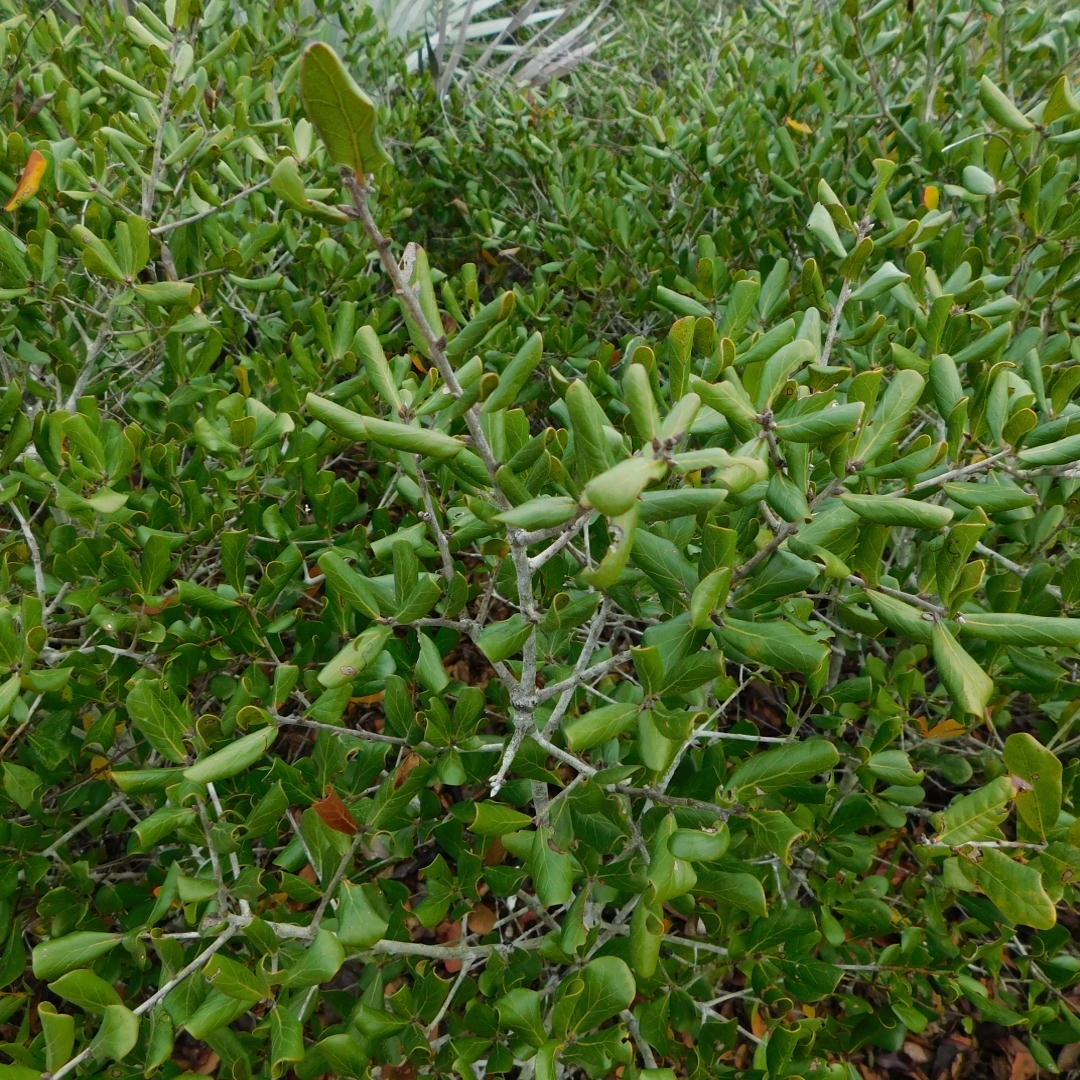
Quercus inopina, known as Sandhill Oak (also Florida scrub oak or Florida oak), is a low, colony-forming evergreen shrub oak found nowhere in the world except peninsular Florida. It is one of the signature plants of the Florida scrub ecosystem — the ancient, fire-dependent sand-dune community of the Lake Wales Ridge and other inland sand ridges — where it often makes up 30 to 40 percent of the total shrub cover. Despite the common name “Scrub Live Oak,” this species is a distinct Florida endemic and should not be confused with the unrelated shrub live oak (Quercus turbinella) of the desert Southwest, which has its own separate page on this site.
Sandhill Oak spreads extensively below ground through branching, interconnected rhizomes — remarkably, roughly 70 percent of the plant’s total biomass lies underground in this root network. This hidden infrastructure lets the species resprout vigorously after the frequent fires that shape Florida scrub, often regaining its pre-fire cover within about three years.
For Florida gardeners working on sandy, well-drained sites, sandhill oak offers an unusual, low-maintenance evergreen shrub with genuine ecological value, standing in for the natural scrub vegetation that has been lost to much of central Florida’s inland development.
Identification
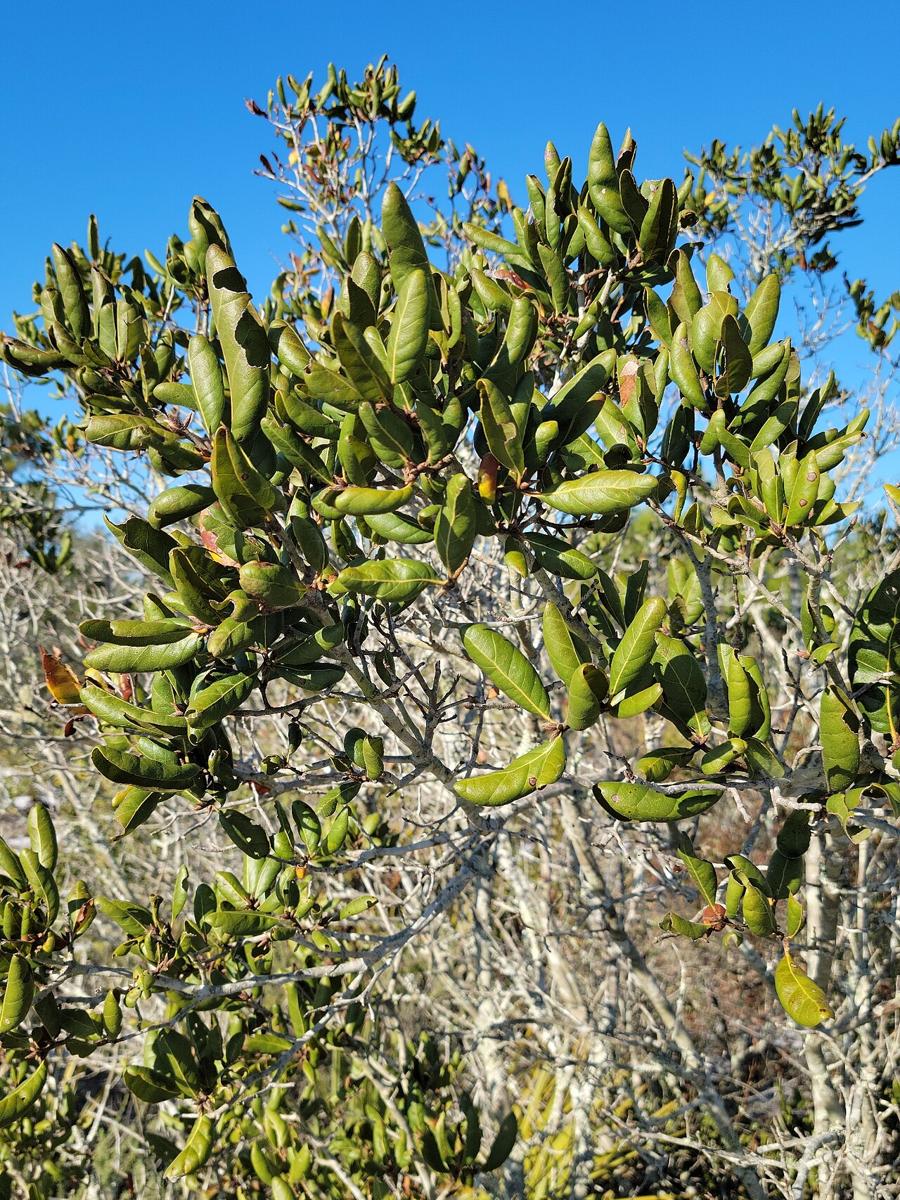
Sandhill Oak is an evergreen, colony-forming shrub or small tree, generally staying under 6 feet tall in most populations but occasionally reaching up to 16 feet where conditions and fire history allow. It typically grows as a dense, spreading thicket rather than a single upright plant, a direct result of its clonal, rhizome-based growth.
Leaves
The leaves are small, leathery, and evergreen, generally oblong to elliptical with smooth to slightly wavy margins, and often somewhat cupped or folded along the midrib — an adaptation that helps reduce water loss in the hot, exposed, well-drained sand of scrub habitat. They are a glossy mid- to dark green above, paler beneath.
Bark & Twigs
Bark on older stems is light gray and relatively smooth compared to larger oaks. Twigs are light to dark purplish-brown, sometimes slightly pubescent, with terminal buds that are blunt-tipped and distinctly five-angled in cross section — a useful if subtle identification feature for close inspection.
Acorns
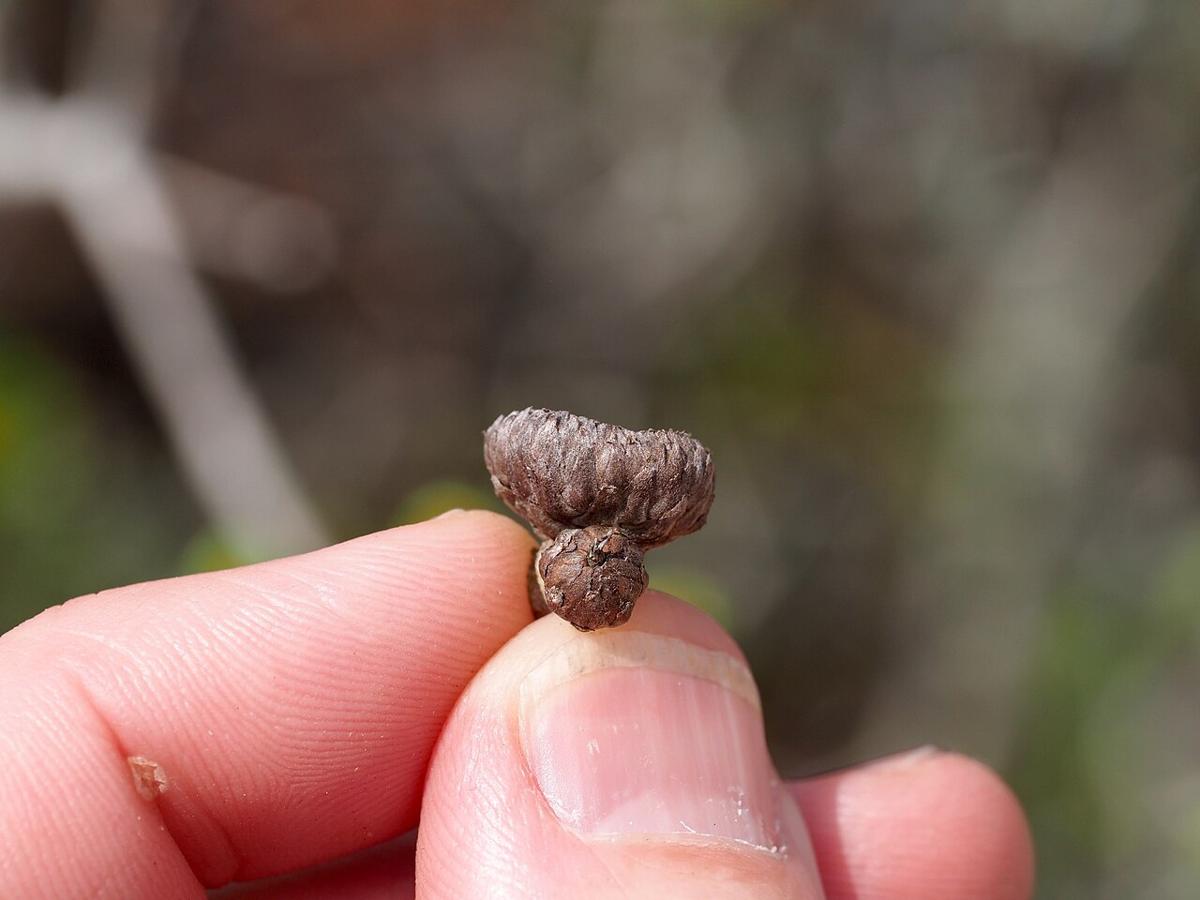
Acorns are small, maturing over roughly a two-year cycle typical of the red oak group, with a shallow cap covering about a third of the nut. They are an important food source for the Florida scrub-jay and other wildlife specifically adapted to scrub habitat.
Quick Facts
| Scientific Name | Quercus inopina |
| Family | Fagaceae (Beech) |
| Plant Type | Evergreen, clonal, colony-forming shrub oak |
| Mature Height | 3–6 ft typical (to 16 ft in places) |
| Growth Rate | Slow to moderate |
| Sun Exposure | Full Sun |
| Water Needs | Low; highly drought tolerant |
| Soil Type | Deep, excessively drained sand |
| Soil pH | Acidic |
| Bloom Time | Spring |
| Flower Color | Inconspicuous green catkins (wind-pollinated) |
| Fall Color | None (evergreen) |
| Fruit | Small acorns maturing over two seasons |
| Fire Response | Resprouts vigorously from rhizomes after fire |
| USDA Hardiness Zones | 8b–10a |
Native Range
Sandhill Oak is endemic to peninsular Florida and occurs nowhere else in the world. Its range is centered on the Lake Wales Ridge and other ancient inland sand ridges of central Florida, extending from around Marion and St. Johns counties south through the central peninsula into Highlands, Polk, Manatee, Hillsborough and Pinellas counties, roughly to just north of Lake Okeechobee.
Within this range, Sandhill Oak is a defining species of Florida scrub and sandhill communities: ancient, well-drained, nutrient-poor sand deposits that formed as dunes and shorelines during past periods of higher sea level. Typical associated habitats include sand pine-evergreen oak scrub, dry slash pine flatwoods, and longleaf pine/scrub oak communities, all of which depend on periodic fire to maintain their open, sunny structure.
Because this habitat is both globally rare and increasingly fragmented by development along Florida’s ancient sand ridges, Sandhill Oak and the scrub community it anchors are priorities for conservation, including protection of remaining tracts and the reintroduction of prescribed fire where natural fire cycles have been suppressed.
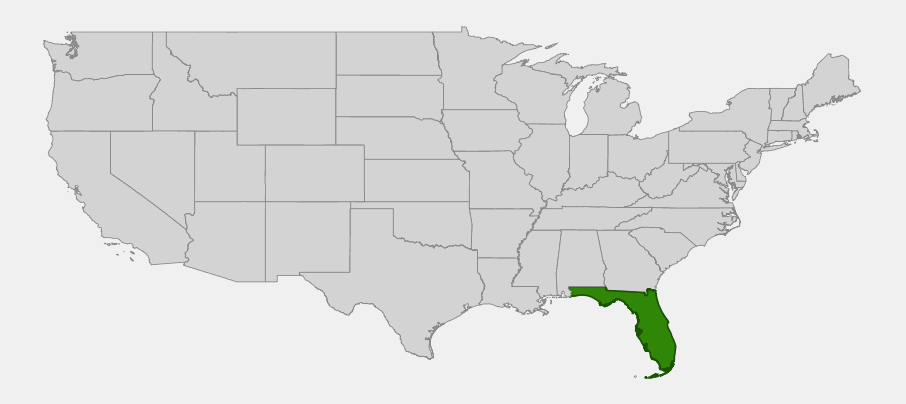
📋 Regional plant lists featuring Sandhill Oak: this species is a peninsular Florida endemic and does not fall within any of this site’s current regional plant lists.
Growing & Care Guide
Sandhill Oak is an easy, low-care choice once established on the right site, but it specifically needs the deep, sharply drained sand that makes it such a successful scrub species in the wild. It is not suited to heavier soils or consistently moist sites.
Light
Give Sandhill Oak full sun, matching the open, exposed conditions of natural scrub, which is maintained by periodic fire that prevents taller trees from shading it out. It does not perform well in significant shade.
Soil & Water
This species demands deep, excessively well-drained sandy soil and is intolerant of wet feet. Once established, it is extremely drought tolerant, reflecting its adaptation to one of Florida’s driest, most nutrient-poor native habitats. Avoid irrigation beyond the establishment period, since overly rich or moist conditions favor weedy competitors over this scrub specialist.
Planting Tips
Plant small, nursery-propagated specimens in a sunny, sandy site with excellent drainage, ideally one that mimics the open structure of natural scrub. Because the species spreads by rhizomes once established, give it room to form a natural colony rather than trying to confine it to a tight single-plant space.
Pruning & Fire Ecology
In the wild, periodic fire is what keeps sandhill oak vigorous and prevents larger trees from overtopping the scrub community; plants resprout from their extensive rhizome network and can regain pre-burn cover within about three years. In a garden setting, occasional hard pruning or cutting back can mimic this effect and help maintain a dense, low form, though fire itself is not something to use outside a managed, professionally conducted prescribed burn.
Landscape Uses
- Xeriscaping on deep, sandy, well-drained Florida sites where irrigation is limited
- Scrub habitat restoration and buffer plantings around remnant scrub preserves
- Wildlife gardens supporting scrub-adapted species, including Florida scrub-jay habitat corridors
- Low evergreen groundcover-scale screening on sandy slopes where little else will grow without irrigation
Wildlife & Ecological Value
As one of the dominant shrubs of Florida scrub, sandhill oak plays an outsized role in supporting the specialized wildlife community of this globally rare habitat.
For Birds
Acorns are an important food source for the threatened Florida scrub-jay, a bird found only in Florida scrub habitat and closely tied to oaks like this species for both food and cover. Other scrub-associated birds also use the dense, low thickets for nesting and foraging.
For Mammals & Other Wildlife
Small mammals feed on acorns and shelter within the dense colonies, while the open, sandy ground between thickets supports a range of scrub-specialist reptiles and insects, many themselves rare or endemic to this habitat type, such as the sand pine scrub community it often grows beneath.
Ecosystem Role
Sandhill Oak’s extensive underground rhizome network stabilizes the loose sand of scrub habitat and allows rapid recovery after fire, which is essential to maintaining the open structure that scrub-dependent wildlife requires. Because Florida scrub has been extensively lost to development along the state’s ancient sand ridges, intact stands of sandhill oak and its associated community are considered a conservation priority.
Taxonomy & Naming Notes
Sandhill Oak is sometimes called “scrub live oak” or “Florida scrub oak” in older or informal references, which can cause confusion with the unrelated western shrub live oak (Quercus turbinella) of Arizona and the Southwest — a different species in a different oak lineage entirely. This page uses “Sandhill Oak,” the common name recognized by USDA PLANTS, to avoid that confusion; if you encounter the name “scrub live oak” elsewhere, always check the scientific name (Quercus inopina vs. Quercus turbinella) before assuming the two refer to the same plant.
Frequently Asked Questions
Is sandhill oak the same as scrub live oak?
No. “Scrub live oak” is sometimes used informally for this Florida-endemic species, but it is also the common name for an entirely different, unrelated species, Quercus turbinella, native to Arizona and the desert Southwest. Always verify the scientific name to avoid confusing the two.
How does sandhill oak survive wildfire?
About 70 percent of its biomass is underground in a network of branching rhizomes. Even when fire kills the above-ground stems, the rhizome network survives and resprouts, often restoring the plant’s pre-fire cover within roughly three years.
Can I grow sandhill oak outside Florida?
It is adapted specifically to Florida’s ancient, deep sand ridges and warm climate, and is not recommended outside its native range or similar sandy, frost-free to lightly frosted conditions in USDA zones 8b–10a.
Does sandhill oak need a lot of water?
No — it is highly drought tolerant once established and actually performs poorly in consistently moist or irrigated soil, which favors weedy competitors over this scrub specialist.

Looking for a nursery that carries Sandhill Oak?
Browse our native plant nursery directory: Florida

