Foothill Sedge (Carex tumulicola)
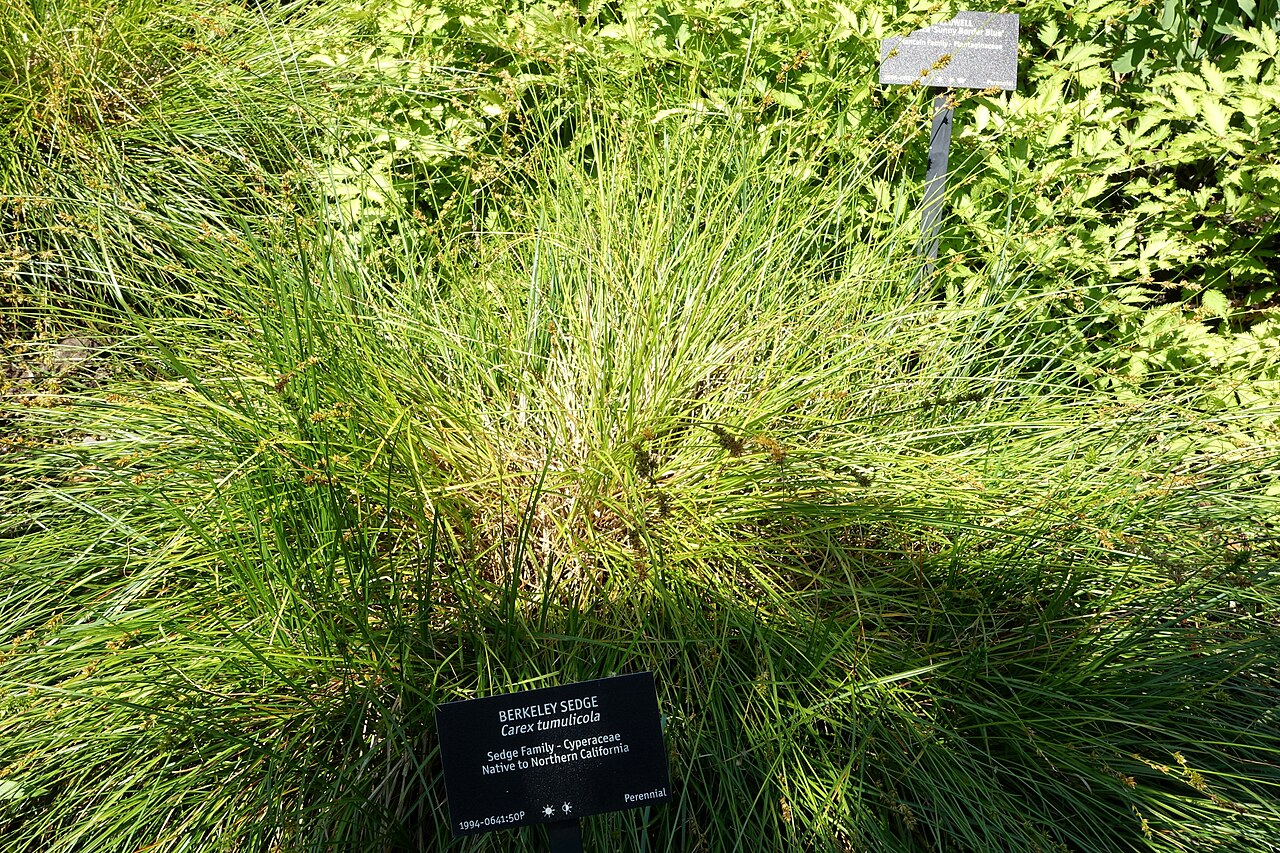
Carex tumulicola, commonly called foothill sedge (and, less precisely, Berkeley sedge), is a fine-textured, clumping evergreen sedge native to the Pacific Coast from Northern California north into Oregon and western Washington. A member of the Cyperaceae (sedge family), it forms low, arching mounds of narrow, deep-green blades that give it a grass-like look, though true grasses and sedges are only distantly related.
In the wild, foothill sedge grows in open woodlands, grassy foothill slopes, coastal prairies, and the dappled shade beneath oaks, often on gravelly or clay soils that stay moist in winter and dry out by summer. It tolerates a wide range of light conditions and is one of the more adaptable native sedges for California and Pacific Northwest gardens, which has made it a popular low-growing groundcover and informal lawn substitute.
Gardeners should be aware of a persistent nursery mix-up: plants sold as “Berkeley sedge” are very often not this species at all, but the non-native, invasive Carex divulsa from Europe. True foothill sedge is a well-behaved, slowly spreading native; confirm the scientific name on the plant tag before buying, since the two are easy to confuse at a glance.
Identification
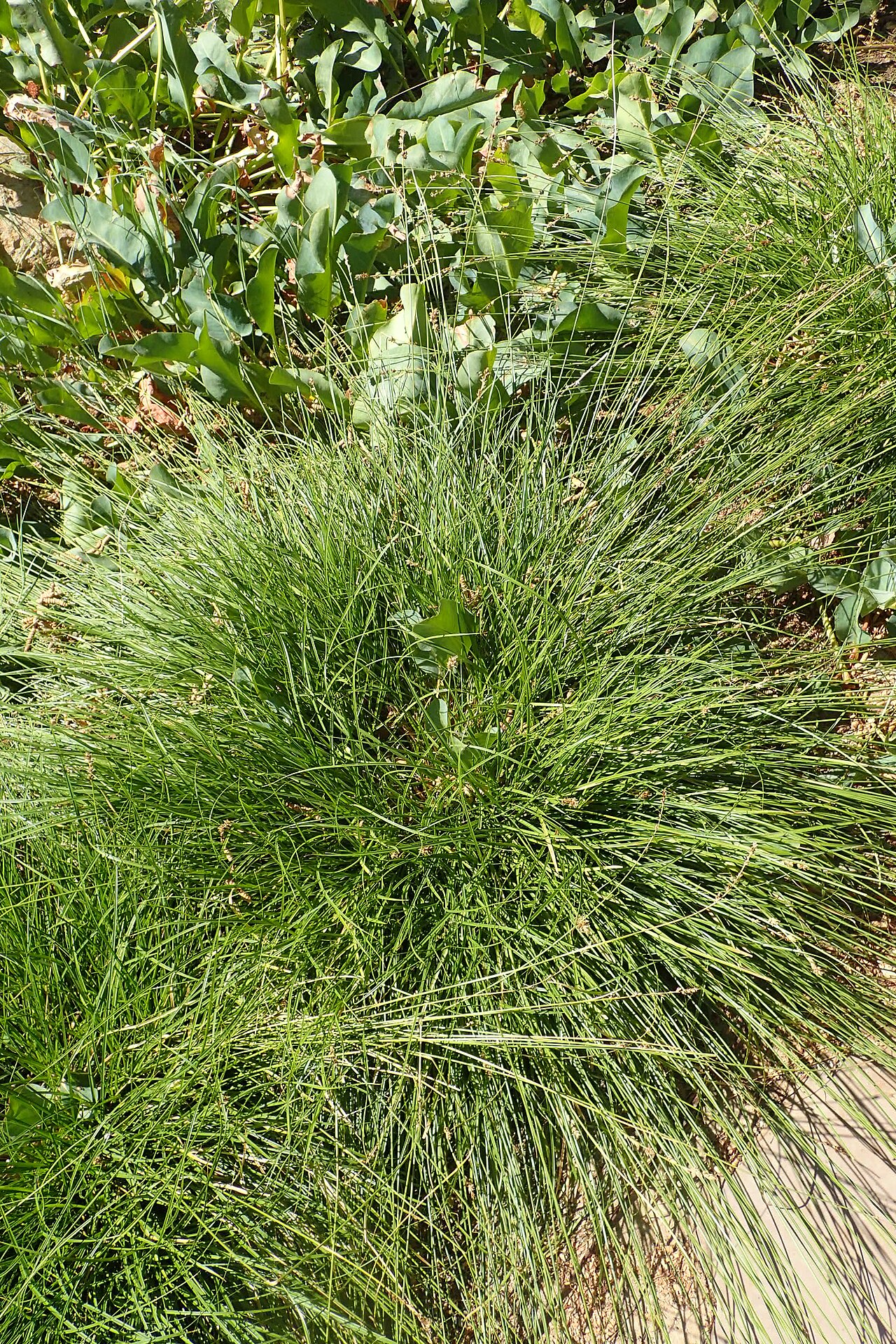
Foothill sedge forms a low, dense tuft of narrow, evergreen leaves 12 to 18 inches tall, with flowering stems that may reach slightly taller. Clumps spread slowly by short rhizomes, gradually widening into broader patches rather than running aggressively.
Stems & Leaves
The leaves are slender, 1/8 inch wide or less, dark green, and softly arching, giving plants a loose, fountain-like form. Triangular flowering stems rise just above or within the foliage. Unlike many ornamental sedges, foothill sedge keeps a relatively fine, delicate texture even in large plantings.
Flowers
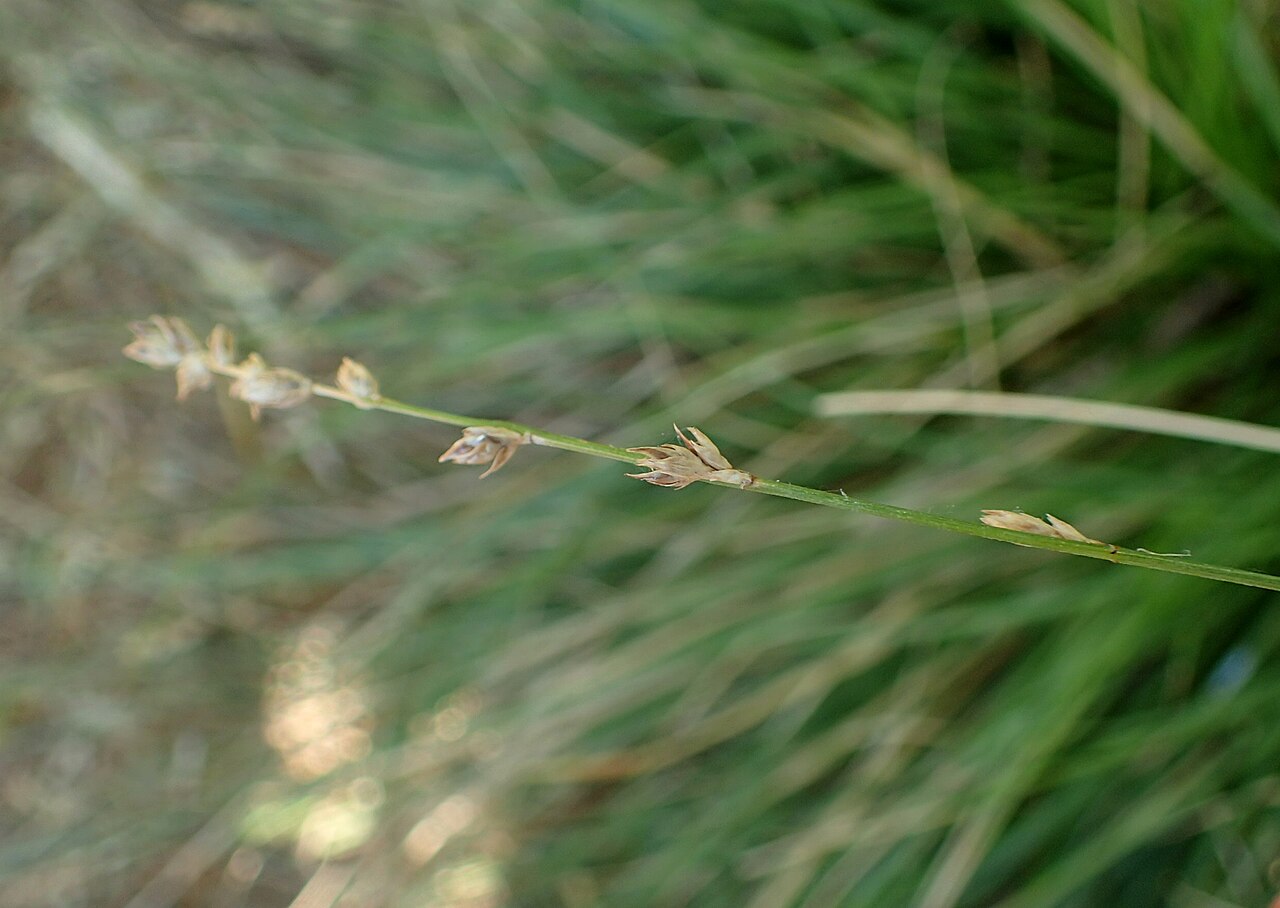
Bloom is inconspicuous, as in all sedges. Slender spikes of tiny wind-pollinated flowers appear in spring, with male and female flowers on separate parts of the same spike. The spikes are easy to overlook against the foliage unless you look closely.
Fruit & Seeds
Small, beaked perigynia develop along the spikes and ripen to a light tan by early summer, each containing a single seed. The old flowering stalks persist into summer before fading back into the foliage.
Quick Facts
| Scientific Name | Carex tumulicola |
| Family | Cyperaceae (Sedge) |
| Plant Type | Evergreen Perennial Sedge |
| Mature Height | 1–1.5 ft |
| Mature Spread | 1.5–3 ft |
| Growth Rate | Slow |
| Sun Exposure | Part Shade to Full Shade (full sun near the coast) |
| Water Needs | Low to Moderate |
| Soil Type | Clay, loam or gravelly soils; adaptable |
| Soil pH | 6.0–7.5 |
| Bloom Time | March – May |
| Flower Color | Inconspicuous green-tan |
| Fall Color | Evergreen |
| Fruit | Small beaked perigynia in slender spikes |
| Deer Resistant | Yes |
| USDA Hardiness Zones | 7–10 |
Native Range
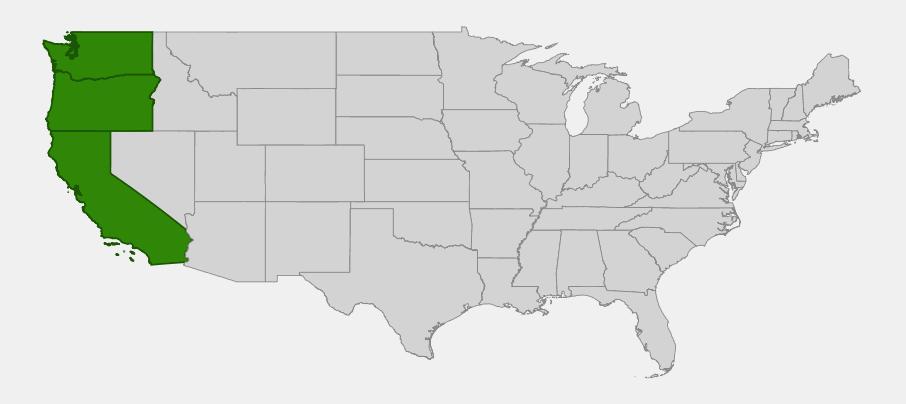
Foothill sedge is native to the Pacific Coast, from Northern California through western Oregon and into western Washington. In California it occurs widely in the Coast Ranges and foothill woodlands from roughly Humboldt County south to San Luis Obispo County, including the Channel Islands.
Across this range it favors the moist-winter, dry-summer climate typical west of the Cascade and Sierra crest, growing in oak woodlands, grassy foothill slopes, coastal prairies, and shaded streambank edges at low to moderate elevations. It is not native to the inland deserts or the Great Basin, and it does not occur naturally in Nevada, despite being offered in the horticultural trade well beyond its native coastal range.
Because “Berkeley sedge” sold at many nurseries is frequently the non-native Carex divulsa rather than true Carex tumulicola, gardeners outside this native range should be especially careful to confirm identity before planting, to avoid inadvertently spreading an invasive look-alike.
📋 Regional plant lists featuring foothill sedge: California & Nevada · Western Oregon & Western Washington
Growing & Care Guide
Foothill sedge is one of the easiest native sedges to work with in a garden setting, tolerating a wide range of light and soil conditions once established, and needing little attention beyond an occasional tidy-up.
Light
It grows best in part shade to full shade, especially inland where summer heat is intense, but can handle full sun close to the coast where fog keeps temperatures moderate. Foliage color and density are best with some protection from hot afternoon sun.
Soil & Water
Foothill sedge adapts to clay, loam, or gravelly soils and tolerates both seasonal moisture and summer dry spells once established, mirroring its native winter-wet, summer-dry foothill habitat. Occasional deep watering in summer keeps it looking lush, but established plantings can get by on little to no supplemental irrigation in coastal gardens.
Planting Tips
Install from containers in fall so roots establish before the dry season. Space plants 12 to 18 inches apart for a filled-in groundcover effect within a couple of seasons, or further apart for a more textured, clumping look. It works well tucked beneath oaks or other natives that provide dappled shade.
Pruning & Maintenance
Comb out old or dead blades by hand in late winter, or give the clump a light shearing to about 4 inches to refresh its appearance before new growth begins. Foothill sedge is otherwise low-maintenance, with no significant pest or disease issues.
Landscape Uses
Its fine texture and tolerance for shade and dry summers suit several roles:
- Lawn substitute or meadow planting that needs little mowing or water
- Groundcover beneath oaks and other native shade trees
- Erosion control on gentle slopes and foothill banks
- Border or edging plant along paths and native plant beds
- Container and rock garden accent for its soft, mounding form
Wildlife & Ecological Value
Though low-key compared to showier natives, foothill sedge supports Pacific Coast wildlife through structure and seed rather than flashy blooms.
For Birds
Small songbirds forage the seed spikes, and the dense tufted growth offers ground-level cover for birds moving through open woodland and prairie habitat, especially where it grows in drifts beneath oaks.
For Pollinators & Insects
As a wind-pollinated sedge it offers little nectar, but it serves as a larval host plant for several native skipper butterflies, and its dense clumps shelter beneficial insects and spiders that help keep garden pest populations in check.
Ecosystem Role
Foothill sedge’s fibrous root system helps hold foothill soils in place through the region’s wet winters, and its low, shade-tolerant growth habit lets it persist as an understory layer in native oak woodlands where few other groundcovers thrive, contributing to the structural diversity of these increasingly fragmented habitats.
Cultural & Historical Uses
Foothill sedge does not have an extensively documented history of traditional use, though California Indigenous peoples made use of various sedges for basketry material, valued for the toughness and flexibility of the leaves and roots.
Its modern cultural significance is largely horticultural. Since the 1990s, foothill sedge has become a favorite low-water, low-mow alternative to turf in California native gardens, popularized alongside other native sedges as part of the broader “sedge meadow” and “freedom lawn” movements in West Coast landscaping.
The ongoing confusion between true foothill sedge and nursery-trade “Berkeley sedge” (actually the invasive European Carex divulsa) has become something of a cautionary tale in native plant circles, prompting growers and botanic gardens to label specimens carefully, as seen on cultivated plants at institutions such as VanDusen Botanical Garden.
Frequently Asked Questions
Is foothill sedge the same plant as “Berkeley sedge” sold at garden centers?
Not necessarily. “Berkeley sedge” sold in nurseries is frequently the non-native, invasive Carex divulsa rather than true Carex tumulicola. Always check the scientific name on the plant tag to be sure you are getting the native species.
Can foothill sedge be used as a lawn substitute?
Yes. It is commonly planted as a low-water, low-mow lawn alternative in California and Pacific Northwest native gardens, tolerating light foot traffic and occasional shearing far better than many other groundcovers.
Does foothill sedge need regular watering?
Once established, it tolerates dry summers reasonably well, especially in shaded or coastal sites, though occasional deep watering keeps the foliage looking its best during extended dry spells.
Will foothill sedge spread out of control in my garden?
No. It spreads slowly from short rhizomes, gradually widening into broader patches rather than running aggressively, so it is easy to keep within bounds.
Is foothill sedge native to Nevada?
No. Despite sometimes being included in regional native-plant lists for California and Nevada, foothill sedge’s native range is limited to coastal California, Oregon, and Washington; it is not native to Nevada’s Great Basin habitats.

Looking for a nursery that carries foothill sedge?
Browse our native plant nursery directory: California · Oregon · Washington