Pincushion Flower (Chaenactis fremontii)
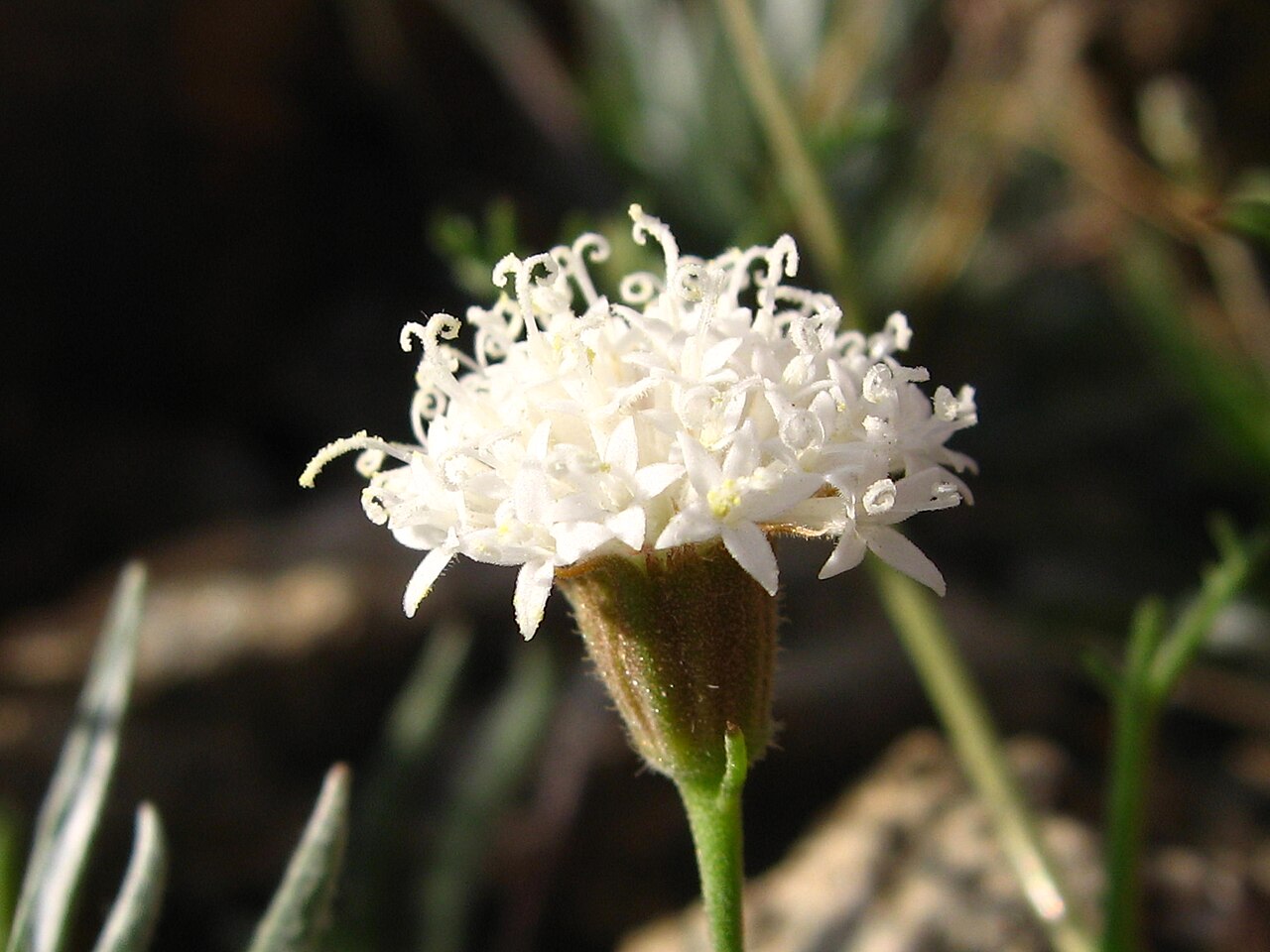
Chaenactis fremontii, known as pincushion flower or Fremont’s pincushion, is a small, fast-cycling desert annual in the daisy family (Asteraceae), native to the deserts of California, Nevada, and Arizona. It is one of the signature wildflowers of the Mojave and Colorado Deserts, carpeting sandy flats and washes with rounded white flower heads during good bloom years.
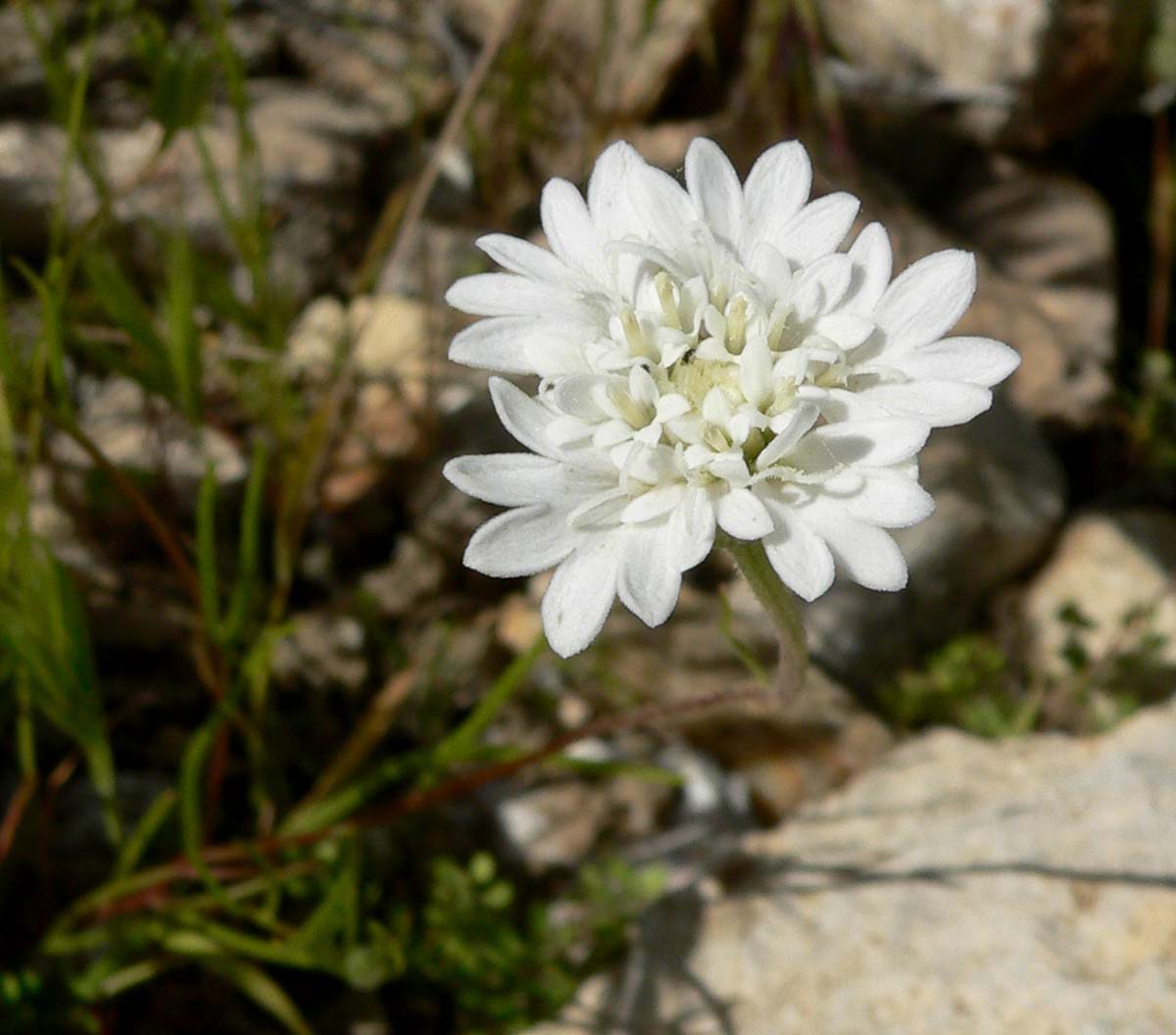
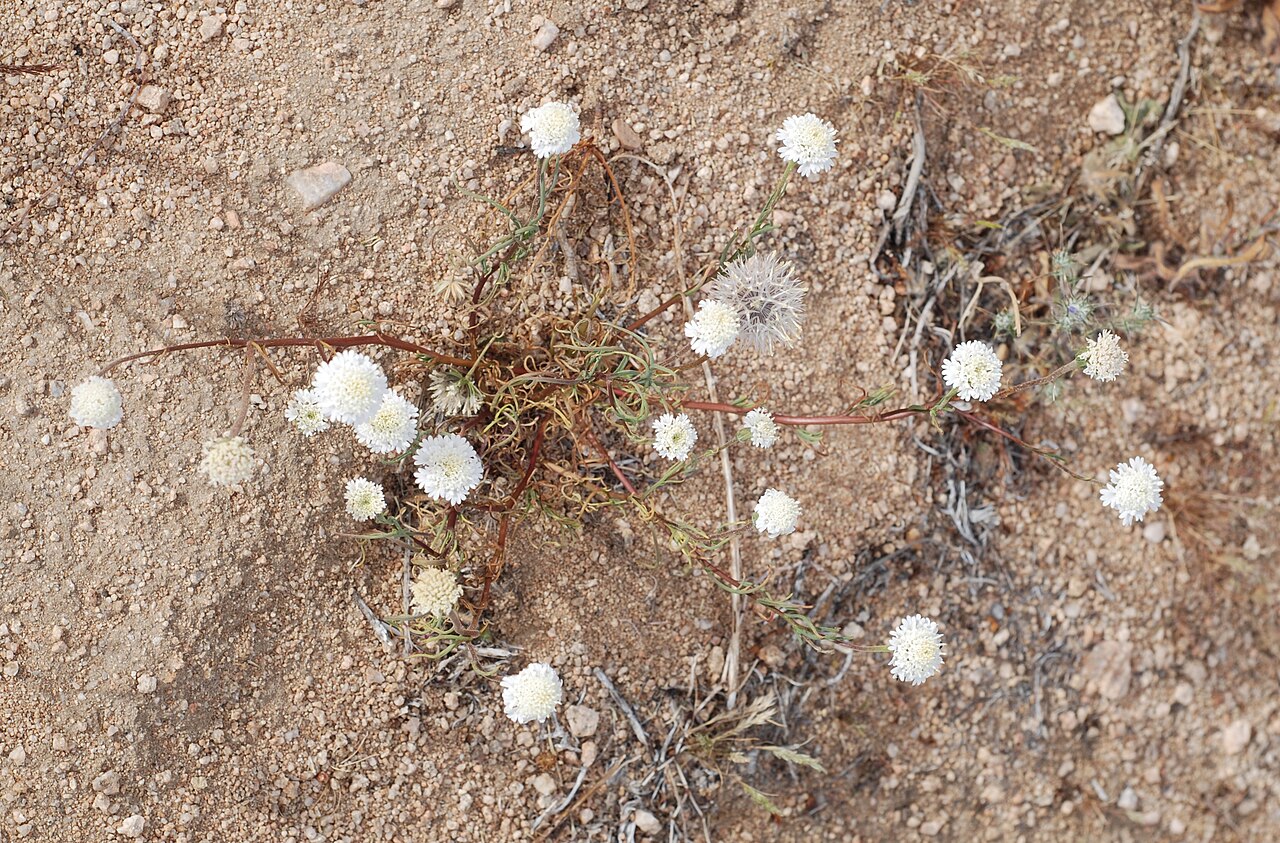
Pincushion flower gets its common name from its distinctive flower head: a dense cluster of small, pale tubular florets that curl and project outward, giving each bloom a soft, pincushion-like texture rather than the flat ray-petal look of a typical daisy. Plants are low and sprawling, often reaching only a few inches tall but spreading several inches to a foot across on thin, wiry stems radiating from a central rosette.
As a true desert ephemeral, pincushion flower germinates after fall or winter rains, grows quickly through late winter, and blooms from February into May before setting seed and dying back as temperatures rise. It is a reliable component of desert wildflower displays, often blooming alongside desert gold poppy, lupines, and sand verbena in the same sandy, well-drained soils.
Identification
Pincushion flower is a low-growing annual herb, typically 2 to 12 inches tall, with a loose, sprawling form. Its gray-green foliage and wiry stems help it blend into the desert floor until the plant comes into bloom.
Stems & Leaves
Stems are slender, often reddish, and branch loosely from the base. The leaves are narrow, finely divided, and covered in fine hairs, giving the foliage a soft, grayish-green cast that reduces water loss in its hot, dry habitat. Leaves are concentrated near the base of the plant, becoming sparser along the flowering stems.
Flowers
Each flower head is a dense, rounded cluster of small white to pale pink tubular florets, roughly 1/2 to 1 inch across, held above the foliage on a slender stalk. Unlike many Asteraceae, pincushion flower lacks true ray petals; its soft, rounded look comes entirely from the curling tips of the disk florets themselves. Bloom runs from February through May, peaking with the main desert wildflower season.
Fruit & Seeds
After flowering, each head dries into a cluster of small, bristly-tufted achenes that disperse readily on desert winds. Like many desert annuals, pincushion flower produces seed that can remain dormant in the soil for years, germinating only when rainfall timing and amount are sufficient — the basis for the region’s unpredictable but sometimes spectacular “superbloom” years.
Quick Facts
| Scientific Name | Chaenactis fremontii |
| Family | Asteraceae (Daisy) |
| Plant Type | Annual Wildflower |
| Mature Height | 2–12 in |
| Mature Spread | 6–12 in |
| Growth Rate | Fast (completes life cycle in one season) |
| Sun Exposure | Full Sun |
| Water Needs | Low |
| Soil Type | Sandy, well-drained desert soils |
| Soil pH | 7.0–8.5 |
| Bloom Time | February – May |
| Flower Color | White to pale pink |
| Fall Color | None; plant dies back after seed set |
| Fruit | Small bristly-tufted achenes |
| Deer Resistant | Yes |
| USDA Hardiness Zones | 8–10 (grown as a cool-season annual) |
Native Range
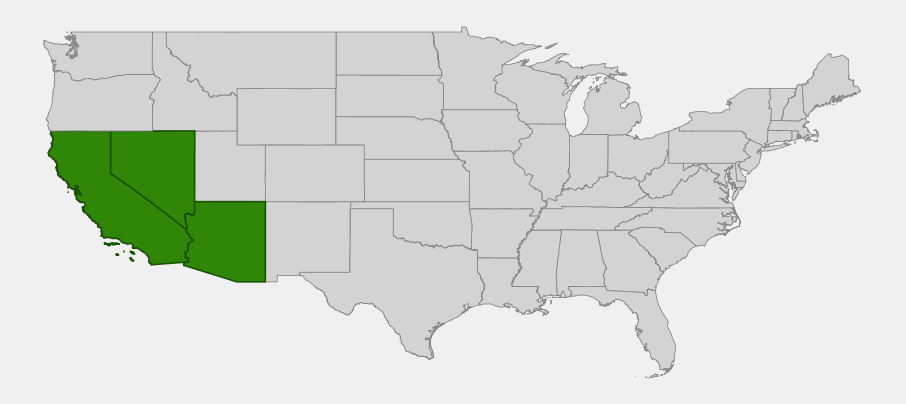
Pincushion flower is native to the hot deserts of the Southwest, with populations concentrated in southeastern California’s Mojave and Colorado Deserts, southern Nevada, and much of Arizona. It is a defining species of spring wildflower displays in areas such as Joshua Tree National Park, Anza-Borrego Desert State Park, and the Sonoran Desert of southern Arizona.
Across this range it grows on sandy flats, desert washes, and gravelly alluvial fans at low to moderate elevations, typically below 5,000 feet, where its shallow roots can take quick advantage of brief periods of soil moisture after winter rain. It is not native to Utah or New Mexico, and county-level records do not support claims of established native populations outside its core Mojave–Sonoran Desert range.
Because it is a true annual dependent on winter and early-spring rainfall, the visible extent and density of pincushion flower populations can vary dramatically from year to year, with dry years producing few or no plants and wet years triggering widespread blooms across its native desert range.
📋 Regional plant lists featuring pincushion flower: California & Nevada · Arizona & New Mexico
Growing & Care Guide
Pincushion flower is easy to work into a desert wildflower garden, provided it is sown at the right time and given the lean, fast-draining conditions it expects in the wild.
Light
This species needs full sun to flower well, reflecting its native open desert habitat with no tree or shrub canopy overhead.
Soil & Water
Pincushion flower thrives in sandy or gravelly, fast-draining soil and needs very little water once seedlings are established; overwatering or heavy clay soil tends to cause poor germination and rot. In a garden setting, rely on natural winter and early-spring rainfall supplemented only lightly during dry spells.
Planting Tips
Direct-sow seed in fall, scattering it over bare, lightly raked soil ahead of expected winter rains, since this species does not transplant well as an annual. Avoid heavy mulch, which can smother the fine seed and interfere with germination. It pairs naturally with other desert annual wildflowers for a mixed-bloom effect.
Pruning & Maintenance
No pruning is needed. As an annual, pincushion flower completes its life cycle in a single season; simply allow spent plants to go to seed and dry naturally to support next year’s germination, or clear them once they have fully browned if a tidier look is wanted.
Landscape Uses
Its low, sprawling habit and reliable spring bloom suit several desert-garden roles:
- Desert wildflower meadows mixed with other native annuals
- Gravel and rock gardens as seasonal color between perennials
- Erosion-control seeding on bare, sandy desert ground
- Pollinator and wildlife gardens for its nectar and seed value
Wildlife & Ecological Value
Despite its small size and short life, pincushion flower plays a meaningful role in the desert ecosystem during its brief but often abundant spring bloom.
For Pollinators
The flower heads attract a range of small native bees, flies, and butterflies drawn to the clustered florets, making pincushion flower an important nectar source during the relatively narrow window when desert wildflowers bloom.
For Birds & Small Mammals
The small seeds produced after bloom provide food for seed-eating birds and small desert rodents, which in turn help disperse seed across the open desert floor, supporting the patchy, rain-dependent distribution typical of desert annuals.
Ecosystem Role
As one of many desert annuals that germinate quickly after rain, pincushion flower contributes to the brief flush of ground cover and biomass that follows winter storms, helping stabilize sandy soils against wind erosion during its growing season and contributing organic matter to nutrient-poor desert soils as it decomposes.
Cultural & Historical Uses
Pincushion flower does not carry an extensively documented history of use by Indigenous peoples of the region compared to more substantial desert plants, though it would have been among the many small annual wildflowers that signaled the arrival of spring and the broader seasonal abundance of desert plant foods following a good rain year.
Its specific epithet honors explorer and soldier John C. Frémont, who led several 19th-century expeditions through the American West and collected botanical specimens, including this species, during his travels through the Mojave Desert region.
Today pincushion flower is best known as a favorite subject for desert wildflower photographers and naturalists, particularly during the spring “superbloom” events that occasionally bring exceptional displays of this and other desert annuals to areas like Joshua Tree National Park and the Anza-Borrego Desert.
Frequently Asked Questions
Is pincushion flower a perennial or an annual?
It is a true annual. Plants germinate after fall or winter rain, grow and bloom over winter and spring, then set seed and die back completely by early summer.
Why does pincushion flower bloom heavily some years and not others?
As a desert ephemeral, its germination depends on the timing and amount of fall and winter rainfall. Dry years produce few visible plants, while wet years can trigger widespread “superbloom” displays across its native range.
Can I grow pincushion flower outside of California, Nevada, or Arizona?
It can be grown as a seasonal annual in similarly hot, dry, low-elevation climates, but it is only native to the Mojave and Sonoran Desert regions of California, Nevada, and Arizona, and is not native to Utah or New Mexico.
Does pincushion flower need regular watering in the garden?
No. It is adapted to minimal rainfall and fast-draining sandy soil; overwatering or heavy, poorly drained soil typically causes poor germination or rot rather than better growth.
What pollinators visit pincushion flower?
Small native bees, flies, and butterflies are regular visitors, drawn to the dense cluster of tubular florets during the desert’s narrow spring bloom window.

Looking for a nursery that carries pincushion flower?
Browse our native plant nursery directory: California · Nevada · Arizona