
Ghost Flower (Mohavea confertiflora)
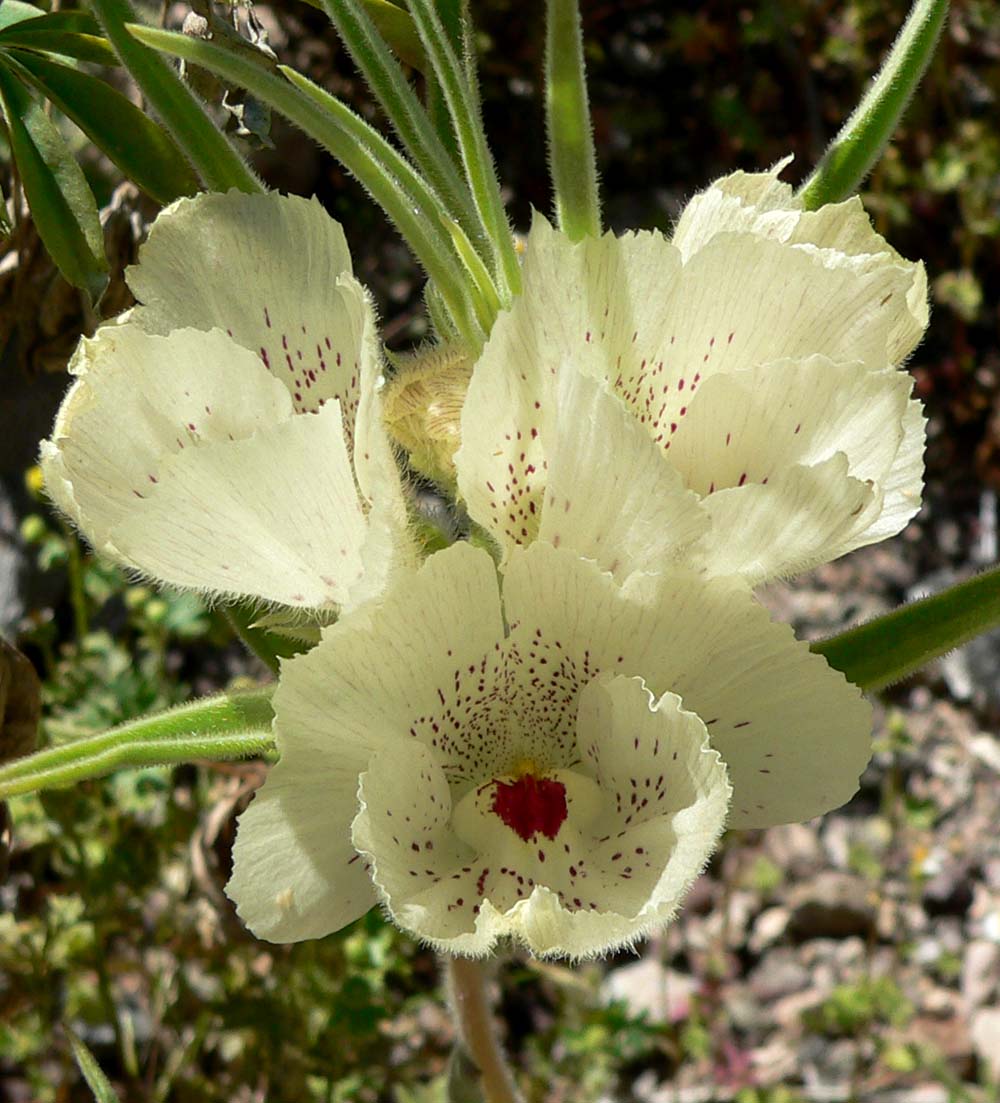
Mohavea confertiflora, known as Ghost Flower, is a striking spring annual of the Mojave and Sonoran Deserts and a relative of the snapdragons in the plantain family (Plantaginaceae). It grows a single upright, hairy stem, usually 4 to 16 inches tall, with narrow leaves and a cluster of large, pale, almost translucent, creamy yellow flowers near the top.
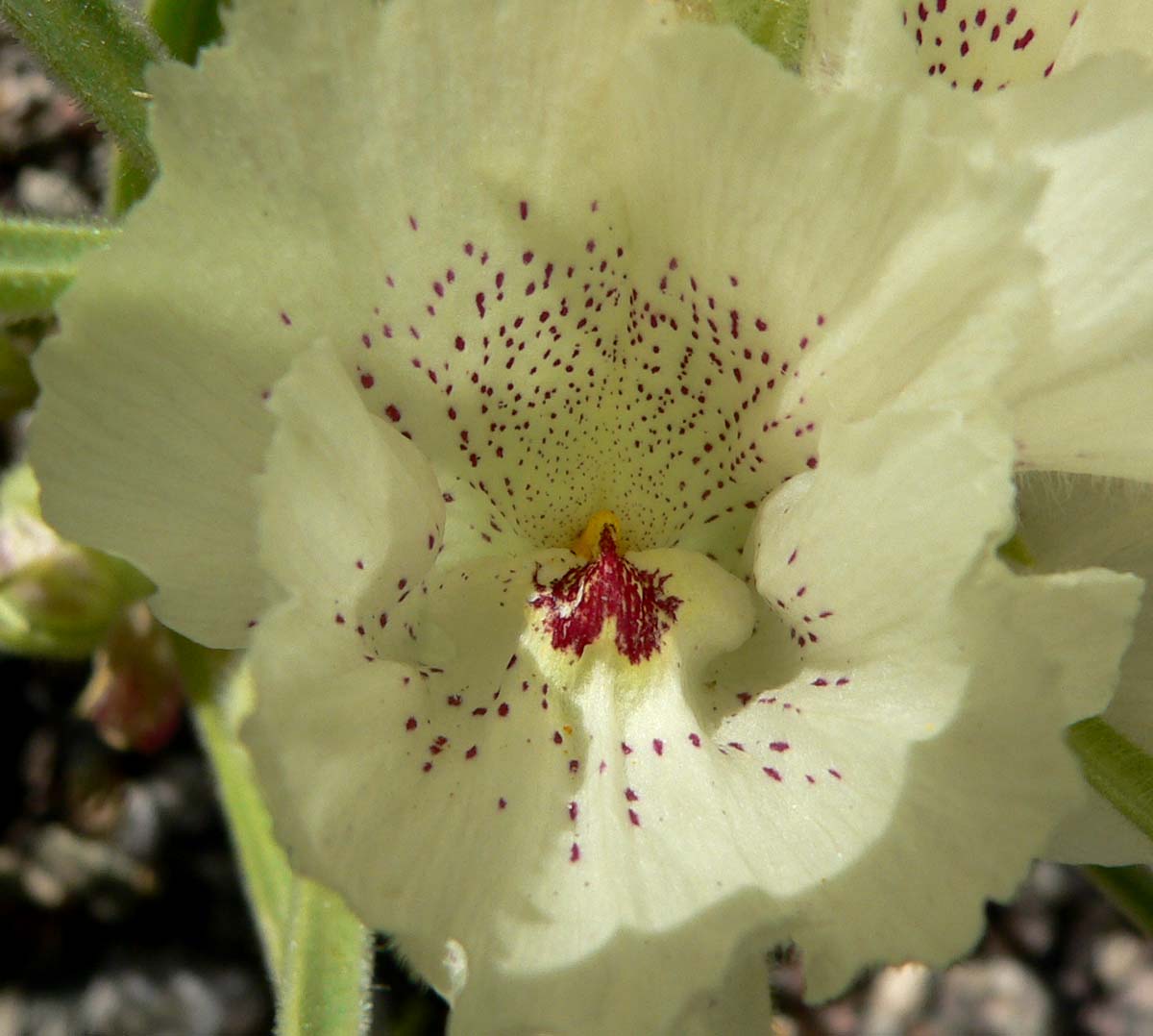
The flowers are cup-shaped and about 1 to 1 1/2 inches across, with petals so thin and pale that they seem to glow in the desert light, which gives the plant its name. Each flower is finely speckled with purple dots and has a dark red, hairy patch at the entrance to the throat. Ghost flower blooms in late winter and spring, mainly from February to April, after good winter rains.
Ghost flower is famous among botanists as a flower mimic. It makes no nectar, but it closely resembles the flowers of a blazing star that grows in the same places, and it relies on bees that are fooled by the resemblance to pollinate it. This guide covers how to identify ghost flower, where it grows, whether you can grow it, and the story of its unusual pollination.
Identification
Ghost flower is unmistakable in bloom. No other desert wildflower has its combination of large, pale, translucent, cup-shaped flowers with purple speckles and a dark red spot in the throat.
Growth Habit
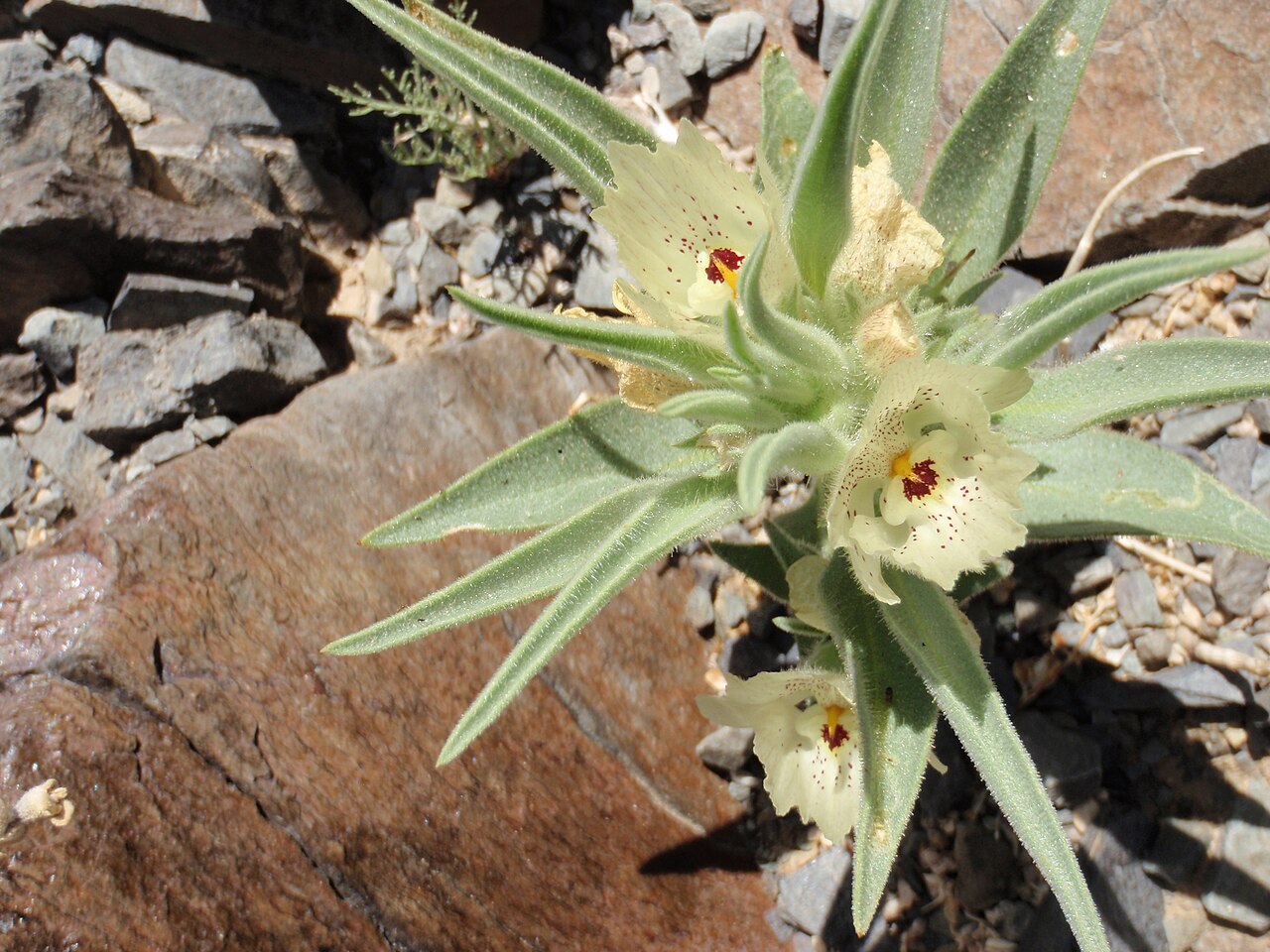
It is an annual herb with a single, erect stem or a few stems from the base, usually 4 to 16 inches tall and occasionally up to about 2 feet in a wet year. The stem and leaves are covered with soft, sticky, glandular hairs, and the plant often grows in small, scattered groups.
Leaves
The leaves are alternate, narrow and lance-shaped, about 1 to 4 inches long, gray-green and hairy. They are crowded along the stem and around the flowers at the top of the plant.
Flowers
The flowers are borne in a dense, leafy cluster at the top of the stem, which is the meaning of confertiflora, “crowded flowers”. Each flower has a short tube and a wide, two-lipped, bowl-shaped corolla about 1 to 1 1/2 inches across, pale cream to light yellow, with thin, slightly translucent petals. The lower lip carries a raised, hairy, dark red to maroon patch, and the petals are sprinkled with fine purple dots.
Fruit & Seeds
The fruit is a small, oval capsule that splits open at the top to release many tiny seeds. The seeds lie dormant in the soil until a winter with enough rain to trigger germination.
Look-alikes
The flowers resemble those of white bractspine blazing star (Mentzelia involucrata), which also has large, satiny, cream-colored flowers and grows in the same habitats. The blazing star has five separate, spreading petals with many long stamens in the center, while ghost flower has a two-lipped, snapdragon-like corolla with a maroon patch. A related species, lesser mohavea (Mohavea breviflora), has much smaller, bright yellow flowers.
Quick Facts
| Scientific Name | Mohavea confertiflora (Benth.) A. Heller |
| Family | Plantaginaceae (plantain family; formerly Scrophulariaceae) |
| Plant Type | Annual wildflower |
| Mature Height | 4–16 in (occasionally to 2 ft) |
| Mature Spread | 4–8 in |
| Growth Rate | Fast after winter rains |
| Sun Exposure | Full sun |
| Water Needs | Very low; depends on winter rain |
| Soil Type | Sandy, gravelly or rocky soils of washes, slopes and canyon floors |
| Soil pH | About 7.0–8.5 |
| Bloom Time | February–April (sometimes into May) |
| Flower Color | Pale cream to light yellow with purple dots and a maroon spot |
| Fall Color | None (annual) |
| Fruit | Small oval capsule with many tiny seeds |
| Deer Resistant | Not well documented |
| USDA Hardiness Zones | 8–11 (grown as an annual) |
Native Range
Ghost flower is a plant of the hot deserts of the American Southwest. USDA PLANTS lists it as native to Arizona, California and Nevada, and its range continues south into northwestern Mexico, including Baja California and Sonora.
It grows in the Mojave Desert and the Sonoran Desert, including the Colorado Desert of southeastern California. Well-known places to see it are Joshua Tree National Park, Anza-Borrego Desert State Park, the canyons of southern Nevada near Lake Mead and the Colorado River, and the deserts of western and southern Arizona. It also grows on the lower slopes of the desert mountain ranges.
Its habitats are sandy and gravelly washes, rocky slopes, canyon floors and desert flats, usually below about 3,300 feet. It is common in good wildflower years and may be absent or very scarce in dry years, when its seeds stay dormant in the soil.
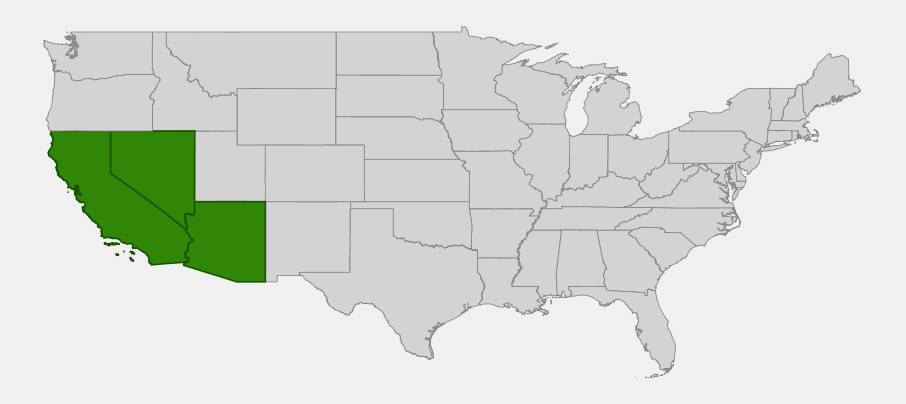
📋 Regional plant lists featuring Ghost Flower: Arizona & New Mexico · California & Nevada
Growing & Care Guide
Ghost flower is a wild desert annual that is rarely, if ever, offered by nurseries. It can be grown from seed in a desert wildflower garden in the low desert, but like many desert annuals it is fussy about rainfall and timing. It is most rewarding to enjoy in the wild in a good wildflower year.
Light
Ghost flower needs full sun. In the wild it grows in open washes and on rocky slopes with no shade.
Soil & Water
It needs very well-drained, sandy, gravelly or rocky soil. Germination depends on a good soaking rain in late fall or winter, followed by enough moisture through the winter and early spring. In the garden, mimic this with a deep watering after sowing and occasional watering in dry spells, but avoid rich soil and frequent irrigation.
Planting Tips
Sow seed in fall, scattering it on bare, gravelly soil and pressing it in lightly. Do not cover it deeply. Grow it with other desert annuals and perennials so that the garden is not bare in years when ghost flower does not appear.
Pruning & Maintenance
No pruning is needed. Let the plants set seed and dry out completely before removing them, so the seed can return to the soil. In some years, few or no plants may come up; the seed bank can wait for a better year.
Propagation
Propagate only from seed, collected from capsules that are dry and beginning to open. Seed of desert annuals often germinates irregularly, with some seed waiting for later years. Seed is seldom available commercially, so do not collect from protected lands such as national and state parks, where collection is not allowed.
Landscape Uses
- Desert wildflower gardens: an unusual, pale, glowing flower for low-desert gardens in good years
- Natural areas: a highlight of spring wildflower displays in Joshua Tree and Anza-Borrego
- Education: a classic example of flower mimicry and deceptive pollination
- Wildflower photography: its translucent, speckled flowers are favorites of desert photographers
- Habitat restoration: part of the diverse annual flora of desert washes and slopes
Wildlife & Ecological Value
Ghost flower is one of the best-known examples of flower mimicry in North America.
For Pollinators
Ghost flower produces no nectar. Instead, it closely resembles the flowers of white bractspine blazing star (Mentzelia involucrata), which often grows in the same habitat and does offer rewards to bees. The blazing star is visited by bees of the genus Xeralictus. Where the two plants grow together, ghost flower attracts the same bees through mimicry. The dark, hairy patch in its throat is thought to resemble a female bee, prompting male bees to enter the flower, and in doing so they pick up and deliver pollen.
For Insects
Because it offers no nectar, ghost flower is not a food plant for most flower visitors. Its value to insects lies mainly in its pollen, which the deceived bees carry from flower to flower, and in its place within the diverse spring wildflower community that supports desert insects as a whole.
For Birds & Mammals
Like other desert annuals, ghost flower contributes tiny seeds to the soil seed bank, which is a key food supply for seed-eating rodents, such as kangaroo rats and pocket mice, and for ants and seed-eating birds.
Ecosystem Role
As a desert annual, ghost flower appears only when winter rain is sufficient, completing its life cycle in a few months and leaving seeds that can survive many dry years. Its mimicry relationship with blazing star and its bees is a fascinating example of how desert plants and pollinators have evolved together.
Cultural & Historical Uses
The genus Mohavea is named for the Mojave Desert region, where the genus grows. The species was first described by George Bentham as a snapdragon, Antirrhinum confertiflorum, and was later moved to Mohavea by the American botanist Amos Arthur Heller. It was long placed in the figwort family (Scrophulariaceae) and is now included in the plantain family with the snapdragons.
The common name ghost flower refers to the pale, translucent petals, which can look almost ghostly against the dark desert rocks. In good spring wildflower years, ghost flower is one of the plants that visitors seek out in Joshua Tree and Anza-Borrego.
Its mimicry of blazing star has made ghost flower a classic subject in studies of pollination biology, showing how a plant can attract pollinators without producing any nectar of its own. Watching which bees visit it on a warm spring morning is a good way to appreciate this relationship in the field.
Frequently Asked Questions
Why is it called ghost flower?
Its large flowers have pale, thin, almost translucent petals that seem to glow in the desert light, giving them a ghostly look.
Does ghost flower make nectar?
No. It is a mimic of white bractspine blazing star, which grows in the same places, and it relies on bees that visit it because of the resemblance.
When does ghost flower bloom?
Mainly from February to April, after good winter rains. In dry years few or no plants may appear.
Where can I see ghost flower?
In the Mojave and Sonoran Deserts of California, Nevada and Arizona, for example in Joshua Tree National Park, Anza-Borrego Desert State Park and the canyons near Lake Mead, usually in sandy or rocky washes and slopes.
Can I grow ghost flower?
It can be grown from seed in sandy, gravelly soil in the low desert, but it is rarely available and depends on winter rain. It is easiest to enjoy in the wild. Do not collect seed in parks or other protected areas.

Looking for a nursery that carries Ghost Flower?
Browse our native plant nursery directory: Arizona · California · Nevada

