
Giant Purple Wakerobin (Trillium kurabayashii)
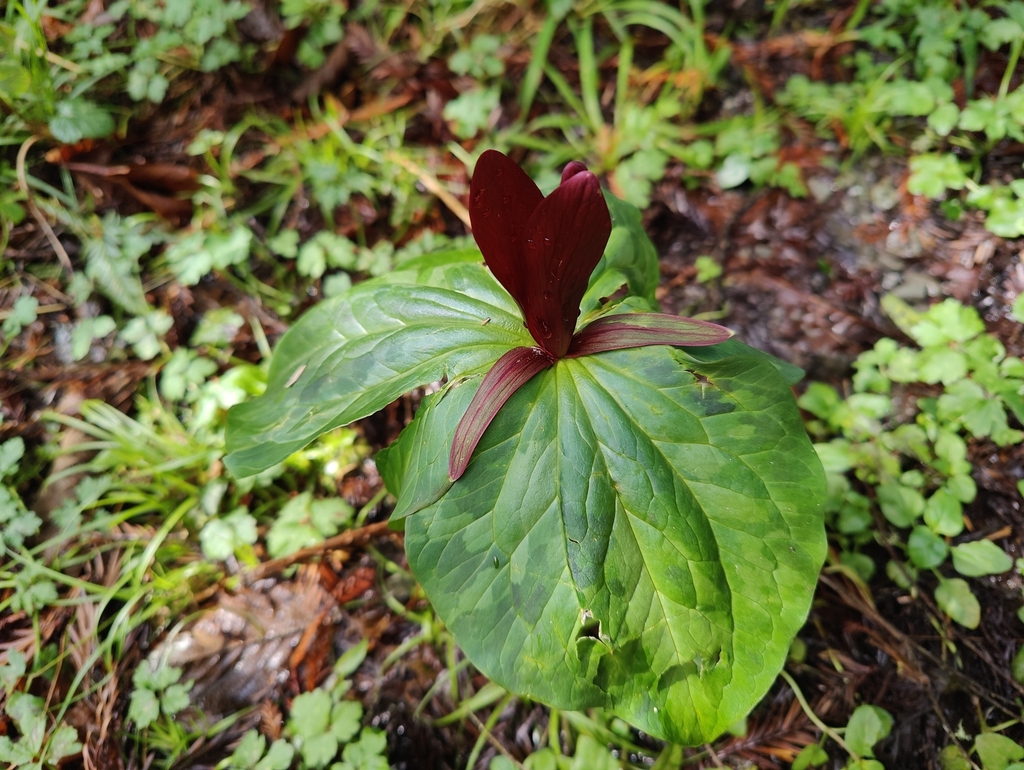
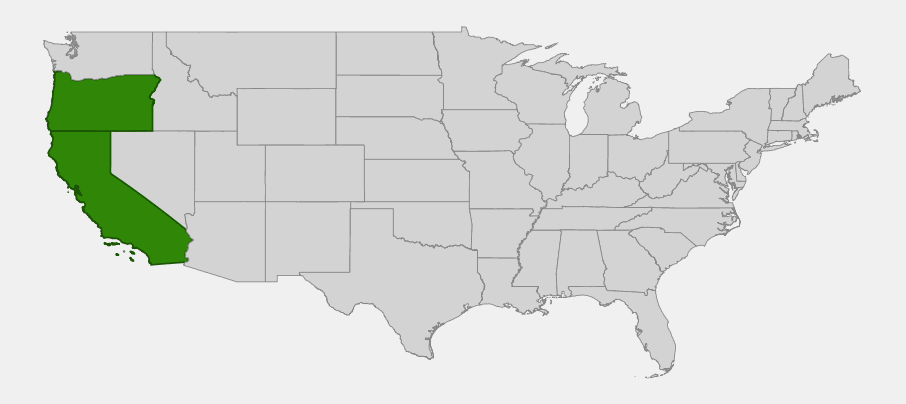
Trillium kurabayashii, the Giant Purple Wakerobin or giant purple trillium, is a spectacular spring wildflower of far northern California and extreme southwestern Oregon. It grows in two separate areas: the coastal redwood and mixed forests from Curry County, Oregon, to Humboldt County, California, and the western foothills of the northern Sierra Nevada.
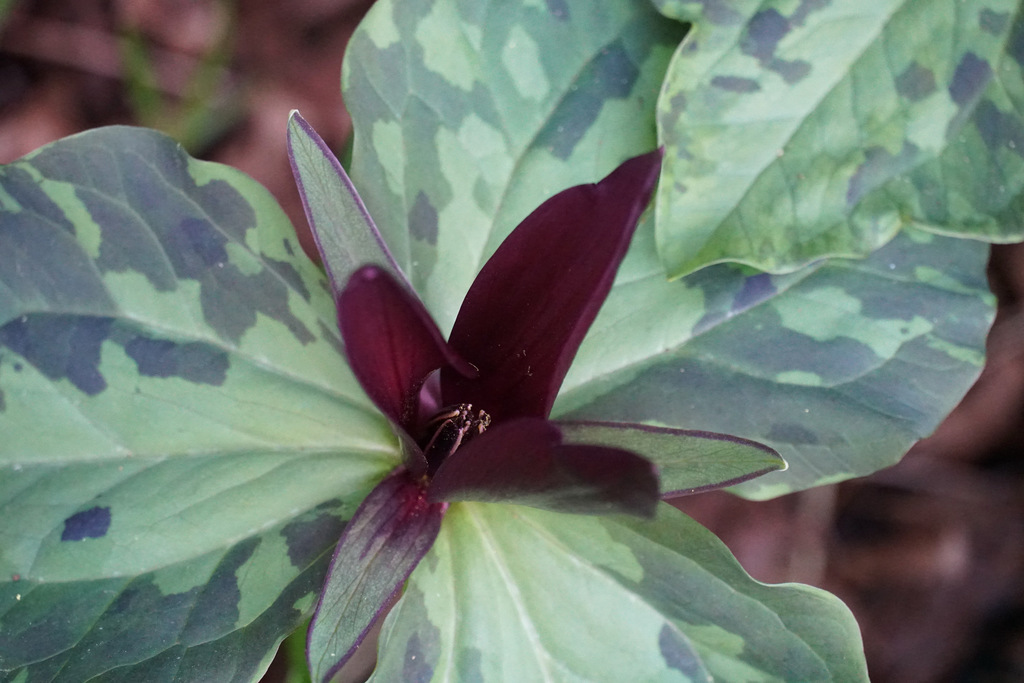
It is a sessile trillium: its stalkless flower sits directly on a whorl of three broad, often boldly mottled leaves. The erect petals are dark maroon to purple-red and can reach 4 inches long, making it one of the largest-flowered of all sessile trilliums.
Some botanists, including the authors of the Jepson Manual, treat it as part of Trillium angustipetalum, but USDA PLANTS, Flora of North America and Plants of the World Online accept it as a distinct species. This guide covers how to identify it, where it grows, how to grow it in a woodland garden and why it should never be dug from the wild.
Identification
Giant purple wakerobin is a tall trillium with three large, usually mottled leaves and a single stalkless flower with erect, broad, dark purple-red petals in early spring.
Stem & Leaves
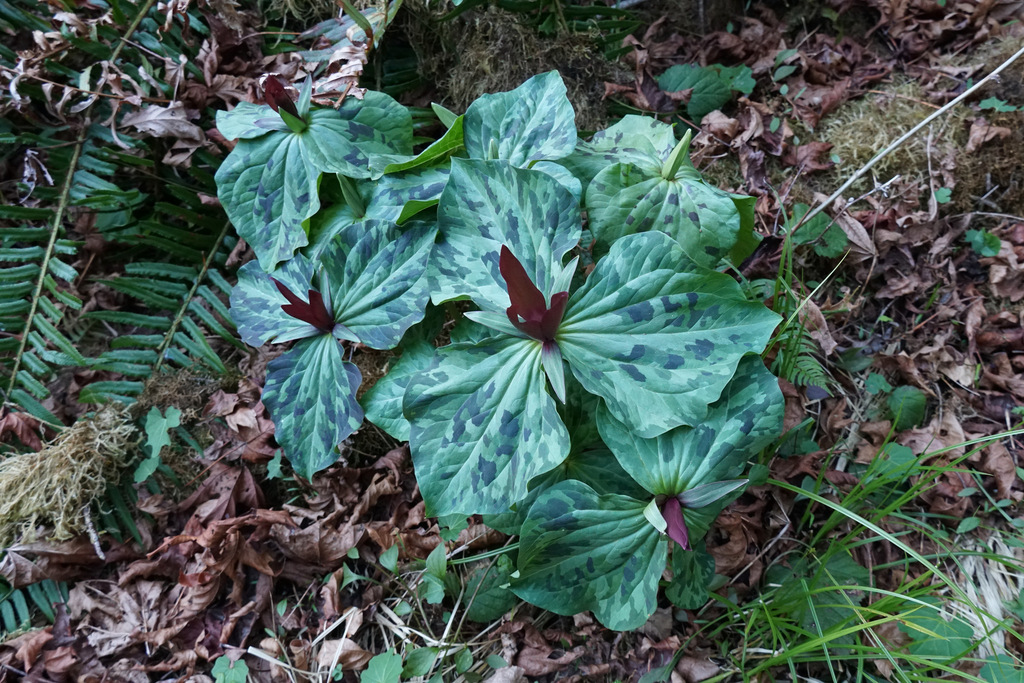
A single stem 11 to 17 inches tall rises from a thick underground rhizome. At its top is a whorl of three stalkless, broadly oval leaves (technically bracts) 4 to 7 inches long, dark green with paler and darker mottling that is usually strong but can be faint.
Flowers
From late March to May, a single flower sits directly on the leaves with no stalk. The three petals are erect, 2½ to 4 inches long and broadest above the middle, deep maroon, red-purple or purple-red. The three green to purplish sepals spread outward below them. The flowers have a spicy or musty scent that may turn unpleasant as they age. A rare yellow-flowered form is known.
Fruit
The fruit is a fleshy, dark reddish-purple, ovoid berry about 1 to 2 inches long, ripening in early summer. Its seeds carry oily appendages (elaiosomes) that attract ants, which carry them off and plant them.
Look-alikes
Giant trillium (T. chloropetalum) of central California has paler, often white, yellow or purple petals with a narrow stalklike base, and its range does not overlap. Trillium angustipetalum has much narrower petals, roughly nine times longer than wide. Giant white wakerobin has white to pinkish petals, and western trillium has a stalked white flower.
Quick Facts
| Scientific Name | Trillium kurabayashii J.D. Freeman |
| Family | Melanthiaceae (bunchflower family) |
| Plant Type | Herbaceous perennial wildflower from a rhizome |
| Mature Height | 11–17 in |
| Mature Spread | 8–14 in; slowly forms clumps |
| Growth Rate | Slow |
| Sun Exposure | Partial to full shade |
| Water Needs | Moderate; moist in spring, drier in summer |
| Soil Type | Rich, humusy, well-drained woodland soil |
| Soil pH | About 5.5–7.0 |
| Bloom Time | Late March–May |
| Flower Color | Dark maroon to purple-red |
| Fall Color | None; leaves die back by late summer |
| Fruit | Fleshy dark purple berry; seeds spread by ants |
| Deer Resistant | No; deer browse trilliums |
| USDA Hardiness Zones | 6–9 |
Native Range
USDA PLANTS lists giant purple wakerobin as native to California and Oregon. Its range is split into two disjunct areas. The larger one runs along the coastal side of the Klamath region from Curry County in extreme southwestern Oregon through Del Norte County to Humboldt County, California. The type specimen came from the edge of a logged redwood forest near Klamath, Del Norte County.
The second area is in the western foothills of the northern Sierra Nevada, in Butte, Yuba, Nevada and Placer counties. Plants reported outside these areas are often garden escapes or other purple trilliums, and the species is frequently confused with T. angustipetalum and T. chloropetalum.
It grows along streams at the edges of coast redwood forests, in rich, moist conifer and hardwood forests, and at higher elevations in woods and grassy openings with scattered oaks. It grows at roughly 100 to 500 feet along the coast and about 1,000 to 3,300 feet in the Sierra foothills.
📋 Regional plant lists featuring Giant Purple Wakerobin: Western Oregon & Western Washington · California & Nevada
Growing & Care Guide
Giant purple wakerobin is grown by trillium enthusiasts and a few specialty nurseries, and it is a striking plant for shady West Coast gardens. Buy only nursery-propagated (seed-grown) plants, and never dig trilliums from the wild: picking the leaves or flower can weaken or kill the plant, and wild-collected rhizomes rarely establish well. Seed-grown plants take several years to bloom, so they cost more than collected stock.
Light
Partial to full shade, such as the dappled light under deciduous trees or the edge of a conifer grove. Morning sun is fine in cool coastal areas.
Soil & Water
Rich, humusy, well-drained woodland soil, kept moist during its winter and spring growing season. In its summer-dry native climate it tolerates dryness once the leaves die back, but it should not bake in hot, sunny soil.
Planting Tips
Plant rhizomes in late summer or fall, about 3 to 4 inches deep, in groups. Mulch with leaf litter or fine bark. It emerges very early, so in cold-winter regions late frosts can damage the shoots; a sheltered spot helps.
Pruning & Maintenance
Let the leaves die back naturally, since they feed the rhizome for next year. Do not cut the flower. Protect plants from slugs, snails and deer.
Propagation
Sow fresh seed in fall in a shaded outdoor seedbed or pot. Seeds take one to two years to germinate and plants need five years or more to flower. Established clumps can be divided carefully in late summer.
Landscape Uses
- Shade and woodland gardens: one of the showiest West Coast trilliums
- Redwood and conifer understory plantings: with ferns and redwood sorrel
- Collector and rock gardens: for trillium enthusiasts
- Habitat restoration: native spring wildflower of coastal forests
Wildlife & Ecological Value
Giant purple wakerobin is an early spring flower of the forest floor whose seeds depend on ants for dispersal.
For Pollinators
The dark, musty-scented flowers of sessile trilliums are visited mainly by flies and beetles, which crawl over the stamens and carry pollen between plants.
For Birds
It is of little direct use to birds, though ground-foraging birds may occasionally take fallen fruit.
For Mammals
Deer and elk browse trillium leaves, and repeated browsing can weaken plants. Small rodents may eat the seeds.
Ecosystem Role
Ants carry the seeds back to their nests for the oily elaiosomes and discard the seeds in rich soil, which spreads the plant slowly through the forest. Like other trilliums it is long-lived and slow to recover from disturbance.
Cultural & Historical Uses
John Daniel Freeman described Trillium kurabayashii in 1975, one of five new sessile trilliums in his revision of the group. The name honors Masataka Kurabayashi, a Japanese cytologist whose chromosome studies first suggested an unrecognized purple trillium on the West Coast.
In the 1950s and 1960s a plant sold as “Trillium sessile var. rubrum” was popular in gardens. It was raised from seed in large numbers by Gilman Keasey of Corvallis, Oregon, from three plants collected in northwestern California, and was almost certainly this species.
Trillium plants, including the berries and rhizomes, are generally considered mildly toxic and should not be eaten.
Frequently Asked Questions
How do I recognize giant purple wakerobin?
Look for a trillium with three broad, mottled leaves and a single stalkless flower with large, erect, dark maroon to purple-red petals in early spring.
Where does giant purple wakerobin grow?
In coastal redwood and mixed forests from Curry County, Oregon, to Humboldt County, California, and in the western foothills of the northern Sierra Nevada.
Is it the same as Trillium angustipetalum?
The Jepson Manual lumps them, but most authorities, including USDA PLANTS, keep them separate. T. angustipetalum has much narrower petals.
Can I grow giant purple wakerobin in my garden?
Yes, in partial to full shade with rich, moist, well-drained soil. Buy seed-grown plants from a reputable nursery and never dig wild trilliums.
Is giant purple wakerobin poisonous?
Trilliums are generally considered mildly toxic, so do not eat any part of the plant. Keep children and pets from chewing the berries.

Looking for a nursery that carries Giant Purple Wakerobin?
Browse our native plant nursery directory: California · Oregon

