
Largeflower Aster (Symphyotrichum grandiflorum)
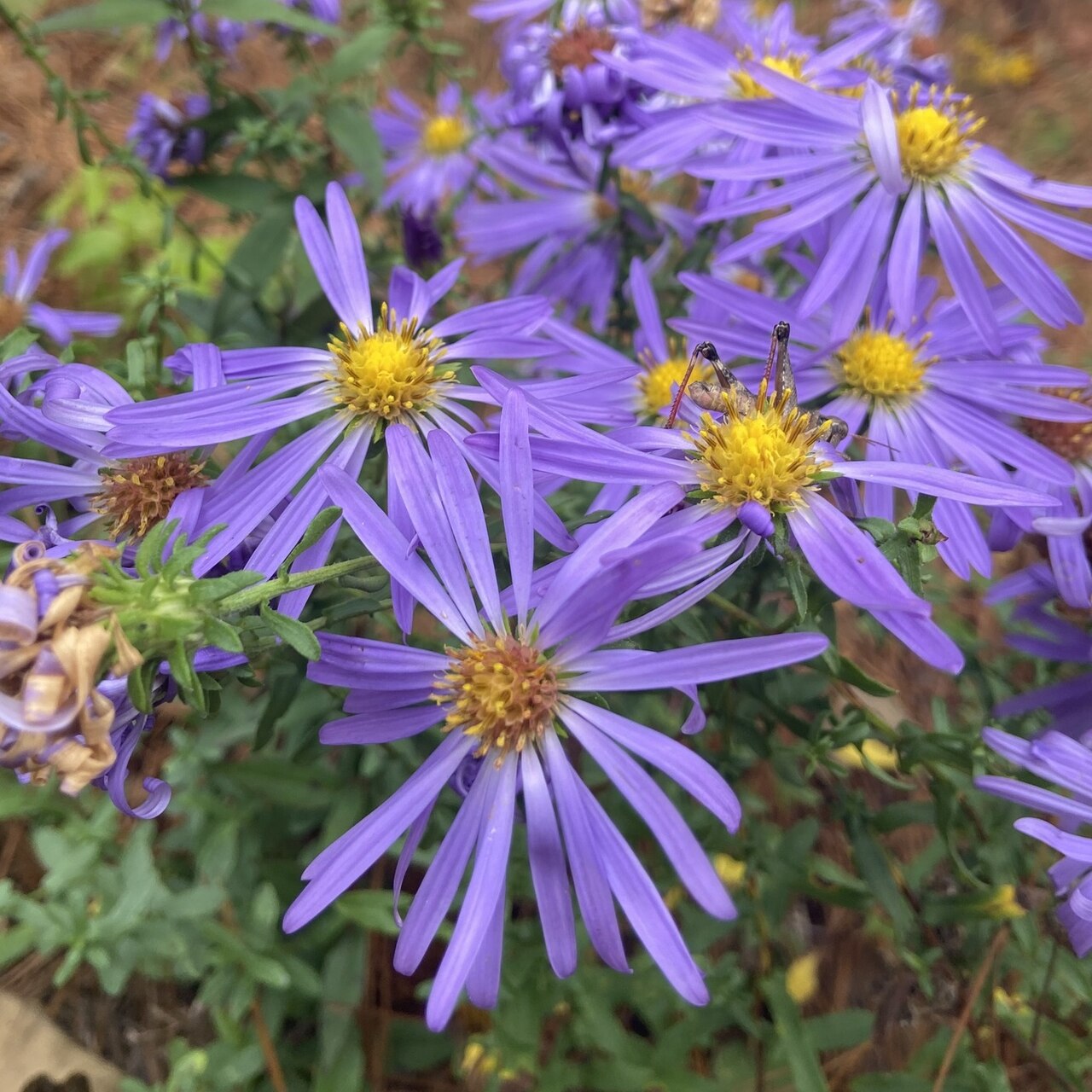
Symphyotrichum grandiflorum, the Largeflower Aster (also written large-flowered aster, and long known as Aster grandiflorus), is a showy fall wildflower found only in Virginia, North Carolina and South Carolina. As the name promises, it has some of the largest flower heads of any eastern aster: rich violet-purple daisies 1½ to 2 inches across, with a yellow center that ages to reddish purple, held at the tips of stiff, hairy branches.
It is also one of the last native wildflowers to bloom in the Carolinas. Flowers open in late September and carry on through October and often into November, long after most goldenrods and other asters have gone to seed, which makes it a valuable late source of nectar and pollen for bees and migrating butterflies. The North Carolina Botanical Garden has featured it as a North Carolina Wildflower of the Year, and nurseries in the region are offering it more and more.
This guide covers how to tell largeflower aster from its look-alikes, where it grows wild, how to grow it in a sunny native garden or meadow, and why it matters to pollinators at the end of the season.
Identification
Largeflower aster is a rough, bristly, somewhat sprawling aster with big violet flower heads at the ends of its branches. The combination of very large heads, stiff hairs, small clasping leaves on the branches and spreading, glandular bracts under the flower heads identifies it within its small range.
Stems & Leaves
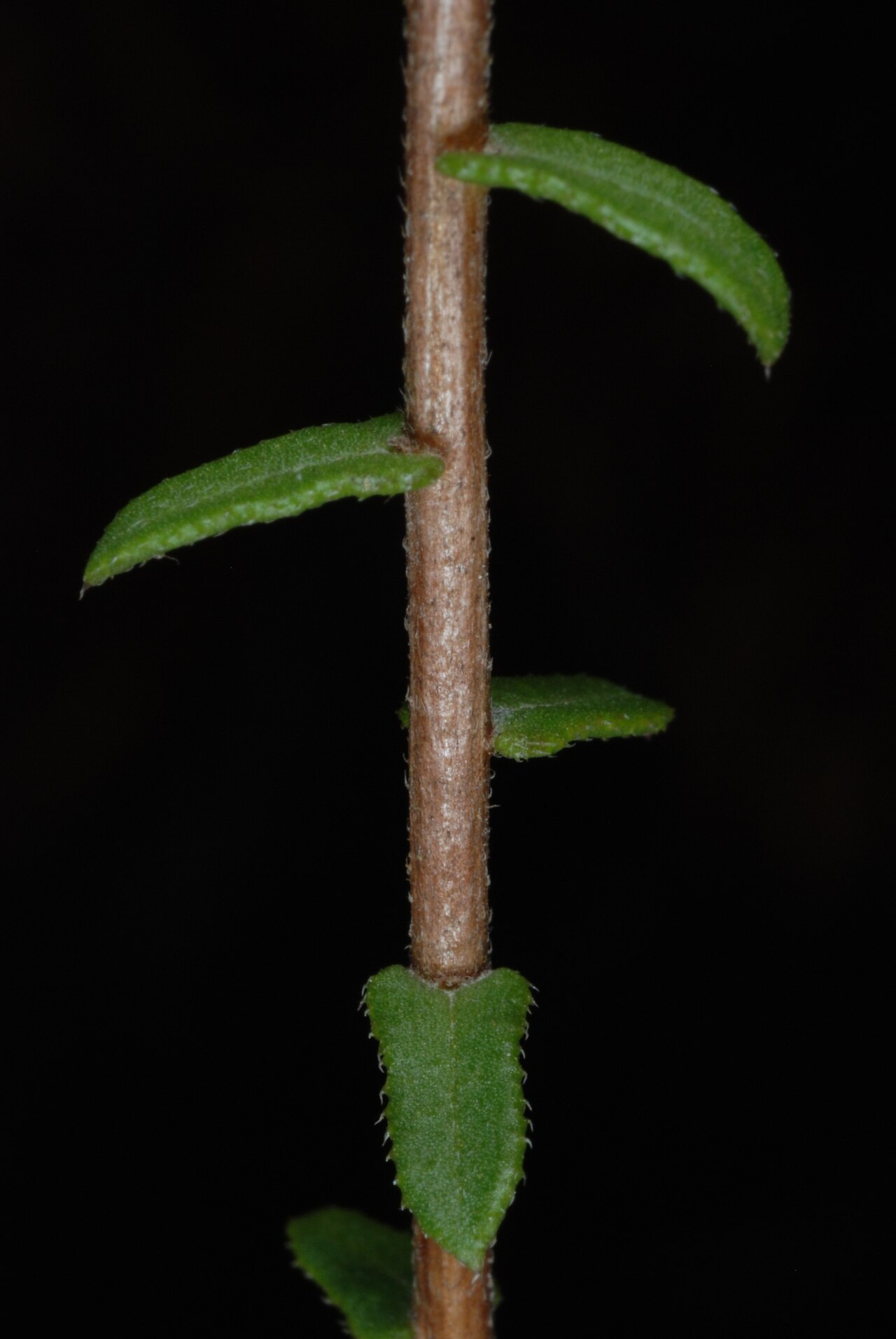
Plants grow from a short rhizome or woody crown and send up one to several stiff stems 1 to 3 feet tall, often leaning or arching under the weight of the flowers. The stems are covered in spreading, stiff hairs. Lower leaves are oblong to lance-shaped, 1 to 4 inches long, and rough to the touch, with bases that clasp the stem. Up the plant the leaves shrink quickly, and the flowering branches carry many tiny, stiff, clasping leaves less than ½ inch long. Lower leaves often wither by flowering time.
Flowers
The flower heads are borne singly at the tips of the branches and are 1½ to 2 inches across, large for an aster. Each has 15 to 35 long, narrow, deep violet to blue-purple ray flowers around a yellow disk. The disk florets turn reddish purple as they age, so older heads have darker centers. Flowering runs from late September into November.
Bracts
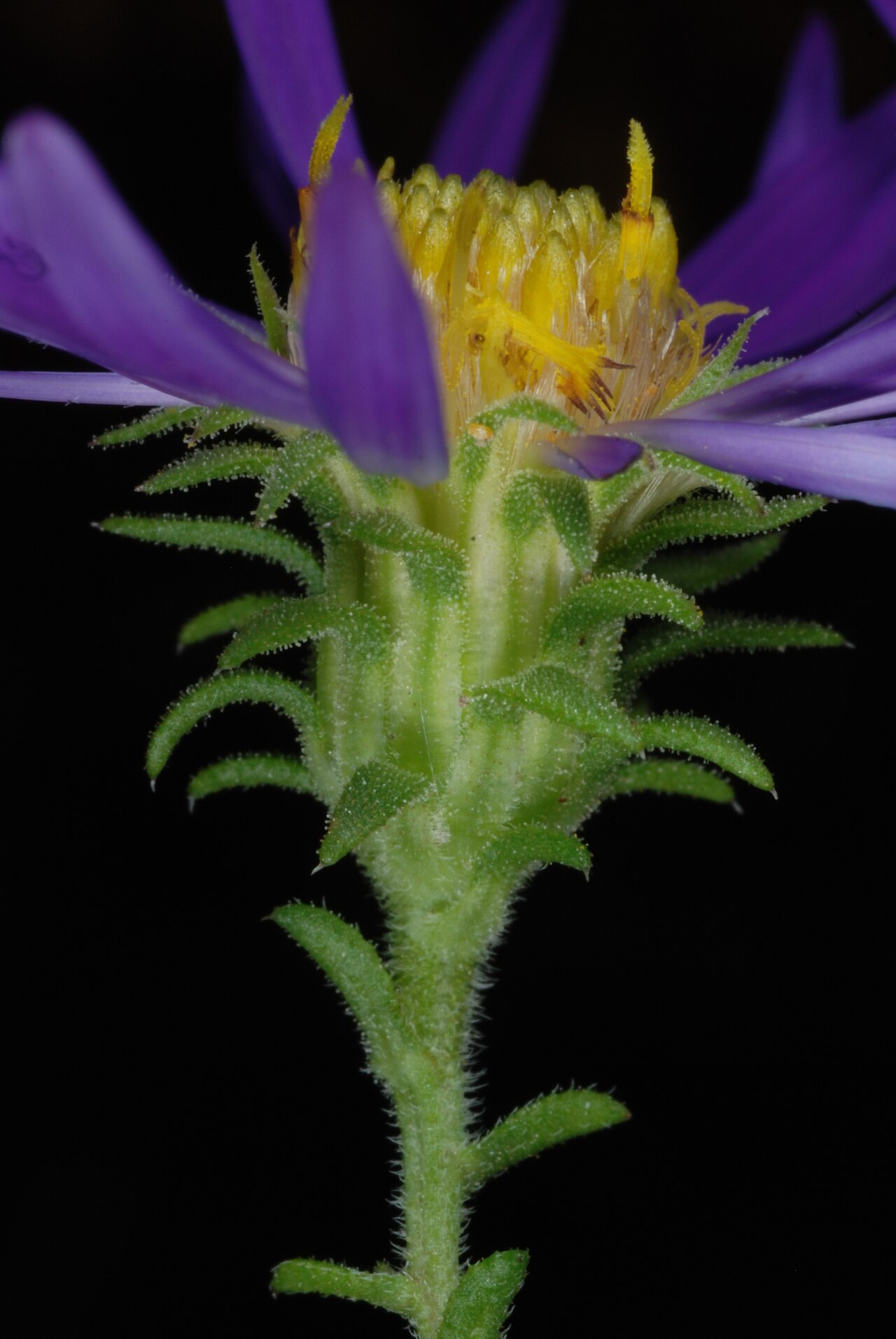
Turn a flower head over to confirm the identification. The bracts (phyllaries) underneath are in several rows, bristly and sticky-glandular, and their green tips spread outward or curl back rather than lying flat. This gives the base of the head a shaggy look that sets it apart from most other purple asters in the region.
Look-alikes
Late Purple Aster (S. patens) also has clasping leaves and grows in the same dry, open habitats, but its heads are smaller (usually about 1 inch), its stems are less bristly, and its bracts are flatter and only lightly glandular. Aromatic aster (S. oblongifolium) has glandular, spreading bracts too, but smaller heads and narrower, non-clasping leaves and grows mostly west of the Carolina coastal plain. Smooth Blue Aster has smooth, hairless, bluish-green leaves.
Quick Facts
| Scientific Name | Symphyotrichum grandiflorum (L.) G.L. Nesom; syn. Aster grandiflorus L. |
| Family | Asteraceae (aster family) |
| Plant Type | Herbaceous perennial wildflower |
| Mature Height | 1–3 ft |
| Mature Spread | 1–2 ft |
| Growth Rate | Moderate |
| Sun Exposure | Full sun to light shade |
| Water Needs | Low to medium; well-drained soil |
| Soil Type | Sandy, loamy or rocky, well-drained soil |
| Soil pH | About 5.0–7.0 (acidic to neutral) |
| Bloom Time | Late September–November |
| Flower Color | Deep violet to blue-purple rays, yellow disk aging reddish purple |
| Fall Color | Flowers are the fall show; foliage dull green to bronze |
| Fruit | Small, hairy achenes (cypselae) with tan bristles |
| Deer Resistant | Moderate; deer browse asters at times |
| USDA Hardiness Zones | 6–9 |
Native Range
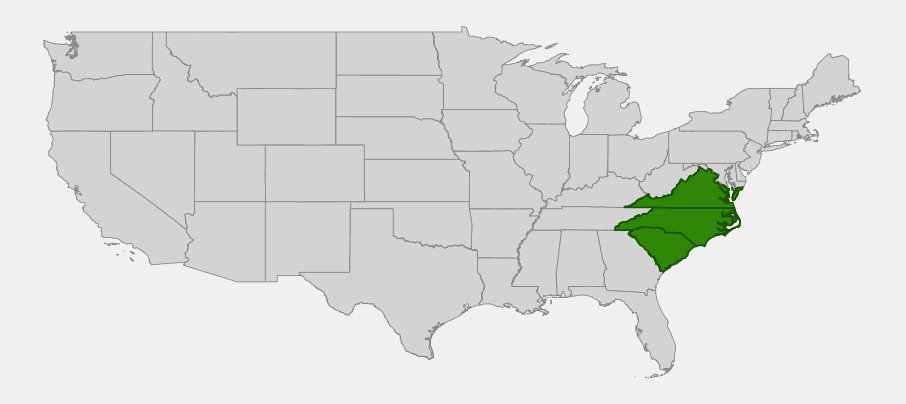
Largeflower aster is native only to the United States, in a small range in the Southeast. USDA PLANTS lists it in Virginia, North Carolina and South Carolina. It grows on the Atlantic coastal plain of southeastern Virginia, North Carolina and South Carolina, and in the Piedmont of North Carolina and South Carolina, where it is most frequent in the eastern and central parts of the region.
Its habitats are dry to moist, open, sunny places with sandy or loamy soil: openings in oak and pine woods, woodland borders and thickets, old fields, powerline rights-of-way and road banks. Like many fall asters it does best where something keeps the shrubs and trees in check, whether fire in longleaf pine and oak woodlands or periodic mowing along roads and utility lines.
Within this small range it can be locally common along roadsides and woodland edges. Because the whole species is limited to three states, though, it depends on the continued existence of open, fire- or mowing-maintained habitat there, which has shrunk as woodlands close in and land is developed. Planting nursery-grown largeflower aster in Carolina and Virginia gardens is a good way to keep this regional specialty in the landscape.
📋 Regional plant lists featuring Largeflower Aster: North & South Carolina · Maryland, Virginia & West Virginia
Growing & Care Guide
Largeflower aster is an easy, long-lived perennial for a sunny, well-drained spot. It is drought tolerant once established, needs no fertilizer, and rewards you with a late burst of purple when most of the garden is finished. Buy nursery-grown plants or seed from a reputable native plant source rather than digging plants from roadsides.
Light
Full sun gives the most flowers and the sturdiest stems. It tolerates light or partial shade at a woodland edge, but in shade it gets lanky and flops.
Soil & Water
It prefers sandy or loamy, well-drained soil, acidic to neutral, and does well in lean soil. Water new plants through their first summer; after that it handles dry spells well. Avoid rich, wet soil, which produces soft, floppy growth and can lead to crown rot.
Planting Tips
Plant in spring or fall, 18 to 24 inches apart. Because the stems arch and lean, place it where it can drape over a wall or be held up by sturdy neighbors such as little bluestem or other bunchgrasses. It is lovely with goldenrods, blazing stars and grasses that turn bronze in fall.
Pruning & Maintenance
To get a shorter, bushier plant, cut the stems back by about a third to a half in late May or early June; it will still bloom in fall. Leave the seed heads standing over winter for birds and cover for overwintering insects, then cut back in late winter. Powdery mildew can show up on the lower leaves in late summer, which is mostly cosmetic.
Propagation
Divide established clumps in early spring. Seed can be sown outdoors in fall or cold-stratified for about 60 days before spring sowing; collect seed only from your own plants or, with permission, from a small share of a large population. The selection ‘Biscoe Belle’, with dense dark purple flowers, is sometimes offered by specialty nurseries.
Landscape Uses
- Pollinator gardens: a late-season nectar and pollen source in October and November
- Meadows and naturalized areas: mixes well with bunchgrasses, goldenrods and blazing stars
- Dry, sandy sites: tolerates lean, droughty soil once established
- Front of a wall or slope: its arching stems spill attractively over edges
- Roadside and right-of-way plantings: native to mowed, sunny edges in its range
Wildlife & Ecological Value
Blooming so late, largeflower aster fills a gap in the food supply for insects that are still active in late fall in the Southeast.
For Pollinators
The large heads attract bumble bees, sweat bees, mining bees and other native bees, as well as honey bees, flies and butterflies. The Xerces Society lists it as having special value for native bees. Migrating monarchs and other late butterflies such as skippers, sulphurs and buckeyes nectar at fall asters. Asters also host the caterpillars of many moths and of butterflies such as the pearl crescent.
For Birds
Small seed-eating birds such as sparrows, juncos and finches pick seeds from the fluffy seed heads in late fall and winter, and the insects drawn to the flowers feed insect-eating birds.
For Mammals
Deer and rabbits occasionally browse the foliage. Small mammals use the dense stems and leaf litter around the base for cover.
Ecosystem Role
As one of the last wildflowers to bloom, it supports bees building fat reserves before winter, including queen bumble bees about to hibernate. It is part of the diverse groundcover of fire-maintained oak and pine woodlands and their sunny edges.
Cultural & Historical Uses
Linnaeus named this plant Aster grandiflorus in 1753, making it one of the earliest North American asters described; grandiflorus means “large-flowered.” It was moved to Symphyotrichum in 1995, when DNA and other studies showed that most North American asters are not close relatives of the Old World genus Aster. Gardeners and older field guides still use the name Aster grandiflorus.
Early botanists sent seed of eastern North American asters to European gardens, where hardy fall asters became popular, although largeflower aster never became as widely grown as New England or New York asters. In recent years native plant nurseries in the Carolinas and Virginia have brought it back into cultivation as a regional specialty.
There is little recorded use of largeflower aster by Indigenous peoples, although asters in general were used in teas and poultices. Today it is valued mainly as a garden and pollinator plant and as a sign of healthy, open woodland edge habitat in the Carolinas.
Frequently Asked Questions
Where is largeflower aster native?
Only in the southeastern United States: the coastal plain of southeastern Virginia, North Carolina and South Carolina, and the Piedmont of North Carolina and South Carolina. It does not grow wild anywhere else.
When does largeflower aster bloom?
From late September through October and often into November. It is one of the last native wildflowers to flower in the Carolinas.
Is largeflower aster the same as Aster grandiflorus?
Yes. Aster grandiflorus is the older name. Botanists now place most North American asters in Symphyotrichum, so the current name is Symphyotrichum grandiflorum.
How is it different from late purple aster?
Largeflower aster has larger heads (1½ to 2 inches), bristlier stems and glandular bracts with spreading green tips. Late purple aster has smaller heads and flatter, less glandular bracts, although both have clasping leaves.
Can I grow largeflower aster outside its native range?
Yes. It grows well in full sun and well-drained soil in about USDA zones 6 to 9. In its native Virginia and Carolina range it is a particularly good choice because it supports local pollinators.

Looking for a nursery that carries Largeflower Aster?
Browse our native plant nursery directory: North Carolina · South Carolina & Virginia

