
Maple-leaf Oak (Quercus acerifolia)
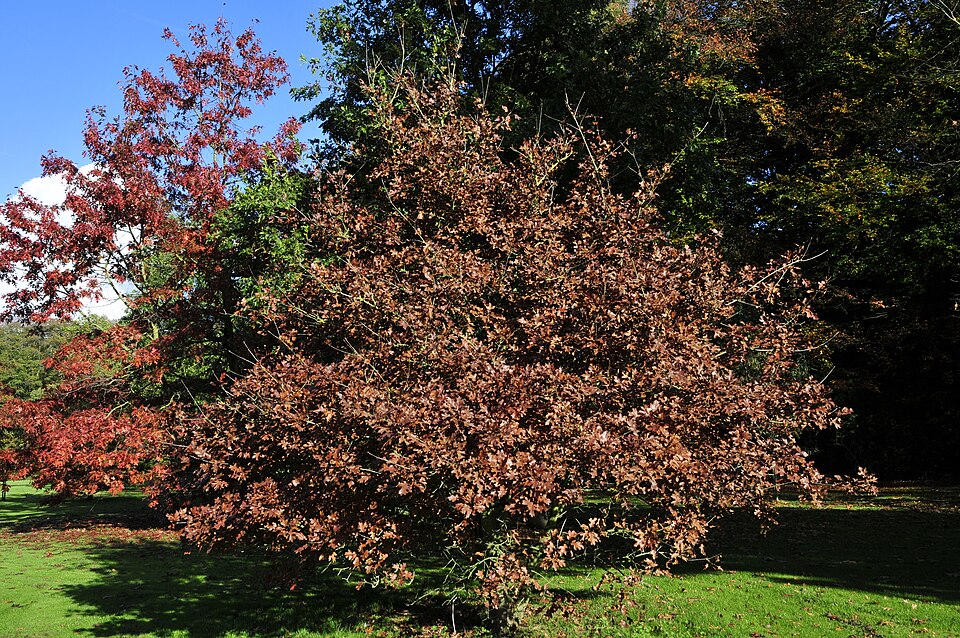
Quercus acerifolia, the Maple-leaf Oak, is one of the rarest trees in North America — a species found nowhere on Earth outside a handful of rocky mountaintops in the Ouachita Mountains of west-central Arkansas. Its entire known range covers roughly 24 square kilometers across just a few sites, including Sugarloaf Mountain, Magazine Mountain, Pryor Mountain, and Porter Mountain. The species was first collected in 1927 and initially classified as a variety of Shumard Oak (Quercus shumardii var. acerifolia); it wasn’t formally recognized as a distinct species until 1990, when botanists Nick Stoynoff and William Hess published morphological and ecological evidence supporting the split. The tree takes its name — “maple-leaf” — from its distinctive five-lobed leaves, which resemble a maple’s more than a typical oak’s.
Maple-leaf Oak is listed as Endangered on the IUCN Red List, and its extraordinarily narrow native range makes it one of the most geographically restricted tree species in the United States. For gardeners and land managers in Arkansas’s Ouachita region, planting or protecting Maple-leaf Oak is a meaningful conservation act; for everyone else, the species is a striking reminder of how much undiscovered or underappreciated diversity can exist within a single mountain range. Because of its rarity, Maple-leaf Oak is essentially unavailable through the ordinary nursery trade — specialty native plant growers and botanical gardens working on conservation propagation are the most realistic sources.
In the wild, Maple-leaf Oak grows on xeric, high-elevation woodland sites with dry, rocky, shallow soils — the kind of exposed ridge and bluff habitat few other oaks can tolerate. It typically reaches a modest 40 to 50 feet, sometimes persisting as a multi-stemmed shrub rather than a single-trunked tree on the most exposed sites, and produces vivid red fall foliage that makes it a desirable, if hard to find, ornamental.
Identification
Maple-leaf Oak is a medium-sized deciduous tree in the red oak group (Quercus section Lobatae), typically reaching 40 to 50 feet, though it may grow as a dense, multi-stemmed shrub on the most exposed, wind-scoured sites. It is often mistaken for Shumard Oak, its close relative, and distinguishing the two reliably requires attention to leaf shape and acorn characteristics.
Bark
Bark is dark gray and develops furrowed, scaly ridges with age, broadly similar to other red oaks of the region.
Leaves
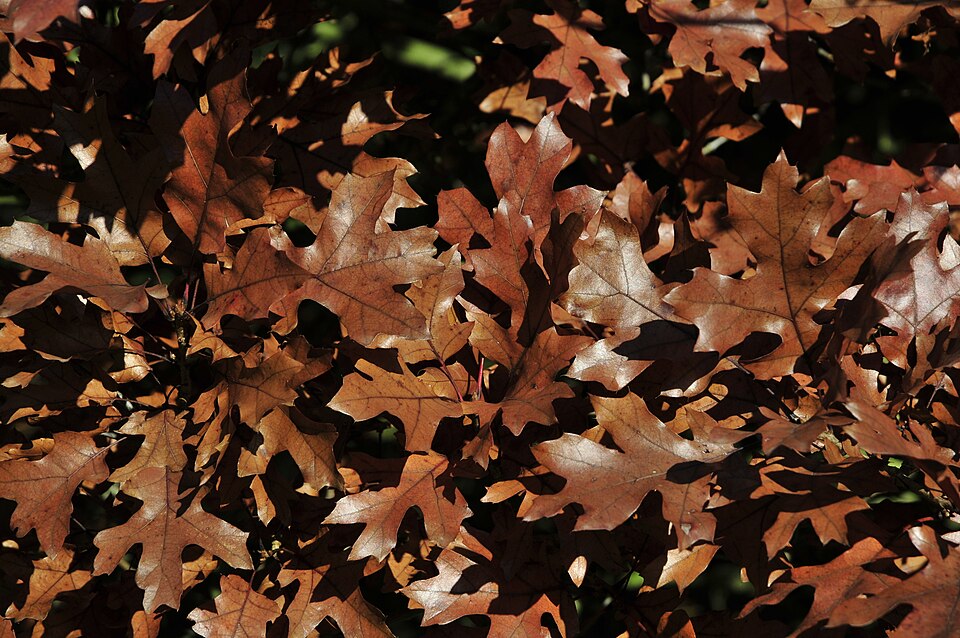
The leaves are the most distinctive feature of this species. Technically pinnately five-lobed, they appear palmately lobed at first glance — the two middle lobes are notably larger than the other three, giving the leaf a broad, maple-like silhouette rather than the narrower, more evenly lobed leaves typical of Shumard Oak. Leaves are broader and shorter overall than Shumard Oak leaves. Fall color is an outstanding deep red to reddish-bronze, among the best of the native red oaks.
Flowers & Fruit
Like other oaks, Maple-leaf Oak is monoecious, with inconspicuous drooping male catkins and small female flowers appearing with the new leaves in spring. Acorns mature over two growing seasons, as is typical of the red oak group, and are somewhat smaller than those of Shumard Oak — one of the morphological traits that helped establish the species as distinct.
Quick Facts
| Scientific Name | Quercus acerifolia |
| Family | Fagaceae (Beech/Oak) |
| Plant Type | Deciduous Tree (occasionally multi-stemmed shrub) |
| Mature Height | 40–50 ft |
| Mature Spread | 25–35 ft |
| Growth Rate | Slow |
| Sun Exposure | Full Sun |
| Water Needs | Low |
| Soil Type | Dry, rocky, shallow upland soils |
| Soil pH | Acidic |
| Bloom Time | April |
| Fall Color | Deep red to reddish-bronze |
| Conservation Status | Endangered (IUCN) — extremely narrow endemic range |
| USDA Hardiness Zones | 6–8 |
Native Range
Maple-leaf Oak is endemic to the Ouachita Mountains of west-central Arkansas and is found nowhere else in the world. Its entire known native distribution covers only about 24 square kilometers, concentrated on a handful of high, exposed sites including Sugarloaf Mountain, Magazine Mountain, Pryor Mountain, and Porter Mountain. This makes it one of the most geographically restricted tree species in North America.
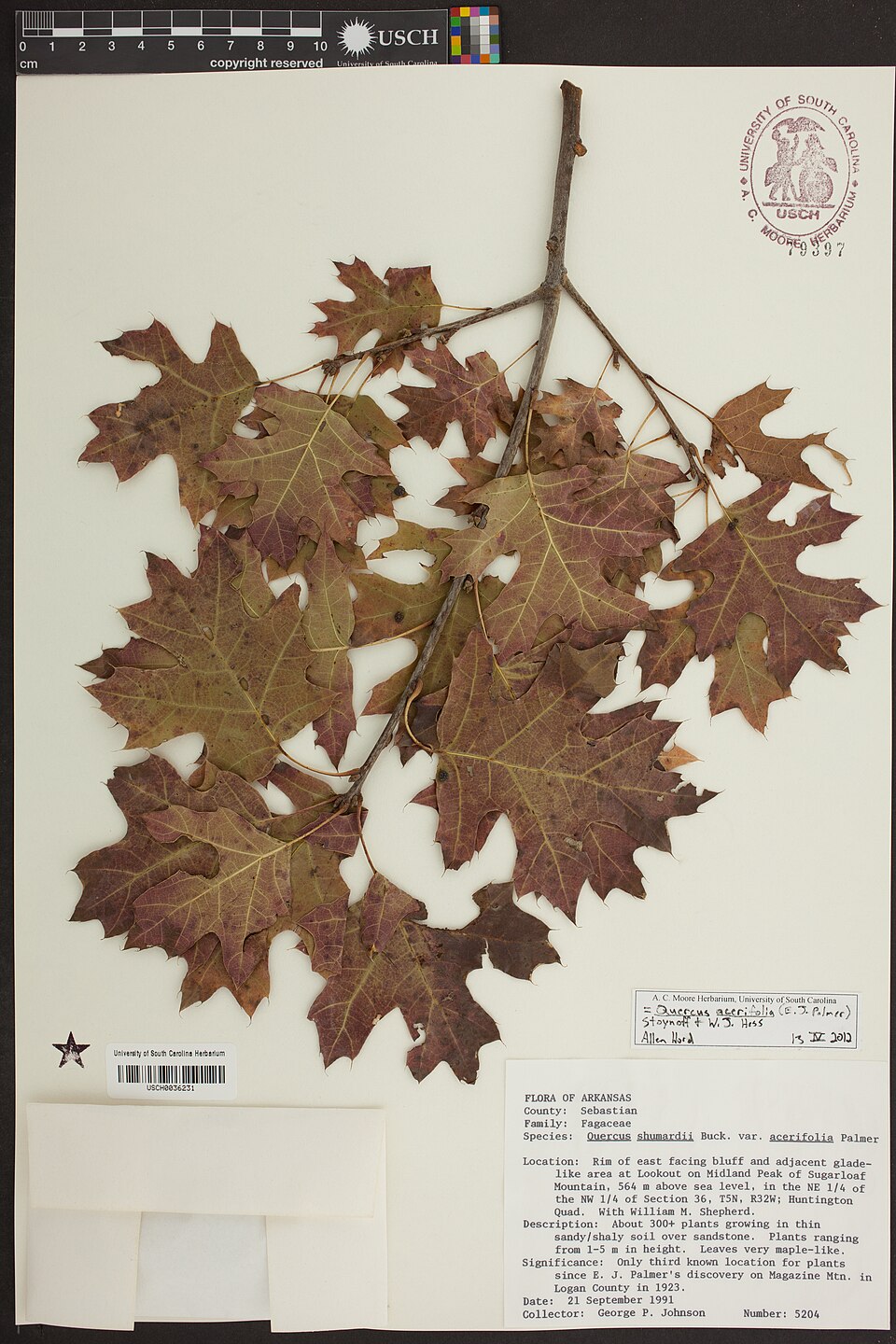
The species grows on xeric, high-elevation woodland habitat with dry, rocky soils — exposed bluffs, ridgelines, and glade-like areas over sandstone, often alongside Shumard Oak in similar but typically less extreme terrain. One herbarium record describes a population of roughly 300 plants growing in thin, sandy-shaly soil over sandstone, ranging from 1 to 5 meters in height, underscoring just how small and precarious the species’ wild populations remain. Its restricted range, combined with its specific habitat requirements, is the primary driver of its endangered conservation status.
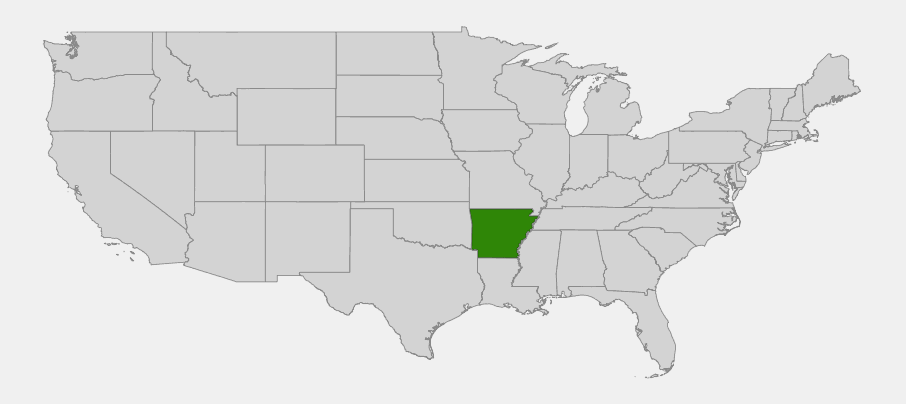
📋 Regional plant lists featuring Maple-leaf Oak: Arkansas, Louisiana, Eastern Oklahoma & Eastern Texas
Growing & Care Guide
Because Maple-leaf Oak is so rare and so specifically adapted to its narrow native habitat, growing it successfully outside the Ouachita Mountains means replicating those harsh, well-drained, rocky conditions as closely as possible.
Light
Full sun is essential — in the wild, Maple-leaf Oak grows on exposed, sun-drenched ridges and bluffs with little canopy competition. It will not thrive in shaded or understory conditions.
Soil & Water
This species demands dry, rocky, well-drained, acidic soil and does not tolerate wet feet or heavy clay. It is adapted to thin, nutrient-poor sandstone-derived soils and performs poorly on rich garden loam kept consistently moist. Established trees are drought-tolerant, reflecting their native exposure to dry mountaintop conditions.
Planting Tips
Given its rarity and conservation status, Maple-leaf Oak is rarely available through commercial nurseries; specialty native plant growers, botanical gardens, or conservation propagation programs are the most realistic sources, and acquiring seed or stock may require contacting Arkansas-based native plant organizations directly. Like other oaks, it develops a substantial taproot, so younger, smaller specimens transplant more successfully than larger nursery stock. Choose a well-drained, sunny, rocky site that mimics its native ridge-top habitat.
Pruning & Maintenance
Minimal pruning is needed beyond removing dead or damaged wood during dormancy. Given how few cultivated specimens exist, documenting and monitoring any planted Maple-leaf Oak contributes meaningfully to the limited body of knowledge about the species’ performance outside its native range.
Landscape Uses
Maple-leaf Oak suits a narrow but meaningful set of applications:
- Conservation plantings within or near its native Ouachita Mountains range in Arkansas
- Rock gardens and dry, rocky landscape features that replicate its natural exposed habitat
- Specimen or accent tree prized for its outstanding red fall color, where it can be sourced
- Botanical garden and arboretum collections focused on rare and endemic North American species
Wildlife & Ecological Value
For Mammals & Birds
Like other oaks, Maple-leaf Oak produces acorns that provide mast for squirrels, deer, and other wildlife within its very limited native range, though the overall food contribution is necessarily small given how few individual trees exist in the wild.
Ecosystem Role
As a narrow endemic confined to a handful of mountaintops, Maple-leaf Oak is an irreplaceable component of Ouachita Mountains xeric woodland biodiversity. Its conservation is tied directly to the protection of a specific, small set of high-elevation sandstone habitats; losing any of these sites would represent a disproportionate loss of the species’ total genetic diversity. Protecting and, where appropriate, expanding Maple-leaf Oak populations is a priority for regional conservation efforts in Arkansas.
Cultural & Historical Uses
Maple-leaf Oak has no significant documented history of Indigenous or settler use distinct from other regional red oaks, likely owing to its extreme rarity and restricted distribution, which would have made it a minor, incidental component of oak stands rather than a resource harvested in its own right. Its primary significance today is scientific and conservation-related: the 1990 reclassification that established it as a distinct species, separate from Shumard Oak, remains a notable example of ongoing refinement in North American oak taxonomy.
Frequently Asked Questions
How is Maple-leaf Oak different from Shumard Oak?
Maple-leaf Oak was originally classified as a variety of Shumard Oak before being recognized as a distinct species in 1990. The clearest distinguishing feature is the leaf: Maple-leaf Oak’s leaves are broader and shorter, with two markedly larger middle lobes that give them a maple-like silhouette, while Shumard Oak leaves are narrower with more evenly sized lobes. Maple-leaf Oak also produces somewhat smaller acorns.
Why is Maple-leaf Oak so rare?
It is a true endemic, found naturally only on a few high, exposed sandstone sites in the Ouachita Mountains of west-central Arkansas, covering a total range of roughly 24 square kilometers. This extremely narrow distribution, combined with its specific habitat needs, makes it inherently vulnerable and has earned it an Endangered listing.
Can I buy a Maple-leaf Oak for my garden?
It is very difficult to find through ordinary retail nurseries. Specialty native plant growers, botanical gardens, and Arkansas conservation organizations focused on rare native species are the most realistic avenues, and availability may be limited or require advance arrangement.
Is Maple-leaf Oak only found in Arkansas?
Yes. Its entire known native range is confined to a handful of Ouachita Mountains sites in west-central Arkansas. Cultivated specimens exist in botanical gardens elsewhere, including in Europe, but these are planted collections, not wild populations.
What does Maple-leaf Oak need to thrive?
Full sun and dry, rocky, well-drained, acidic soil that mimics its native sandstone ridge-top habitat. It does not tolerate wet or heavy soils and performs best when planted conditions closely match the harsh, exposed sites where it grows naturally.

Looking for a nursery that carries Maple-leaf Oak?
Browse our native plant nursery directory: Arkansas

